
Sexual Reproduction I Male Reproductive System A See
- Slides: 55
Sexual Reproduction
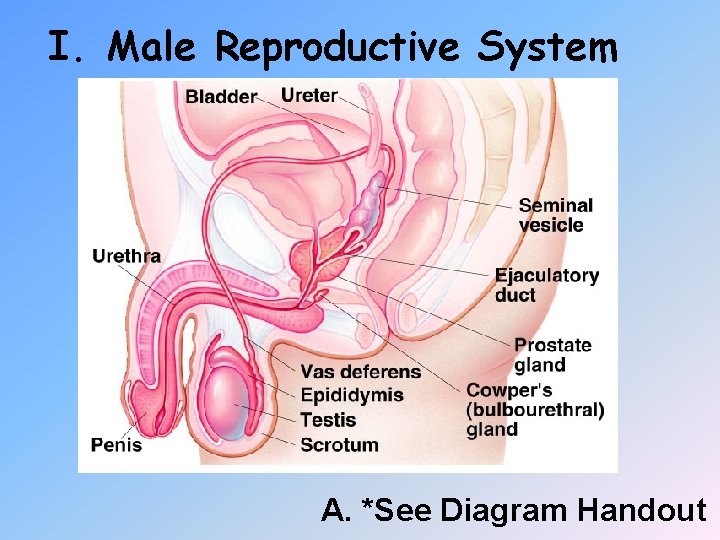
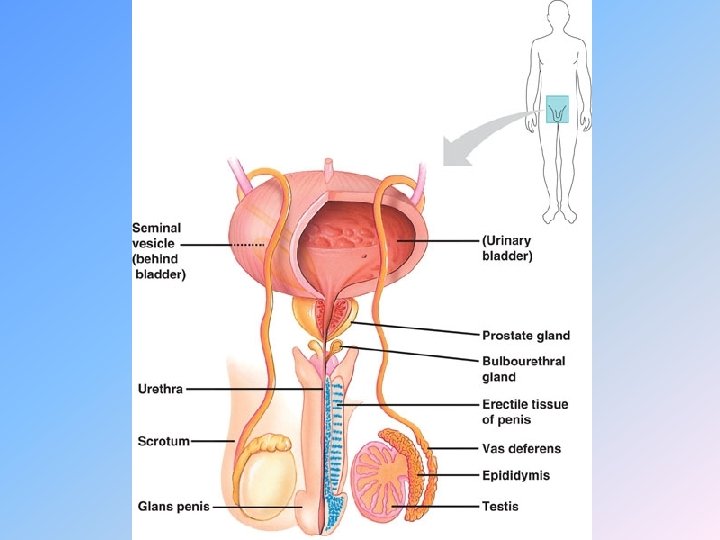
I. Male Reproductive System A. *See Diagram Handout
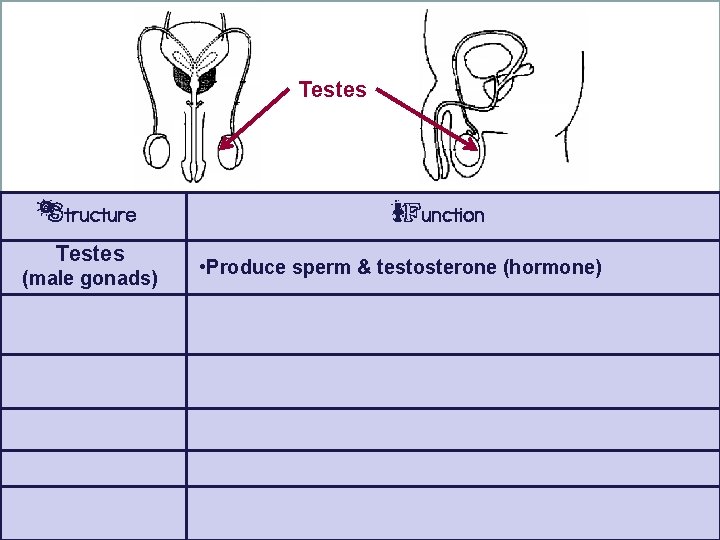
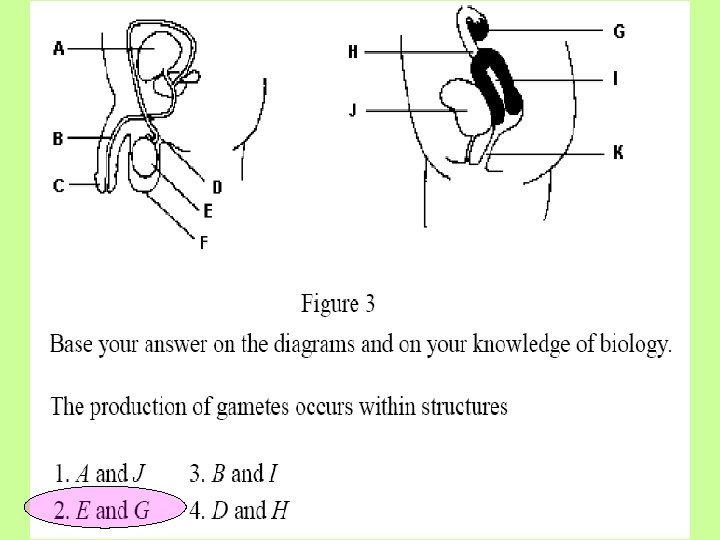
Testes Structure Testes (male gonads) Function • Produce sperm & testosterone (hormone)
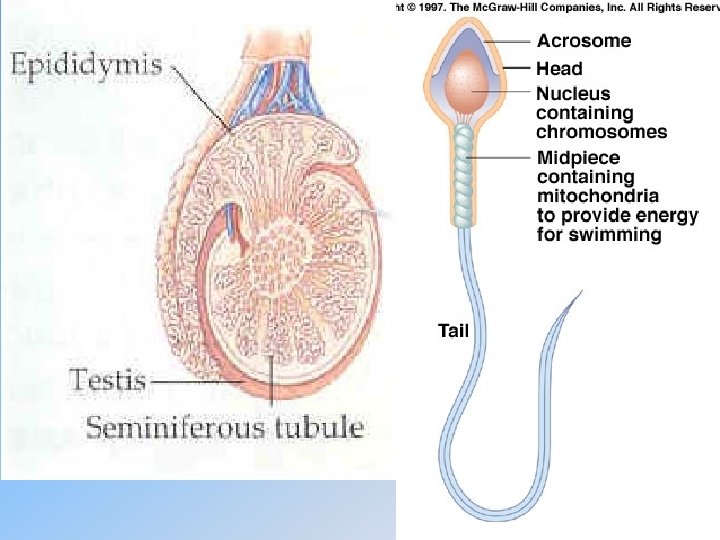
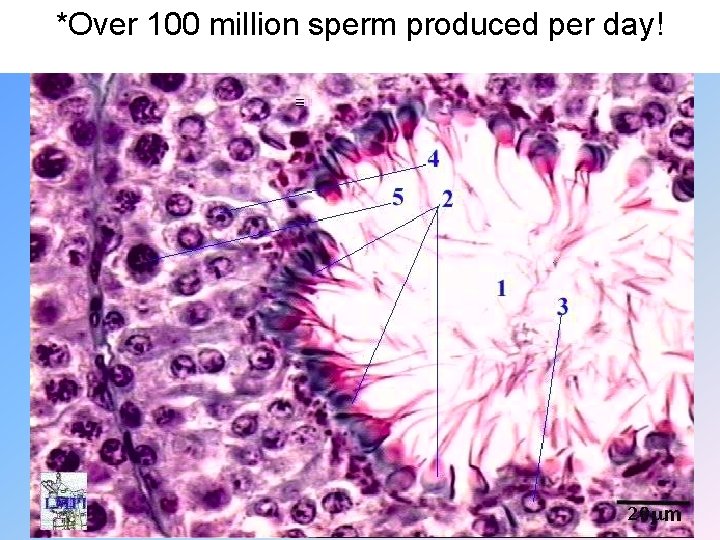
*Over 100 million sperm produced per day!
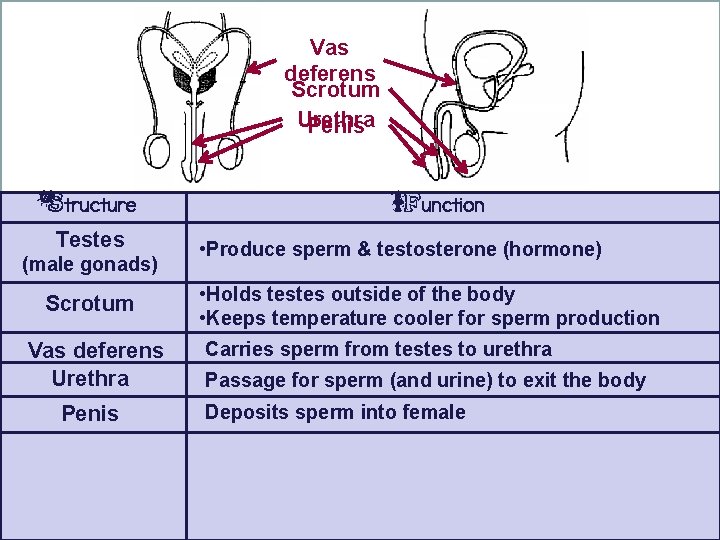
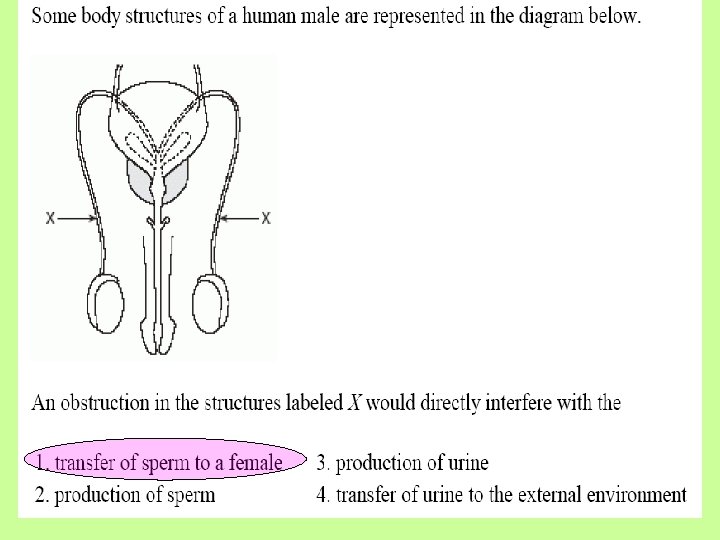
Vas deferens Scrotum Urethra Penis Structure Testes (male gonads) Scrotum Vas deferens Urethra Penis Function • Produce sperm & testosterone (hormone) • Holds testes outside of the body • Keeps temperature cooler for sperm production Carries sperm from testes to urethra Passage for sperm (and urine) to exit the body Deposits sperm into female
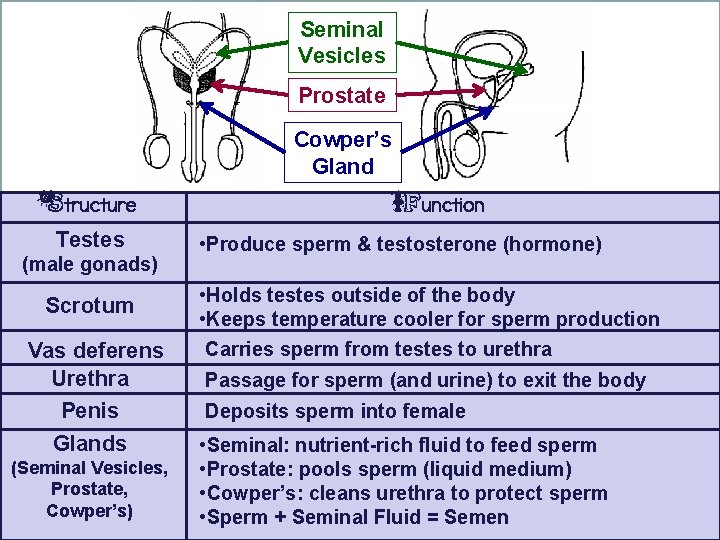
Seminal Vesicles Prostate Cowper’s Gland Structure Testes (male gonads) Scrotum Vas deferens Urethra Penis Glands (Seminal Vesicles, Prostate, Cowper’s) Function • Produce sperm & testosterone (hormone) • Holds testes outside of the body • Keeps temperature cooler for sperm production Carries sperm from testes to urethra Passage for sperm (and urine) to exit the body Deposits sperm into female • Seminal: nutrient-rich fluid to feed sperm • Prostate: pools sperm (liquid medium) • Cowper’s: cleans urethra to protect sperm • Sperm + Seminal Fluid = Semen
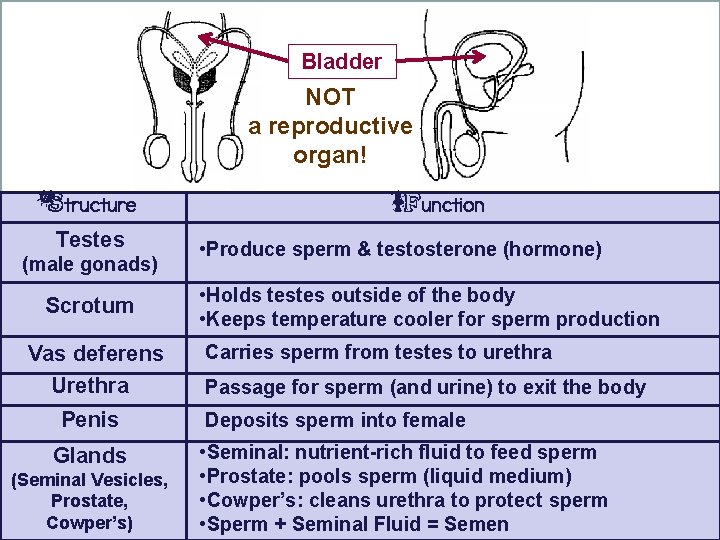
Bladder NOT a reproductive organ! Structure Testes (male gonads) Scrotum Vas deferens Urethra Penis Glands (Seminal Vesicles, Prostate, Cowper’s) Function • Produce sperm & testosterone (hormone) • Holds testes outside of the body • Keeps temperature cooler for sperm production Carries sperm from testes to urethra Passage for sperm (and urine) to exit the body Deposits sperm into female • Seminal: nutrient-rich fluid to feed sperm • Prostate: pools sperm (liquid medium) • Cowper’s: cleans urethra to protect sperm • Sperm + Seminal Fluid = Semen
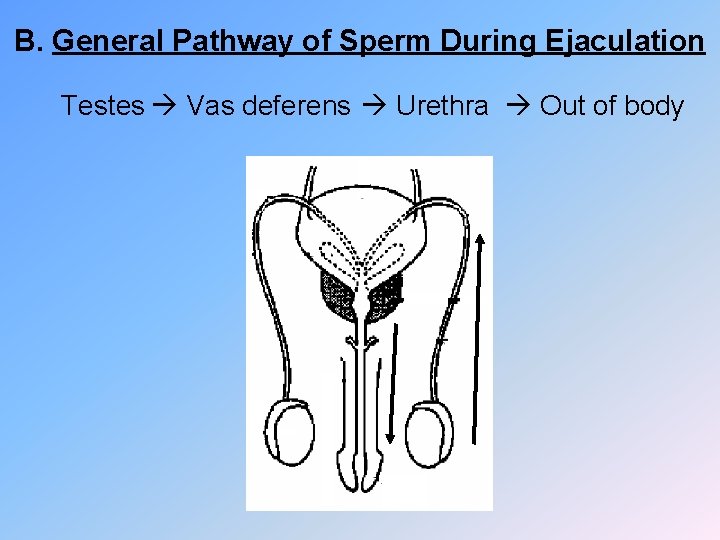
B. General Pathway of Sperm During Ejaculation Testes Vas deferens Urethra Out of body
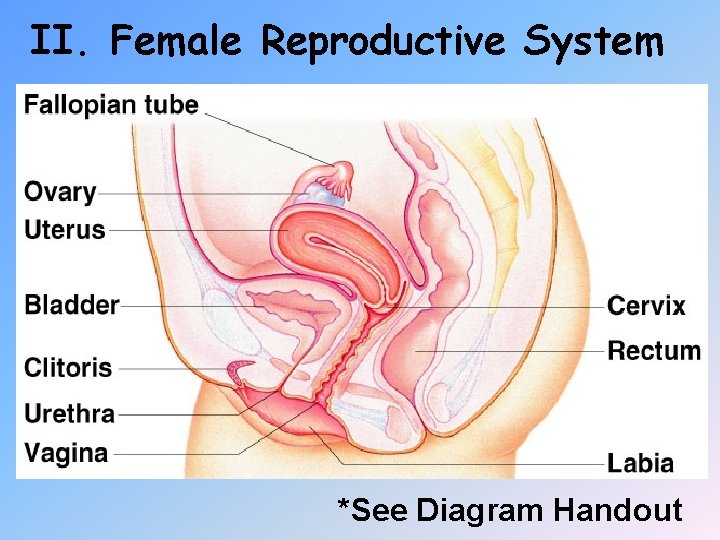
II. Female Reproductive System *See Diagram Handout
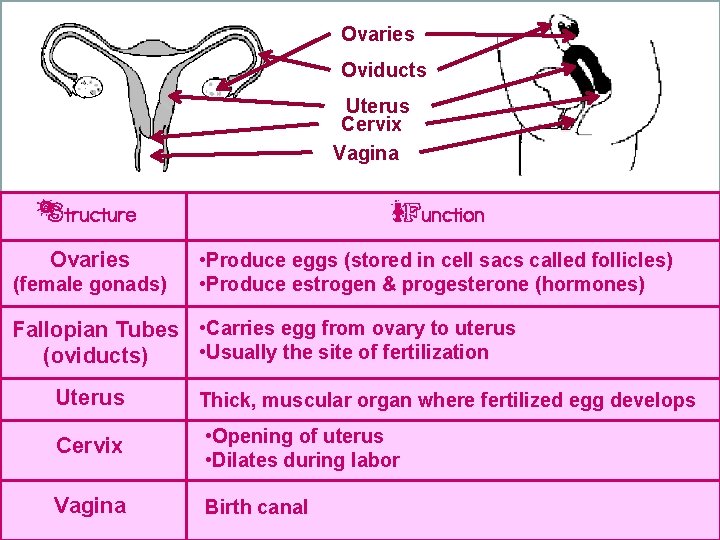
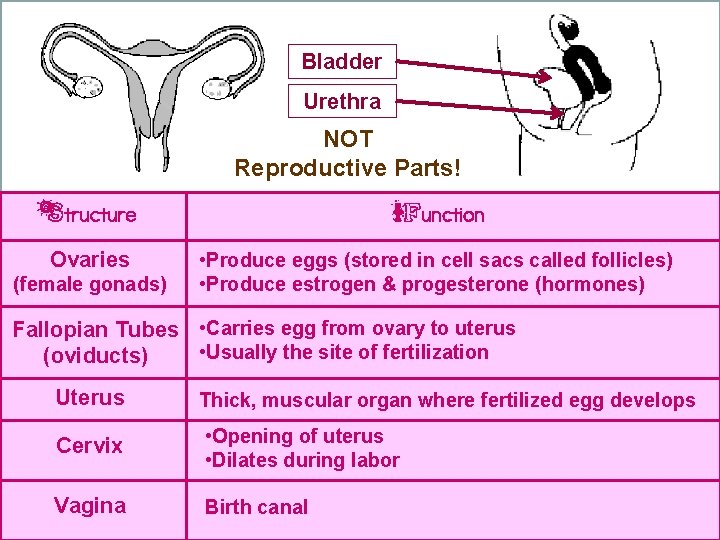
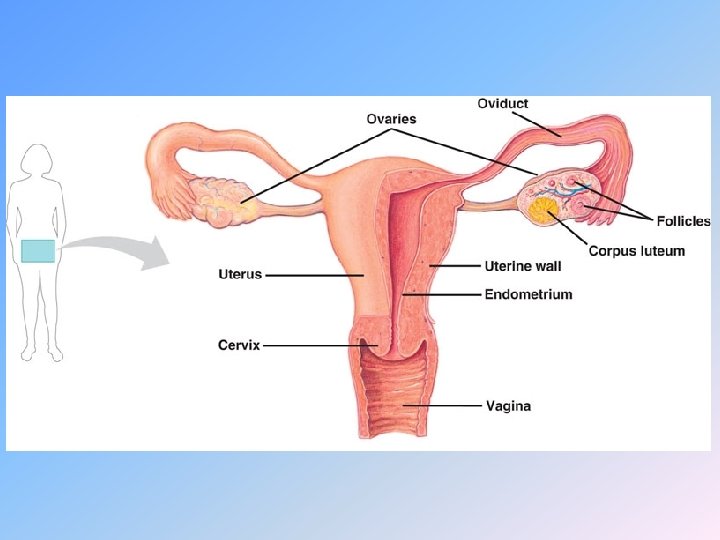
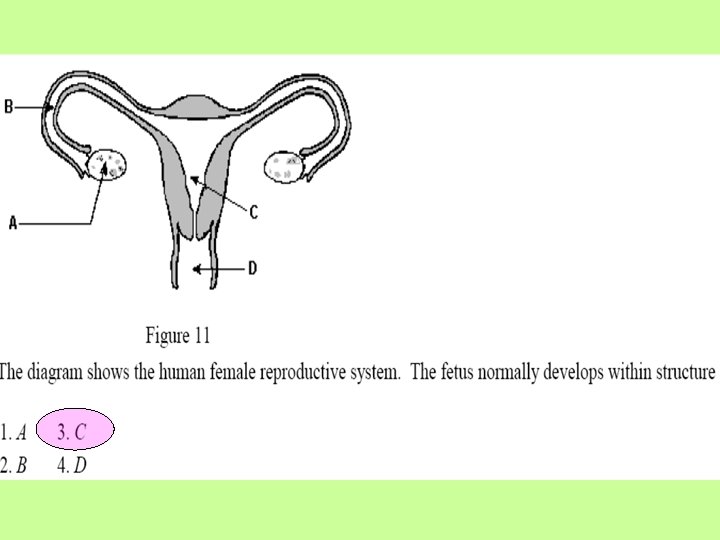
Ovaries Oviducts Uterus Cervix Vagina Structure Function Ovaries • Produce eggs (stored in cell sacs called follicles) • Produce estrogen & progesterone (hormones) (female gonads) Fallopian Tubes • Carries egg from ovary to uterus • Usually the site of fertilization (oviducts) Uterus Thick, muscular organ where fertilized egg develops Cervix • Opening of uterus • Dilates during labor Vagina Birth canal
Bladder Urethra NOT Reproductive Parts! Structure Function Ovaries • Produce eggs (stored in cell sacs called follicles) • Produce estrogen & progesterone (hormones) (female gonads) Fallopian Tubes • Carries egg from ovary to uterus • Usually the site of fertilization (oviducts) Uterus Thick, muscular organ where fertilized egg develops Cervix • Opening of uterus • Dilates during labor Vagina Birth canal
Brief Review
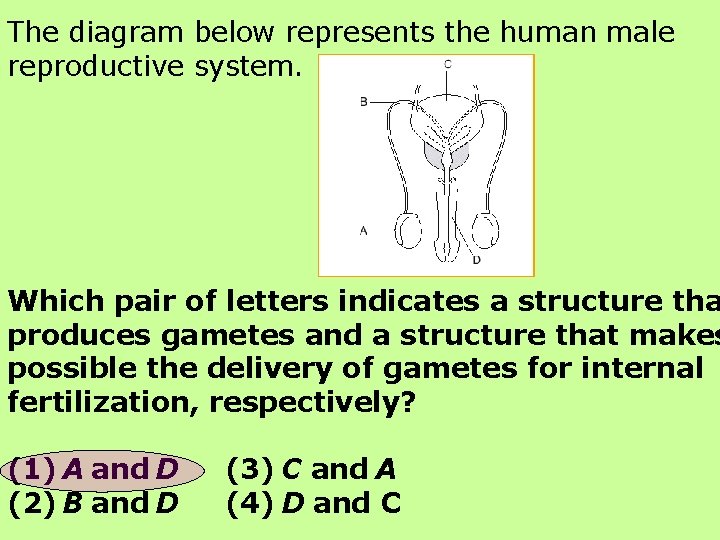
The diagram below represents the human male reproductive system. Which pair of letters indicates a structure tha produces gametes and a structure that makes possible the delivery of gametes for internal fertilization, respectively? (1) A and D (2) B and D (3) C and A (4) D and C
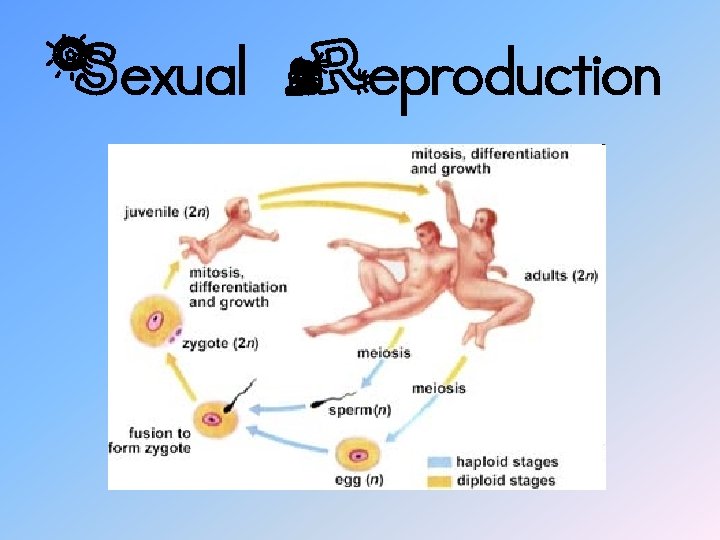
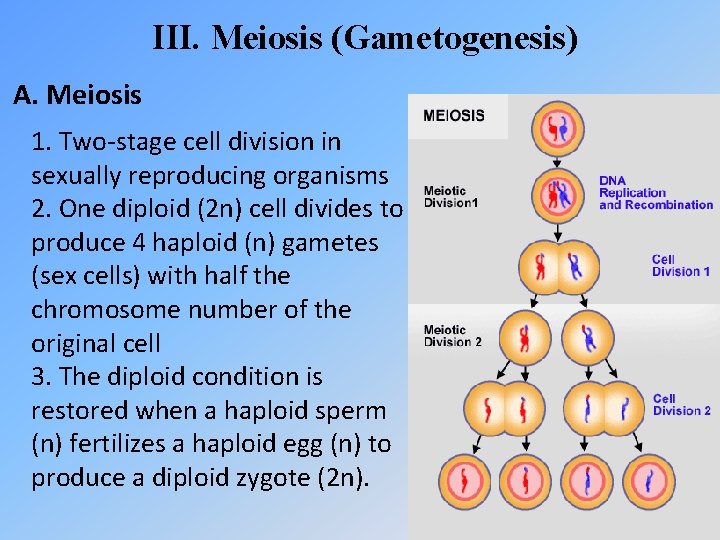
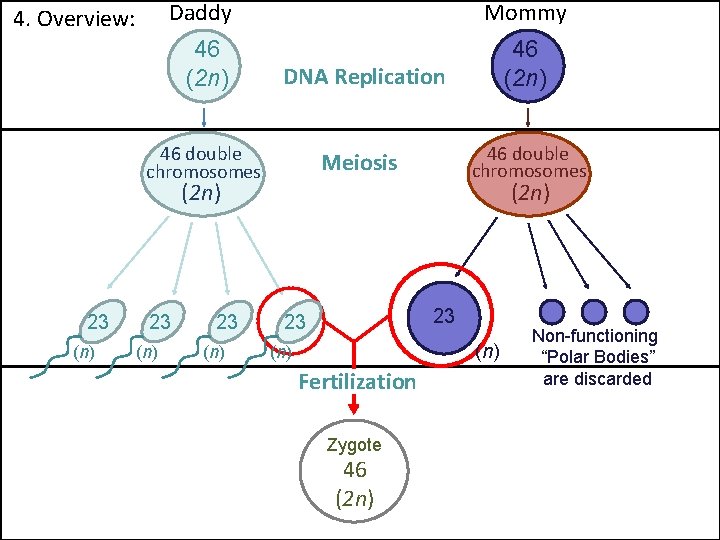
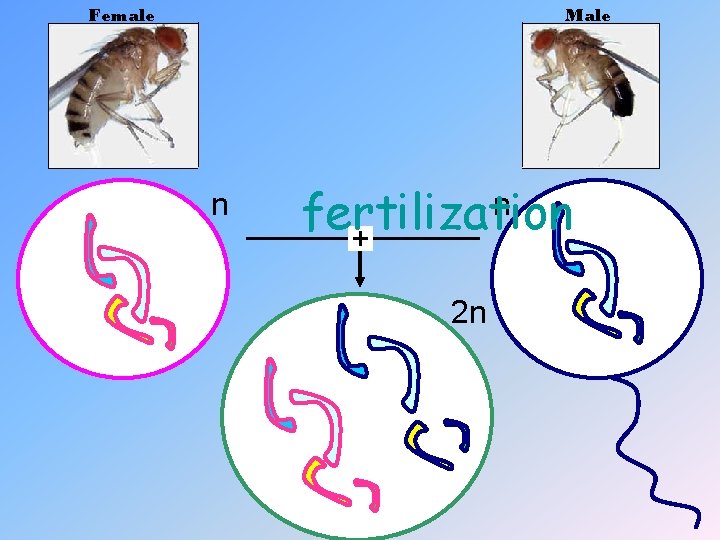
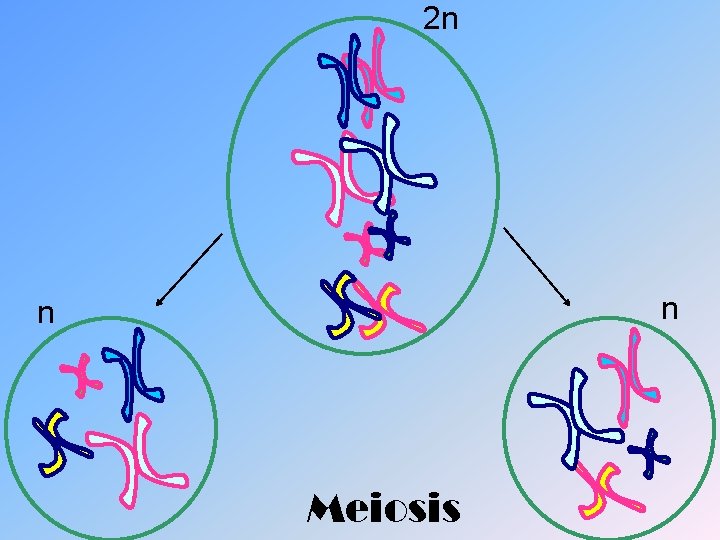
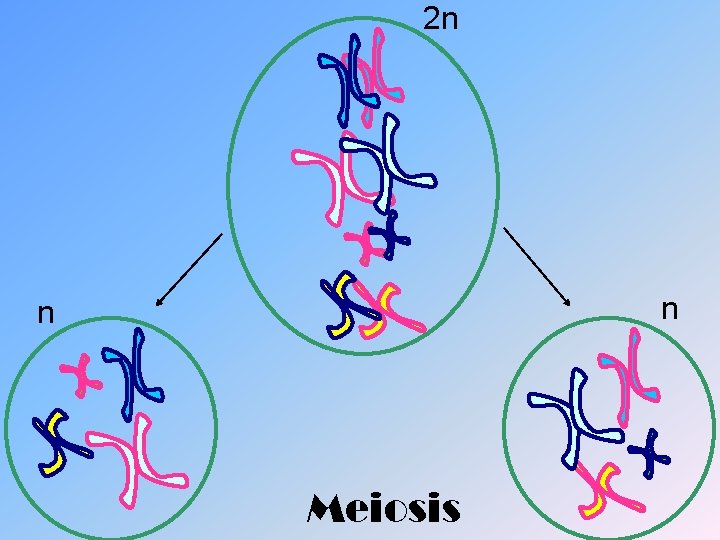
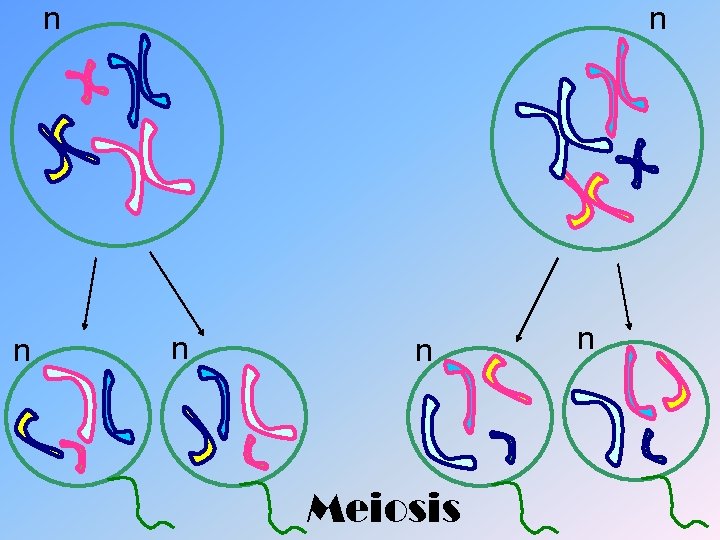
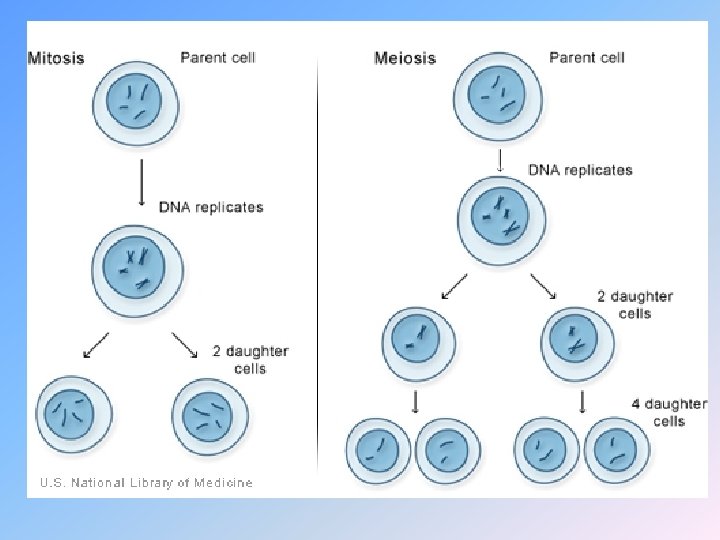
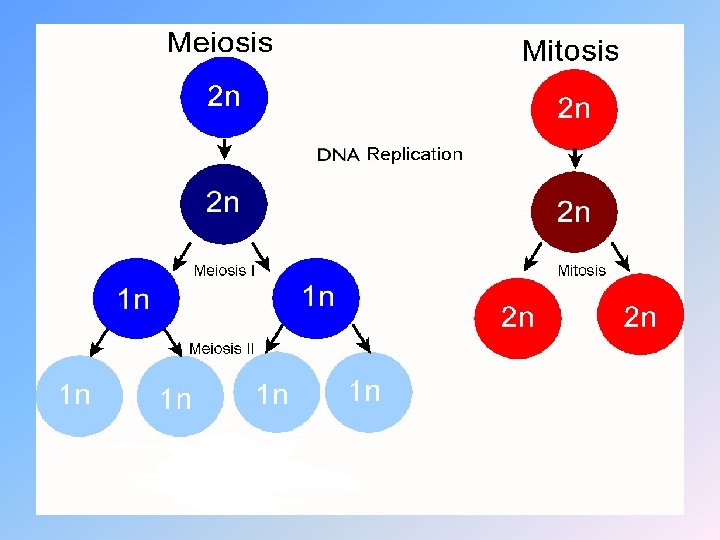
III. Meiosis (Gametogenesis) A. Meiosis 1. Two-stage cell division in sexually reproducing organisms 2. One diploid (2 n) cell divides to produce 4 haploid (n) gametes (sex cells) with half the chromosome number of the original cell 3. The diploid condition is restored when a haploid sperm (n) fertilizes a haploid egg (n) to produce a diploid zygote (2 n).
Daddy Mommy 46 (2 n) DNA Replication 46 (2 n) 46 double chromosomes Meiosis 46 double chromosomes 4. Overview: (2 n) 23 (n) (2 n) 23 23 (n) Fertilization Zygote 46 (2 n) Non-functioning “Polar Bodies” are discarded
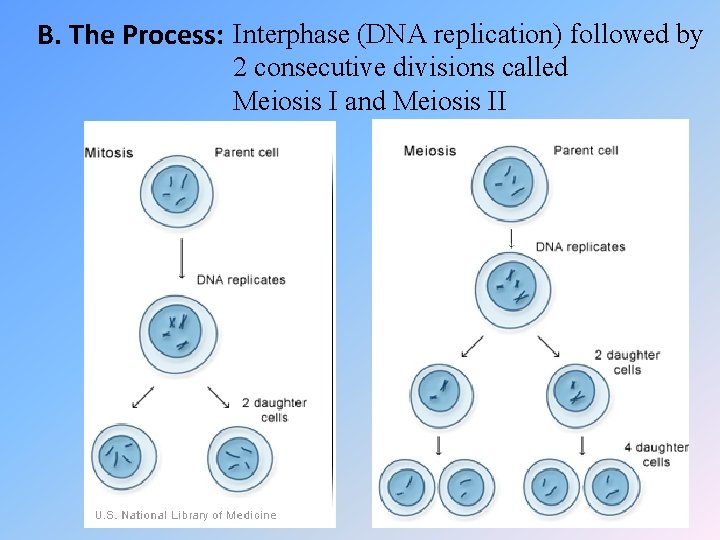
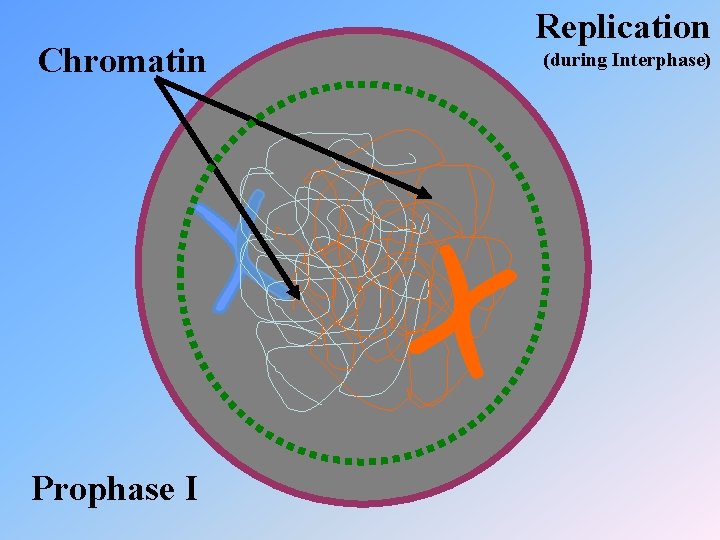
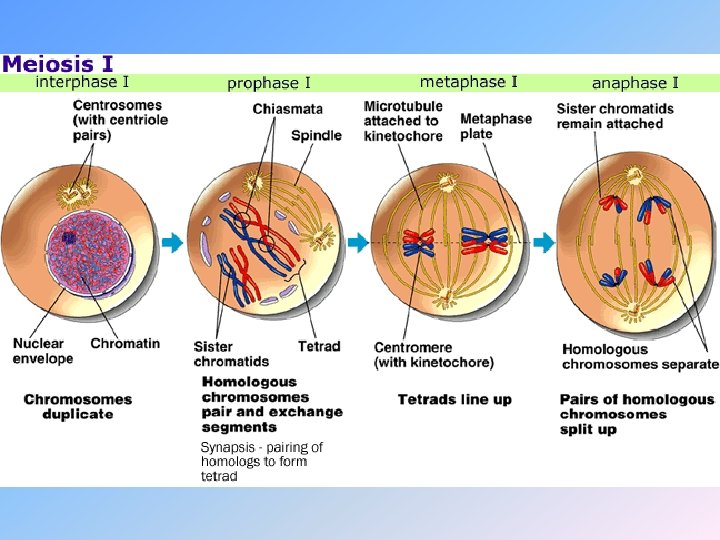
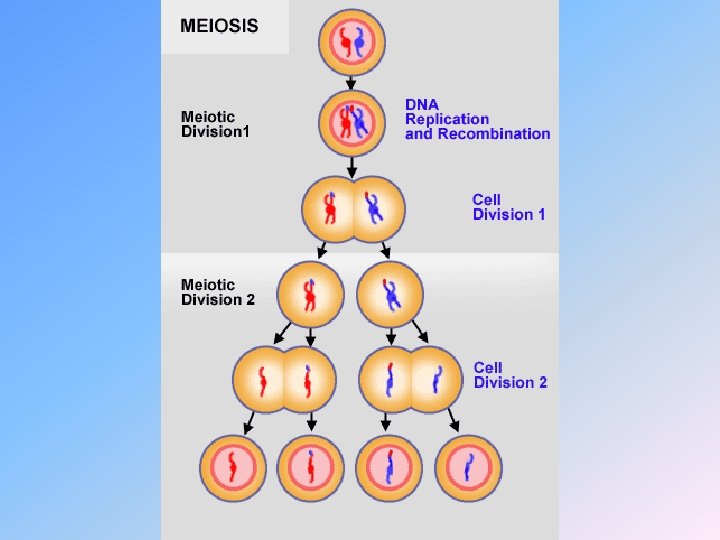
B. The Process: Interphase (DNA replication) followed by 2 consecutive divisions called Meiosis I and Meiosis II
Chromatin Prophase I Replication (during Interphase)
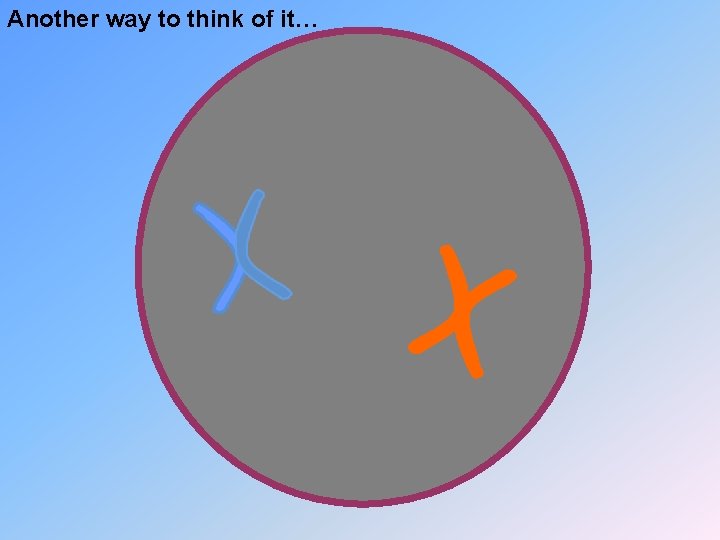
Another way to think of it…
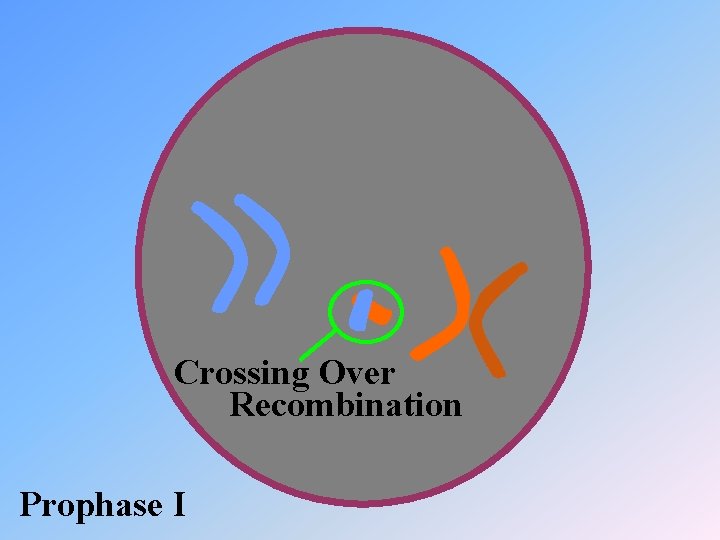
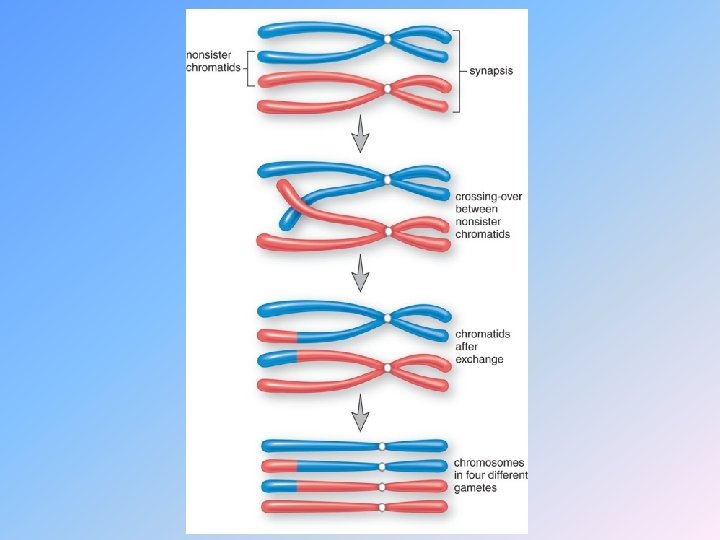
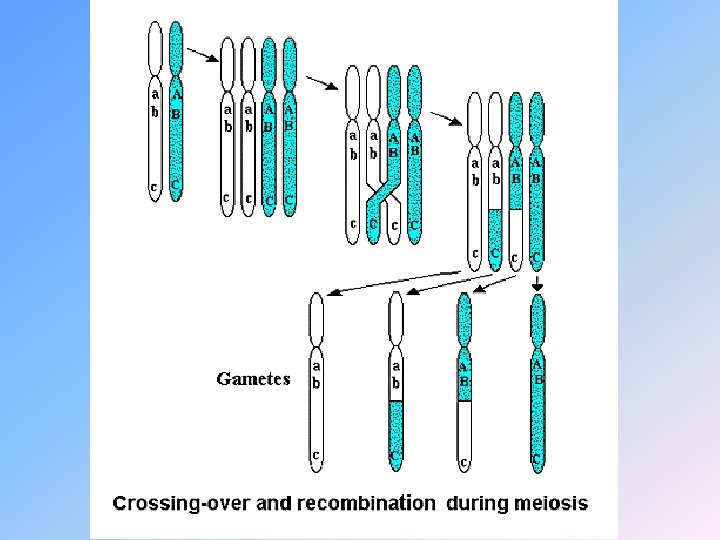
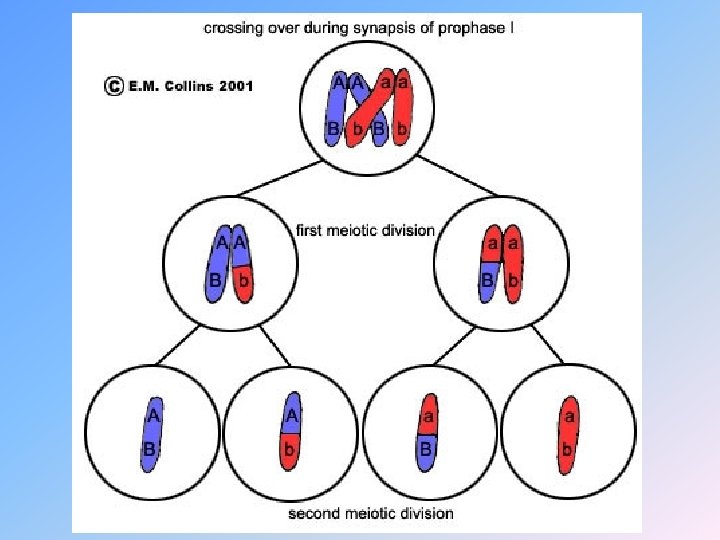
Crossing Over Recombination Prophase I
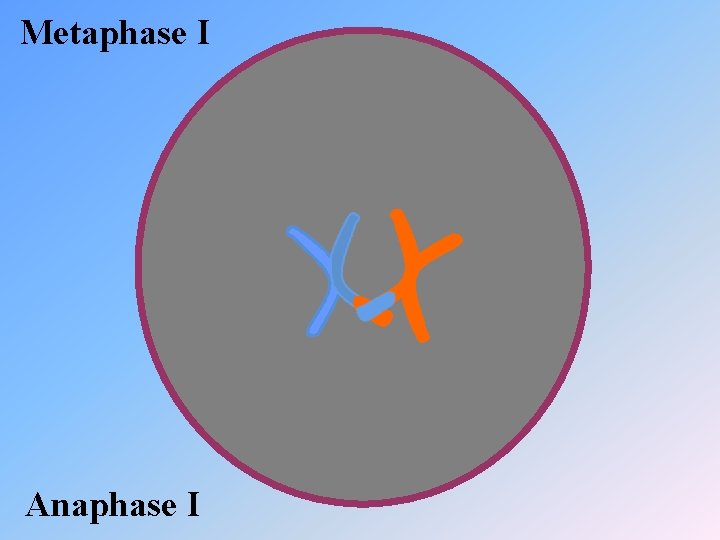
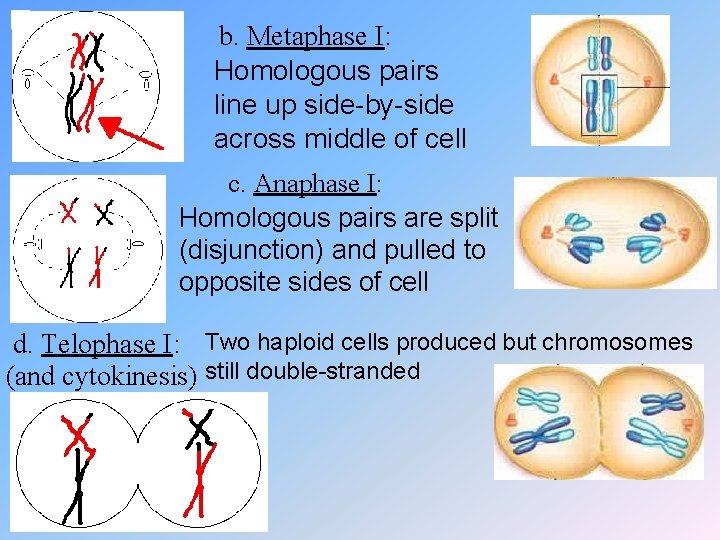
Metaphase I Anaphase I
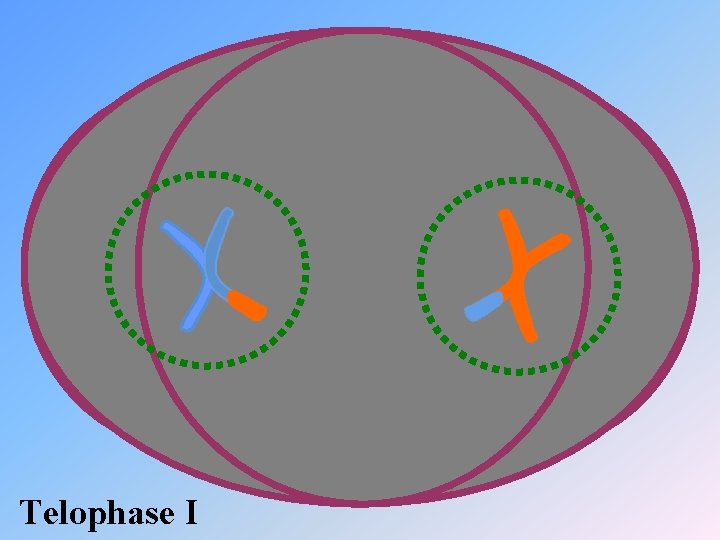
Telophase I
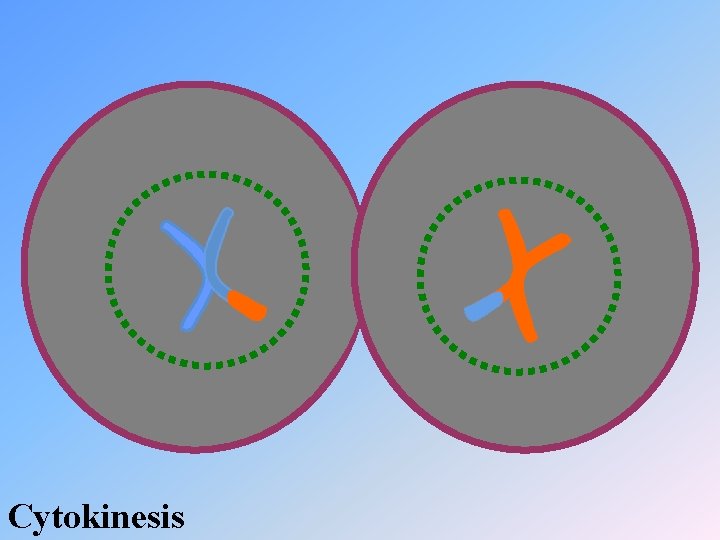
Cytokinesis
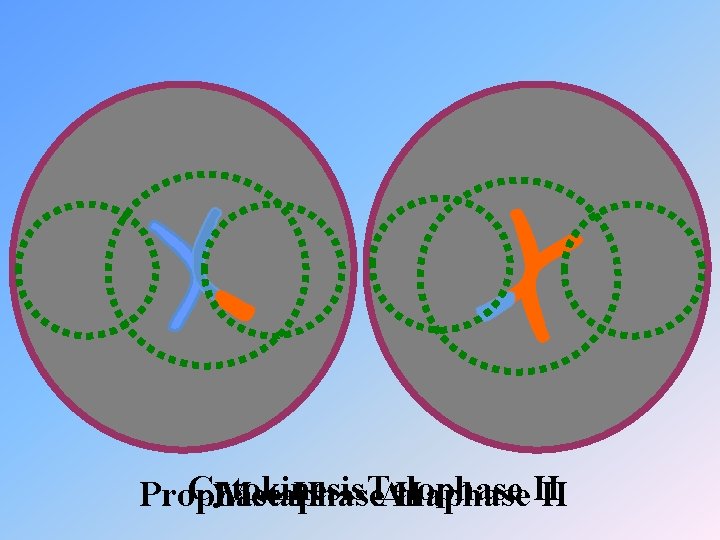
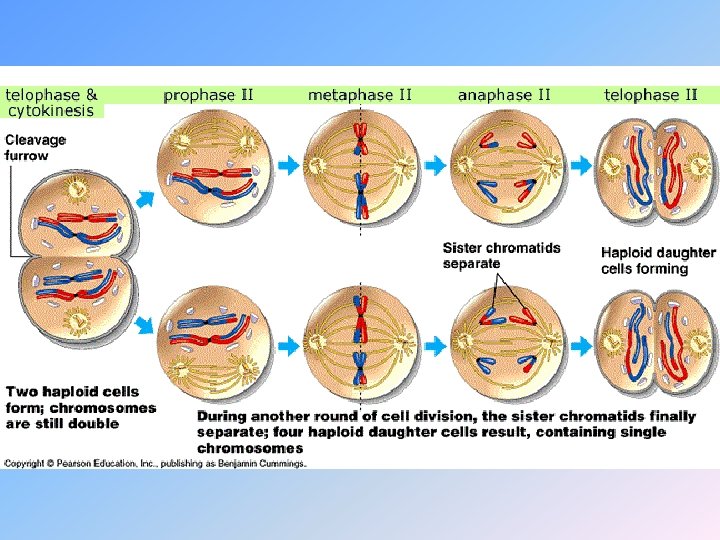
Cytokinesis II Prophase Metaphase II Telophase Anaphase II II
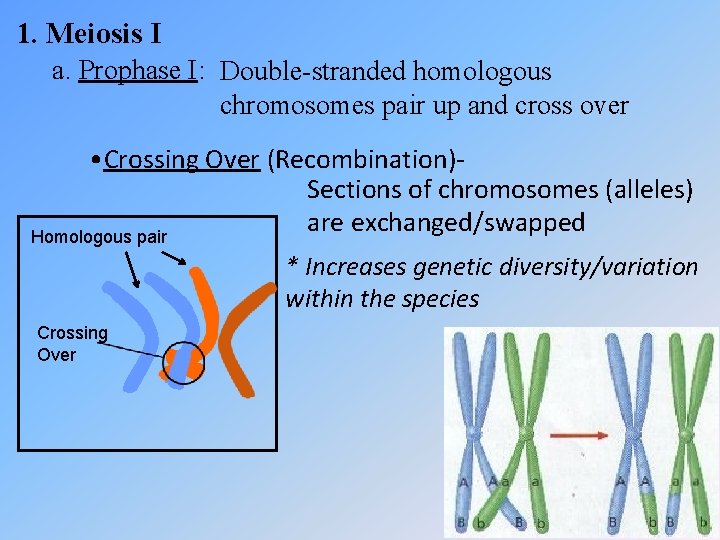
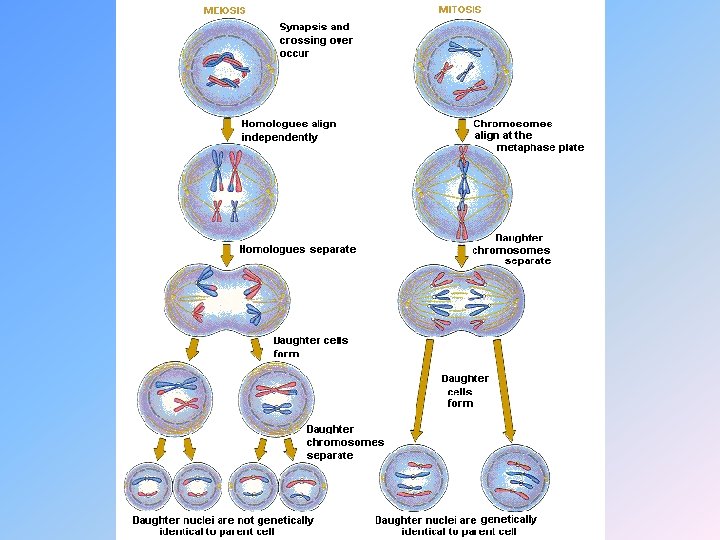
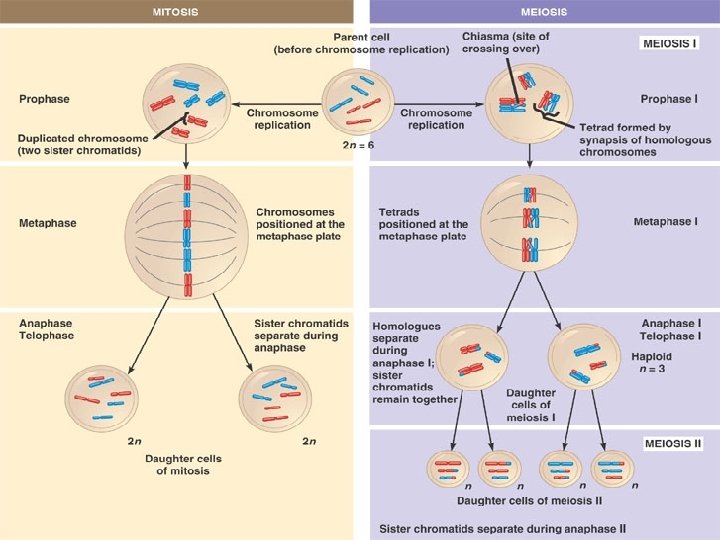
1. Meiosis I a. Prophase I: Double-stranded homologous chromosomes pair up and cross over • Crossing Over (Recombination)Sections of chromosomes (alleles) are exchanged/swapped Homologous pair * Increases genetic diversity/variation within the species Crossing Over
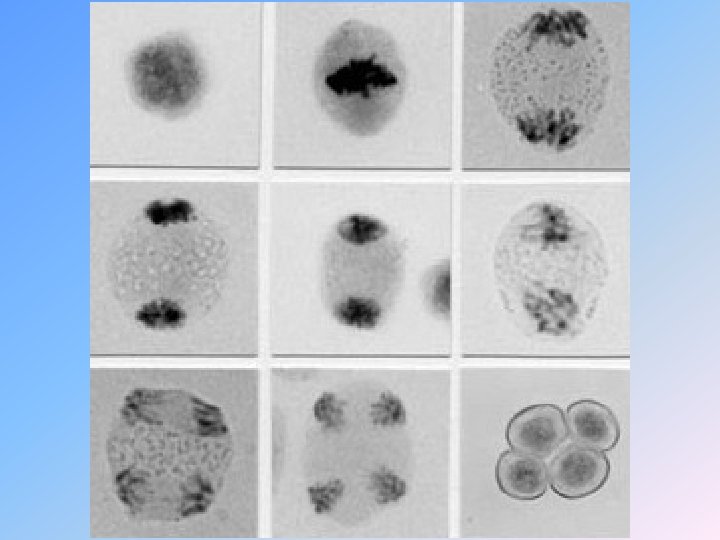
b. Metaphase I: Homologous pairs line up side-by-side across middle of cell c. Anaphase I: Homologous pairs are split (disjunction) and pulled to opposite sides of cell d. Telophase I: Two haploid cells produced but chromosomes (and cytokinesis) still double-stranded
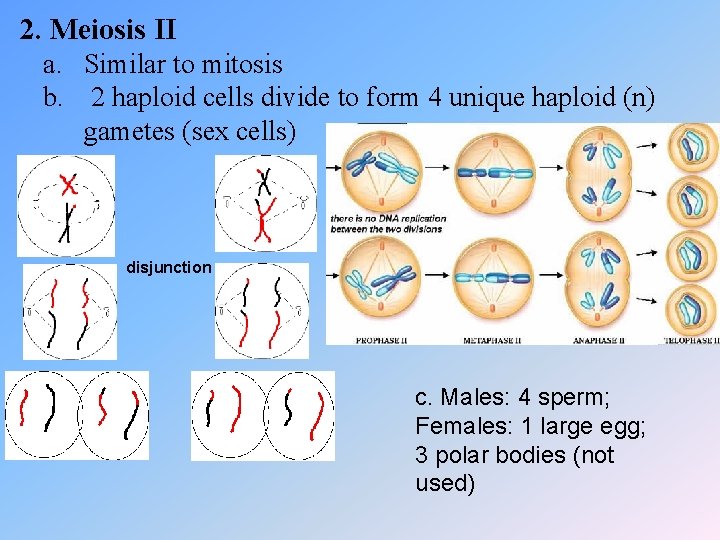
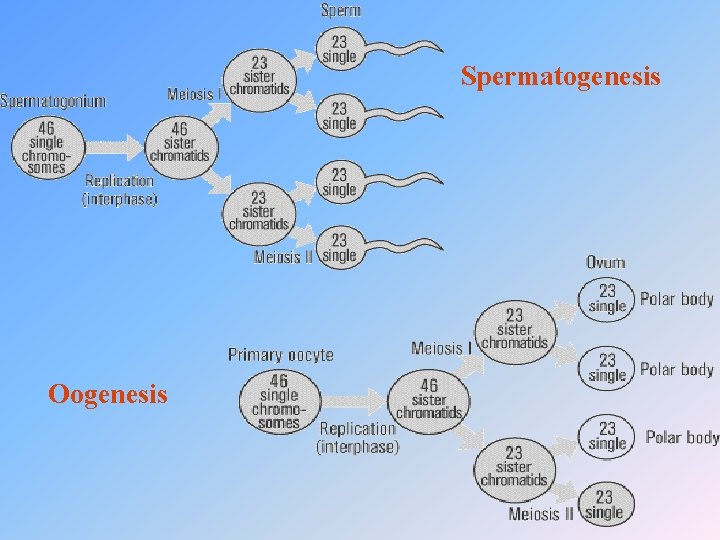
2. Meiosis II a. Similar to mitosis b. 2 haploid cells divide to form 4 unique haploid (n) gametes (sex cells) disjunction c. Males: 4 sperm; Females: 1 large egg; 3 polar bodies (not used)
Male Female n n fertilization + 2 n
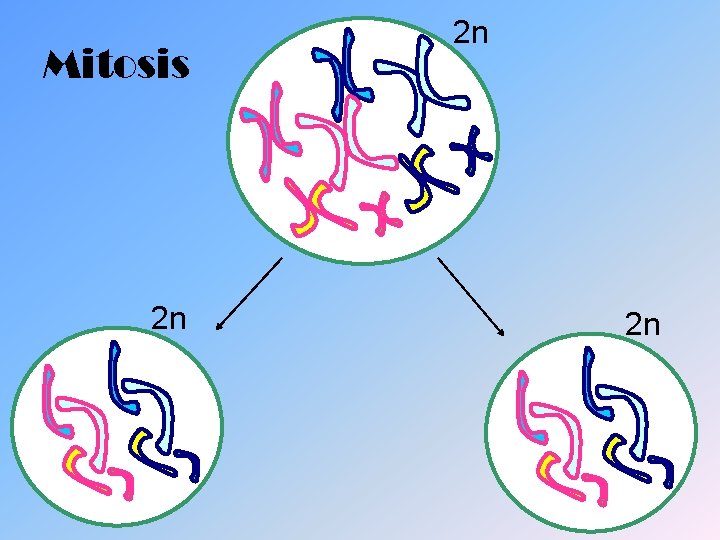
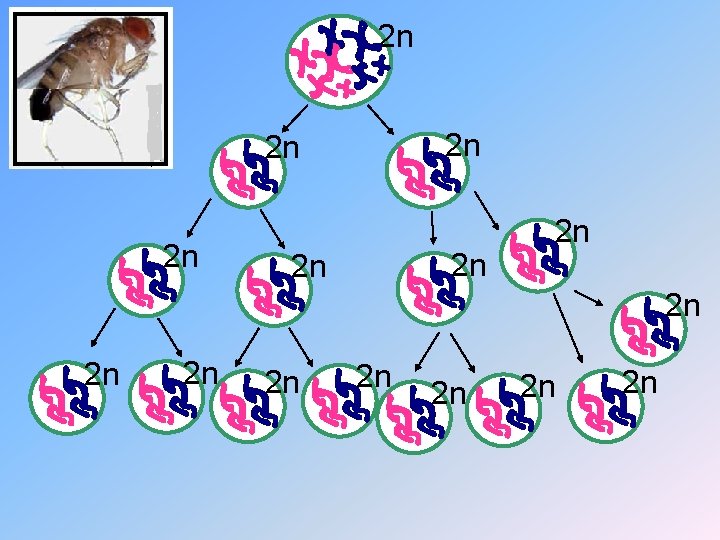
Mitosis 2 n 2 n 2 n
2 n 2 n 2 n 2 n
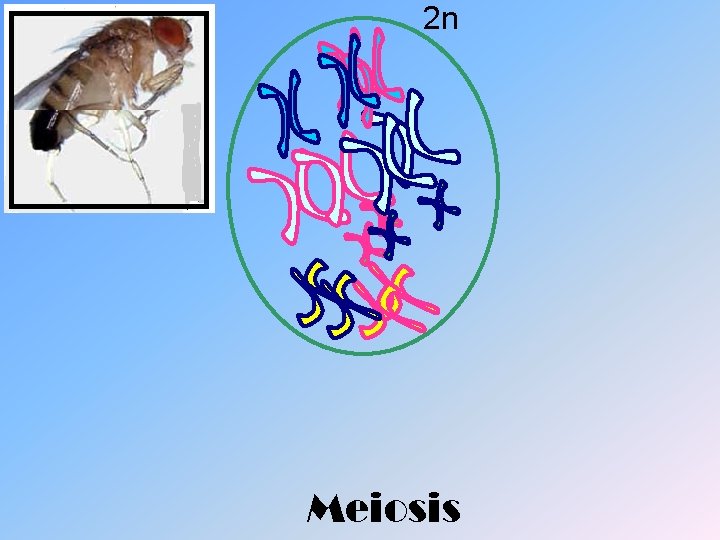
2 n Meiosis
2 n n n Meiosis
2 n n n Meiosis
n n n Meiosis n
Spermatogenesis Oogenesis
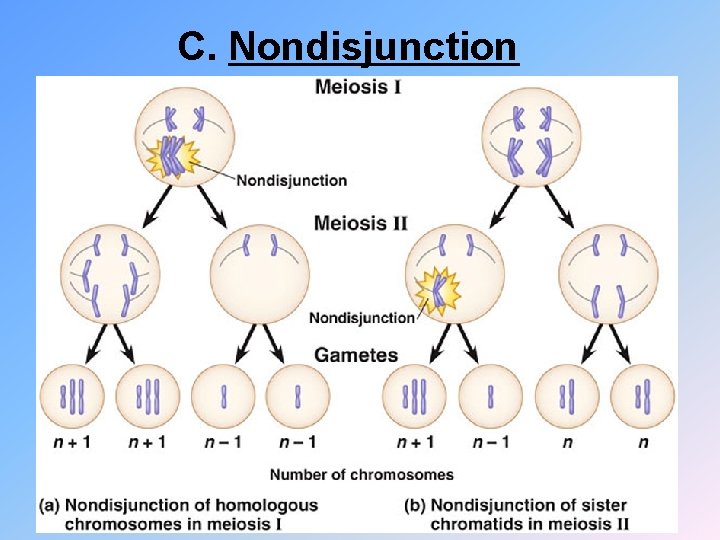
C. Nondisjunction
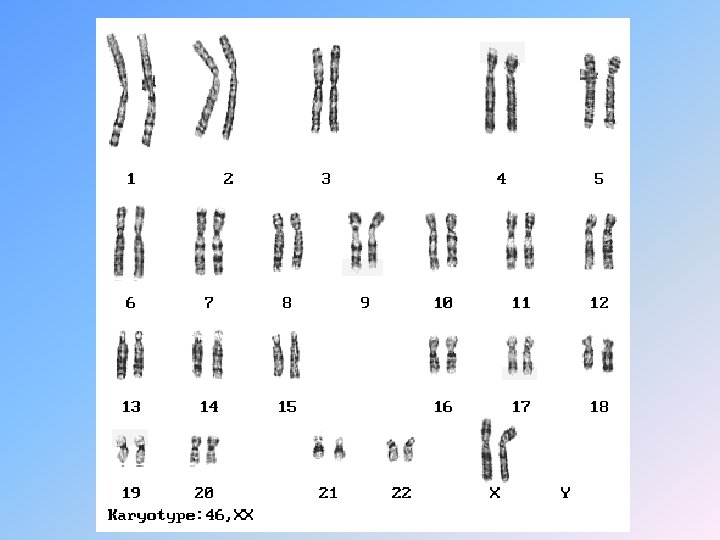
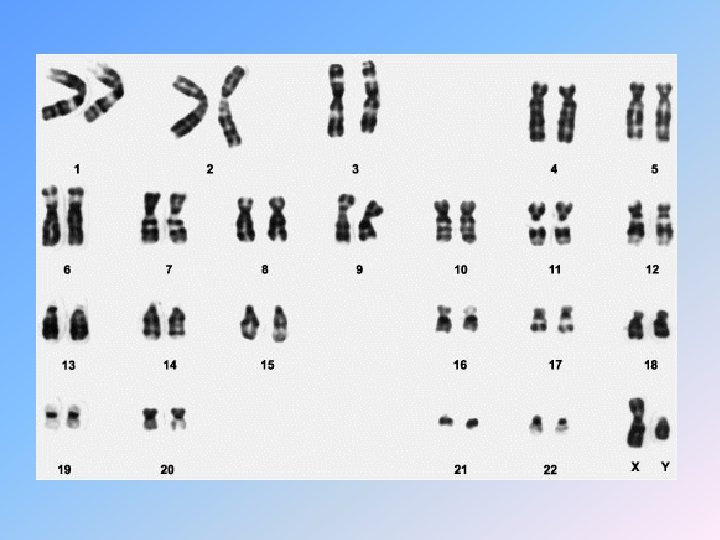
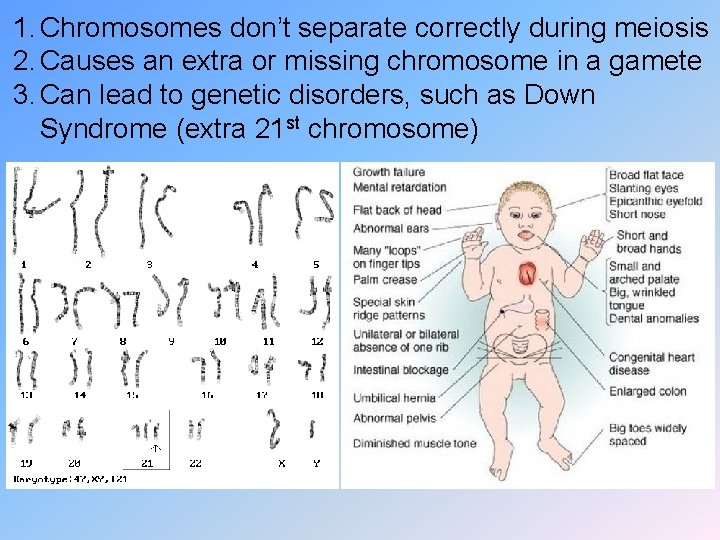
1. Chromosomes don’t separate correctly during meiosis 2. Causes an extra or missing chromosome in a gamete 3. Can lead to genetic disorders, such as Down Syndrome (extra 21 st chromosome)