
Sexual reproduction Fusion of two gametes to produce
- Slides: 15
Sexual reproduction • Fusion of two gametes to produce a single zygote. • Introduces greater genetic variation, allows genetic recombination. • With exception of self-fertilizing organisms (e. g. some plants), zygote has gametes from two different parents. Meiosis KM 1
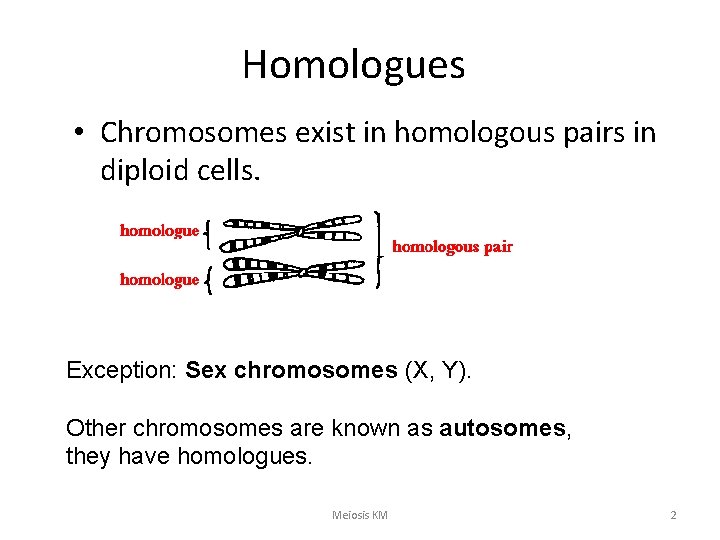
Homologues • Chromosomes exist in homologous pairs in diploid cells. Exception: Sex chromosomes (X, Y). Other chromosomes are known as autosomes, they have homologues. Meiosis KM 2
In humans … • 23 chromosomes donated by each parent (total = 46 or 23 pairs). • Gametes (sperm/ova): – Contain 22 autosomes and 1 sex chromosome. – Are haploid (haploid number “n” = 23 in humans). • Fertilization/syngamy results in zygote with 2 haploid sets of chromosomes - now diploid. – Diploid cell; 2 n = 46. (n=23 in humans) • Most cells in the body produced by mitosis. • Only gametes are produced by meiosis. Meiosis KM 3
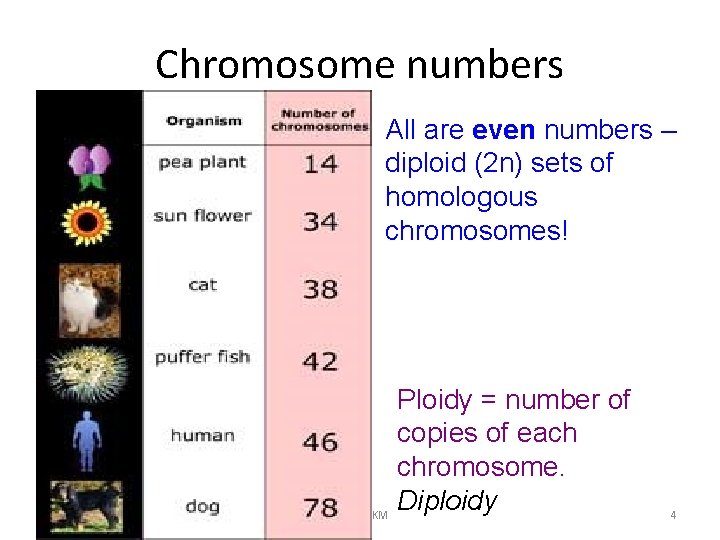
Chromosome numbers All are even numbers – diploid (2 n) sets of homologous chromosomes! Meiosis KM Ploidy = number of copies of each chromosome. Diploidy 4
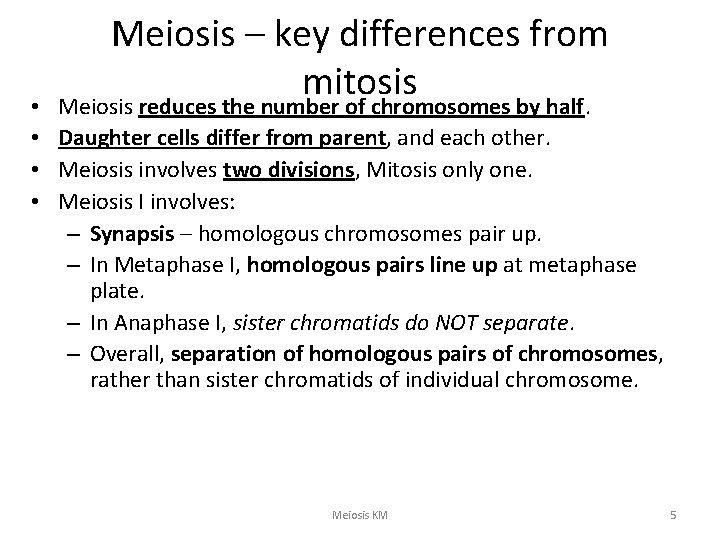
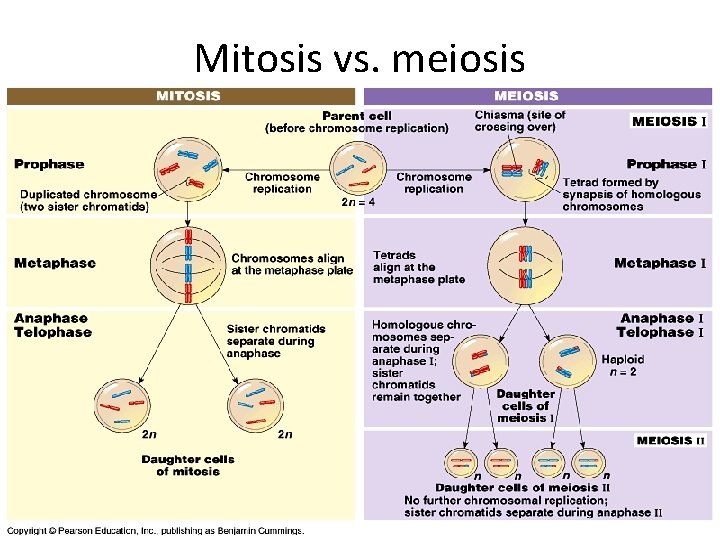
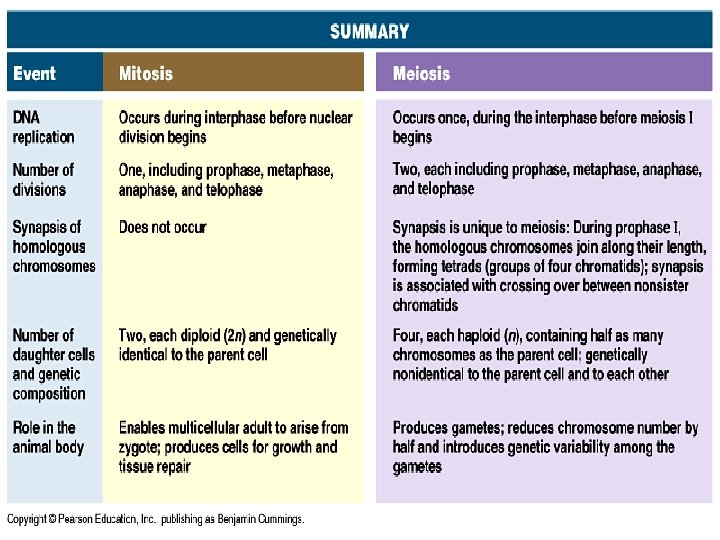
Meiosis – key differences from mitosis Meiosis reduces the number of chromosomes by half. • • Daughter cells differ from parent, and each other. • Meiosis involves two divisions, Mitosis only one. • Meiosis I involves: – Synapsis – homologous chromosomes pair up. – In Metaphase I, homologous pairs line up at metaphase plate. – In Anaphase I, sister chromatids do NOT separate. – Overall, separation of homologous pairs of chromosomes, rather than sister chromatids of individual chromosome. Meiosis KM 5
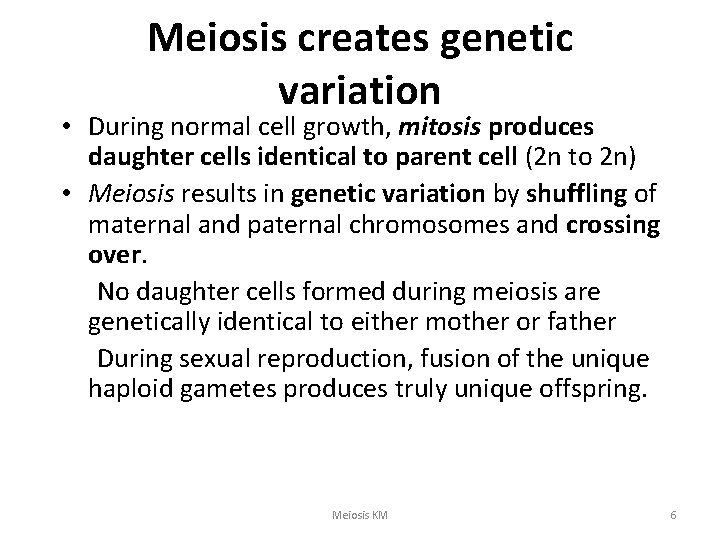
Meiosis creates genetic variation • During normal cell growth, mitosis produces daughter cells identical to parent cell (2 n to 2 n) • Meiosis results in genetic variation by shuffling of maternal and paternal chromosomes and crossing over. No daughter cells formed during meiosis are genetically identical to either mother or father During sexual reproduction, fusion of the unique haploid gametes produces truly unique offspring. Meiosis KM 6
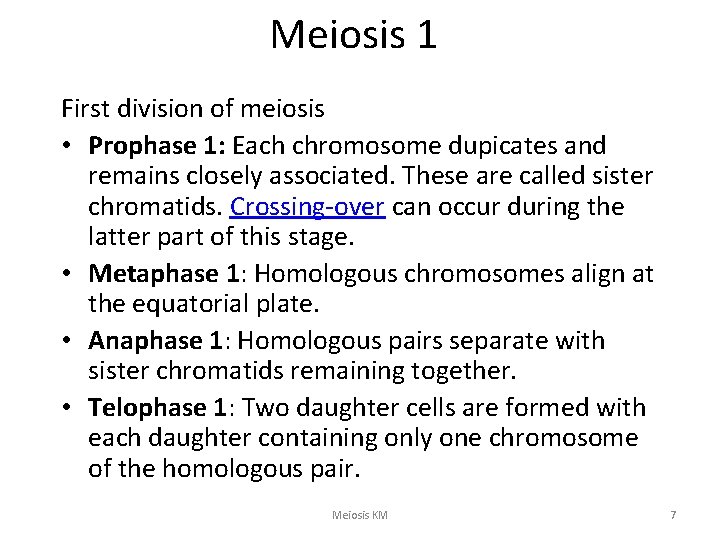
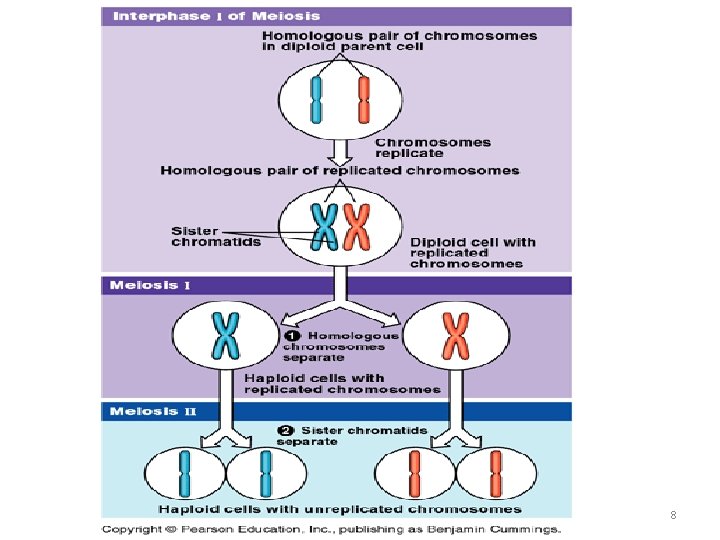
Meiosis 1 First division of meiosis • Prophase 1: Each chromosome dupicates and remains closely associated. These are called sister chromatids. Crossing-over can occur during the latter part of this stage. • Metaphase 1: Homologous chromosomes align at the equatorial plate. • Anaphase 1: Homologous pairs separate with sister chromatids remaining together. • Telophase 1: Two daughter cells are formed with each daughter containing only one chromosome of the homologous pair. Meiosis KM 7
Meiosis KM 8
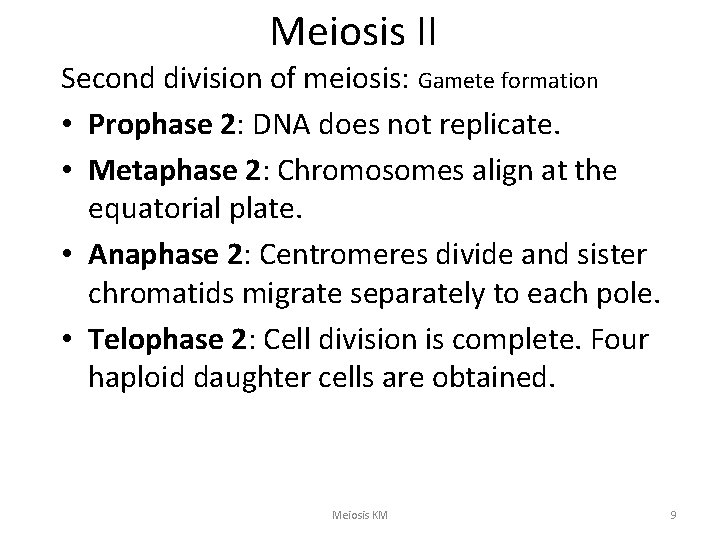
Meiosis II Second division of meiosis: Gamete formation • Prophase 2: DNA does not replicate. • Metaphase 2: Chromosomes align at the equatorial plate. • Anaphase 2: Centromeres divide and sister chromatids migrate separately to each pole. • Telophase 2: Cell division is complete. Four haploid daughter cells are obtained. Meiosis KM 9
Mitosis vs. meiosis Meiosis KM 10
Meiosis KM 11
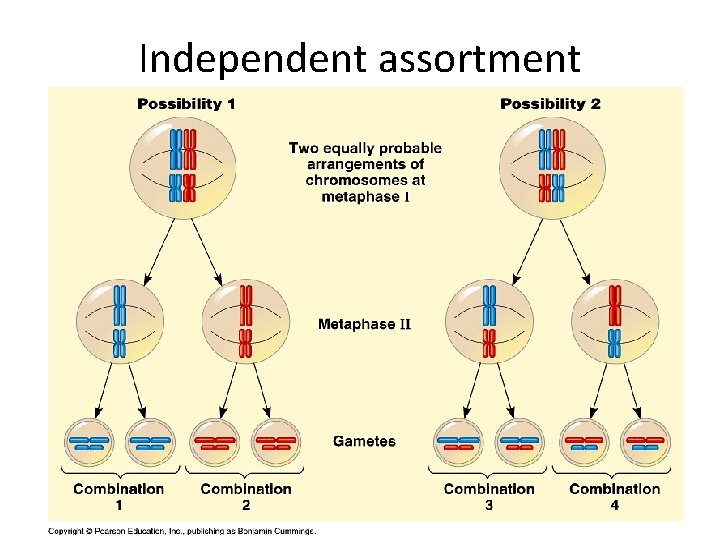
Independent assortment Meiosis KM 12
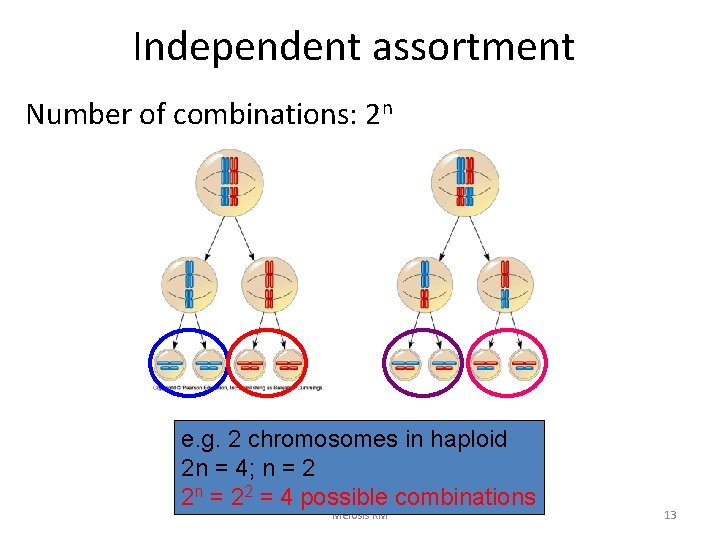
Independent assortment Number of combinations: 2 n e. g. 2 chromosomes in haploid 2 n = 4; n = 2 2 n = 22 = 4 possible combinations Meiosis KM 13
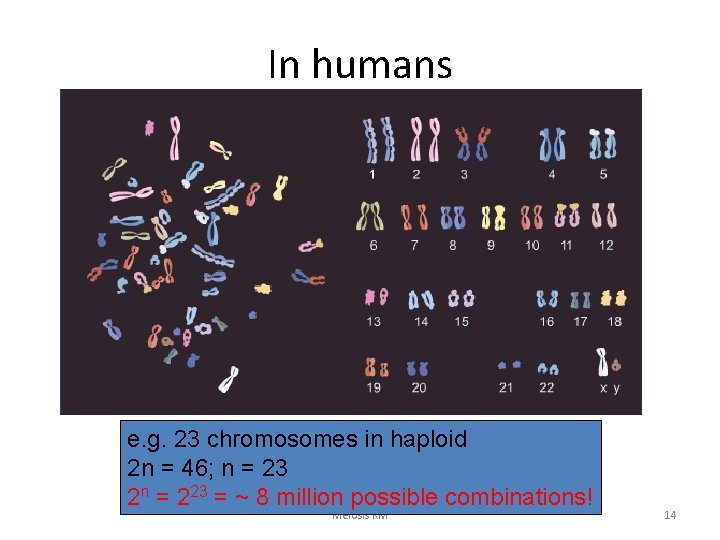
In humans e. g. 23 chromosomes in haploid 2 n = 46; n = 23 2 n = 223 = ~ 8 million possible combinations! Meiosis KM 14
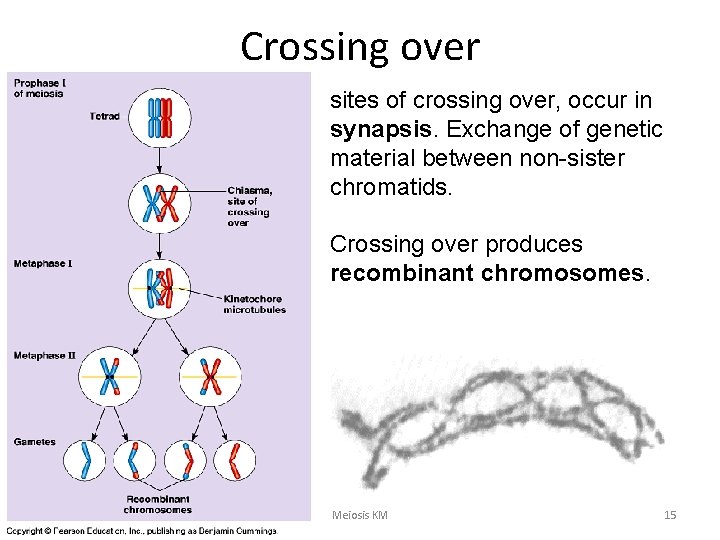
Crossing over sites of crossing over, occur in synapsis. Exchange of genetic material between non-sister chromatids. Crossing over produces recombinant chromosomes. Meiosis KM 15