
Sexual Reproduction and Meiosis Review of chromosome structure

- Slides: 38
Sexual Reproduction and Meiosis Review of chromosome structure and intro to meiosis
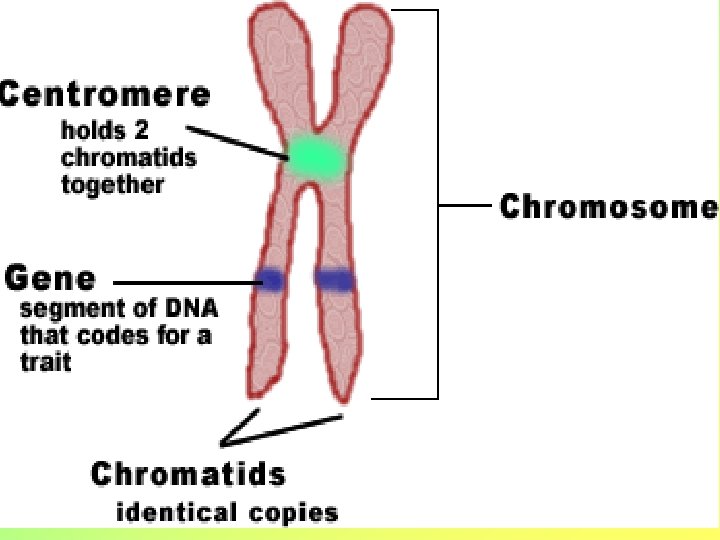
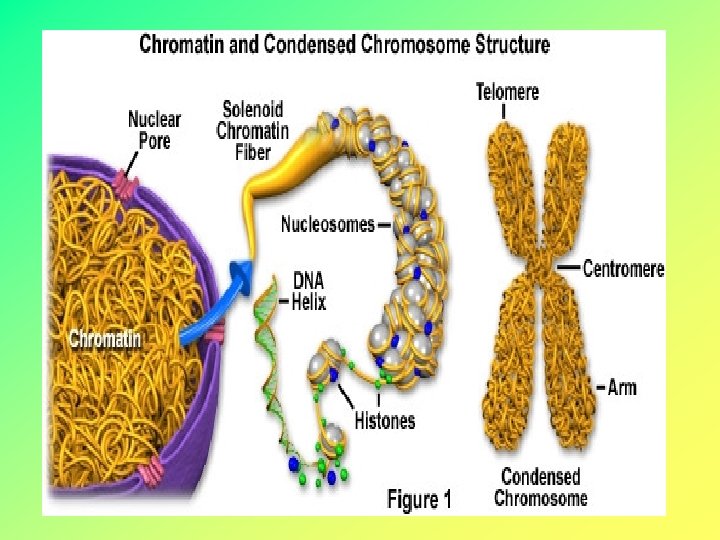
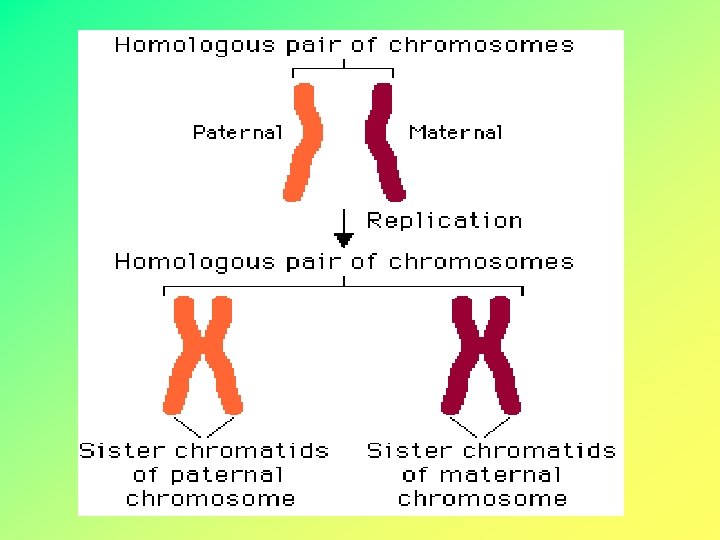
What is a chromosome? • Contains genetic information • Made of genes which are made of DNA • Chr. genes DNA (Large => Small) • Let’s look at the structure: chromatid, centromere, double stranded chromosome
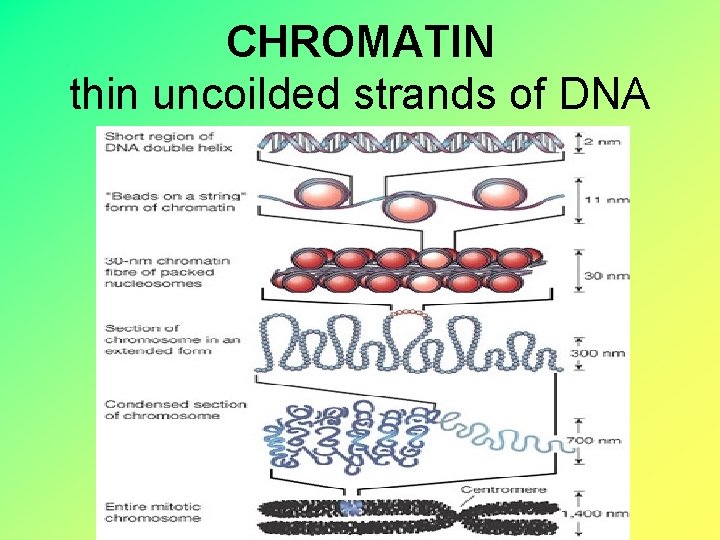
CHROMATIN thin uncoilded strands of DNA
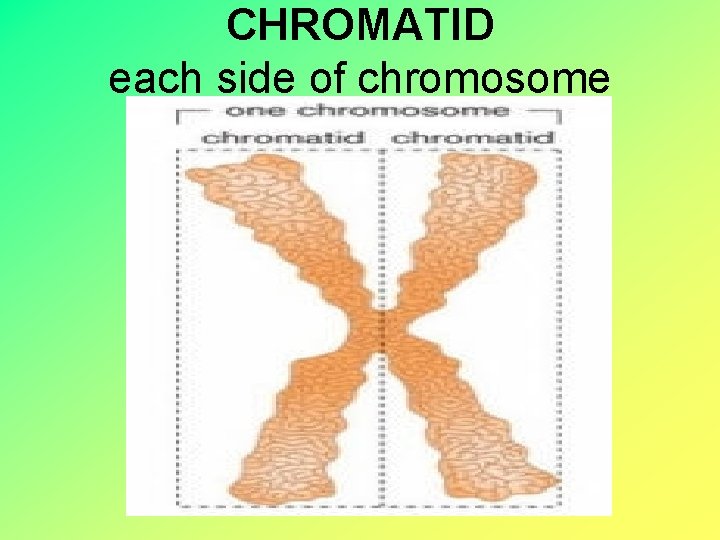
CHROMATID each side of chromosome
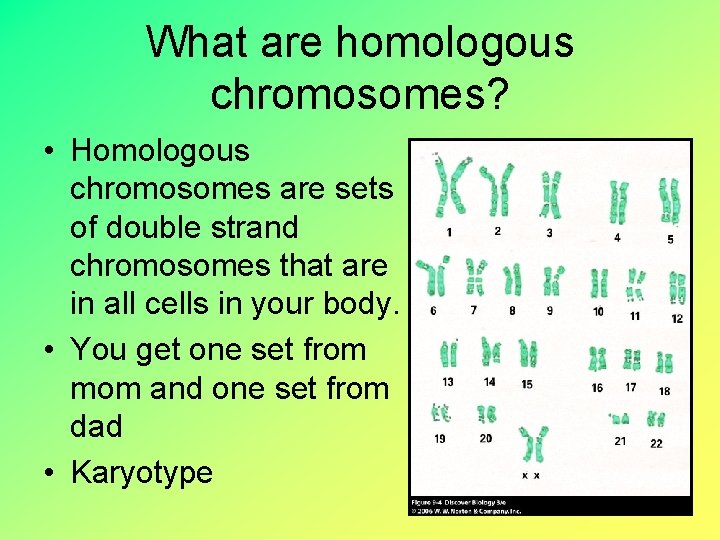
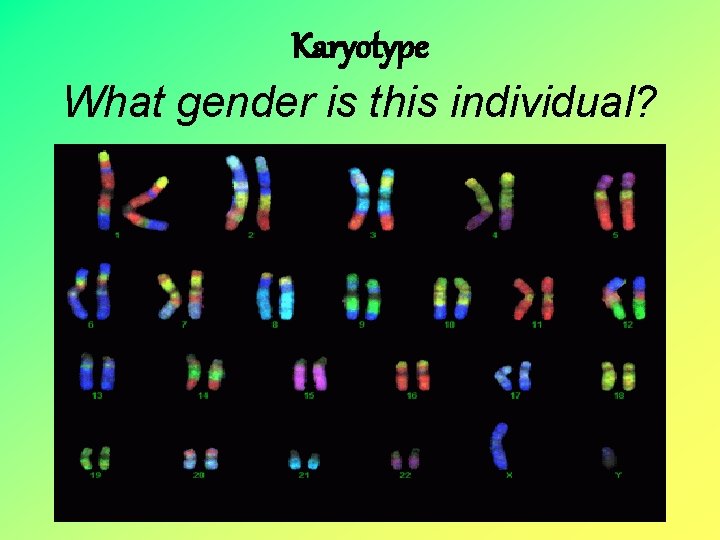
What are homologous chromosomes? • Homologous chromosomes are sets of double strand chromosomes that are in all cells in your body. • You get one set from mom and one set from dad • Karyotype
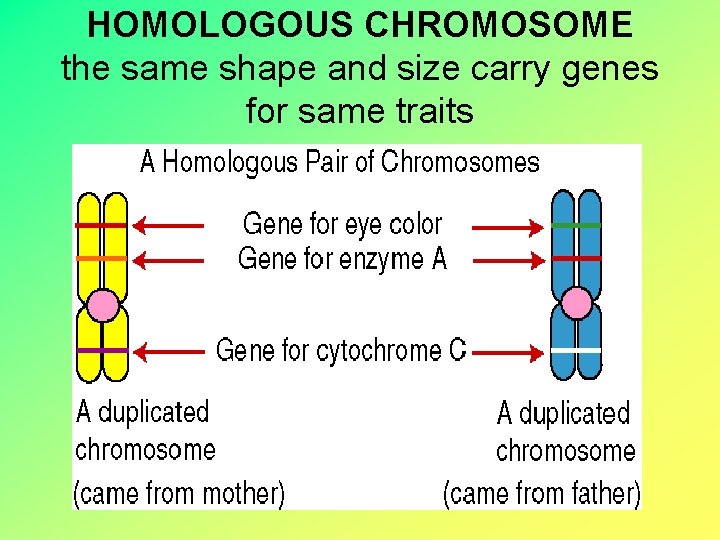
HOMOLOGOUS CHROMOSOME the same shape and size carry genes for same traits
Karyotype What gender is this individual?
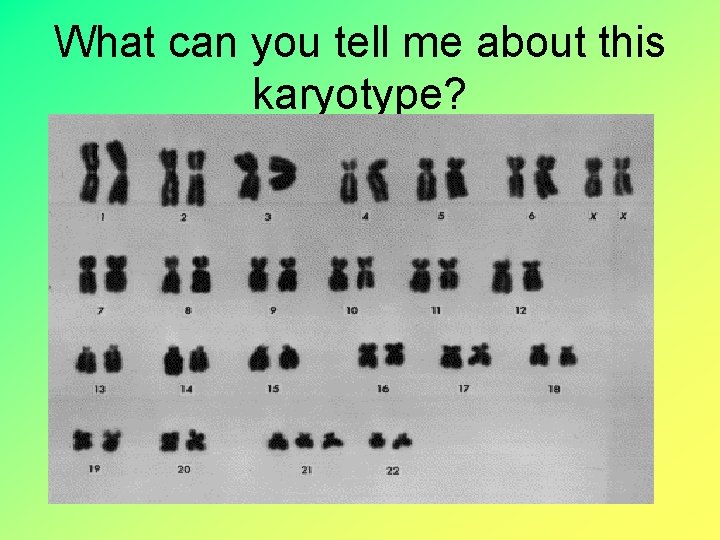
What can you tell me about this karyotype?
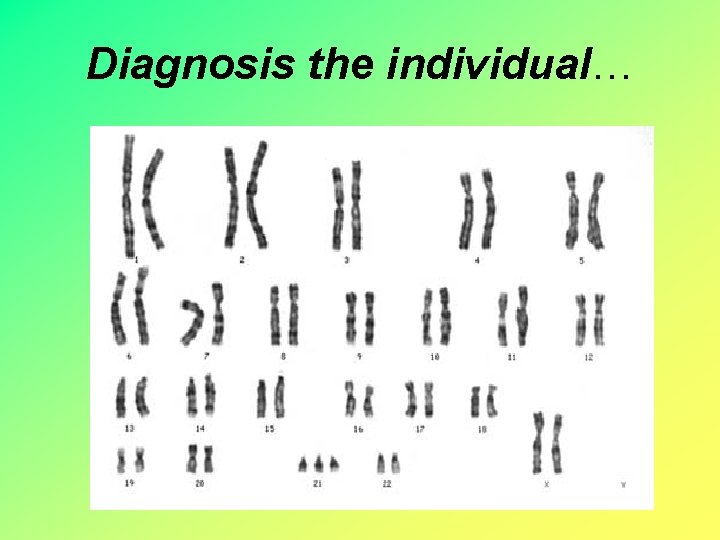
Diagnosis the individual…
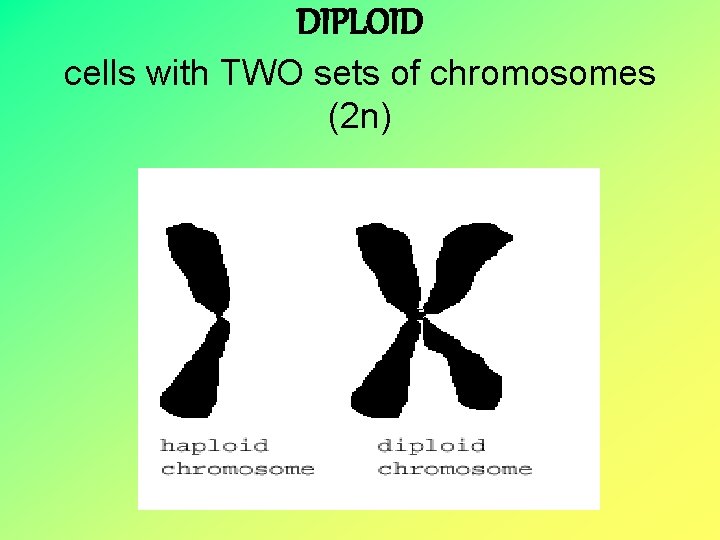
DIPLOID cells with TWO sets of chromosomes (2 n)
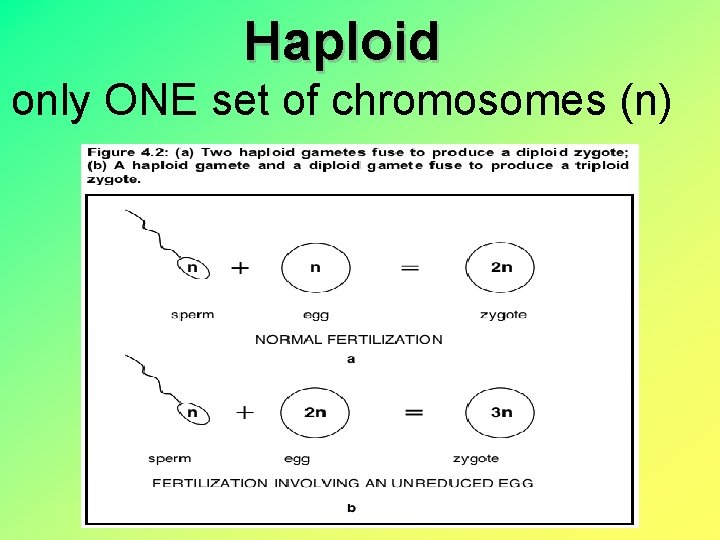
Haploid only ONE set of chromosomes (n)
Reproduction and Development What is reproduction?
Reproduction • To make more of its own kind: – A) asexual – 1 parent, identical offspring – B) sexual – 2 parents, NOT identical offspring
MEIOSIS: GAMETE CELL DIVISION • Recall that GAMETES are the REPRODUCTIVE (SEX) cells of the body. (Sperm and Egg) • The purpose of Meiosis is to produce gametes • SEXUAL REPRODUCTION occurs when two different individuals ( 1 male & 1 female) produce a HYBRID OFFSPRING (a combination of both parents) by each contributing 1 GAMETE cell. • Male cell: SPERM CELL • Female cell: EGG CELL • FERTILIZATION occurs when the two cells meet and form ONE new cell called the ZYGOTE. (This is the very FIRST cell of any sexually reproducing organism) • The zygote will then divide OVER AND OVER again VIA MITOSIS until it grows into fully developed individual.
• GAMETOGENESIS: The making of gametes • GAMETE - SEX CELL (SPERM OR EGG) • GENESIS - TO MAKE OR CREATE 2 TYPES: • SPERMATOGENESIS - Makes MALE sperm cells • OOGENESIS - Makes the FEMALE egg cells Both processes use MEIOSIS as their type of cell division, HOWEVER the results are quite different.
• In order for a sexually reproducing organism's chromosome number to stay the same generation after generation (for example: Humans- 46 chromosomes) the gamete's chromosome number must be HALF of the normal number. • (Human gamete - 23 chromosomes) • To make such cells requires a different type of cell division called MEIOSIS
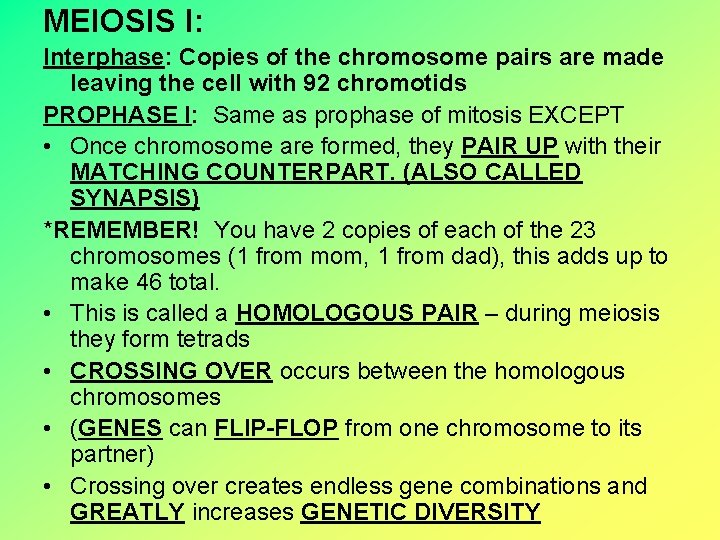
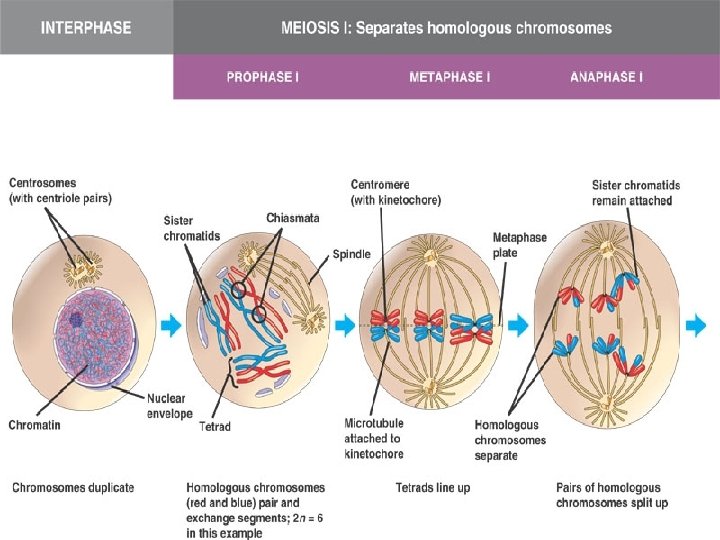
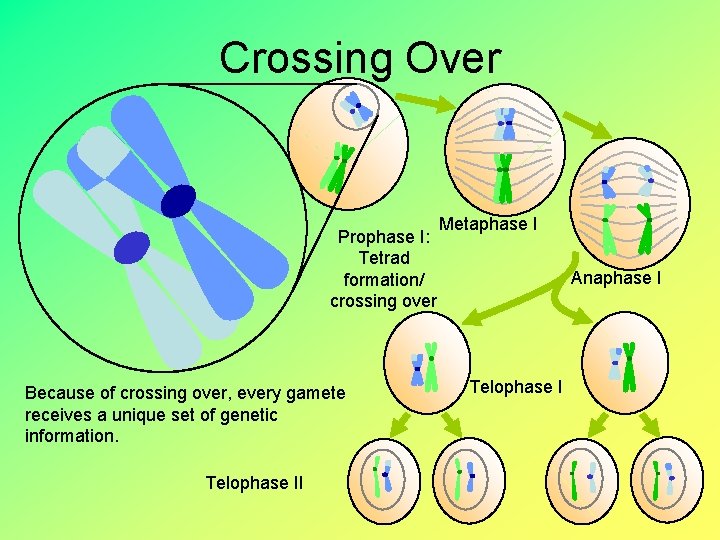
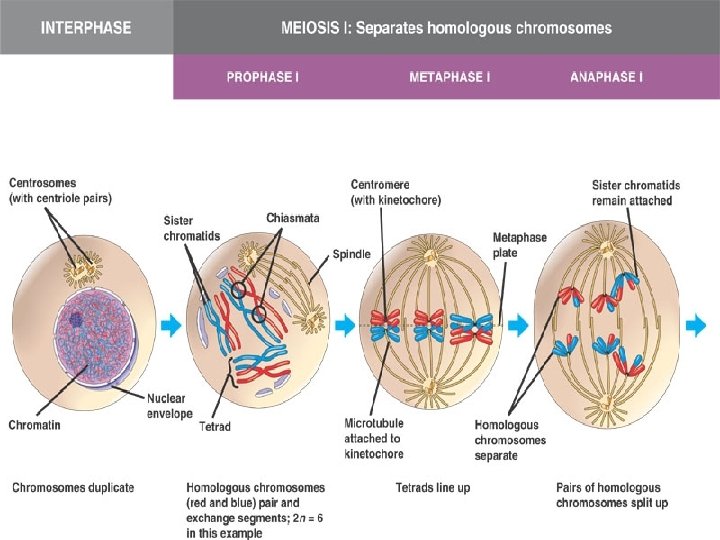
MEIOSIS I: Interphase: Copies of the chromosome pairs are made leaving the cell with 92 chromotids PROPHASE I: Same as prophase of mitosis EXCEPT • Once chromosome are formed, they PAIR UP with their MATCHING COUNTERPART. (ALSO CALLED SYNAPSIS) *REMEMBER! You have 2 copies of each of the 23 chromosomes (1 from mom, 1 from dad), this adds up to make 46 total. • This is called a HOMOLOGOUS PAIR – during meiosis they form tetrads • CROSSING OVER occurs between the homologous chromosomes • (GENES can FLIP-FLOP from one chromosome to its partner) • Crossing over creates endless gene combinations and GREATLY increases GENETIC DIVERSITY
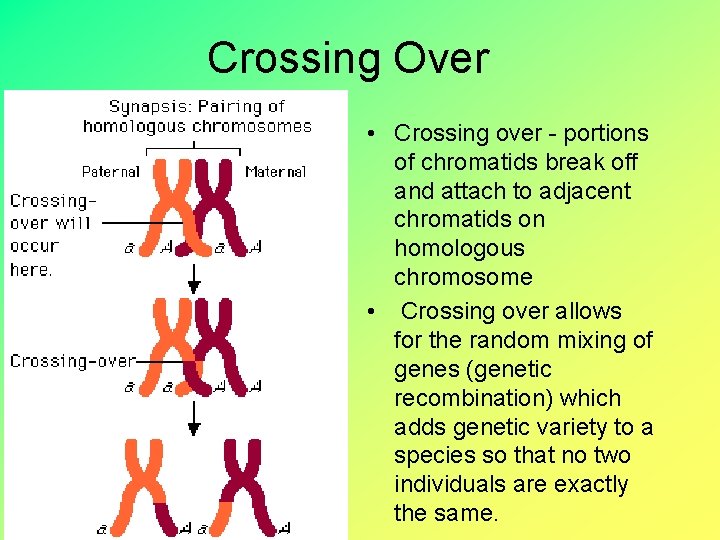
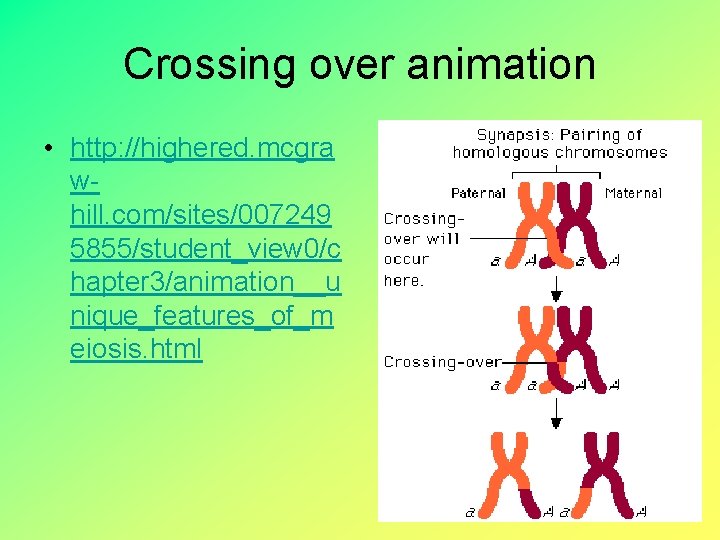
Crossing Over • Crossing over - portions of chromatids break off and attach to adjacent chromatids on homologous chromosome • Crossing over allows for the random mixing of genes (genetic recombination) which adds genetic variety to a species so that no two individuals are exactly the same.
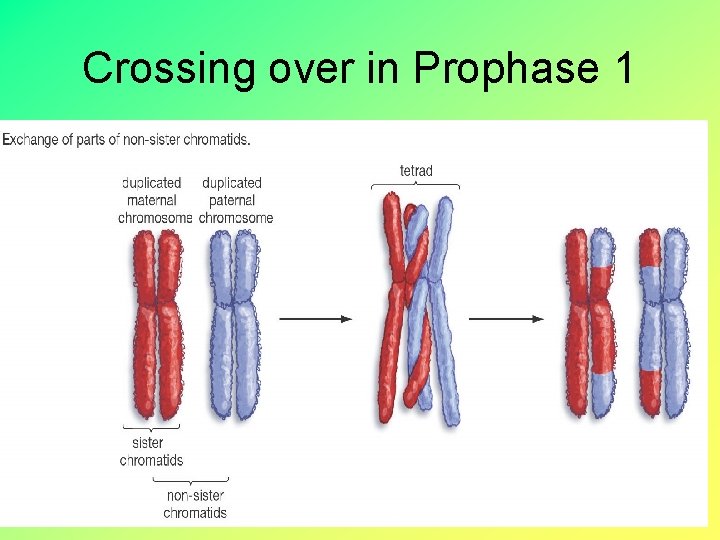
Crossing over in Prophase 1 Crossing-over multiplies the already huge number of different gamete types produced by independent assortment.
Crossing Over Prophase I: Tetrad formation/ crossing over Because of crossing over, every gamete receives a unique set of genetic information. Telophase II Metaphase I Anaphase I Telophase I
Crossing over animation • http: //highered. mcgra whill. com/sites/007249 5855/student_view 0/c hapter 3/animation__u nique_features_of_m eiosis. html
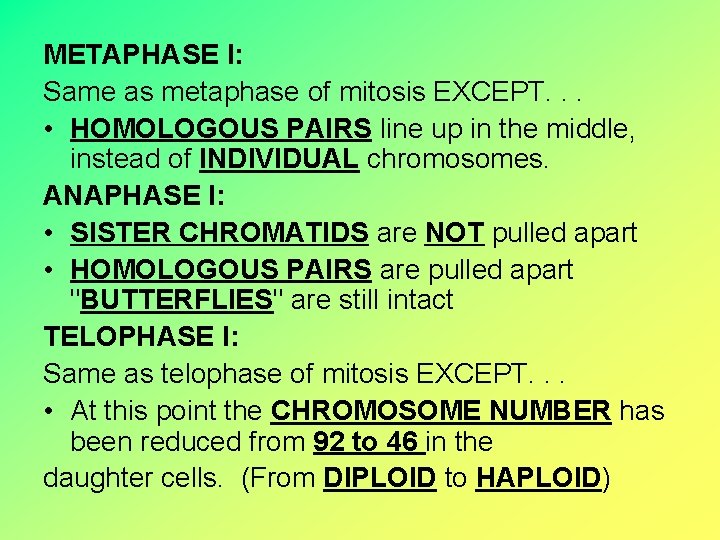
METAPHASE I: Same as metaphase of mitosis EXCEPT. . . • HOMOLOGOUS PAIRS line up in the middle, instead of INDIVIDUAL chromosomes. ANAPHASE I: • SISTER CHROMATIDS are NOT pulled apart • HOMOLOGOUS PAIRS are pulled apart "BUTTERFLIES" are still intact TELOPHASE I: Same as telophase of mitosis EXCEPT. . . • At this point the CHROMOSOME NUMBER has been reduced from 92 to 46 in the daughter cells. (From DIPLOID to HAPLOID)
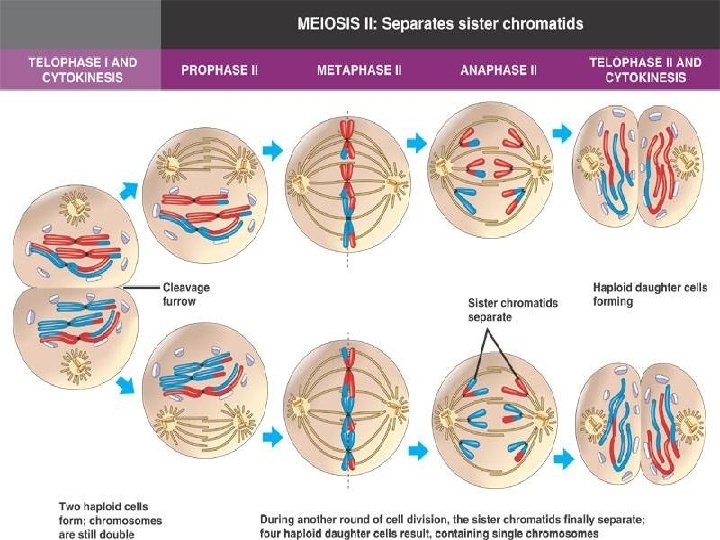
Meiosis II • The events that take place in MEIOSIS II are exactly the same as MITOSIS, EXCEPT that there are only 23 chromosomes being separated INSTEAD of 46.
IMPORTANT DISTINCTION • NOTE: There is NO interphase between meiosis I and meiosis II. • So that each new cell will only have half (haploid) the number of chromosomes as the original parent cell. • Why is this important? • Meiosis II is not preceded by the copying of DNA
Stages Of Meiosis - Meiosis II • Prophase II - Cells do not go interphase between meiosis I and II, thus chromosomes are already condensed • Metaphase II - Chromosomes line up at the equator of the two haploid cells produced in meiosis I • Anaphase II - Chromosomes made up of two chromatids split to make chromosomes with one chromatid which migrate to the poles of the cells • Telophase II - Cytokinesis and reformation of the nuclear membrane in four haploid cells each with one set of chromosomes made of one chromatid
• https: //www. youtube. c om/watch? v=-DLGfd. Wpr 4
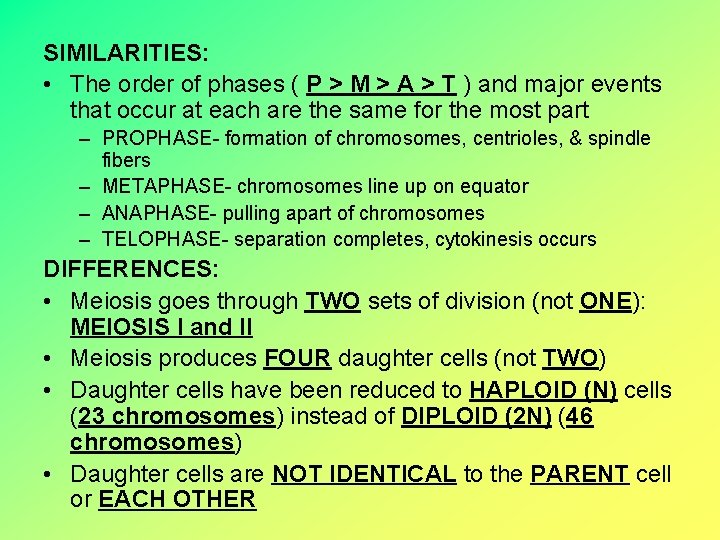
SIMILARITIES: • The order of phases ( P > M > A > T ) and major events that occur at each are the same for the most part – PROPHASE- formation of chromosomes, centrioles, & spindle fibers – METAPHASE- chromosomes line up on equator – ANAPHASE- pulling apart of chromosomes – TELOPHASE- separation completes, cytokinesis occurs DIFFERENCES: • Meiosis goes through TWO sets of division (not ONE): MEIOSIS I and II • Meiosis produces FOUR daughter cells (not TWO) • Daughter cells have been reduced to HAPLOID (N) cells (23 chromosomes) instead of DIPLOID (2 N) (46 chromosomes) • Daughter cells are NOT IDENTICAL to the PARENT cell or EACH OTHER
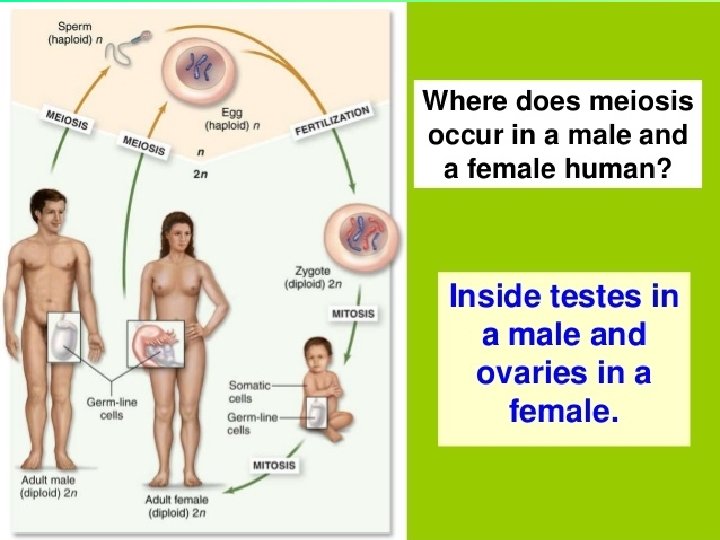
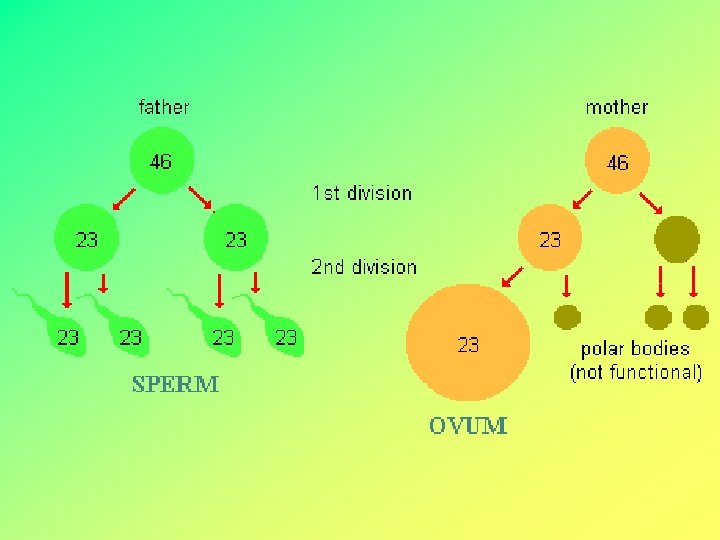
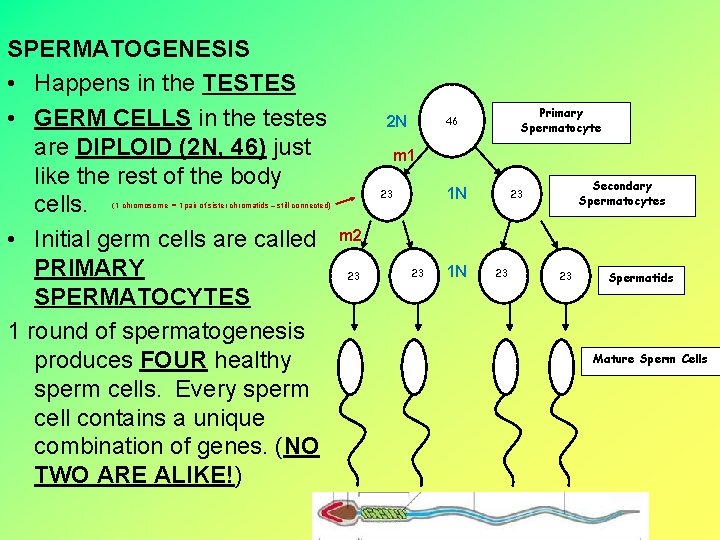
SPERMATOGENESIS • Happens in the TESTES • GERM CELLS in the testes are DIPLOID (2 N, 46) just like the rest of the body cells. • Initial germ cells are called PRIMARY SPERMATOCYTES 1 round of spermatogenesis produces FOUR healthy sperm cells. Every sperm cell contains a unique combination of genes. (NO TWO ARE ALIKE!) 2 N Primary Spermatocyte 46 m 1 1 N 23 (1 chromosome = 1 pair of sister chromatids – still connected) Secondary Spermatocytes 23 m 2 23 23 1 N 23 23 Spermatids Mature Sperm Cells
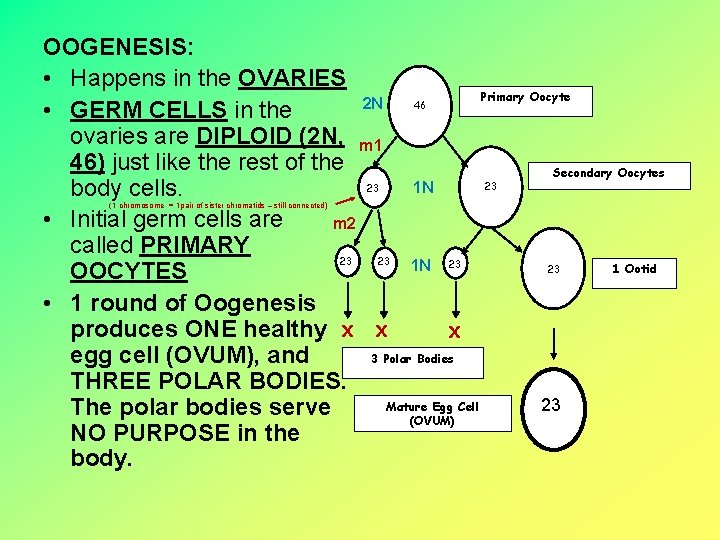
OOGENESIS: • Happens in the OVARIES Primary Oocyte 2 N 46 • GERM CELLS in the ovaries are DIPLOID (2 N, m 1 46) just like the rest of the Secondary Oocytes 23 23 1 N body cells. • Initial germ cells are m 2 called PRIMARY 23 23 1 N 23 1 Ootid 23 OOCYTES • 1 round of Oogenesis produces ONE healthy X X X egg cell (OVUM), and 3 Polar Bodies THREE POLAR BODIES. Mature Egg Cell 23 The polar bodies serve (OVUM) NO PURPOSE in the body. (1 chromosome = 1 pair of sister chromatids – still connected)
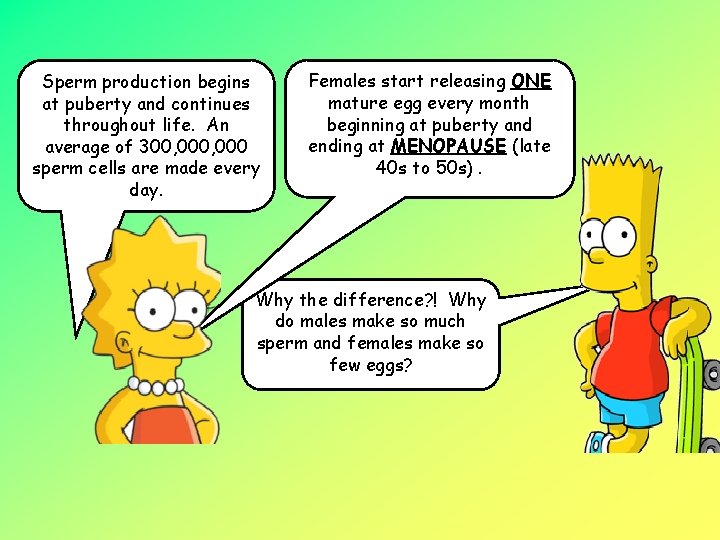
Sperm production begins at puberty and continues throughout life. An average of 300, 000 sperm cells are made every day. Females start releasing ONE mature egg every month beginning at puberty and ending at MENOPAUSE (late 40 s to 50 s). Why the difference? ! Why do males make so much sperm and females make so few eggs?