
Sexual Reproduction and Genetics Chapter 10 10 1
- Slides: 33
Sexual Reproduction and Genetics Chapter 10
10. 1: Meiosis MAIN IDEA: Meiosis produces haploid gametes.
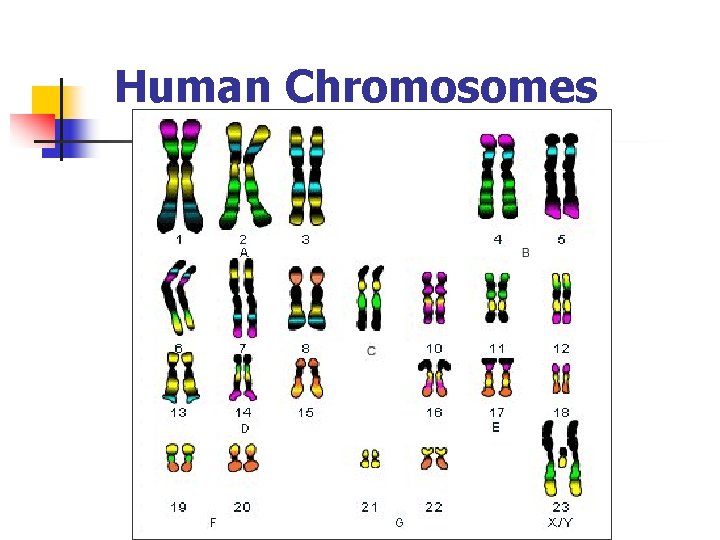
In Our Body Cells: Each chromosome has a matching pair homologous pairs n One chromosome from each pair came from mother, other from father n Homologous chromosomes - code for the same type of traits, but don’t have the exact same information n
Human Chromosomes
Humans Have 23 pairs of chromosomes (46 total) n Each chromosome has about 1500 genes n Genetic info passed from parents to children in sexual reproduction n
Types of Reproduction 1. Asexual 2. Sexual n Single parent n 2 parents n Offspring genetically identical to parent different from parents – variation n No sex cells n Involves sex cells
Body Cells vs. Sex Cells Body (somatic) cells n Diploid - contain both chromosomes of each pair n Represented by 2 n n Sex cells (gametes) n Haploid - Contain half the number of chromosomes; only one of each pair n Represented by n n
Haploid and Diploid If corn body cells have 20 chromosomes, how many are in the gametes? n If an organism has a haploid number of 18, what is the diploid number? n n= 24. Is this the haploid or diploid? Is this the number of chromosomes in the gametes or body cells? n
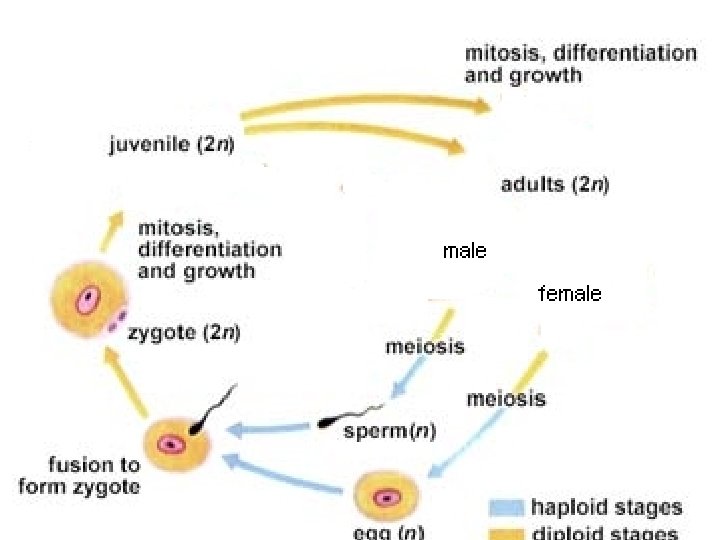
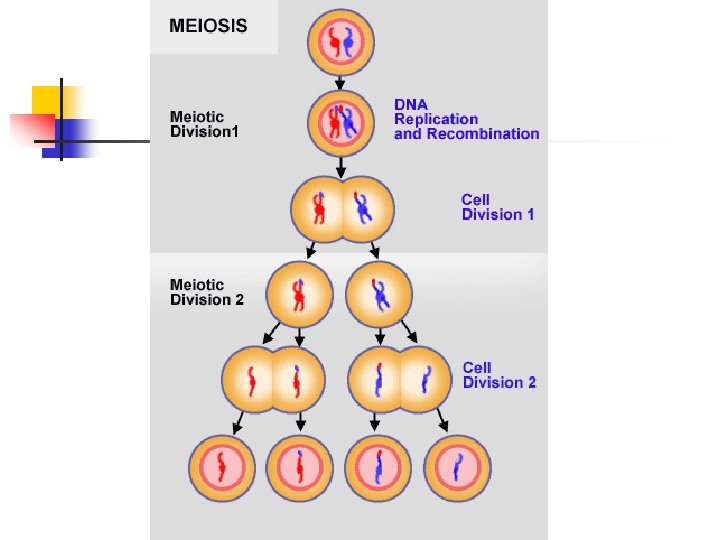
Meiosis Special type of cell division that forms gametes – occurs in reproductive parts n Meiosis called reduction division – reduces # of chromosomes in half n Fertilization – 2 gametes combine – zygote cells are diploid n Sexual reproduction is a cycle n
Meiosis Interphase (same as before) n 2 divisions: n Meiosis II n How many cells will result? n How many cells resulted from mitosis? n
Phases of Meiosis I n Prophase I, metaphase I, anaphase I, telophase I n Meiosis II n Prophase II, metaphase II, anaphase II, telophase II n
What happens in each phase?
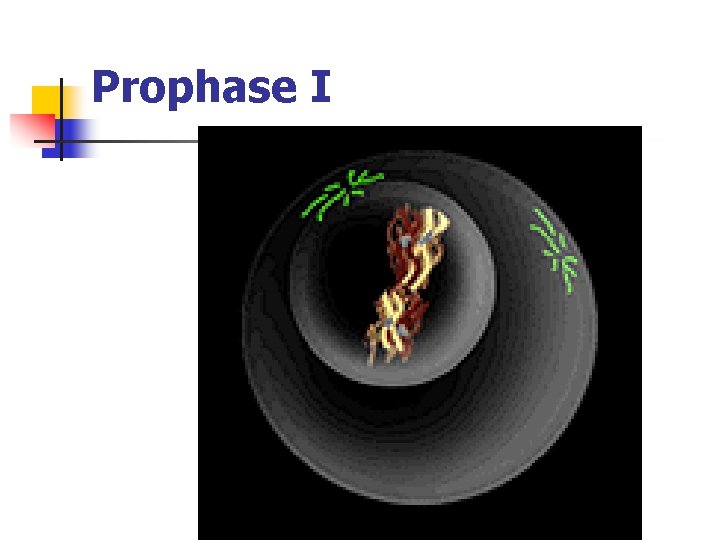
Prophase I (like mitosis) Chromosomes become visible; sister chromatids join at centromeres n Nuclear membrane disappears; Spindle fibers start to form n
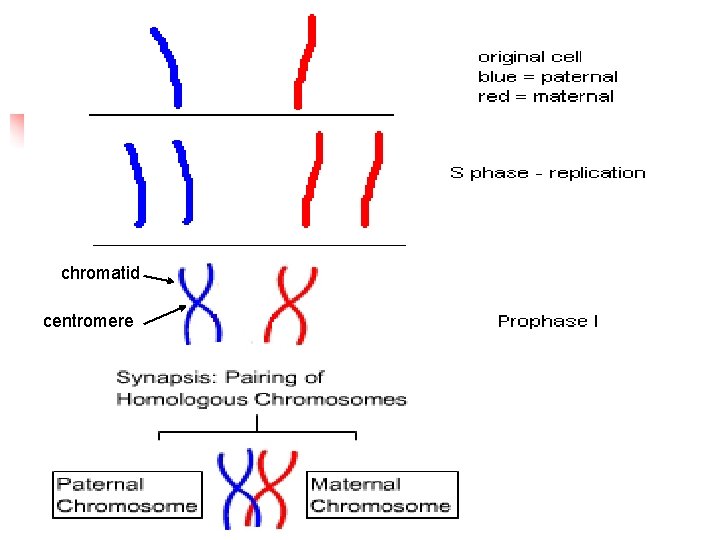
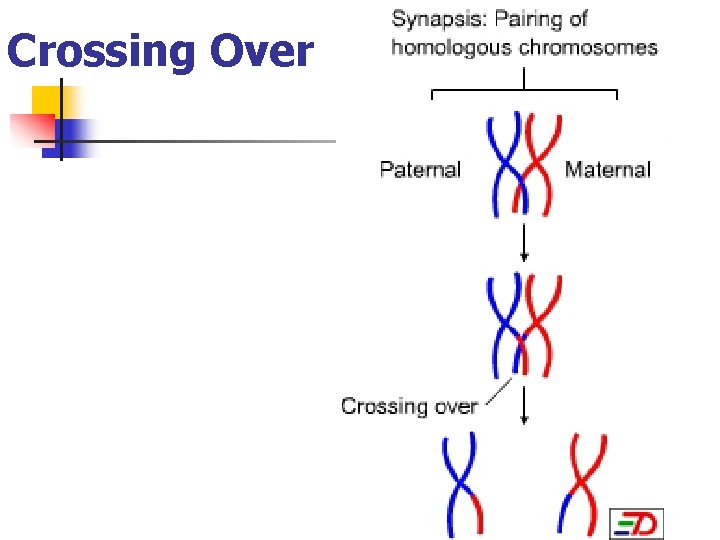
Prophase I (only meiosis) 2 matching homologous pairs (one from father, one from mother) join together – synapsis n Crossing over occurs - piece of one chromosome is exchanged with piece of another n
chromatid centromere
Crossing Over
Prophase I
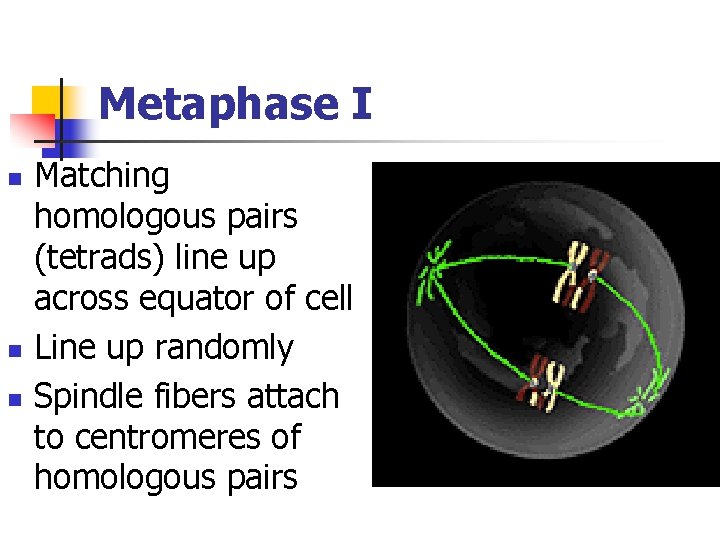
Metaphase I n n n Matching homologous pairs (tetrads) line up across equator of cell Line up randomly Spindle fibers attach to centromeres of homologous pairs
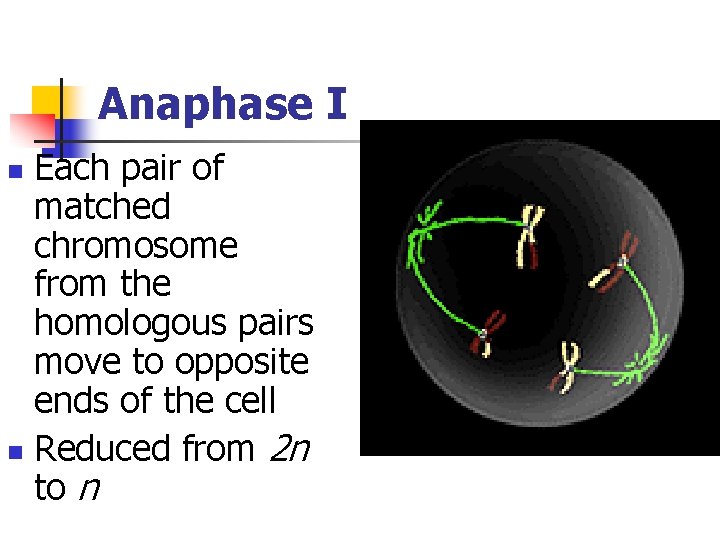
Anaphase I Each pair of matched chromosome from the homologous pairs move to opposite ends of the cell n Reduced from 2 n to n n
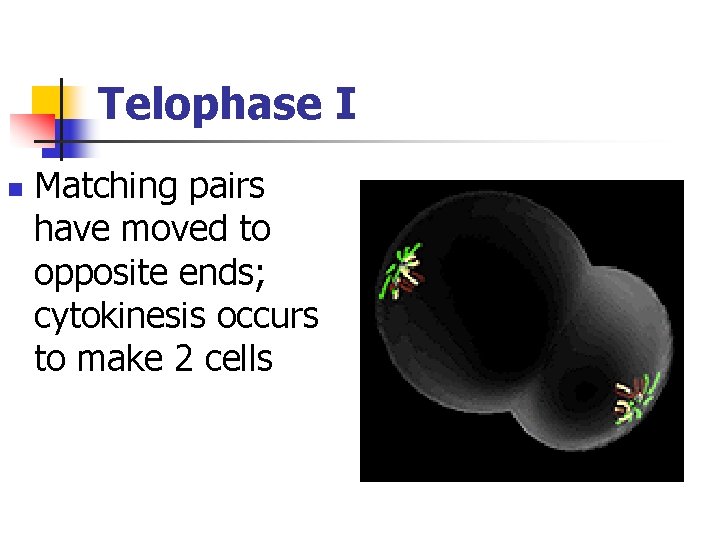
Telophase I n Matching pairs have moved to opposite ends; cytokinesis occurs to make 2 cells
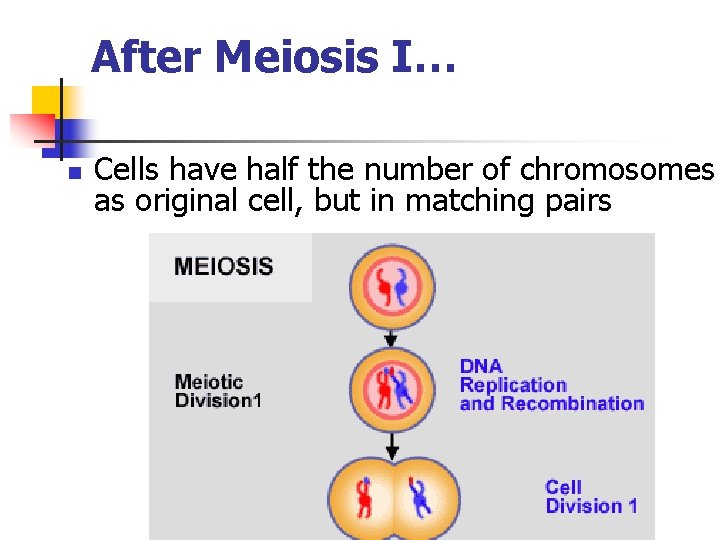
After Meiosis I… n Cells have half the number of chromosomes as original cell, but in matching pairs
DO NOW What is the end result of meiosis? n Why is meiosis called a “reduction division”, and why is it important? n What is a homologous pair of chromosomes? n If a cell contains 54 chromosomes before meiosis, how many are in each cell after meiosis? n
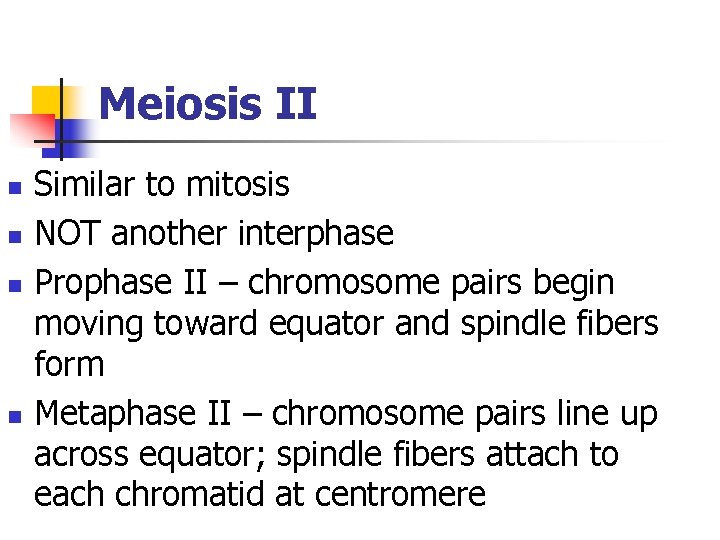
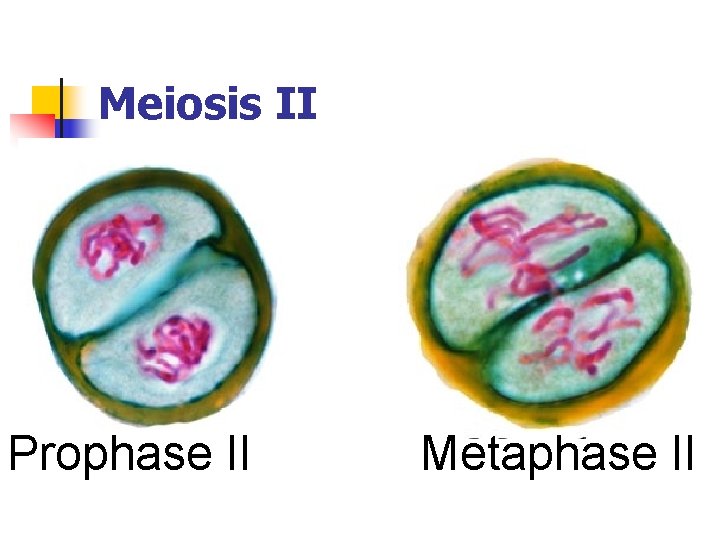
Meiosis II n n Similar to mitosis NOT another interphase Prophase II – chromosome pairs begin moving toward equator and spindle fibers form Metaphase II – chromosome pairs line up across equator; spindle fibers attach to each chromatid at centromere
Meiosis II Prophase II Metaphase II
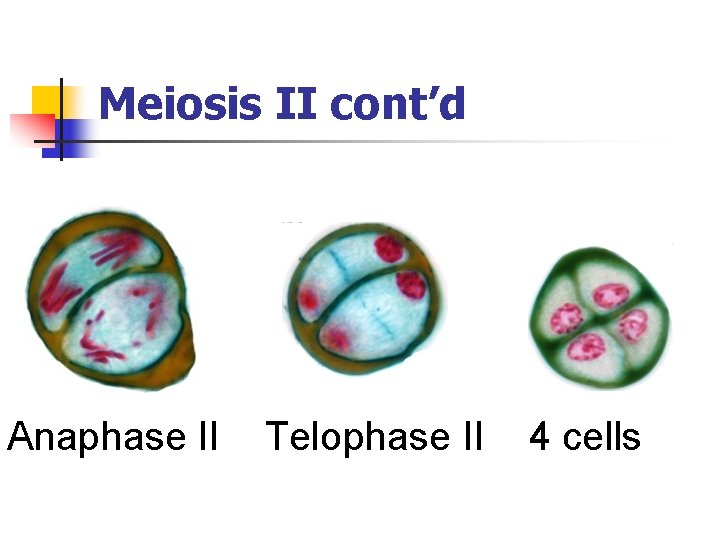
Meiosis II cont’d Anaphase II – pairs of chromosomes are separated, and move along spindle toward poles of cell n Telophase II – chromosomes are at opposite ends of cell, cytokinesis occurs n After Meiosis II – 4 haploid daughter cells n
Meiosis II cont’d Anaphase II Telophase II 4 cells
Answer the Following: How does the chromosome # change with each cycle of mitosis and fertilization? n What must occur to keep the chromosome number constant when fertilization occurs? n
DO NOW n n n What is the end result of meiosis? What is a homologous chromosome pair? Why is it important that meiosis is a “reduction” division?
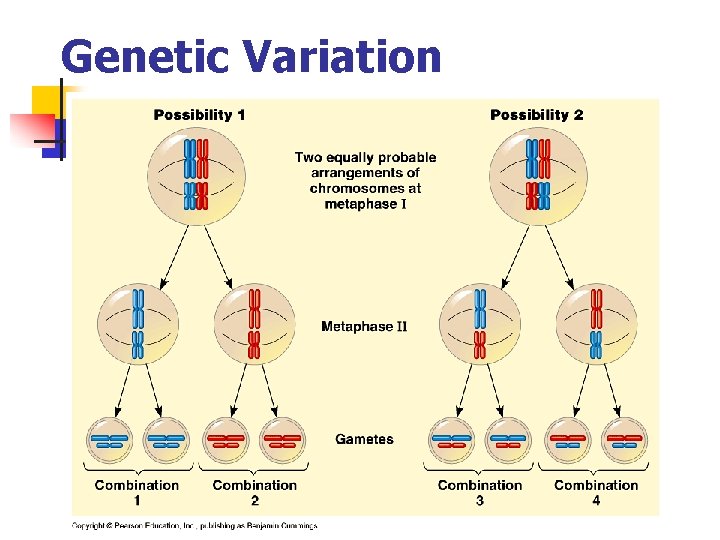
Genetic Variation During prophase I, crossing over can occur n Because homologous pairs are randomly separated, different gametes are formed n When chromosomes recombine during fertilization, new combination of chromosomes results n
Genetic Variation
Checkpoint How is sexual reproduction an advantage to a species? n Explain 2 reasons why you do not look exactly like either of your parents. n