
Sexual development and young people with learning disabilities
Sexual development and young people with learning disabilities and attachment informed Perspective Training Facilitator : James Hawkins Psychotherapist and Training Coordinator Contact details: Tel 020 7874 5487 email: james. hawkins@respond. org. uk
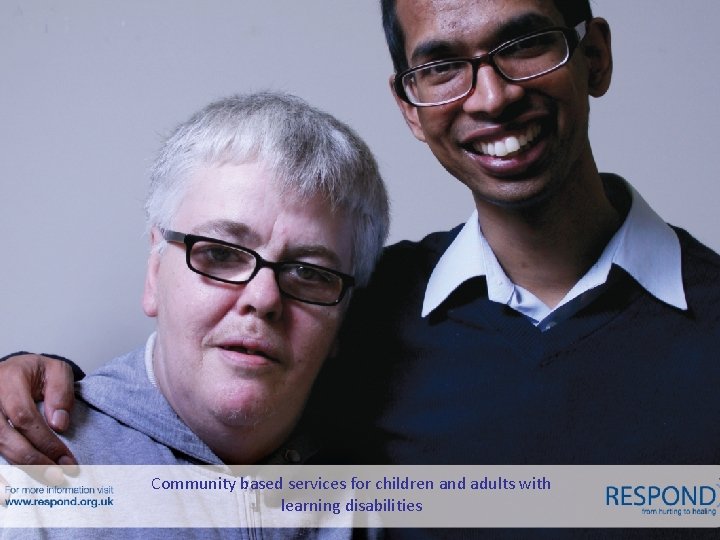
Community based services for children and adults with learning disabilities
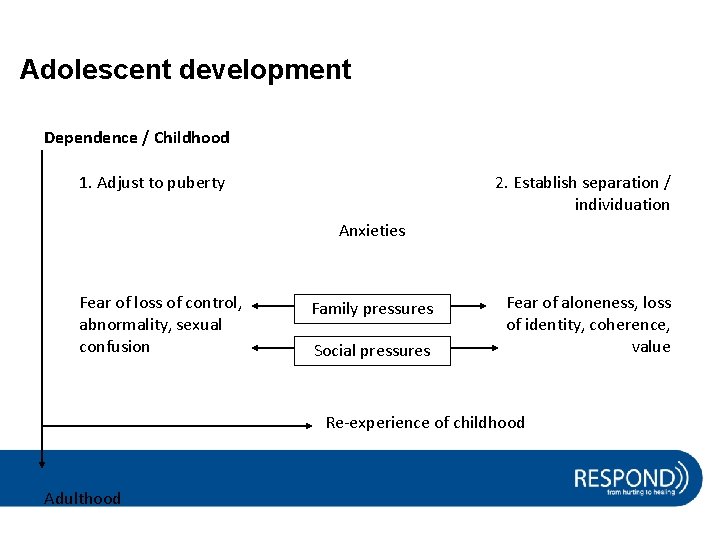
Adolescent development Dependence / Childhood 1. Adjust to puberty 2. Establish separation / individuation Anxieties Fear of loss of control, abnormality, sexual confusion Family pressures Social pressures Fear of aloneness, loss of identity, coherence, value Re-experience of childhood Adulthood
Normality and Abnormality in Adolescence ‘In general, the adolescent upset and its manifestations are not predictable… Adolescence by definition is an interruption of peaceful growth. The adolescent manifestations come close to symptom formation of the neurotic, the psychotic or dissocial order and verge almost imperceptibly into borderline states and initial frustrated of fully fledged forms of almost all mental illness’ A. Freud, Adolescence, The Psychoanalytic Study of the Child 13, 1958. ‘Perhaps the most distinguishing mark of adolescent disturbance, however is the element of compulsivity – that is, where adolescents are engaged persistently and repeatedly, as if driven from within , in the extreme forms of self- destructive behaviour, invariably against their better judgement’ Peter Wilson, ‘Psychotherapy with Adolescents’ in Textbook of Psychotherapy in Psychiatric Practice, Ed. Holmes. J, Whurr Publishers, 1991.
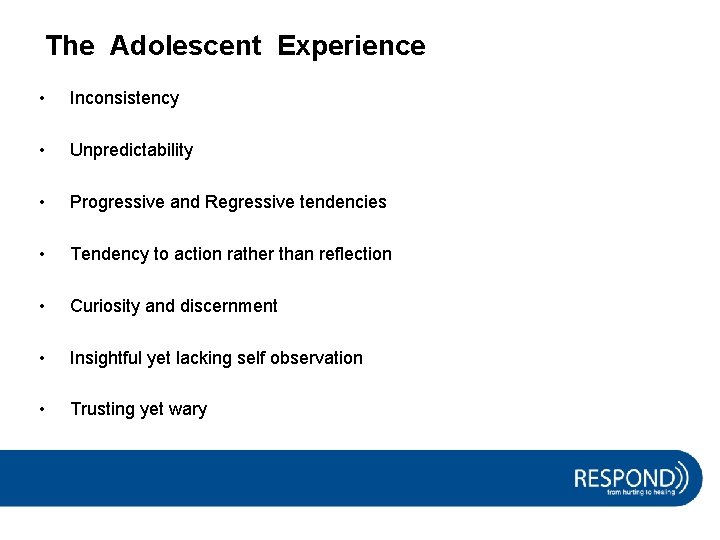
The Adolescent Experience • Inconsistency • Unpredictability • Progressive and Regressive tendencies • Tendency to action rather than reflection • Curiosity and discernment • Insightful yet lacking self observation • Trusting yet wary
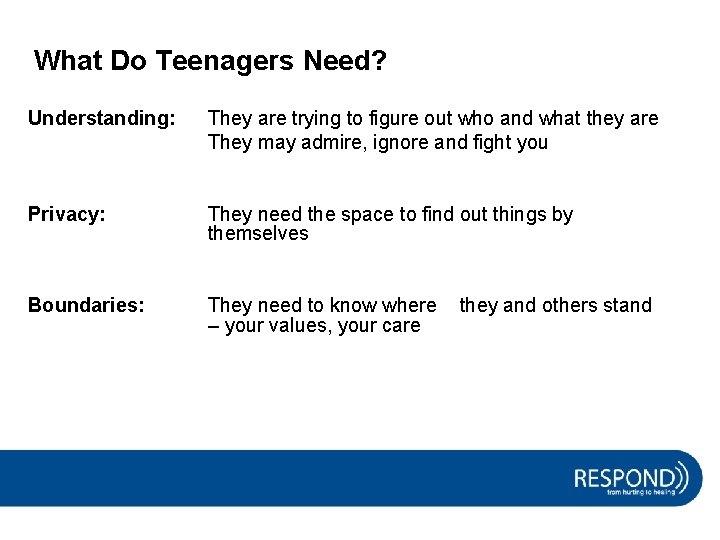
What Do Teenagers Need? Understanding: They are trying to figure out who and what they are They may admire, ignore and fight you Privacy: They need the space to find out things by themselves Boundaries: They need to know where – your values, your care they and others stand
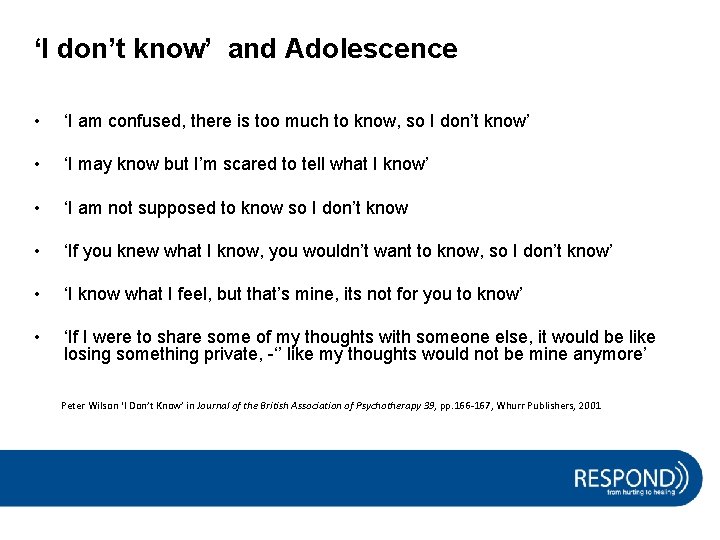
‘I don’t know’ and Adolescence • ‘I am confused, there is too much to know, so I don’t know’ • ‘I may know but I’m scared to tell what I know’ • ‘I am not supposed to know so I don’t know • ‘If you knew what I know, you wouldn’t want to know, so I don’t know’ • ‘I know what I feel, but that’s mine, its not for you to know’ • ‘If I were to share some of my thoughts with someone else, it would be like losing something private, -‘’ like my thoughts would not be mine anymore’ Peter Wilson ‘I Don’t Know’ in Journal of the British Association of Psychotherapy 39, pp. 166 -167, Whurr Publishers, 2001
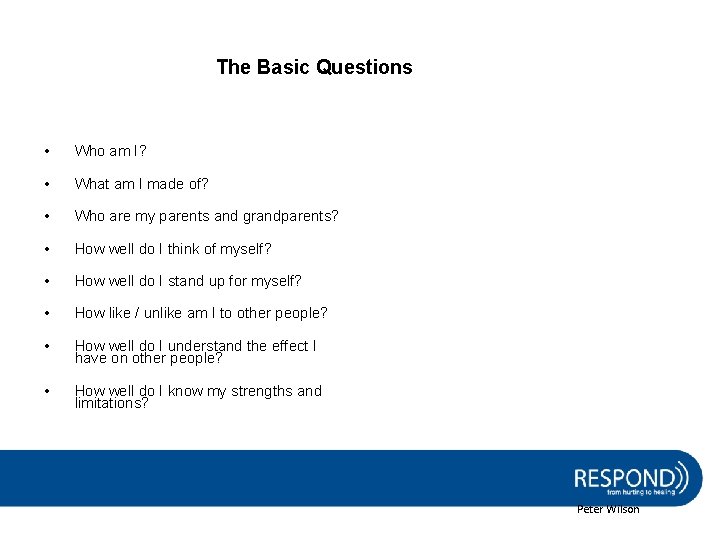
The Basic Questions • Who am I? • What am I made of? • Who are my parents and grandparents? • How well do I think of myself? • How well do I stand up for myself? • How like / unlike am I to other people? • How well do I understand the effect I have on other people? • How well do I know my strengths and limitations? Peter Wilson
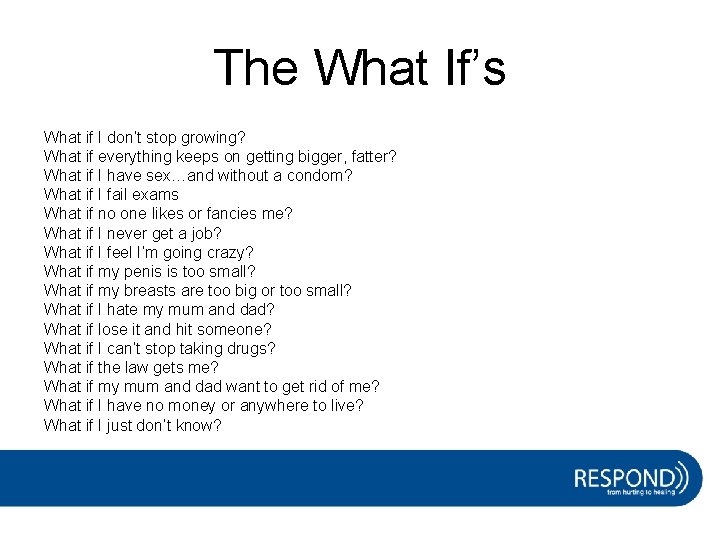
The What If’s What if I don’t stop growing? What if everything keeps on getting bigger, fatter? What if I have sex…and without a condom? What if I fail exams What if no one likes or fancies me? What if I never get a job? What if I feel I’m going crazy? What if my penis is too small? What if my breasts are too big or too small? What if I hate my mum and dad? What if lose it and hit someone? What if I can’t stop taking drugs? What if the law gets me? What if my mum and dad want to get rid of me? What if I have no money or anywhere to live? What if I just don’t know?
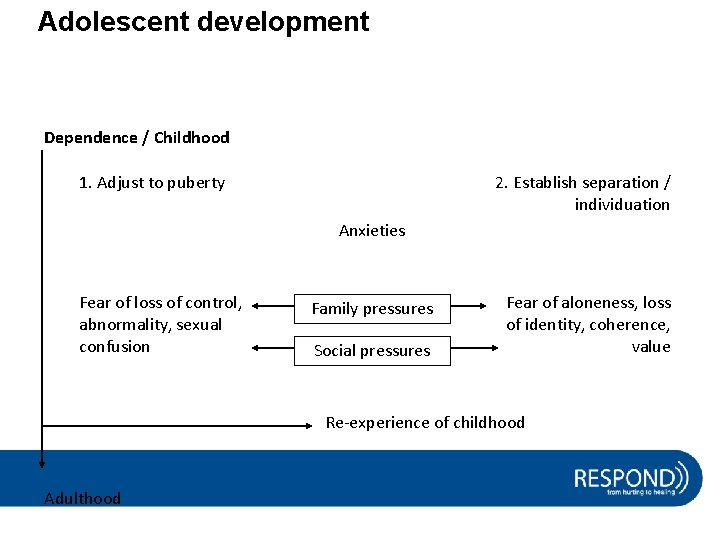
Adolescent development Dependence / Childhood 1. Adjust to puberty 2. Establish separation / individuation Anxieties Fear of loss of control, abnormality, sexual confusion Family pressures Social pressures Fear of aloneness, loss of identity, coherence, value Re-experience of childhood Adulthood
Anger and Anxiety in Autism and related conditions Vanessa Oldham Leader of Outreach and Inclusion Freemantles School
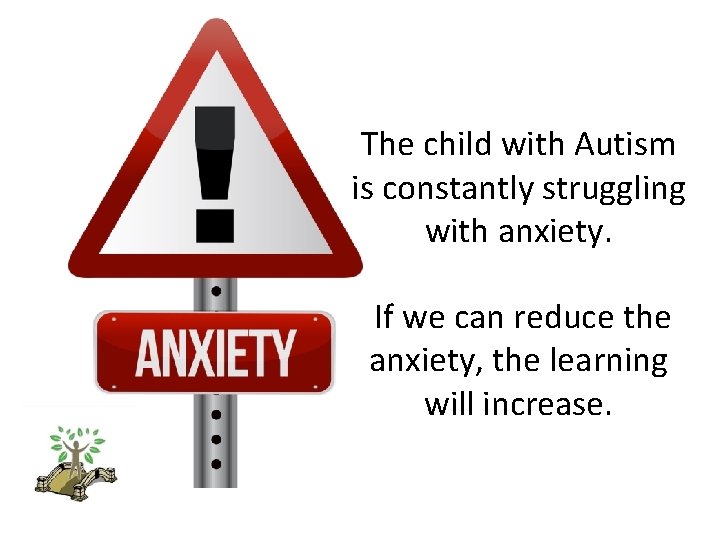
The child with Autism is constantly struggling with anxiety. If we can reduce the anxiety, the learning will increase.
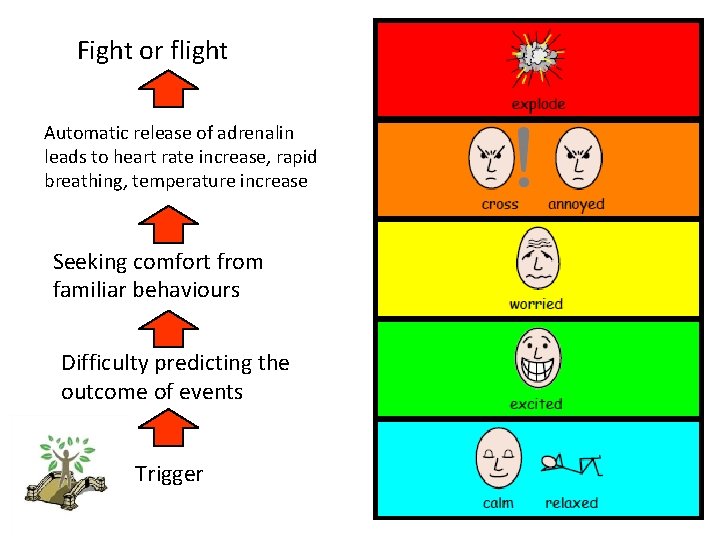
Fight or flight Automatic release of adrenalin leads to heart rate increase, rapid breathing, temperature increase Seeking comfort from familiar behaviours Difficulty predicting the outcome of events Trigger
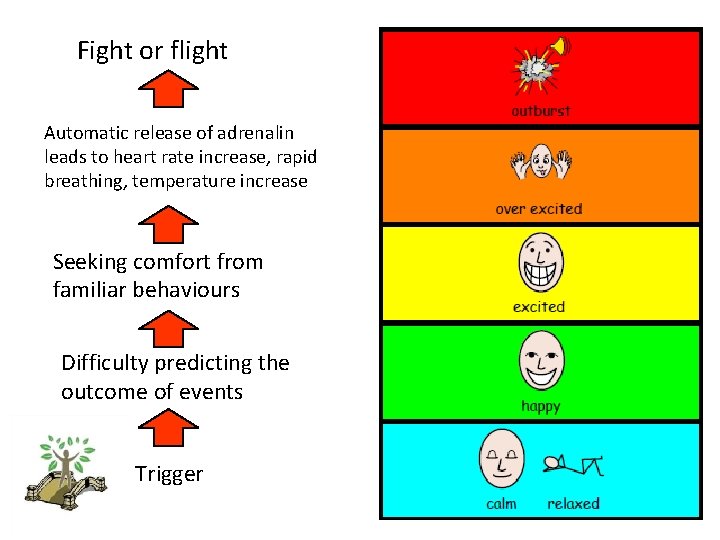
Fight or flight Automatic release of adrenalin leads to heart rate increase, rapid breathing, temperature increase Seeking comfort from familiar behaviours Difficulty predicting the outcome of events Trigger
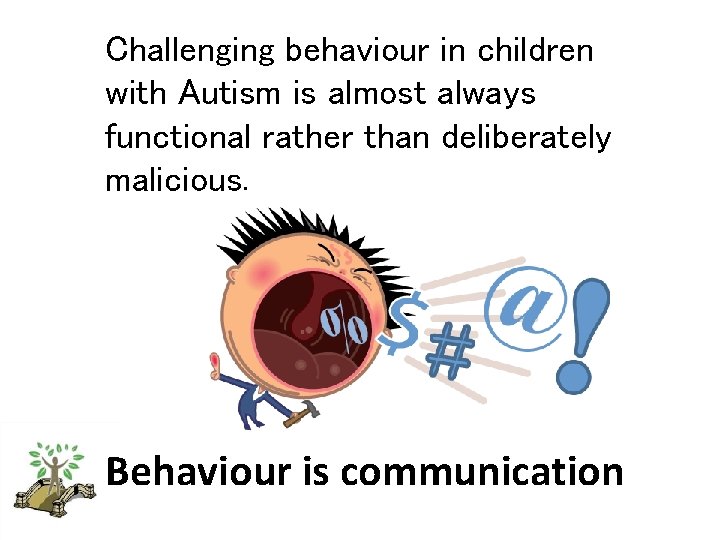
Challenging behaviour in children with Autism is almost always functional rather than deliberately malicious. Behaviour is communication
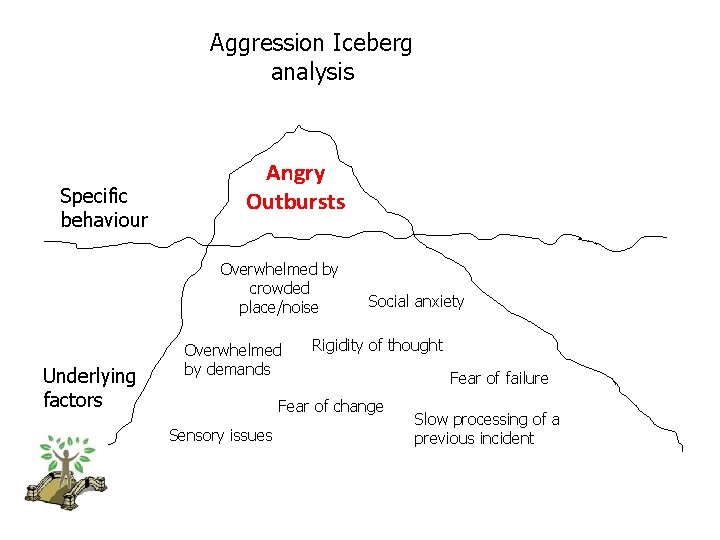
Aggression Iceberg analysis Specific behaviour Angry Outbursts Overwhelmed by crowded place/noise Underlying factors Overwhelmed by demands Social anxiety Rigidity of thought Fear of change Sensory issues Fear of failure Slow processing of a previous incident
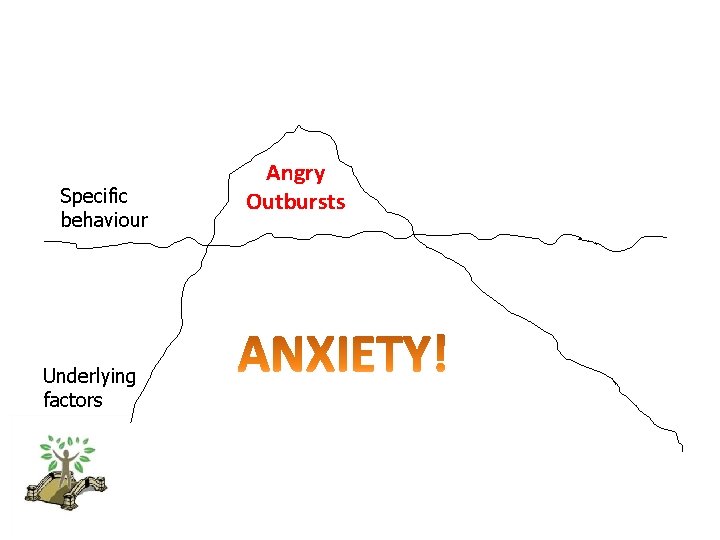
Specific behaviour Underlying factors Angry Outbursts
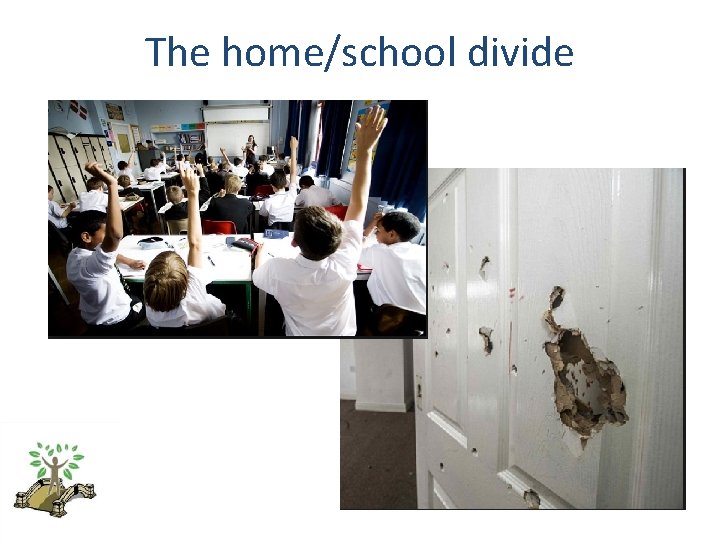
The home/school divide
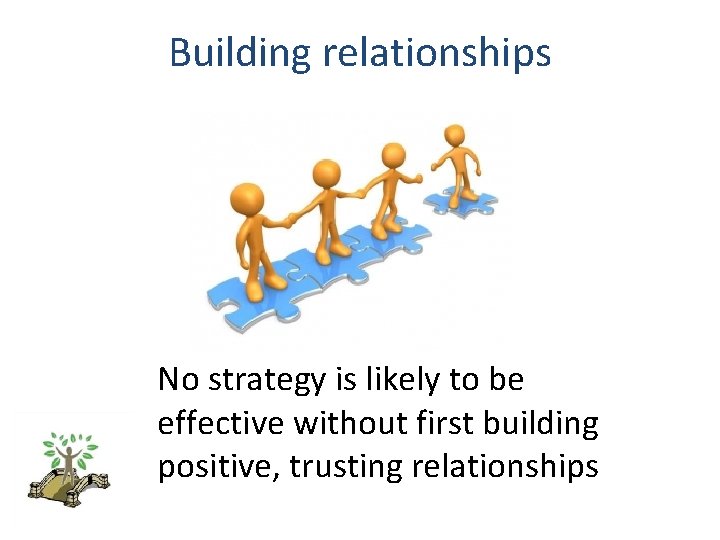
Building relationships No strategy is likely to be effective without first building positive, trusting relationships

Intensive Interaction “Use their own body language to tap into the way that they are talking to themselves” – Pheobe Caldwell
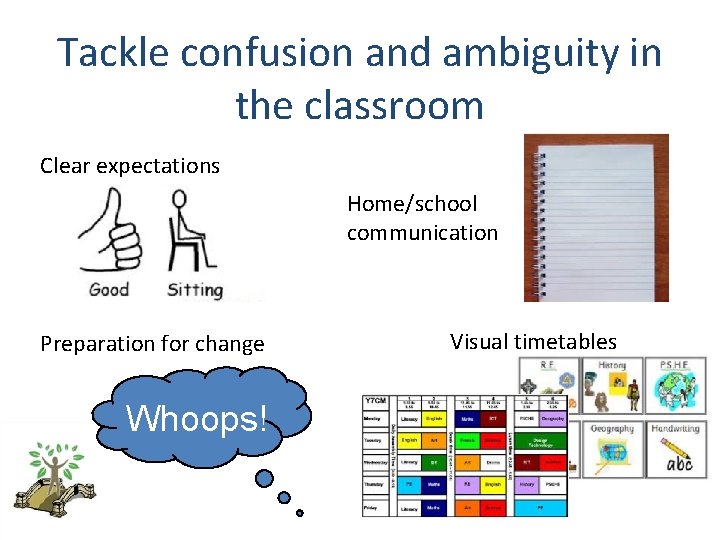
Tackle confusion and ambiguity in the classroom Clear expectations Home/school communication Preparation for change Whoops! Visual timetables
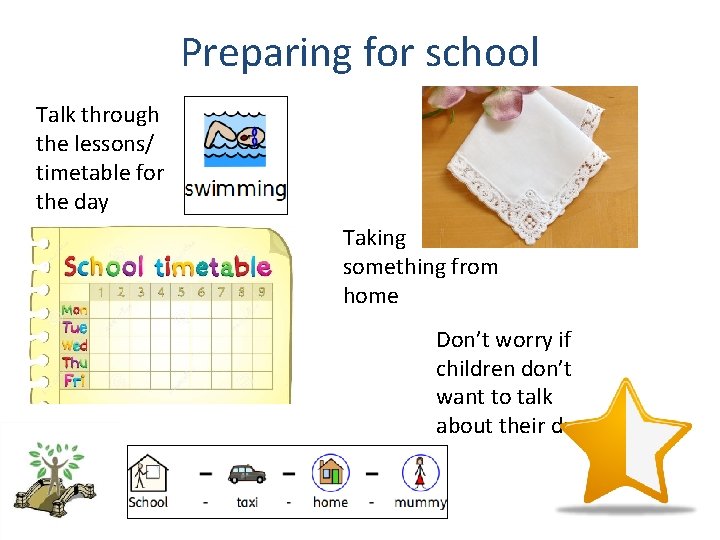
Preparing for school Talk through the lessons/ timetable for the day Taking something from home Don’t worry if children don’t want to talk about their day
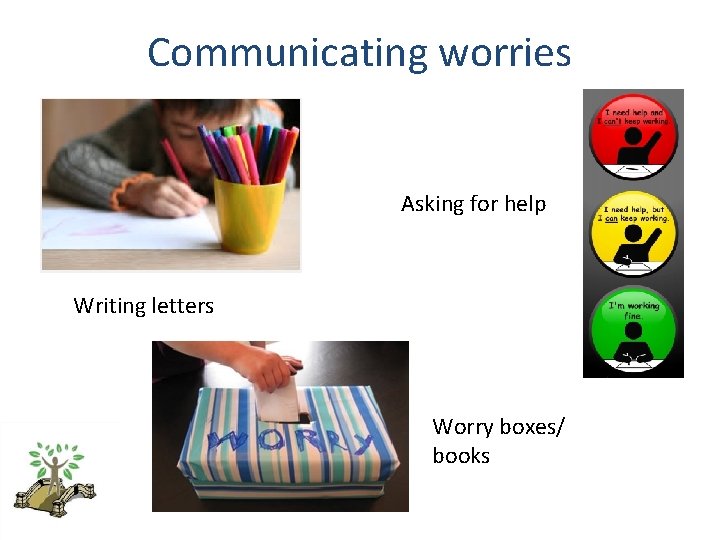
Communicating worries Asking for help Writing letters Worry boxes/ books
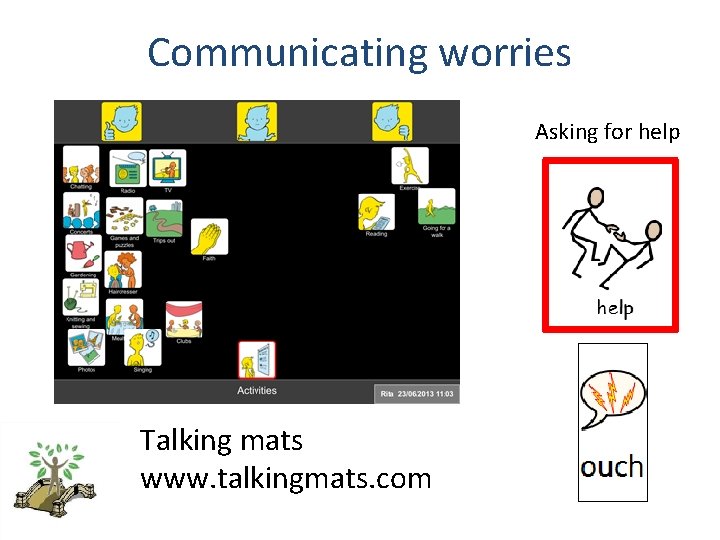
Communicating worries Asking for help Talking mats www. talkingmats. com
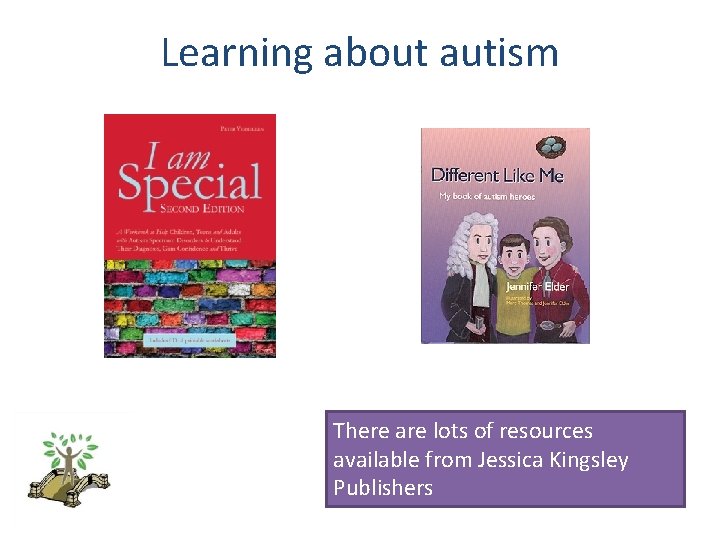
Learning about autism There are lots of resources available from Jessica Kingsley Publishers
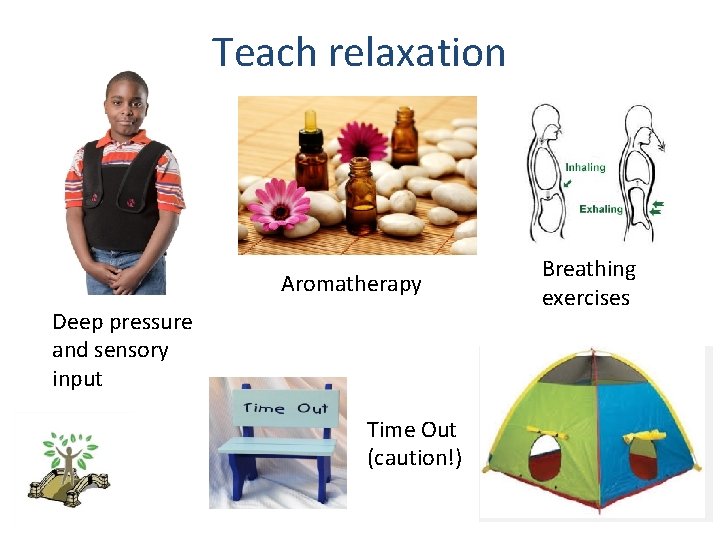
Teach relaxation Aromatherapy Deep pressure and sensory input Time Out (caution!) Breathing exercises
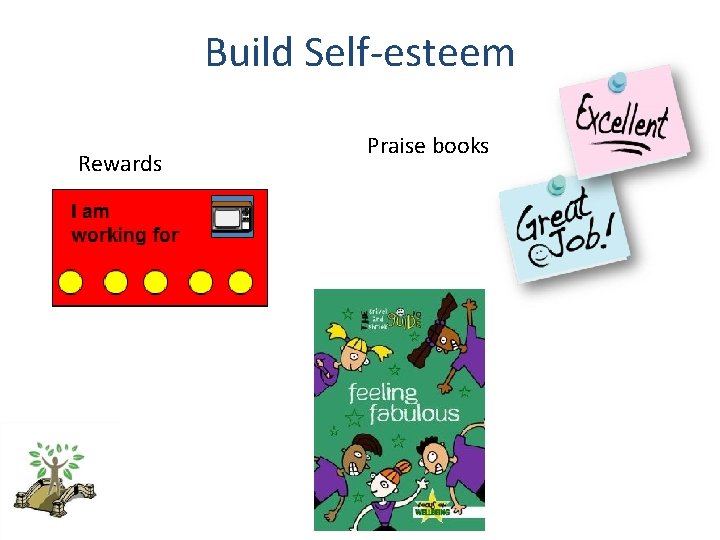
Build Self-esteem Rewards Praise books
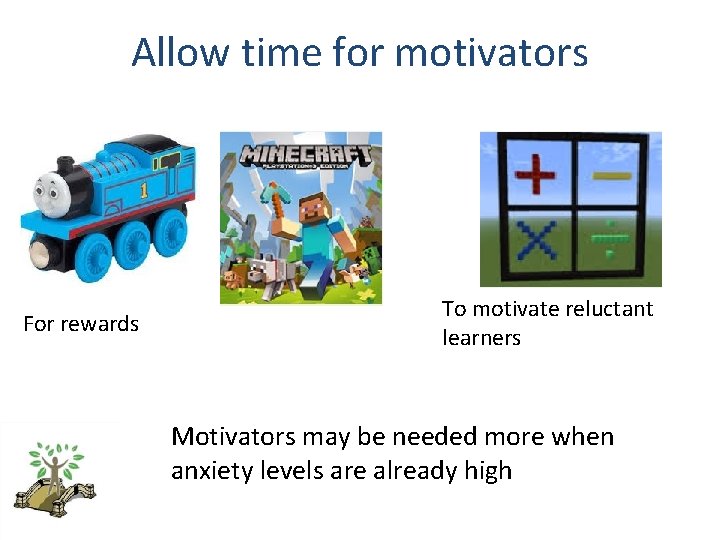
Allow time for motivators For rewards To motivate reluctant learners Motivators may be needed more when anxiety levels are already high
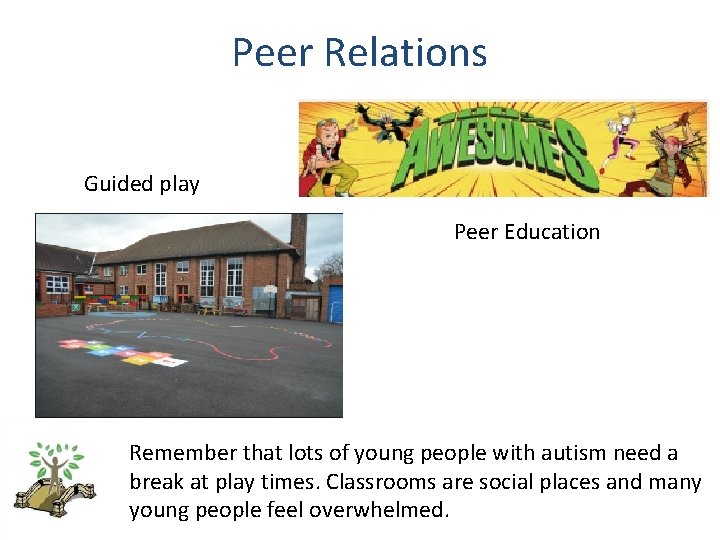
Peer Relations Guided play Peer Education Remember that lots of young people with autism need a break at play times. Classrooms are social places and many young people feel overwhelmed.
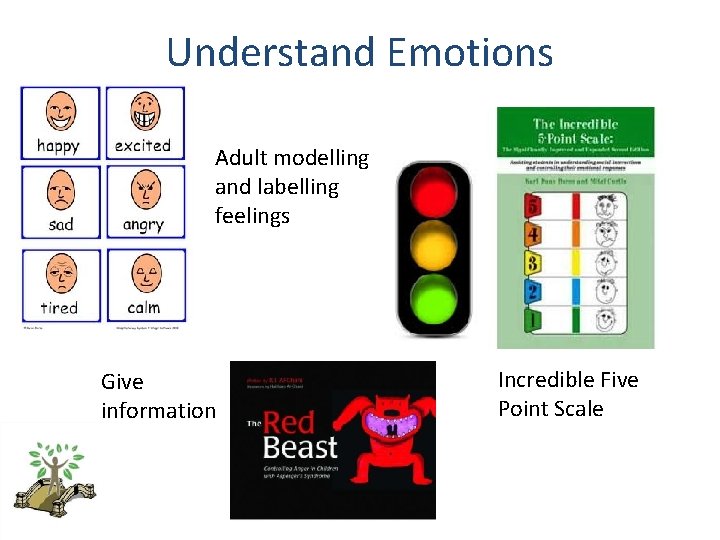
Understand Emotions Adult modelling and labelling feelings Give information Incredible Five Point Scale
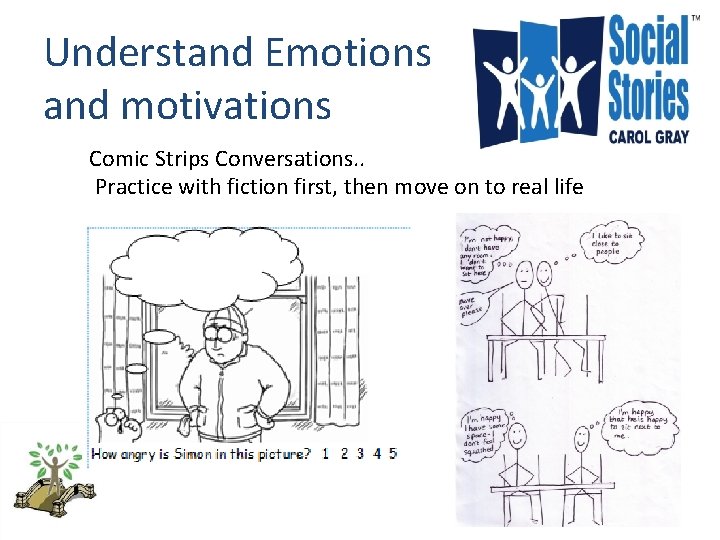
Understand Emotions and motivations Comic Strips Conversations. . Practice with fiction first, then move on to real life
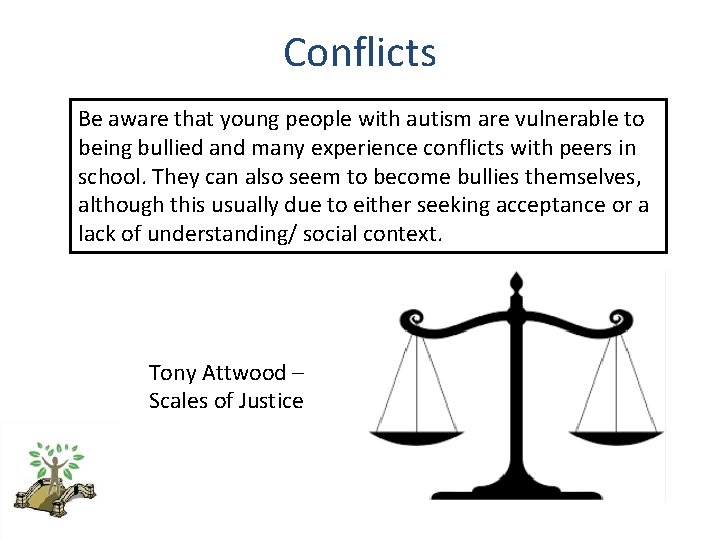
Conflicts Be aware that young people with autism are vulnerable to being bullied and many experience conflicts with peers in school. They can also seem to become bullies themselves, although this usually due to either seeking acceptance or a lack of understanding/ social context. Tony Attwood – Scales of Justice
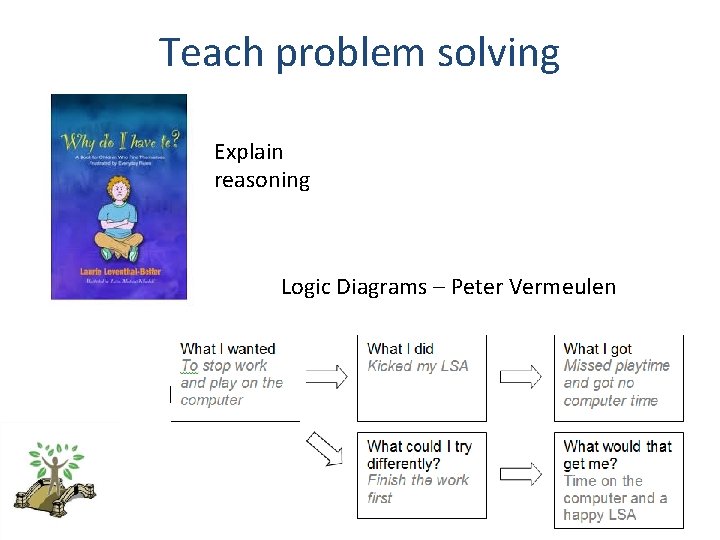
Teach problem solving Explain reasoning Logic Diagrams – Peter Vermeulen
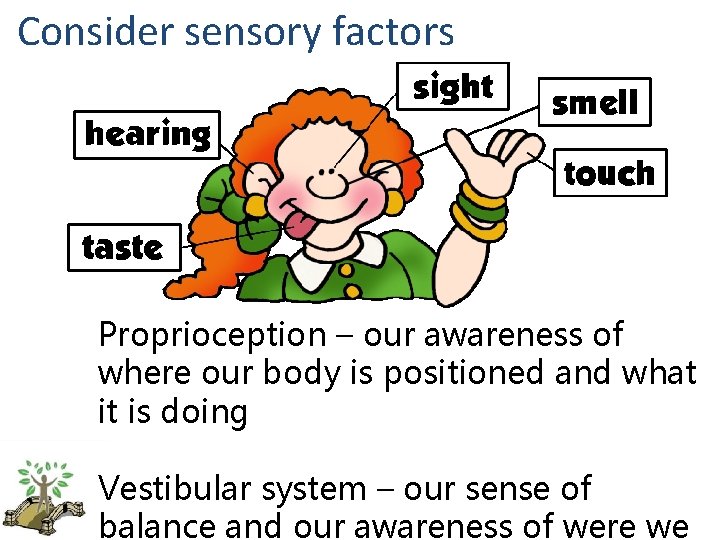
Consider sensory factors Proprioception – our awareness of where our body is positioned and what it is doing Vestibular system – our sense of balance and our awareness of were we
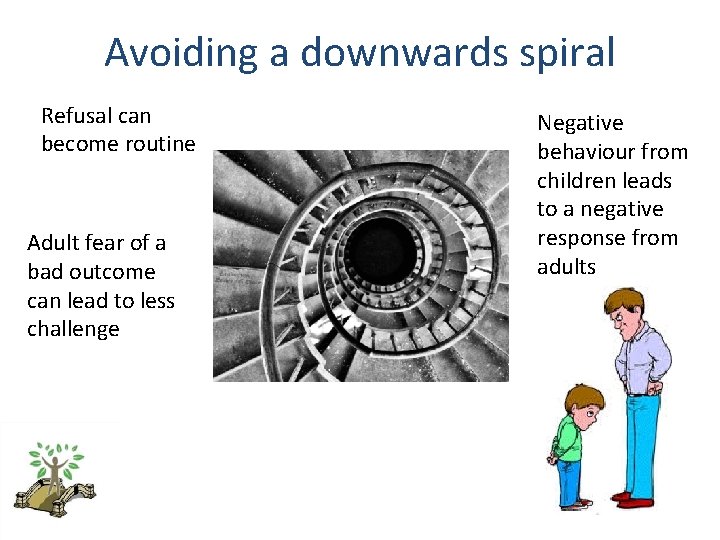
Avoiding a downwards spiral Refusal can become routine Adult fear of a bad outcome can lead to less challenge Negative behaviour from children leads to a negative response from adults
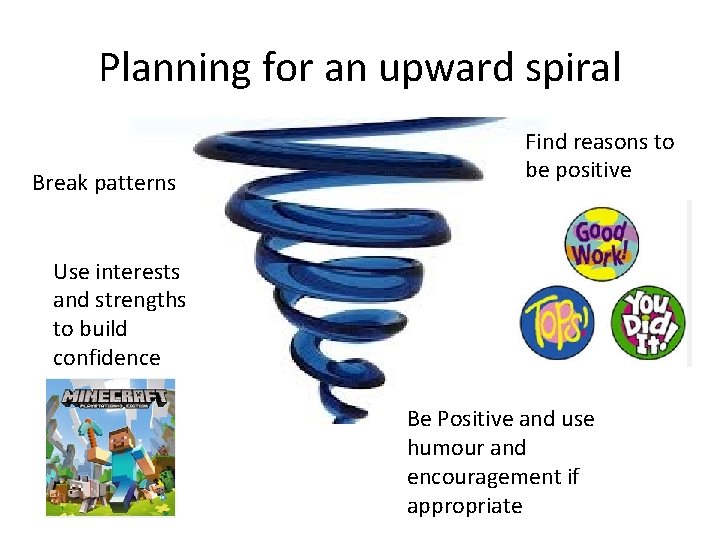
Planning for an upward spiral Break patterns Find reasons to be positive Use interests and strengths to build confidence Be Positive and use humour and encouragement if appropriate
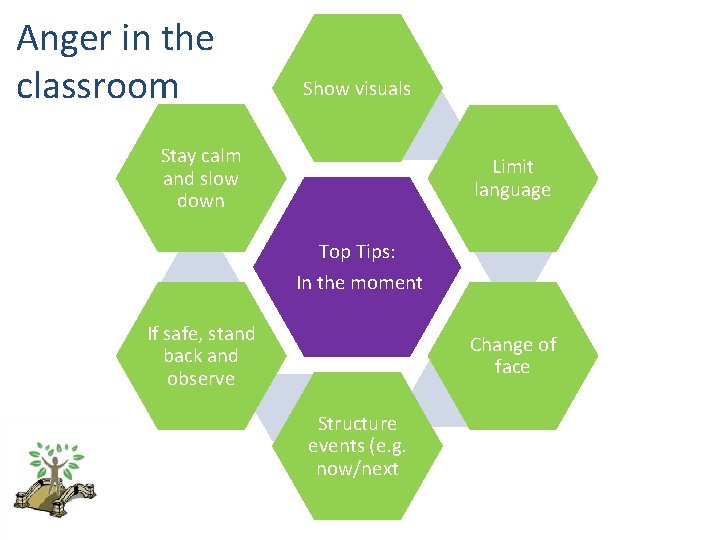
Anger in the classroom Show visuals Stay calm and slow down Limit language Top Tips: In the moment If safe, stand back and observe Change of face Structure events (e. g. now/next
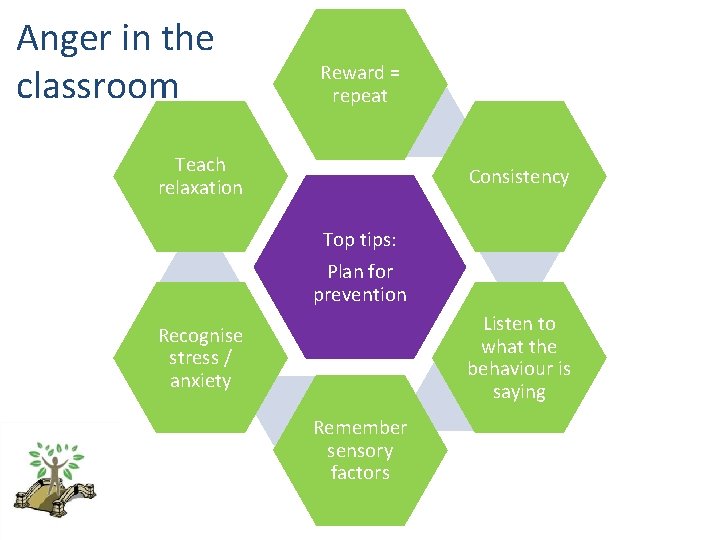
Anger in the classroom Reward = repeat Teach relaxation Consistency Top tips: Plan for prevention Listen to what the behaviour is saying Recognise stress / anxiety Remember sensory factors
Conclusion ‘People are always looking for the single magic bullet that will totally change everything. There is no single magic bullet. ’ Temple Grandin

- Slides: 40