
Sexual Abuse in the Disability World and What
Sexual Abuse in the Disability World and What Can be Done 2018 State Task Force Meeting November 7, 2018 © Pennsylvania Coalition Against Rape 2018. Do not reproduce, distribute, or adapt without permission from the Pennsylvania Coalition Against Rape.
Help Hope Healing Founded in 1975, the Pennsylvania Coalition Against Rape (PCAR) partners with organizations and individuals at the state and national levels to better respond to and prevent all forms of sexual violence. PCAR works with its network of 50 sexual assault centers throughout the Commonwealth to raise public awareness, support victims and significant others, change public policy, and create materials that help communities prevent sexual violence.
What role do you play in child sexual abuse prevention?
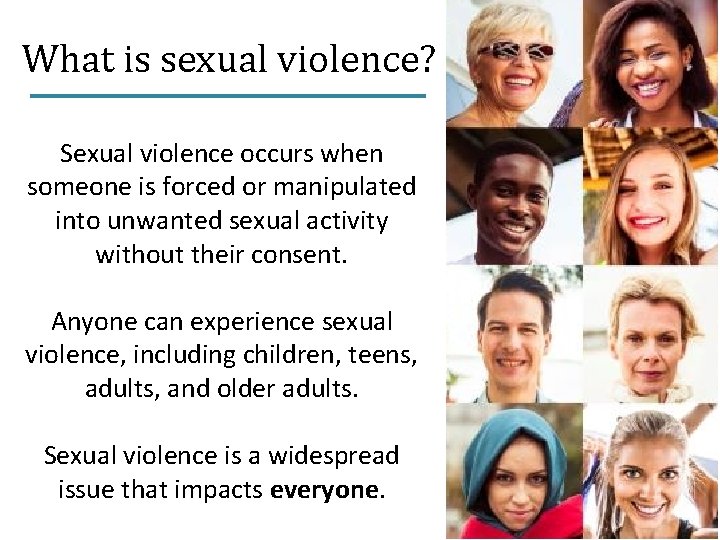
What is sexual violence? Sexual violence occurs when someone is forced or manipulated into unwanted sexual activity without their consent. Anyone can experience sexual violence, including children, teens, adults, and older adults. Sexual violence is a widespread issue that impacts everyone.
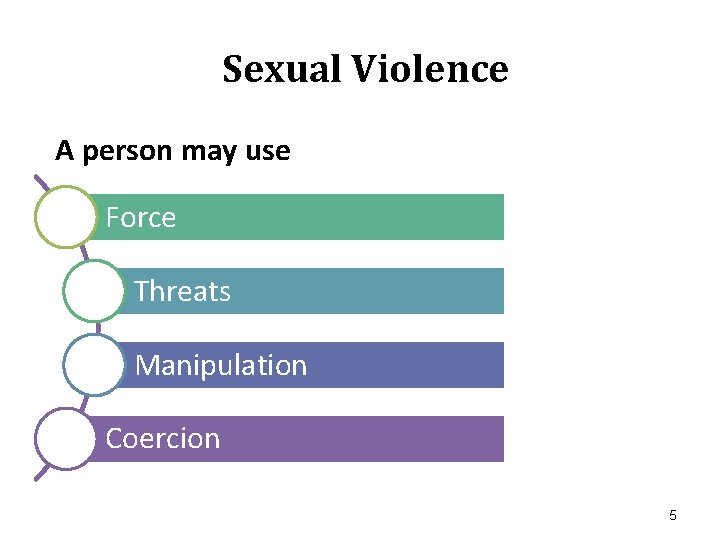
Sexual Violence A person may use Force Threats Manipulation Coercion 5
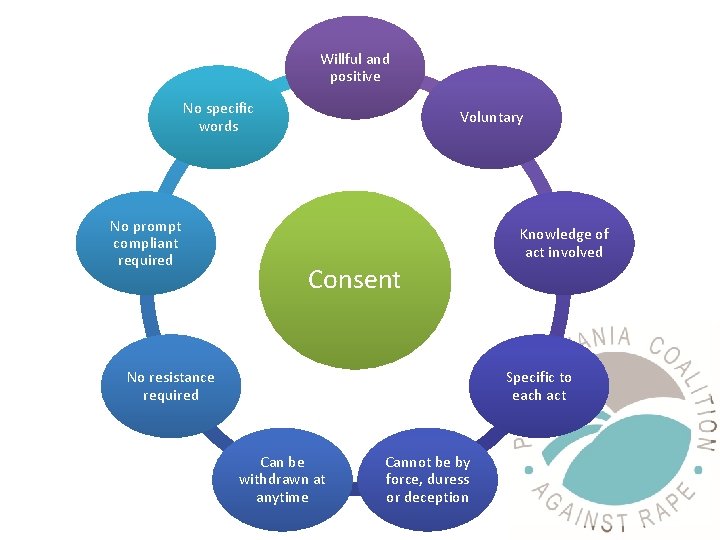
Willful and positive No specific words No prompt compliant required Voluntary Knowledge of act involved Consent No resistance required Specific to each act Can be withdrawn at anytime Cannot be by force, duress or deception
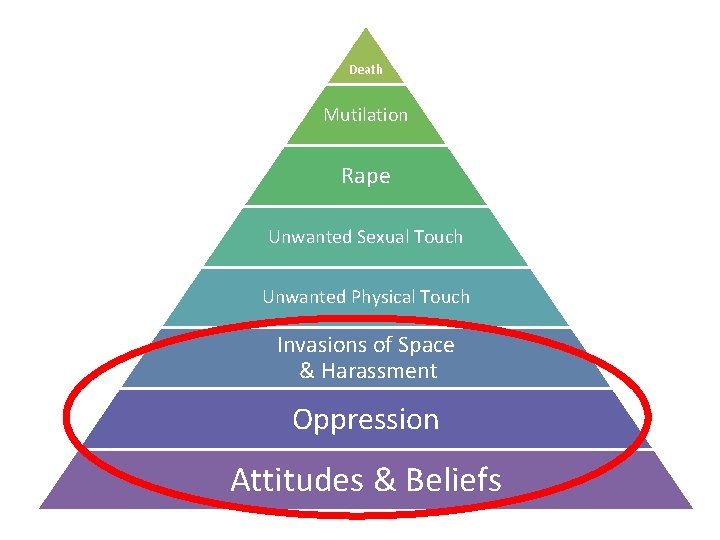
Death Mutilation Rape Unwanted Sexual Touch Unwanted Physical Touch Invasions of Space & Harassment Oppression Attitudes & Beliefs
Specifics on SV & Disabilities? • People with intellectual disabilities are sexually assaulted at a rate seven times higher than those without disabilities (Shapiro, 2018).
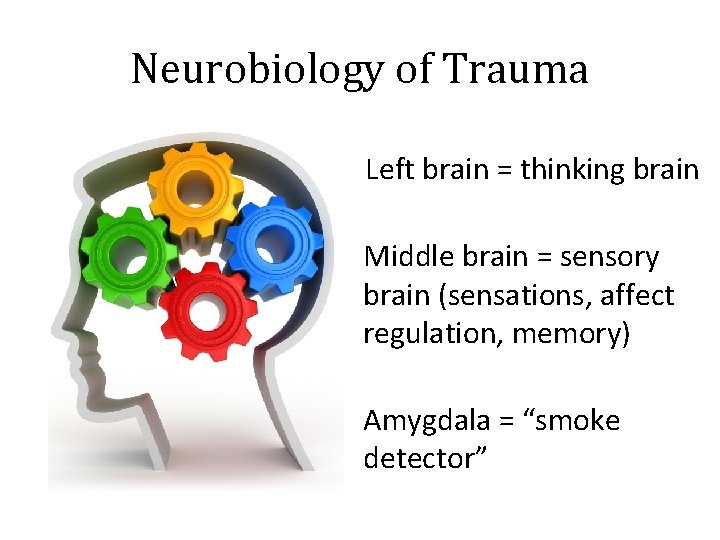
Neurobiology of Trauma Left brain = thinking brain Middle brain = sensory brain (sensations, affect regulation, memory) Amygdala = “smoke detector”
Trauma can impact learning & behavior. (NCTSN, 2008)
Impact on Learning & Behavior Difficulty with emotional regulation Inconsistent academic performance Unpredictable or impulsive behavior Over or under reacting to stimulation in the environment • Intense reactions to reminders of their traumatic event • • (NCTSN, 2008)
Prevention of Child Sexual Abuse
Best Practices • • • Adult Responsibility Comprehensive Trauma-Informed Developmentally Appropriate Social-Emotional Learning (Nation et al. , 2003; Prevent Child Abuse Vermont, 2016)
Where do children get information or messages about sexuality? What information or messages do they get from these sources? What information do I want them to get?
Healthy Sexuality Healthy sexuality is nurtured when we… • Accurately respond to a child’s questions • Recognize and reinforce positive interactions • Provide information about bodies and sexuality • Promote clear & open communication (Prevent Child Abuse Vermont, 2016)
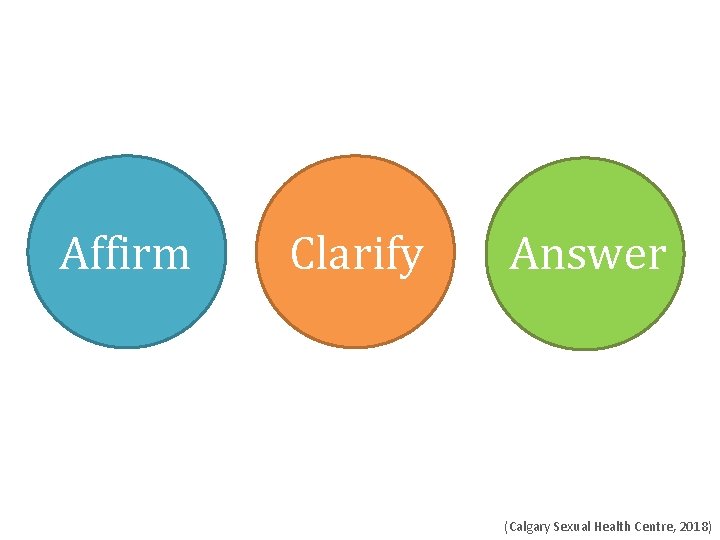
Affirm Clarify Answer (Calgary Sexual Health Centre, 2018)
Affirm • Let them know that it’s great they asked the question. • Reassure them that you are a good person to ask. (Calgary Sexual Health Centre, 2018)
Clarify • Ask any clarifying questions if you are not sure what they are asking. • You might also ask what they already know about the subject. (Calgary Sexual Health Centre, 2018)
Answer • When you answer the question, address the facts, feelings, and values that it brings up. . • Encourage them to ask questions and seek information in the future. (Calgary Sexual Health Centre, 2018)
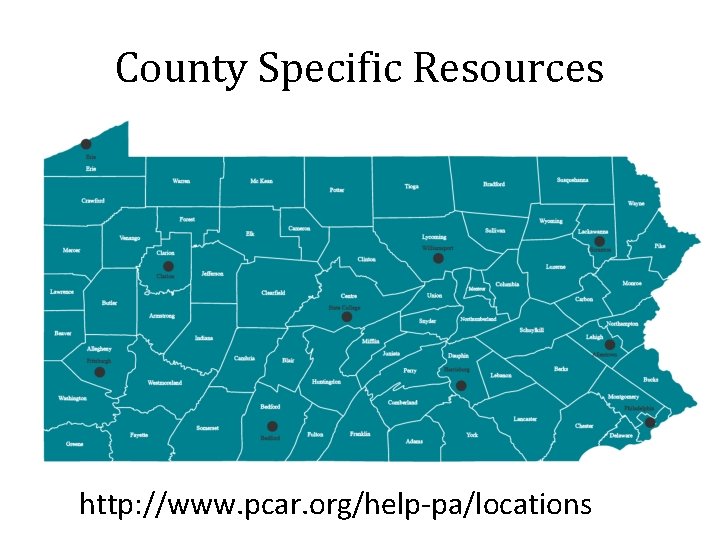
County Specific Resources http: //www. pcar. org/help-pa/locations
Additional Resources • Child Trauma Toolkit for Educators, The National Child Traumatic Stress Network http: //www. nctsn. org/sites/default/files/assets/pdfs/Chil d_Trauma_Toolkit_Final. pdf • The Brain, Body, and Trauma (e-learning course), The National Sexual Violence Resource Center http: //campus. nsvrc. org/ • Beyond the Birds and the Bees: Adolescent Sexual Consent and Disabilities: A Technical Assistance Guide (e -mail alivelsberger@pcar. org for a copy)
Pennsylvania Coalition Against Rape www. pcar. org or (717) 728 -9740 Kayla Houser Outreach Coordinator knhouser@pcar. org or ext. 117 Alexa Livelsberger Children’s Advocacy Coordinator alivelsberger@pcar. org or ext. 122
References Calgary Sexual Health Centre (2018). Supporting Consent, Healthy Relationships & Healthy Sexuality for Adolescents with Disabilities. National Child Traumatic Stress Network (2008). Child Trauma Toolkit for Educators. Retrieved from http: //www. nctsn. org/sites/default/files/assets/pdfs/Child_Trauma_Toolkit_Final. pd f Prevent Child Abuse Vermont (2016). Healthy Relationships Project: Care for Kids.
- Slides: 23