
Sex Determination in Humans Male Reproductive System Sperm
- Slides: 11
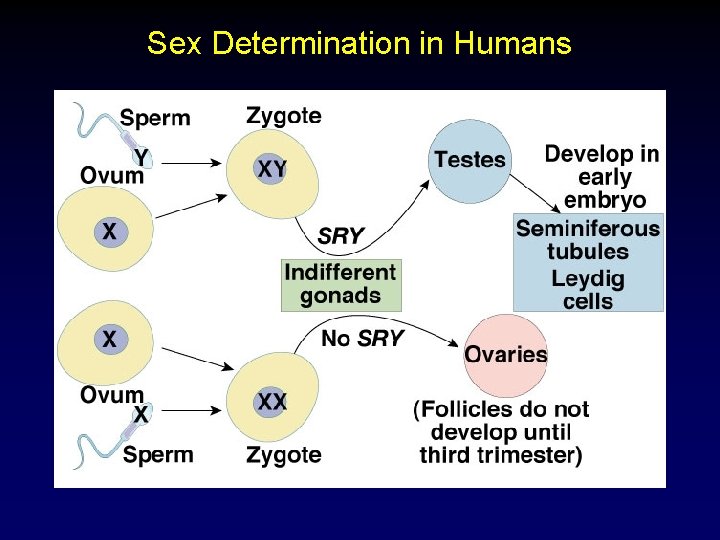
Sex Determination in Humans
Male Reproductive System • Sperm are produced in seminiferous tubules. – Leydig cells, located in interstitial tissue between seminiferous tubules (50 days), secrete testosterone (70 days). § Converts indifferent structures into male external genitalia (penis and scrotum). – In an adult, each testis is composed primarily of seminiferous tubules. § testes descend into scrotum v maintains slightly lowered temperature 2 2
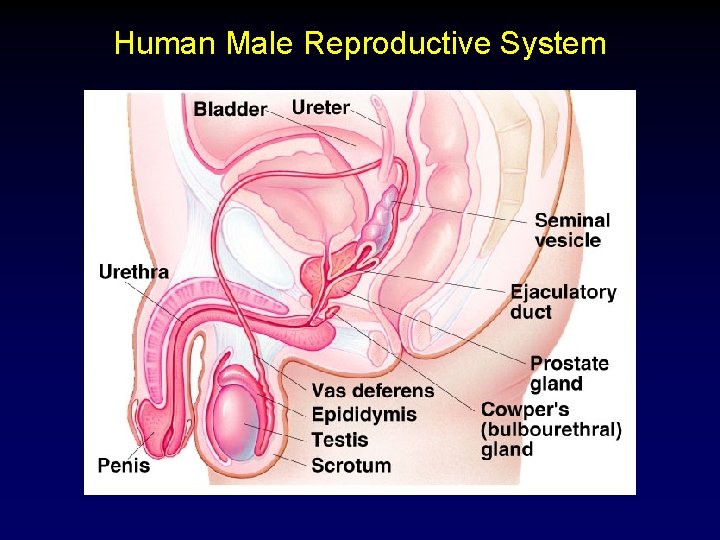
Human Male Reproductive System
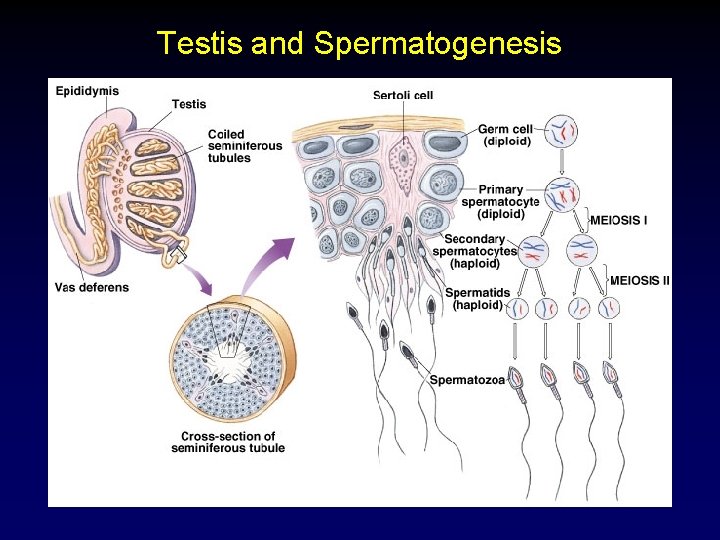
Male Reproductive System • Production of sperm – Wall of seminiferous tubule consists of germinal cells which become sperm, by meiosis, and supporting Sertoli cells (secrete products required for spermatogenesis, also engulfs the extra cytoplasm in spermatids). – Each parent cell undergoes mitosis, and one of the two daughter cells then undergoes meiosis to form sperm. 4 4
Male Reproductive System • Diploid daughter cell - primary spermatocyte – First meiotic division produces two haploid secondary spermatocytes. § Each undergoes second meiotic division to separate the chromatids and produce two haploid cells, spermatids. § Total of four haploid spermatids produced by each primary spermatocyte. 5 5
Testis and Spermatogenesis
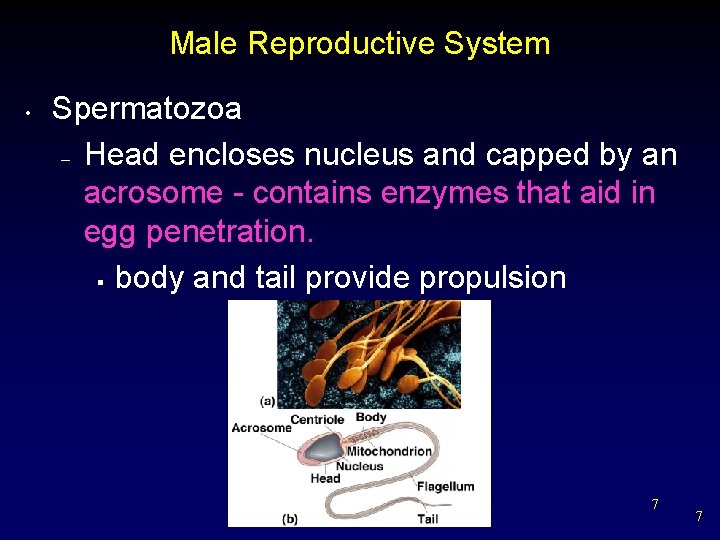
Male Reproductive System • Spermatozoa – Head encloses nucleus and capped by an acrosome - contains enzymes that aid in egg penetration. § body and tail provide propulsion 7 7
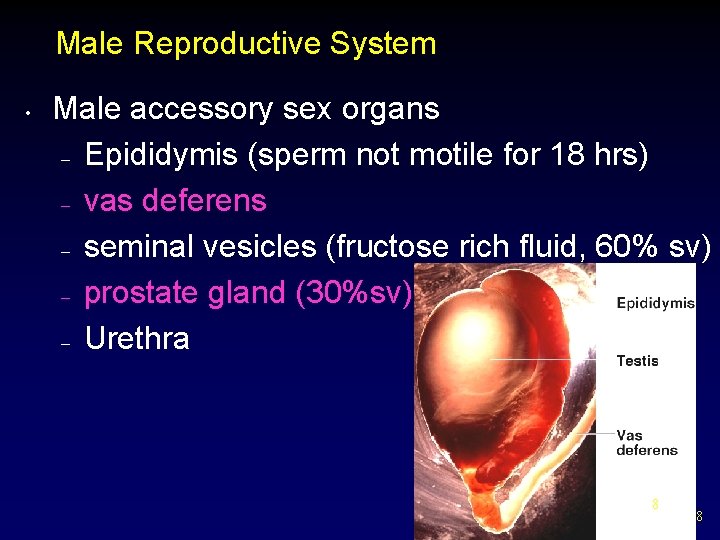
Male Reproductive System • Male accessory sex organs – Epididymis (sperm not motile for 18 hrs) – vas deferens – seminal vesicles (fructose rich fluid, 60% sv) – prostate gland (30%sv) – Urethra 8 8
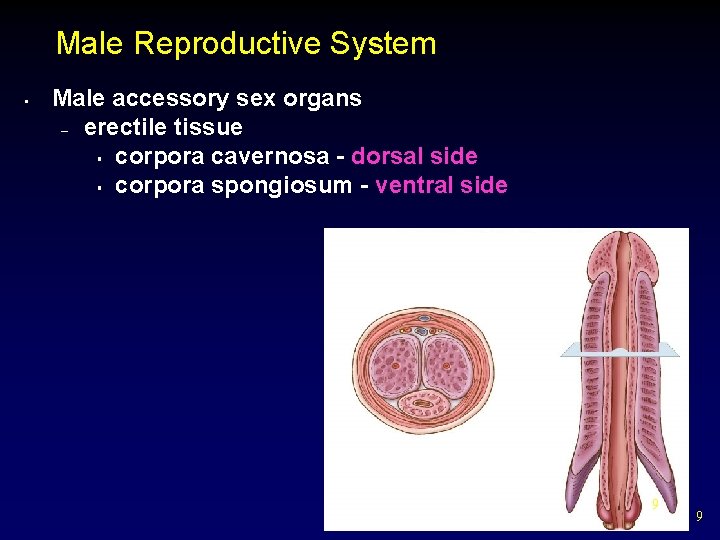
Male Reproductive System • Male accessory sex organs – erectile tissue § corpora cavernosa - dorsal side § corpora spongiosum - ventral side 9 9
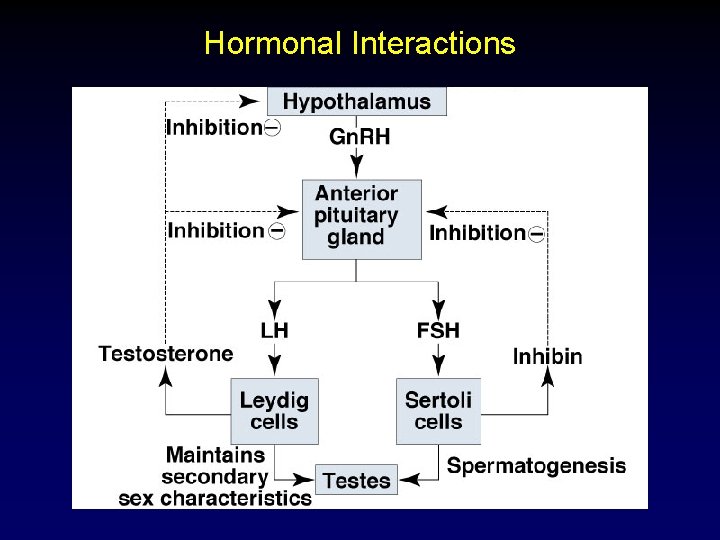
Male Reproductive System • Hormonal control of male reproduction – FSH stimulates the Sertoli to facilitate sperm development. – LH stimulates Leydig cells to secrete testosterone. § Principle negative feedback inhibition applies to FSH and LF secretion. 10 10
Hormonal Interactions