
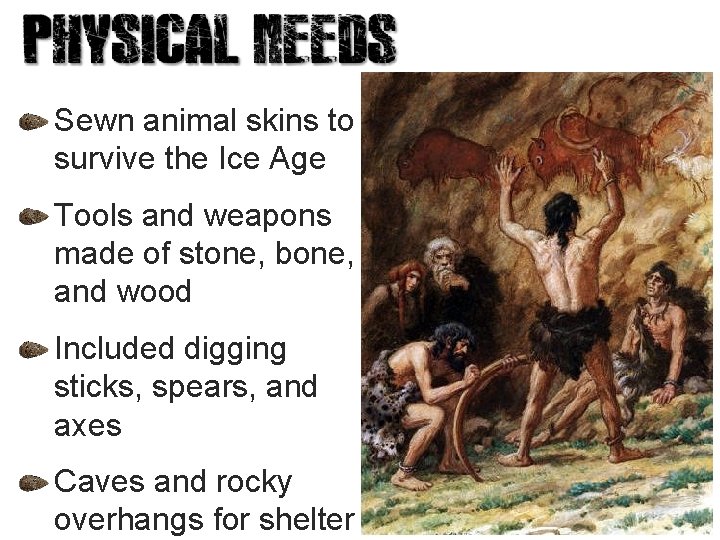
Sewn animal skins to survive the Ice Age

- Slides: 13
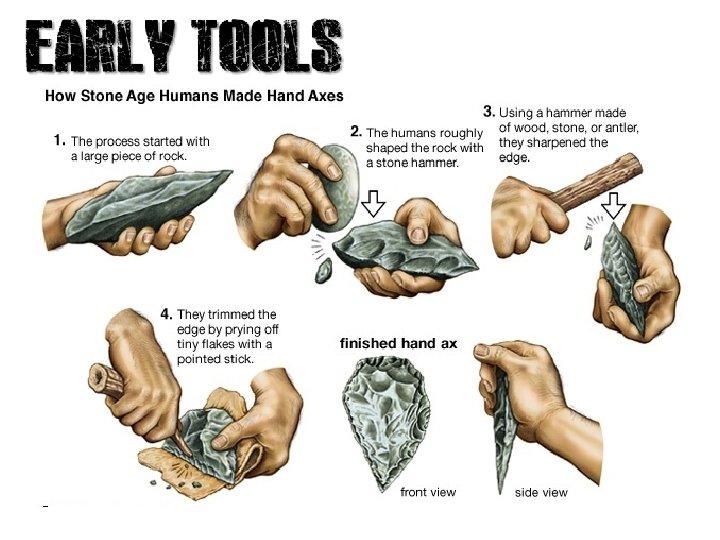
Sewn animal skins to survive the Ice Age Tools and weapons made of stone, bone, and wood Included digging sticks, spears, and axes Caves and rocky overhangs for shelter
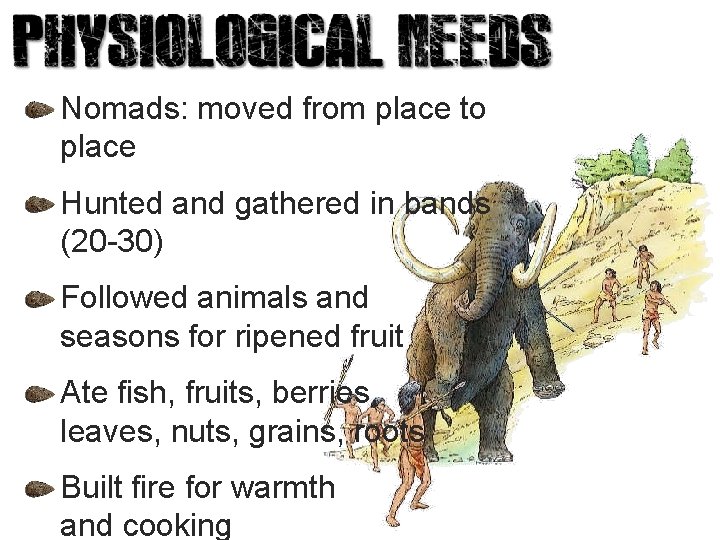
Nomads: moved from place to place Hunted and gathered in bands (20 -30) Followed animals and seasons for ripened fruit Ate fish, fruits, berries, leaves, nuts, grains, roots Built fire for warmth and cooking
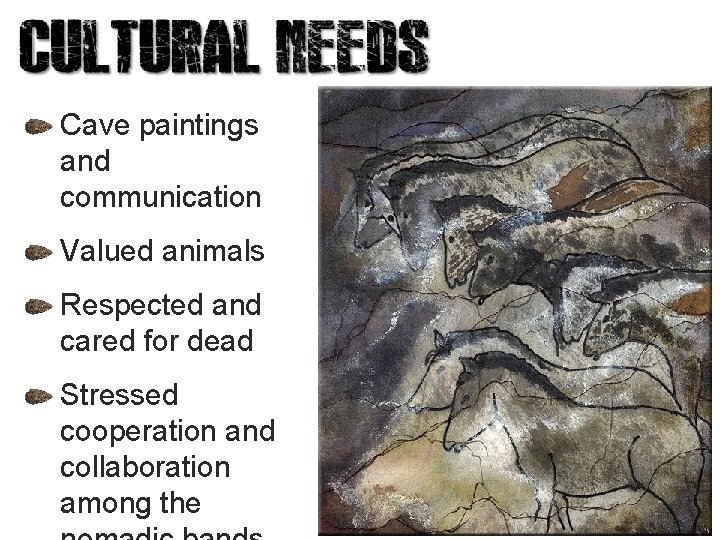
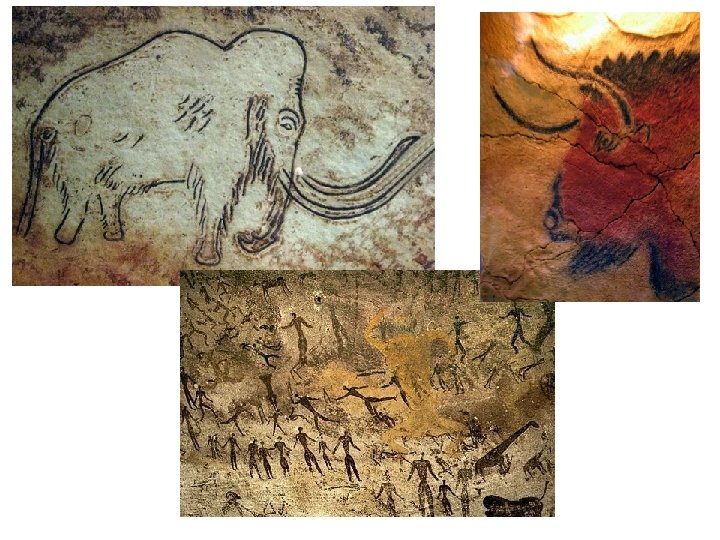
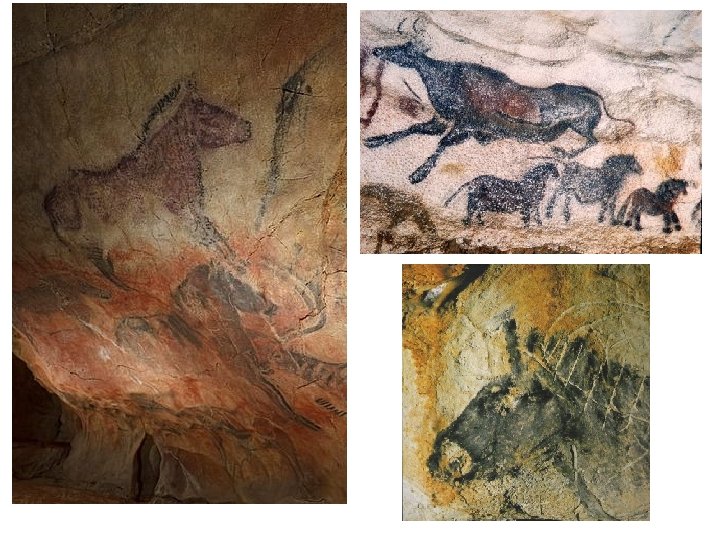
Cave paintings and communication Valued animals Respected and cared for dead Stressed cooperation and collaboration among the
Looked to animal spirits for answers (animism) Paintings of half-human half-animal beings Buried their dead and likely held ceremonies Believed in an afterlife Possible ancestor worship and cults
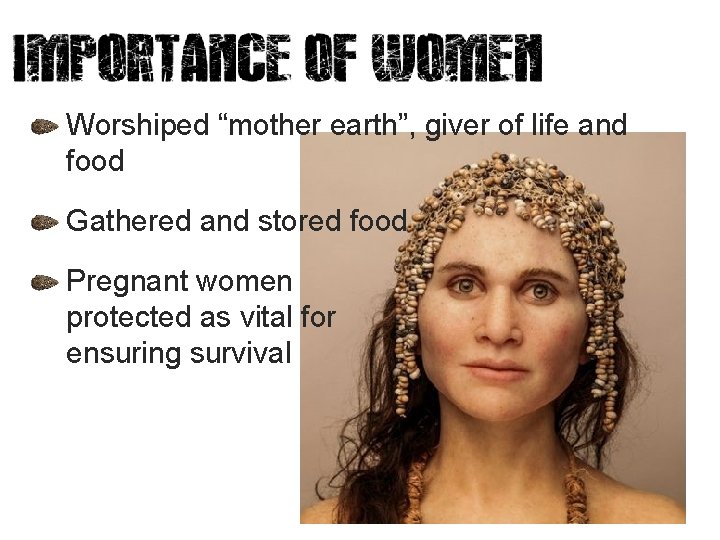
Worshiped “mother earth”, giver of life and food Gathered and stored food Pregnant women protected as vital for ensuring survival
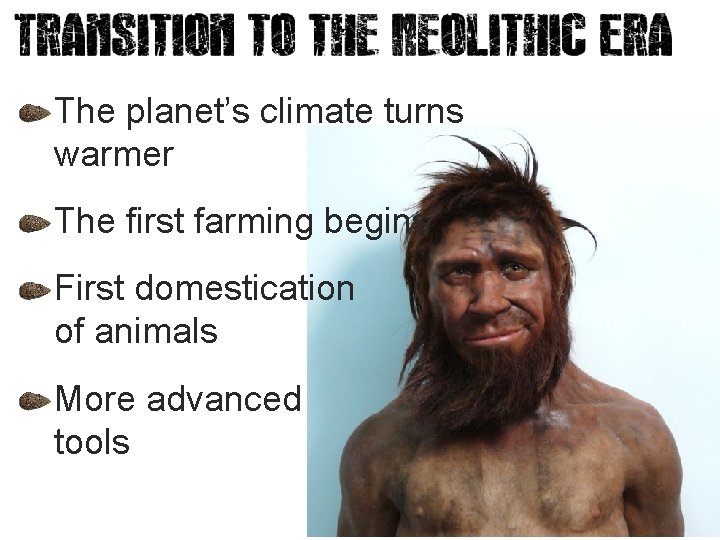
The planet’s climate turns warmer The first farming begins First domestication of animals More advanced tools
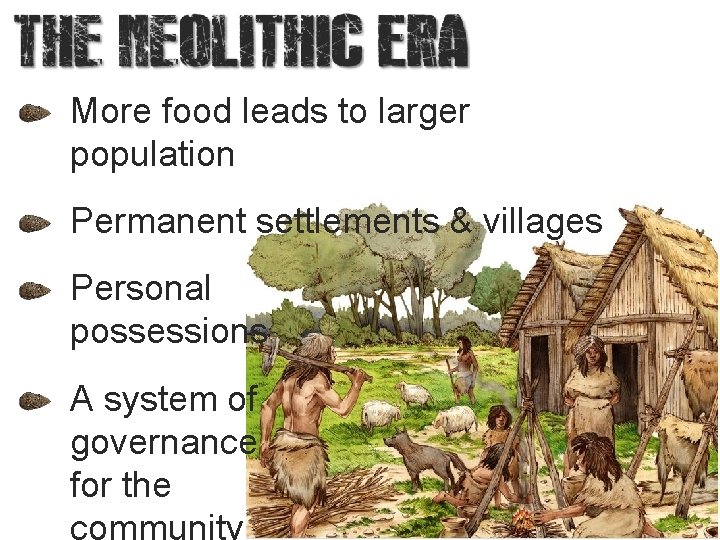
More food leads to larger population Permanent settlements & villages Personal possessions A system of governance for the
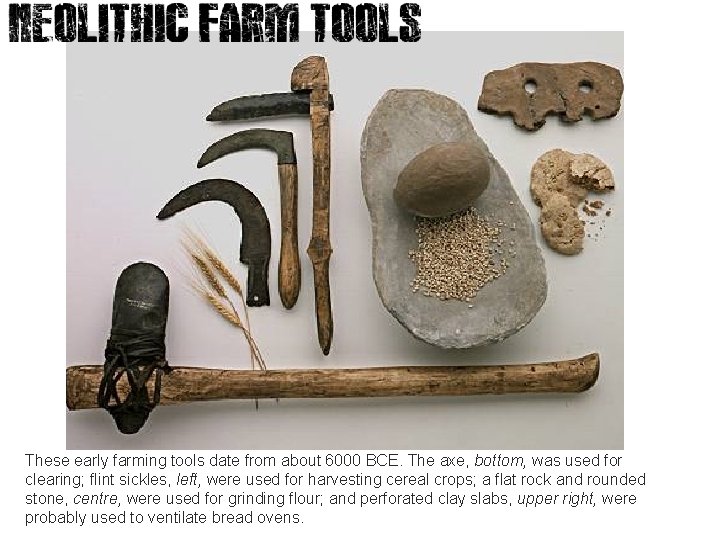
These early farming tools date from about 6000 BCE. The axe, bottom, was used for clearing; flint sickles, left, were used for harvesting cereal crops; a flat rock and rounded stone, centre, were used for grinding flour; and perforated clay slabs, upper right, were probably used to ventilate bread ovens.
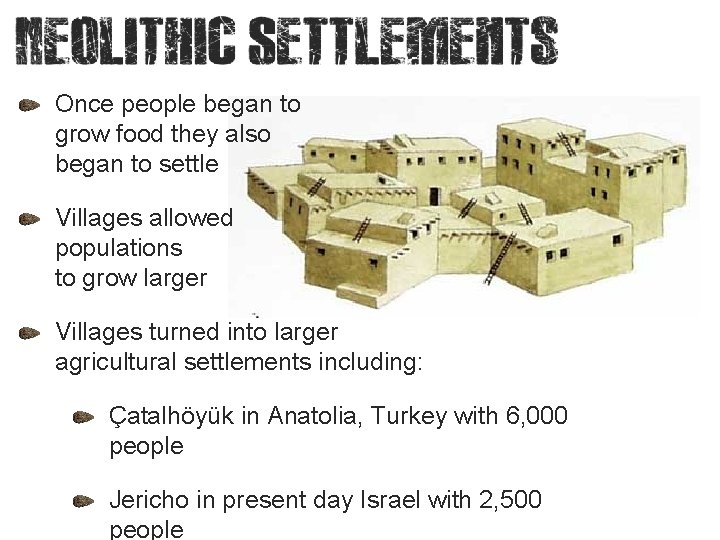
Once people began to grow food they also began to settle Villages allowed populations to grow larger Villages turned into larger agricultural settlements including: Çatalhöyük in Anatolia, Turkey with 6, 000 people Jericho in present day Israel with 2, 500 people