
Sewing Equipment Chapter 63 1 Sewing Machine Refer



- Slides: 35
Sewing Equipment Chapter 63 1
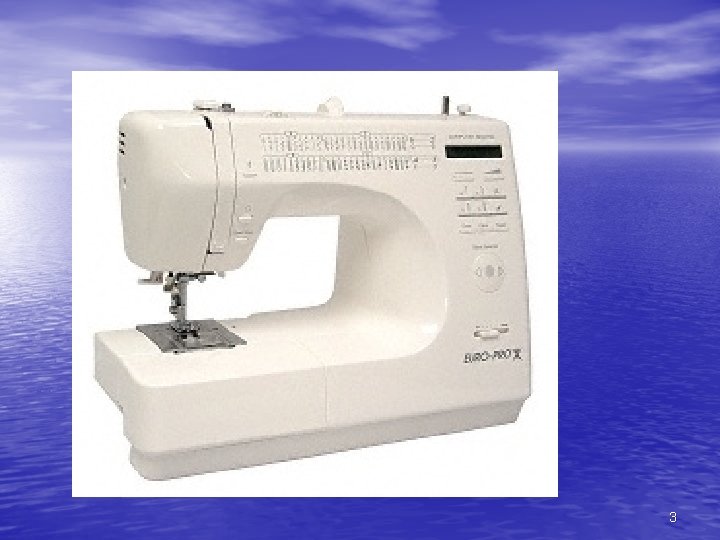
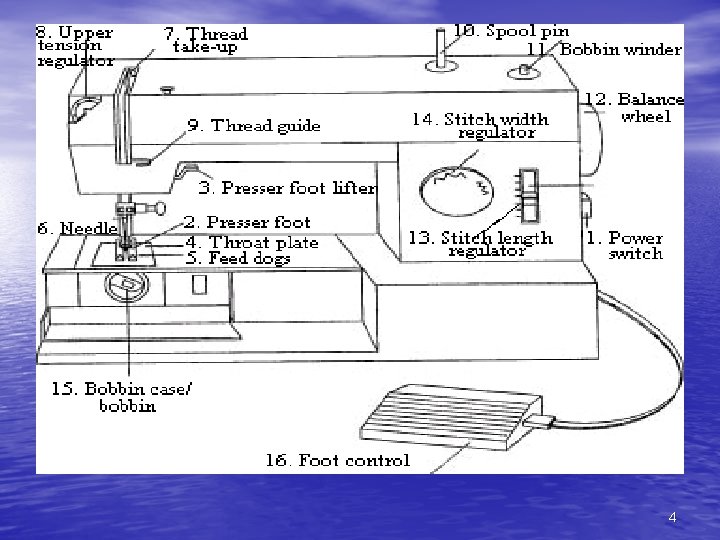
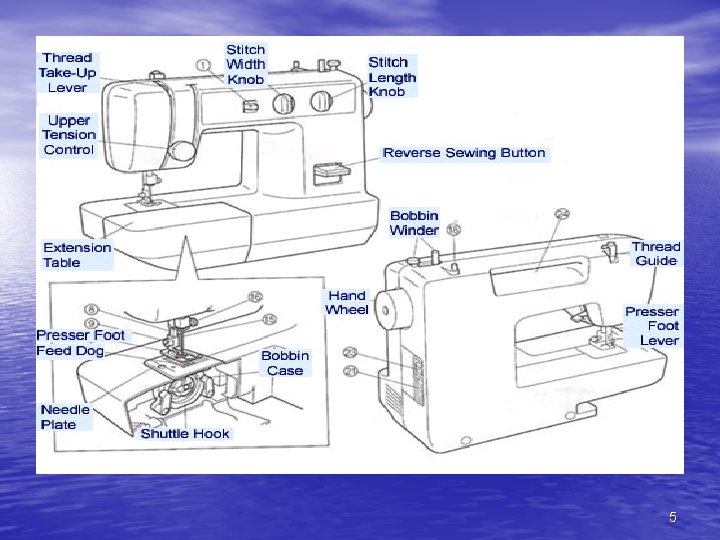
Sewing Machine • Refer to Figure 63. 1 for parts, page 608 • Lockstitch = stitch that uses a thread above the fabric to join another thread (bobbin thread) coming from below the fabric 2
3
4
5
6
7
8
9
• Feed dogs = two small rows of metal teeth that advance the fabric evenly for each stitch **operated by knee or foot control **hand-wheel raises and lowers the needle 10
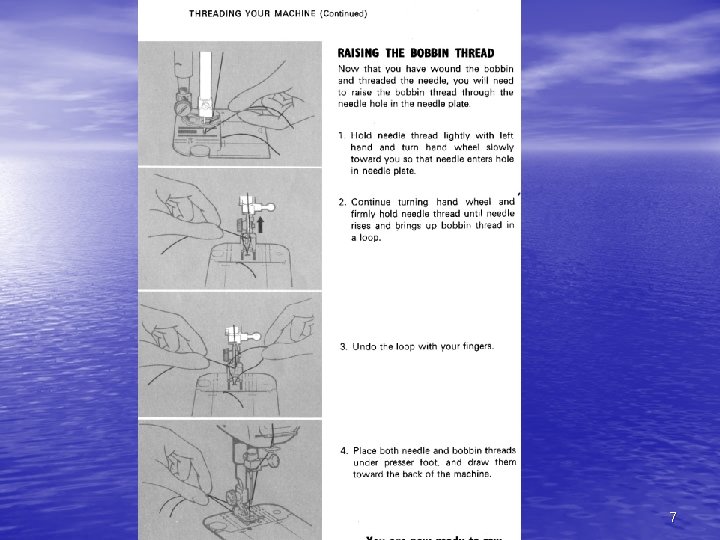
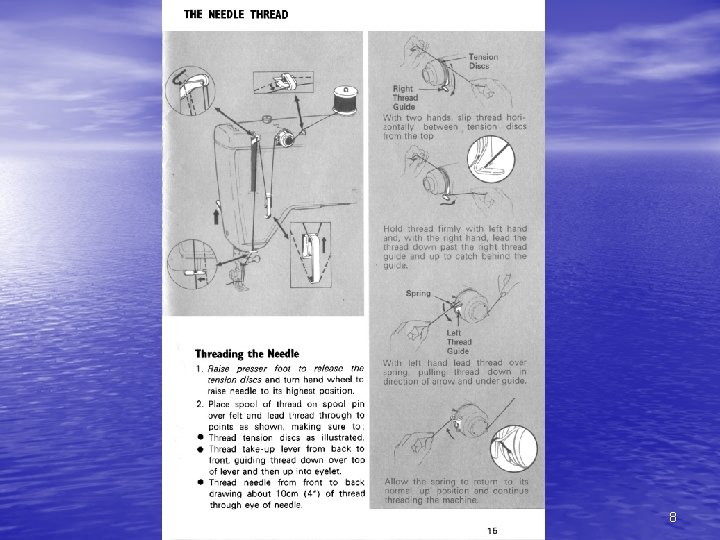
Threading the Machine • **all machines are different but basic steps are the same • 1. thread goes from spool • 2. to upper tension • 3. to take-up lever • 4. then down to the needle through needle guide 11
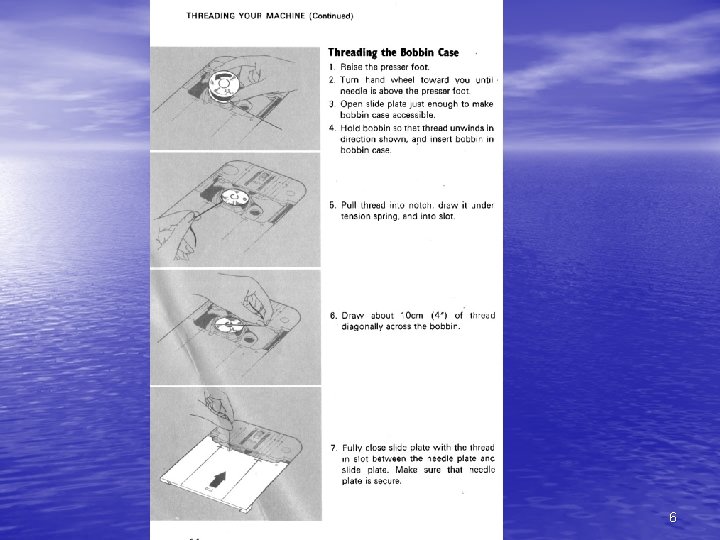
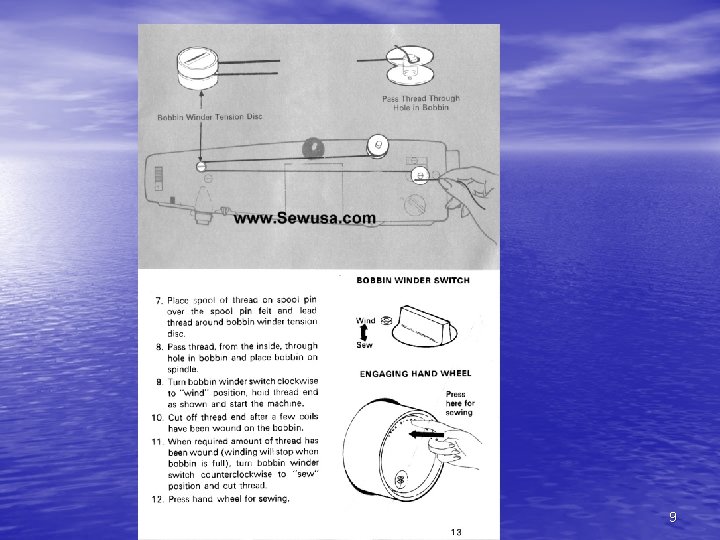
• Bobbin = small spool that holds the bottom thread • Make sure thread winds evenly, perhaps by guiding it between your fingers until the bobbin is about three-quarters full. 12
Adjusting Stitches • Regular stitch – Medium-length stitch (10 -12 stitches per inch) • Basting stitch – Long stitch (4 – 6 stitches per inch) • Reinforcement stitch – Short stitch (18 -20 stitches per inch) – Strengthens corners, etc 13
• Zigzag stitch – Sideways stitch to finish seam allowances • Specialty stitches – Many machines have a variety 14
Machine Needles • General or universal – For most fabrics (all purpose) • Ballpoint – Rounded point for knits – ***bent or damaged needles hurt machine – ***won’t sew correctly 15
Caring for Machine • **regularly clean and oil machines • Also vacuum out dust bunnies, etc 16
• Some computerized sewing machines allow sewers to use preprogrammed decorative stitches or to design their own. • Manufacturers are now seeking ways to link sewers’ machines with their home computers to store custom stitches in the computer’s memory. 17
• Other features include a motor that allows sewers to stitch on thick fabrics; • an electronic sensor to signal that the bobbin is nearly empty; • and other sensors that adjust thread tension to match the fabric and stitch selection. 18
Serger • Over-lock sewing machine – Trims, sews, and overcasts in one step – See figure 63. 2 – Can be used like a sewing machine but does not replace it 19
2 Basic Stitches on Serger • 1. Over-lock which is used for seams • 2. Over-edge which finishes edges 20
Serger Parts • Loopers = parts that perform as bobbins do on conventional sewing machine • Cutting knives = one moveable and the other stationary to trim and smooth fabric 21
Serger cont… • Special edge finishes and decorative stitching • Special threads = lighter weight than normal threads (up to 5 on a serger) • Differential feeds = provides different speeds for feeding fabric 22
Real Life • Sergers were developed in the early 1900’s by manufacturers of military uniforms made of serge, a cloth woven in a twin pattern from woolen fibers. • Sergers enabled the clothing manufacturers to provide a great many uniforms quickly and inexpensively. 23
• The numbers used to identify a serger refer to the number of threads it uses. • A 4/2 thread serger uses two or four threads; a 4/3 thread serger; three to four threads. • Both types have two needles and two loopers. 24
• A ruffling attachment on a serger can make it easier to sew ruffled pillows or curtains. • The serger can gather fabric, attach the ruffle, and finish the seam, all at the same time. • The serger’s rolled-hem stitch finishes sheer curtains for a delicate, billowy look. 25
Consumer Skills • New sewers should buy a less expensive sewing machine and trade up as their skills improve. • Many dealers take trade-ins and apply them toward the price of a new machine. • As you consider buying a sewing machine or serger, try it out using fabrics you want to work on. 26
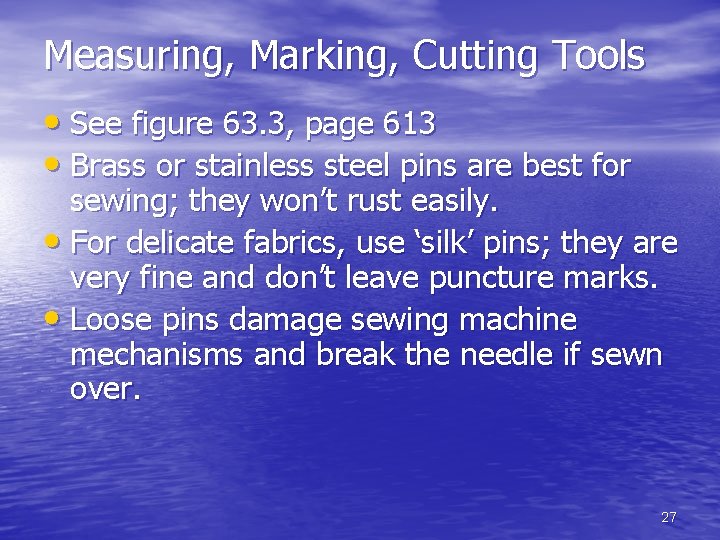
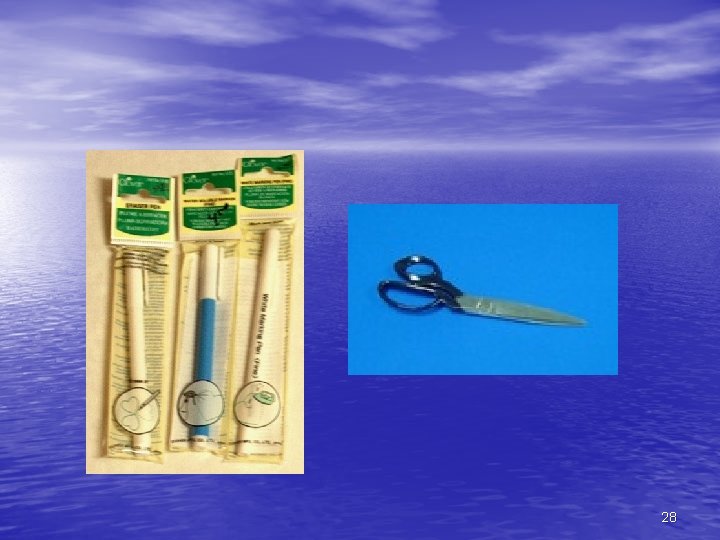
Measuring, Marking, Cutting Tools • See figure 63. 3, page 613 • Brass or stainless steel pins are best for sewing; they won’t rust easily. • For delicate fabrics, use ‘silk’ pins; they are very fine and don’t leave puncture marks. • Loose pins damage sewing machine mechanisms and break the needle if sewn over. 27
28
29
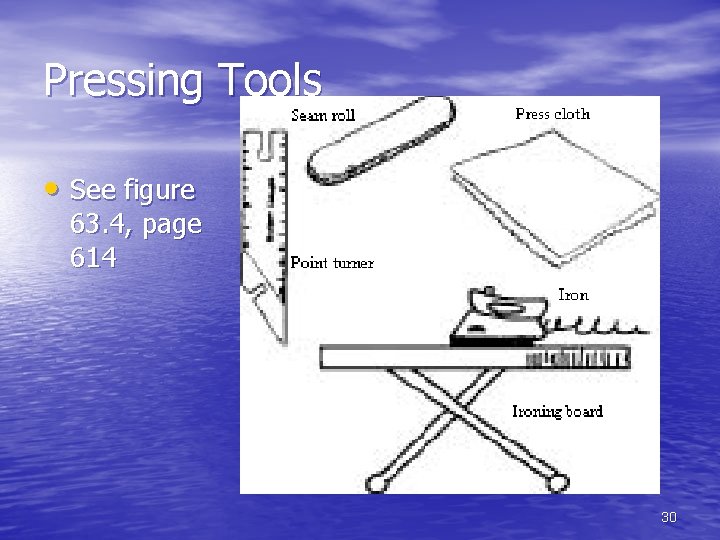
Pressing Tools • See figure 63. 4, page 614 30
Troubleshooting Skills • Skipped stitches= make sure needle size and type are right for fabric; rethread machine; loosen tension • Bunching of thread = hold thread ends behind presser foot when starting to stitch 31
Troubleshooting cont…. . • Puckering; loosen tension; replace needle; shorten stitch length • Thread breaks= check threading and needle; begin stitching more slowly • Machine jams = check threading, needle position, and bobbin 32
Activity • Describe the function of the item on the care while the class tries to identify it. 33
Activity 2 • Comparing costs= list any sewing tools and equipment that you already have. What additional tools would you need to begin a sewing project? Estimate the cost of the tool, if the cost is too high, what other options might you have? 34
Activity 3 • Sewing Sample • Choose three different types of thread, and hand sew a line of running stitches with each. How does each one handle? Predict how each one might perform in a sewing machine or serger. Then use threads to sew a sample of stitches on the sewing machine. What differences do you notice? 35