
Sewer Testing Information Saint Paul Public Works Sewer
Sewer Testing Information Saint Paul Public Works - Sewer Utility Sewer Testing Information
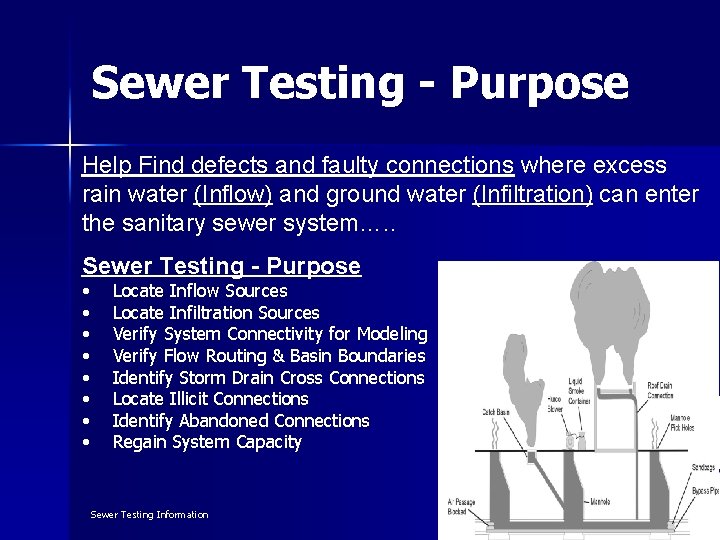
Sewer Testing - Purpose Help Find defects and faulty connections where excess rain water (Inflow) and ground water (Infiltration) can enter the sanitary sewer system…. . Sewer Testing - Purpose • • Locate Inflow Sources Locate Infiltration Sources Verify System Connectivity for Modeling Verify Flow Routing & Basin Boundaries Identify Storm Drain Cross Connections Locate Illicit Connections Identify Abandoned Connections Regain System Capacity Sewer Testing Information
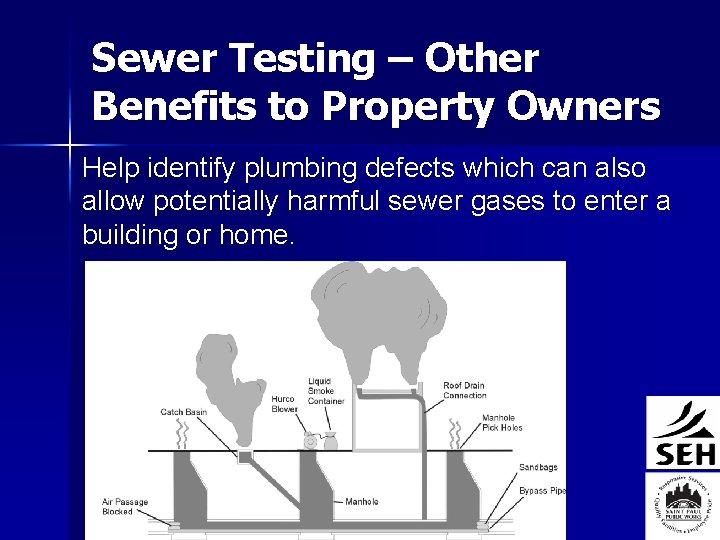
Sewer Testing – Other Benefits to Property Owners Help identify plumbing defects which can also allow potentially harmful sewer gases to enter a building or home. Sewer Testing Information
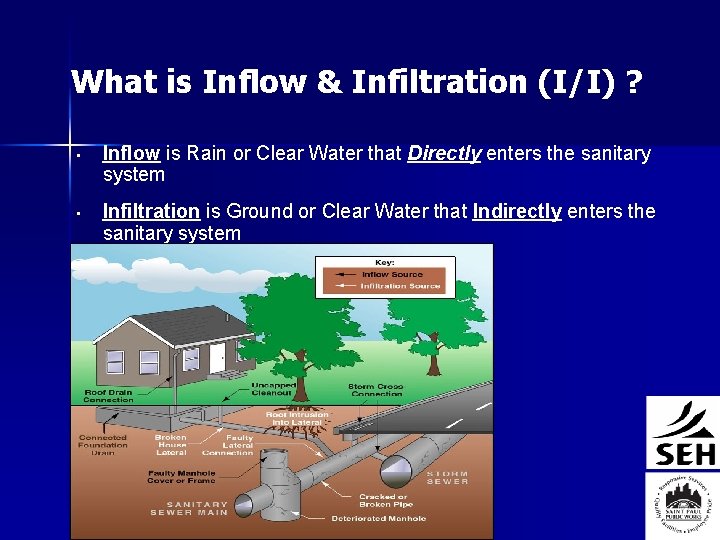
What is Inflow & Infiltration (I/I) ? • Inflow is Rain or Clear Water that Directly enters the sanitary system • Infiltration is Ground or Clear Water that Indirectly enters the sanitary system Sewer Testing Information
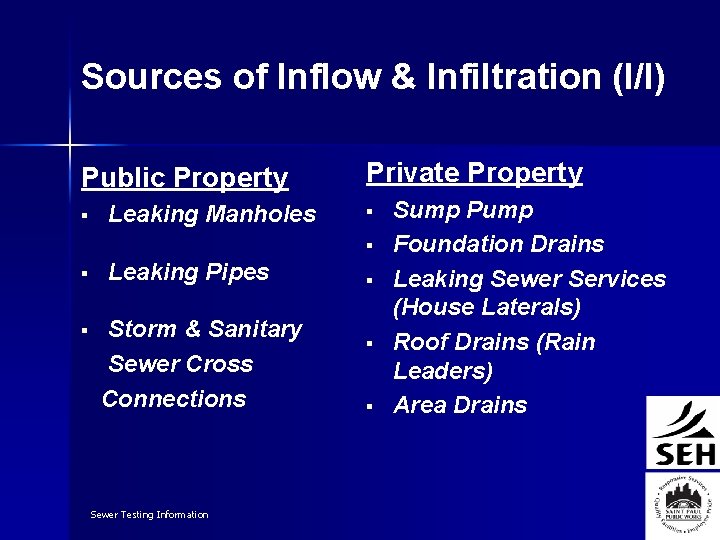
Sources of Inflow & Infiltration (I/I) Public Property § Leaking Manholes Private Property § § Leaking Pipes Storm & Sanitary Sewer Cross Connections Sewer Testing Information § § § Sump Pump Foundation Drains Leaking Sewer Services (House Laterals) Roof Drains (Rain Leaders) Area Drains
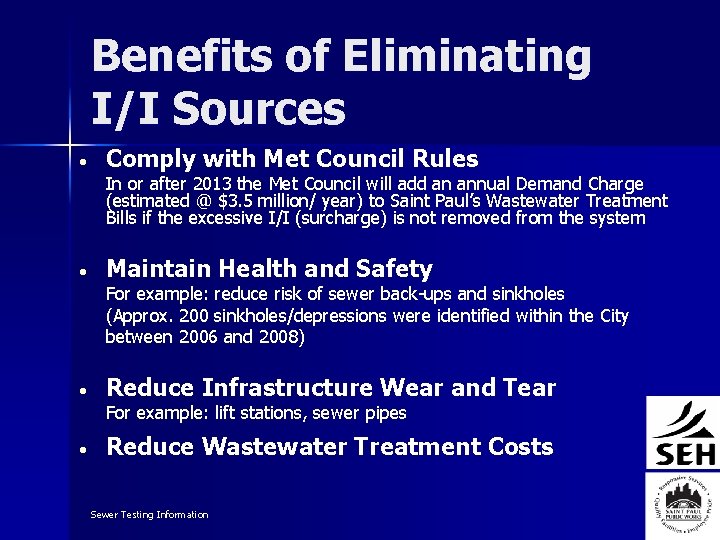
Benefits of Eliminating I/I Sources • Comply with Met Council Rules In or after 2013 the Met Council will add an annual Demand Charge (estimated @ $3. 5 million/ year) to Saint Paul’s Wastewater Treatment Bills if the excessive I/I (surcharge) is not removed from the system • Maintain Health and Safety For example: reduce risk of sewer back-ups and sinkholes (Approx. 200 sinkholes/depressions were identified within the City between 2006 and 2008) • Reduce Infrastructure Wear and Tear For example: lift stations, sewer pipes • Reduce Wastewater Treatment Costs Sewer Testing Information
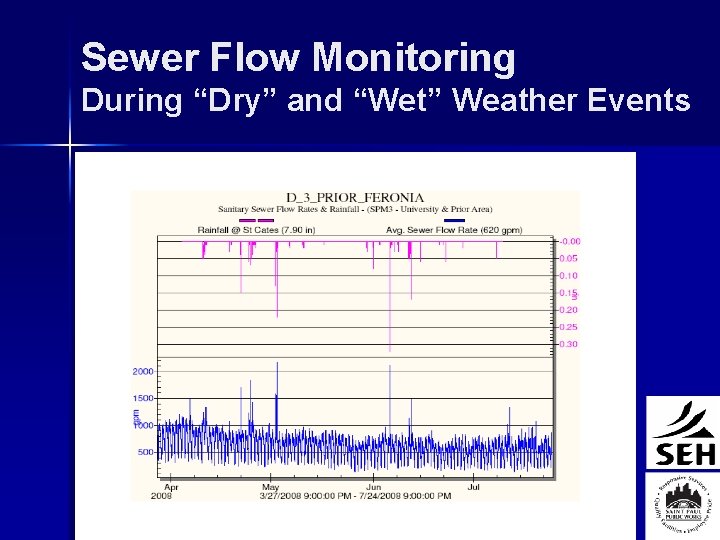
Sewer Flow Monitoring During “Dry” and “Wet” Weather Events Sewer Testing Information
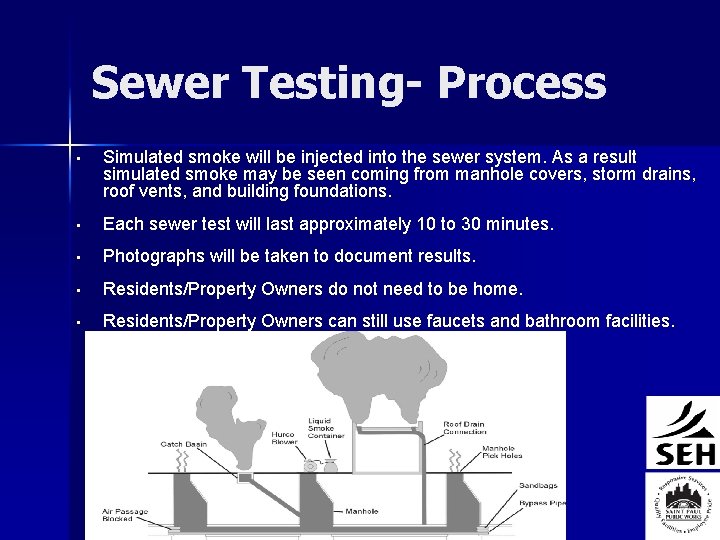
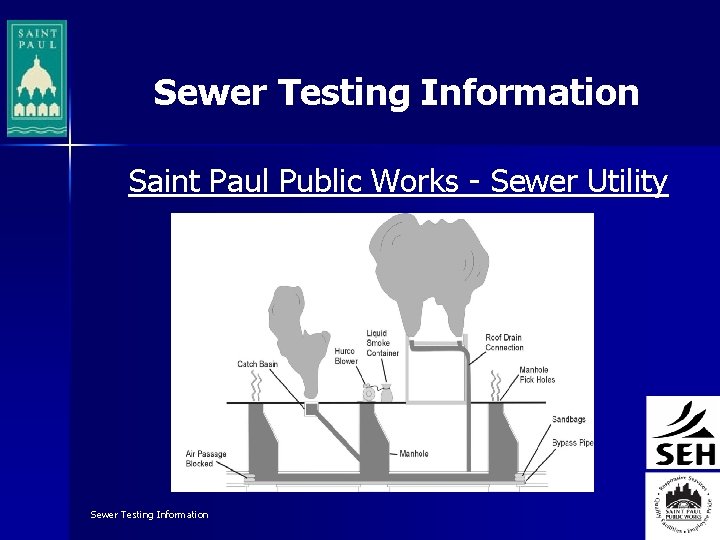
Sewer Testing- Process • Simulated smoke will be injected into the sewer system. As a result simulated smoke may be seen coming from manhole covers, storm drains, roof vents, and building foundations. • Each sewer test will last approximately 10 to 30 minutes. • Photographs will be taken to document results. • Residents/Property Owners do not need to be home. • Residents/Property Owners can still use faucets and bathroom facilities. Sewer Testing Information
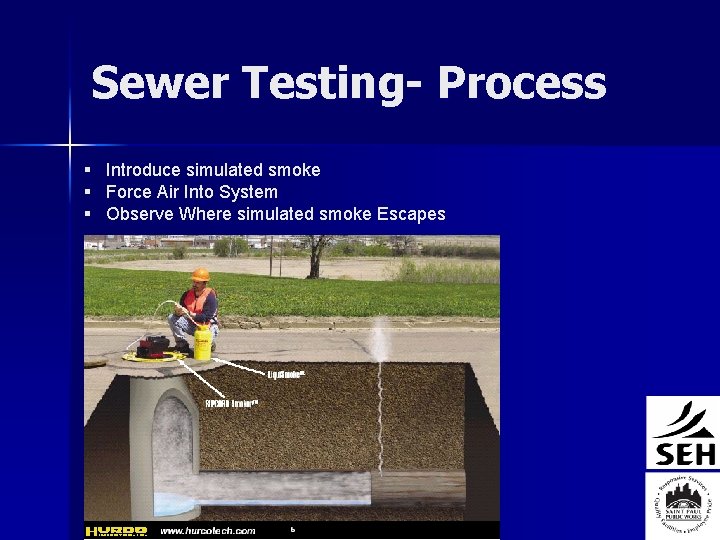
Sewer Testing- Process § Introduce simulated smoke § Force Air Into System § Observe Where simulated smoke Escapes Sewer Testing Information
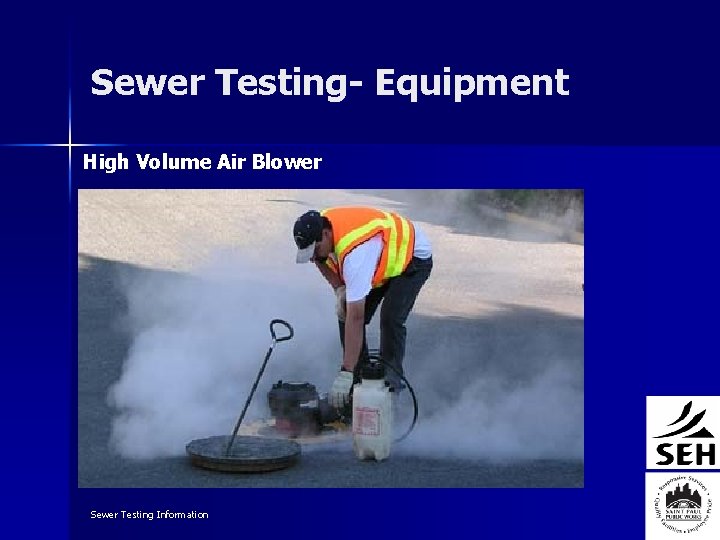
Sewer Testing- Equipment High Volume Air Blower Sewer Testing Information
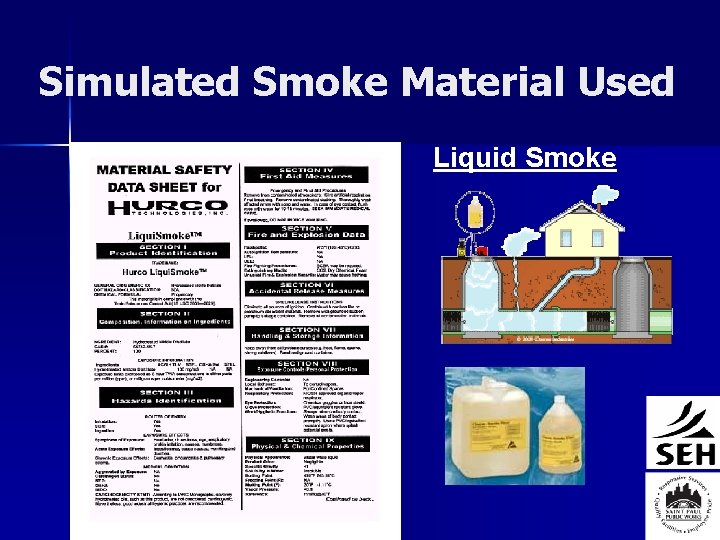
Simulated Smoke Material Used Liquid Smoke Sewer Testing Information
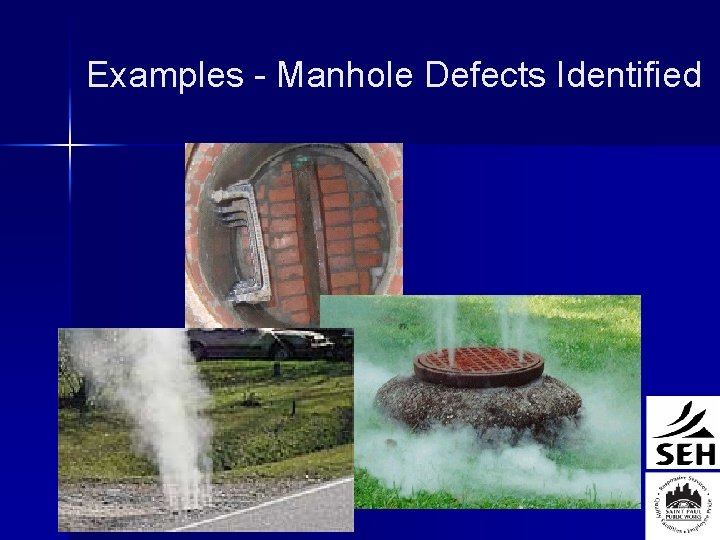
Examples - Manhole Defects Identified Sewer Testing Information
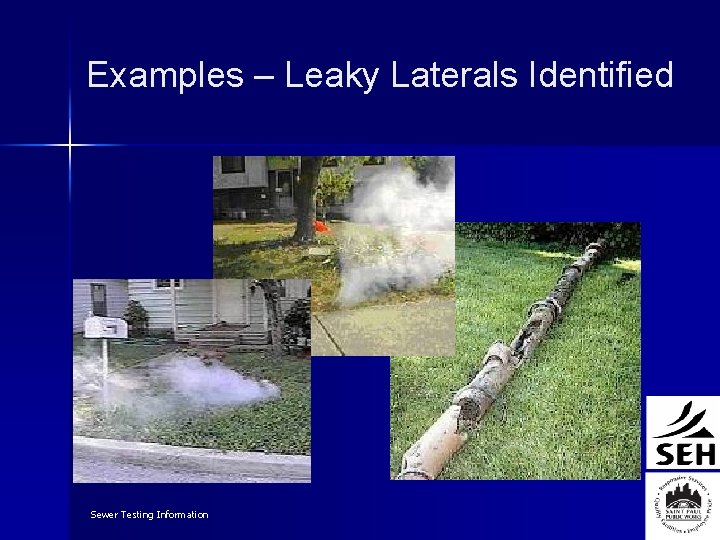
Examples – Leaky Laterals Identified Sewer Testing Information
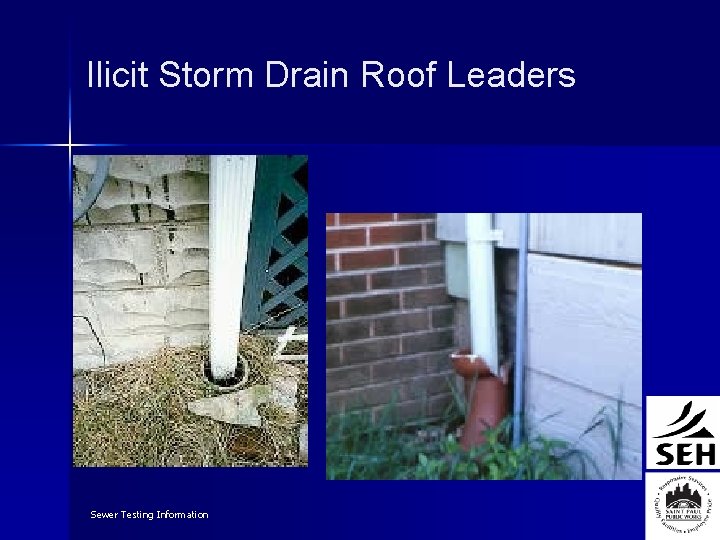
Ilicit Storm Drain Roof Leaders Sewer Testing Information
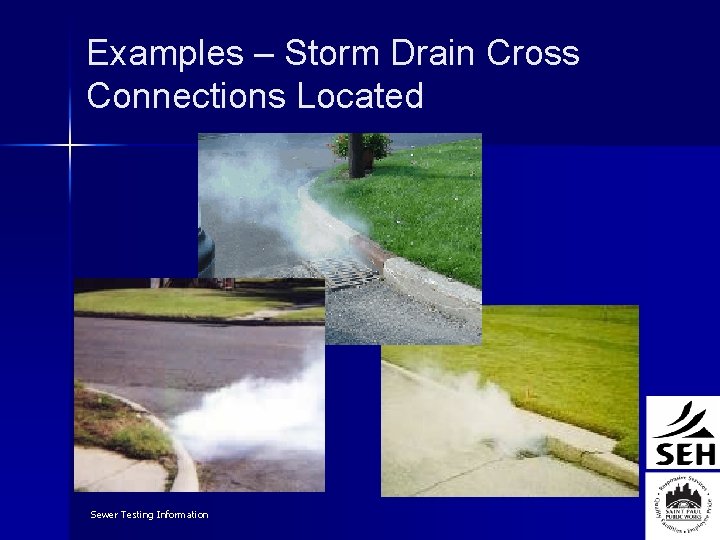
Examples – Storm Drain Cross Connections Located Sewer Testing Information
Sewer Testing – Tips for Residents & Property Owners Tips to prevent simulated smoke from entering your home (complete prior to test) • Run water faucets for a few seconds in unused sinks, tubs, and drains to fill fixture traps. • Pour water into each basement floor drain (at least 1 gallon) • If you have defective plumbing (i. e. no trap), you should consult with a licensed plumber. If you notice simulated smoke in your home • Do NOT become alarmed. • Open doors and windows to clear simulated smoke. • Please notify the Testing Crew Chief @ (651) 238 -0572 • Simulated smoke will not stain walls or furniture; nor leave a residue. • Consult a licensed plumber in the near future to identify the simulated smoke access area, as the potential exists for sewer gases to enter your home in the same manner. Sewer Testing Information
Sewer Testing – Safety and Health • There is NO danger of fire or explosion of sewer gas with Sewer testing. • St. Paul Police and Fire Departments will be notified of the Sewer testing. • If there is an individual in your home or business who has respiratory and/or mobility limitations please notify the Sewer Utility @ (651) 266 -6171 (prior to testing). • Avoid unnecessary exposure to the simulated smoke. The simulated smoke is not harmful to your health but may cause some coughing. Simulated smoke irritation is temporary and should disappear after exposure has ceased. • A copy of Material Safety Data Sheet (MSDS) for the simulated smoke can be found on Saint Paul’s Home website page (www. stpaul. gov) under the headings of Government/Public Works/ Sewer Utility/ Sewer Testing/ Safety. Sewer Testing Information
Sewer Testing – Communication Steps (after initial mailing) Ø Ø Ø Police & Fire Departments will be notified on a regular basis. Within 3 days of testing Door Hangars will be placed on property front doors. An automated phone call will be made notifying properties that testing will occur in a few days. Properties/ Residents who have notified the City as having individuals with respiratory and/or mobility limitations, or pet concerns: Ø Ø Will be contacted again by the testing contractor identifying a more specific time for which testing will occur. Properties will be monitored during the time of the test. Sewer Testing Information
Other Information Sanitary Sewer Services For information regarding Televising or Repairing Your Sanitary Sewer Service please…… Contact the Sewer Utility Permit Desk @ (651) 266 -6234 Sewer Testing Information
- Slides: 19