
Seven Principles of Learning Motivation Prior Knowledge Metacognition
- Slides: 14
Seven Principles of Learning Motivation Prior Knowledge Metacognition Diverse learning style Principled content knowledge Practices and activity shape understanding Socially-supported interactions
Designing for Inquiry • Goals – Process – Content – Attitude • Design activity – Deliberate sequencing – Match activity to goal • Meaning making - Synthesize
Assessment & Knowing Goals What would a successful student look like? How would you know? Reading/writing/talking/drawing Be clear on the main idea you want people to come away with; if it were a bumper sticker, what would it say? – Light travels in straight path – Learners need to know how to raise and answer questions – People should be aware of the processes of science Be selective, if you try to cover too much, you may lose the audience
The process skills of science • Being like a scientist – Define desired skills, questioning, predicting, data collection; synthesizing – Pre-test—written, oral, performance; – Design/do an entire inquiry – Thinking like a scientist? – Asking and answering questions – ---- How would you know?
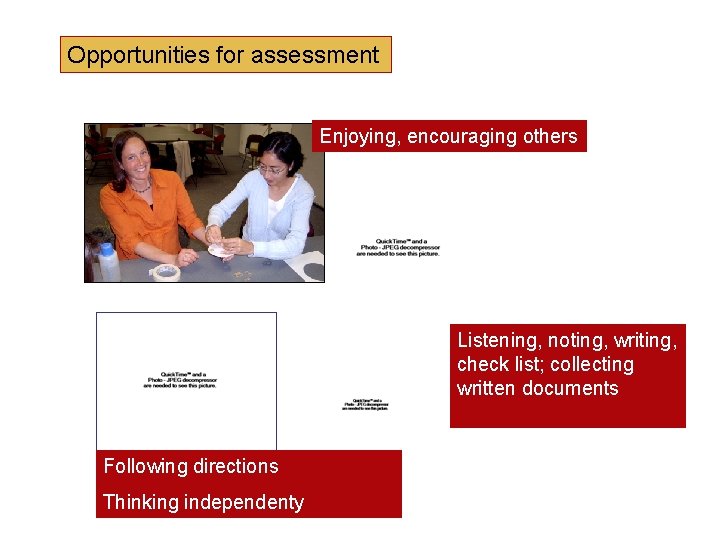
Opportunities for assessment Enjoying, encouraging others Listening, noting, writing, check list; collecting written documents Following directions Thinking independenty
Working on specific skills—questioning • Question generation – Listening to conversation, rubric for questions, – Collecting samples over time; – Constrain/reword questions; • Illustrate when they are answered – What happened to them? – Question boards with categories
Assessing Content Pre- and post-tests Written, verbal; Astronomy diagnostic test Performance Doing a particular activity ----
Attitude goals Appreciate science —Public understanding of what scientists do Equity goals —equal access to science, leaky pipeline for girls and culturally and linguistically diverse populations – ----------
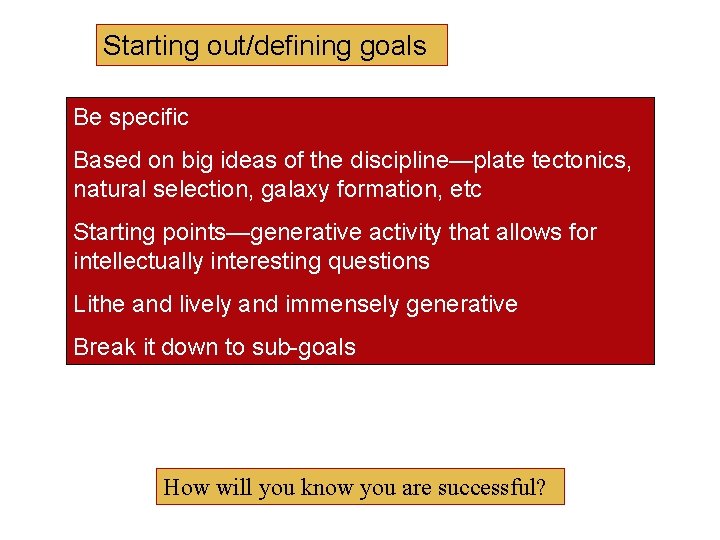
Starting out/defining goals Be specific Based on big ideas of the discipline—plate tectonics, natural selection, galaxy formation, etc Starting points—generative activity that allows for intellectually interesting questions Lithe and lively and immensely generative Break it down to sub-goals How will you know you are successful?
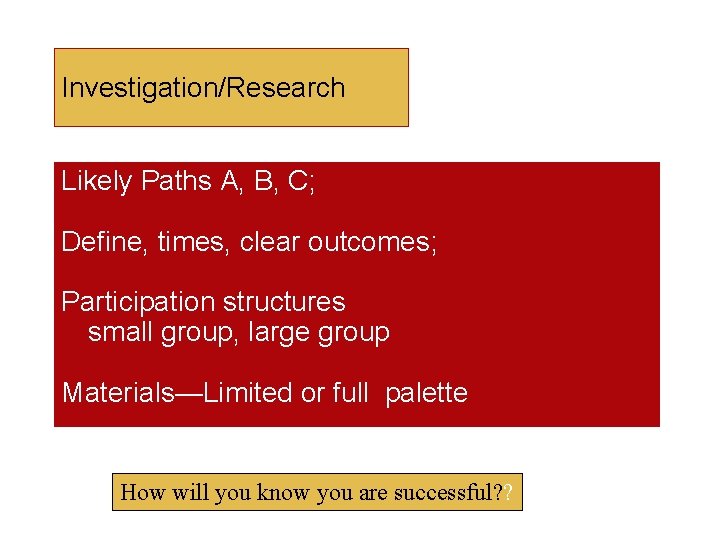
Investigation/Research Likely Paths A, B, C; Define, times, clear outcomes; Participation structures small group, large group Materials—Limited or full palette How will you know you are successful? ?
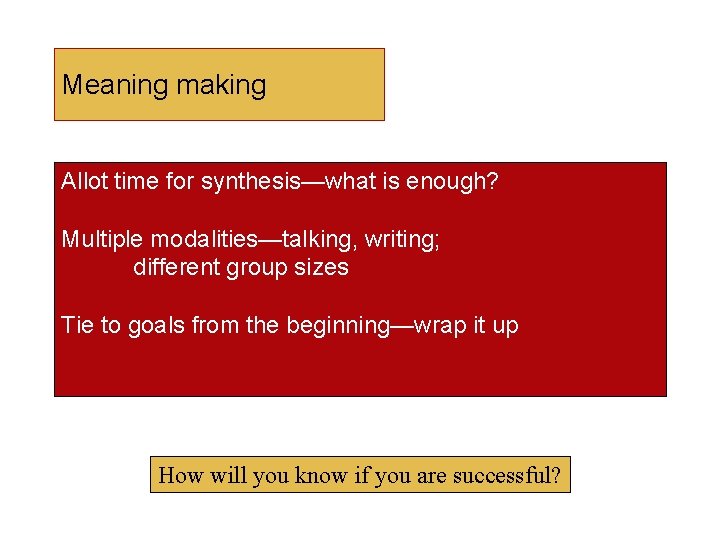
Meaning making Allot time for synthesis—what is enough? Multiple modalities—talking, writing; different group sizes Tie to goals from the beginning—wrap it up How will you know if you are successful?
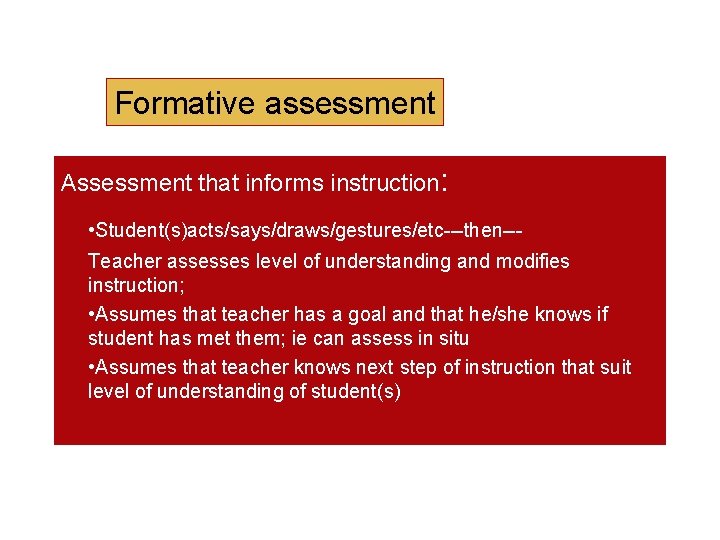
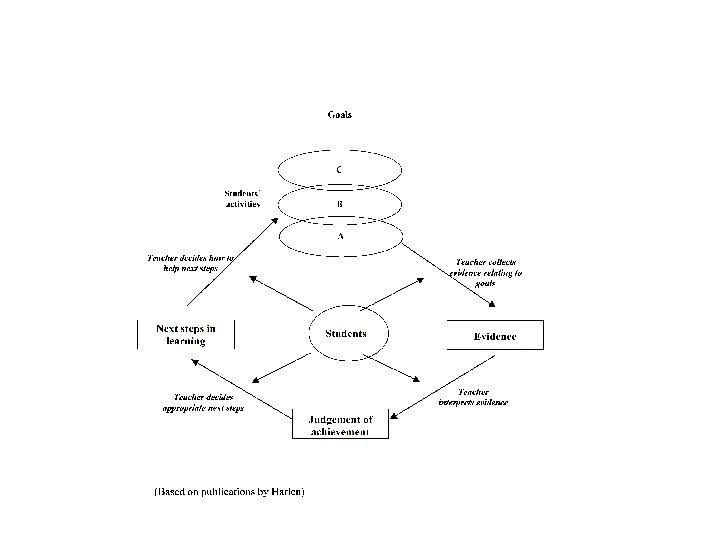
Electronic feedback Formative assessment Assessment that informs instruction: • Student(s)acts/says/draws/gestures/etc---then--Teacher assesses level of understanding and modifies instruction; • Assumes that teacher has a goal and that he/she knows if student has met them; ie can assess in situ • Assumes that teacher knows next step of instruction that suit level of understanding of student(s)