
Seven Functions of Skin MechanicalChemical damage keratin toughens

- Slides: 23
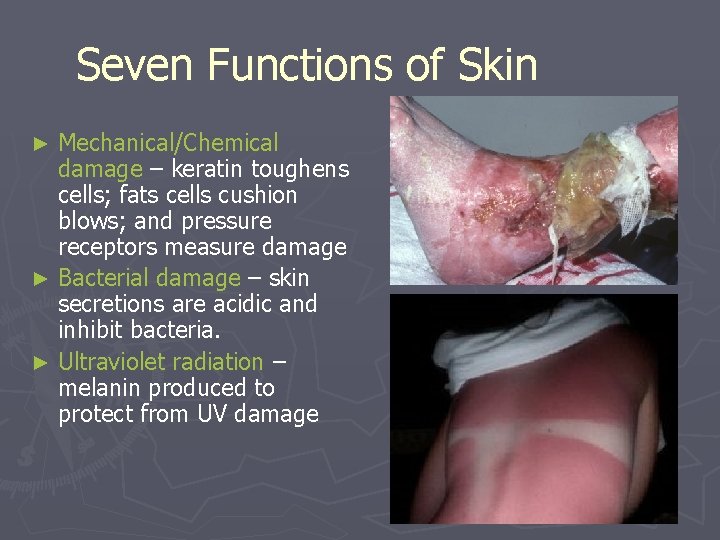
Seven Functions of Skin Mechanical/Chemical damage – keratin toughens cells; fats cells cushion blows; and pressure receptors measure damage ► Bacterial damage – skin secretions are acidic and inhibit bacteria. ► Ultraviolet radiation – melanin produced to protect from UV damage ►
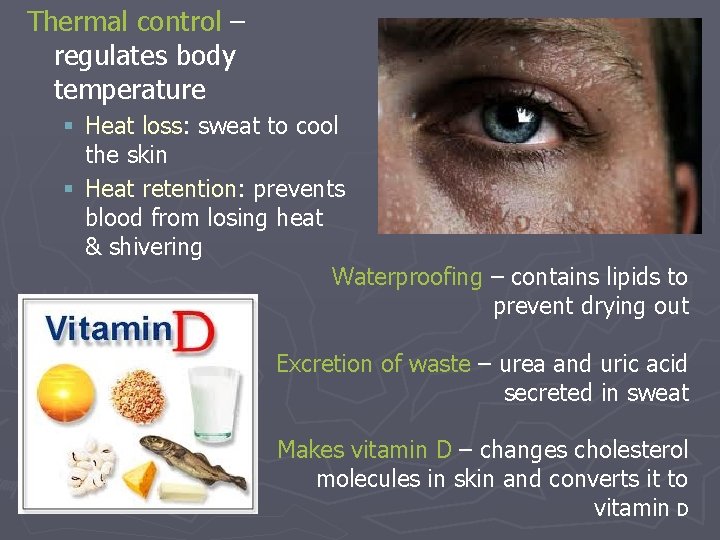
Thermal control – regulates body temperature § Heat loss: sweat to cool the skin § Heat retention: prevents blood from losing heat & shivering Waterproofing – contains lipids to prevent drying out Excretion of waste – urea and uric acid secreted in sweat Makes vitamin D – changes cholesterol molecules in skin and converts it to vitamin D
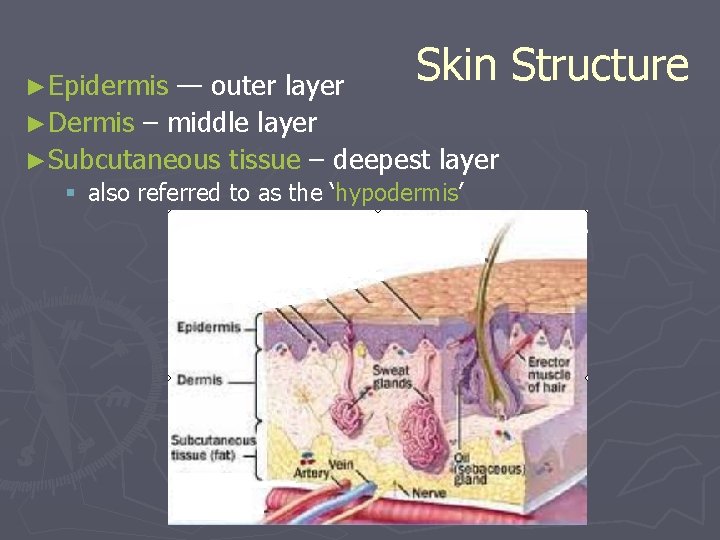
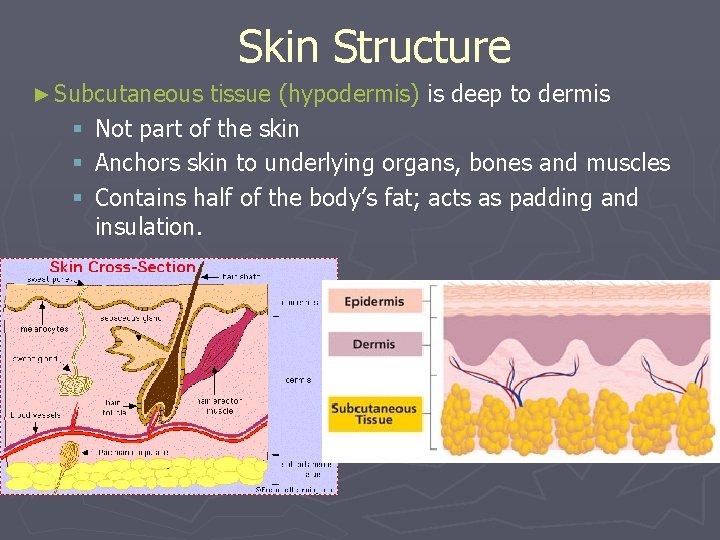
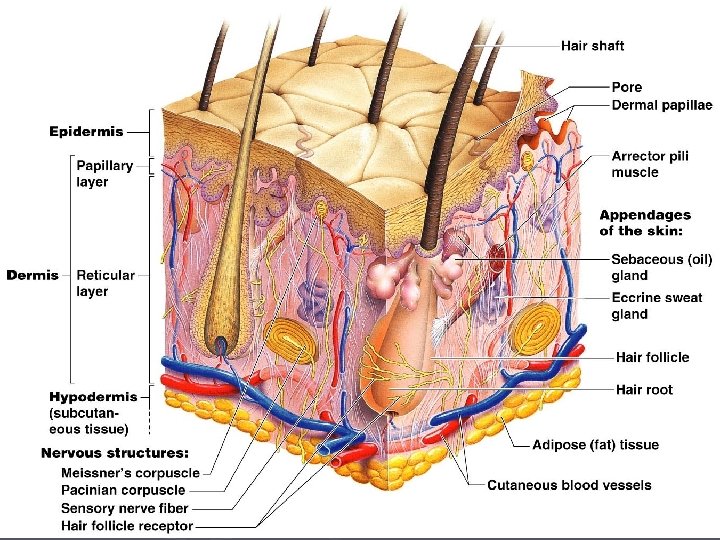
Skin Structure Skin — outer layer ►Dermis – middle layer ►Subcutaneous tissue – deepest layer ►Epidermis § also referred to as the ‘hypodermis’
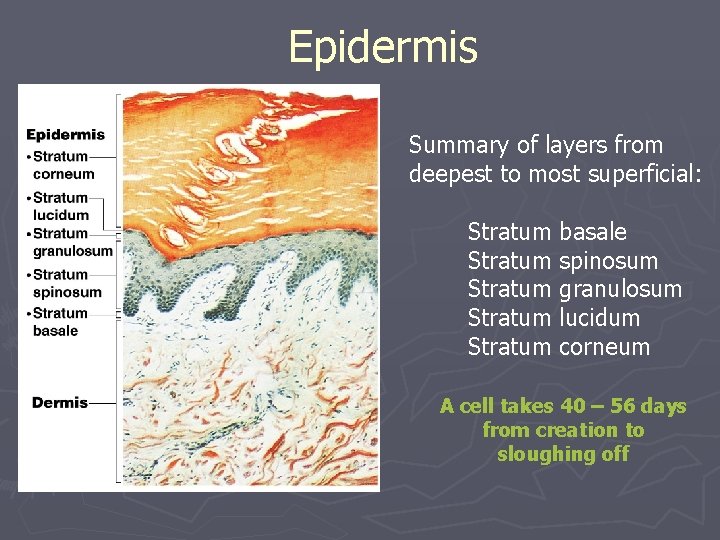
Epidermis Summary of layers from deepest to most superficial: Stratum basale Stratum spinosum Stratum granulosum Stratum lucidum Stratum corneum A cell takes 40 – 56 days from creation to sloughing off
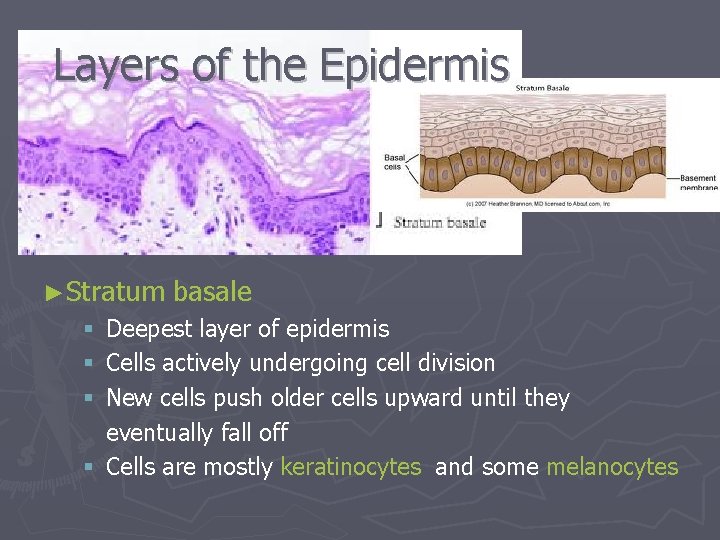
Layers of the Epidermis ►Stratum basale Deepest layer of epidermis Cells actively undergoing cell division New cells push older cells upward until they eventually fall off § Cells are mostly keratinocytes and some melanocytes § § §
Keratinization ► Keratin is a protein that helps harden skin cells, makes them tougher and helps prevent water loss by the body. Keratin makes the skin waterproof ► Keratinocytes are responsible for making keratin Keratin is found in cells of the basale and spinosum strata
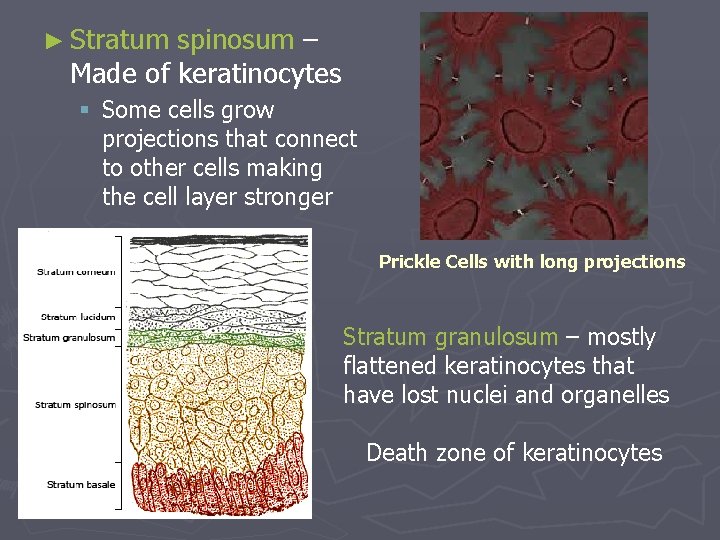
► Stratum spinosum – Made of keratinocytes § Some cells grow projections that connect to other cells making the cell layer stronger Prickle Cells with long projections Stratum granulosum – mostly flattened keratinocytes that have lost nuclei and organelles Death zone of keratinocytes
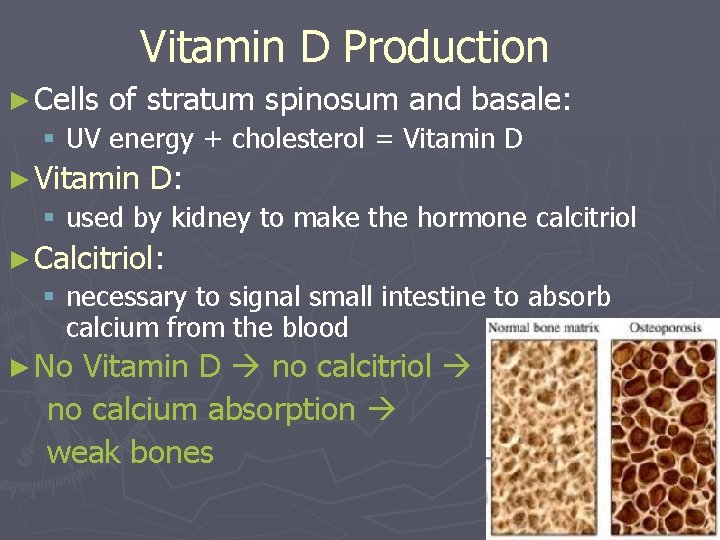
Vitamin D Production ► Cells of stratum spinosum and basale: § UV energy + cholesterol = Vitamin D ► Vitamin D: § used by kidney to make the hormone calcitriol ► Calcitriol: § necessary to signal small intestine to absorb calcium from the blood ► No Vitamin D no calcitriol no calcium absorption weak bones
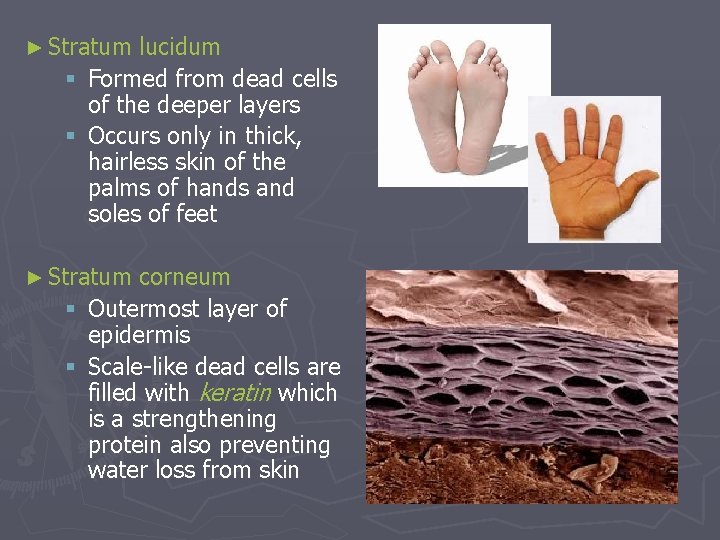
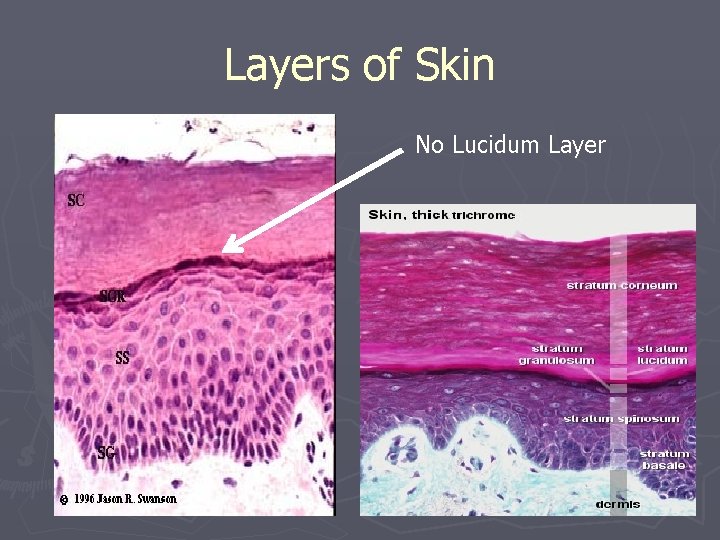
► Stratum lucidum § Formed from dead cells of the deeper layers § Occurs only in thick, hairless skin of the palms of hands and soles of feet ► Stratum corneum § Outermost layer of epidermis § Scale-like dead cells are filled with keratin which is a strengthening protein also preventing water loss from skin
Layers of Skin No Lucidum Layer
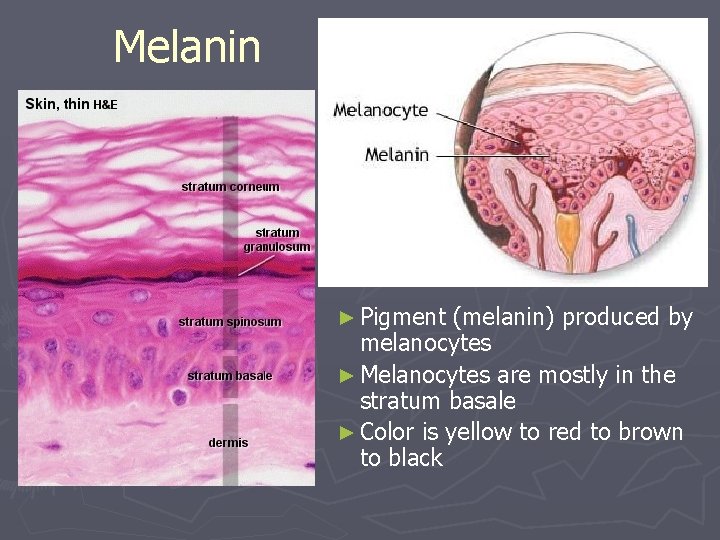
Melanin ► Pigment (melanin) produced by melanocytes ► Melanocytes are mostly in the stratum basale ► Color is yellow to red to brown to black
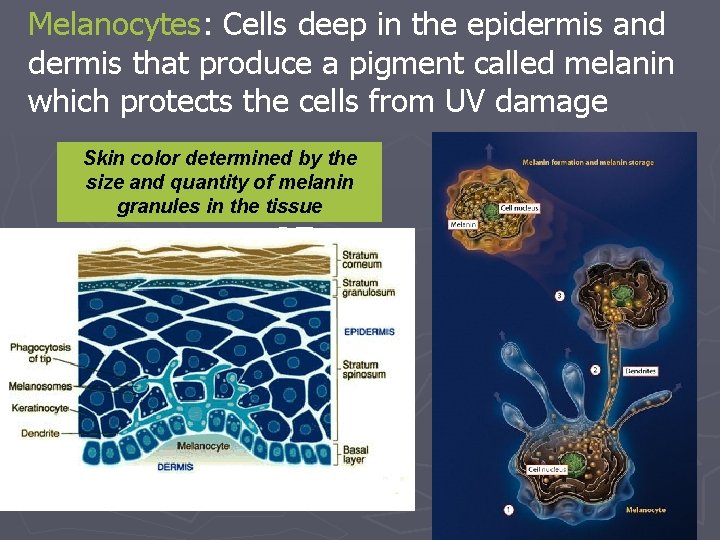
Melanocytes: Cells deep in the epidermis and dermis that produce a pigment called melanin which protects the cells from UV damage Skin color determined by the size and quantity of melanin granules in the tissue
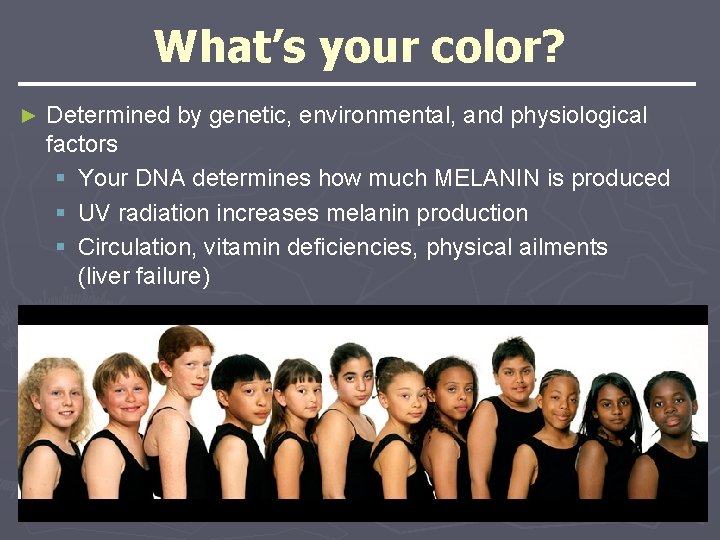
What’s your color? ► Determined by genetic, environmental, and physiological factors § Your DNA determines how much MELANIN is produced § UV radiation increases melanin production § Circulation, vitamin deficiencies, physical ailments (liver failure)
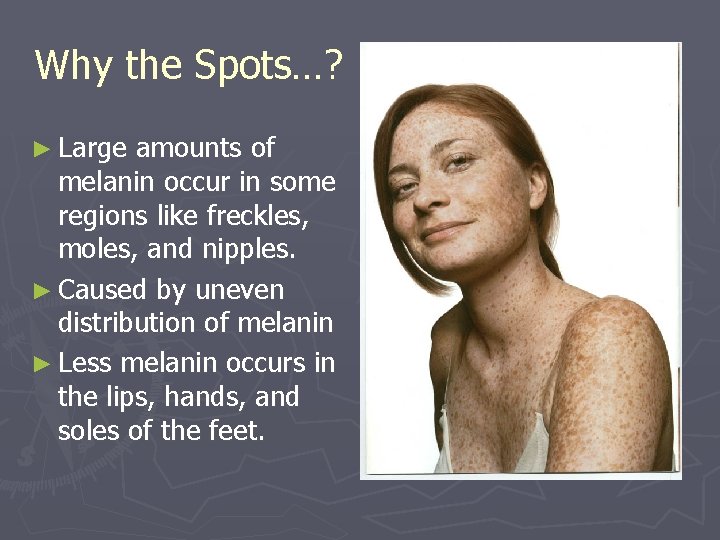
Why the Spots…? ► Large amounts of melanin occur in some regions like freckles, moles, and nipples. ► Caused by uneven distribution of melanin ► Less melanin occurs in the lips, hands, and soles of the feet.
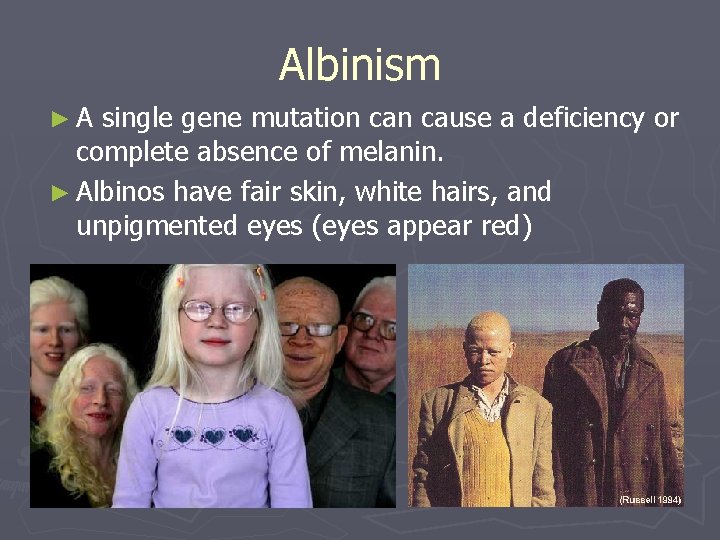
Albinism ►A single gene mutation cause a deficiency or complete absence of melanin. ► Albinos have fair skin, white hairs, and unpigmented eyes (eyes appear red)
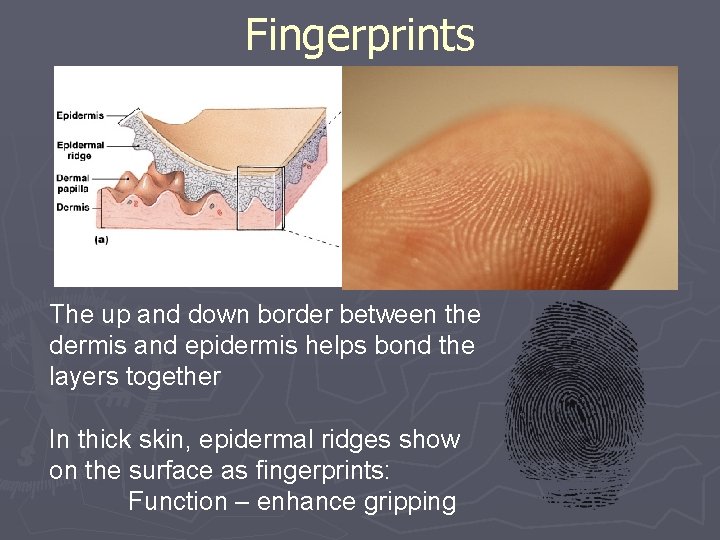
Fingerprints The up and down border between the dermis and epidermis helps bond the layers together In thick skin, epidermal ridges show on the surface as fingerprints: Function – enhance gripping
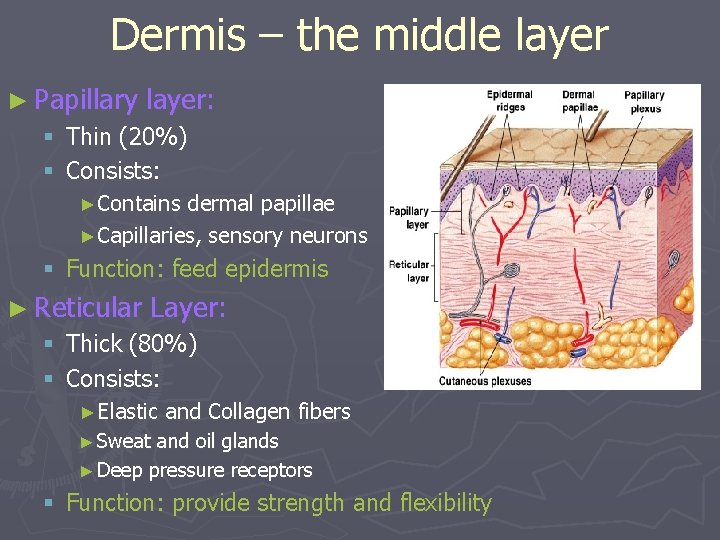
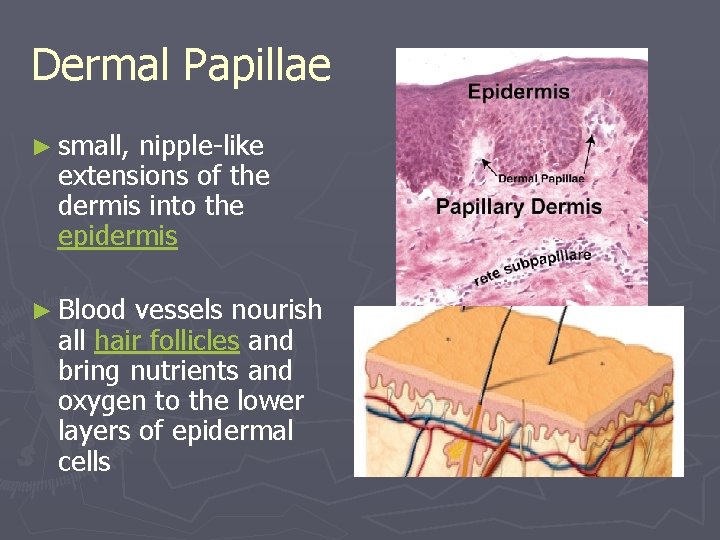
Dermis – the middle layer ► Papillary layer: § Thin (20%) § Consists: ►Contains dermal papillae ►Capillaries, sensory neurons § Function: feed epidermis ► Reticular Layer: § Thick (80%) § Consists: ►Elastic and Collagen fibers ► Sweat and oil glands ► Deep pressure receptors § Function: provide strength and flexibility
Dermal Papillae ► small, nipple-like extensions of the dermis into the epidermis ► Blood vessels nourish all hair follicles and bring nutrients and oxygen to the lower layers of epidermal cells
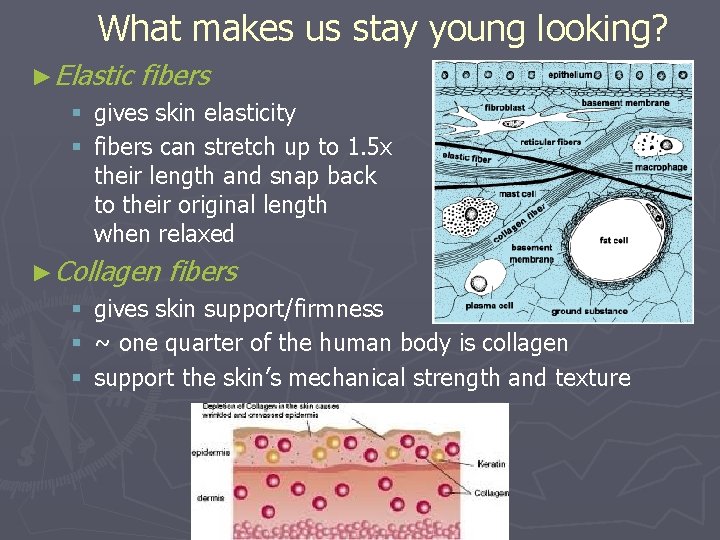
What makes us stay young looking? ►Elastic fibers § gives skin elasticity § fibers can stretch up to 1. 5 x their length and snap back to their original length when relaxed ►Collagen § § § fibers gives skin support/firmness ~ one quarter of the human body is collagen support the skin’s mechanical strength and texture
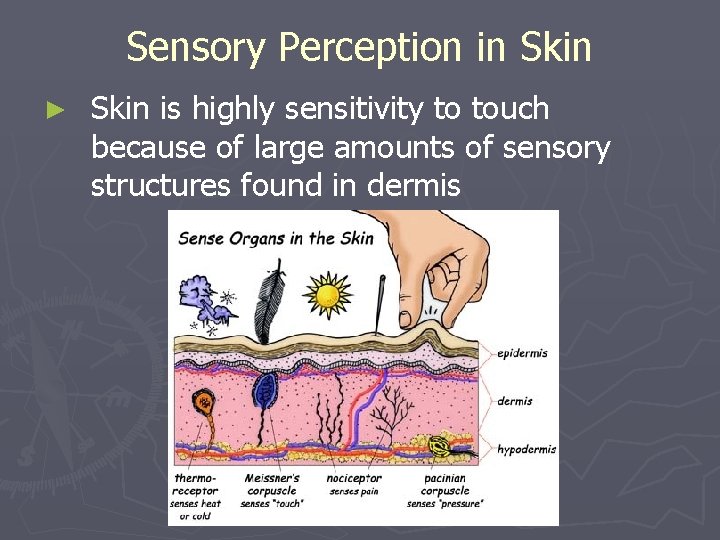
Sensory Perception in Skin ► Skin is highly sensitivity to touch because of large amounts of sensory structures found in dermis
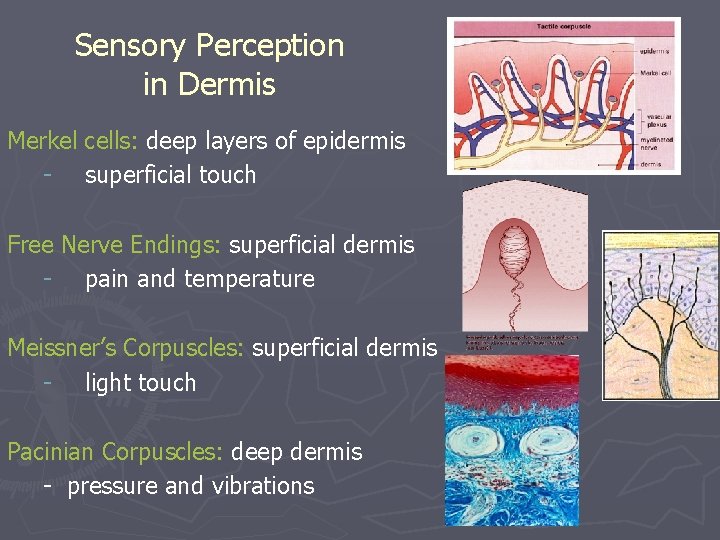
Sensory Perception in Dermis Merkel cells: deep layers of epidermis - superficial touch Free Nerve Endings: superficial dermis - pain and temperature Meissner’s Corpuscles: superficial dermis - light touch Pacinian Corpuscles: deep dermis - pressure and vibrations
Skin Structure ► Subcutaneous § § § tissue (hypodermis) is deep to dermis Not part of the skin Anchors skin to underlying organs, bones and muscles Contains half of the body’s fat; acts as padding and insulation.