
Settler Activity Where do most people live in
- Slides: 26
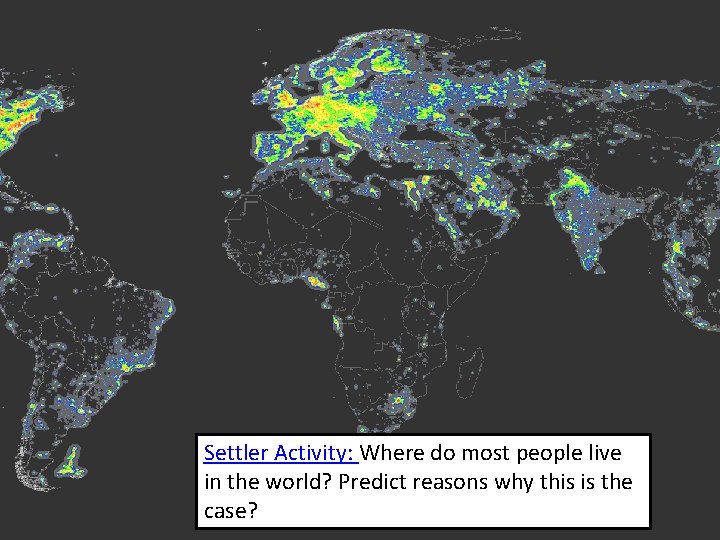
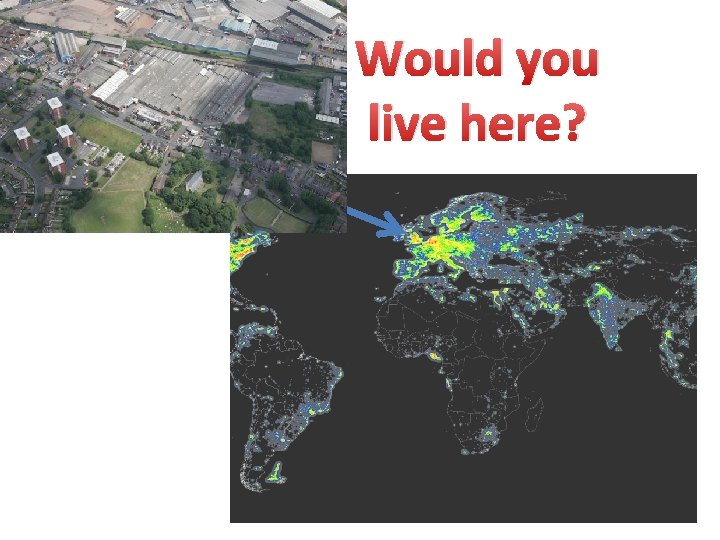
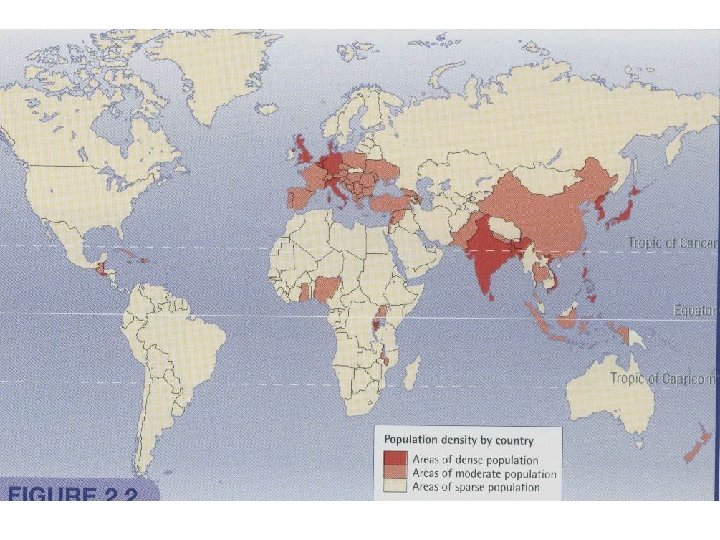
Settler Activity: Where do most people live in the world? Predict reasons why this is the case?
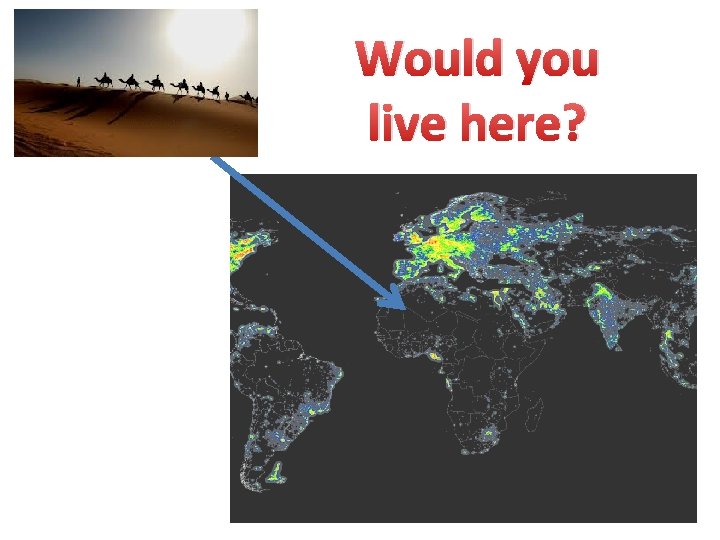
Would you live here?
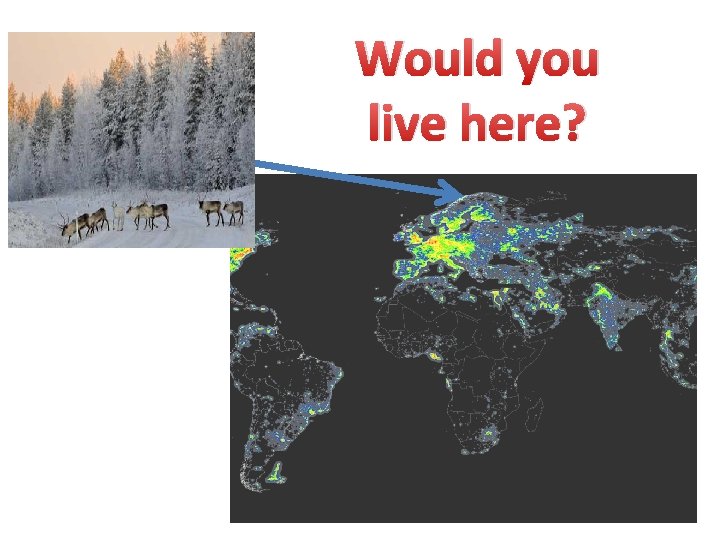
Would you live here?
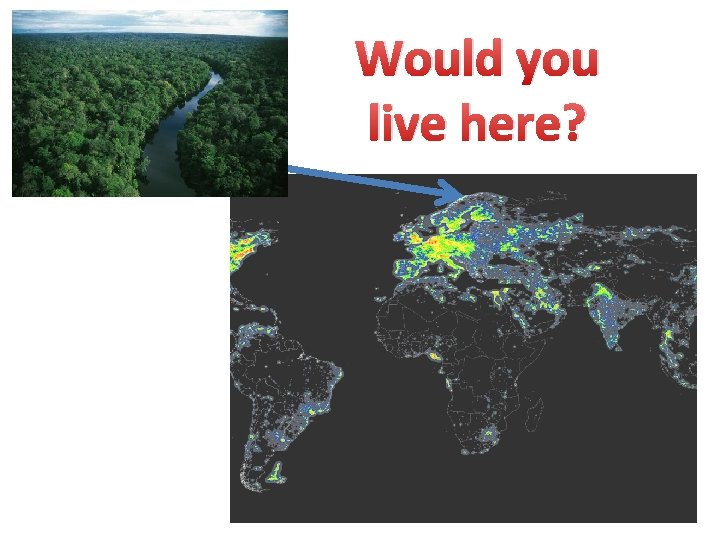
Would you live here?
Would you live here?
Where do People Live? Learning Outcomes: All should: List examples of high/low density areas and be able to explain 2 or 3 examples. In addition, identify how a country copes with an increasing population. Most should: Identify range of examples and be able to use accurate factors affecting population density. In addition, explain the issues of a rapidly increasing population. Some could: Give reasons for a wide range of examples of global population density patterns. Evaluate the positive and negative benefits of a high population density. Competence: Team Work Key Words / Ideas Population Density = The number of people living in a certain area. Normally measured per square kilometre. Key Words: Ø Ø Ø Ø Ø Population Density Distribution Positive Negative Physical Economic Sparsely Densely
Starter Activity: Where do People Live? Key Words / Ideas • On your own! • Put the card sort in order • Choose which figures match up with each statement! • When finished compare and discuss your answers with the person sat next to you. Population Density = The number of people living in a certain area. Normally measured per square kilometre. Key Words: Ø Ø Ø Ø Ø Population Density Distribution Positive Negative Physical Economic Sparsely Densely
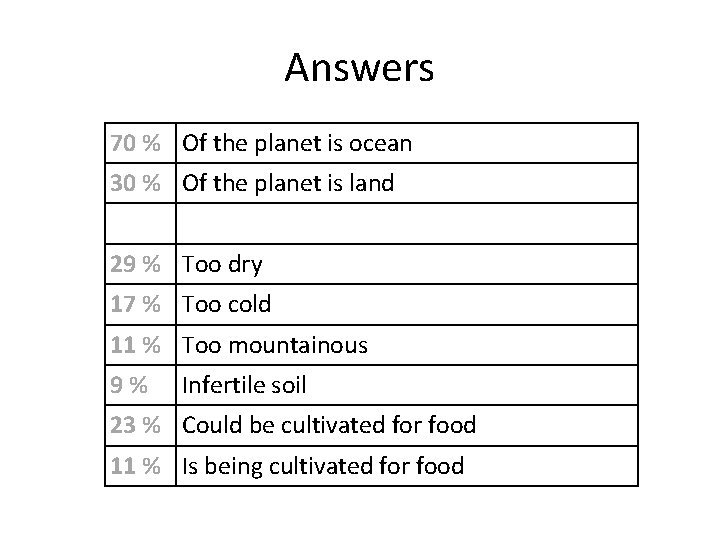
Answers 70 % Of the planet is ocean 30 % Of the planet is land 29 % Too dry 17 % Too cold 11 % Too mountainous 9% Infertile soil 23 % Could be cultivated for food 11 % Is being cultivated for food
Where do people live? Lingo Bingo Activity: Ø Population Ø Density Ø Distribution Ø Positive Ø Negative Ø Physical Ø Human Ø Natural Ø Economic Ø Sparsely Ø Densely http: //www. bbc. co. uk/schools/gcsebitesize/ge ography/population_distribution_v ideo. shtml
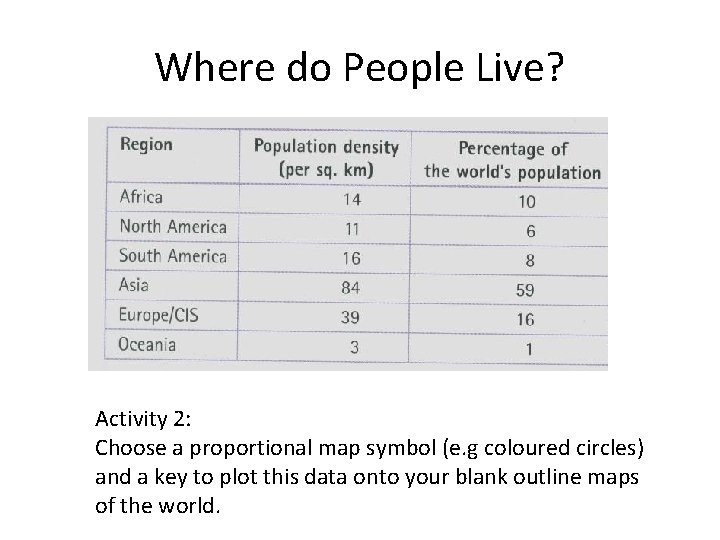
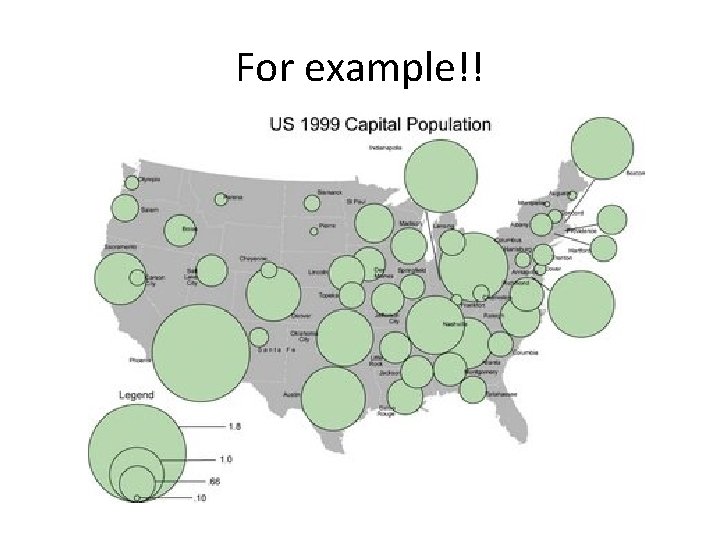
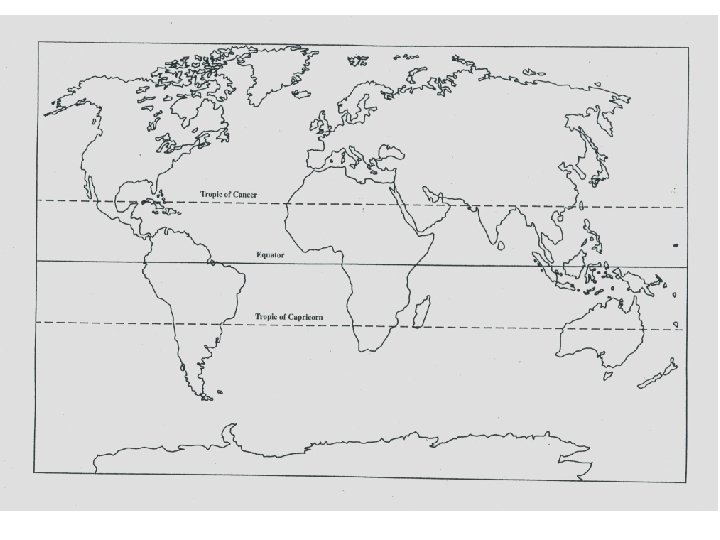
Where do People Live? Activity 2: Choose a proportional map symbol (e. g coloured circles) and a key to plot this data onto your blank outline maps of the world.
For example!!
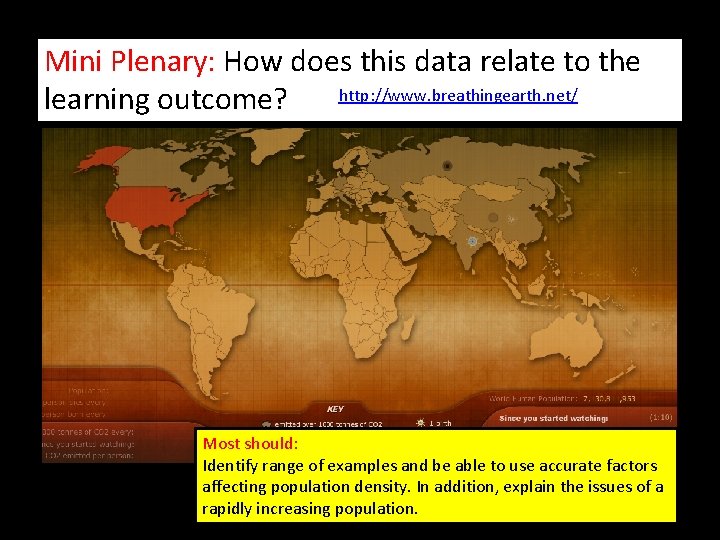
Mini Plenary: How does this data relate to the http: //www. breathingearth. net/ learning outcome? Most should: Identify range of examples and be able to use accurate factors affecting population density. In addition, explain the issues of a rapidly increasing population.
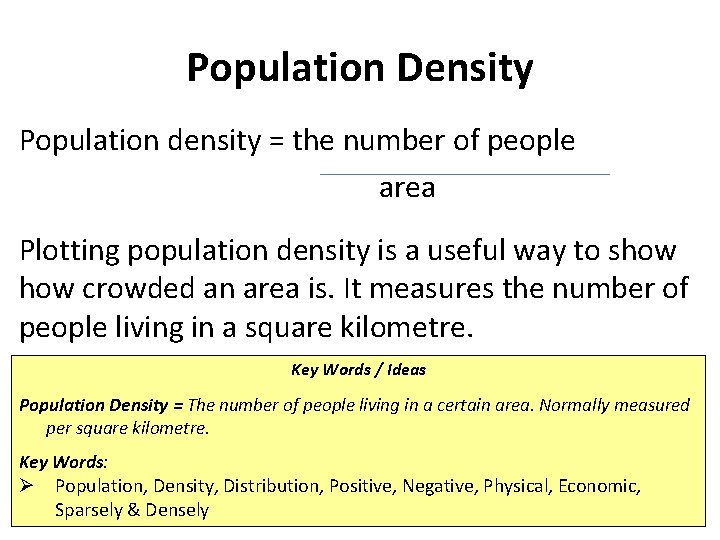
Population Density Population density = the number of people area Plotting population density is a useful way to show crowded an area is. It measures the number of people living in a square kilometre. Key Words / Ideas Population Density = The number of people living in a certain area. Normally measured per square kilometre. Key Words: Ø Population, Density, Distribution, Positive, Negative, Physical, Economic, Sparsely & Densely
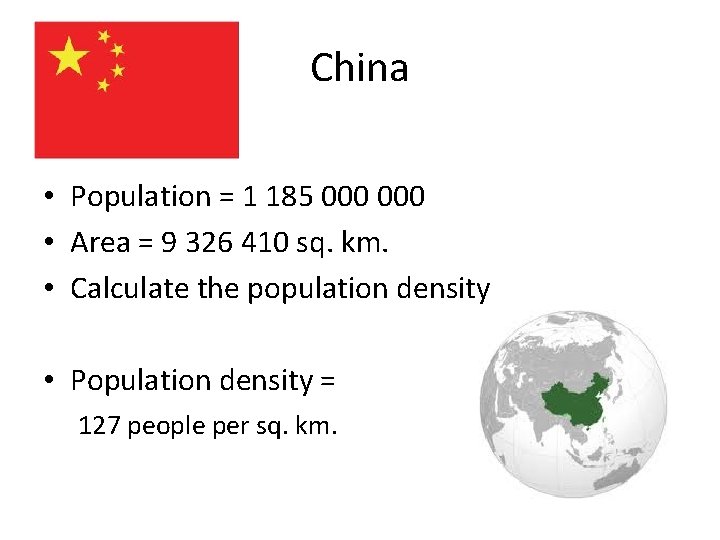
China • Population = 1 185 000 • Area = 9 326 410 sq. km. • Calculate the population density • Population density = 127 people per sq. km.
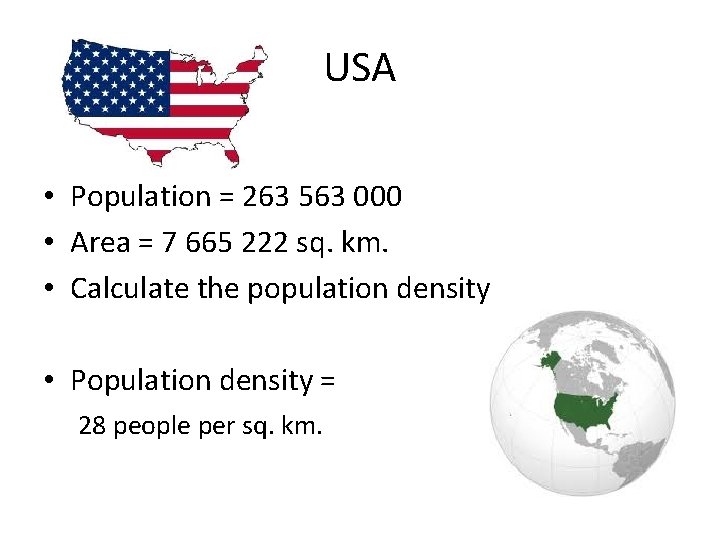
USA • Population = 263 563 000 • Area = 7 665 222 sq. km. • Calculate the population density • Population density = 28 people per sq. km.
Key Words / Ideas Population Density = The number of people living in a certain area. Normally measured per square kilometre. Key Words: Ø Population, Density, Distribution, Positive, Negative, Physical, Economic, Sparsely & Densely
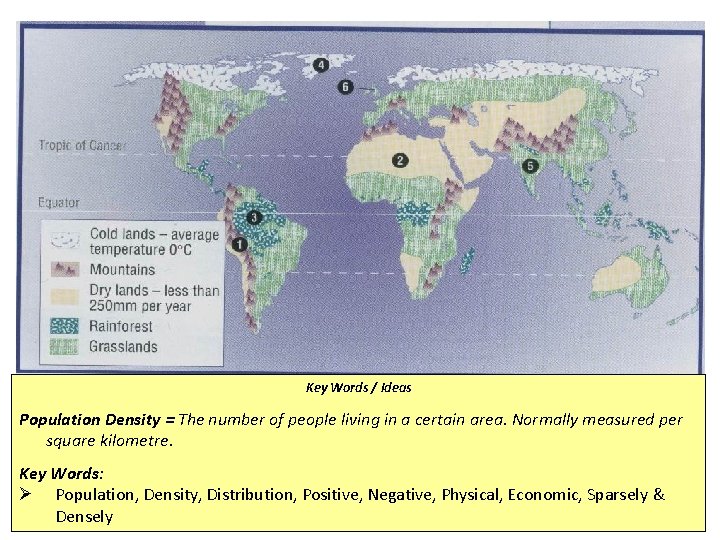
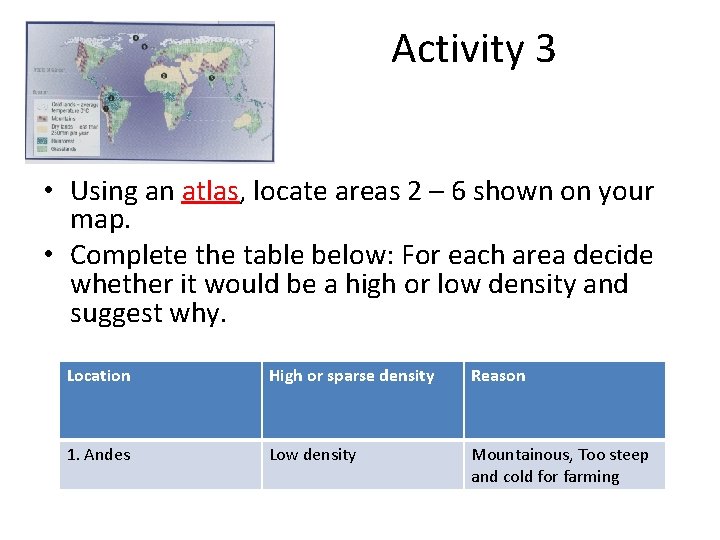
Activity 3 • Using an atlas, locate areas 2 – 6 shown on your map. • Complete the table below: For each area decide whether it would be a high or low density and suggest why. Location High or sparse density Reason 1. Andes Low density Mountainous, Too steep and cold for farming
Activity 4 • In full sentences…. . Explain why there is a link between environmental factors and population density? • HINT: use the answers from the card sort to help in your thinking! Most should: Identify range of examples and be able to use accurate factors affecting population density. In addition, explain the issues of a rapidly increasing population.
Social & Economic reasons for population distribution • People live where their needs are met e. g. people live where they can grow crops! • Desert areas attract people for raw materials e. g. oil • London is a capital city, a centre for administration and a centre of commerce. • MEDC Population densities are higher in urban compared to rural areas. This is not the case in some LEDC’s
Extension • On an outline map of the world, shade the areas that are most suitable for people to live. • Use an atlas to find additional information, i. e. climate and relief. • Write a description of your map and explain how you decided on your areas.
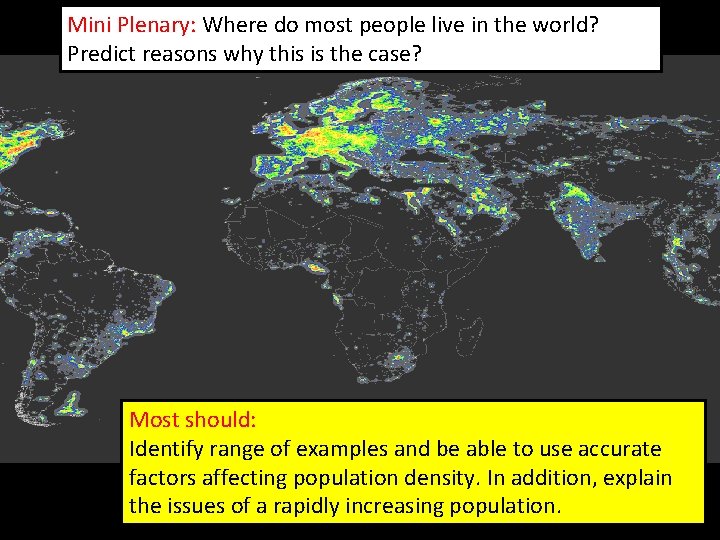
Mini Plenary: Where do most people live in the world? Predict reasons why this is the case? Most should: Identify range of examples and be able to use accurate factors affecting population density. In addition, explain the issues of a rapidly increasing population.
Where do People Live & What are the issues of a rapidly increasing population? http: //www. bbc. co. uk/learningzone/clips/urbanisation-why-dopeople-move-to-the-city/511. html Most should: Identify range of examples and be able to use accurate factors affecting population density. In addition, explain the issues of a rapidly increasing population.
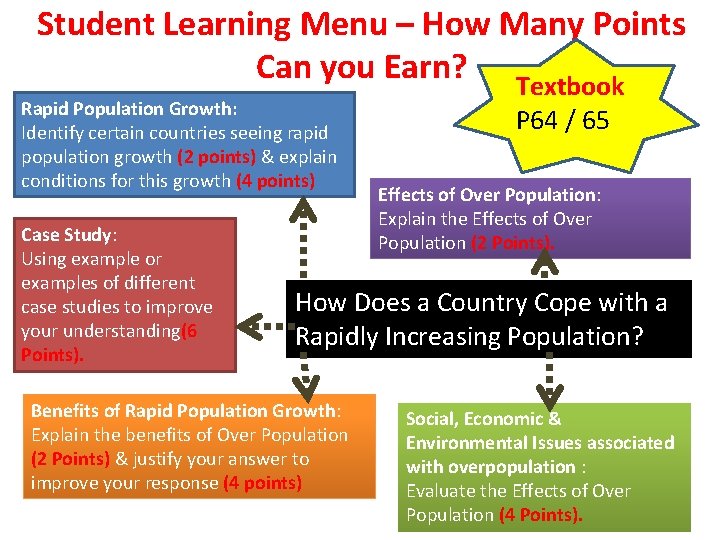
Student Learning Menu – How Many Points Can you Earn? Textbook Rapid Population Growth: Identify certain countries seeing rapid population growth (2 points) & explain conditions for this growth (4 points) Case Study: Using example or examples of different case studies to improve your understanding(6 Points). P 64 / 65 Effects of Over Population: Explain the Effects of Over Population (2 Points). How Does a Country Cope with a Rapidly Increasing Population? Benefits of Rapid Population Growth: Explain the benefits of Over Population (2 Points) & justify your answer to improve your response (4 points) Social, Economic & Environmental Issues associated with overpopulation : Evaluate the Effects of Over Population (4 Points).
Reflective Review Most should: Identify range of examples and be able to use accurate factors affecting population density. In addition, explain the issues of a rapidly increasing population.