
Settlements HumanUrban Geography What are they Settlements are

Settlements Human/Urban Geography
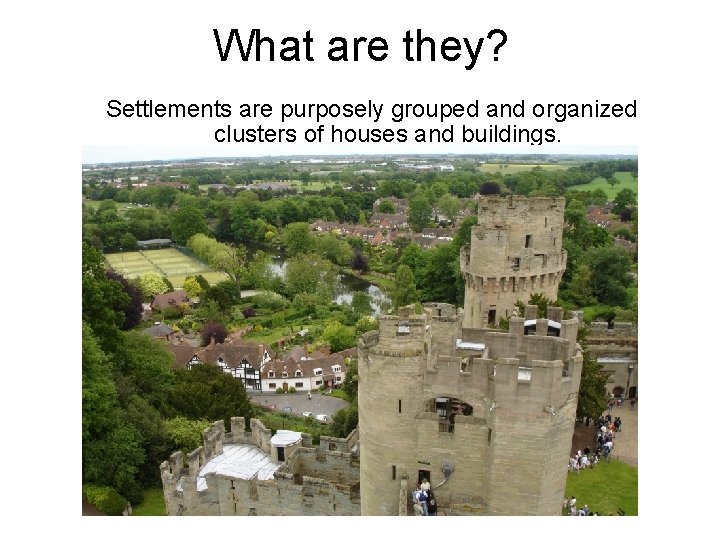
What are they? Settlements are purposely grouped and organized clusters of houses and buildings.
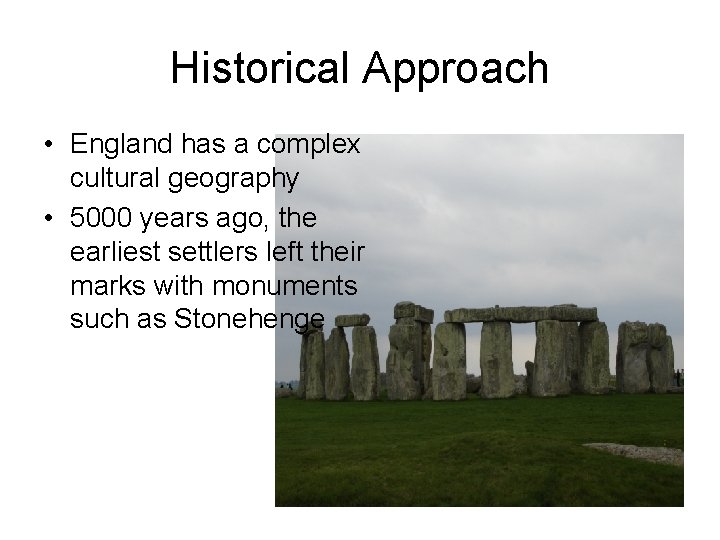
Historical Approach • England has a complex cultural geography • 5000 years ago, the earliest settlers left their marks with monuments such as Stonehenge
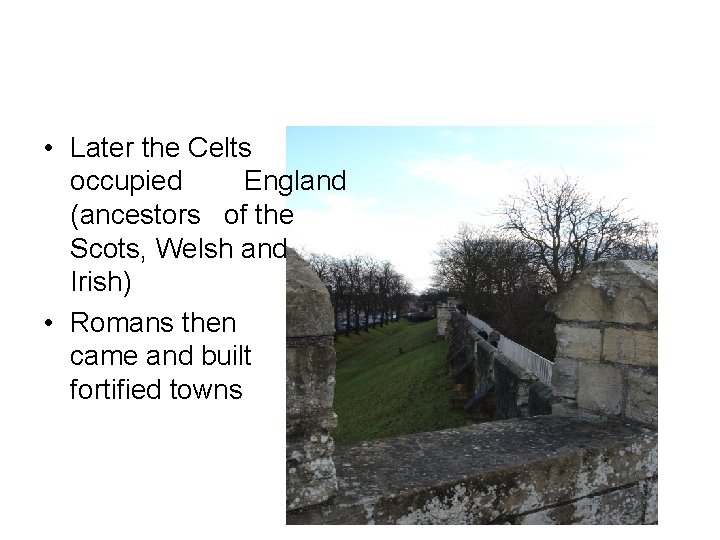
• Later the Celts occupied England (ancestors of the Scots, Welsh and Irish) • Romans then came and built fortified towns
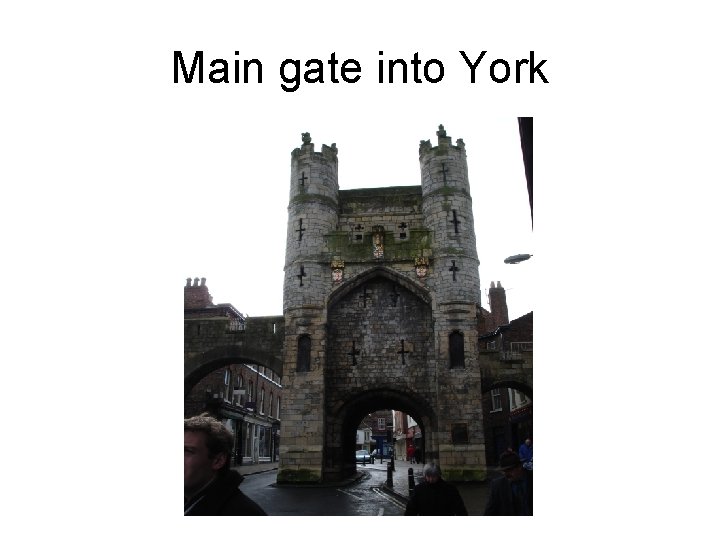
Main gate into York
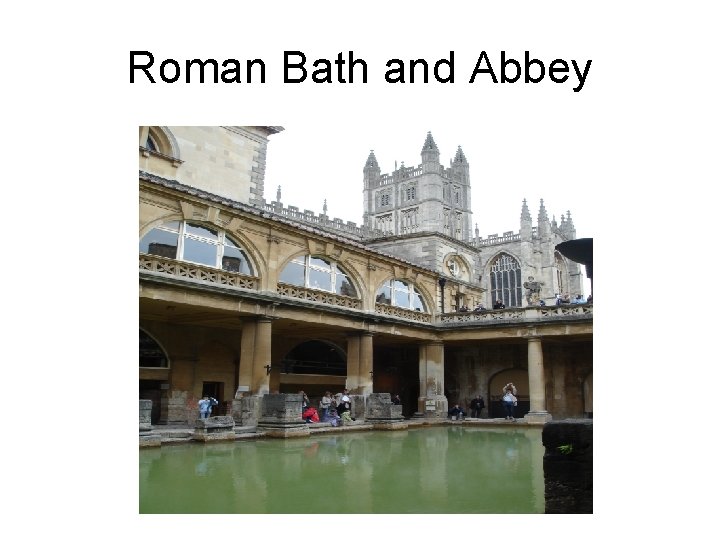
Roman Bath and Abbey
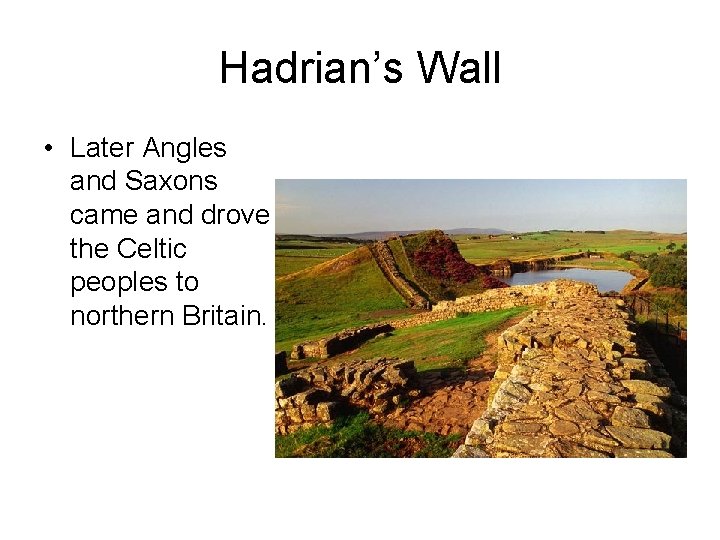
Hadrian’s Wall • Later Angles and Saxons came and drove the Celtic peoples to northern Britain.
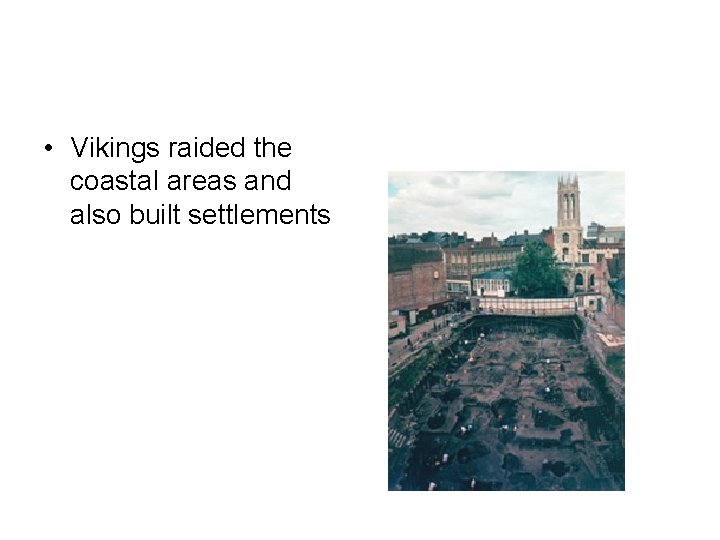
• Vikings raided the coastal areas and also built settlements
• In 1066 William of Normandy conquered England. William brought in many French lords and gave them a lot of land for settlement. This led to future contention between England France which remains today.
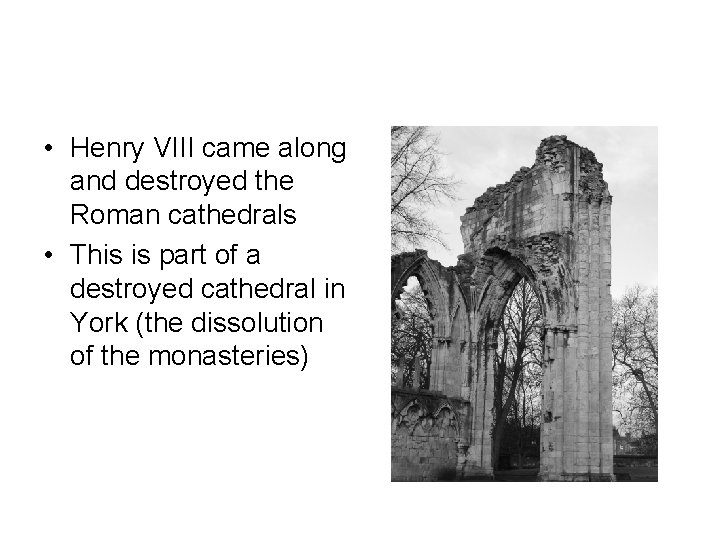
• Henry VIII came along and destroyed the Roman cathedrals • This is part of a destroyed cathedral in York (the dissolution of the monasteries)
• Each of these peoples left an imprint on England its landscape. • This process is called sequent occupance a process of settlement by successive groups of people in which each group creates a distinctive cultural landscape
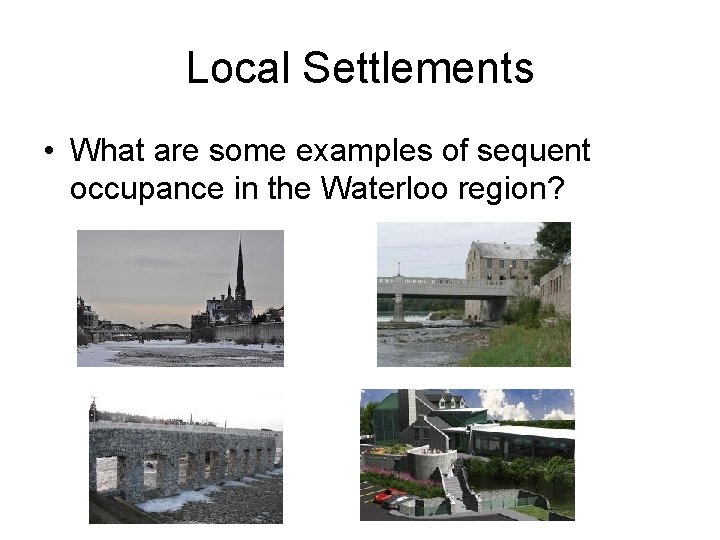
Local Settlements • What are some examples of sequent occupance in the Waterloo region?
Paragraph Assignment Consider that Sequent Occupance is reflected by layers of imprints in a cultural landscape that reflect years of differing human activity. Choose any city in the world and write a ½ pg paragraph (approximately 200 -300 words) describing the changes in physical and human landscape over the many years of occupancy. Think of: the different groups that occupied the area, how they used the land/resources, how they changed or added to the landscape (physical and human) Due: Tomorrow
- Slides: 13