
SETTLEMENT PATTERNS URBAN GEOGRAPHY SUBJECT OVERVIEW Defining Urbanism
SETTLEMENT PATTERNS/ URBAN GEOGRAPHY

SUBJECT OVERVIEW ► Defining Urbanism ► SETTLEMENTS ► ORIGINS OF SETTLEMENTS ► TYPES OF SETTLEMENTS ► DEVELOPMENT OF URBAN SETTLEMENTS ► CITY HISTORY ► URBAN PATTERNS
What is Urbanism? ► Depends on time and culture: § The size of the stationary population is part of the picture… but it varies according to the historical context and location § The size of a city varies geographically; Portugal=10, 000, Ethiopia=2, 000, Norway=200 § Therefore, urbanism usually is qualified by a population considered large for its time and place
What makes a City? ► Population alone does not make a city; a stadium may hold many people, but is it a city? ► There must also be government of some kind. ► There must also be definable boundaries; even if they change over time. Metropolitan Statistical Area (MSA) used to calculate a city’s boundaries: a city center and its immediately interacting counties

What makes a City… ► The economy is another layer in classifying it as rural or urban… economic diversity ► A cultural layer also plays a role in defining a place’s degree of urbanity or “cityness”… cultural diversity ► So, a clear definition of urban or city more of a process of comparison than a sentence or two… it depends!
Hearths of Urbanization ► Where begin? did cities and urbanism, or urban life § The earliest cities were born around 3500 BCE spawned from agricultural villages: ►Mesopotamia ►Indus River region ►Nile Valley ►Huang He River valle ►Mexico ►Peru
Settlement ► Settlement - a permanent collection of buildings and inhabitants
GEOGRAPHIC PERSPECTIVE OF SETTLEMENTS ► Geographers are interested in the patterns of settlements and the interrelationship of settlements ► How do the patterns of settlements explain human culture?

ORIGINS OF SETTLEMENTS ► Religious ► Cultural - graves, churches, temples - schools, libraries ► Political/Military ► Economic - leader’s house, walls - stores, food

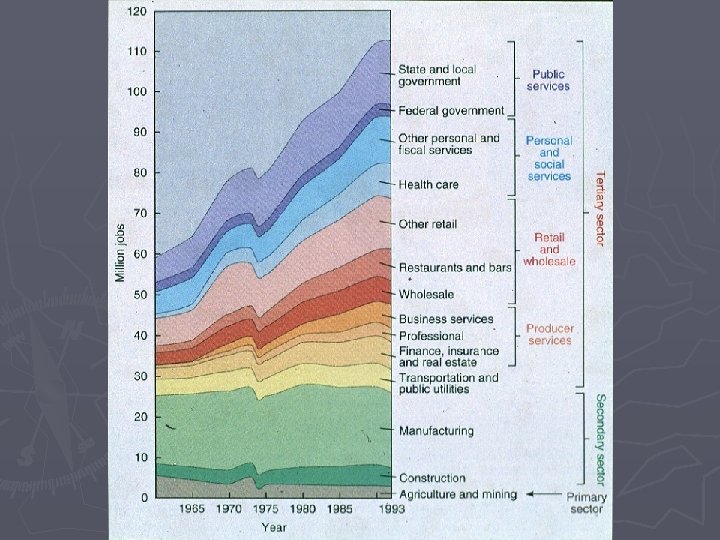
TYPES OF SETTLEMENTS ► Rural Settlements - agriculture as the predominant occupation. ► Urban settlements - principal industries are secondary and tertiary.
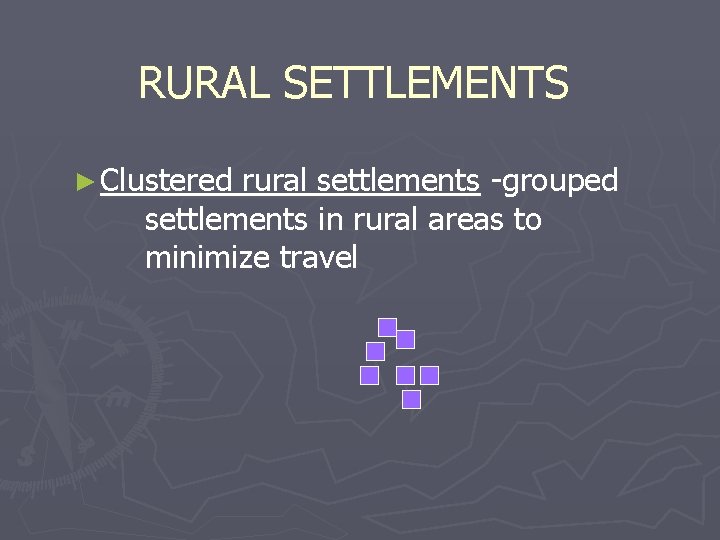
RURAL SETTLEMENTS ► Clustered rural settlements -grouped settlements in rural areas to minimize travel

RURAL SETTLEMENTS ► Dispersed rural Settlements - isolated farms with enclosed continuous fields
RURAL SETTLEMENTS IN THE EASTERN U. S. ► New England - clustered villages of the colonists ► Mid Atlantic - dispersed isolated farms of the Dutch, Swedes, Irish and Germans ► South - plantations (mansions surrounded by plantation services)

DEVELOPMENT OF URBAN SETTLEMENTS ► Prior to modern times most settlements were rural ► First Urban Settlement § UR (modern day of Iraq) ► Other Early Cities § Mycenae, Troy, & Isle of Crete in Greece § Settlements along the world’s great rivers
DEVELOPMENT OF URBAN SETTLEMENTS ► Athens - first city over 100, 000 § by the 5 th century BC over 300, 000 ► Rome - center of an empire 200 BC-400 AD § “all roads lead to Rome” § Paris, London, Vienna - all old Roman sites ► Mid-Evil Europe - after the fall of Rome § urbanization decreased § patterns of castles, walls & narrow streets § compact space surrounded by walls
DEVELOPMENT OF URBAN SETTLEMENTS ► Renaissance-Baroque Cities § Renaissance 15 -16 th centuries § Baroque 16 -18 th centuries § development of wide avenues & monuments § Paris & London rebuilt, Washington D. C. ► Industrial City § 19 th century to present § city designed around industry and transportation § most modern cities
DEVELOPMENT OF URBAN SETTLEMENTS ► Megalopolis - § conurbation of a number of cities blended together without separation § “The Blob” Lewis Mumford § SMSA- Standard Metropolitan Statistical Area § 40% of the world’s population lives in urban areas
URBAN SMSA’s ► First city with 1 million - London in 1810 ► Over 1 million - 180+ cities ► Over 10 million - LA, Buenos Aires, London, Bombay, Jakarta, Mexico City, New York City, Osaka, Paris, Rio De Janeiro, Sao Paulo, Seoul ► Over 30 million - Tokyo
DEFINITION OF THE CITY ► Physical Definition of the City - Nonrural settlement that is, built up, economically functional, has a local government, and a legal boundary. ► Environmental Definition of the City § urban dust domes ►(defined by pollution) § heat island ►(defined by increased temperatures)
GROWTH OF THE CITY ► Skyscrapers - using vertical space § intensive use of land ►shops at street level § professional offices at higher levels ► Outward Expansion § advent of the automobile & transportation routes § decline of public transport
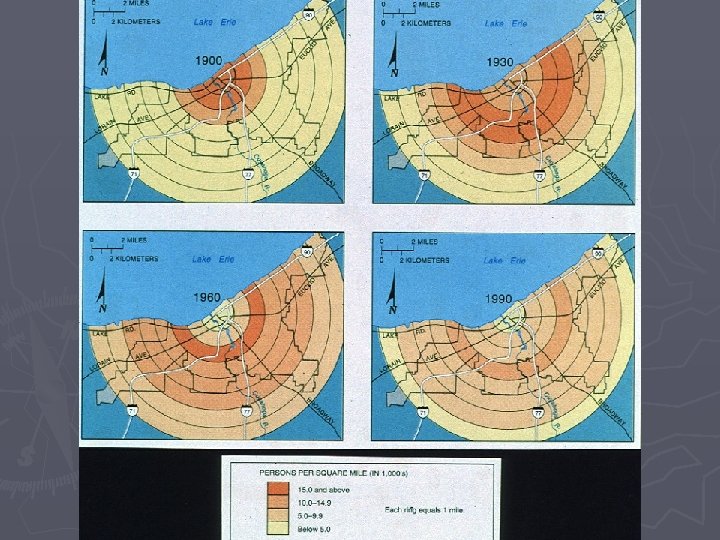
OUTWARD EXPANSION (con’t) ► Squatter Settlements - illegally erected shacks, cardboard structures and tents, due to rapid growth in cities of developing countries ► De-urbanization of the City § suburbanism - legally independent cities § cluster cities § rural areas- preferable to urban lifestyle § telecommuting - economic activity from a distance
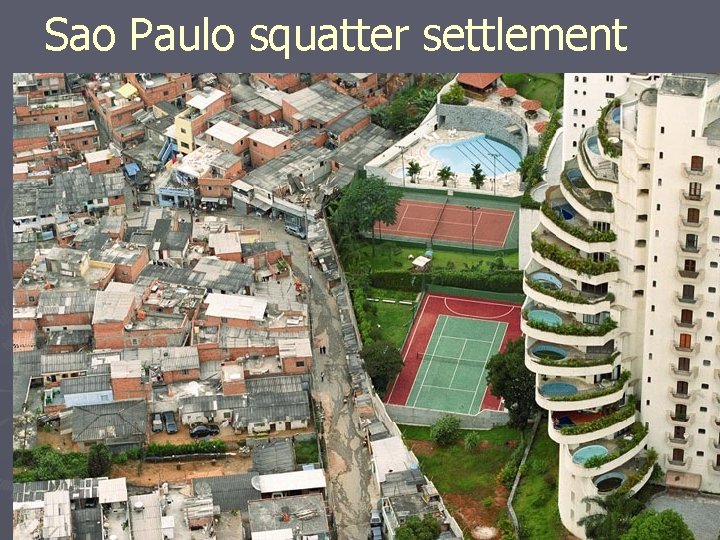
Sao Paulo squatter settlement
DISTRIBUTION OF CITIES ► Physical Restraints § Manufacturing - North & East § Retail Cities serving farmers - Mid West § Resorts & Retirement - Southwest ► Economic Functions § site & situation factors § International Trade - Port Cities § Entertainment Centers - Las Vegas
DISTRIBUTION OF CITIES ► International Distribution § Developed countries have a higher population living in urban areas ►Two thirds live in urban areas § Developing countries have the greatest increases in the number of large urban settlements ►One quarter live in urban areas ►Most of the largest cities are in the developing regions
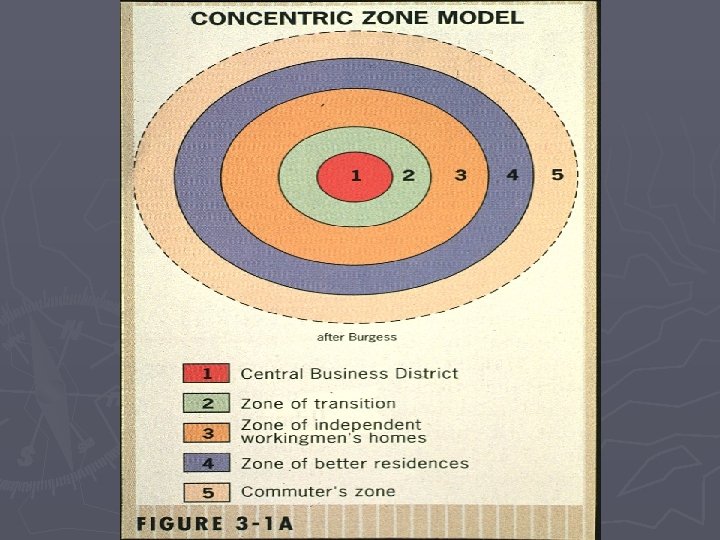
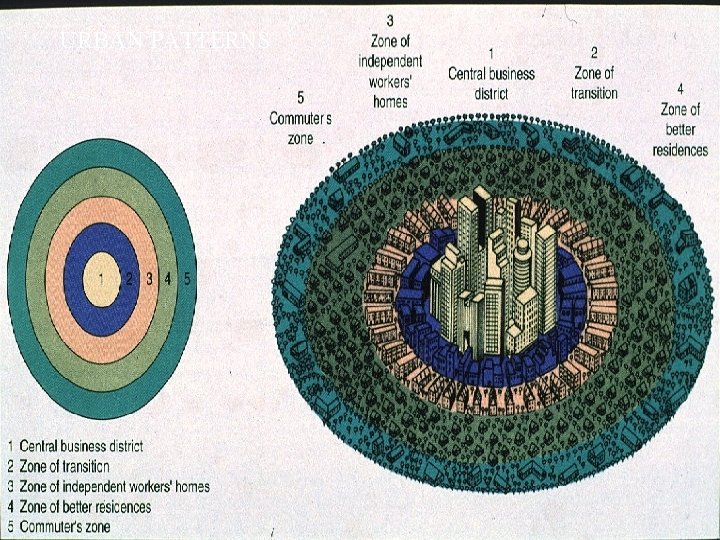
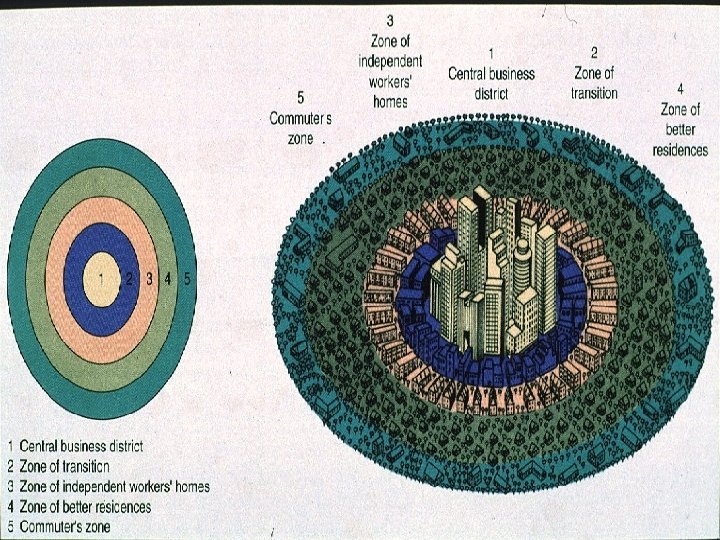
URBAN PATTERNS
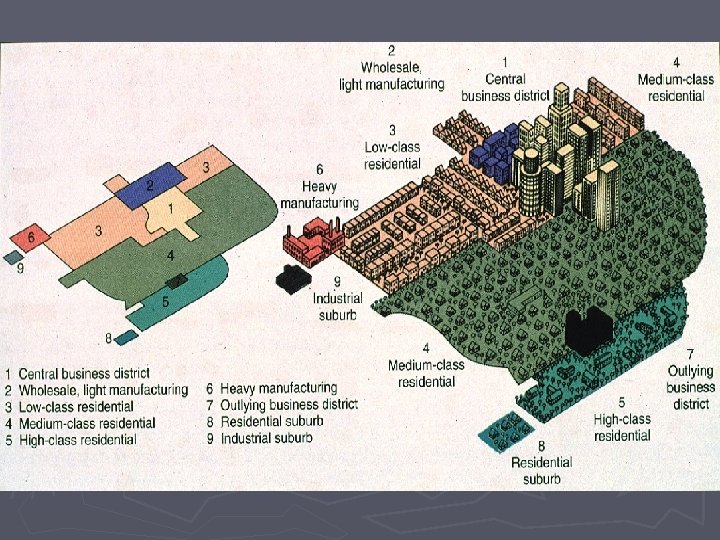
URBAN PATTERNS ► City Center § best known area, most visually distinctive ►San Francisco, London § original site of settlement ► Central Business District § retail & office space § assessable § often a focal point with skyscrapers § specialized stores for the office workers

URBAN PATTERNS ► Zones in Transition § mixed use with light industry § transition from business to residential § older neighborhoods (slums) ►home to ethnic groups not culturally integrated ►ghettos vs. ethnic neighborhood ► Suburbs § residential § nodes of retail services

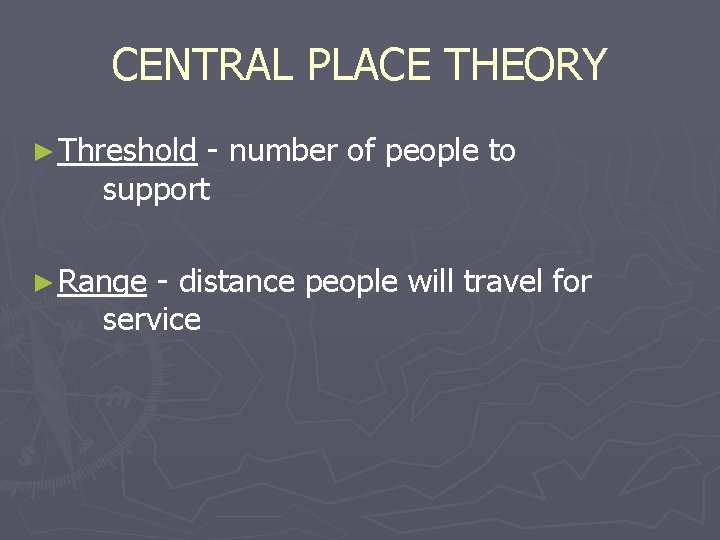
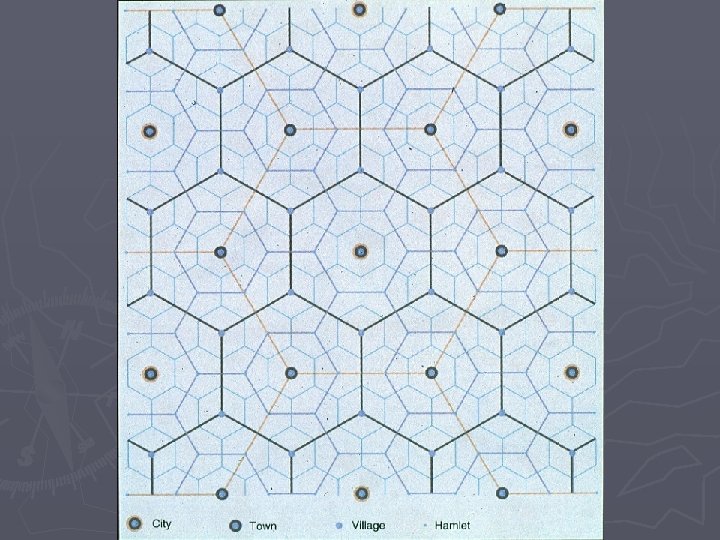
CENTRAL PLACE THEORY ► Threshold - number of people to support ► Range - distance people will travel for service
SUBJECT REVIEW ► SETTLEMENTS ► ORIGINS OF SETTLEMENTS ► TYPES OF SETTLEMENTS ► DEVELOPMENT OF URBAN SETTLEMENTS ► CITY HISTORY ► URBAN PATTERNS
- Slides: 36