
Setting the Stage Session 3 Dialogue with those


- Slides: 24
Setting the Stage Session 3: Dialogue with those affected and involved
What do we know? (1) There are 1000 cases and 100 deaths -- 10% death rate? EATEX-D is a new illness, does not respond to anti-biotics Threat is worldwide news, creating worldwide concern Likely mode of transmission is food, but also close contact with an infected person • Control Strategy: self quarantine of 10, 000 potentially infected citizens • •
What do we know? (2) • Concentration of new cases in specific neighbourhood: Downville • No difference in risk management/risk communication strategies across the city • No obvious reason why behaviour change strategy not working in this area • Question: WHY?
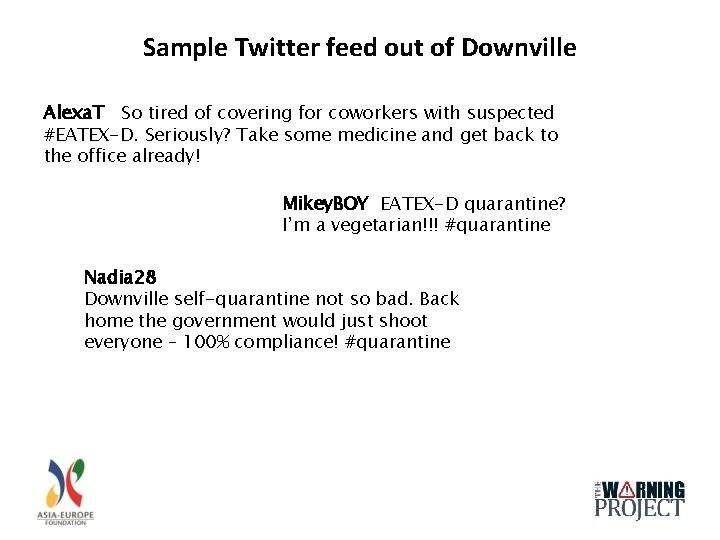
Sample Twitter feed out of Downville Alexa. T So tired of covering for coworkers with suspected #EATEX-D. Seriously? Take some medicine and get back to the office already! Mikey. BOY EATEX-D quarantine? I’m a vegetarian!!! #quarantine Nadia 28 Downville self-quarantine not so bad. Back home the government would just shoot everyone – 100% compliance! #quarantine
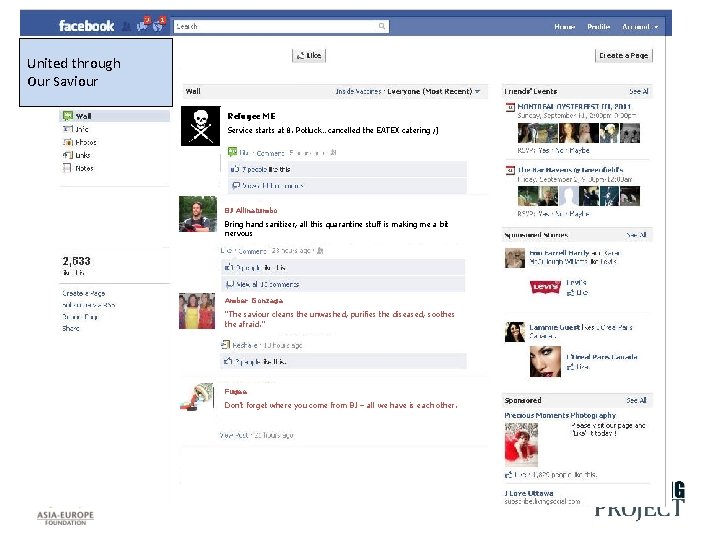
Risk Communication Surveillance United through Our Saviour Refugee ME Service starts at 8. Potluck…cancelled the EATEX catering ; ) BJ Allinatumbo Bring hand sanitizer, all this quarantine stuff is making me a bit nervous Amber Gonzaga “The saviour cleans the unwashed, purifies the diseased, soothes the afraid. ” Fugee Don’t forget where you come from BJ – all we have is each other.
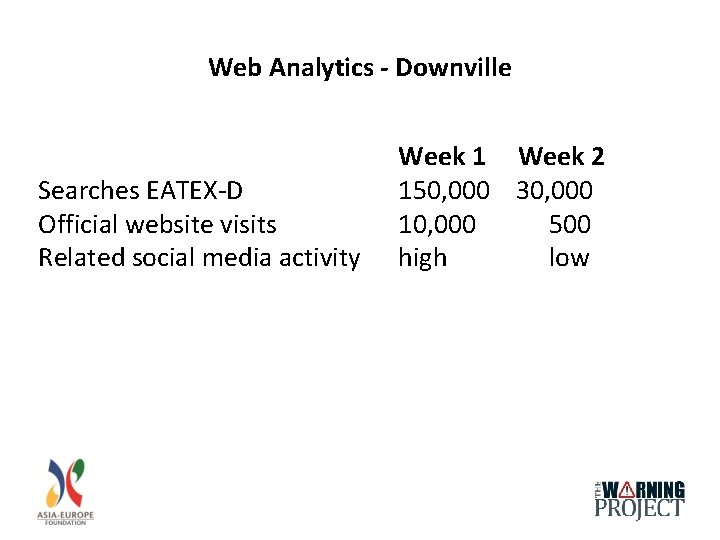
Web Analytics - Downville Searches EATEX-D Official website visits Related social media activity Week 1 Week 2 150, 000 30, 000 10, 000 500 high low
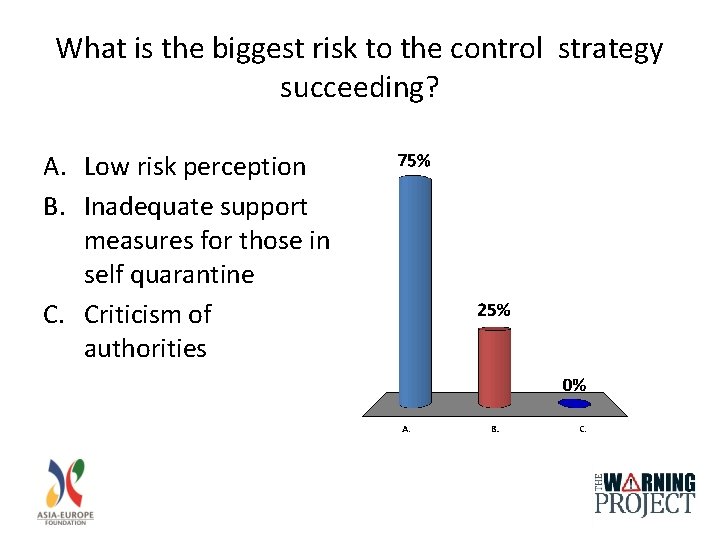
What is the biggest risk to the control strategy succeeding? A. Low risk perception B. Inadequate support measures for those in self quarantine C. Criticism of authorities
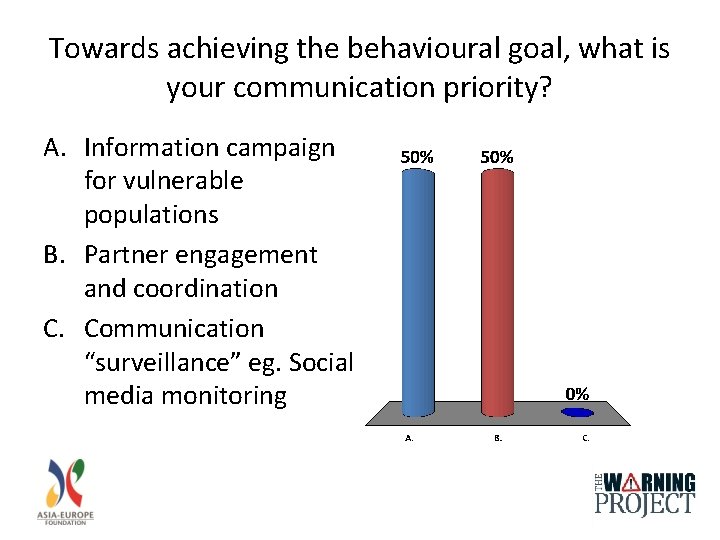
Towards achieving the behavioural goal, what is your communication priority? A. Information campaign for vulnerable populations B. Partner engagement and coordination C. Communication “surveillance” eg. Social media monitoring
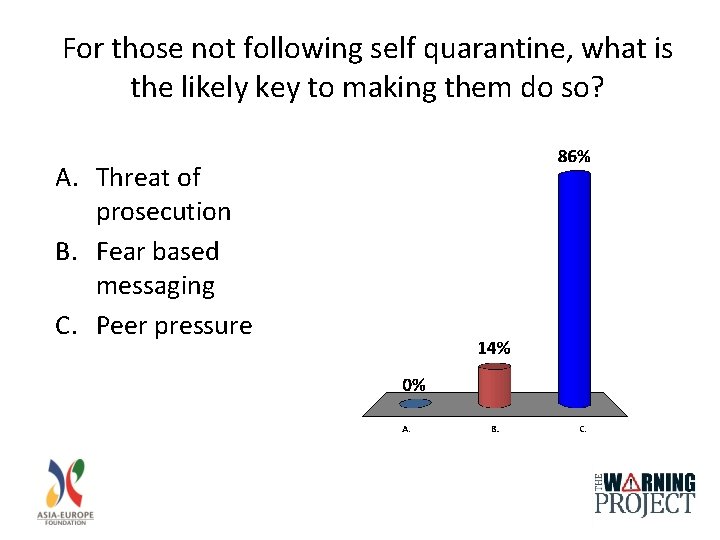
For those not following self quarantine, what is the likely key to making them do so? A. Threat of prosecution B. Fear based messaging C. Peer pressure
Dialogue with those affected and involved
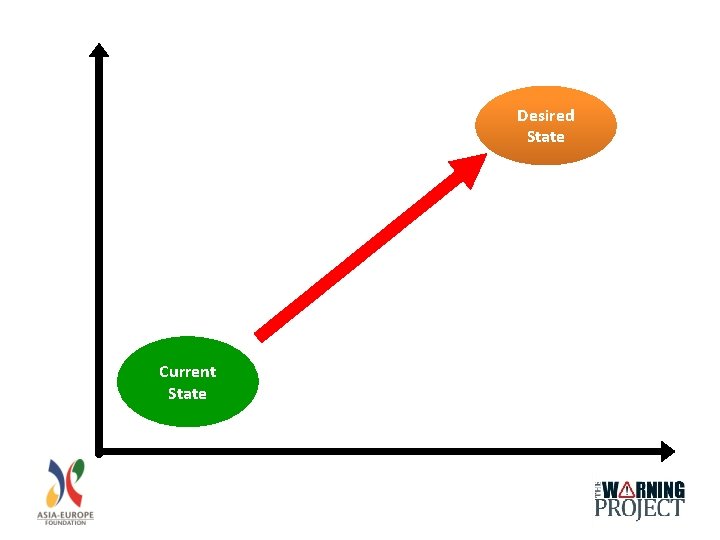
Desired State Current State
Factors Influencing Behaviour Change • • • Perceived Risk Confidence in measures suggested Confidence in ability to complete measures Risk information source and credibility Social norms and pressures – cost of behaviour change 14
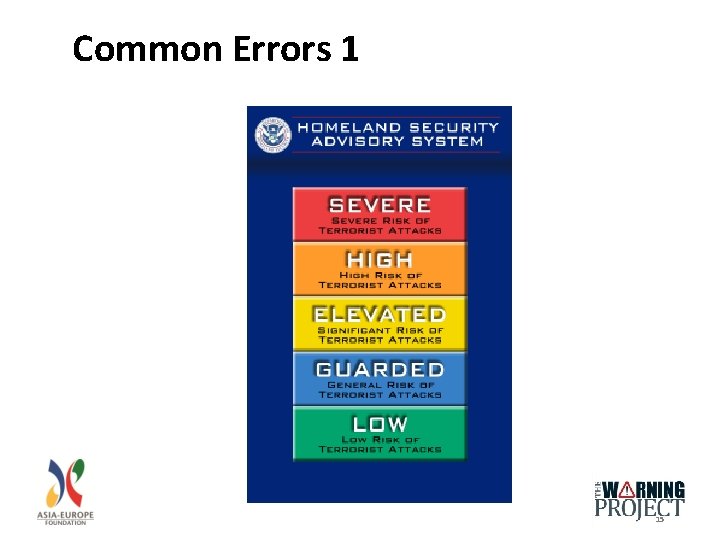
Common Errors 1 15
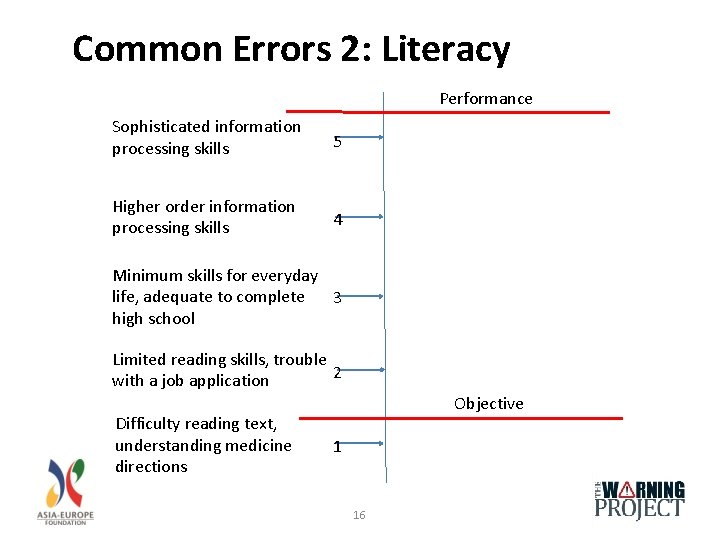
Common Errors 2: Literacy Performance Sophisticated information processing skills 5 Higher order information processing skills 4 Minimum skills for everyday life, adequate to complete 3 high school Limited reading skills, trouble 2 with a job application Difficulty reading text, understanding medicine directions Objective 1 16
Common Errors 3 Common Knowledge Effect • Tendency to exaggerate how much of THEIR knowledge is shared by others • Can’t assume public’s knowledge base • Best practice: real time citizen driven Q/A 17
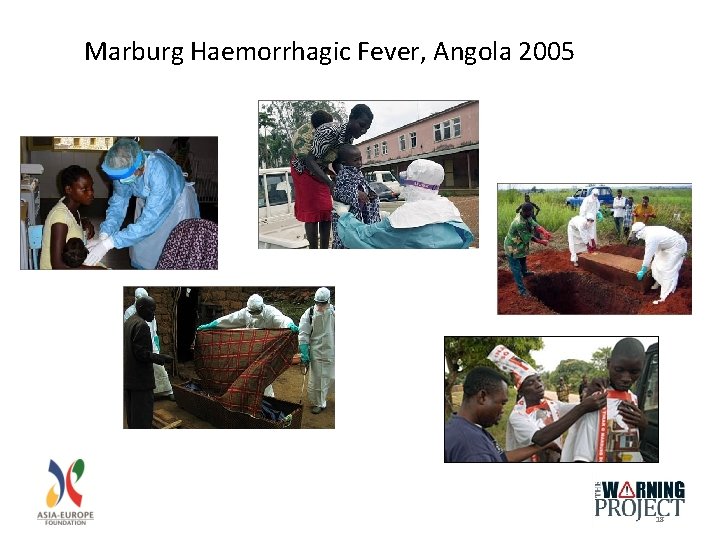
Marburg Haemorrhagic Fever, Angola 2005 18
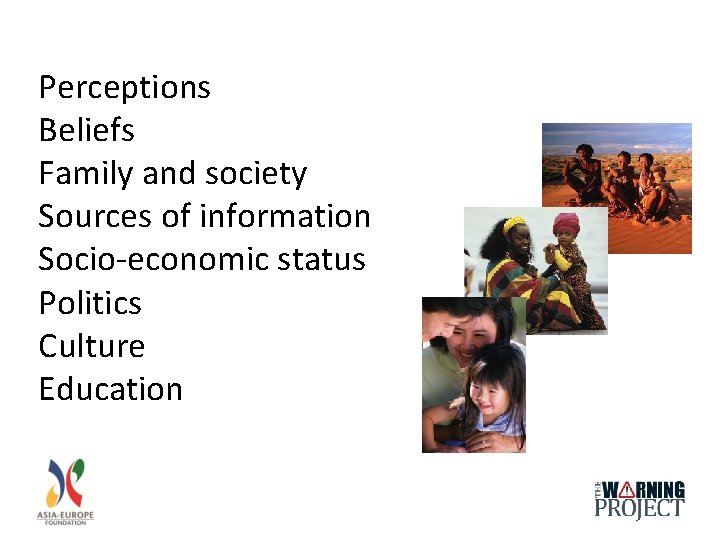
Perceptions Beliefs Family and society Sources of information Socio-economic status Politics Culture Education
Discussion • Ms Fernanda FALERO, Health Promotion and Anthropology Advisor, MSF Spain • Mr Daniel SCHMIDT, Adviser, Department of International Public Health, Norwegian Institute of Public Health
Workgroup Task 1: Identifying Barriers to Success
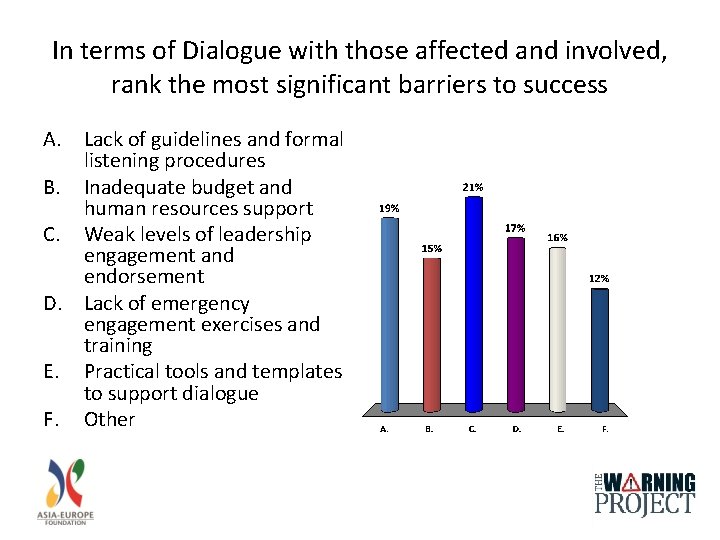
In terms of Dialogue with those affected and involved, rank the most significant barriers to success A. Lack of guidelines and formal listening procedures B. Inadequate budget and human resources support C. Weak levels of leadership engagement and endorsement D. Lack of emergency engagement exercises and training E. Practical tools and templates to support dialogue F. Other
Workgroup Task 2: Recommendations
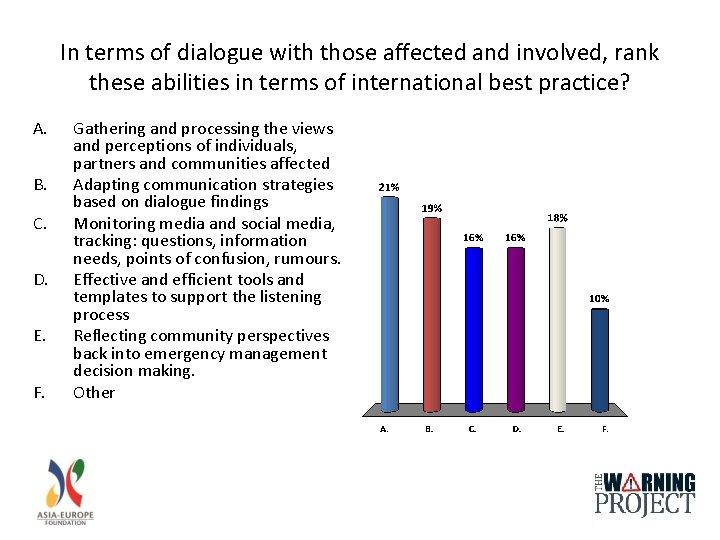
In terms of dialogue with those affected and involved, rank these abilities in terms of international best practice? A. B. C. D. E. F. Gathering and processing the views and perceptions of individuals, partners and communities affected Adapting communication strategies based on dialogue findings Monitoring media and social media, tracking: questions, information needs, points of confusion, rumours. Effective and efficient tools and templates to support the listening process Reflecting community perspectives back into emergency management decision making. Other