
Setting the Stage for Learning Setting the Stage


- Slides: 18
Setting the Stage for Learning
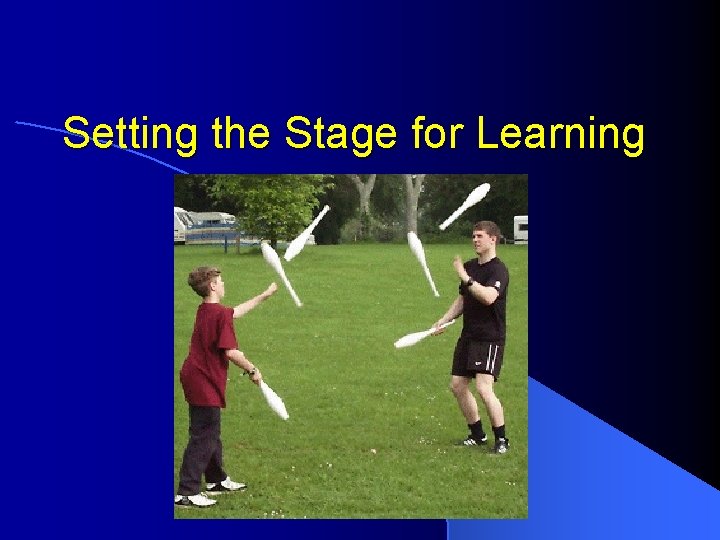
Setting the Stage for Learning l First step is shaping the environment in which learning of movement skills is optimized
Verbal Instructions l Common Myth? Experts are always the most effective instructors l Role of Task Instructions – Communicate general idea of skill or technique - Skill refinement and control
Considerations in Verbal Instructions l Amount of Information l Precision l Locus of Attention – First stage - relevant aspects or features – Second stage - internal or external? - regulatory or not? l Frame of Reference
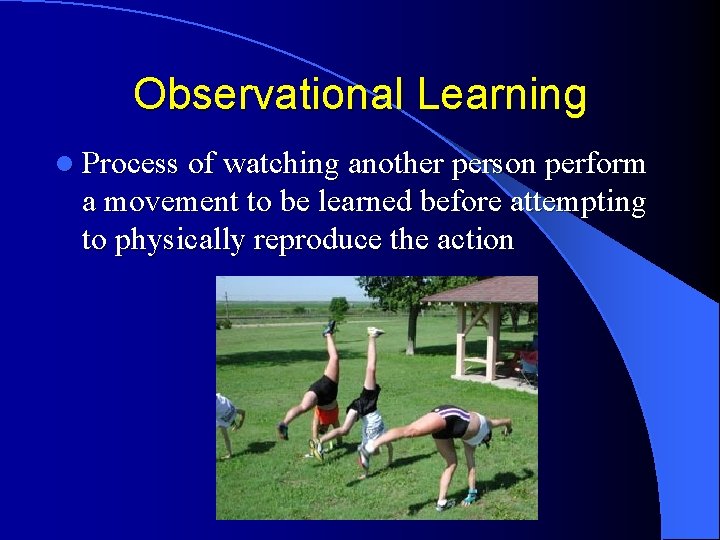
Observational Learning l Process of watching another person perform a movement to be learned before attempting to physically reproduce the action
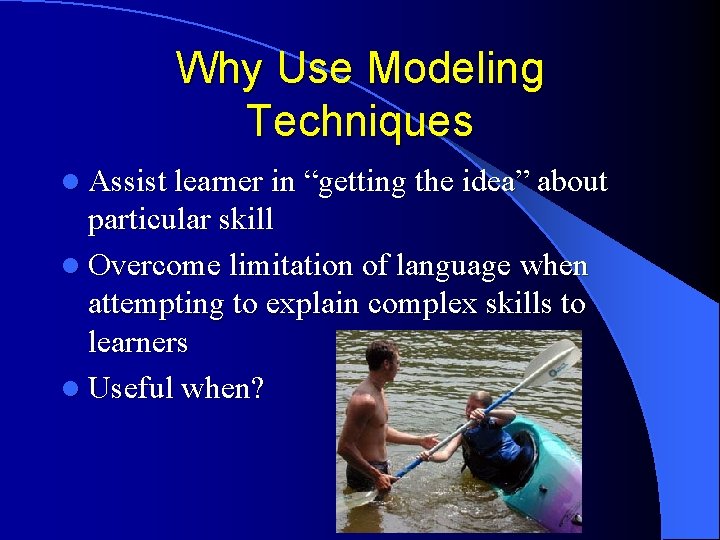
Why Use Modeling Techniques l Assist learner in “getting the idea” about particular skill l Overcome limitation of language when attempting to explain complex skills to learners l Useful when?
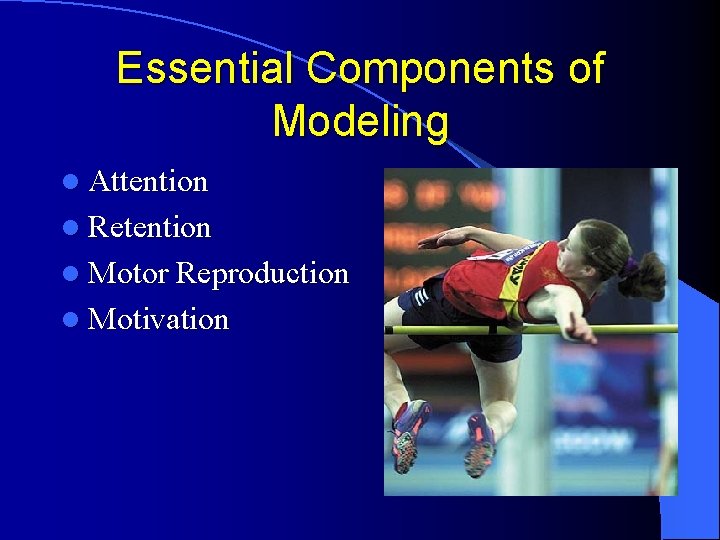
Essential Components of Modeling l Attention l Retention l Motor Reproduction l Motivation
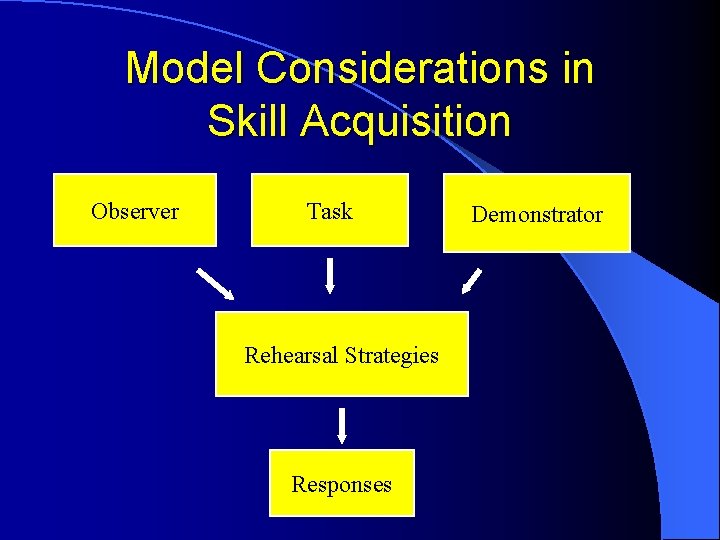
Model Considerations in Skill Acquisition Observer Task Rehearsal Strategies Responses Demonstrator
Does a perfect model lead to perfect learning?
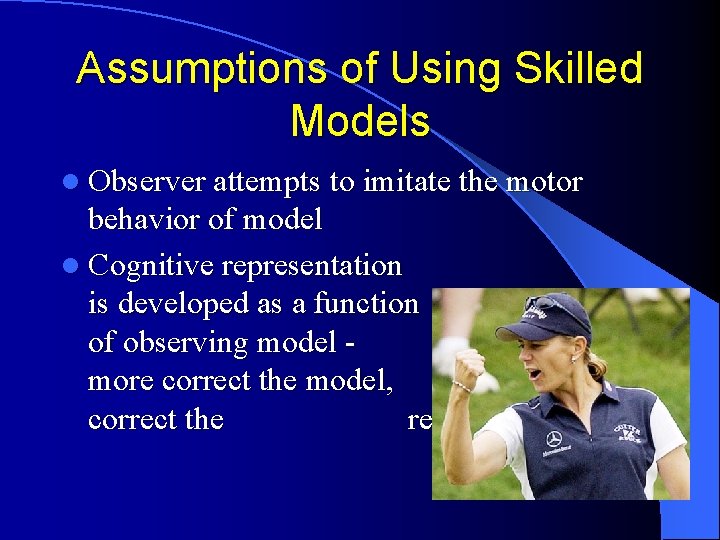
Assumptions of Using Skilled Models l Observer attempts to imitate the motor behavior of model l Cognitive representation is developed as a function of observing model more correct the model, more correct the representation
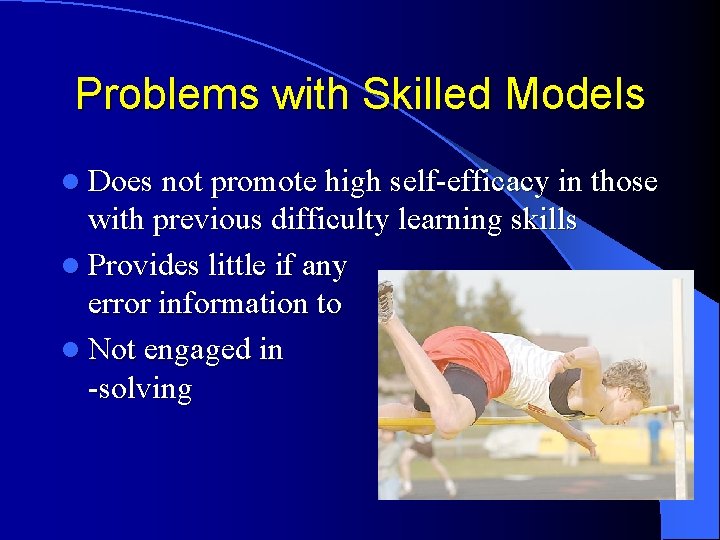
Problems with Skilled Models l Does not promote high self-efficacy in those with previous difficulty learning skills l Provides little if any error information to observer l Not engaged in problem -solving
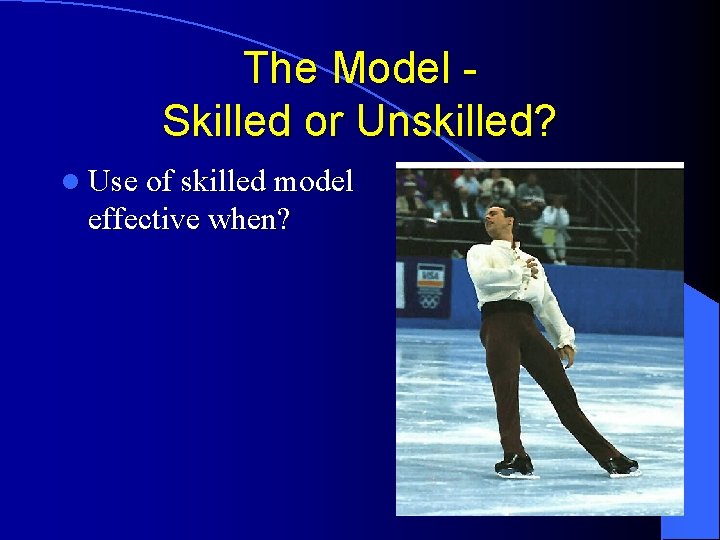
The Model Skilled or Unskilled? l Use of skilled model effective when?
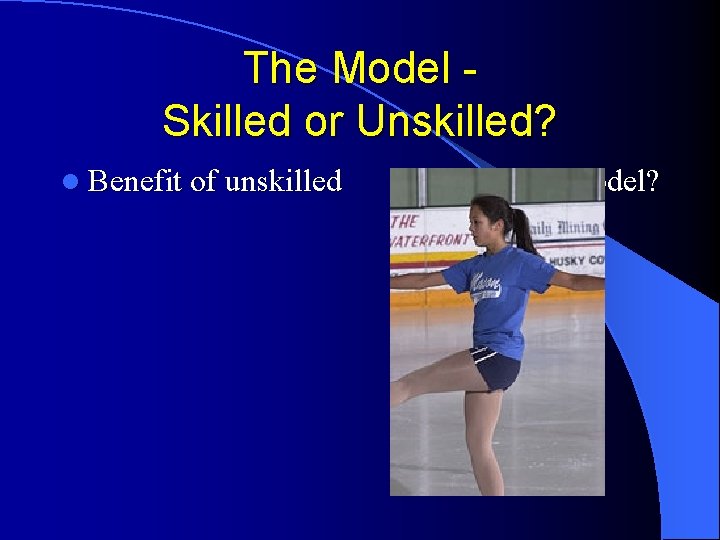
The Model Skilled or Unskilled? l Benefit of unskilled model?
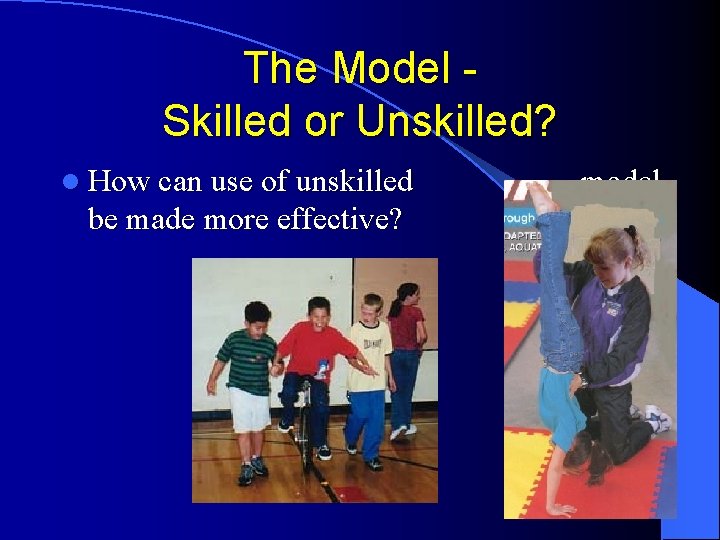
The Model Skilled or Unskilled? l How can use of unskilled be made more effective? model
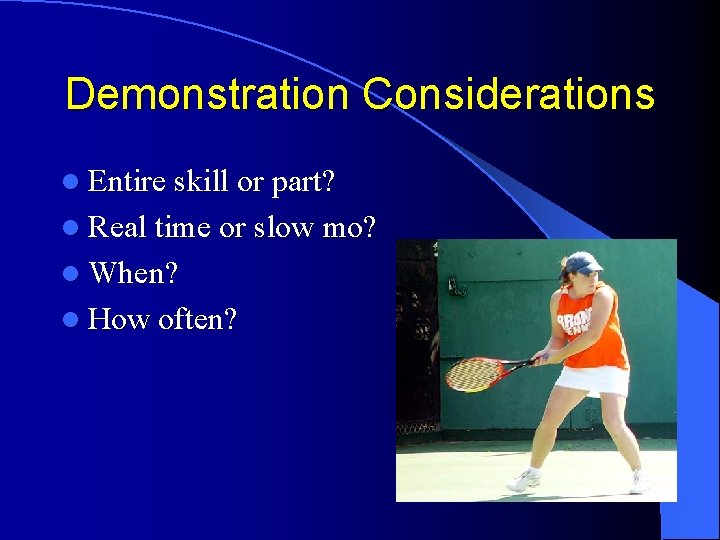
Demonstration Considerations l Entire skill or part? l Real time or slow mo? l When? l How often?
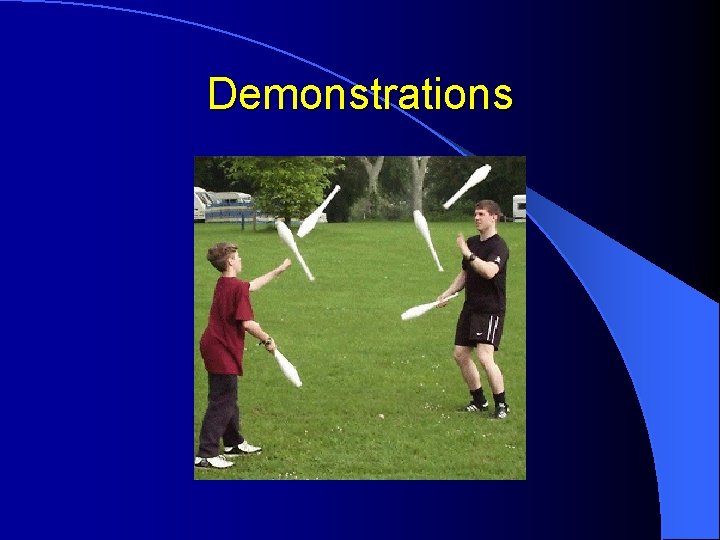
Demonstrations
Verbal Cues l Word or concise phrase – Focuses attention on relevant aspects – Influences attentional capacity – Prompts key movement pattern elements/sequence – Guides rehearsal of skill (self-talk)
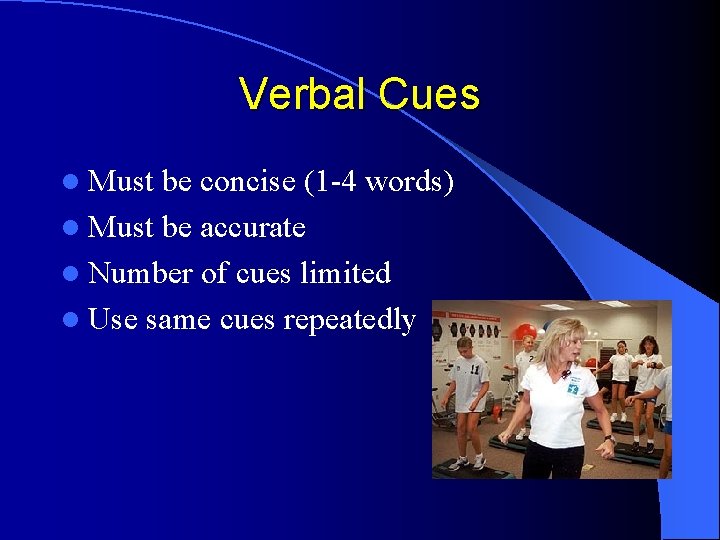
Verbal Cues l Must be concise (1 -4 words) l Must be accurate l Number of cues limited l Use same cues repeatedly