
Setting Strategic Direction 09 15 09 30 Arrival



- Slides: 39
Setting Strategic Direction
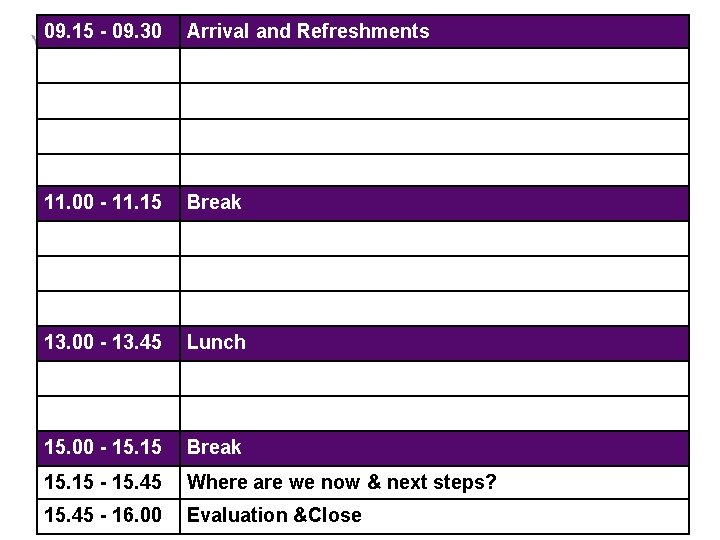
09. 15 - 09. 30 Arrival and Refreshments 11. 00 - 11. 15 Break 13. 00 - 13. 45 Lunch 15. 00 - 15. 15 Break 15. 15 - 15. 45 Where are we now & next steps? 15. 45 - 16. 00 Evaluation &Close
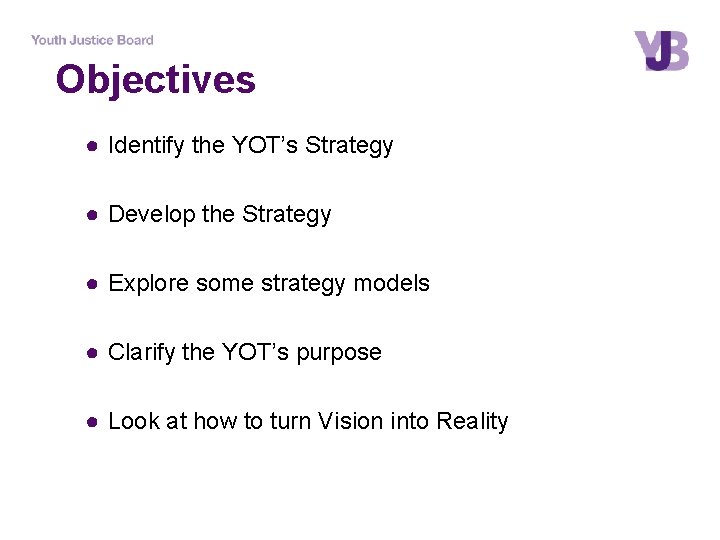
Objectives ● Identify the YOT’s Strategy ● Develop the Strategy ● Explore some strategy models ● Clarify the YOT’s purpose ● Look at how to turn Vision into Reality
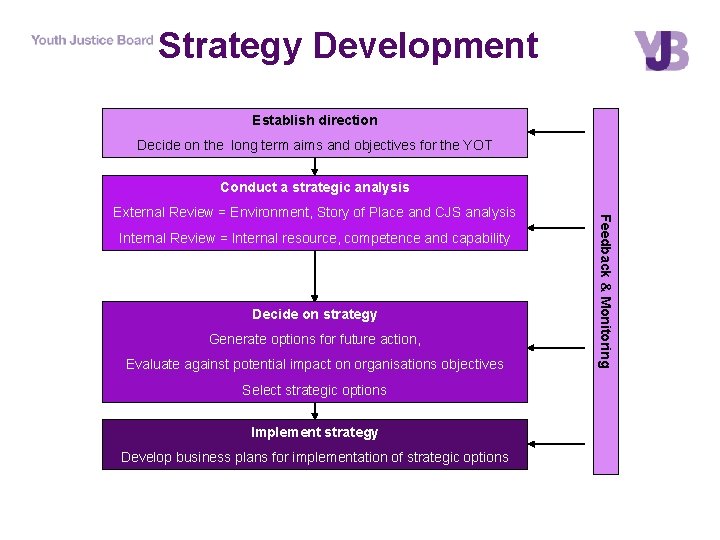
Strategy Development Establish direction Decide on the long term aims and objectives for the YOT Conduct a strategic analysis Internal Review = Internal resource, competence and capability Decide on strategy Generate options for future action, Evaluate against potential impact on organisations objectives Select strategic options Implement strategy Develop business plans for implementation of strategic options Feedback & Monitoring External Review = Environment, Story of Place and CJS analysis
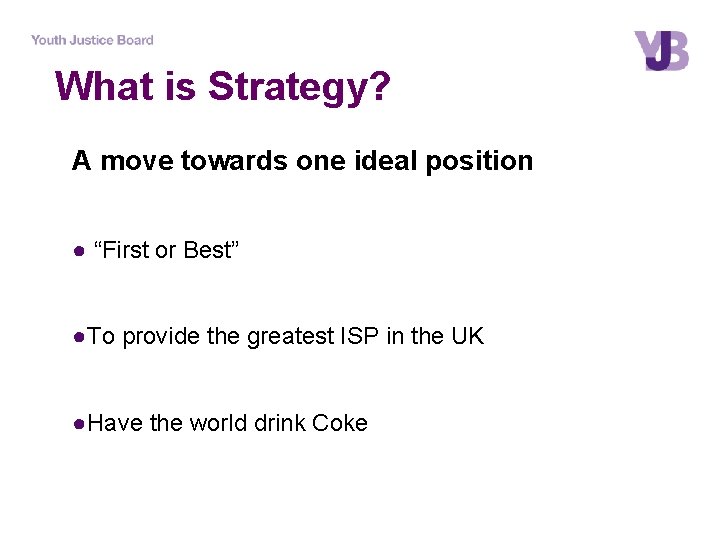
What is Strategy? A move towards one ideal position ● “First or Best” ●To provide the greatest ISP in the UK ●Have the world drink Coke
However…. . “Strategy is not the consequence of planning, but the opposite: its starting point” Planning doesn’t produce strategy - it produces plans. Henry Mintzberg
Clarify the strategic imperatives What are the big strategic issues for ? ? ? Yot? Clear, concise and concrete Implementation of the strategy? What about culture?
Strategy Execution • Where are we today? • Where do you want to be? Level 3 Strategy Aligned • By when? Level 2 Strategy Aware Level 1 Strategy Blind Goals The strategy is a well-guarded secret PM is viewed as a headache Goals Company strategic goals are well communicated at a high level. Simple forms automation. PM is an event vs a process Goals Managers & employees set goals & competencies & track progress. PM is an ongoing process. Managers track progress toward goals & have development plans to achieve competencies Level 4 Strategy Connected Goals Employees have clear line of sight to corporate goals. Managers & executive can track progress toward achievement. Company has agile strategy. PM process is continuous & optimised. PM is tightly linked to the strategy & system becomes a predictor of success – & ultimately increases odds of success. Shareholder Value Time & Cost Savings Employee Engagement Productivity
A Strategy Focused organisation ● mobilise change ● translate the strategy ● align the organisation ● make strategy continual ● everyone’s job
Strategic Development Staff awareness Connected with strategy Two way Tracking Support and development Link performance to reward
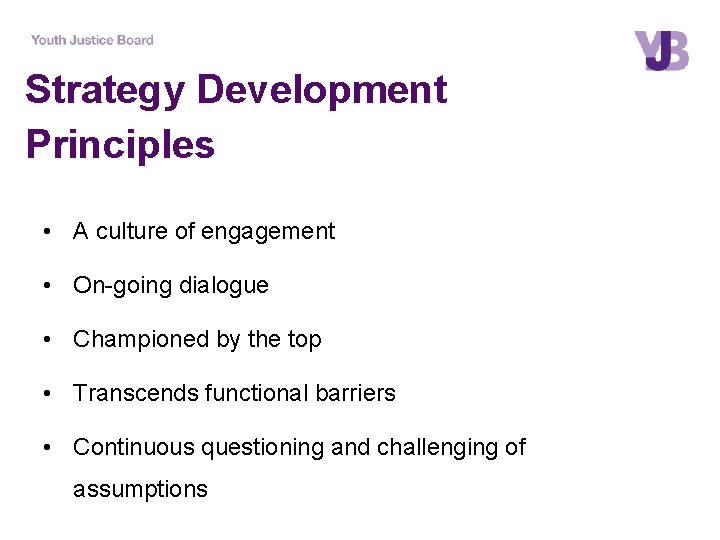
Strategy Development Principles • A culture of engagement • On-going dialogue • Championed by the top • Transcends functional barriers • Continuous questioning and challenging of assumptions
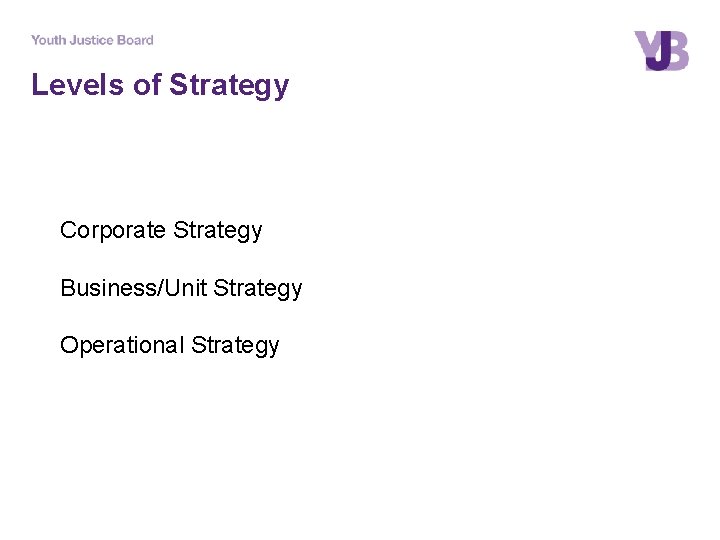
Levels of Strategy Corporate Strategy Business/Unit Strategy Operational Strategy
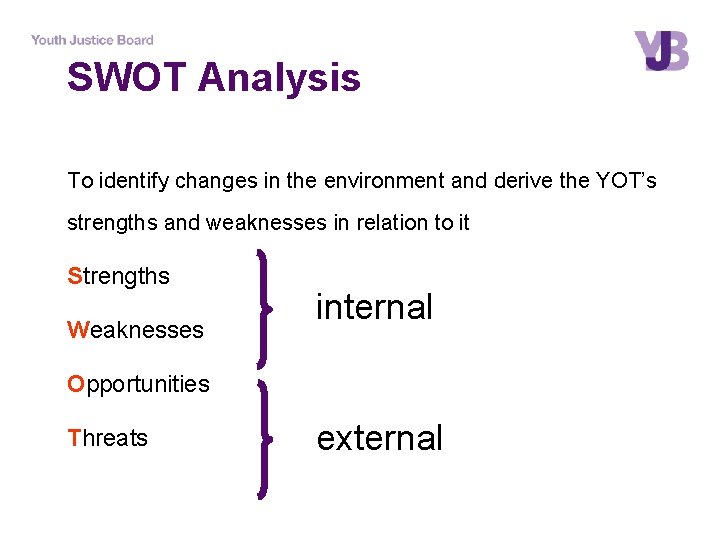
SWOT Analysis To identify changes in the environment and derive the YOT’s strengths and weaknesses in relation to it Strengths Weaknesses internal Opportunities Threats external
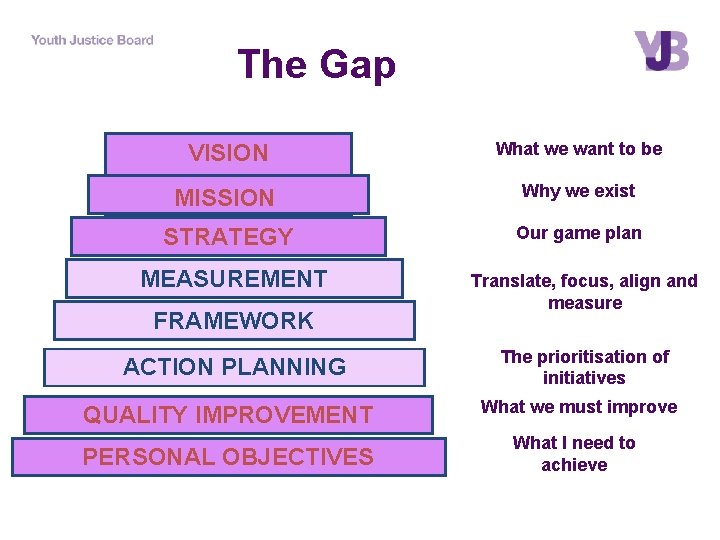
The Gap VISION What we want to be MISSION Why we exist STRATEGY Our game plan MEASUREMENT FRAMEWORK ACTION PLANNING Translate, focus, align and measure The prioritisation of initiatives QUALITY IMPROVEMENT What we must improve PERSONAL OBJECTIVES What I need to achieve
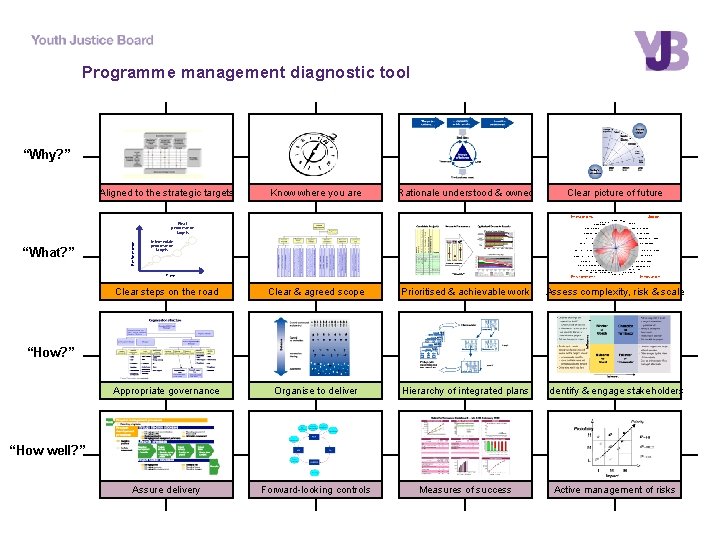
Programme management diagnostic tool “Why? ” Aligned to the strategic targets Know where you are Rationale understood & owned Clear picture of future Interactions Scope Procurement Stakeholders Final performance targets Risk Management Dependencies “What? ” Performance Technical Intermediate performance targets Resources. Cost Timescale Impact on Strategy Clarity of Scope Use of New Technology Social / Culture Learning Environment Supportive Environment Support Structure Level of Industry Regulation Business Model Emerging Technology Urgency / Pace Delivery Strategy Suitable Resources Test Facilities Maturity of the Business Market Changing Norms Maturity of the Organisation Restrictions Time Environment Innovation Clear steps on the road Clear & agreed scope Prioritised & achievable work Assess complexity, risk & scale Appropriate governance Organise to deliver Hierarchy of integrated plans Identify & engage stakeholders Assure delivery Forward-looking controls Measures of success Active management of risks “How? ” “How well? ”
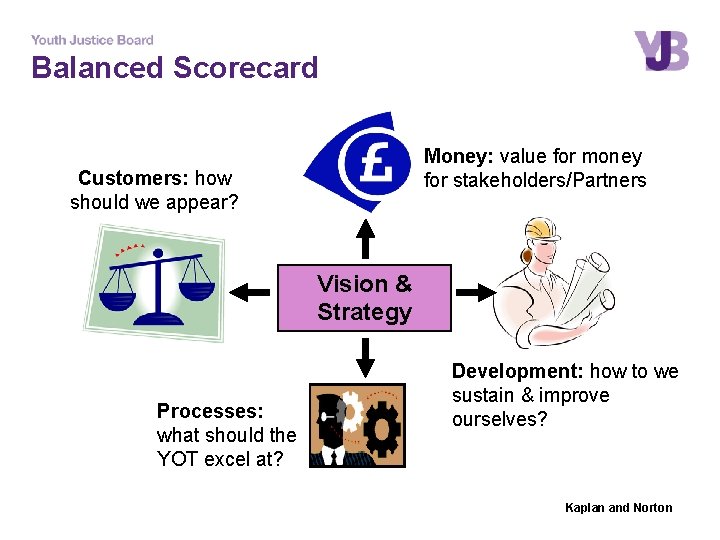
Balanced Scorecard Money: value for money for stakeholders/Partners Customers: how should we appear? Vision & Strategy = Processes: what should the YOT excel at? Development: how to we sustain & improve ourselves? Kaplan and Norton
The balanced scorecard A management & measurement system A framework for the internal business Not just financial measures, people, business processes and customers.
Balanced scorecard Objectives Targets Measures Initiatives
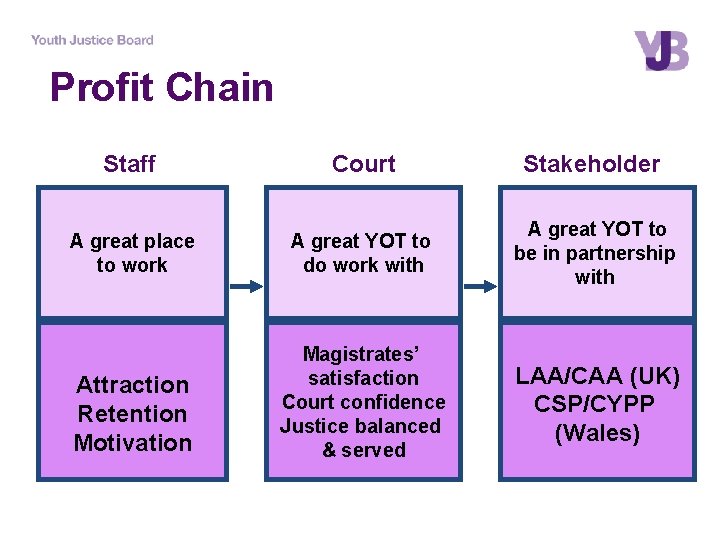
Profit Chain Staff Court Stakeholder A great place to work A great YOT to do work with A great YOT to be in partnership with Attraction Retention Motivation Magistrates’ satisfaction Court confidence Justice balanced & served LAA/CAA (UK) CSP/CYPP (Wales)
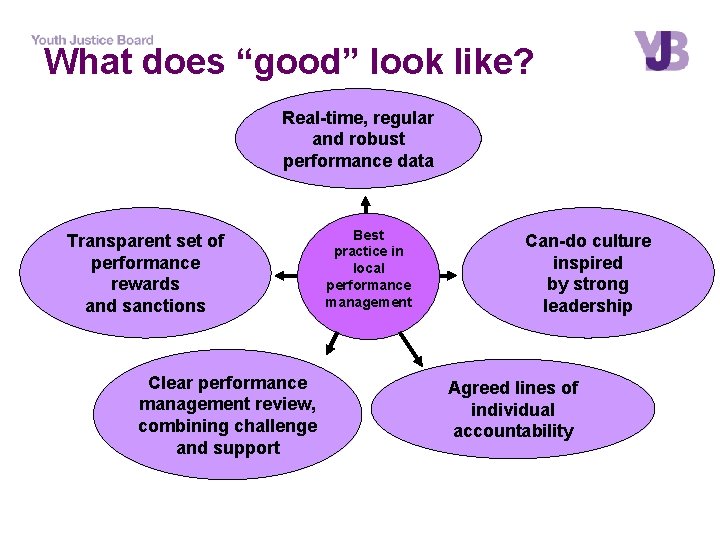
What does “good” look like? Real-time, regular and robust performance data Transparent set of performance rewards and sanctions Clear performance management review, combining challenge and support Best practice in local performance management Can-do culture inspired by strong leadership Agreed lines of individual accountability
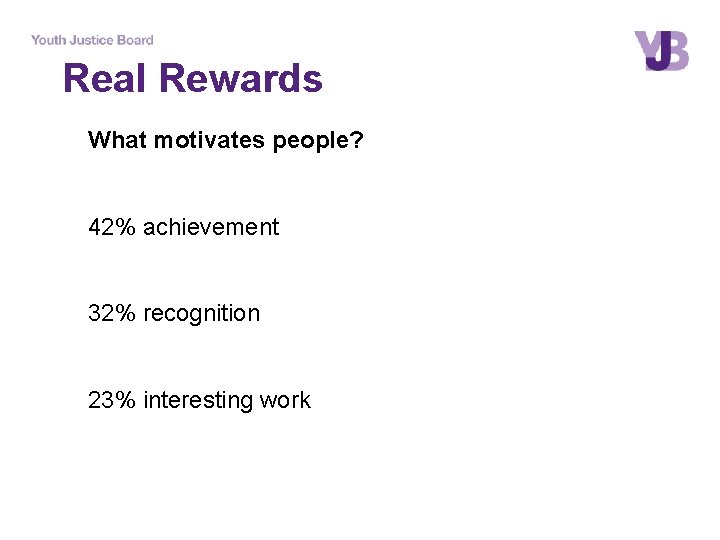
Real Rewards What motivates people? 42% achievement 32% recognition 23% interesting work
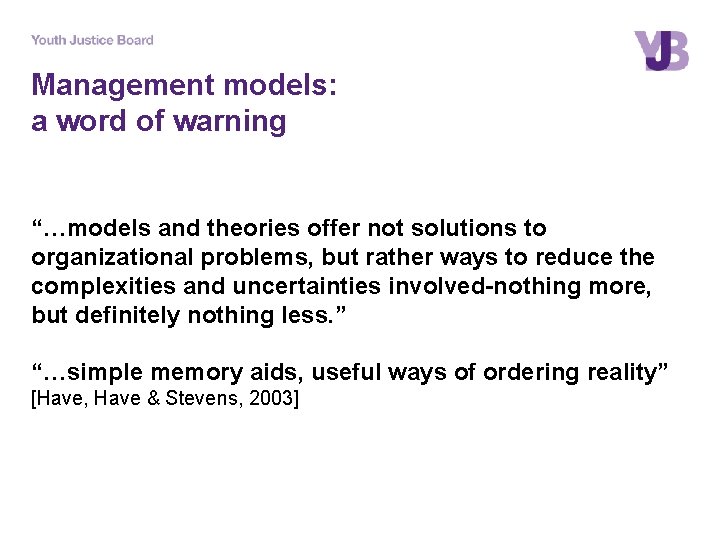
Management models: a word of warning “…models and theories offer not solutions to organizational problems, but rather ways to reduce the complexities and uncertainties involved-nothing more, but definitely nothing less. ” “…simple memory aids, useful ways of ordering reality” [Have, Have & Stevens, 2003]
But on the up side…? Models …offer valuable insights and a sound framework on the basis of which the right choices can be made…”
Purpose and Priorities
Exercise – Purpose 1/2 What is the purpose of ? ? ? YOT (i. e. what is it for)? PART 1 – In pairs you have 5 minutes to come up with as many reasons as possible for the purpose of ? ? ? YOT Using the post-it notes on your table, please only record 1 reason on 1 post-it note Part 2 – In 2 groups you now have 10 minutes to share your reasons with the group
Exercise – Purpose 2/2 Please theme your reasons into categories by placing like reasons together onto the flip chart Part 3 - You now have 2 minutes to present your categories to the main group Part 4 – Now as a main group agree main categories
YOTs are responsible for: Reducing Offending Co-ordination Assessment Intervention Management of Risk
Exercise 2 - Priorities Using the single Red / Amber / Green sticky dots on your tables, can you please rate the categories in level of priority as follows: • Red • Amber • Green = 1 st highest priority = 2 nd highest priority = 3 rd highest priority
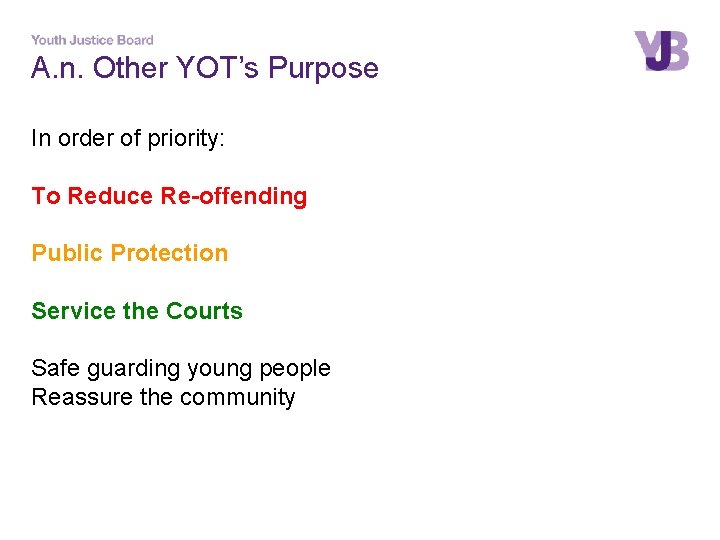
A. n. Other YOT’s Purpose In order of priority: To Reduce Re-offending Public Protection Service the Courts Safe guarding young people Reassure the community
Translating Purpose & Priorities into the Vision
What is a Vision? A description of what the organisation aspires to be, where it is heading & in the future where it wants to be
Vision focused organisations Linked to activity Does the Vision drive the YOT ? Is the Vision isn’t supported in strategy
Vision Development 1/2 Part 1 - In 2 groups you have 10 minutes thinking about the vision statement for ? ? ? YOT Write it down & be prepared to read it to the whole group Part 2 - In turn, read your vision statement out to the whole group
Vision Development 2/2 Part 3 - We will now pull together a shared vision Next steps – The vision statement will be fed back to the Management Board on ? ? ?
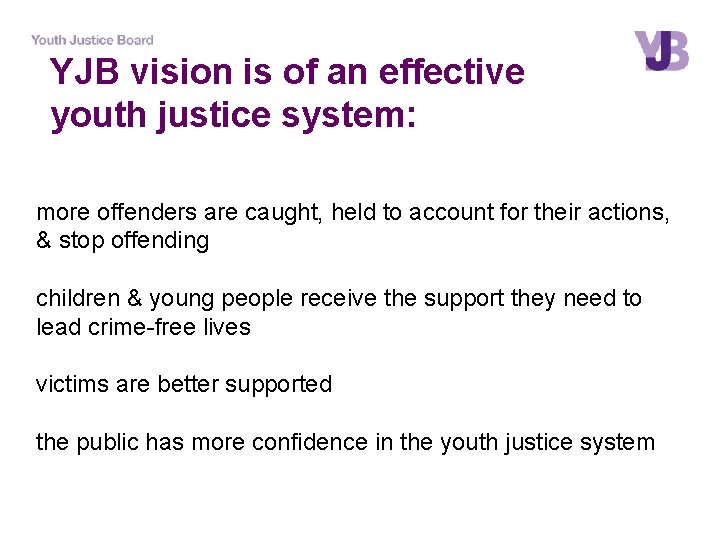
YJB vision is of an effective youth justice system: more offenders are caught, held to account for their actions, & stop offending children & young people receive the support they need to lead crime-free lives victims are better supported the public has more confidence in the youth justice system
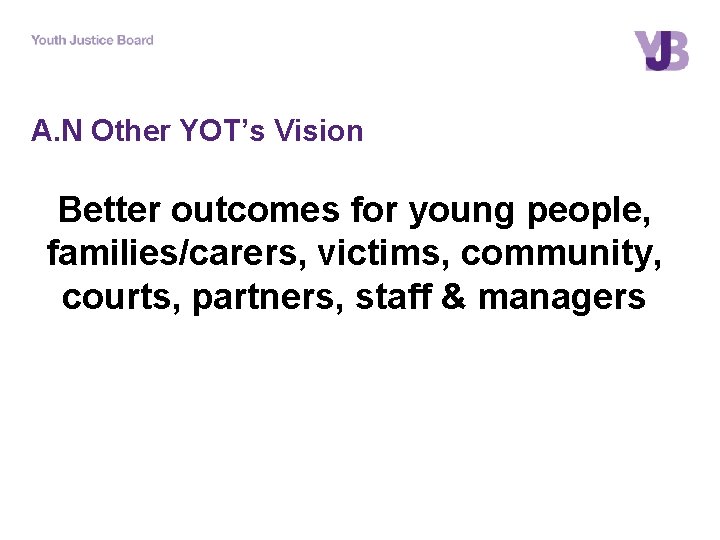
A. N Other YOT’s Vision Better outcomes for young people, families/carers, victims, community, courts, partners, staff & managers
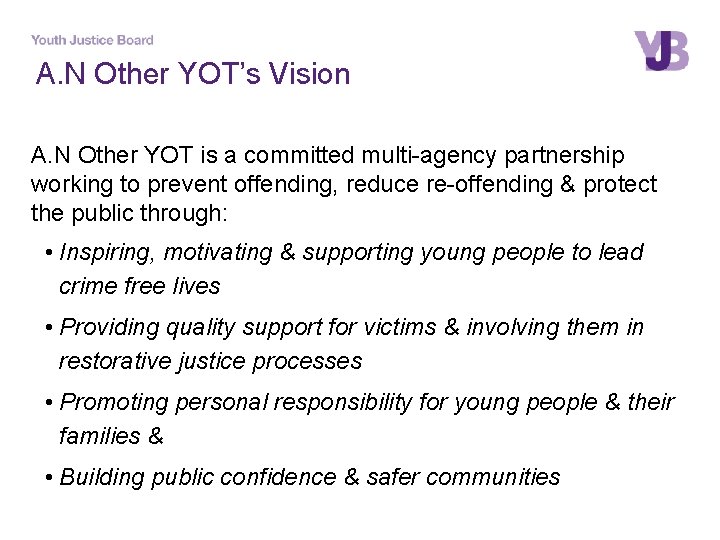
A. N Other YOT’s Vision A. N Other YOT is a committed multi-agency partnership working to prevent offending, reduce re-offending & protect the public through: • Inspiring, motivating & supporting young people to lead crime free lives • Providing quality support for victims & involving them in restorative justice processes • Promoting personal responsibility for young people & their families & • Building public confidence & safer communities
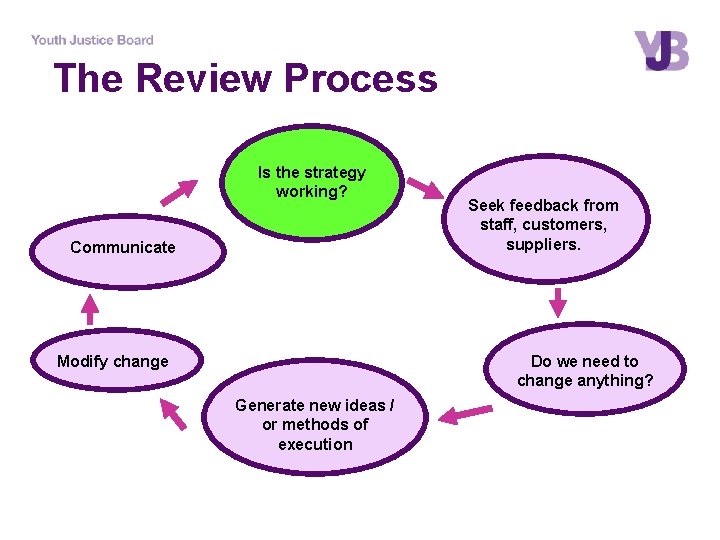
The Review Process Is the strategy working? Communicate Modify change Seek feedback from staff, customers, suppliers. Do we need to change anything? Generate new ideas / or methods of execution
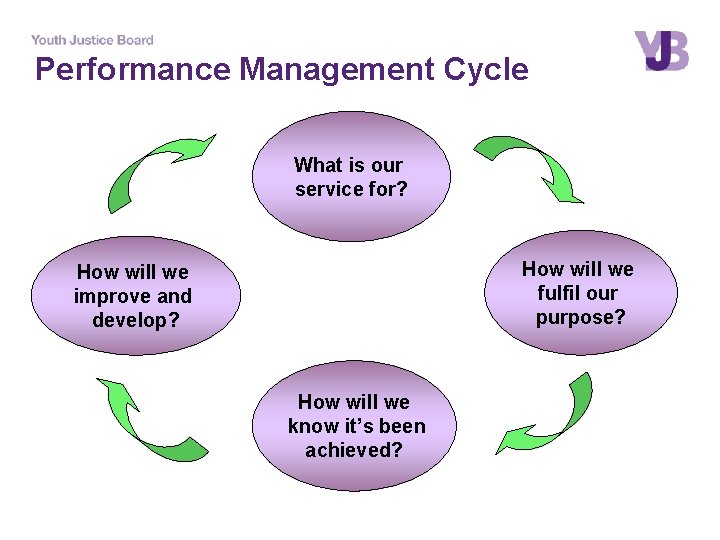
Performance Management Cycle What is our service for? How will we fulfil our purpose? How will we improve and develop? How will we know it’s been achieved?