
Setting a goal what is the aim Aim
- Slides: 14
Setting a goal - what is the aim? Aim to teach effectively – teaching that changes lives
The Goal of Bible Teaching 1 Timothy 1: 5 ´for the end of the commandment is love that comes of a pure heart and of a good conscience, and of faith that is without hypocrisy: ` LOVE - Love from a pure heart HOLINESS - Good conscience FAITH - Sincere faith
Goals for teachers 1. …will learn to teach the Bible creatively. 2. …will teach with definite goals – to see changed lives. 3. …will be able to make lesson plans. 4. …will gain the confidence to teach.
Teacher – telling or guiding. 1. Teacher as teller 2. Students passive - writing notes 3. Emphasis on facts 2. Teacher as guide 3. Students active Led into understanding through participation.
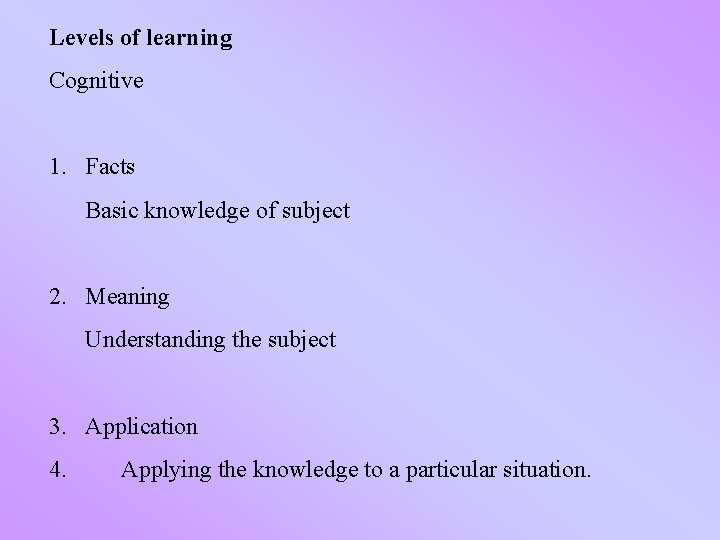
Levels of learning Cognitive 1. Facts Basic knowledge of subject 2. Meaning Understanding the subject 3. Application 4. Applying the knowledge to a particular situation.
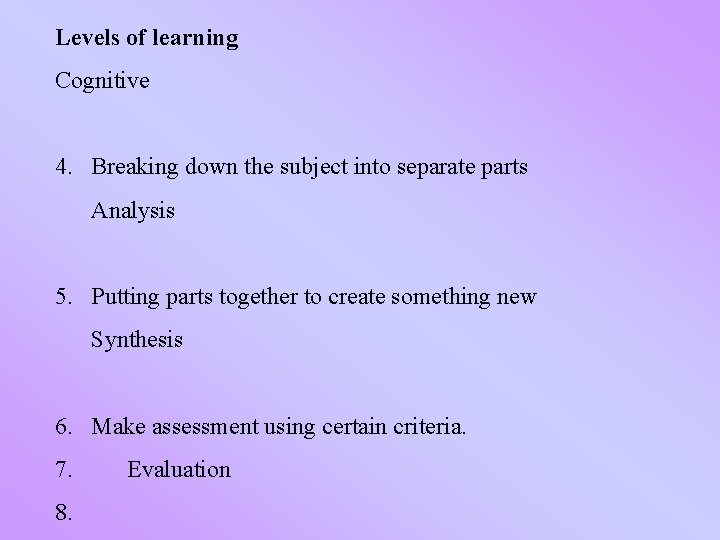
Levels of learning Cognitive 4. Breaking down the subject into separate parts Analysis 5. Putting parts together to create something new Synthesis 6. Make assessment using certain criteria. 7. 8. Evaluation
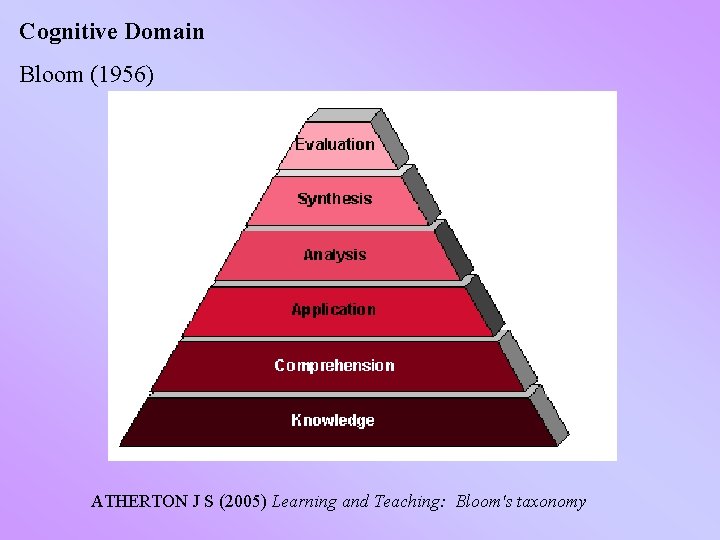
Cognitive Domain Bloom (1956) ATHERTON J S (2005) Learning and Teaching: Bloom's taxonomy
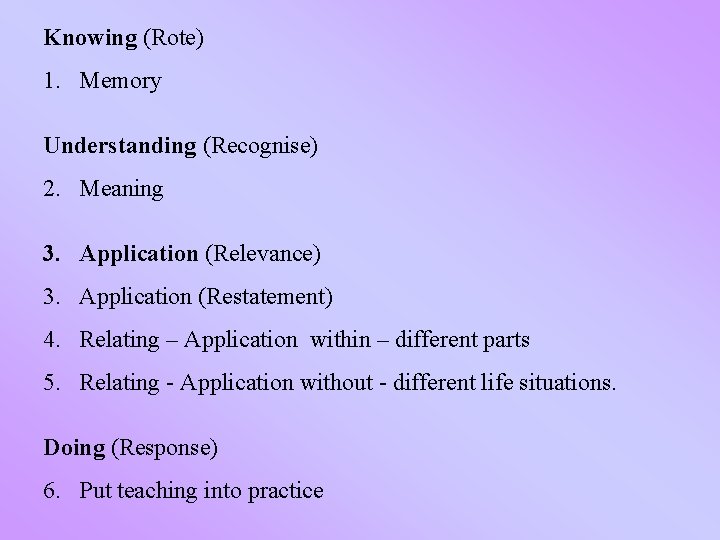
Knowing (Rote) 1. Memory Understanding (Recognise) 2. Meaning 3. Application (Relevance) 3. Application (Restatement) 4. Relating – Application within – different parts 5. Relating - Application without - different life situations. Doing (Response) 6. Put teaching into practice
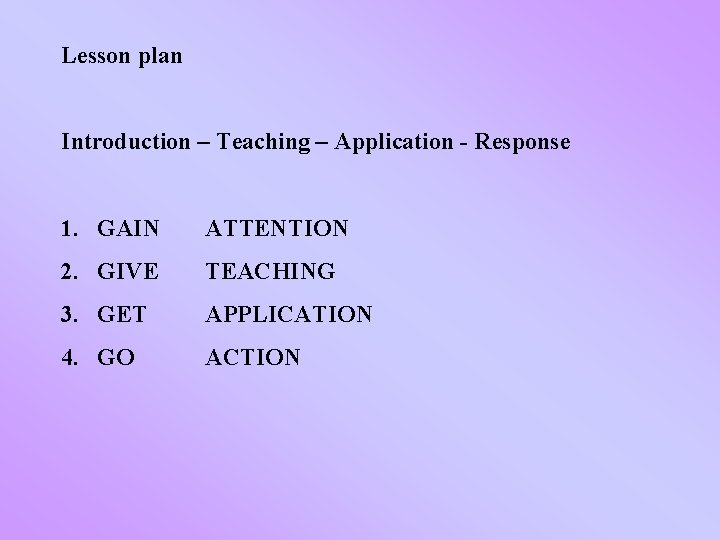
Lesson plan Introduction – Teaching – Application - Response 1. GAIN ATTENTION 2. GIVE TEACHING 3. GET APPLICATION 4. GO ACTION
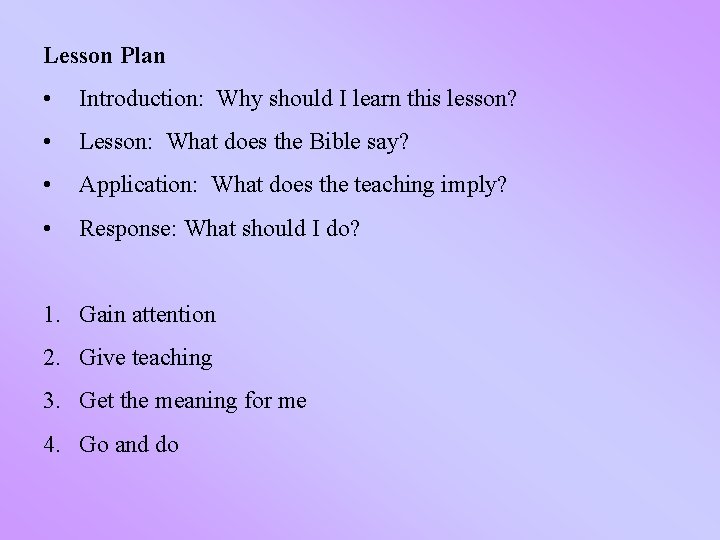
Lesson Plan • Introduction: Why should I learn this lesson? • Lesson: What does the Bible say? • Application: What does the teaching imply? • Response: What should I do? 1. Gain attention 2. Give teaching 3. Get the meaning for me 4. Go and do
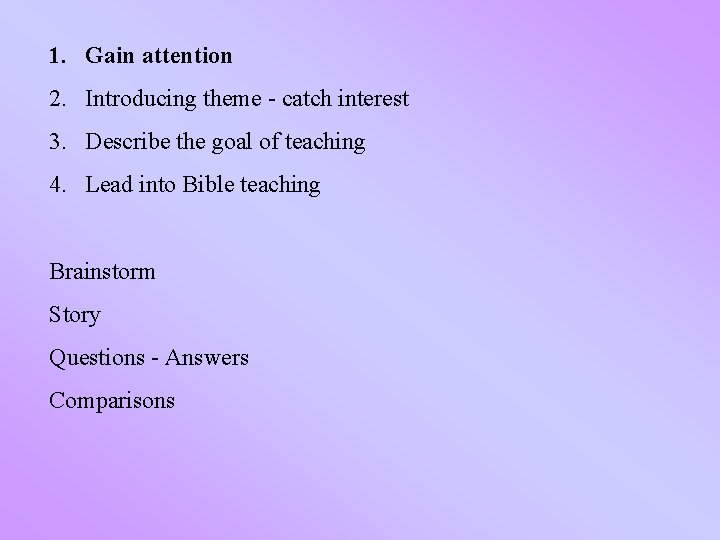
1. Gain attention 2. Introducing theme - catch interest 3. Describe the goal of teaching 4. Lead into Bible teaching Brainstorm Story Questions - Answers Comparisons
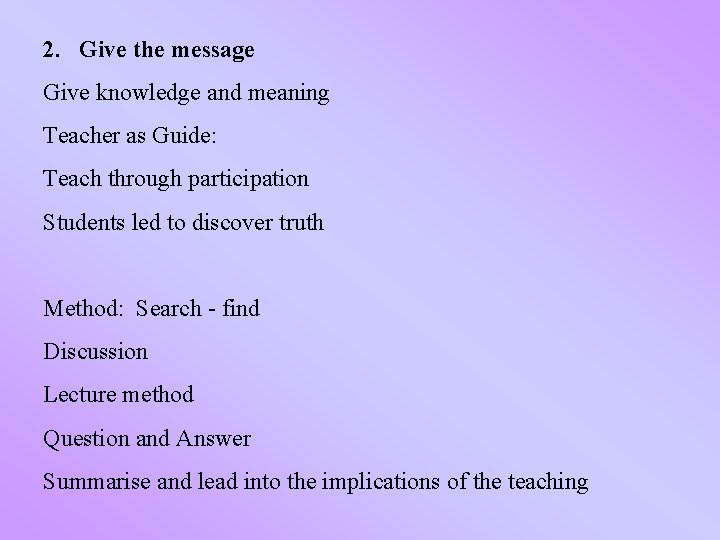
2. Give the message Give knowledge and meaning Teacher as Guide: Teach through participation Students led to discover truth Method: Search - find Discussion Lecture method Question and Answer Summarise and lead into the implications of the teaching
3. Get the message out 4. What does the message mean in practical terms? 5. What needs to be done? 6. Ideas 7. List
4. Go with the message 5. What will you do? 6. When will you do it? 7. Share plans 8. Prayer 9. Arrange time to testify about results.