
Set Design Developing an overarching design concept What
- Slides: 12
Set Design Developing an overarching design concept • What is the show about? • What do we really need to get that point across to the audience? • Think Big picture, Establish a statement • • • Visual/Audible/Written Abstract/Concrete Simple/Complex Examples Addams Family Great Gatsby Curiosity Cat Laramie Project
Set Design Texture • Texture comes from mood and atmosphere of the text/script Types of materials to create texture • • Fabrics • Wood • Metals • Plastics/Foams • Glass • Texture helps create the type of feeling you want to convey to the audience
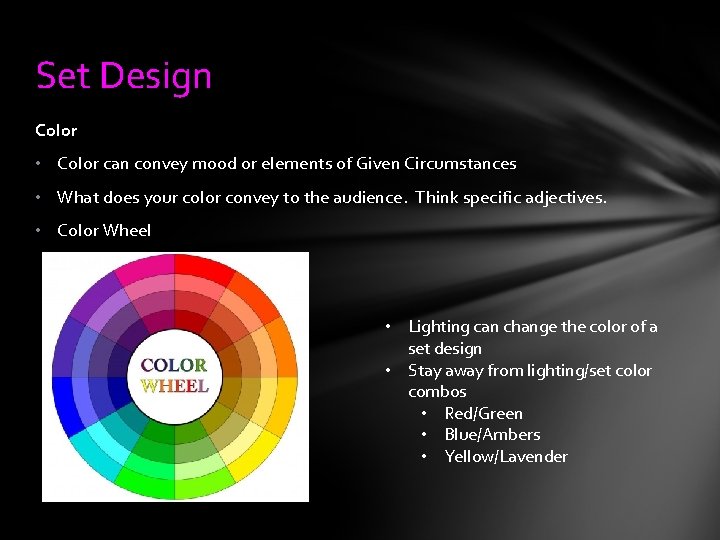
Set Design Color • Color can convey mood or elements of Given Circumstances • What does your color convey to the audience. Think specific adjectives. • Color Wheel • Lighting can change the color of a set design • Stay away from lighting/set color combos • Red/Green • Blue/Ambers • Yellow/Lavender
Set Design Logistics and Practical Design Concepts • What type of set do you need? • Box/One Set • Multi-Set • Unit Set • Set Design as a floor plan • Point of view • 2 D • What needs to be on a set design? How do I draw it? • Examples
Lighting Design Functions of Light • The “Why” of stage lighting • Visibility- Ability to see the performers on stage. MAIN FUNCTION • Selective Focus- lighting can tell audience where to look • Modeling- lighting can make performers look a certain way • Mood-Lighting can convey mood or emotion to audience • Convey information- lighting can inform audience of time of day, season, location
Lighting Design The Controllable Qualities of Light • The “how” of lighting design • Distribution- Designer can control how much light is used in certain areas of stage • Intensity- Designer can control how bright or dim a light can be • Movement- A designer can control if a light moves (spotlight or laser) • Color- A designer can use color to help create mood or setting
Lighting Design Identifying a “Look” • A “look” determines what the audience sees • Includes both Controllable qualities of light and utilizes the functions of light • Any time something about these two elements changes, the “look” has changed • Examples • Lighting Look #1 • Lighting Look #2 • Lighting Look #3
Lighting Design Practical Lighting Components and Instruments • Instruments • Fresnels • Ellipsoidals • Spotlights • Moving Lights • Tools • Gels • Gobos (Example #1 , Example #2) • Fog/Haze (Example #1 , Example #2)
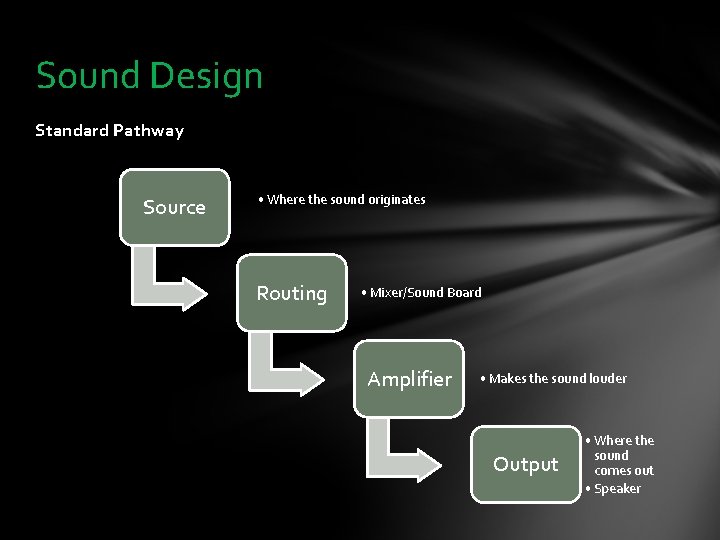
Sound Design Standard Pathway Source • Where the sound originates Routing • Mixer/Sound Board Amplifier • Makes the sound louder Output • Where the sound comes out • Speaker
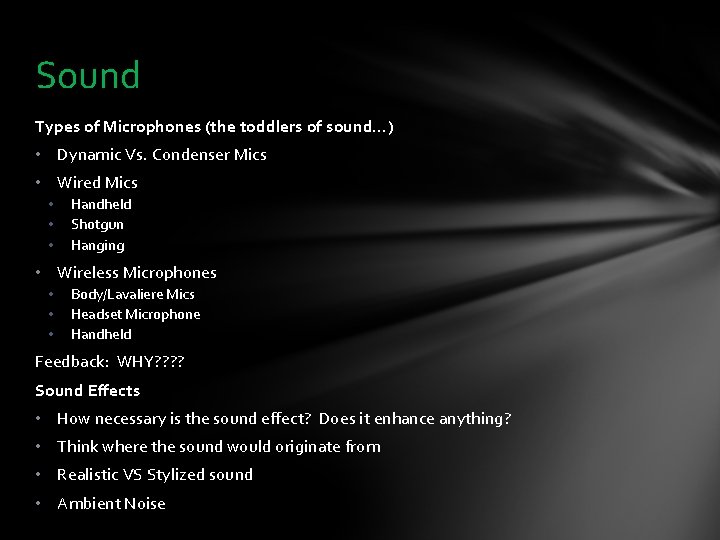
Sound Types of Microphones (the toddlers of sound…) • Dynamic Vs. Condenser Mics • Wired Mics • • • Handheld Shotgun Hanging • Wireless Microphones • • • Body/Lavaliere Mics Headset Microphone Handheld Feedback: WHY? ? Sound Effects • How necessary is the sound effect? Does it enhance anything? • Think where the sound would originate from • Realistic VS Stylized sound • Ambient Noise
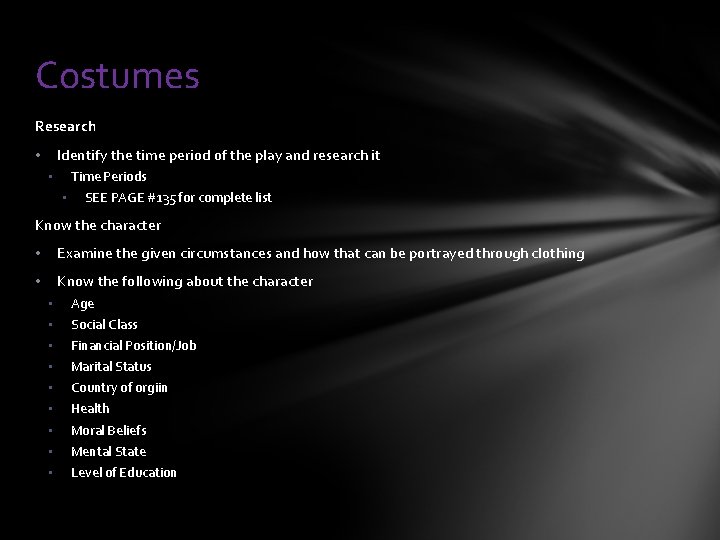
Costumes Research Identify the time period of the play and research it • Time Periods • • SEE PAGE #135 for complete list Know the character • Examine the given circumstances and how that can be portrayed through clothing • Know the following about the character • • • Age Social Class Financial Position/Job Marital Status Country of orgiin Health Moral Beliefs Mental State Level of Education
Costumes Design Choices • Costumes should fit with themes and moods of the production • Lighting/Set Design • Costumes can be used as a metaphor or to suggest a character trait • Is there a “key” piece that the rest of the costume is designed • Examples