
Session Overview How the identification of individual need

- Slides: 23
Session Overview § How the identification of individual need enhances participation and compliance with community sentences in the youth justice system. § How organisations can undertake small changes to help enhance communication with service users 1
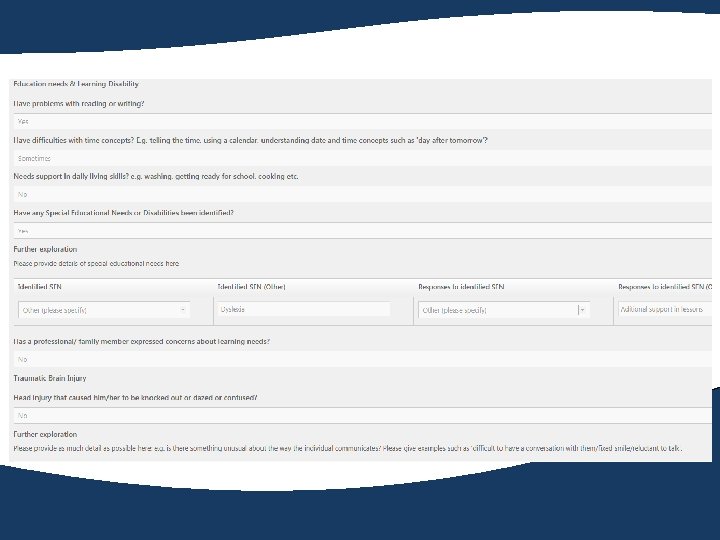
Session Objectives § Increase understanding of the difficulties experienced by many service users in relation to communication. § To explain a model of effective communication. § To Explore some small examples of how we might do things differently in our own services to improve engagement. § Discuss how SEND issues are assessed and managed in the youth justice system. 2
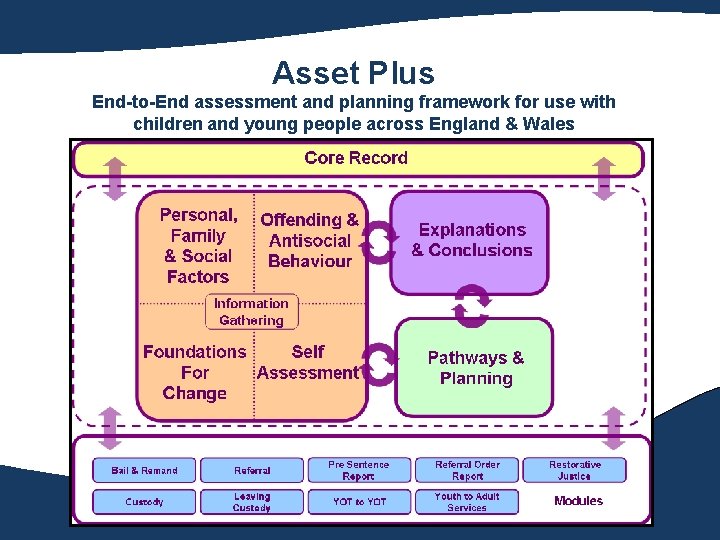
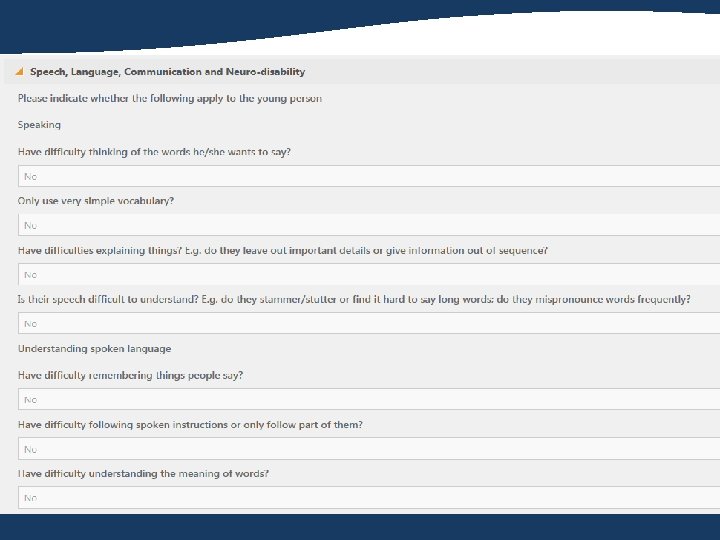
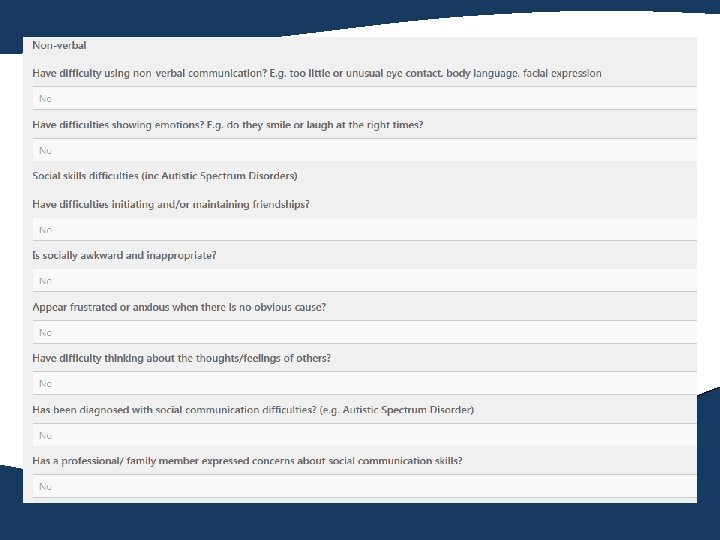
Asset Plus End-to-End assessment and planning framework for use with children and young people across England & Wales 3
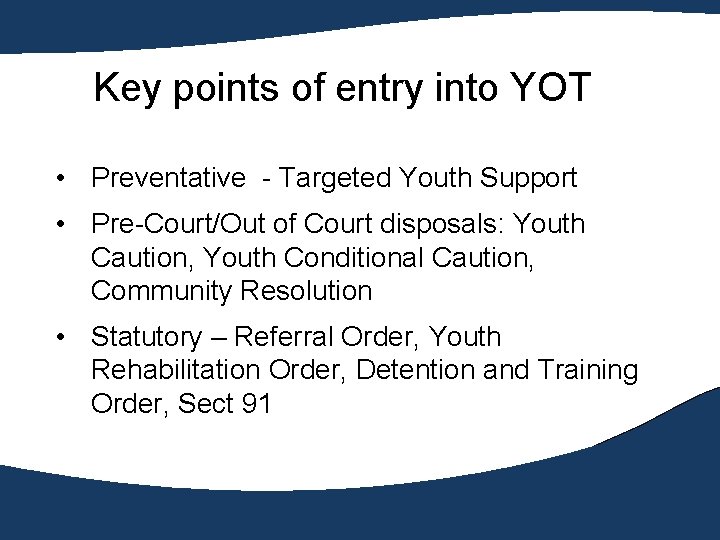
Key points of entry into YOT • Preventative - Targeted Youth Support • Pre-Court/Out of Court disposals: Youth Caution, Youth Conditional Caution, Community Resolution • Statutory – Referral Order, Youth Rehabilitation Order, Detention and Training Order, Sect 91 4
5
6
7
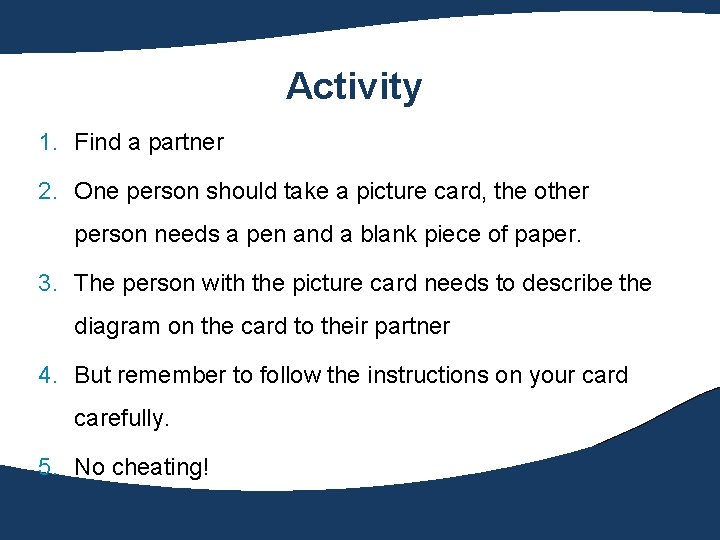
Activity 1. Find a partner 2. One person should take a picture card, the other person needs a pen and a blank piece of paper. 3. The person with the picture card needs to describe the diagram on the card to their partner 4. But remember to follow the instructions on your card carefully. 5. No cheating! 8
9
10
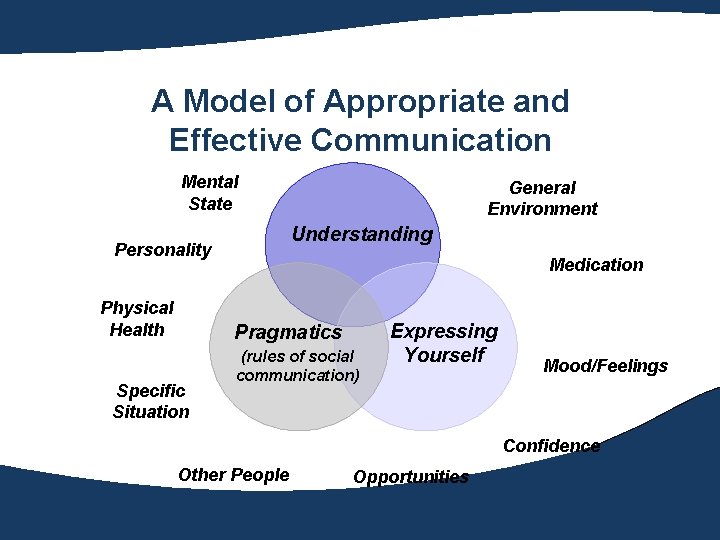
A Model of Appropriate and Effective Communication Mental State Understanding Personality Physical Health General Environment Medication Pragmatics Specific Situation (rules of social communication) Expressing Yourself Mood/Feelings Confidence Other People Opportunities 11
12
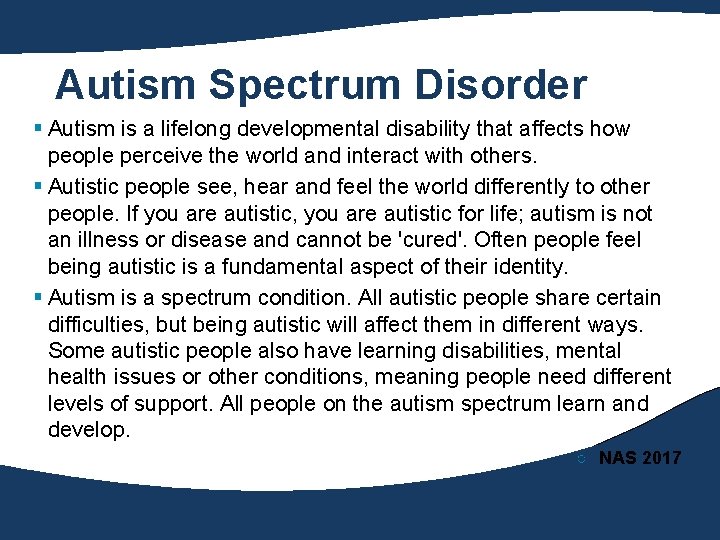
Autism Spectrum Disorder § Autism is a lifelong developmental disability that affects how people perceive the world and interact with others. § Autistic people see, hear and feel the world differently to other people. If you are autistic, you are autistic for life; autism is not an illness or disease and cannot be 'cured'. Often people feel being autistic is a fundamental aspect of their identity. § Autism is a spectrum condition. All autistic people share certain difficulties, but being autistic will affect them in different ways. Some autistic people also have learning disabilities, mental health issues or other conditions, meaning people need different levels of support. All people on the autism spectrum learn and develop. ○ NAS 2017 13
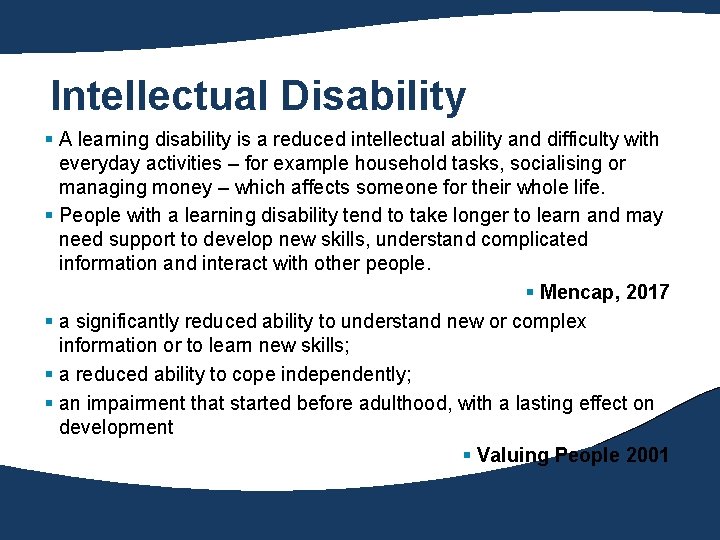
Intellectual Disability § A learning disability is a reduced intellectual ability and difficulty with everyday activities – for example household tasks, socialising or managing money – which affects someone for their whole life. § People with a learning disability tend to take longer to learn and may need support to develop new skills, understand complicated information and interact with other people. § Mencap, 2017 § a significantly reduced ability to understand new or complex information or to learn new skills; § a reduced ability to cope independently; § an impairment that started before adulthood, with a lasting effect on development § Valuing People 2001 14
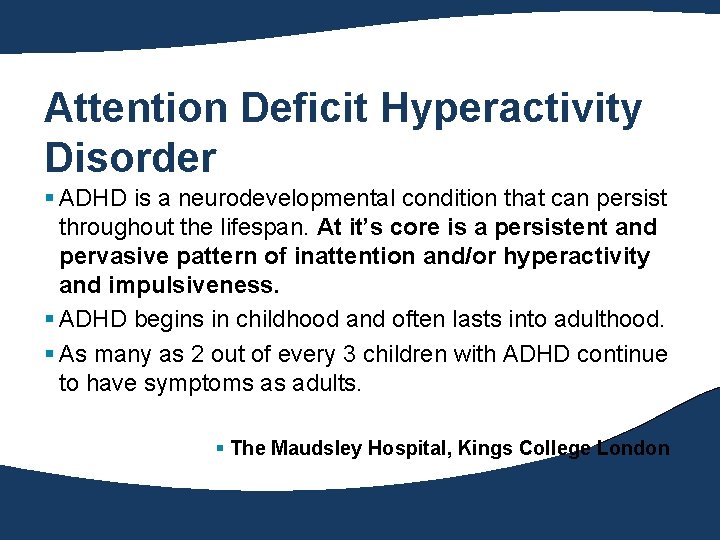
Attention Deficit Hyperactivity Disorder § ADHD is a neurodevelopmental condition that can persist throughout the lifespan. At it’s core is a persistent and pervasive pattern of inattention and/or hyperactivity and impulsiveness. § ADHD begins in childhood and often lasts into adulthood. § As many as 2 out of every 3 children with ADHD continue to have symptoms as adults. § The Maudsley Hospital, Kings College London 15
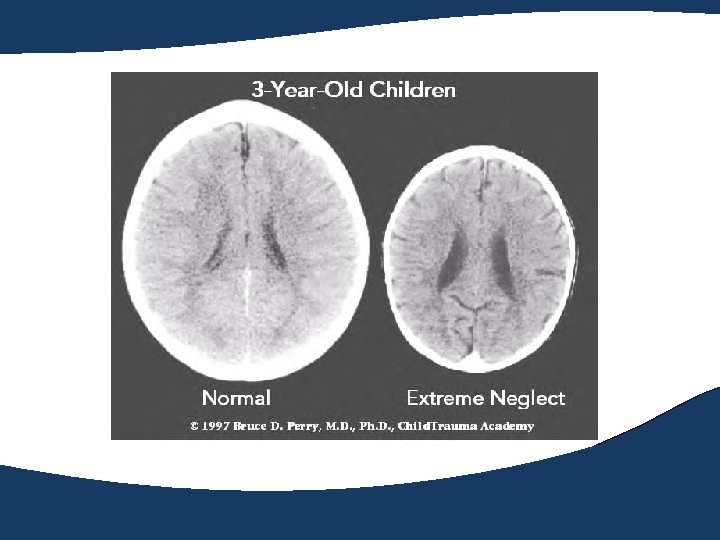
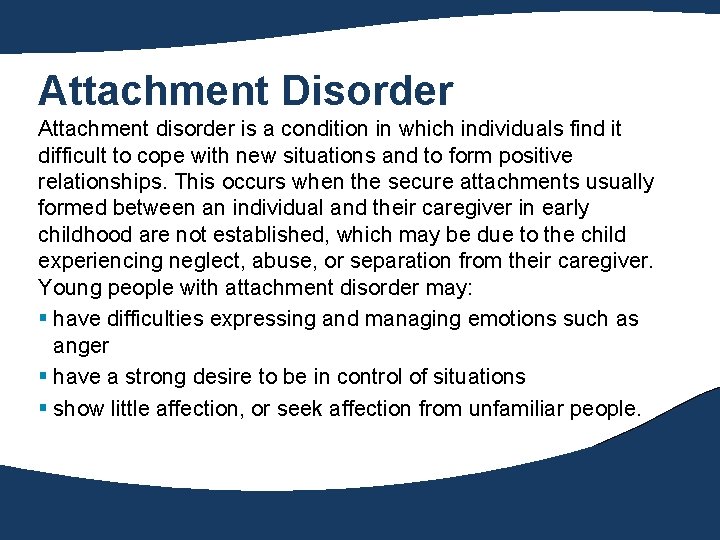
Attachment Disorder Attachment disorder is a condition in which individuals find it difficult to cope with new situations and to form positive relationships. This occurs when the secure attachments usually formed between an individual and their caregiver in early childhood are not established, which may be due to the child experiencing neglect, abuse, or separation from their caregiver. Young people with attachment disorder may: § have difficulties expressing and managing emotions such as anger § have a strong desire to be in control of situations § show little affection, or seek affection from unfamiliar people. 16
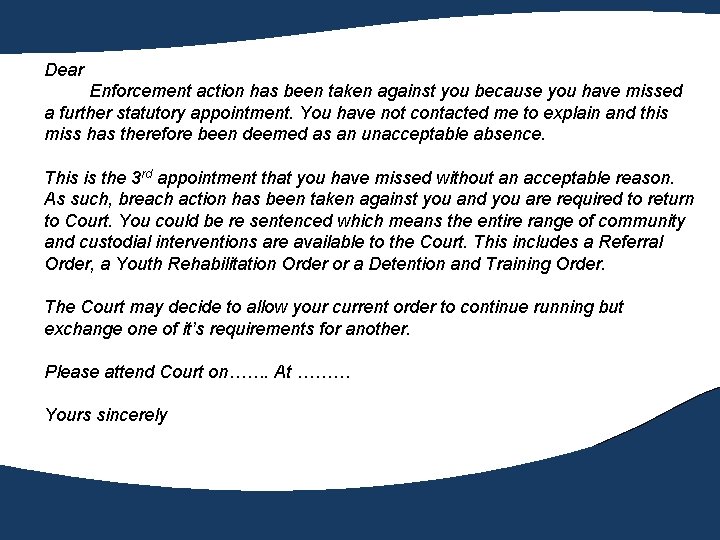
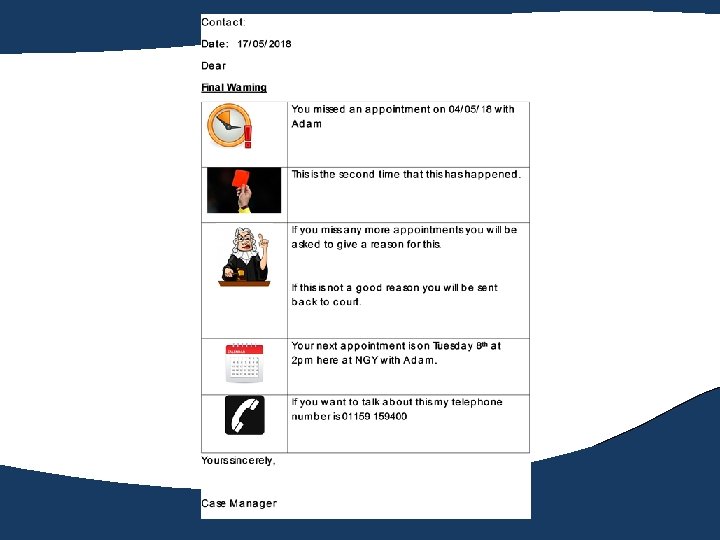
Written communication § Why are letters sent out? § What are the consequences if letters and appointments aren’t followed? § Sentences exercise 17
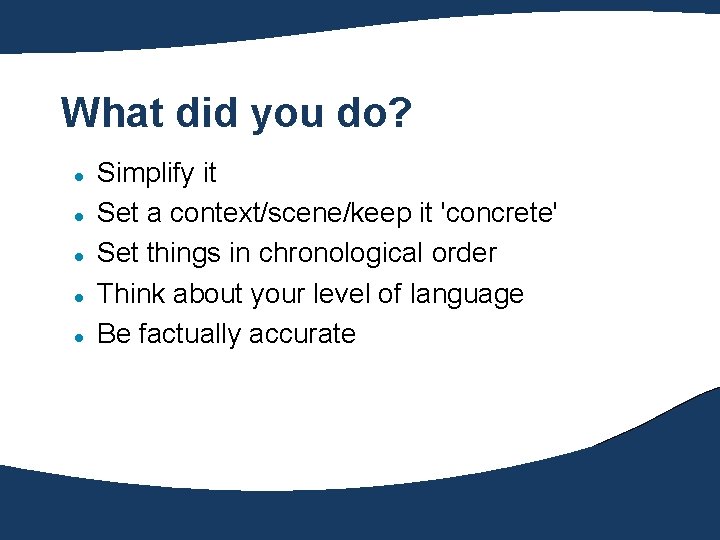
What did you do? Simplify it Set a context/scene/keep it 'concrete' Set things in chronological order Think about your level of language Be factually accurate 18
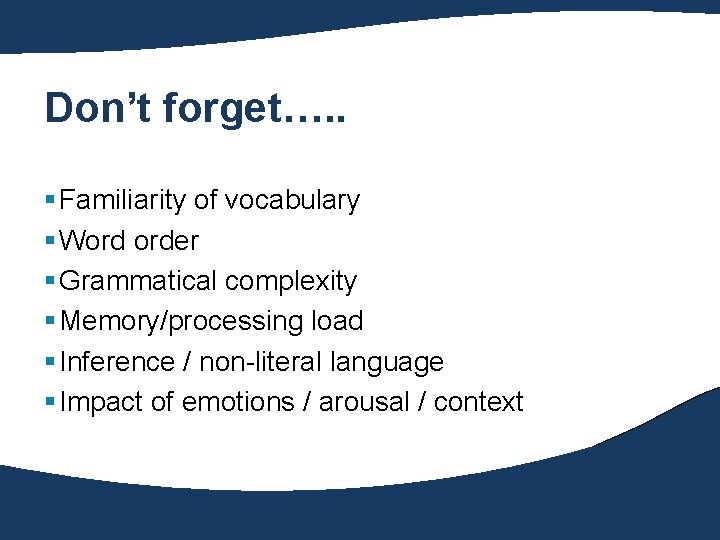
Don’t forget…. . § Familiarity of vocabulary § Word order § Grammatical complexity § Memory/processing load § Inference / non-literal language § Impact of emotions / arousal / context 19
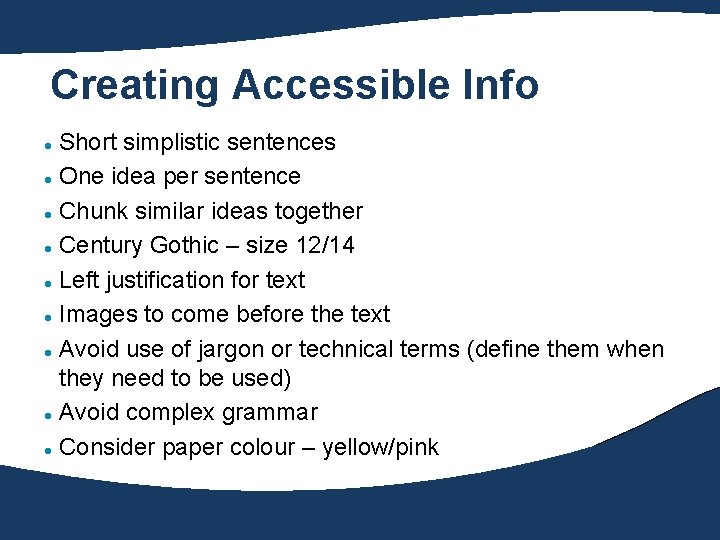
Creating Accessible Info Short simplistic sentences One idea per sentence Chunk similar ideas together Century Gothic – size 12/14 Left justification for text Images to come before the text Avoid use of jargon or technical terms (define them when they need to be used) Avoid complex grammar Consider paper colour – yellow/pink 20
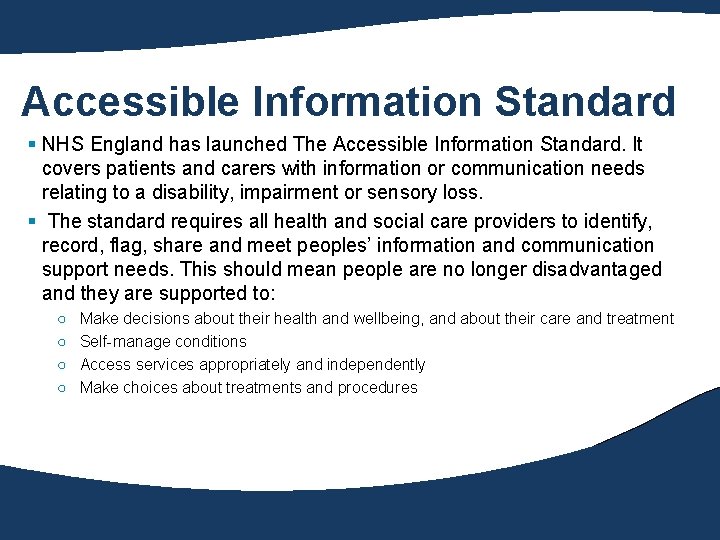
Accessible Information Standard § NHS England has launched The Accessible Information Standard. It covers patients and carers with information or communication needs relating to a disability, impairment or sensory loss. § The standard requires all health and social care providers to identify, record, flag, share and meet peoples’ information and communication support needs. This should mean people are no longer disadvantaged and they are supported to: ○ ○ Make decisions about their health and wellbeing, and about their care and treatment Self-manage conditions Access services appropriately and independently Make choices about treatments and procedures 21
Dear Enforcement action has been taken against you because you have missed a further statutory appointment. You have not contacted me to explain and this miss has therefore been deemed as an unacceptable absence. This is the 3 rd appointment that you have missed without an acceptable reason. As such, breach action has been taken against you and you are required to return to Court. You could be re sentenced which means the entire range of community and custodial interventions are available to the Court. This includes a Referral Order, a Youth Rehabilitation Order or a Detention and Training Order. The Court may decide to allow your current order to continue running but exchange one of it’s requirements for another. Please attend Court on……. At ……… Yours sincerely 22
23