
Session Mortality Compression Discussant Dr Leonid A Gavrilov




- Slides: 20
Session: Mortality Compression Discussant: Dr. Leonid A. Gavrilov, Ph. D. Center on Aging NORC and The University of Chicago, Illinois, USA
Temporal evolution of some mortality indicators. Application to Spanish data Debon, F. Martinez-Ruiz, F. Montes
Strengths Compact presentation of mortality data and opportunity to reconstruct age-specific mortality. Clear dynamics of kt coefficient gives an opportunity for mortality forecasts.
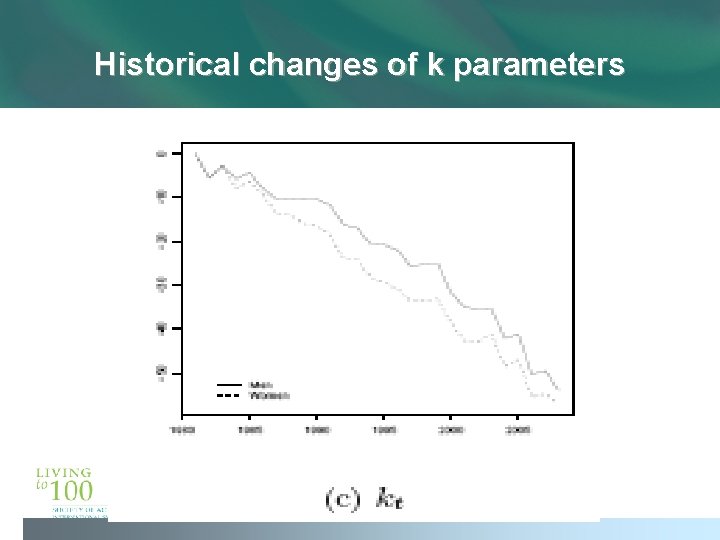
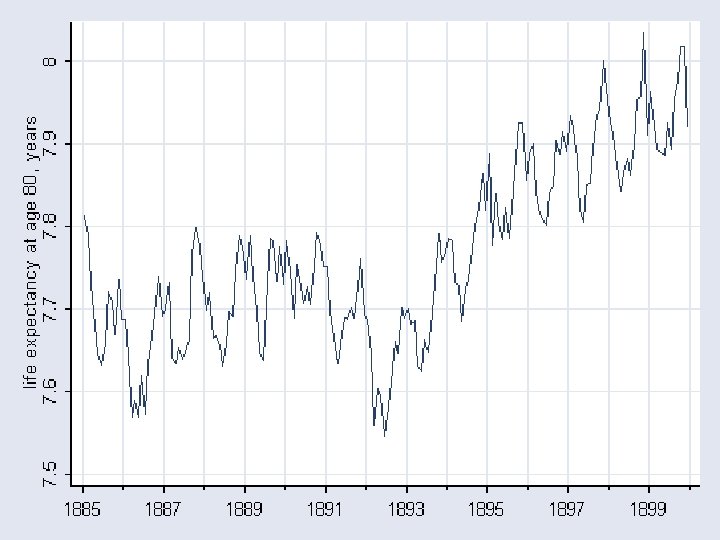
Historical changes of k parameters
Weaknesses Assumed only one factor of mortality change Younger age groups may have different factors compared to older groups
Changes in Mortality, 1925 -2007 Swedish Females. Data source: Human Mortality Database
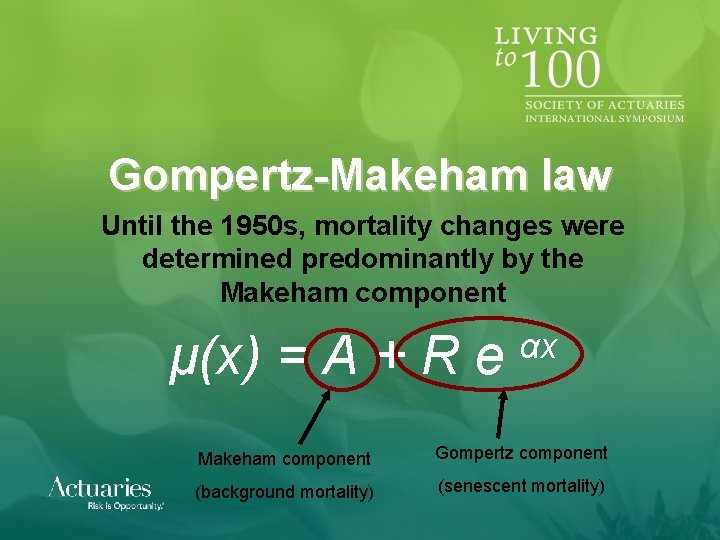
Gompertz-Makeham law Until the 1950 s, mortality changes were determined predominantly by the Makeham component μ(x) = A + R e αx Makeham component Gompertz component (background mortality) (senescent mortality)
Extension of the Gompertz-Makeham Model Through the Factor Analysis of Mortality Trends Mortality force (age, time) = = a 0(age) + a 1(age) x F 1(time) + a 2(age) x F 2(time)
Factor Analysis of Mortality Swedish Females Data source: Human Mortality Database
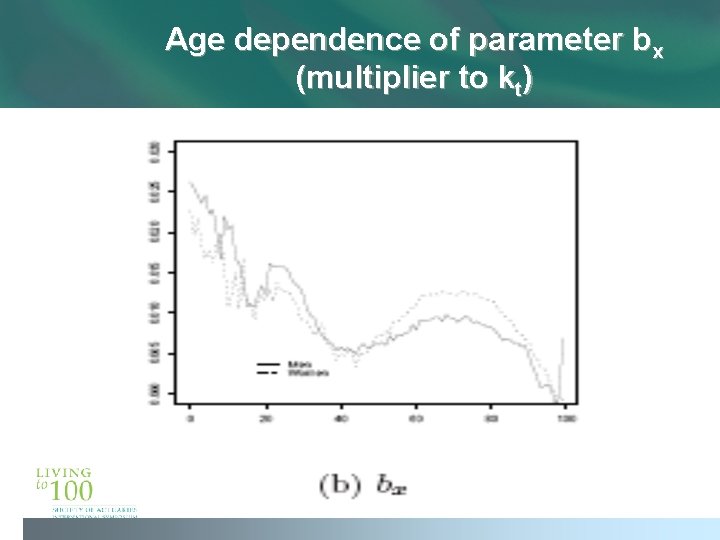
Age dependence of parameter bx (multiplier to kt)
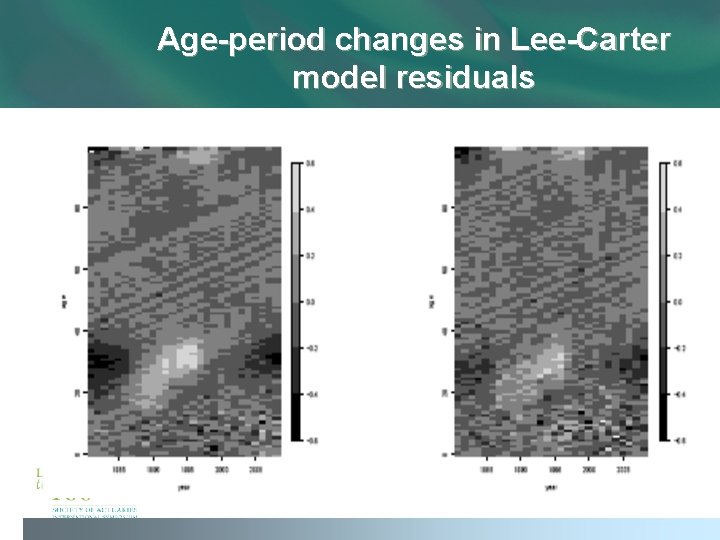
Opportunities Interesting finding related to the agetime changes of residuals in the Lee. Carter model. Cohort effects.
Age-period changes in Lee-Carter model residuals
Threats These models and forecasts are based on the past experience. Economic crisis and challenges of population aging may change mortality trends
Mortality Compression and Longevity Risk Jack C. Yue
Strengths Rectangularization issue was elegantly addressed using two simple indicators Showed that compression of mortality is not so obvious – some indicators (SD, survival probability after mode) do not show compression of mortality
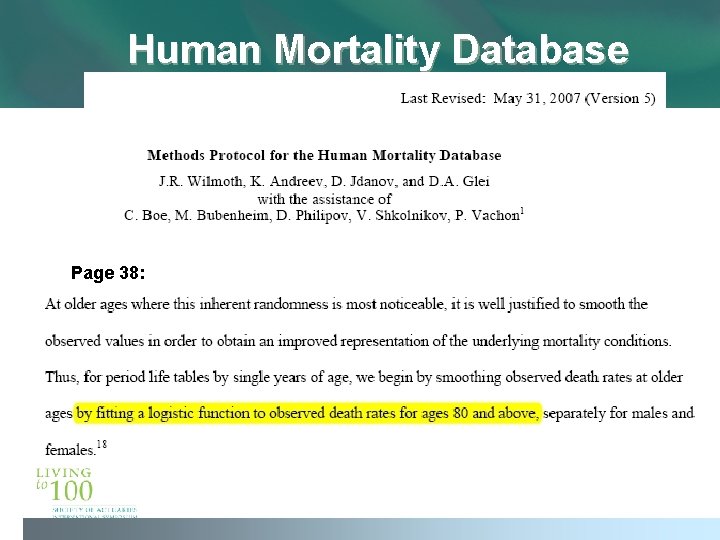
Weaknesses The author argues that he used “raw” data from the Human Mortality Database. It is not clear which particular data were used. If the author used death rates from HMD life tables then the data are not entirely raw. The author uses standard deviation supposedly in the whole age interval. It may be reasonable to use SD 10
Human Mortality Database Page 38:
Opportunities It may be reasonable to use SD 20. Why not to use coefficient of variation?
Threats Again it is possible that past experience may be irrelevant to future changes in economic situation and age structure Recommendation to stop annuity payments at age 100 may be not a solution if more people survive to age 90 or 95