
Session 9 Master Production Scheduling http www pom












- Slides: 26
Session 9 Master Production Scheduling http: //www. pom. edu/mpc/lectures_in_manufacturing_planning. htm lecture session 8 Mr. Tim Loar Manager, Production Planning Ross Products Division of Abbott Laboratories 1
Agenda • • Ross/Abbott background Operations structure at Ross Production planning: theory Production drivers Production planning: reality Inventory Management Conclusion 2
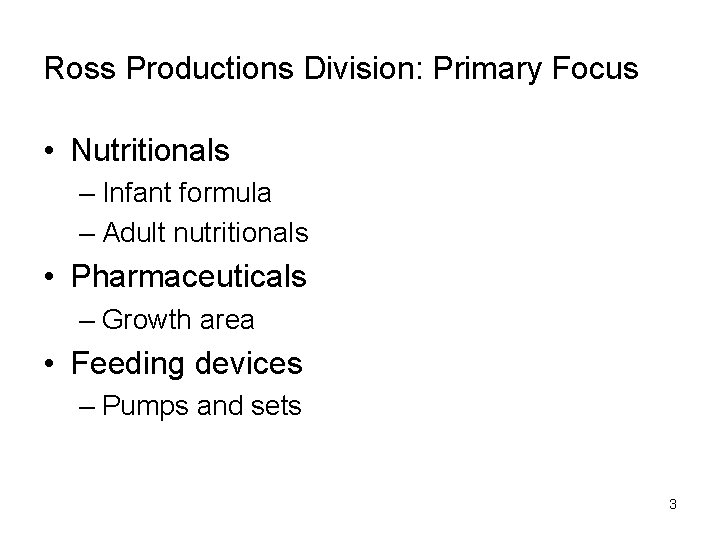
Ross Productions Division: Primary Focus • Nutritionals – Infant formula – Adult nutritionals • Pharmaceuticals – Growth area • Feeding devices – Pumps and sets 3
Ross Products Division: Manufacturing • Five manufacturing plants – Produce 888 sku’s – 27 different mfg. lines • Third party manufacturers – For expertise/capabilities don’t have in-house – Product 674 sku’s – 33 different mfg. lines • 87% of Ross sales produced in Ross Plants 4
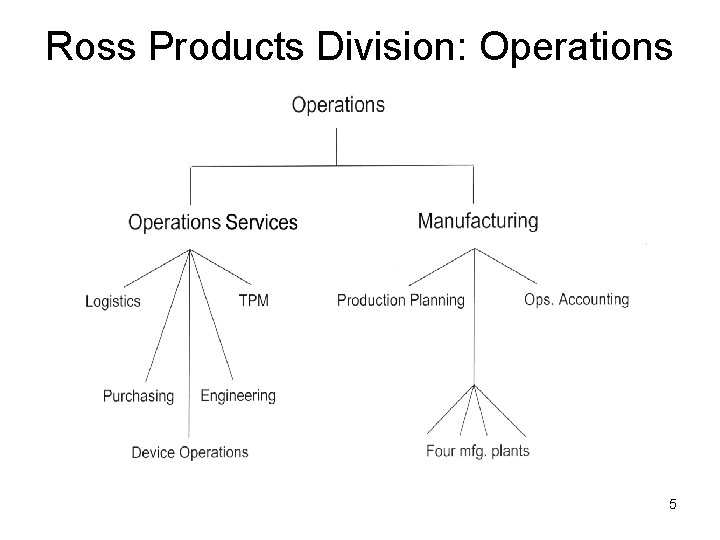
Ross Products Division: Operations 5
Ross Products Division: Production Planning 6
Production Planning: Theory 7
Production Planning: Theory 8
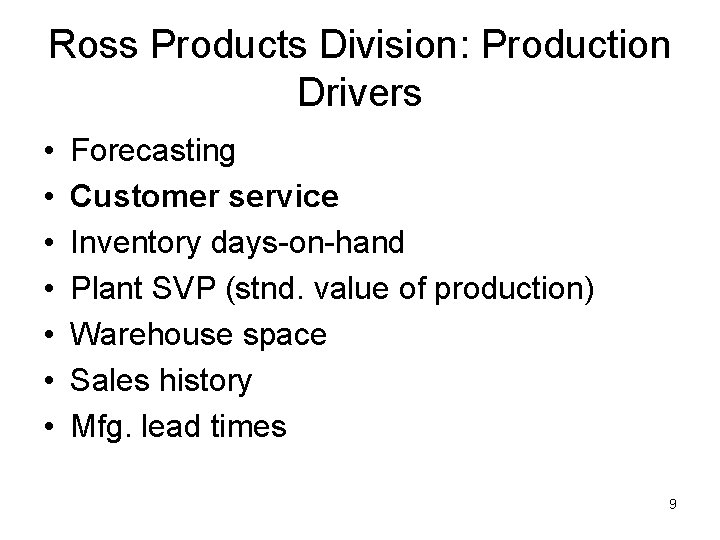
Ross Products Division: Production Drivers • • Forecasting Customer service Inventory days-on-hand Plant SVP (stnd. value of production) Warehouse space Sales history Mfg. lead times 9
Daily Case Shipments Report 10
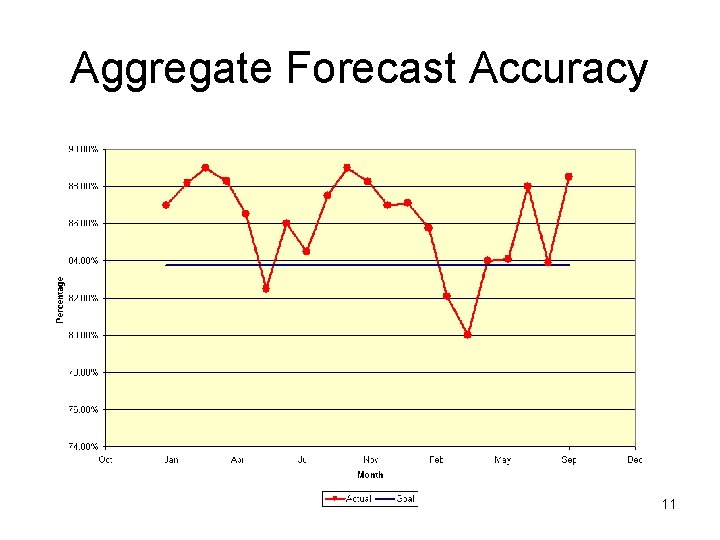
Aggregate Forecast Accuracy 11
Forecast Accuracy – September, xxxx 12
Production Planning: Reality Marketing forecast Forecast administrator Finance Operations forecast • Ongoing products – Compiling the “realistic” forecast • • Monthly meetings with Marketing Sku by sku review Agree to forecast for next 6 -12 months (2 financial plans look out further, up to 18 months) 13
Production Planning: Reality Marketing forecast Forecast administrator Finance Operations forecast • New products/Promotions – Strong reliance on Marketing/Sales • No history for a forecast base • Consumer research – Bi-weekly/monthly promotions meetings • Review planned promotions • Understand demand impact on promotion item and cannibalization of other sku’s 14
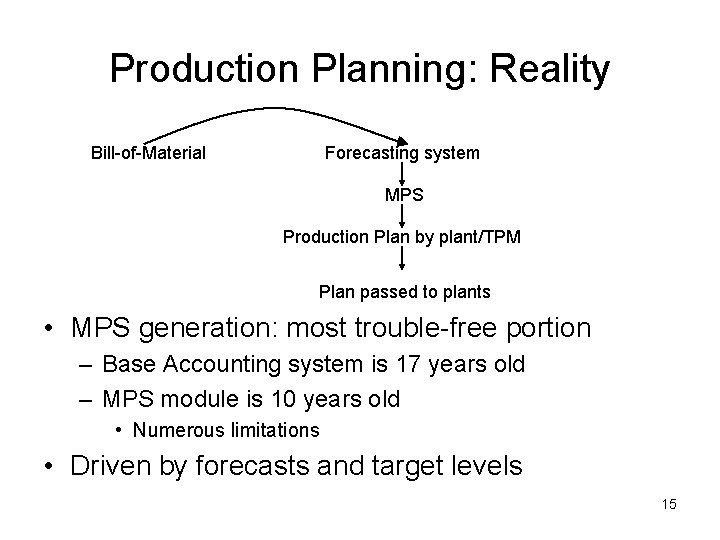
Production Planning: Reality Bill-of-Material Forecasting system MPS Production Plan by plant/TPM Plan passed to plants • MPS generation: most trouble-free portion – Base Accounting system is 17 years old – MPS module is 10 years old • Numerous limitations • Driven by forecasts and target levels 15
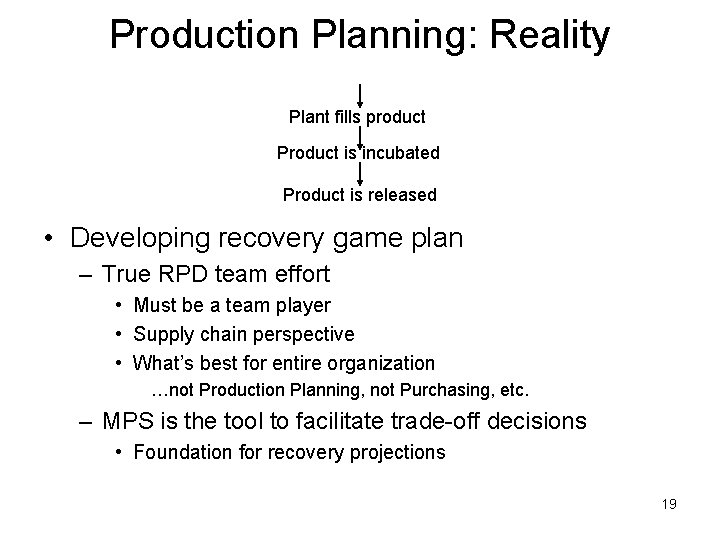
Production Planning: Reality… Plant fills product Product is incubated Product is released • Tough decisions – Production trade-offs • Limited capacity • Long commodity lead times • Management anxiety over backorders potential in competitive environment • Overall game plan • High levels of MPS interaction/“what-ifs” 16
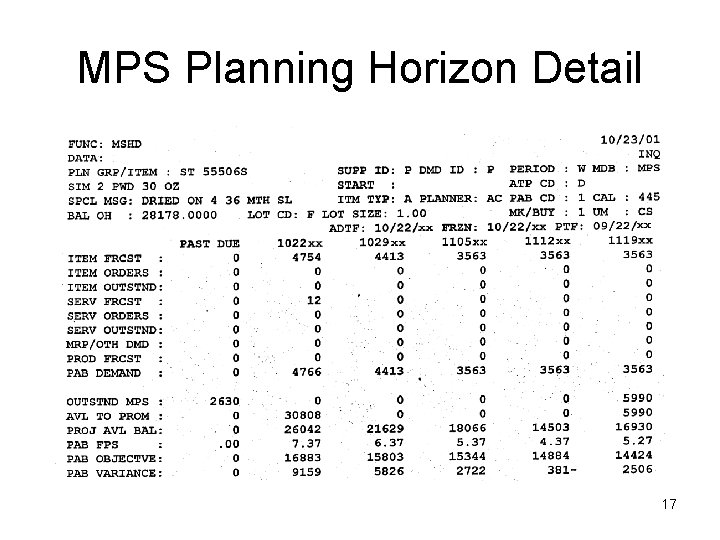
MPS Planning Horizon Detail 17
Production Planning: Reality Plant fills product Product is incubated Product is released • Tough decisions – prioritization • Which customer base has biggest impact • When to contact the customer • Which unaffected products can survive a period of neglect? – Fallout • Daily attention to detail put on hold 18
Production Planning: Reality Plant fills product Product is incubated Product is released • Developing recovery game plan – True RPD team effort • Must be a team player • Supply chain perspective • What’s best for entire organization …not Production Planning, not Purchasing, etc. – MPS is the tool to facilitate trade-off decisions • Foundation for recovery projections 19
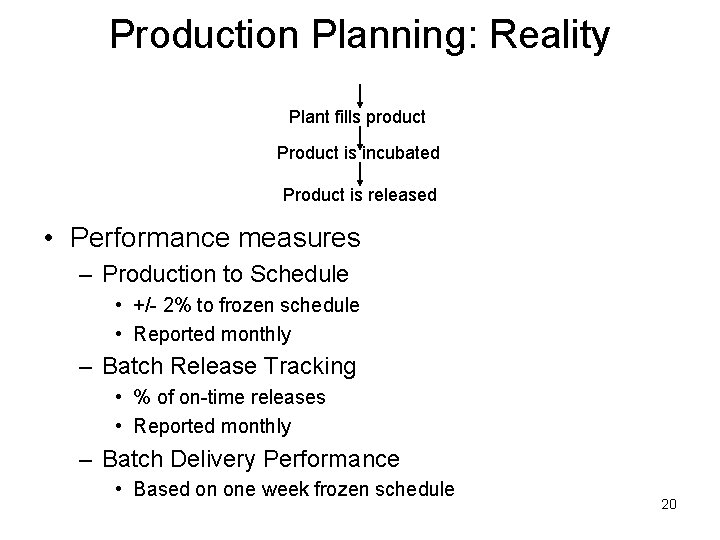
Production Planning: Reality Plant fills product Product is incubated Product is released • Performance measures – Production to Schedule • +/- 2% to frozen schedule • Reported monthly – Batch Release Tracking • % of on-time releases • Reported monthly – Batch Delivery Performance • Based on one week frozen schedule 20
Production Planning: Reality Product is deployed • Very close interaction with MPS – Logistics manages inventory by DC/warehouse site – Logistics utilizes MPS to determine deployment plan • For example, short supply out West: – Move product from the East (high trans. $’s) – Evaluate MPS (& finite plant schedule) to determine next production run and product release timing 21
Production Planning: Reality Sales results feed Back into MPS Orders Received • Biggest daily impact on MPS management – Variance to forecasted sales – Pull production forward for oversells – Push production out for undersells 22
Inventory Management and MPS Inventory Plan MPS Production plan by plant/TPM • The focus is on DOH • Two budget processes per year – MPS generates projected inventory value • Based on established target levels – Forms basis for inventory investment accountability – MPS used to assure compliance with the inventory plan 23
Inventory Management and MPS (continued) Inventory Plan MPS Production plan by plant/TPM • MPS-related issues with inventory plan – Tendency is to want to keep lines running – MPS data allows for monitoring of adherence to plan – Production must move with sales to forecast variances – MPS keeps planner appraised of variances to inventory target levels based on sales results 24
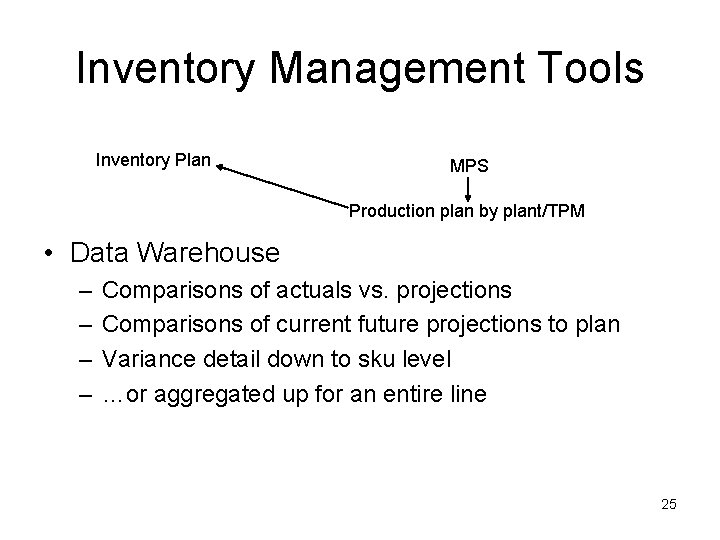
Inventory Management Tools Inventory Plan MPS Production plan by plant/TPM • Data Warehouse – – Comparisons of actuals vs. projections Comparisons of current future projections to plan Variance detail down to sku level …or aggregated up for an entire line 25
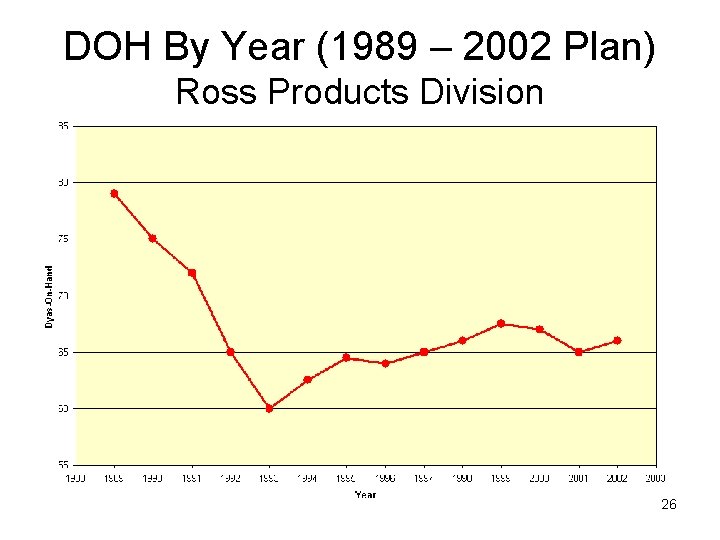
DOH By Year (1989 – 2002 Plan) Ross Products Division 26