
Session 9 Developing Math Fact Fluency OGAPMath LLC

- Slides: 23
Session 9: Developing Math Fact Fluency © OGAPMath. LLC 2017 for non-commercial use only 1
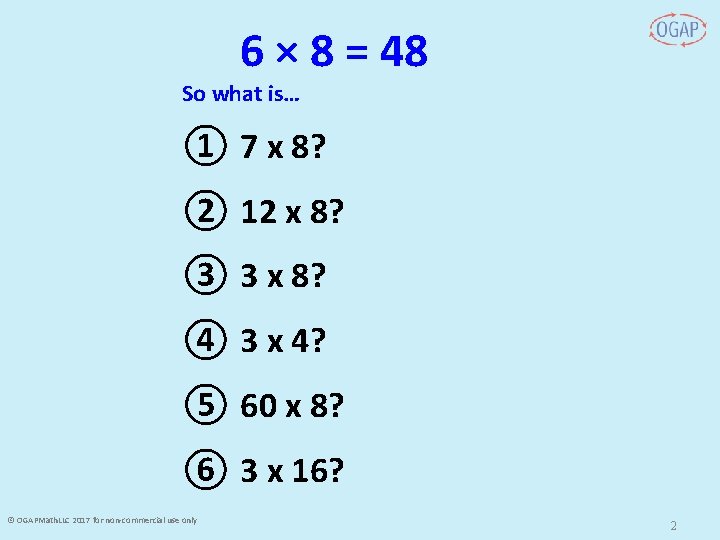
6 × 8 = 48 So what is… ① 7 x 8? ② 12 x 8? ③ 3 x 8? ④ 3 x 4? ⑤ 60 x 8? ⑥ 3 x 16? © OGAPMath. LLC 2017 for non-commercial use only 2
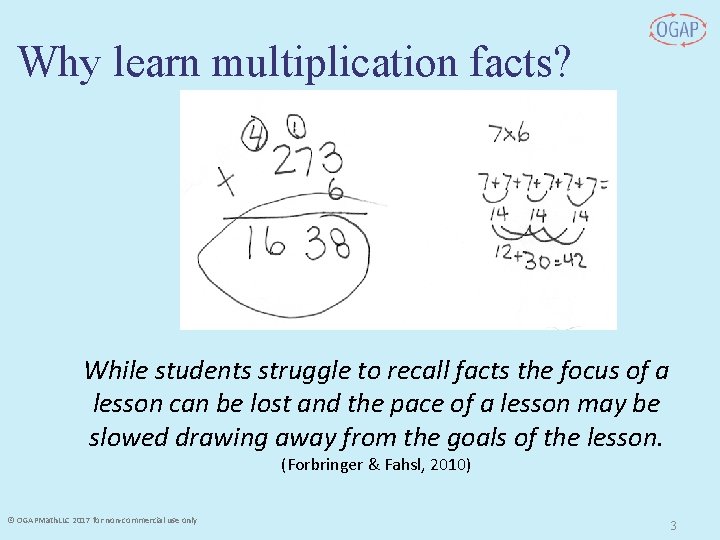
Why learn multiplication facts? While students struggle to recall facts the focus of a lesson can be lost and the pace of a lesson may be slowed drawing away from the goals of the lesson. (Forbringer & Fahsl, 2010) © OGAPMath. LLC 2017 for non-commercial use only 3
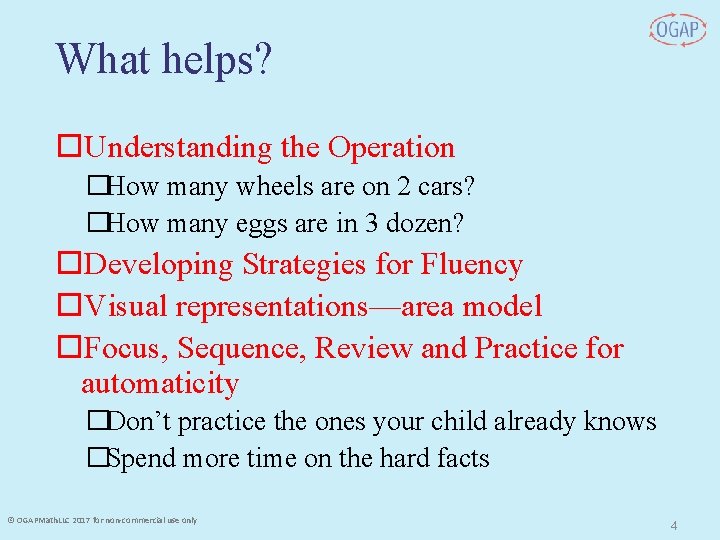
What helps? Understanding the Operation �How many wheels are on 2 cars? �How many eggs are in 3 dozen? Developing Strategies for Fluency Visual representations—area model Focus, Sequence, Review and Practice for automaticity �Don’t practice the ones your child already knows �Spend more time on the hard facts © OGAPMath. LLC 2017 for non-commercial use only 4
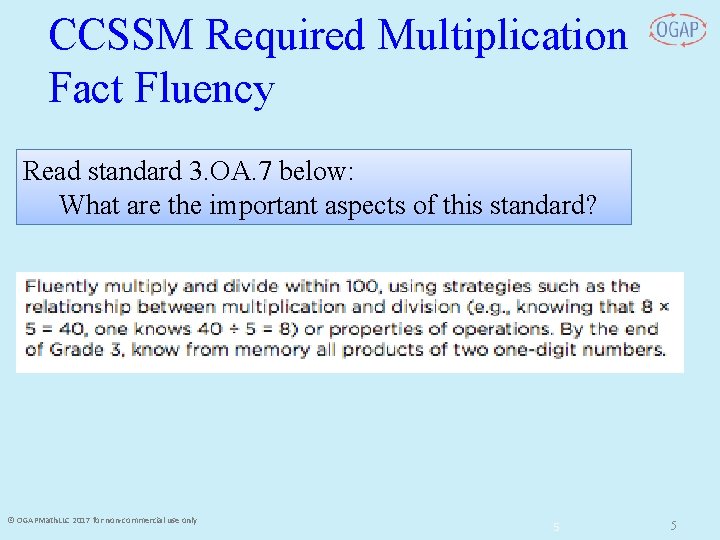
CCSSM Required Multiplication Fact Fluency Read standard 3. OA. 7 below: What are the important aspects of this standard? © OGAPMath. LLC 2017 for non-commercial use only 5 5
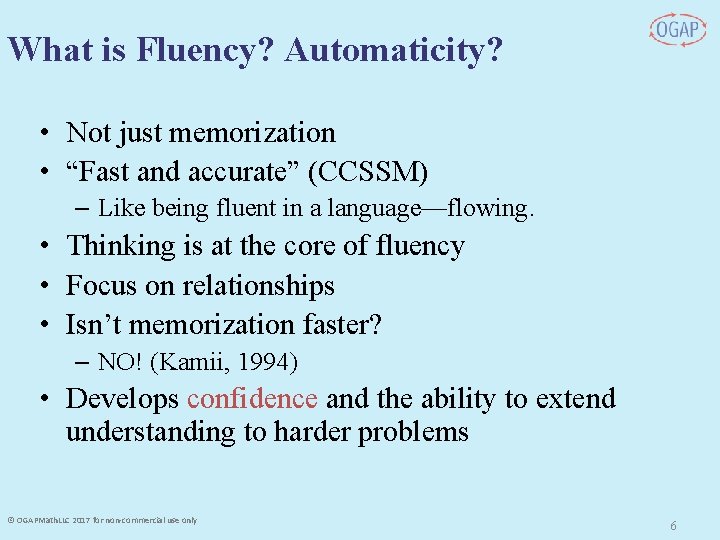
What is Fluency? Automaticity? • Not just memorization • “Fast and accurate” (CCSSM) – Like being fluent in a language—flowing. • Thinking is at the core of fluency • Focus on relationships • Isn’t memorization faster? – NO! (Kamii, 1994) • Develops confidence and the ability to extend understanding to harder problems © OGAPMath. LLC 2017 for non-commercial use only 6
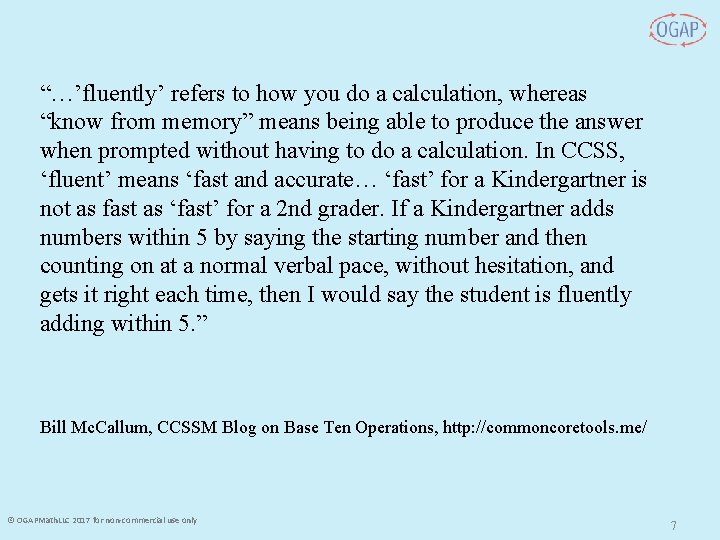
“…’fluently’ refers to how you do a calculation, whereas “know from memory” means being able to produce the answer when prompted without having to do a calculation. In CCSS, ‘fluent’ means ‘fast and accurate… ‘fast’ for a Kindergartner is not as fast as ‘fast’ for a 2 nd grader. If a Kindergartner adds numbers within 5 by saying the starting number and then counting on at a normal verbal pace, without hesitation, and gets it right each time, then I would say the student is fluently adding within 5. ” Bill Mc. Callum, CCSSM Blog on Base Ten Operations, http: //commoncoretools. me/ © OGAPMath. LLC 2017 for non-commercial use only 7
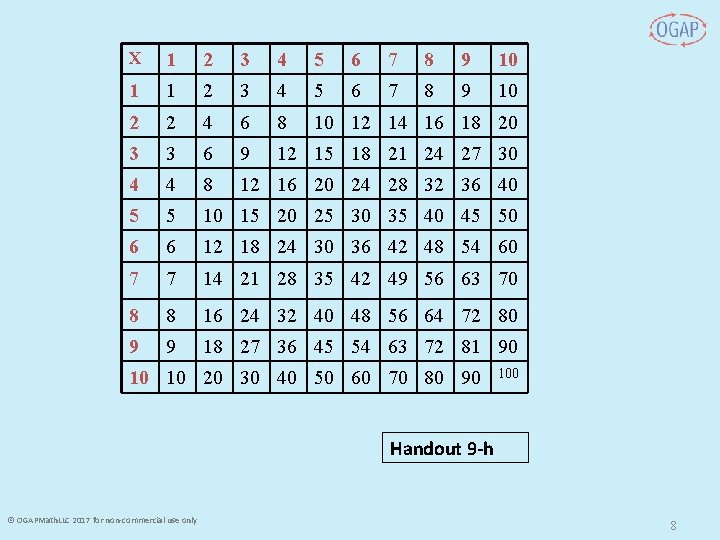
X 1 2 3 4 5 6 7 8 9 10 1 1 2 3 4 5 6 7 8 9 10 2 2 4 6 8 10 12 14 16 18 20 3 3 6 9 12 15 18 21 24 27 30 4 4 8 12 16 20 24 28 32 36 40 5 5 10 15 20 25 30 35 40 45 50 6 6 12 18 24 30 36 42 48 54 60 7 7 14 21 28 35 42 49 56 63 70 8 8 16 24 32 40 48 56 64 72 80 9 9 18 27 36 45 54 63 72 81 90 10 10 20 30 40 50 60 70 80 90 100 Handout 9 -h © OGAPMath. LLC 2017 for non-commercial use only 8
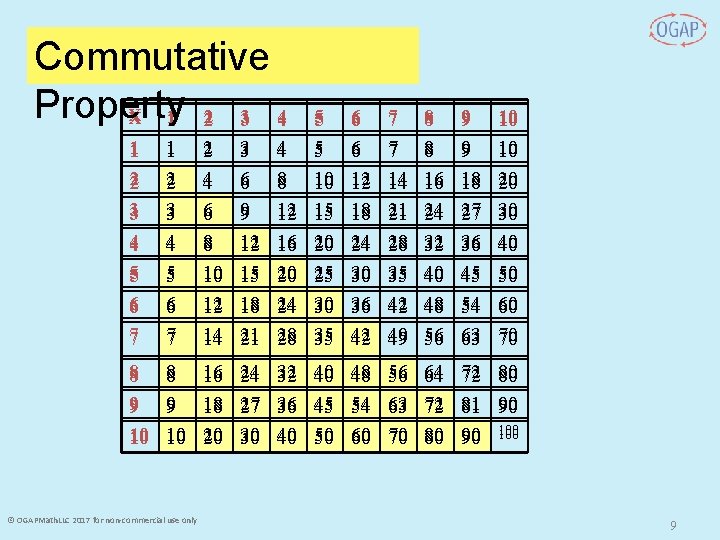
Commutative Property X 1 2 3 4 2 4 3 6 6 6 7 7 8 8 9 9 10 10 1 2 3 4 5 6 10 12 14 16 6 9 12 15 18 21 24 8 12 16 20 24 28 32 10 15 20 25 30 35 40 12 18 24 30 36 42 48 7 7 14 21 28 35 42 49 56 63 70 8 9 16 18 32 36 40 45 48 54 56 63 64 72 18 20 27 30 36 40 45 54 50 60 72 81 80 90 10 10 20 30 40 50 60 70 80 90 100 © OGAPMath. LLC 2017 for non-commercial use only 24 27 4 8 5 5 9
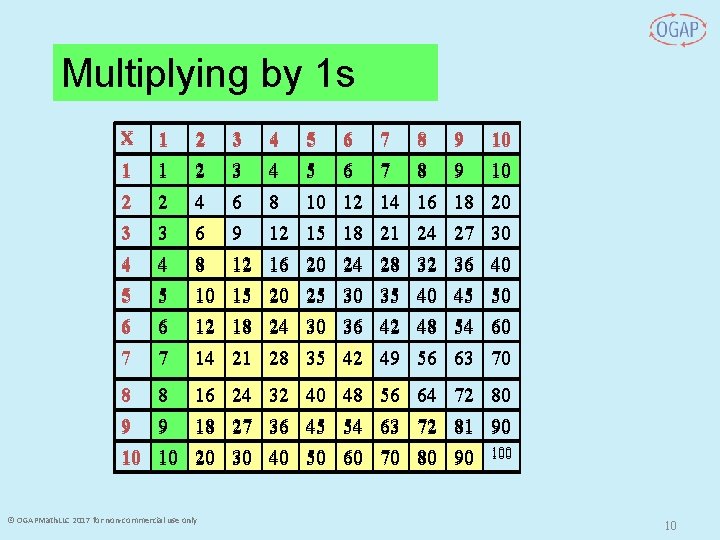
Multiplying by 1 s X 1 2 3 4 5 6 1 1 2 2 3 3 4 4 5 5 6 6 7 7 8 8 9 9 10 10 2 3 4 6 6 9 8 12 10 15 12 18 14 21 16 24 18 27 20 30 4 5 8 12 16 20 24 28 10 15 20 25 30 35 12 18 24 30 36 42 14 21 28 35 42 49 7 6 7 8 9 16 24 32 40 18 27 36 45 10 10 20 30 40 50 © OGAPMath. LLC 2017 for non-commercial use only 32 36 40 40 45 50 48 54 60 56 63 70 48 56 64 72 80 54 63 72 81 90 60 70 80 90 10
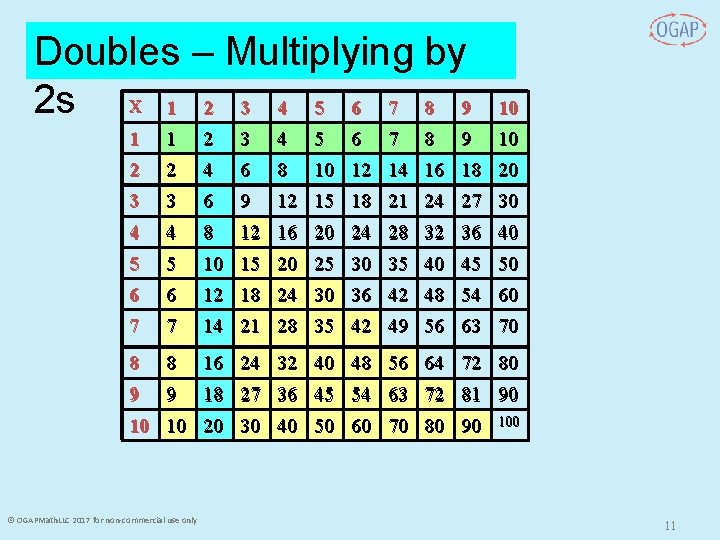
Doubles – Multiplying by 2 s X 1 2 3 4 5 6 7 8 9 10 1 1 2 3 4 5 2 2 4 6 8 10 12 14 16 18 20 3 3 6 9 12 15 18 21 24 27 30 4 4 8 12 16 20 24 28 32 36 40 5 5 10 15 20 25 30 35 40 45 50 6 6 12 18 24 30 36 42 48 54 60 7 7 14 21 28 35 42 49 56 63 70 8 8 16 24 32 40 48 56 64 72 80 9 9 18 27 36 45 54 63 72 81 90 10 10 20 30 40 50 60 70 80 90 © OGAPMath. LLC 2017 for non-commercial use only 10 100 11
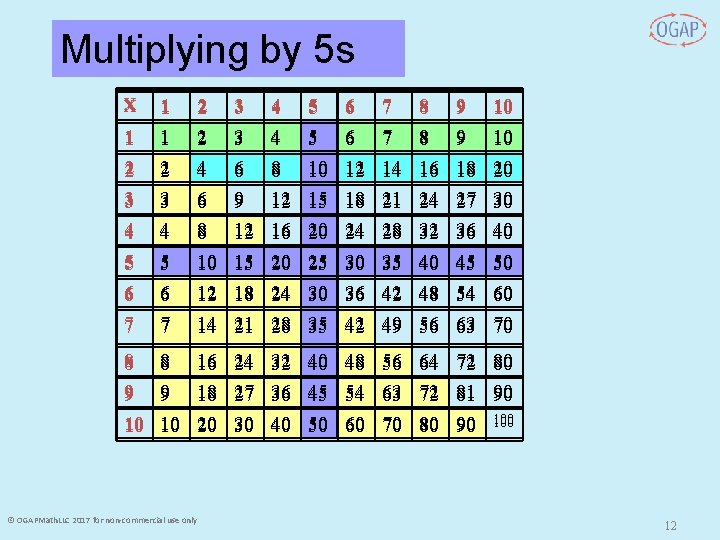
Multiplying by 5 s X 1 2 3 4 5 6 1 1 2 2 3 3 2 3 4 6 6 9 4 5 7 6 7 8 9 4 4 5 5 6 6 7 7 8 10 12 14 12 15 18 21 8 12 16 20 24 28 10 15 20 25 30 35 12 18 24 30 36 42 8 8 9 9 10 10 16 18 20 24 27 30 32 36 40 40 48 45 54 50 60 14 21 28 35 42 49 56 63 70 72 81 80 90 10 10 20 30 40 50 60 70 80 90 100 © OGAPMath. LLC 2017 for non-commercial use only 16 18 24 27 32 36 40 45 48 54 56 63 64 72 12
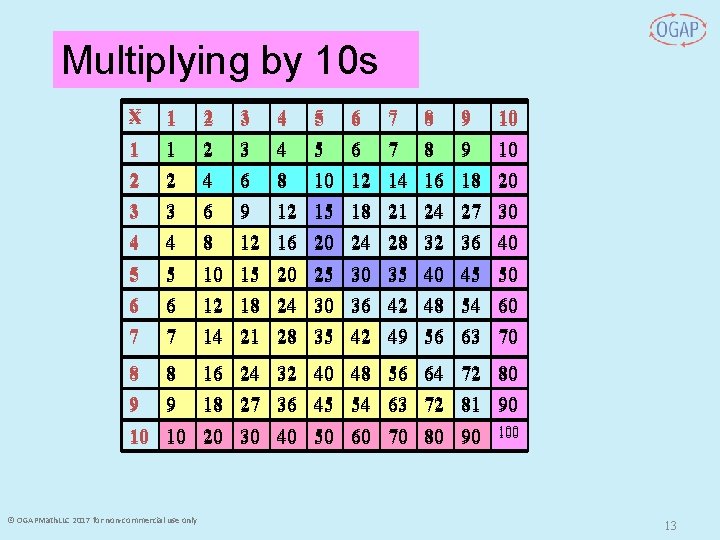
Multiplying by 10 s X 1 2 1 1 2 2 3 3 2 3 4 6 6 9 4 4 5 5 6 6 7 7 8 8 9 9 10 10 8 10 12 14 16 18 12 15 18 21 24 27 8 12 16 20 24 28 32 36 10 15 20 25 30 35 40 45 12 18 24 30 36 42 48 54 20 30 16 18 72 81 80 90 10 10 20 30 40 50 60 70 80 90 100 3 4 5 6 4 5 7 6 7 8 9 © OGAPMath. LLC 2017 for non-commercial use only 40 50 60 14 21 28 35 42 49 56 63 70 24 27 32 36 40 45 48 54 56 63 64 72 13
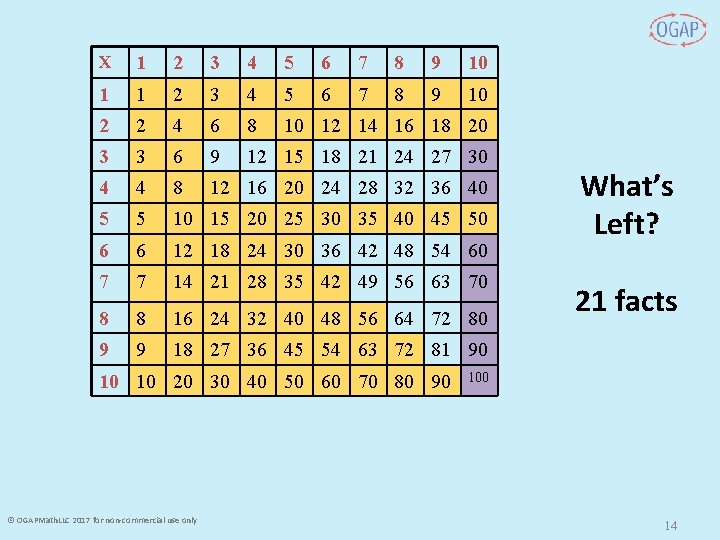
X 1 2 3 4 5 6 7 8 9 10 1 1 2 3 4 5 6 7 8 9 10 2 2 4 6 8 10 12 14 16 18 20 3 3 6 9 12 15 18 21 24 27 30 4 4 8 12 16 20 24 28 32 36 40 5 5 10 15 20 25 30 35 40 45 50 6 6 12 18 24 30 36 42 48 54 60 7 7 14 21 28 35 42 49 56 63 70 8 8 16 24 32 40 48 56 64 72 80 9 9 18 27 36 45 54 63 72 81 90 10 10 20 30 40 50 60 70 80 90 © OGAPMath. LLC 2017 for non-commercial use only What’s Left? 21 facts 100 14
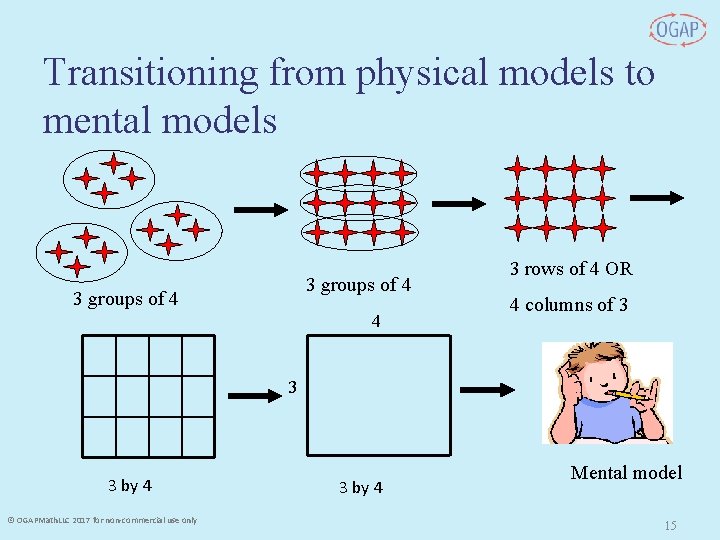
Transitioning from physical models to mental models 3 groups of 4 4 3 rows of 4 OR 4 columns of 3 3 3 by 4 © OGAPMath. LLC 2017 for non-commercial use only 3 by 4 Mental model 15
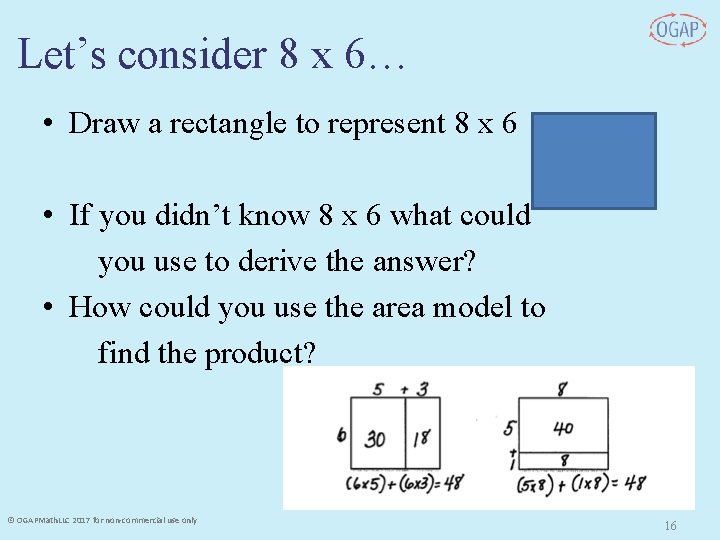
Let’s consider 8 x 6… • Draw a rectangle to represent 8 x 6 • If you didn’t know 8 x 6 what could you use to derive the answer? • How could you use the area model to find the product? © OGAPMath. LLC 2017 for non-commercial use only 16
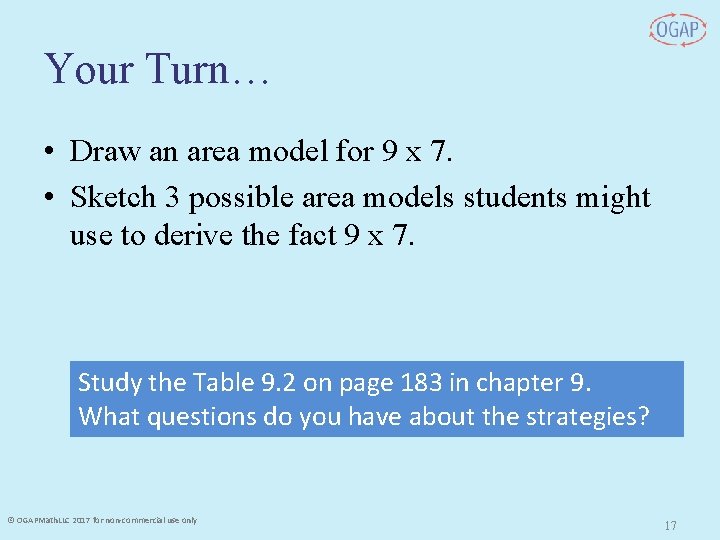
Your Turn… • Draw an area model for 9 x 7. • Sketch 3 possible area models students might use to derive the fact 9 x 7. Study the Table 9. 2 on page 183 in chapter 9. What questions do you have about the strategies? © OGAPMath. LLC 2017 for non-commercial use only 17
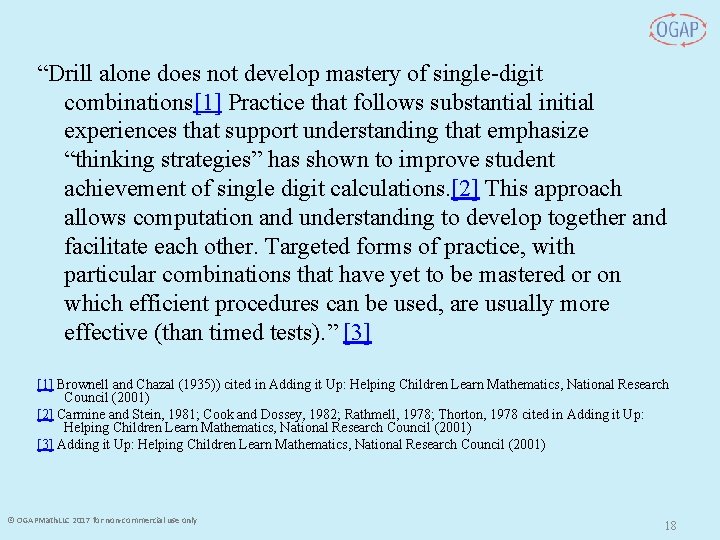
“Drill alone does not develop mastery of single-digit combinations[1] Practice that follows substantial initial experiences that support understanding that emphasize “thinking strategies” has shown to improve student achievement of single digit calculations. [2] This approach allows computation and understanding to develop together and facilitate each other. Targeted forms of practice, with particular combinations that have yet to be mastered or on which efficient procedures can be used, are usually more effective (than timed tests). ” [3] [1] Brownell and Chazal (1935)) cited in Adding it Up: Helping Children Learn Mathematics, National Research Council (2001) [2] Carmine and Stein, 1981; Cook and Dossey, 1982; Rathmell, 1978; Thorton, 1978 cited in Adding it Up: Helping Children Learn Mathematics, National Research Council (2001) [3] Adding it Up: Helping Children Learn Mathematics, National Research Council (2001) © OGAPMath. LLC 2017 for non-commercial use only 18
Two Kinds of Fact Practice • Targeted Practice • General Practice More on Targeted and General Fact Practice Chapter 9 p. 184 - 186 © OGAPMath. LLC 2017 for non-commercial use only 19
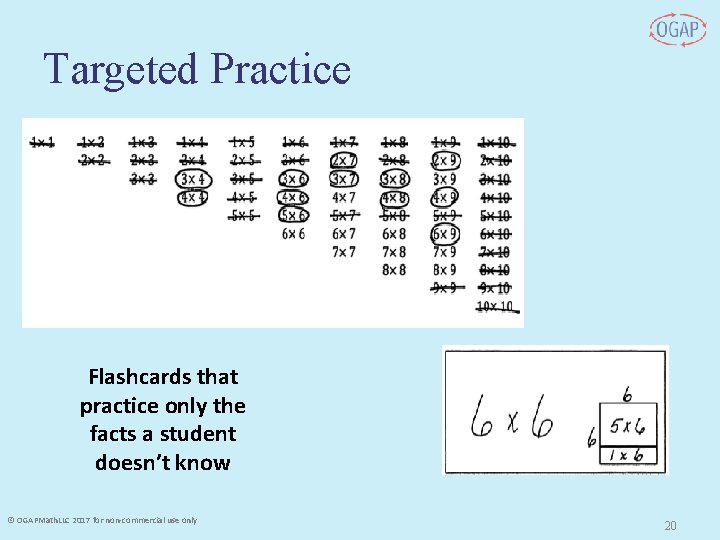
Targeted Practice Flashcards that practice only the facts a student doesn’t know © OGAPMath. LLC 2017 for non-commercial use only 20
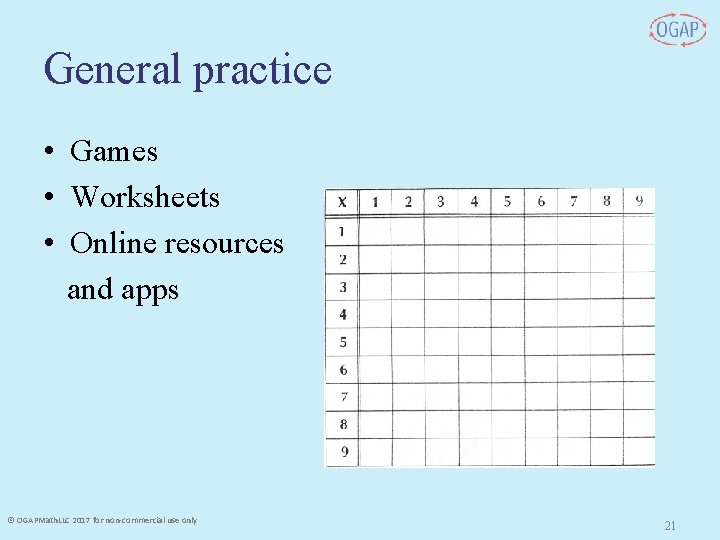
General practice • Games • Worksheets • Online resources and apps © OGAPMath. LLC 2017 for non-commercial use only 21
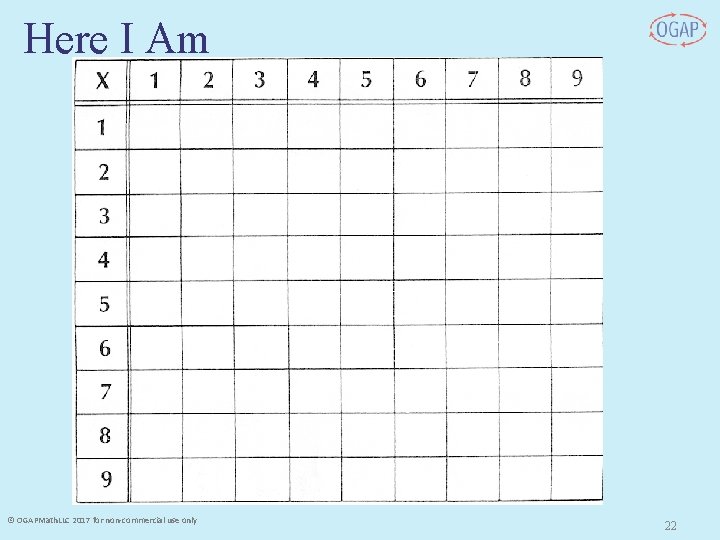
Here I Am © OGAPMath. LLC 2017 for non-commercial use only 22
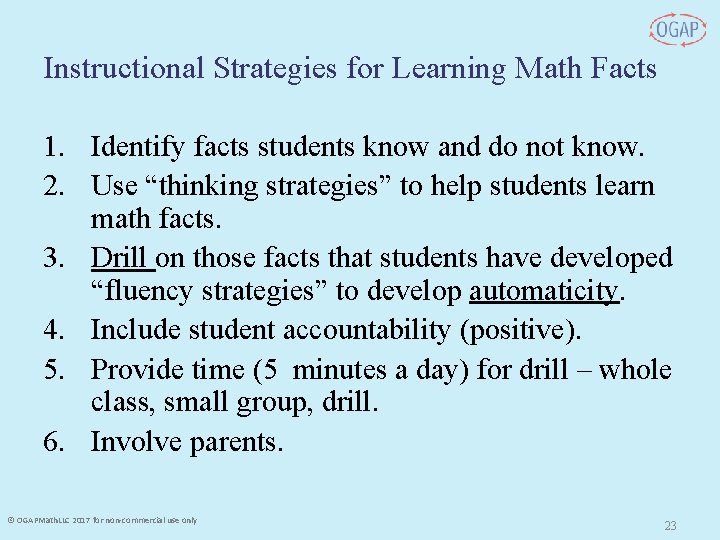
Instructional Strategies for Learning Math Facts 1. Identify facts students know and do not know. 2. Use “thinking strategies” to help students learn math facts. 3. Drill on those facts that students have developed “fluency strategies” to develop automaticity. 4. Include student accountability (positive). 5. Provide time (5 minutes a day) for drill – whole class, small group, drill. 6. Involve parents. © OGAPMath. LLC 2017 for non-commercial use only 23