
SESSION 7 Integrated Governance InterGovernmental Planning Framework IGPF

- Slides: 20
SESSION 7: Integrated Governance: > Inter-Governmental Planning Framework (IGPF) – A National Perspective - Yusuf Patel Director: IDP Nat. Dept of Prov & Local Govt 5 March 2004 IDP Conference 2004 “Developmental Governance in Action”
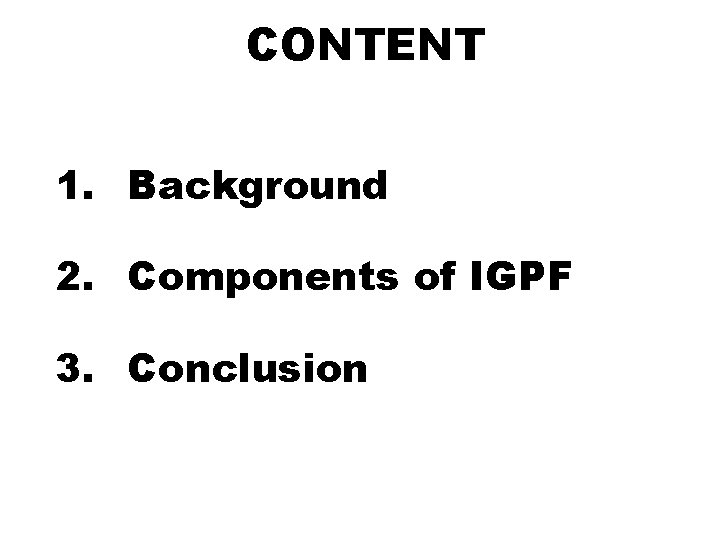
CONTENT 1. Background 2. Components of IGPF 3. Conclusion
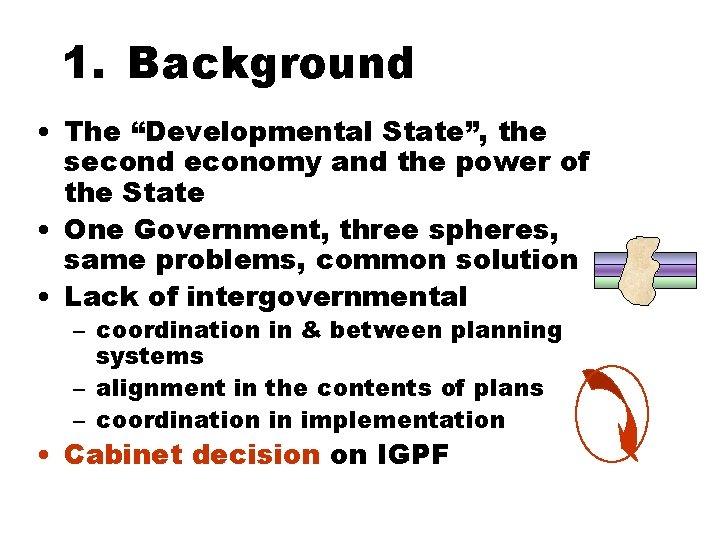
1. Background • The “Developmental State”, the second economy and the power of the State • One Government, three spheres, same problems, common solution • Lack of intergovernmental – coordination in & between planning systems – alignment in the contents of plans – coordination in implementation • Cabinet decision on IGPF
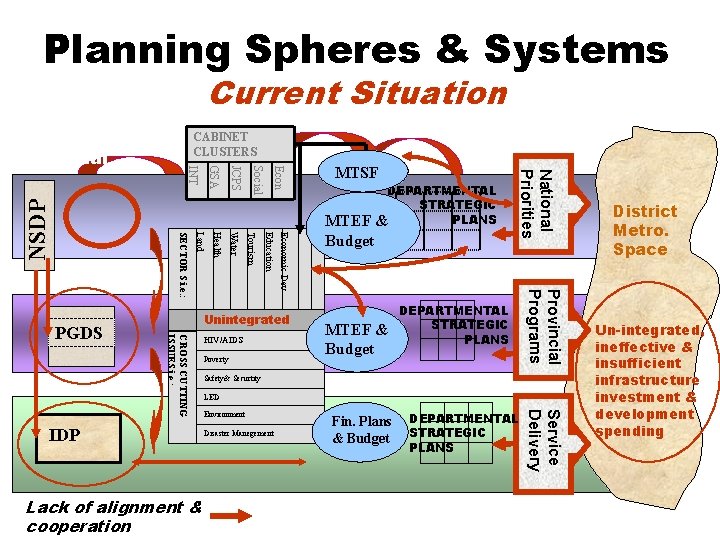
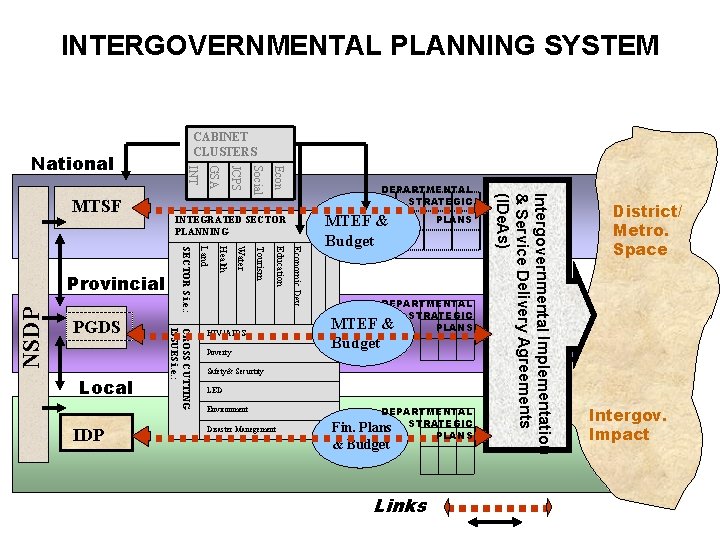
Planning Spheres & Systems Current Situation MTEF & Budget DEPARTMENTAL STRATEGIC PLANS Safety& Securtity LED Environment Disaster Manegement Fin. Plans & Budget DEPARTMENTAL STRATEGIC PLANS Service Delivery NSDP Lack of alignment & cooperation Poverty MTEF Budget DEPARTMENTAL STRATEGIC PLANS & Provincial Programs Economic Dev Education Tourism Water Health Land IDP HIV/AIDS MTSF National Priorities Econ Social JCPS GSA Local Unintegrated CROSS CUTTING ISSUES i. e. : PGDS SECTOR S i. e. : Provincial INT National CABINET CLUSTERS District Metro. Space Un-integrated, ineffective & insufficient infrastructure investment & development spending
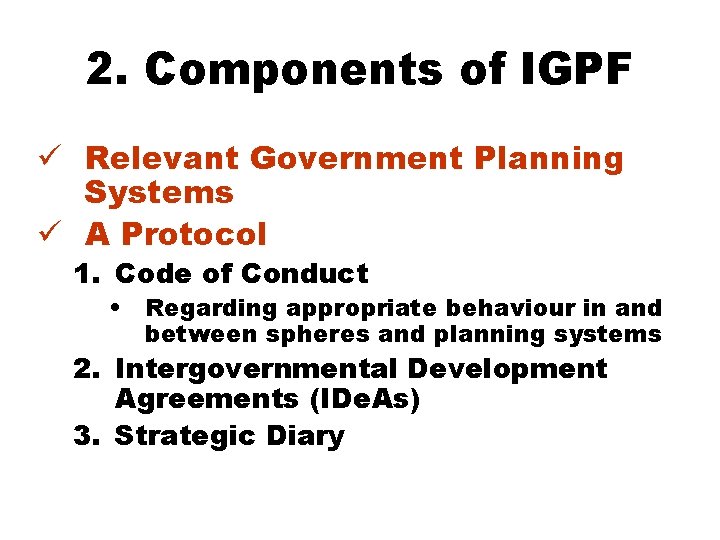
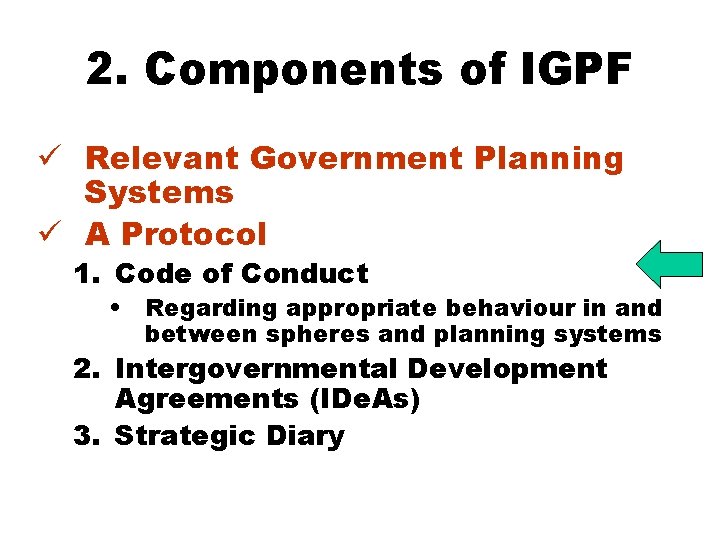
2. Components of IGPF ü Relevant Government Planning Systems ü A Protocol 1. Code of Conduct • Regarding appropriate behaviour in and between spheres and planning systems 2. Intergovernmental Development Agreements (IDe. As) 3. Strategic Diary
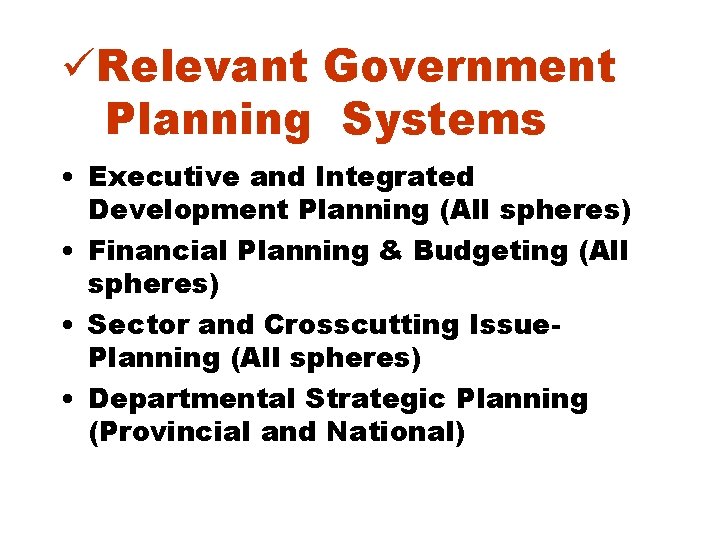
üRelevant Government Planning Systems • Executive and Integrated Development Planning (All spheres) • Financial Planning & Budgeting (All spheres) • Sector and Crosscutting Issue. Planning (All spheres) • Departmental Strategic Planning (Provincial and National)
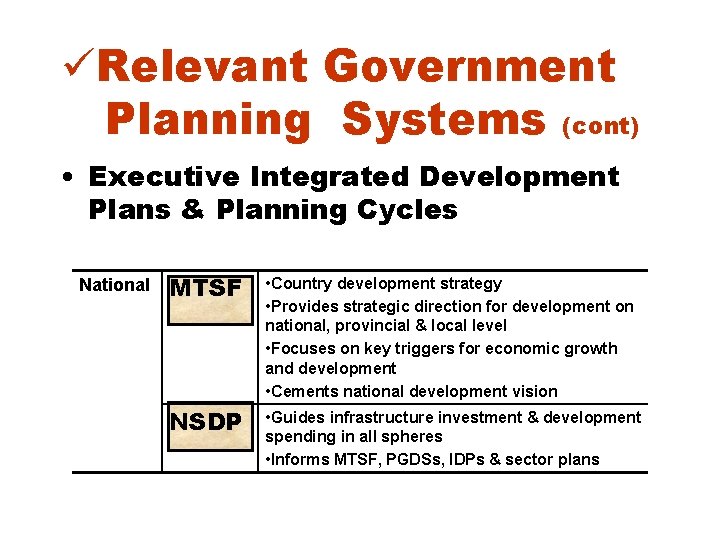
üRelevant Government Planning Systems (cont) • Executive Integrated Development Plans & Planning Cycles National MTSF • Country development strategy • Provides strategic direction for development on national, provincial & local level • Focuses on key triggers for economic growth and development • Cements national development vision NSDP • Guides infrastructure investment & development spending in all spheres • Informs MTSF, PGDSs, IDPs & sector plans
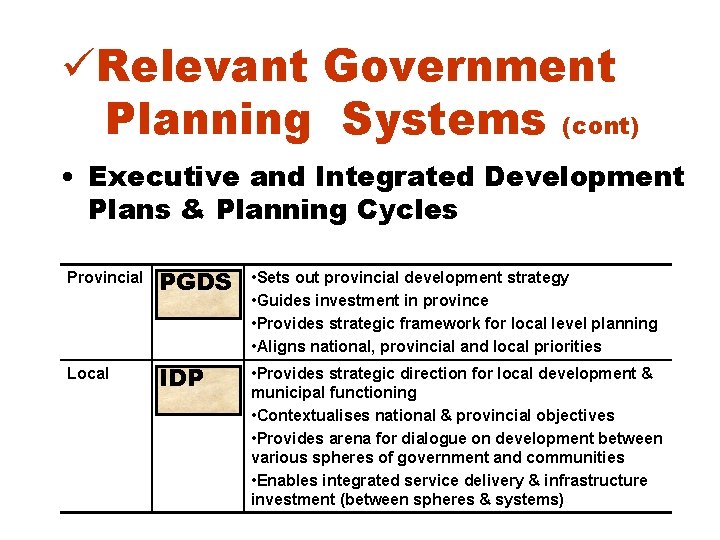
üRelevant Government Planning Systems (cont) • Executive and Integrated Development Plans & Planning Cycles Provincial PGDS • Sets out provincial development strategy • Guides investment in province • Provides strategic framework for local level planning • Aligns national, provincial and local priorities Local IDP • Provides strategic direction for local development & municipal functioning • Contextualises national & provincial objectives • Provides arena for dialogue on development between various spheres of government and communities • Enables integrated service delivery & infrastructure investment (between spheres & systems)
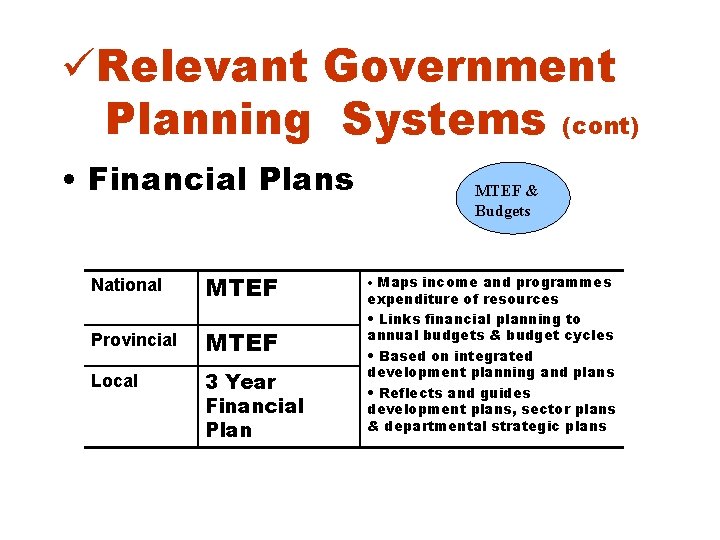
üRelevant Government Planning Systems (cont) • Financial Plans National MTEF Provincial MTEF Local 3 Year Financial Plan MTEF & Budgets • Maps income and programmes expenditure of resources • Links financial planning to annual budgets & budget cycles • Based on integrated development planning and plans • Reflects and guides development plans, sector plans & departmental strategic plans
üRelevant Government Planning Systems (cont) LED Environment Disaster Manegement Transport Safety & Securtity Housing Poverty Economic Dev CROSS CUTTING ISSUES i. e. : HIV/AIDS Education Tourism Water Health Land SECTOR S i. e. : • Sector and Crosscutting issue. Plans & Planning Processes INTEGRATED SECTOR PLANNING (all spheres):
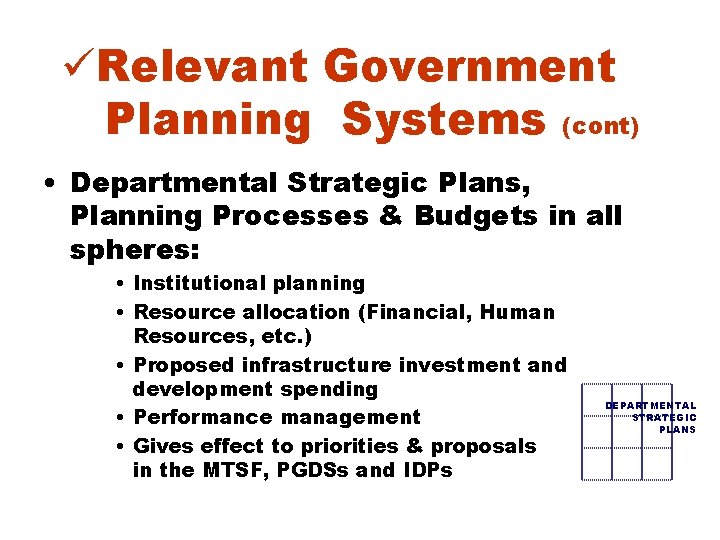
üRelevant Government Planning Systems (cont) • Departmental Strategic Plans, Planning Processes & Budgets in all spheres: • Institutional planning • Resource allocation (Financial, Human Resources, etc. ) • Proposed infrastructure investment and development spending • Performance management • Gives effect to priorities & proposals in the MTSF, PGDSs and IDPs DEPARTMENTAL STRATEGIC PLANS
INTERGOVERNMENTAL PLANNING SYSTEM Poverty MTEF & Budget PLANS DEPARTMENTAL STRATEGIC PLANS MTEF & Budget Safety& Securtity LED Environment Disaster Manegement DEPARTMENTAL Plans STRATEGIC PLANS Fin. & Budget Links Intergovernmental Implementation & Service Delivery Agreements (IDe. As) HIV/AIDS Economic Dev Education Tourism Water Health NSDP Econ Social JCPS IDP Land Local CROSS CUTTING ISSUES i. e. : PGDS DEPARTMENTAL STRATEGIC INTEGRATED SECTOR PLANNING SECTOR S i. e. : Provincial GSA MTSF INT National CABINET CLUSTERS District/ Metro. Space Intergov. Impact
2. Components of IGPF ü Relevant Government Planning Systems ü A Protocol 1. Code of Conduct • Regarding appropriate behaviour in and between spheres and planning systems 2. Intergovernmental Development Agreements (IDe. As) 3. Strategic Diary
1. Code of Conduct • To ensure greater coherence and consistency in and between the three spheres in their development, sector, financial and departmental planning and budgeting, all role players must: – Align proposals for infrastructure investment and development spending as captured in development, sector, departmental and financial plans in time and space; – Participate and collaborate with colleagues within and between the different spheres of government in their respective development and sector plan preparation and review processes; – Adhere to national development objectives, development principles, policy positions and legal provisions & requirements in all planning actions; – Link the proposals captured in development, sector and departmental planning and plans with financial planning and plans;
1. Code of Conduct – Coordinate and integrate the implementation of proposals captured in development plans with programmes and projects in sector, departmental and financial plans; – Establish agreements (IDe. As) with participating role players and set up structures and mechanisms within and between spheres and sectors to support the required actions; – Share planning, project and programme information in the right format and at the right time by making use of the IDP Nerve Centre; – Rigorously monitor and review development objectives and outcomes of the programmes and projects for implementation (as set out in IDe. As); and – Take strong corrective measures as and where necessary.
2. Intergovernmental Development Agreements (IDe. As) One set of agreements: – Drawn up by: municipalities and organs of state in the provincial and national spheres – On: infrastructure investment & development spending approach, commitments, targets, indicators – For: each district & metro municipality (a specific spatial area) – Will: ensure greater predicatability, commitment and enable “intergovernmental performance management”
2. Intergovernmental Development Agreements (IDe. As) (continued…) • Signed into operation by: relevant Premiers, Mayors and Ministers • Prepared: during preparation of IDPs and PGDSs • Based on and informs: subsequent preparation and reviews of IDPs & PGDSs • Captured in: IDP Nerve Centre where progress on reaching commitment, signing off and implementation can be monitored electronically
2. Intergovernmental Development Agreements (IDe. As) (continued…) • Templates on IDP Nerve Centre will ensure: commitment to national development objectives, adherence to NSDP principles, integration and standardisation for ease of use • Initially: Agreements may not contain any immediate commitment to infrastructure investment or development spending • Agreements will over time: ensure a progression towards actual expenditure & will strengthen intergovernmental relations
3. Strategic Diary • Specifies dates for completion of key activities in each of the government planning systems and spheres • Enables: – Alignment in planning, – Cooperation and integration in infrastructure investment and development spending – Realisation of Intergovernmental Development Agreements (IDe. As)
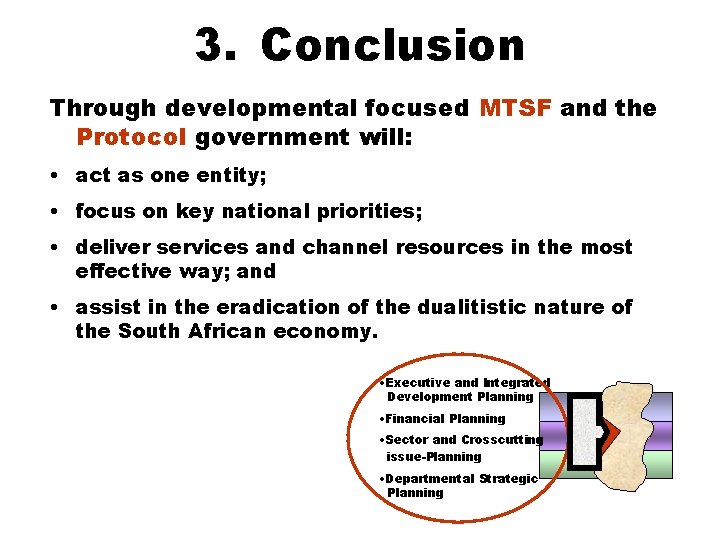
3. Conclusion Through developmental focused MTSF and the Protocol government will: • act as one entity; • focus on key national priorities; • deliver services and channel resources in the most effective way; and • assist in the eradication of the dualitistic nature of the South African economy. • Executive and Integrated Development Planning • Financial Planning • Sector and Crosscutting issue-Planning • Departmental Strategic Planning