
Session 6 PHYSICAL ACTIVITY FOR HEALTH AIM LEARNING












- Slides: 40
Session 6 PHYSICAL ACTIVITY FOR HEALTH
AIM
LEARNING OBJECTIVES
LEARNING OBJECTIVE A. To improve the Counselor’s understanding about the importance of physical activity
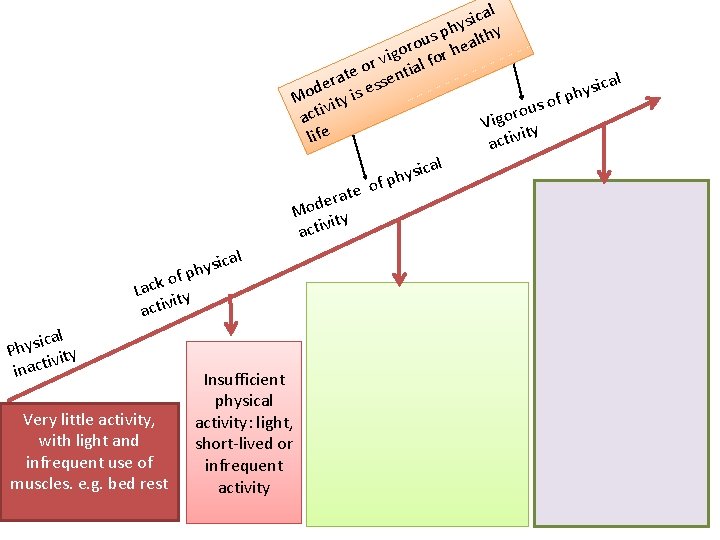
al c i s hy hy p s lt u a o r e igo l for h v r te o sentia a r ical s de is es y o h M ity of p s v u i o act igor V ity v i life t c a ical s y h of p e t era d o M ity activ ical s y h of p k c La ity v i t c a ical s y h P ivity t c a in Very little activity, with light and infrequent use of muscles. e. g. bed rest Insufficient physical activity: light, short-lived or infrequent activity
LEARNING OBJECTIVE B. To improve the Counselor’s understanding about physical activity as a risk factor to NCDs
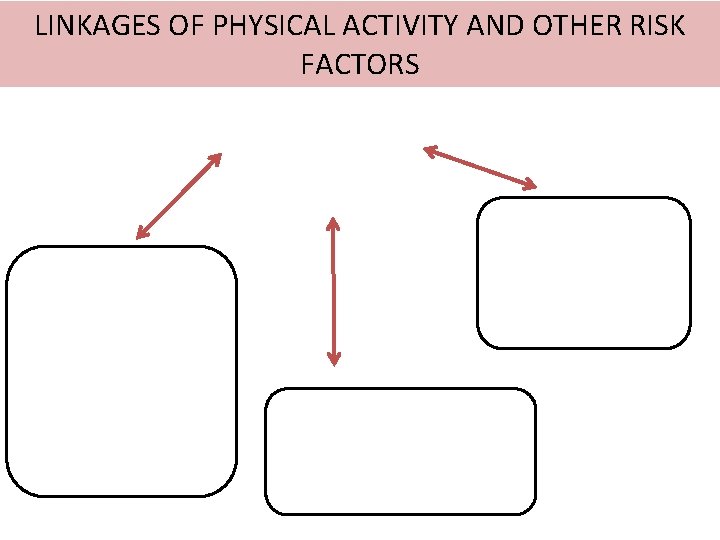
LINKAGES OF PHYSICAL ACTIVITY AND OTHER RISK FACTORS
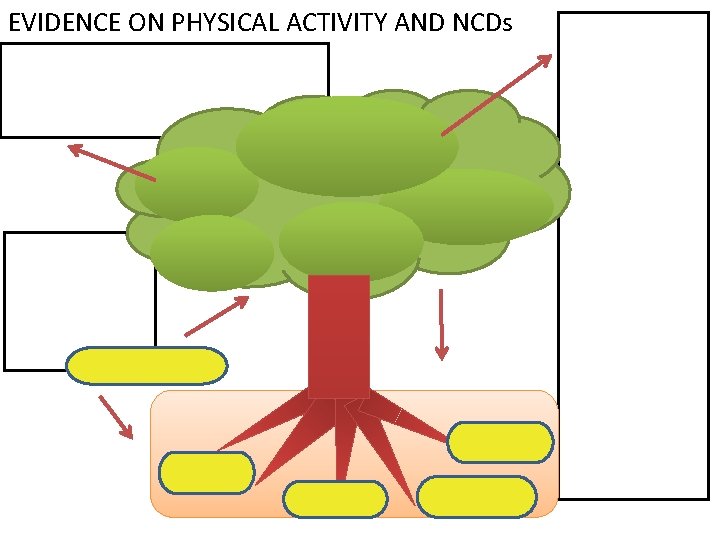
EVIDENCE ON PHYSICAL ACTIVITY AND NCDs
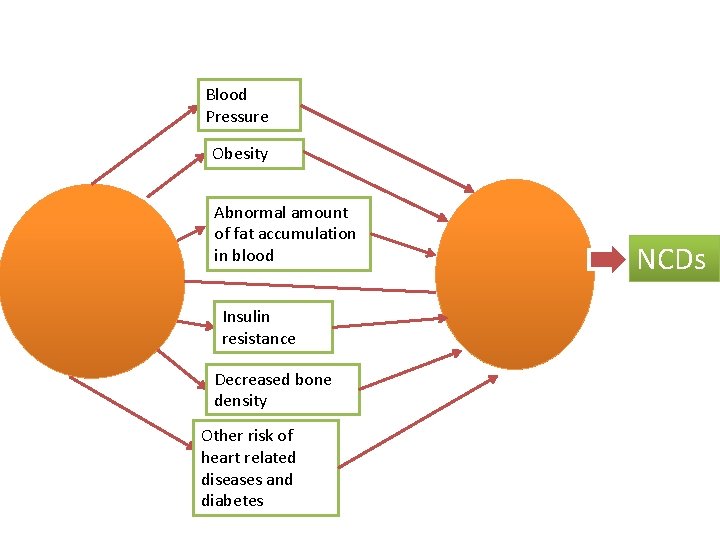
Blood Pressure Obesity Abnormal amount of fat accumulation in blood Insulin resistance Decreased bone density Other risk of heart related diseases and diabetes NCDs
C. To identify the lack of physical activity and promote behavioral change
THREE STEPS TO OFFER HELP Involve the patient including family/ significant others in the three steps
Use counseling skills for behavioral change
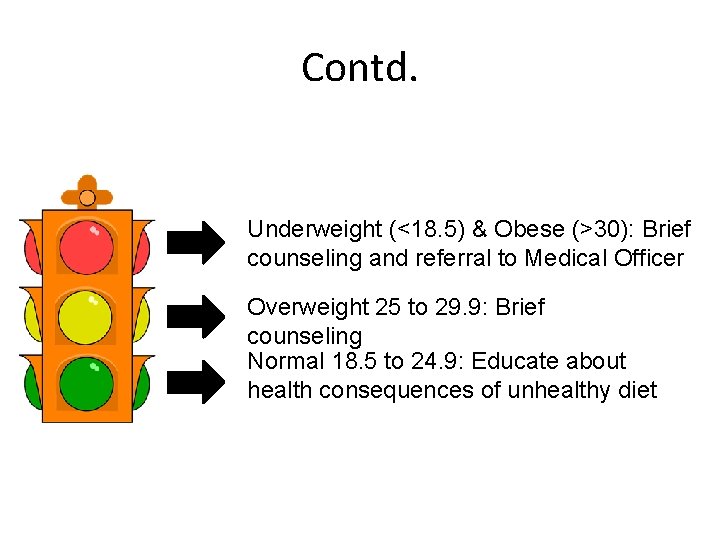
Contd. Underweight (<18. 5) & Obese (>30): Brief counseling and referral to Medical Officer Overweight 25 to 29. 9: Brief counseling Normal 18. 5 to 24. 9: Educate about health consequences of unhealthy diet
USE A BALANCE SHEET
USE A BALANCE SHEET
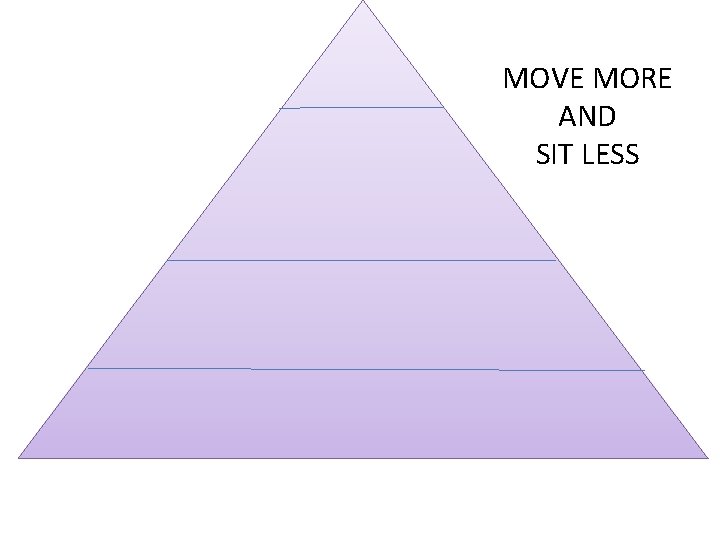
MOVE MORE AND SIT LESS
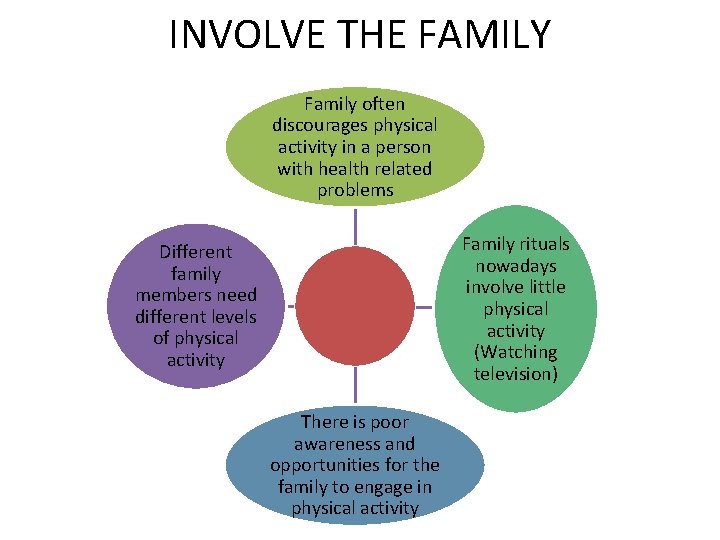
INVOLVE THE FAMILY Family often discourages physical activity in a person with health related problems Family rituals nowadays involve little physical activity (Watching television) Different family members need different levels of physical activity There is poor awareness and opportunities for the family to engage in physical activity
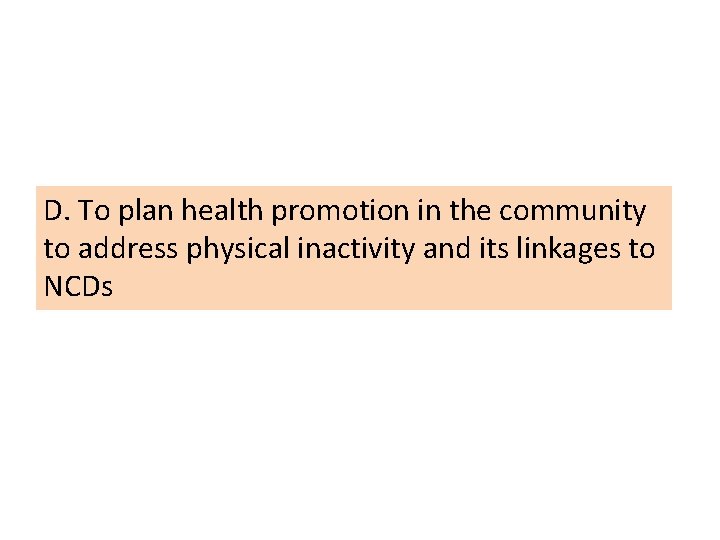
D. To plan health promotion in the community to address physical inactivity and its linkages to NCDs
WRAP UP