
Session 5 Targeting Consumers in Value Based Marketing
Session 5 Targeting Consumers in Value Based Marketing Segmentation, Target Markets and Positioning
What is Market Segmentation? Market segmentation is the process of dividing a market of potential customers into groups, or segments, based on different characteristics. The segments created are composed of consumers who will respond similarly to marketing strategies and who share traits such as similar interests, needs, or locations.
Two Types of Markets Consumer (B 2 C) markets • Purchasers and household members who intend to consume or benefit from purchased products and do not buy products to make profits Industrial (B 2 B) markets • Individuals or groups that purchase a specific kind of product for resale, direct use in producing other products or use in general daily operations
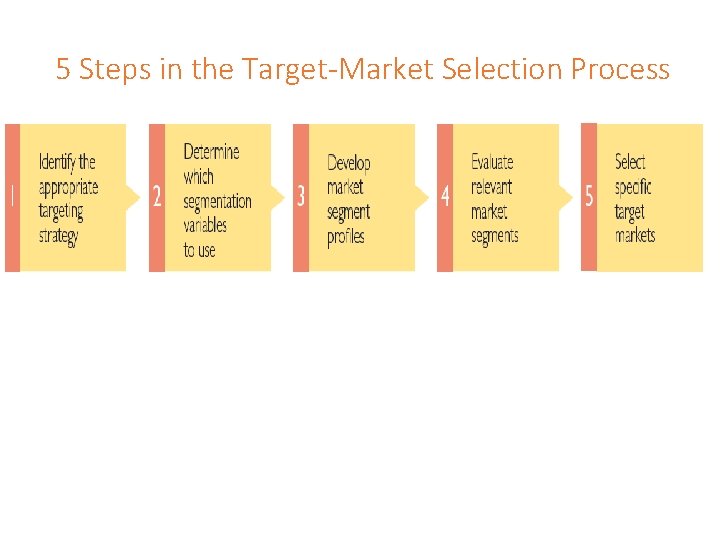
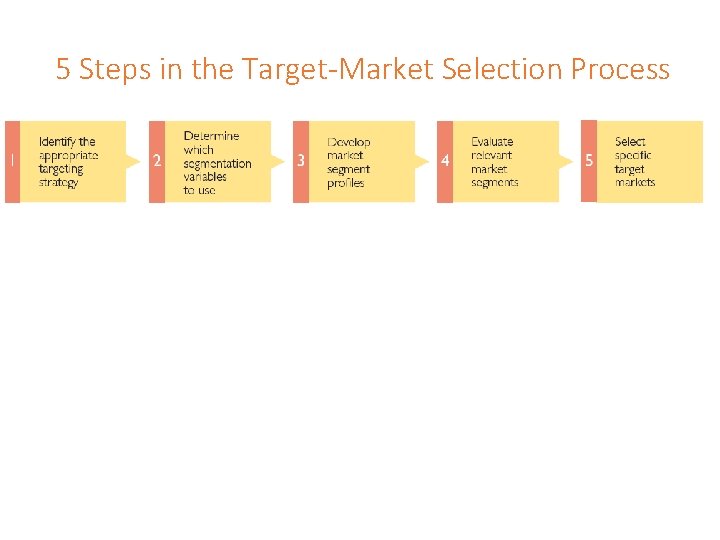
5 Steps in the Target-Market Selection Process

Step 1: Identify the Appropriate Targeting Strategy • Undifferentiated targeting strategy – Organisation designs a single marketing mix and directs it at entire market for a particular product (mass market – e. g. TV, Billboards, Radio no research needed) • Homogeneous market – A large proportion of customers have similar needs for a product (e. g. stoves, fridges, etc. ) Continues next slide

STEP 1 – CONTINUED • Concentrated targeting strategy – Organisation targets a single market segment using one marketing mix (e. g. teenage girls) • Heterogeneous market – Markets made up of individuals or organisations with diverse needs for a product (e. g. computer – but you cannot substitute a PC for a MAC – different platforms) Continues next slide
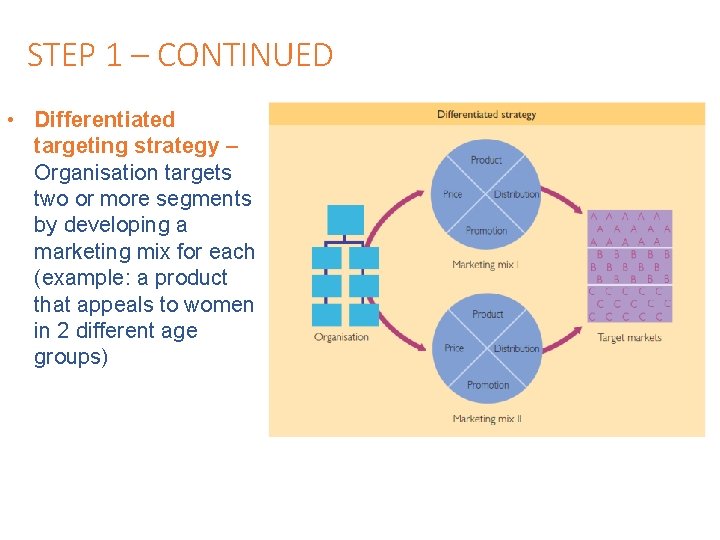
STEP 1 – CONTINUED • Differentiated targeting strategy – Organisation targets two or more segments by developing a marketing mix for each (example: a product that appeals to women in 2 different age groups)
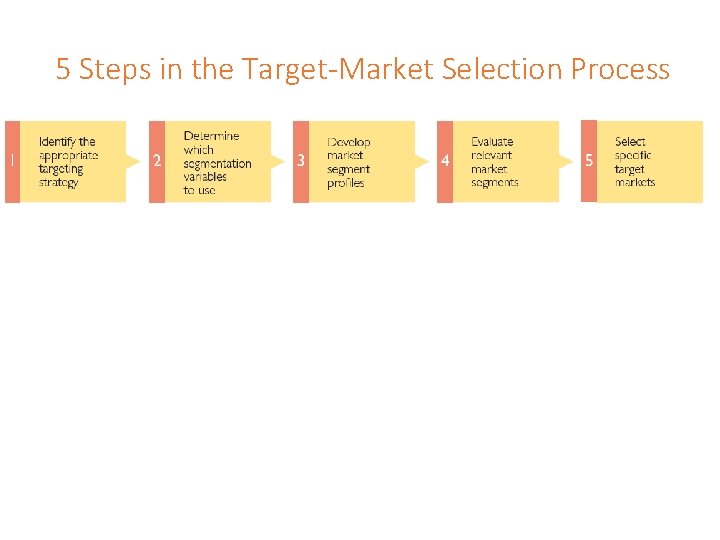
5 Steps in the Target-Market Selection Process
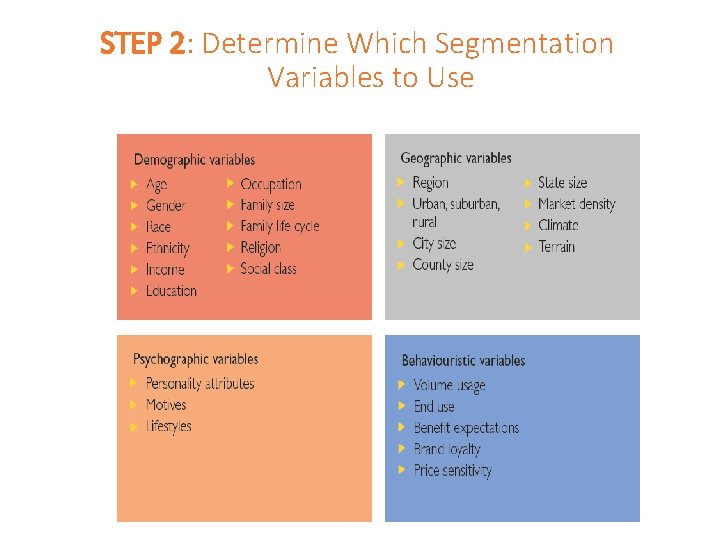
STEP 2: Determine Which Segmentation Variables to Use
Living Standards Measure The Living Standards Measure or LSM is a marketing and research tool ( same as social economic class: SEC but more refined ) used in South Africa to classify standard of living and disposable income. The international measure of income distribution is the Gini coefficient, and South Africa has one of the highest in the world, which means the country has a very unequal income distribution with many haves and the have-nots
Living Standards Measure The LSM (Living Standards Measure) divides the population into 10 LSM groups, 10 (highest) to 1 (lowest). . The LSM is one approach to segmenting the South African market – but controversial because there are diverse clusters of respondents - with different characteristics - within each LSM group who cannot be lumped together in one category (IT-Online, April 6, 2017)
Socio-Economic Measure Approach The Socio-Economic Measure (SEMs) has been suggested as an approach to replace the market segmentation tool, Living Standard Measure (LSMs), since this is considered a more accurate reflection of South African society in terms of how people live. . “SEMs speak as to how South Africans live and not what they have.
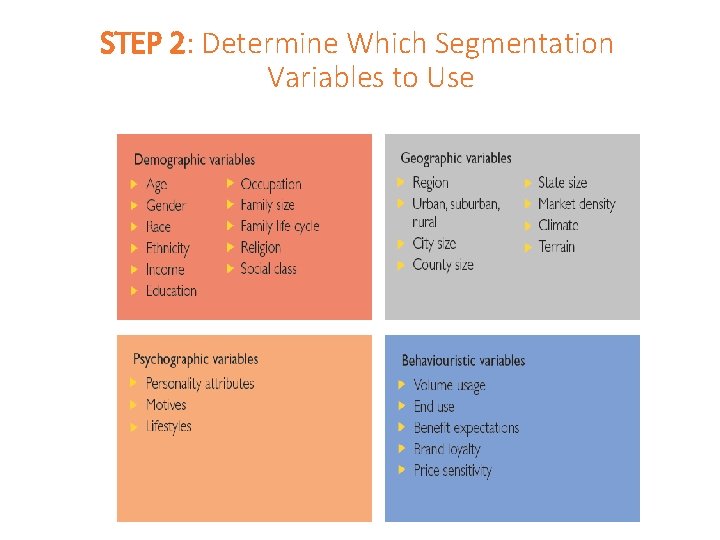
STEP 2: Determine Which Segmentation Variables to Use
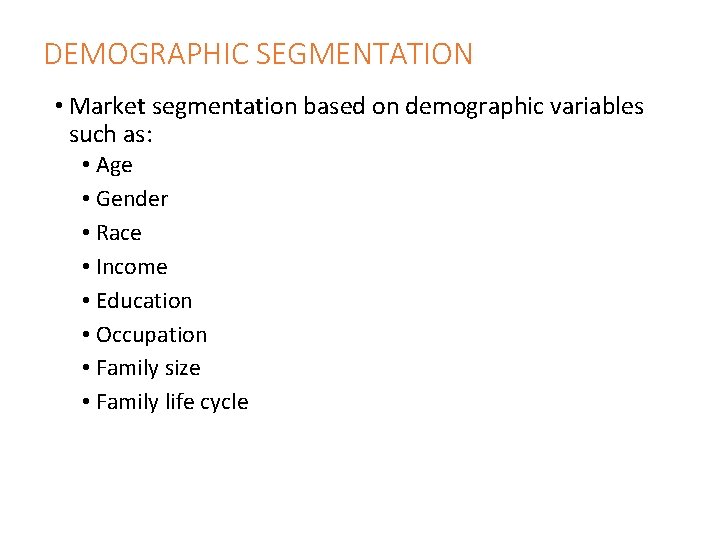
DEMOGRAPHIC SEGMENTATION • Market segmentation based on demographic variables such as: • Age • Gender • Race • Income • Education • Occupation • Family size • Family life cycle
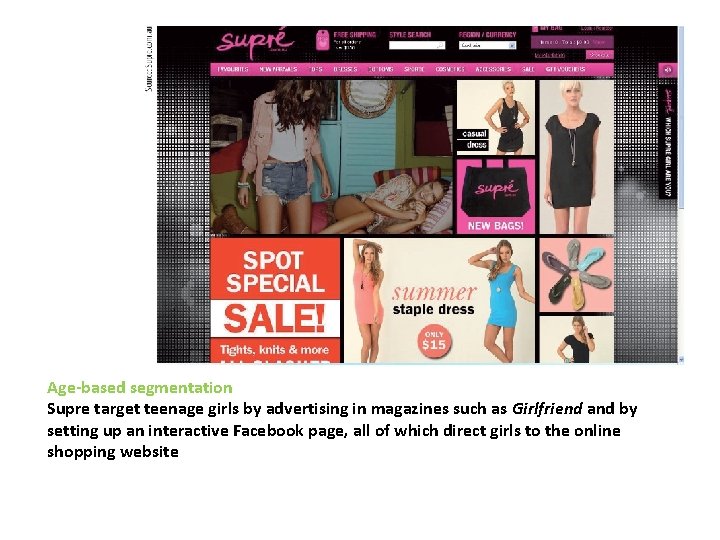
Age-based segmentation Supre target teenage girls by advertising in magazines such as Girlfriend and by setting up an interactive Facebook page, all of which direct girls to the online shopping website
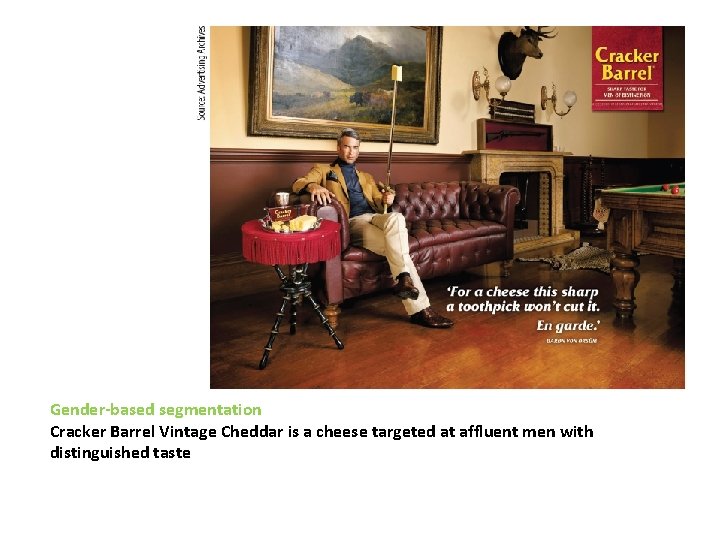
Gender-based segmentation Cracker Barrel Vintage Cheddar is a cheese targeted at affluent men with distinguished taste

Example of Gender Segmentation In celebration of Women's History Month, Johnny Walker is introducing Jane Walker, "a female iteration of the Johnny Walker brand's iconic Striding Man logo. " The Johnnie Walker Black Label The Jane Walker Edition will be sold starting in March
GEOGRAPHIC SEGMENTATION • Market segmentation based on geographic variables such as: • Climate • Terrain • City size • Population density • Urban/rural areas • This segmentation considers national boundaries, regional districts or even suburban postcode
Geographic segmentation – CONTINUED Market density • Number of potential customers within a unit of land area – Cape Town vs Johannesburg Geodemographic segmentation • Market segmentation that clusters people in postcode areas and smaller neighbourhood units based on lifestyle and demographic information – Sea Point vs Stellenbosch Micromarketing • An approach to market segmentation in which organisations focus precise marketing efforts on very small geo-demographic markets – Golf Estates
PSYCHOGRAPHIC SEGMENTATION • Market segmentation based on psychographic variables such as personality, motives and lifestyle • Psychographic variables can be used independently to segment a market but are more commonly combined with other types of segmentation variables
VIDEO NICHE – demographics vs psychographics Importance of behaviouristic and psychographic variables
Identify the probable psychographic profile target markets for the following products (i. e. personality, life-style, motivations) • Amarula Cream • Ushaka Water-World • The rope swing at Moses Mahiba Stadium • UKZN Classical Symphony Orchestra

Lifestyle segmentation This advertisement is designed to encourage UK residents to ‘go walkabout down under’
5 Steps in the Target-Market Selection Process
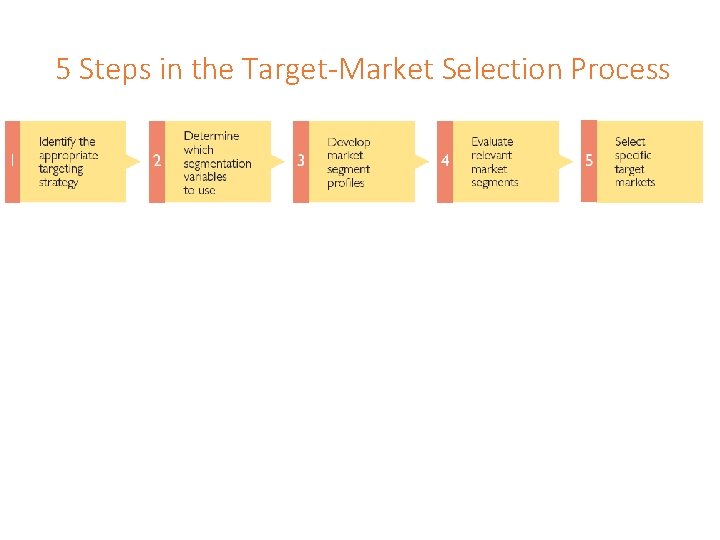
STEP 3: Develop Market Segment Profiles • A market segment profile describes the similarities of potential customers within a segment and explains the differences among people and organisations in different segments • A profile segment can benefits Strategic Marketers in 2 ways: • Helps determine the most attractive segment(s) • Can be potentially useful information for subsequent marketing decisions
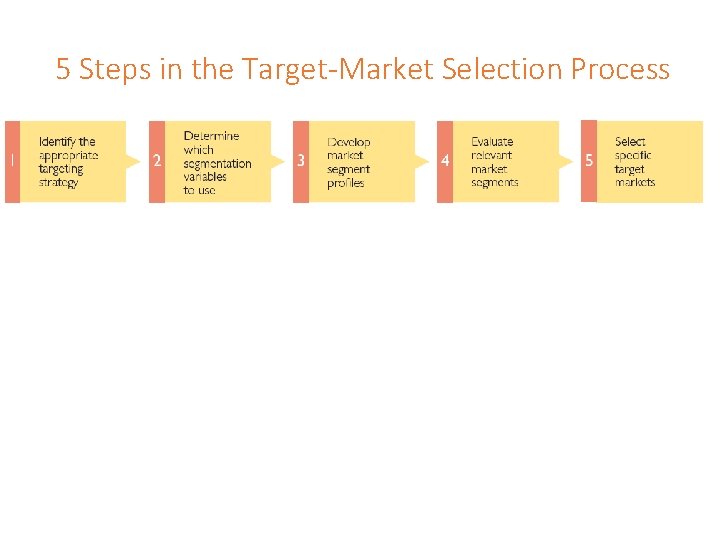
5 Steps in the Target-Market Selection Process
STEP 4: Evaluate Relevant Market Segments After analysing the segment profiles, a Strategic Marketer may have identified several relevant market segments to further analyze in terms of: • Estimates of Sales • Assess the Competition • Assess Costs
ESTIMATE OF SALES • What is the potential of Sales: • This is calculated by: The total amount of product that customers will purchase - in a specified period - at a specific level of industry-wide marketing activity - and at a competitive price
ASSESS THE COMPETITION • Without assessing the competition, sales estimates can be misleading • The following questions need to be answered for a competitive assessment • • • How many competitors exist? What are their strengths and weaknesses? Do several competitors have a major market share? Can we create a competitive marketing mix? Will new competitors enter this segment? If so, can we still compete successfully?
ESTIMATE OF COSTS • • To developing and maintain a marketing mix that fulfills the needs of a target segment, can be expensive Factors affecting costs include: • Distinctive product features • Attractive package design • Generous product warranties • Extensive advertising • Attractive promotional offers • Competitive prices • High quality personal service
5 Steps in the Target-Market Selection Process
STEP 5: Select Specific Target Markets Do the customers’ needs differ enough to warrant use of market segmentation? • Are the customers’ needs homogeneous? – then do an undifferentiated targeting strategy (TV, etc. ) • Are the customers’ needs heterogeneous – then one or more target markets must be selected (computer - but different platforms) • Assuming one or more segments offer significant opportunities, marketers must decide in which segments to participate
WHAT IS PRODUCT POSITIONING? If a firm needs to create and maintain a certain concept of a product in customers’ minds they can position their product by: • Giving the features of the Product, and • Giving the benefits of the Product in terms of Price, Quality, or Brand Reputation relative to their competitors!
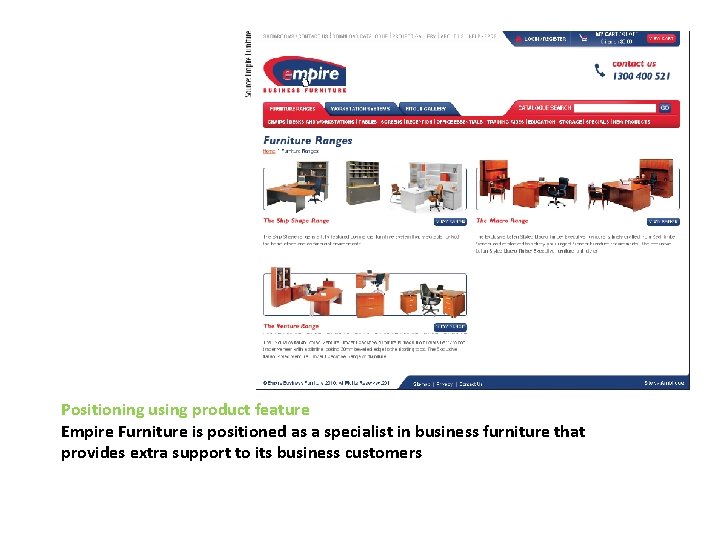
Positioning using product feature Empire Furniture is positioned as a specialist in business furniture that provides extra support to its business customers
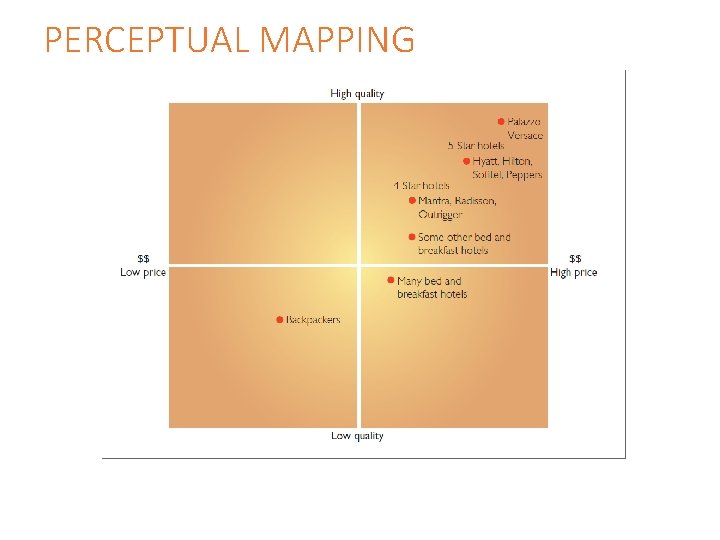
PERCEPTUAL MAPPING
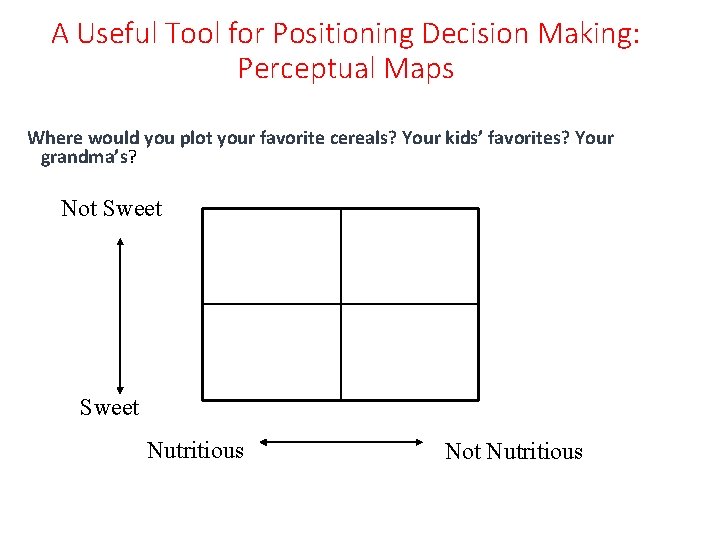
A Useful Tool for Positioning Decision Making: Perceptual Maps Where would you plot your favorite cereals? Your kids’ favorites? Your grandma’s? Not Sweet Nutritious Not Nutritious
PRODUCT REPOSITIONING Firms need to regularly evaluate the current position of their product(s) in order to: • Strengthen market share and profitability Repositioning can be done through: • Changing the product physically • Revising its pricing and/or distribution strategy • Changing the product image • Targeting a different market
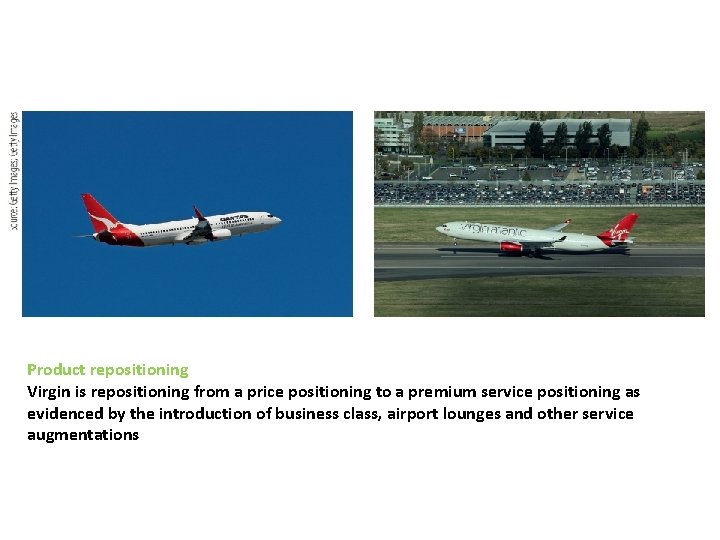
Product repositioning Virgin is repositioning from a price positioning to a premium service positioning as evidenced by the introduction of business class, airport lounges and other service augmentations
DISCUSSION QUESTION What has been done by Mc. Donald’s to reposition its brand in the past few years?
B 2 B: Marketing Strategically in Industrial Markets
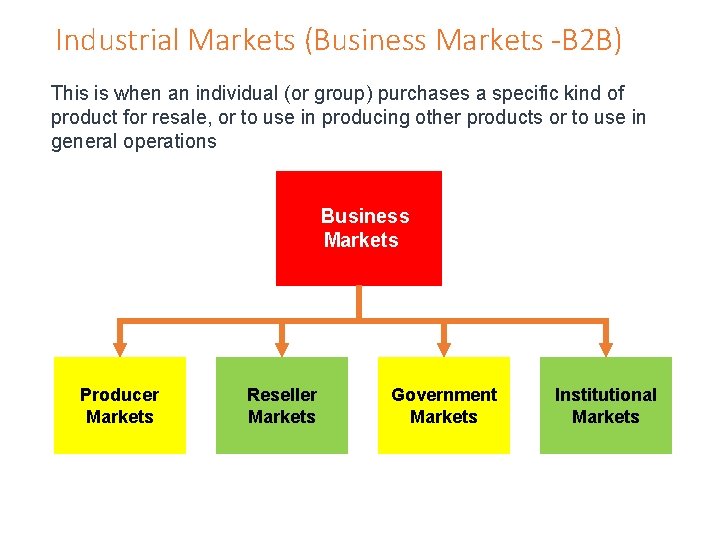
Industrial Markets (Business Markets -B 2 B) This is when an individual (or group) purchases a specific kind of product for resale, or to use in producing other products or to use in general operations Business Markets Producer Markets Reseller Markets Government Markets Institutional Markets
Producer Markets • Includes buyers of raw materials, as well as purchasers of semi-finished and finished items used to produce other products • Manufacturers tend to be geographically concentrated and can be served more efficiently • Examples?

PRODUCER MARKETS Focused on producer market “Fellowes” manufactures shredders. The company that sell raw materials, equipment and component parts to Fellowes and other manufacturers are serving producer market.
Reseller Markets • Resellers • Intermediaries who buy finished goods and resell them for a profit • Factors resellers consider • Level of demand • Space required relative to potential profit • Ease of placing orders • Availability of technical assistance • Training programs from producers Examples?
Government Markets • Federal, state, county or local governments that buy goods and services to support their internal operations and provide products to their constituencies • Examples?
Institutional Markets • Organisations with charitable, educational, community or other non-business goals • Examples?
DISCUSSION QUESTION • Can you think of products used mainly by institutional markets?
Attributes of Business Customers • Well informed about the products they purchase • Demand detailed information and technical specifications • Help the firm achieve organisational objectives • Engage in rational buying behaviour • Goals of a purchasing agent may include advancement or financial awards • Often form partnerships with suppliers

Primary Concerns of Business Customers • Price • Quality • Service • Supplier relationships Concerns of business customers In this ad, CDW promises excellent and timely service; one of the primary concerns of business customers
- Slides: 49