
Session 4 Lewin 2 Framework for Change Burnes
Session 4
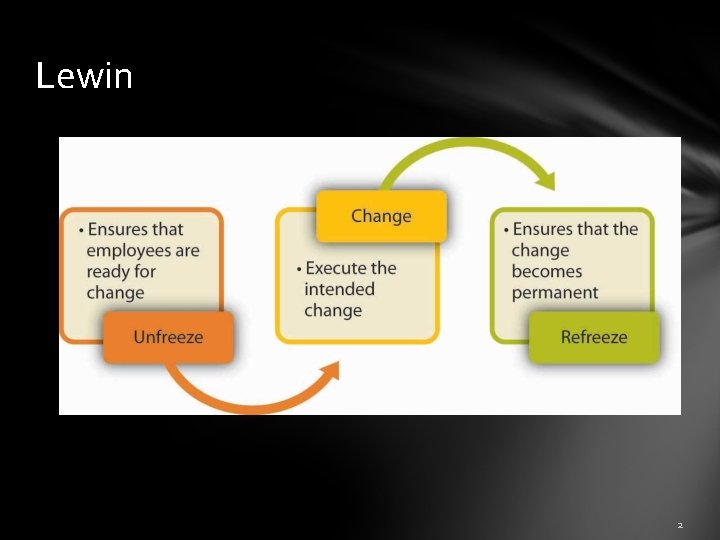
Lewin 2
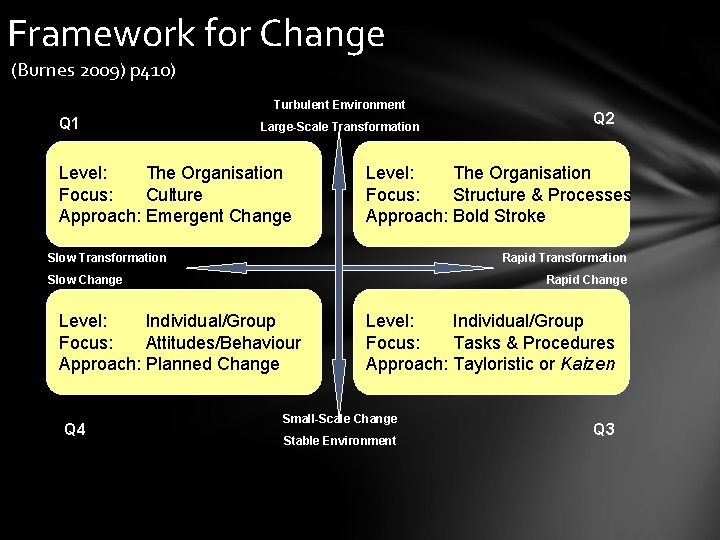
Framework for Change (Burnes 2009) p 410) Turbulent Environment Q 1 Large-Scale Transformation Level: The Organisation Focus: Culture Approach: Emergent Change Level: The Organisation Focus: Structure & Processes Approach: Bold Stroke Slow Transformation Rapid Transformation Slow Change Rapid Change Level: Individual/Group Focus: Attitudes/Behaviour Approach: Planned Change Q 4 Q 2 Level: Individual/Group Focus: Tasks & Procedures Approach: Tayloristic or Kaizen Small-Scale Change Stable Environment Q 3
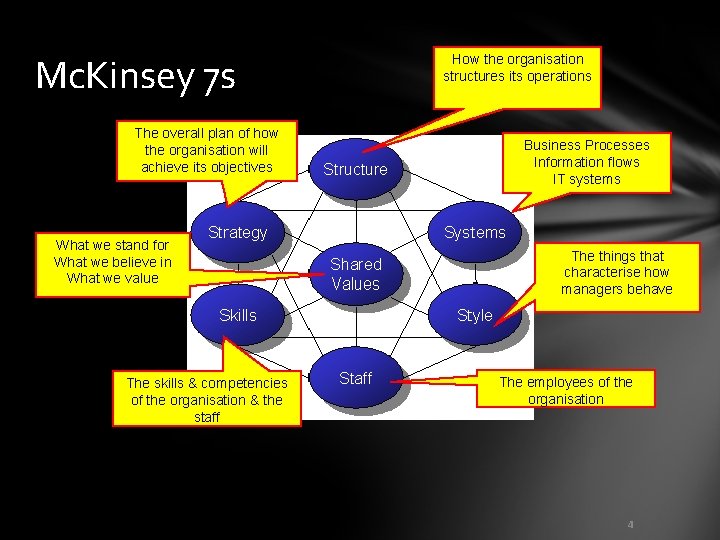
Mc. Kinsey 7 s The overall plan of how the organisation will achieve its objectives What we stand for What we believe in What we value The skills & competencies of the organisation & the staff How the organisation structures its operations Business Processes Information flows IT systems The things that characterise how managers behave The employees of the organisation 4
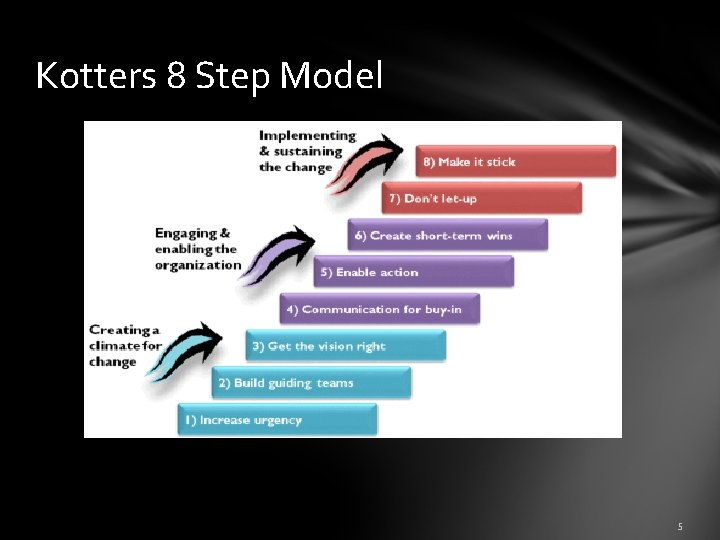
Kotters 8 Step Model 5
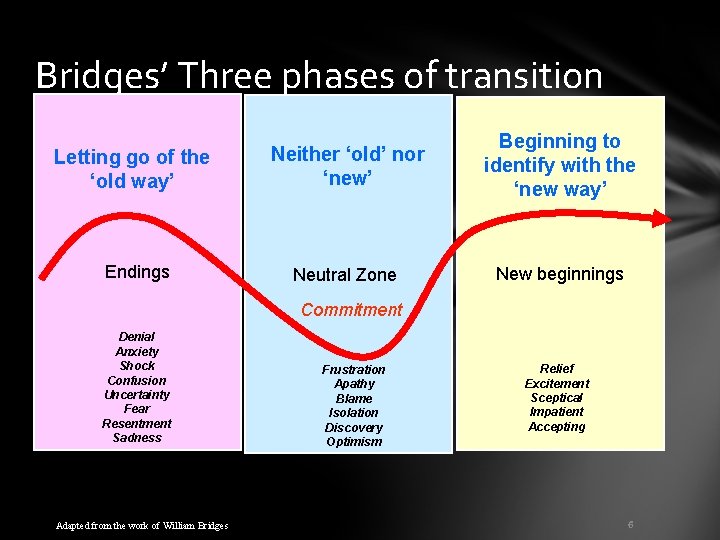
Bridges’ Three phases of transition Letting go of the ‘old way’ Neither ‘old’ nor ‘new’ Beginning to identify with the ‘new way’ Endings Neutral Zone New beginnings Commitment Denial Anxiety Shock Confusion Uncertainty Fear Resentment Sadness Adapted from the work of William Bridges Frustration Apathy Blame Isolation Discovery Optimism Relief Excitement Sceptical Impatient Accepting 6
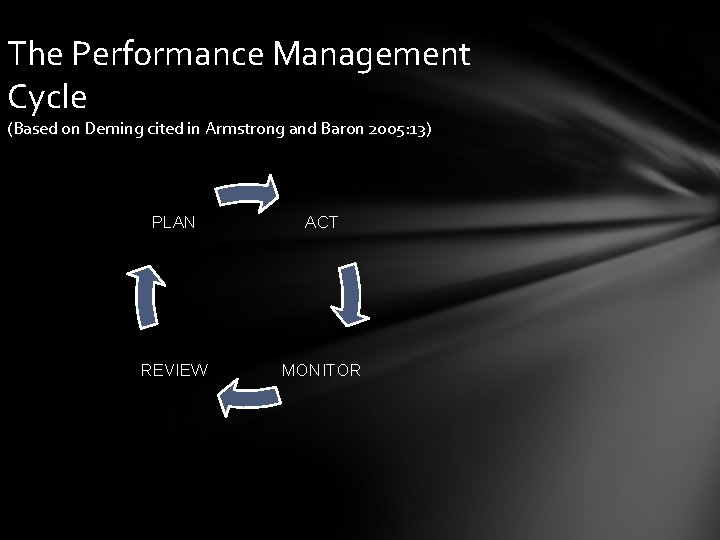
The Performance Management Cycle (Based on Deming cited in Armstrong and Baron 2005: 13) PLAN ACT REVIEW MONITOR
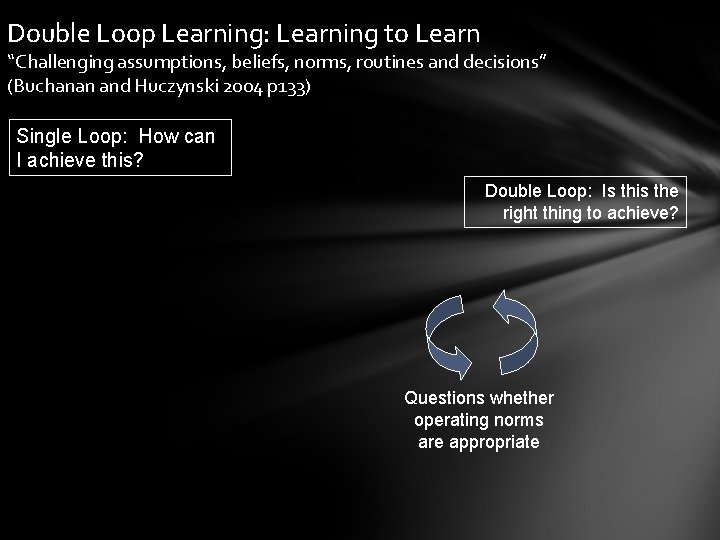
Double Loop Learning: Learning to Learn “Challenging assumptions, beliefs, norms, routines and decisions” (Buchanan and Huczynski 2004 p 133) Single Loop: How can I achieve this? Double Loop: Is this the right thing to achieve? Questions whether operating norms are appropriate
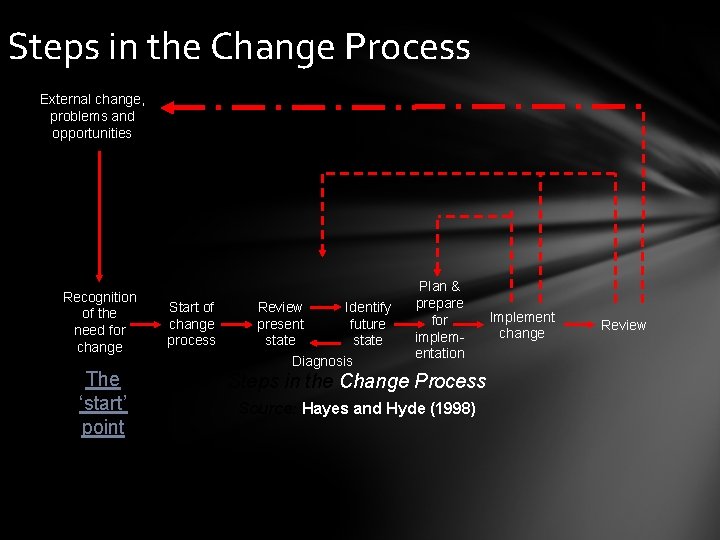
Steps in the Change Process External change, problems and opportunities Recognition of the need for change The ‘start’ point Start of change process Review Identify present future state Diagnosis Plan & prepare for implementation Steps in the Change Process Source: Hayes and Hyde (1998) Implement change Review
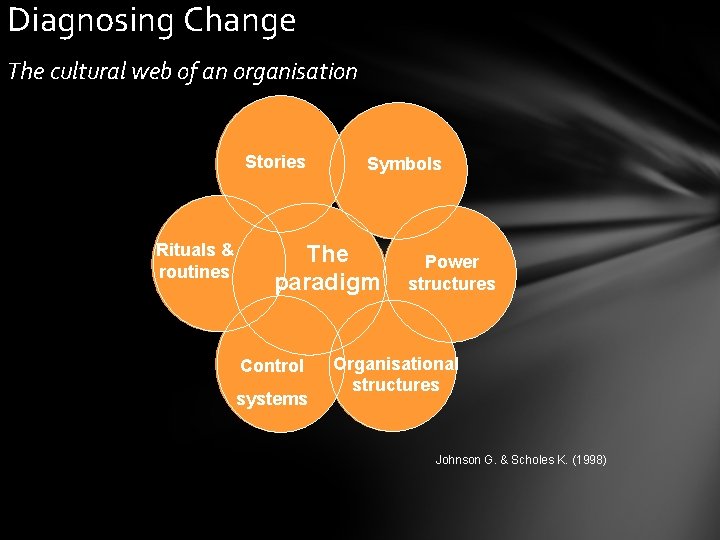
Diagnosing Change The cultural web of an organisation Stories Rituals & routines Symbols The paradigm Control systems Power structures Organisational structures Johnson G. & Scholes K. (1998)
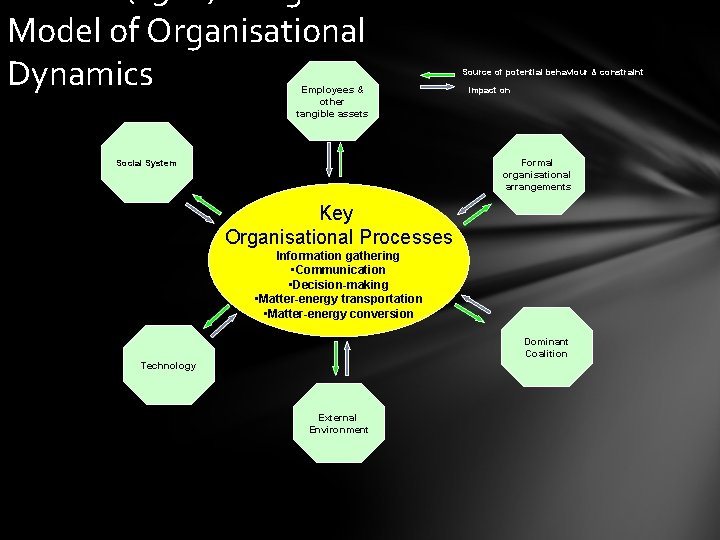
Model of Organisational Dynamics Employees & other tangible assets Source of potential behaviour & constraint Impact on Formal organisational arrangements Social System Key Organisational Processes Information gathering • Communication • Decision-making • Matter-energy transportation • Matter-energy conversion Dominant Coalition Technology External Environment
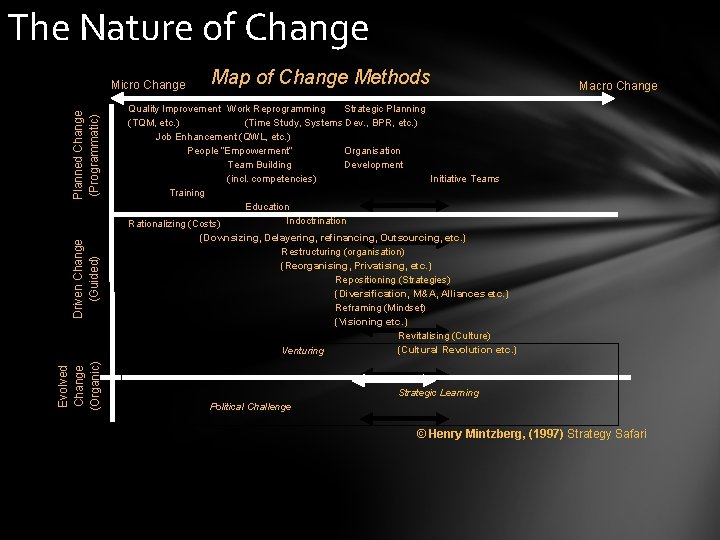
The Nature of Change Evolved Change (Organic) Driven Change (Guided) Planned Change (Programmatic) Micro Change Map of Change Methods Macro Change Quality Improvement Work Reprogramming Strategic Planning (TQM, etc. ) (Time Study, Systems Dev. , BPR, etc. ) Job Enhancement (QWL, etc. ) People “Empowerment” Organisation Team Building Development (incl. competencies) Initiative Teams Training Education Indoctrination Rationalizing (Costs) (Downsizing, Delayering, refinancing, Outsourcing, etc. ) Restructuring (organisation) (Reorganising, Privatising, etc. ) Repositioning (Strategies) (Diversification, M&A, Alliances etc. ) Reframing (Mindset) (Visioning etc. ) Revitalising (Culture) (Cultural Revolution etc. ) Venturing Strategic Learning Political Challenge © Henry Mintzberg, (1997) Strategy Safari
- Slides: 13