
Session 3 Grading Requirements for Guardrail End Treatments
- Slides: 20
Session 3 Grading Requirements for Guardrail End Treatments
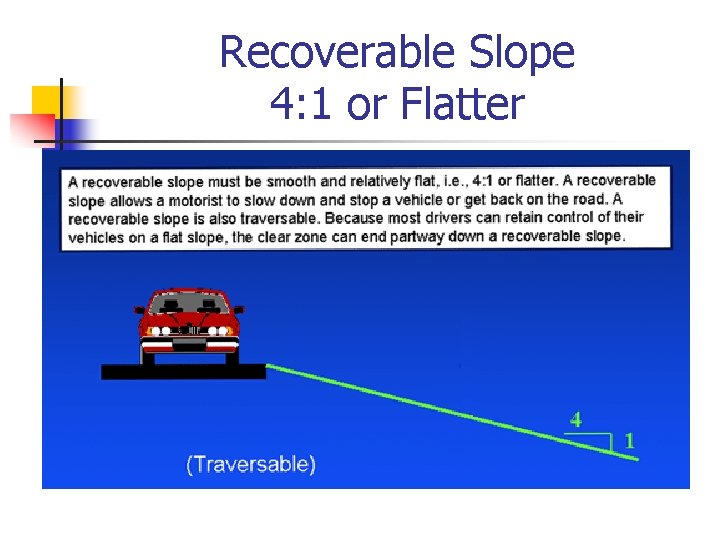
Recoverable Slope 4: 1 or Flatter
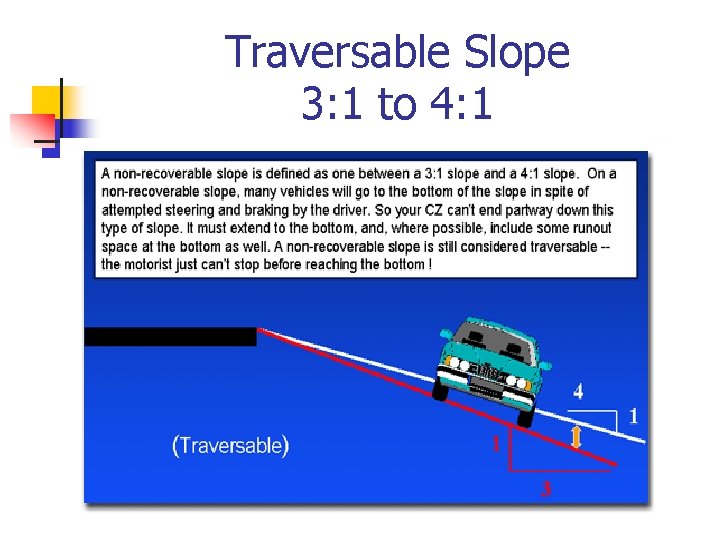
Traversable Slope 3: 1 to 4: 1
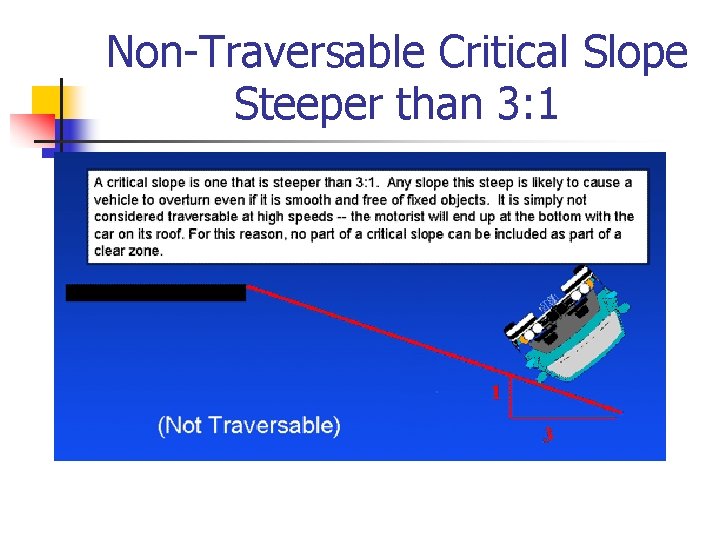
Non-Traversable Critical Slope Steeper than 3: 1
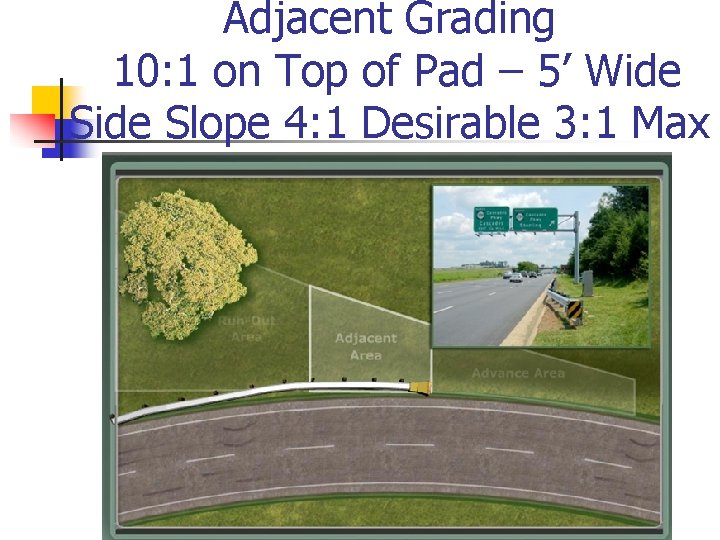
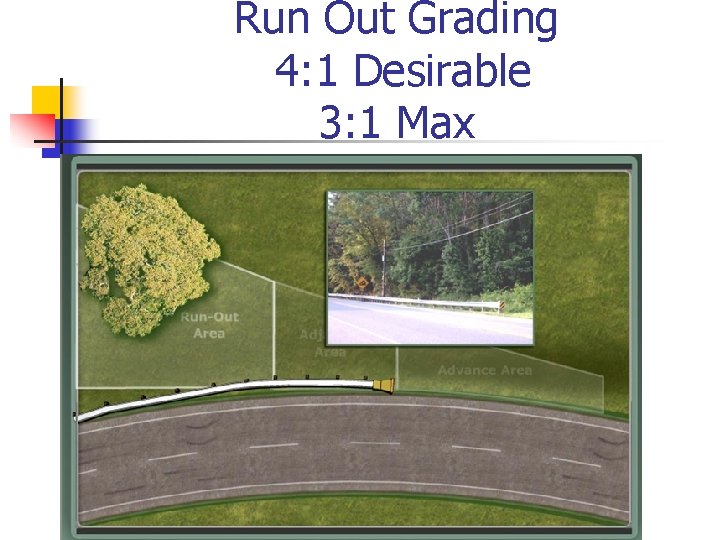
Three Areas to Consider for Grading Advanced Grading n Adjacent Grading n Run Out Grading n
Per Bill Gulick “You CANNOT Disconnect Grading and Guardrail”
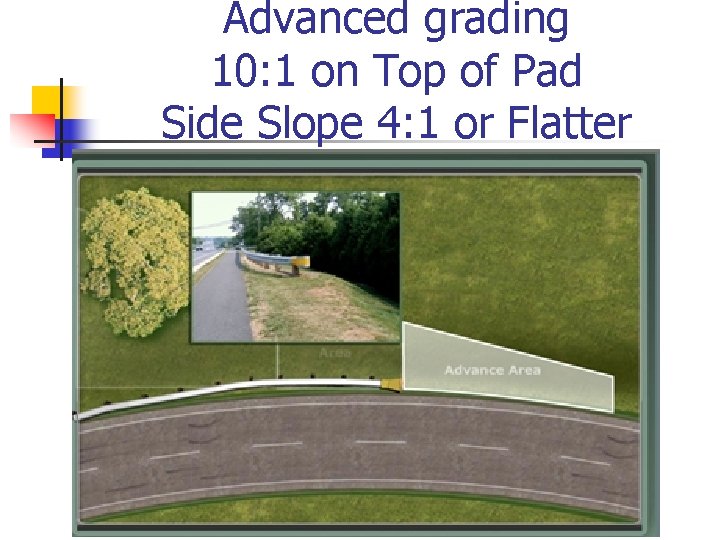
Advanced grading 10: 1 on Top of Pad Side Slope 4: 1 or Flatter
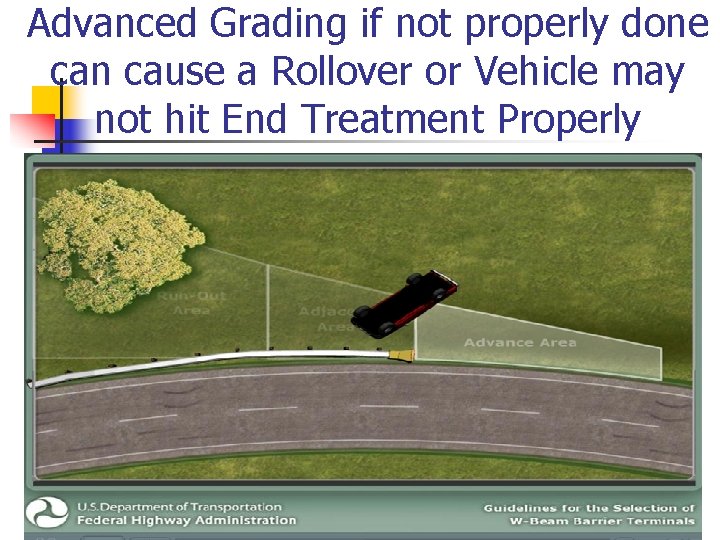
Advanced Grading if not properly done can cause a Rollover or Vehicle may not hit End Treatment Properly
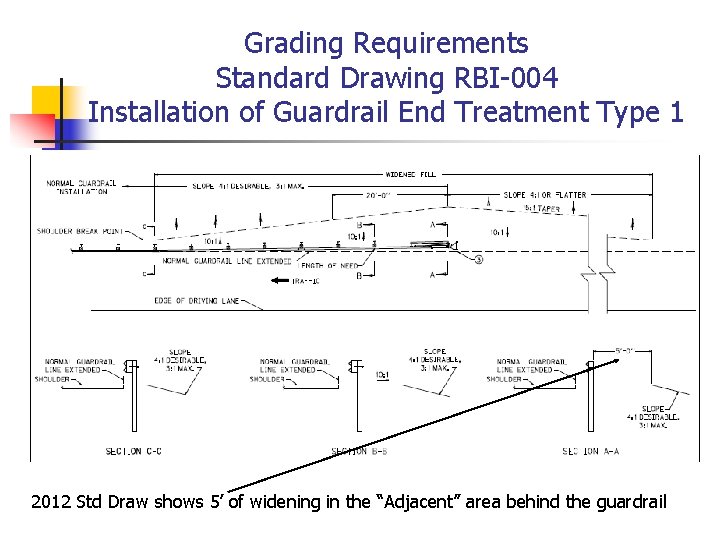
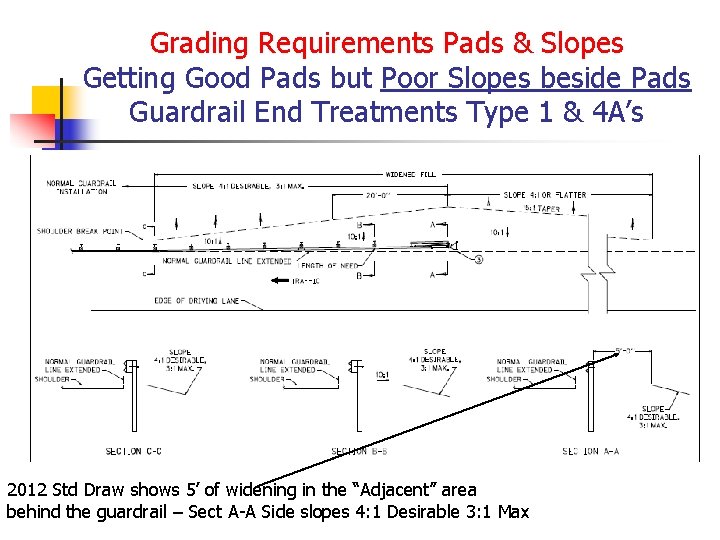
Adjacent Grading 10: 1 on Top of Pad – 5’ Wide Slope 4: 1 Desirable 3: 1 Max
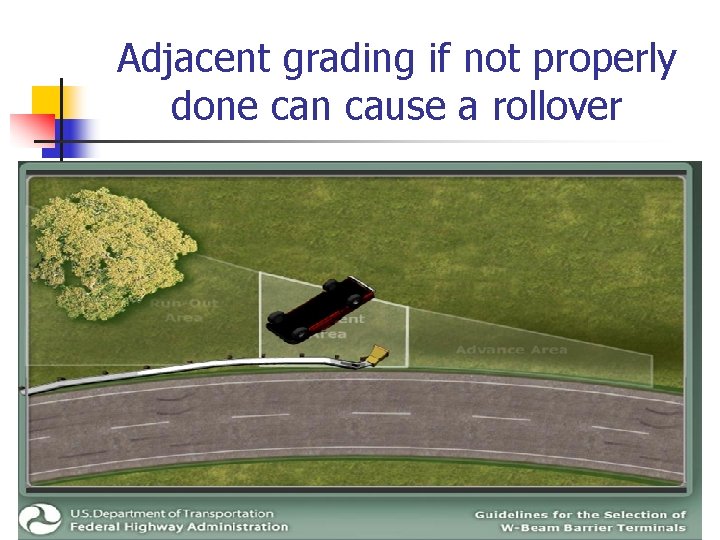
Adjacent grading if not properly done can cause a rollover
Run Out Grading 4: 1 Desirable 3: 1 Max
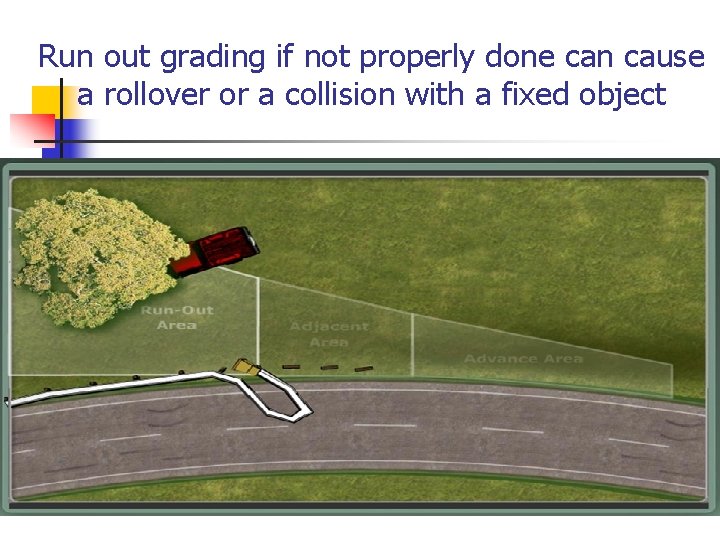
Run out grading if not properly done can cause a rollover or a collision with a fixed object
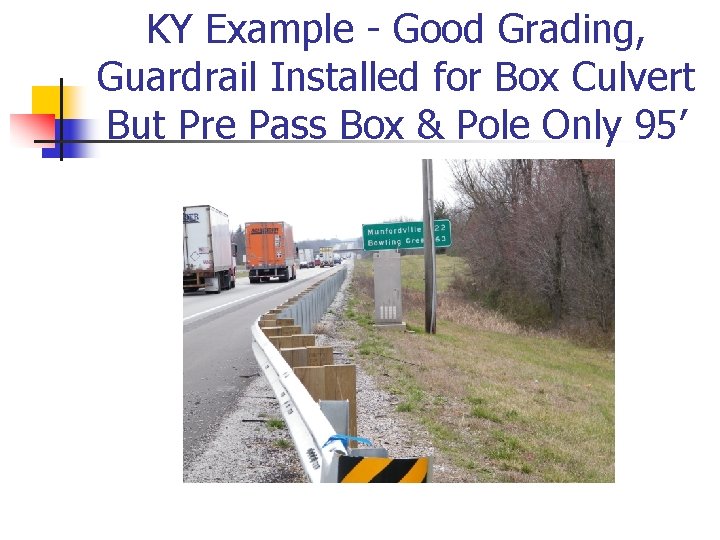
KY Example - Good Grading, Guardrail Installed for Box Culvert But Pre Pass Box & Pole Only 95’
Grading Requirements Standard Drawing RBI-004 Installation of Guardrail End Treatment Type 1 2012 Std Draw shows 5’ of widening in the “Adjacent” area behind the guardrail
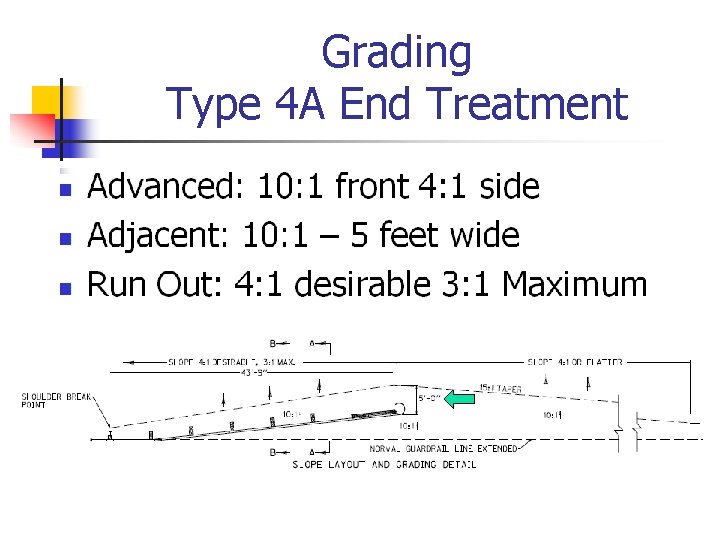
Grading Type 4 A End Treatment
Grading Requirements Pads & Slopes Getting Good Pads but Poor Slopes beside Pads Guardrail End Treatments Type 1 & 4 A’s 2012 Std Draw shows 5’ of widening in the “Adjacent” area behind the guardrail – Sect A-A Side slopes 4: 1 Desirable 3: 1 Max
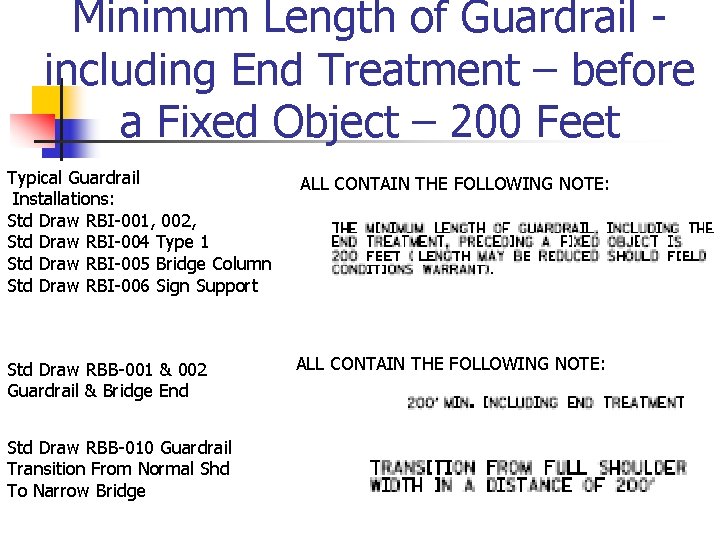
Minimum Length of Guardrail including End Treatment – before a Fixed Object – 200 Feet Typical Guardrail Installations: Std Draw RBI-001, 002, Std Draw RBI-004 Type 1 Std Draw RBI-005 Bridge Column Std Draw RBI-006 Sign Support ALL CONTAIN THE FOLLOWING NOTE: Std Draw RBB-001 & 002 Guardrail & Bridge End ALL CONTAIN THE FOLLOWING NOTE: Std Draw RBB-010 Guardrail Transition From Normal Shd To Narrow Bridge
Q & A Time 1. What are the Names for the 3 Areas of Grading? Advanced, Adjacent and Run Out
Q & A Time 2. Why do we need to grade an area in front of an End Treatment so Flat? to ensure that a vehicle is stable at the moment of impact and that its suspension is neither extended nor compressed
Q & A Time 3. n n n Define: Recoverable Slope Traversable Slope Critical Slope Recoverable Slope – 4: 1 or Flatter Traversable Slope – 4: 1 to 3: 1 Critical Slope - Steeper than 3: 1