
Session 3 Community Information and Emergency Coordination 1
- Slides: 3
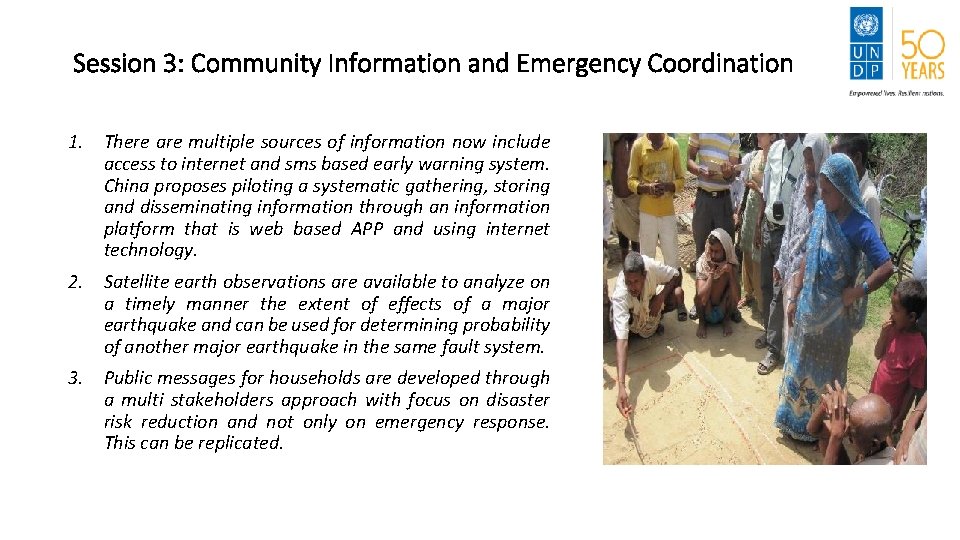
Session 3: Community Information and Emergency Coordination 1. There are multiple sources of information now include access to internet and sms based early warning system. China proposes piloting a systematic gathering, storing and disseminating information through an information platform that is web based APP and using internet technology. 2. Satellite earth observations are available to analyze on a timely manner the extent of effects of a major earthquake and can be used for determining probability of another major earthquake in the same fault system. 3. Public messages for households are developed through a multi stakeholders approach with focus on disaster risk reduction and not only on emergency response. This can be replicated.
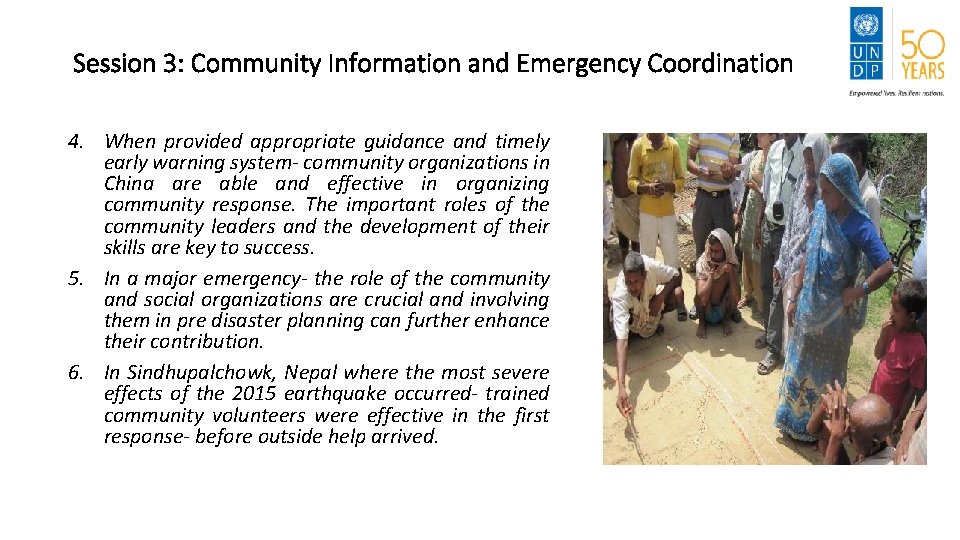
Session 3: Community Information and Emergency Coordination 4. When provided appropriate guidance and timely early warning system- community organizations in China are able and effective in organizing community response. The important roles of the community leaders and the development of their skills are key to success. 5. In a major emergency- the role of the community and social organizations are crucial and involving them in pre disaster planning can further enhance their contribution. 6. In Sindhupalchowk, Nepal where the most severe effects of the 2015 earthquake occurred- trained community volunteers were effective in the first response- before outside help arrived.
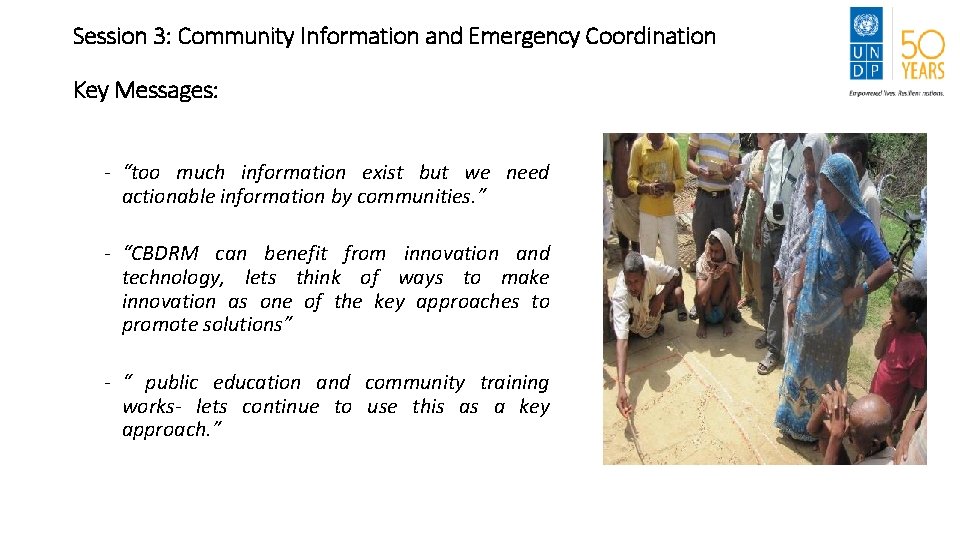
Session 3: Community Information and Emergency Coordination Key Messages: - “too much information exist but we need actionable information by communities. ” - “CBDRM can benefit from innovation and technology, lets think of ways to make innovation as one of the key approaches to promote solutions” - “ public education and community training works- lets continue to use this as a key approach. ”