
Session 22 Complete and Grammar 101 Checkin Questions



- Slides: 42
Session 22: Complete and Grammar 101
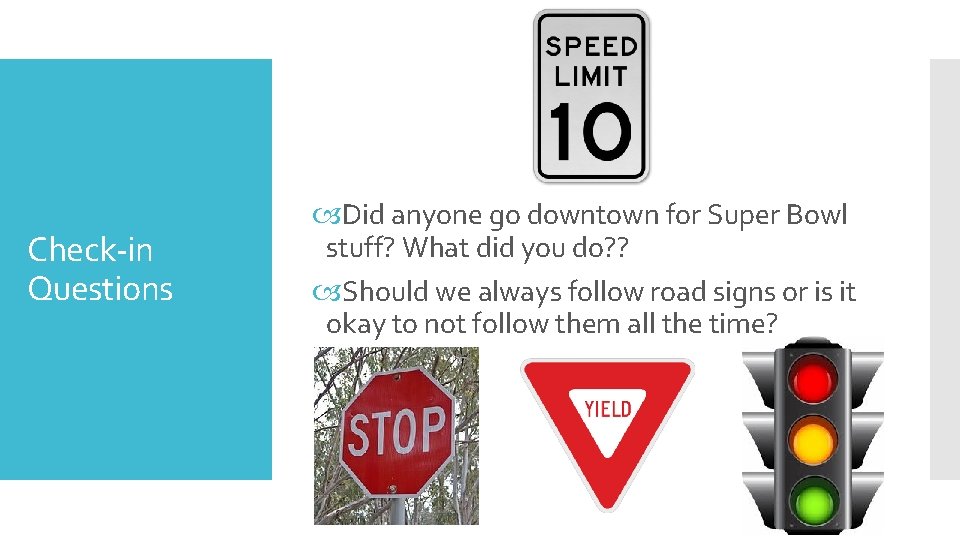
Check-in Questions Did anyone go downtown for Super Bowl stuff? What did you do? ? Should we always follow road signs or is it okay to not follow them all the time?
Objectives: Learn how to identify STOP/GO Punctuation Practice other types of Grammar Questions that will appear on the ACT
Complete & Incomplete Ideas What do you think makes an idea complete? What do you think makes an idea incomplete?
Complete & Incomplete Ideas A complete idea can stand on its own as a complete sentence even though it may be part of a longer sentence. An incomplete idea CANNOT stand on its own as a complete sentence and must be appropriately linked to a complete idea.
Let’s look at some examples!
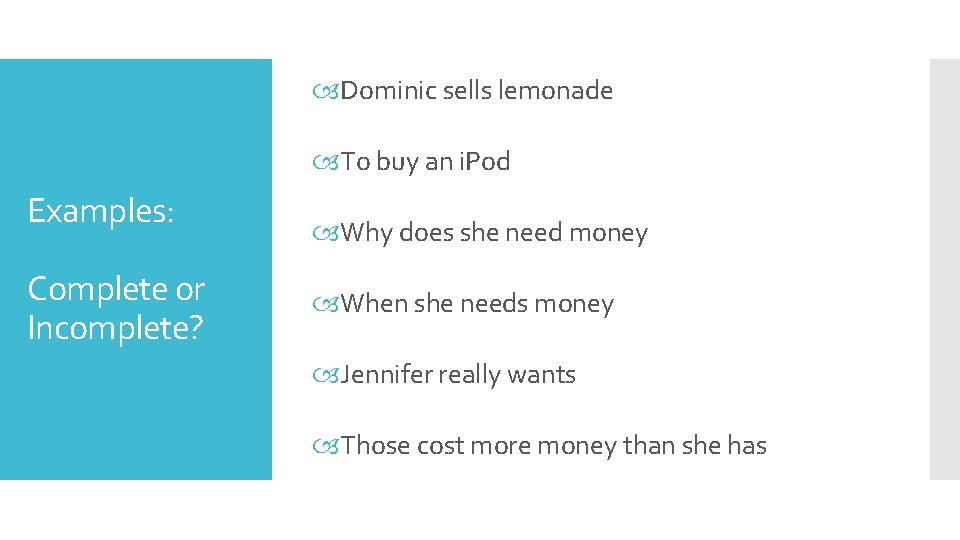
Dominic sells lemonade To buy an i. Pod Examples: Complete or Incomplete? Why does she need money When she needs money Jennifer really wants Those cost more money than she has
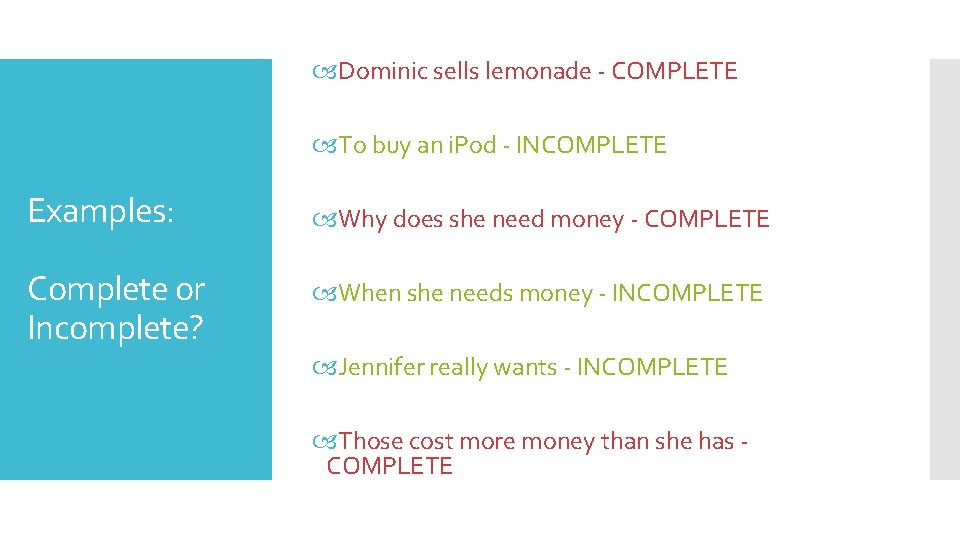
Dominic sells lemonade - COMPLETE To buy an i. Pod - INCOMPLETE Examples: Complete or Incomplete? Why does she need money - COMPLETE When she needs money - INCOMPLETE Jennifer really wants - INCOMPLETE Those cost more money than she has COMPLETE
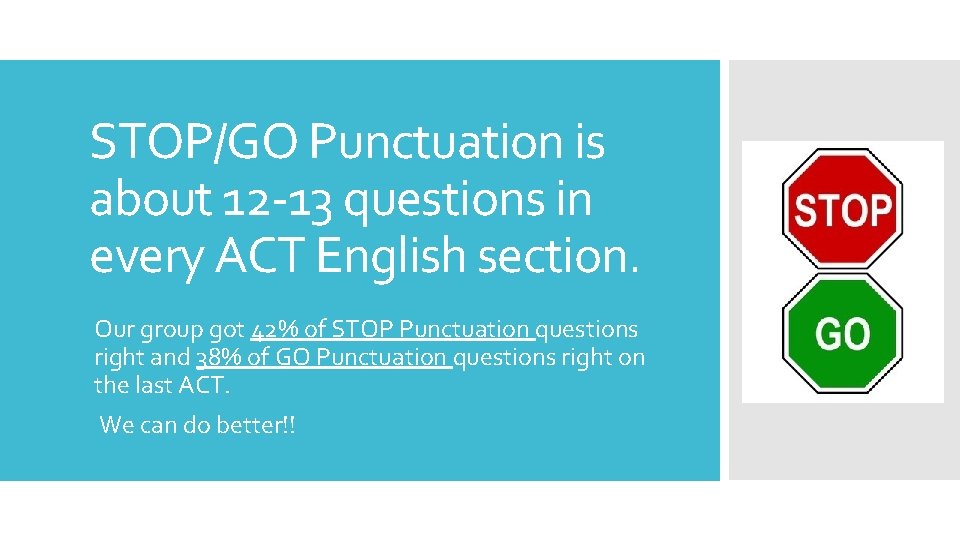
STOP/GO Punctuation is about 12 -13 questions in every ACT English section. Our group got 42% of STOP Punctuation questions right and 38% of GO Punctuation questions right on the last ACT. We can do better!!
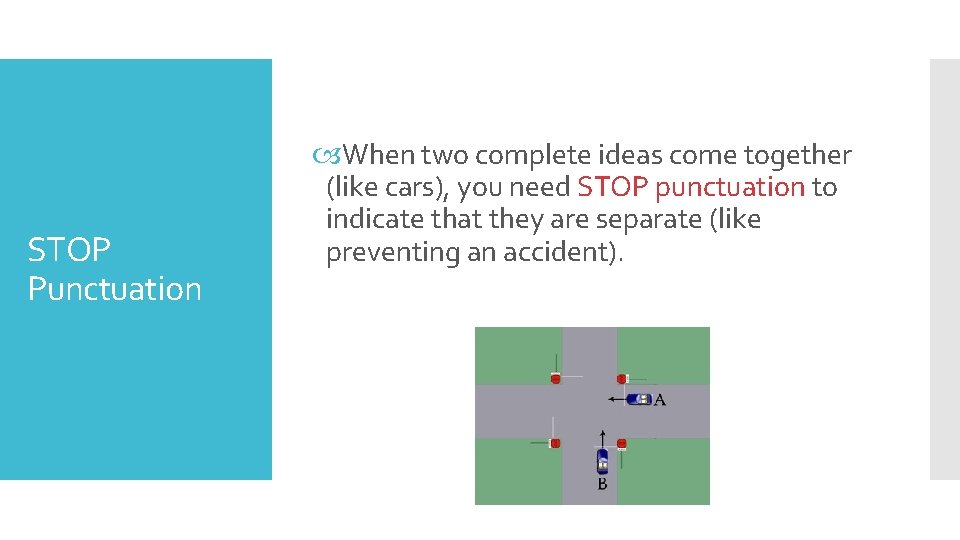
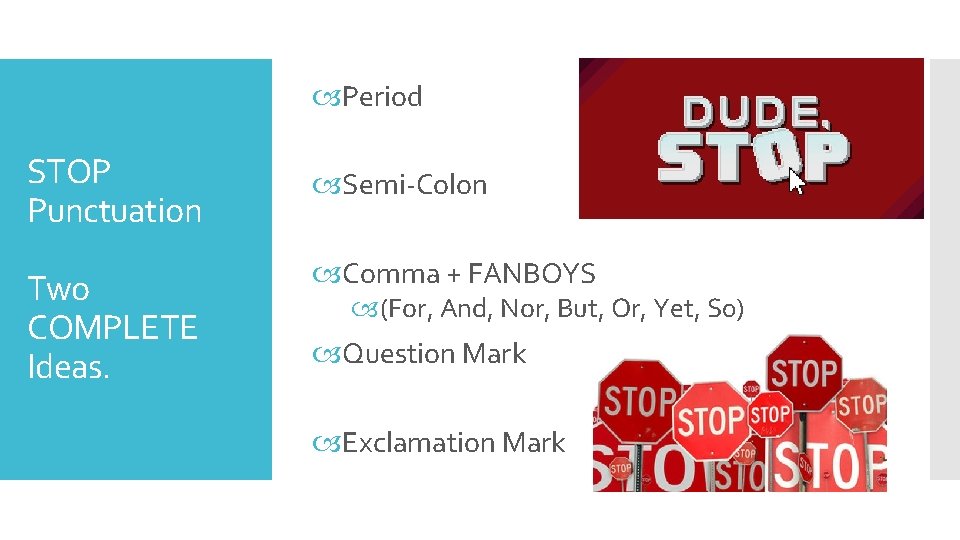
STOP Punctuation When two complete ideas come together (like cars), you need STOP punctuation to indicate that they are separate (like preventing an accident).
Period STOP Punctuation Two COMPLETE Ideas. Semi-Colon Comma + FANBOYS (For, And, Nor, But, Or, Yet, S 0) Question Mark Exclamation Mark
GO Punctuation Like traffic, good English writing needs to flow without unnecessary interruption. Unnecessary signals cause traffic jams! GO punctuation can link anything EXCEPT two complete ideas
GO Punctuation Anything EXCEPT two COMPLETE ideas. Comma NO Punctuation (Concise!) If there is no reason to use a comma – don’t use one!
YIELD Punctuation (Half-Stop) Half-Stops can only come AFTER a complete idea, but can be followed by anything (complete or incomplete ideas). TWO TYPES: Colon Single Dash
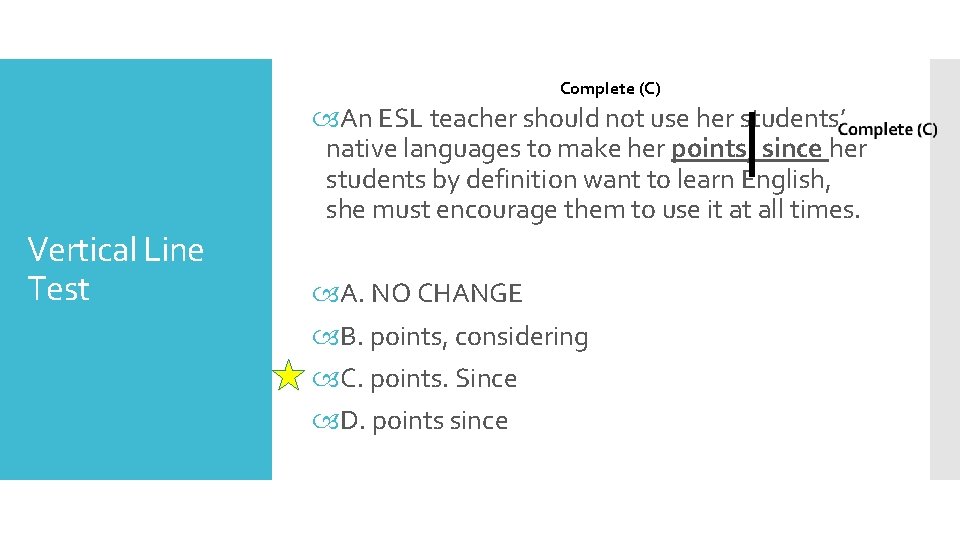
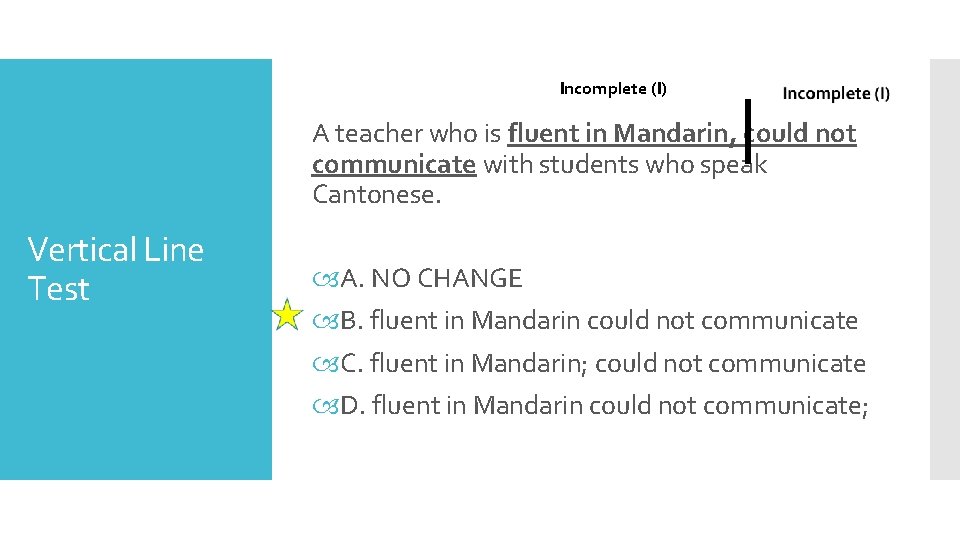
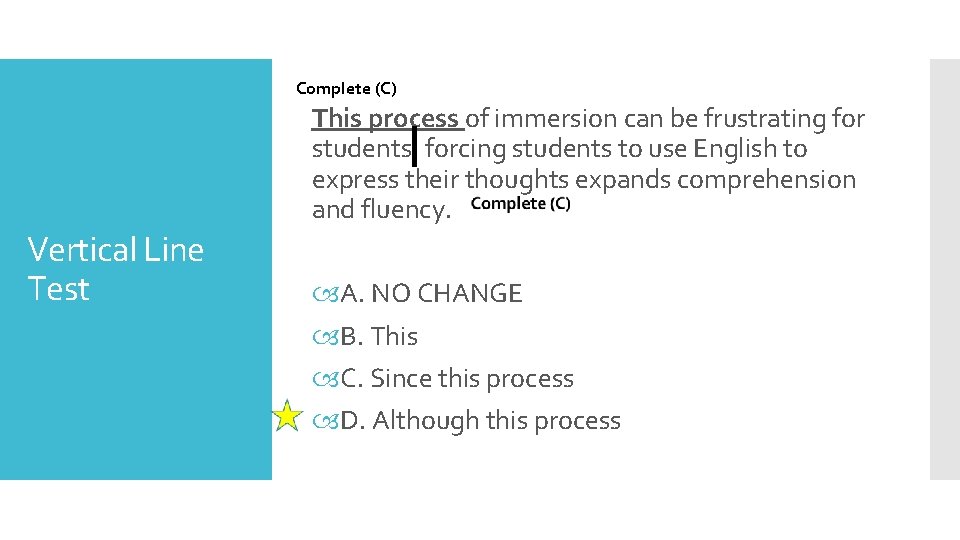
Vertical Line Test In order to tell whether or not you have the correct punctuation in a sentence, you can use the Vertical Line Test. Let’s look at three examples to show you how it works.
Complete (C) An ESL teacher should not use her students’ native languages to make her points, since her students by definition want to learn English, she must encourage them to use it at all times. Vertical Line Test A. NO CHANGE B. points, considering C. points. Since D. points since
Incomplete (I) A teacher who is fluent in Mandarin, could not communicate with students who speak Cantonese. Vertical Line Test A. NO CHANGE B. fluent in Mandarin could not communicate C. fluent in Mandarin; could not communicate D. fluent in Mandarin could not communicate;
Complete (C) This process of immersion can be frustrating for students, forcing students to use English to express their thoughts expands comprehension and fluency. Vertical Line Test A. NO CHANGE B. This C. Since this process D. Although this process
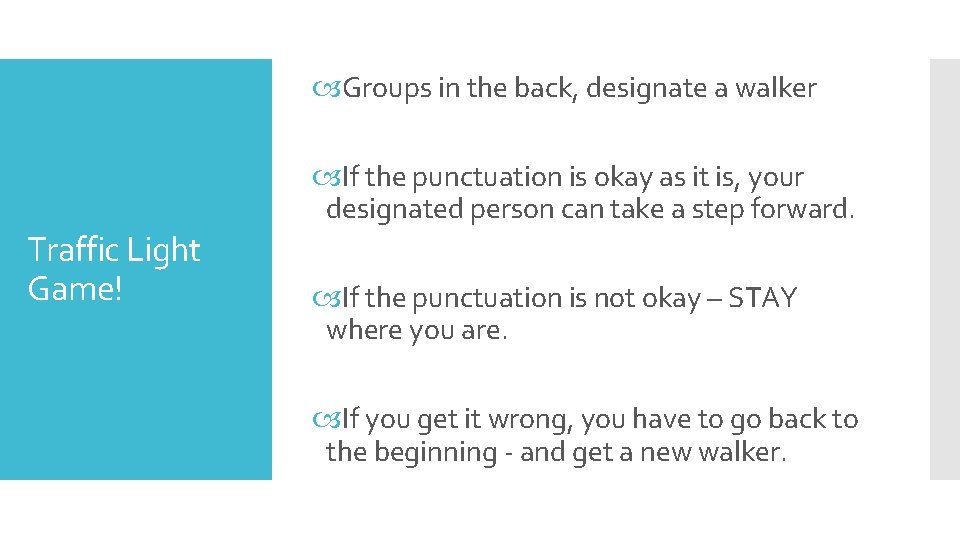
Groups in the back, designate a walker If the punctuation is okay as it is, your designated person can take a step forward. Traffic Light Game! If the punctuation is not okay – STAY where you are. If you get it wrong, you have to go back to the beginning - and get a new walker.
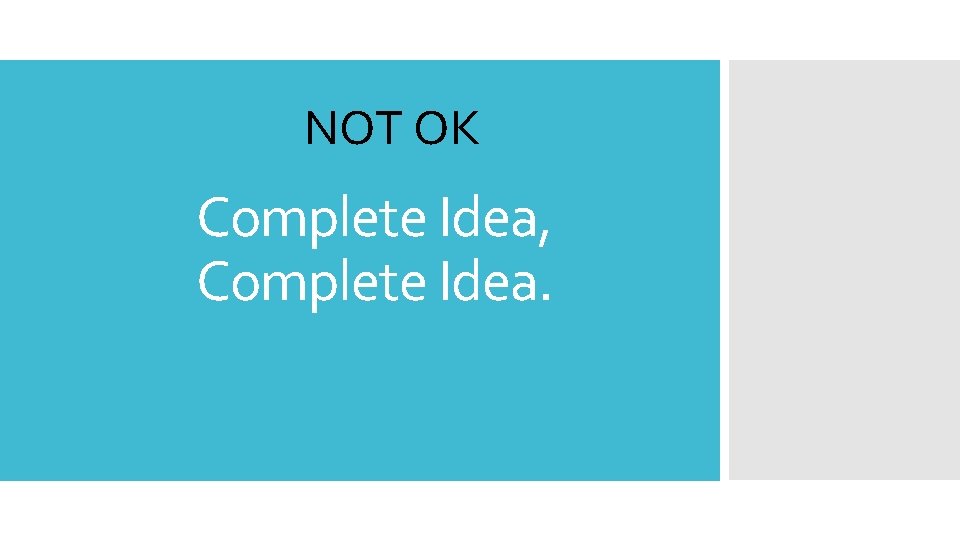
NOT OK Complete Idea, Complete Idea.
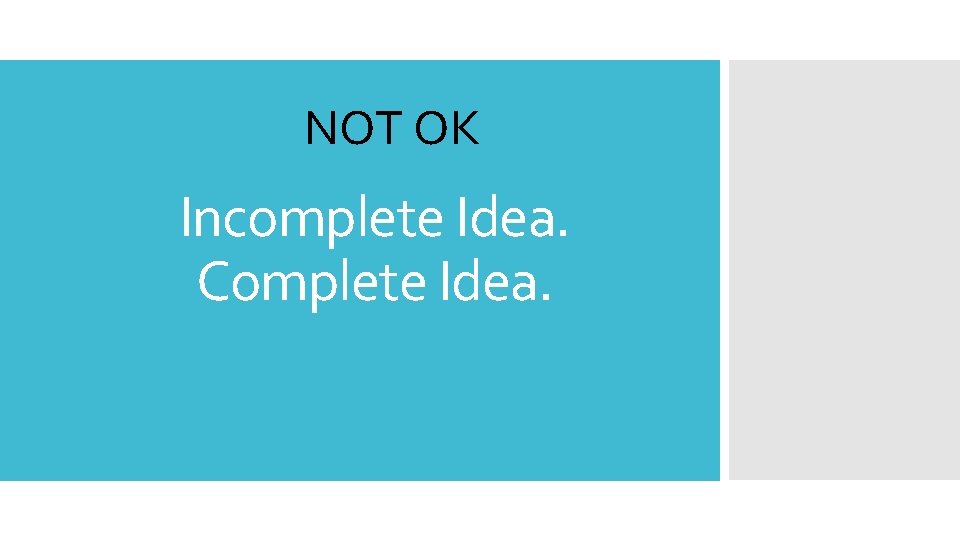
NOT OK Incomplete Idea. Complete Idea.
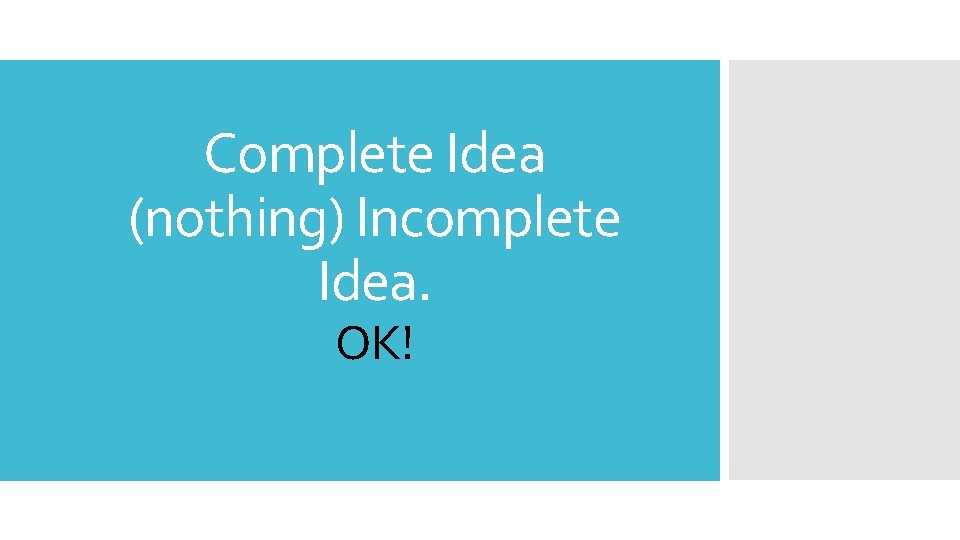
Complete Idea (nothing) Incomplete Idea. OK!
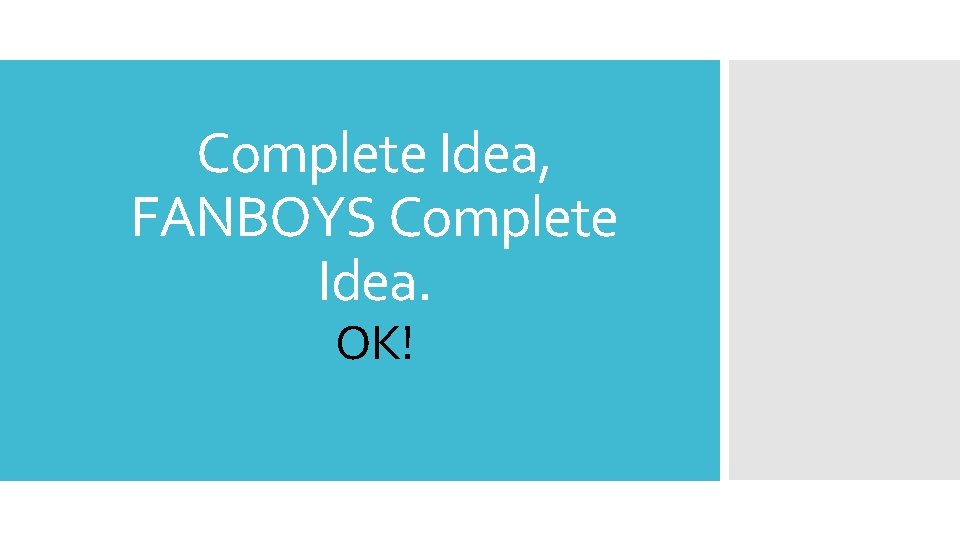
Complete Idea, FANBOYS Complete Idea. OK!
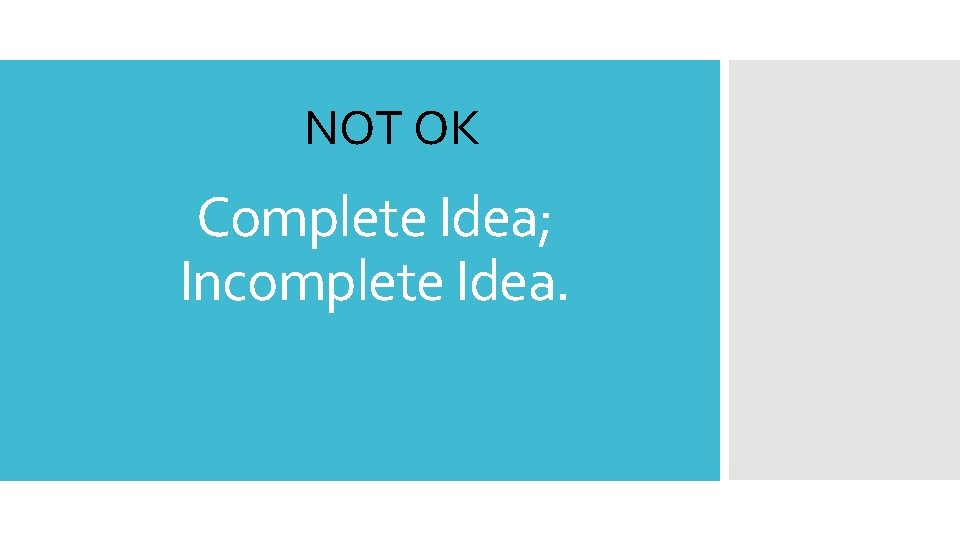
NOT OK Complete Idea; Incomplete Idea.
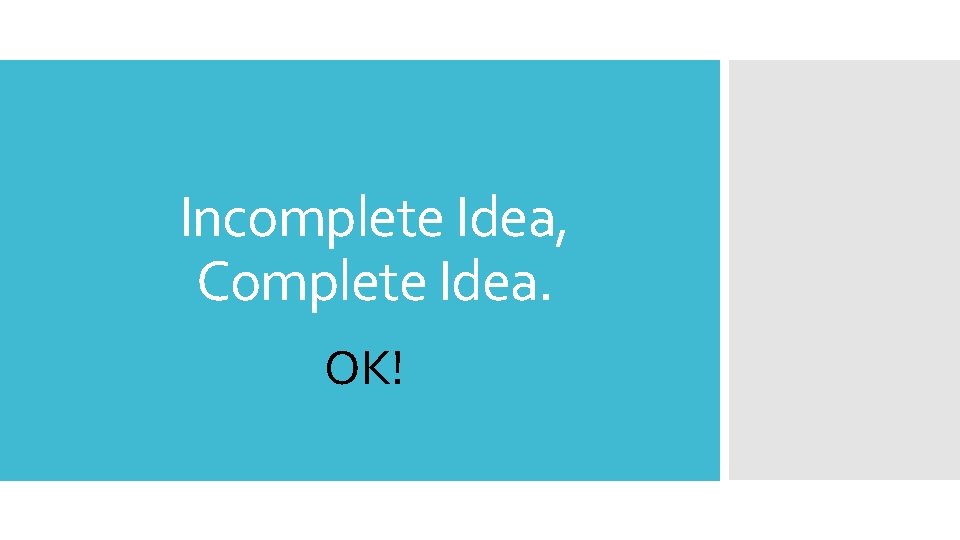
Incomplete Idea, Complete Idea. OK!
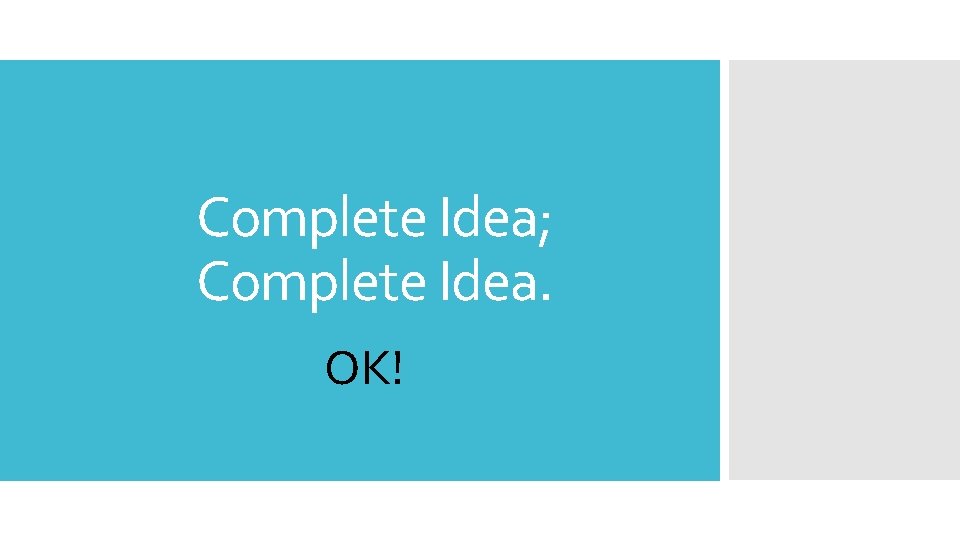
Complete Idea; Complete Idea. OK!
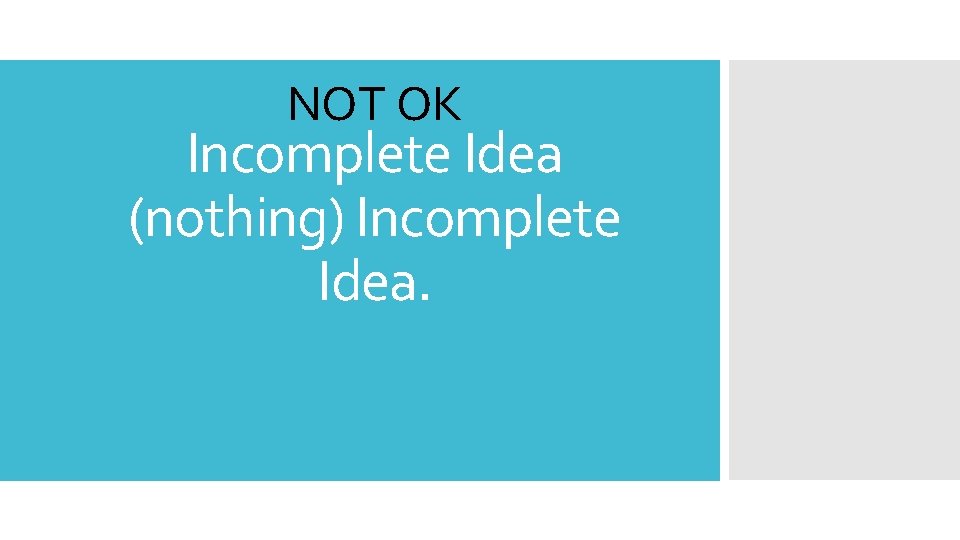
NOT OK Incomplete Idea (nothing) Incomplete Idea.
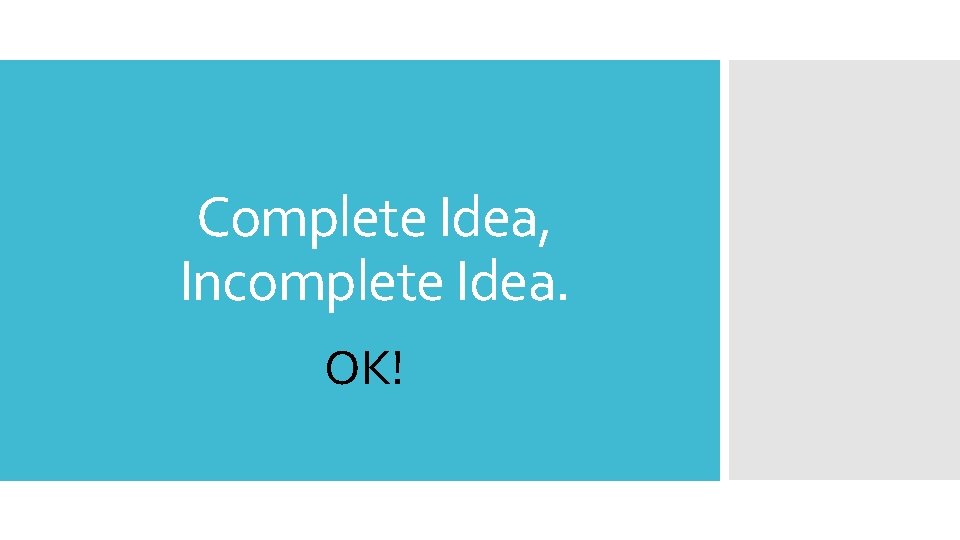
Complete Idea, Incomplete Idea. OK!
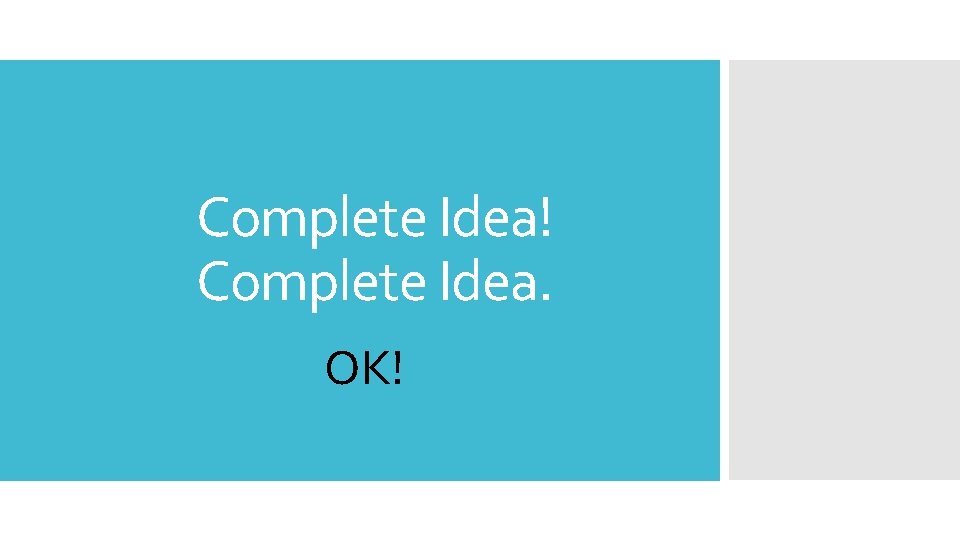
Complete Idea! Complete Idea. OK!
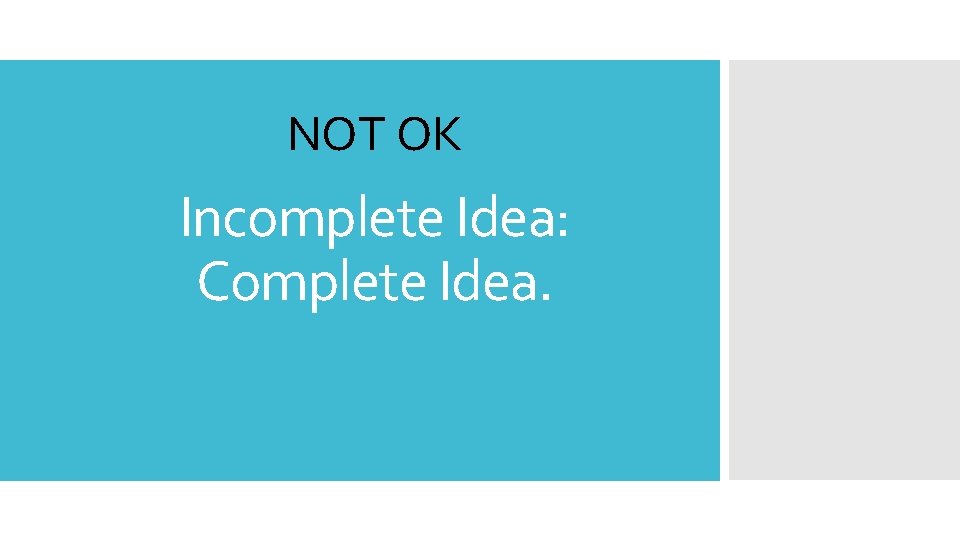
NOT OK Incomplete Idea: Complete Idea.
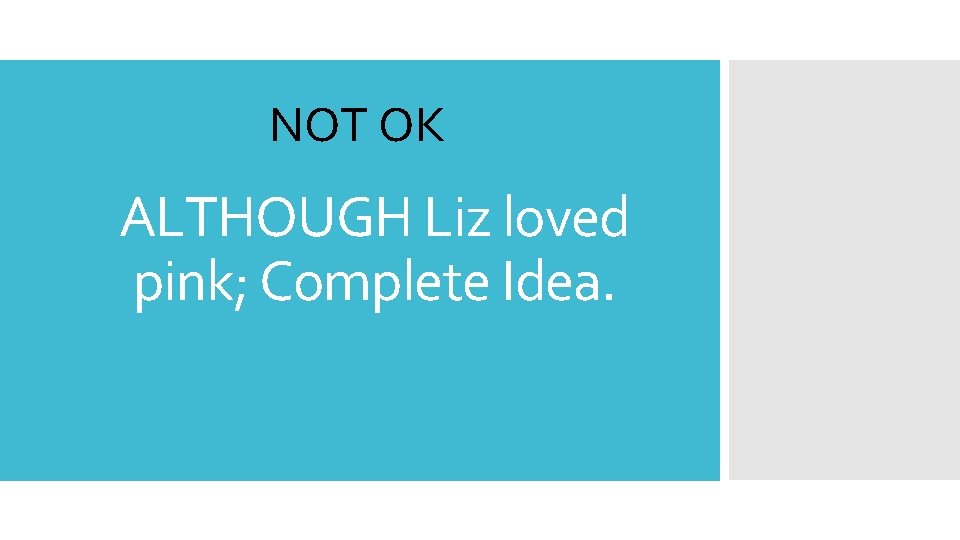
NOT OK ALTHOUGH Liz loved pink; Complete Idea.
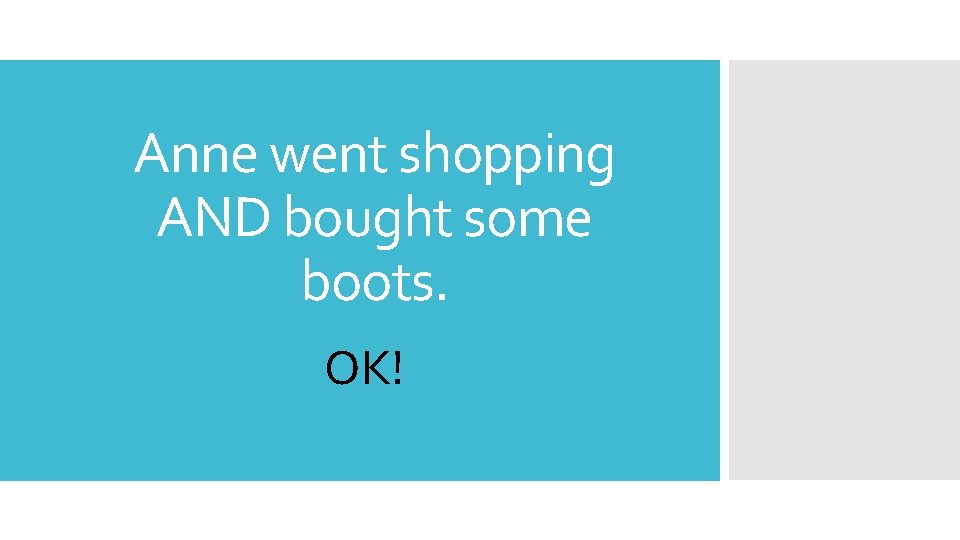
Anne went shopping AND bought some boots. OK!
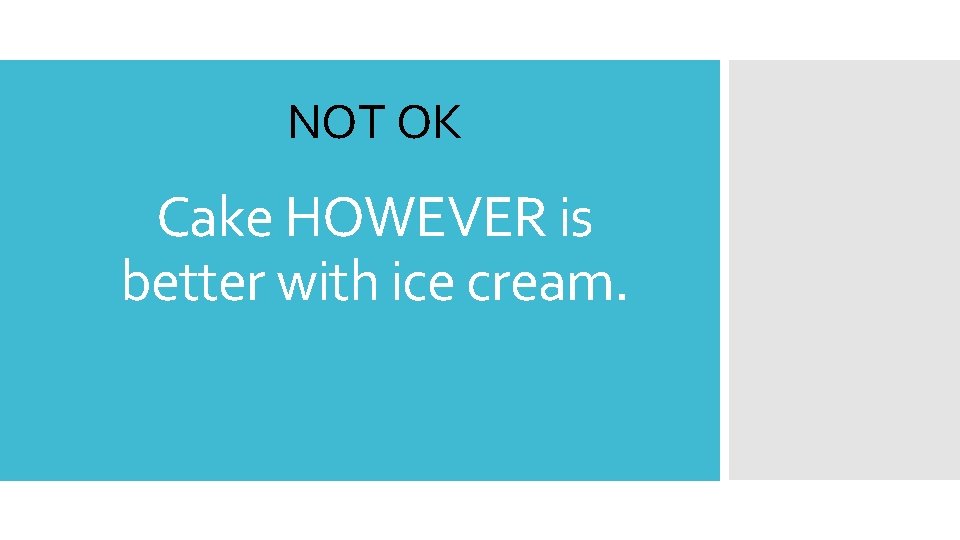
NOT OK Cake HOWEVER is better with ice cream.
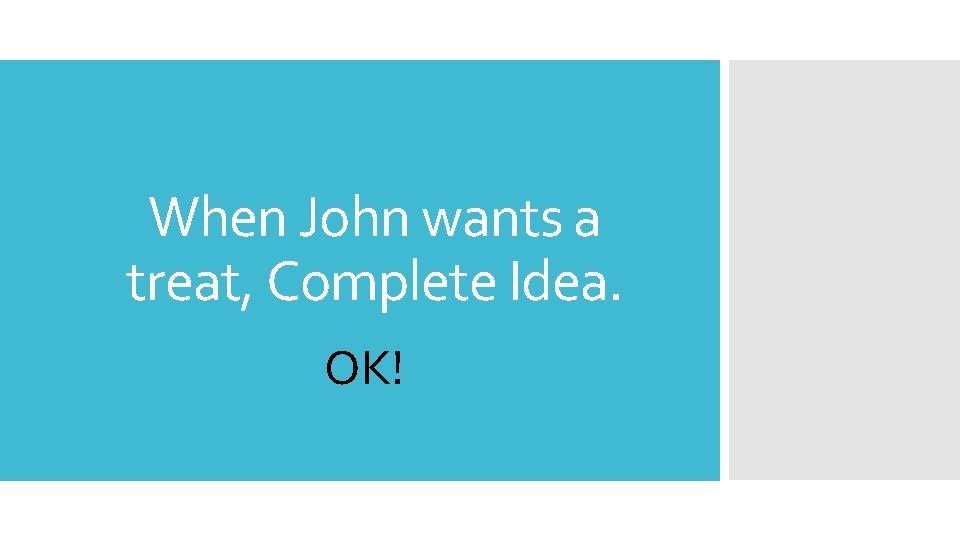
When John wants a treat, Complete Idea. OK!
BREAK CPPS Rollouts: Enrichment Fair & St. Scholastica
MVD – Tues 2/13 Announcements At break today – use your popsicle sticks!
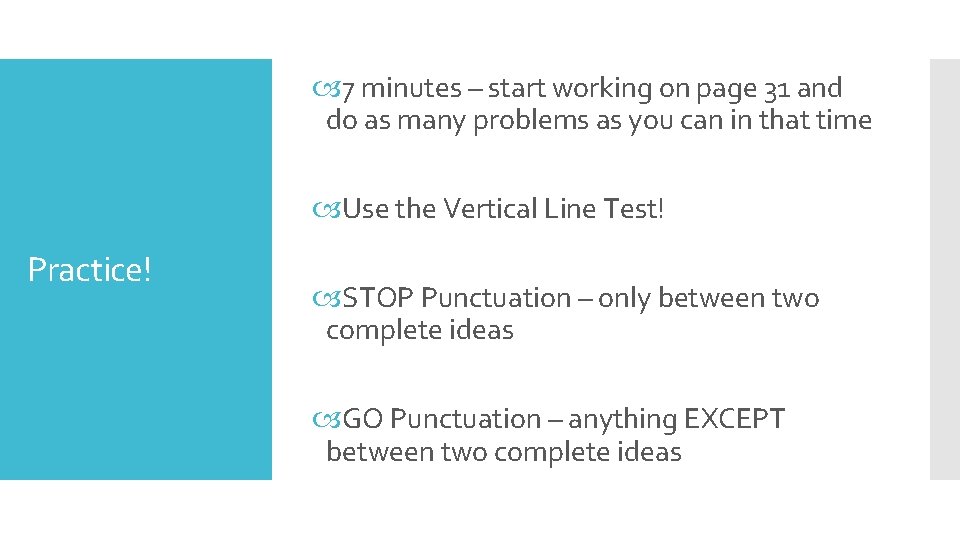
7 minutes – start working on page 31 and do as many problems as you can in that time Use the Vertical Line Test! Practice! STOP Punctuation – only between two complete ideas GO Punctuation – anything EXCEPT between two complete ideas
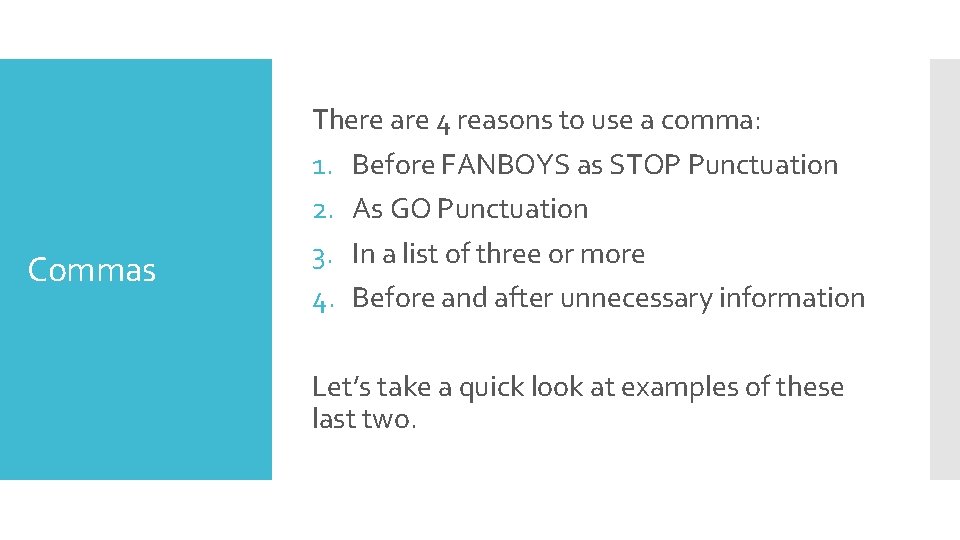
Commas There are 4 reasons to use a comma: 1. Before FANBOYS as STOP Punctuation 2. As GO Punctuation 3. In a list of three or more 4. Before and after unnecessary information Let’s take a quick look at examples of these last two.
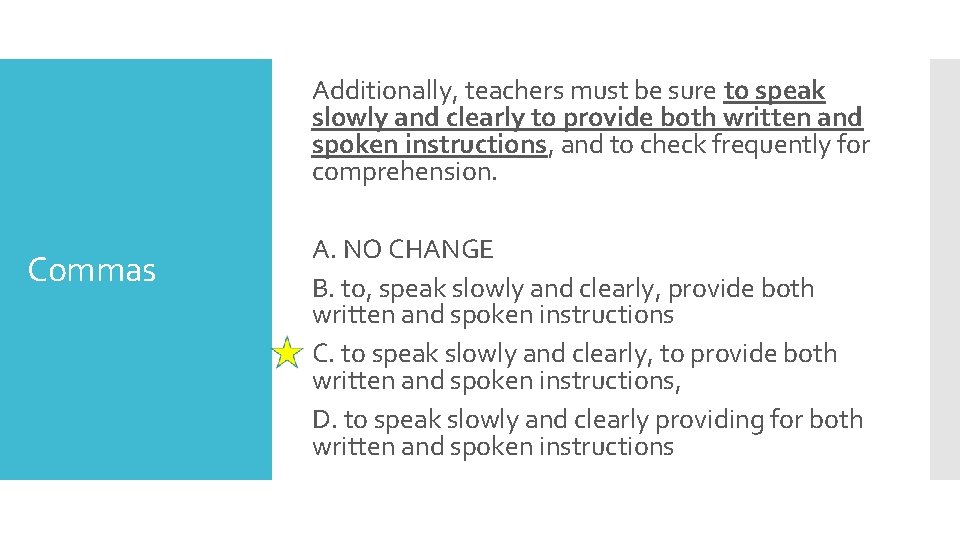
Additionally, teachers must be sure to speak slowly and clearly to provide both written and spoken instructions, and to check frequently for comprehension. Commas A. NO CHANGE B. to, speak slowly and clearly, provide both written and spoken instructions C. to speak slowly and clearly, to provide both written and spoken instructions, D. to speak slowly and clearly providing for both written and spoken instructions
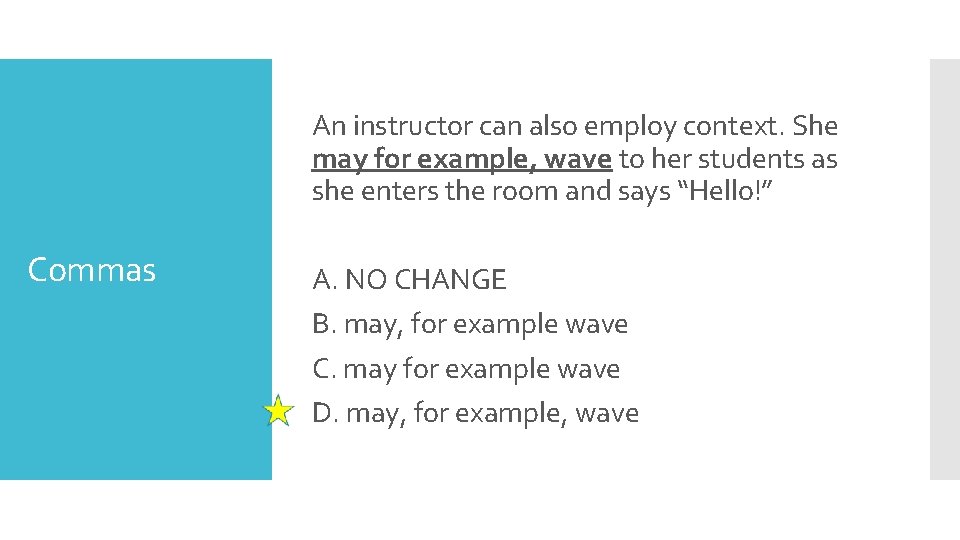
An instructor can also employ context. She may for example, wave to her students as she enters the room and says “Hello!” Commas A. NO CHANGE B. may, for example wave C. may for example wave D. may, for example, wave
Kahoot!
Last drill of the day! Page 26 -27 – 9 minutes