
Session 2 Introduction to compare mean Dr Tu
- Slides: 22
Session 2 Introduction to compare mean Dr. Tu Van Binh
Compare means and test • Compare means • Independent samples T test: two independent groups • Paired samples T test: Paired variables • Comparing more than two independent groups: Analysis of Variance (ANOVA) or Kruskal Wallis test https: //statistics. laerd. com/statistical-guides/independent-t-test-statistical-guide. php https: //statistics. laerd. com/spss-tutorials/independent-t-test-using-spss-statistics. php
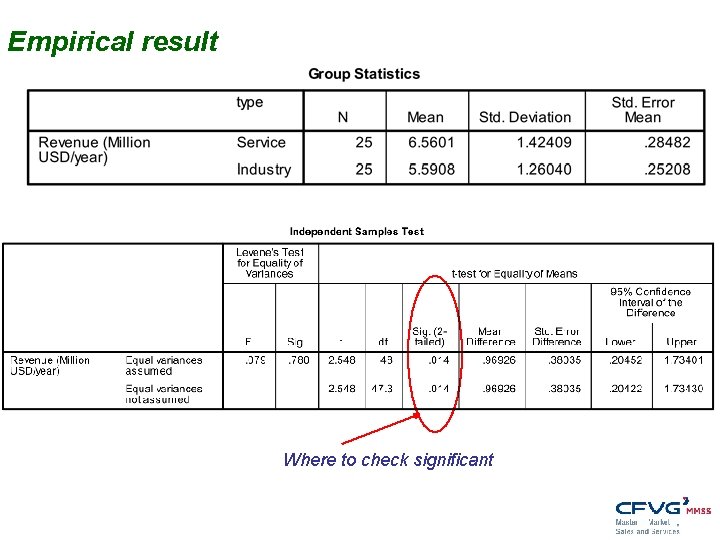
Compare means and test • • Calculate means of values, percent Show different between two groups Test significant differences Significant level – Value of Sig. < 0. 01 Significant at 1% – 0. 01 ≤ Value of Sig. < 0. 05 Significant at 5% – 0. 05 ≤ Value of Sig. < 0. 1 Significant at 10%
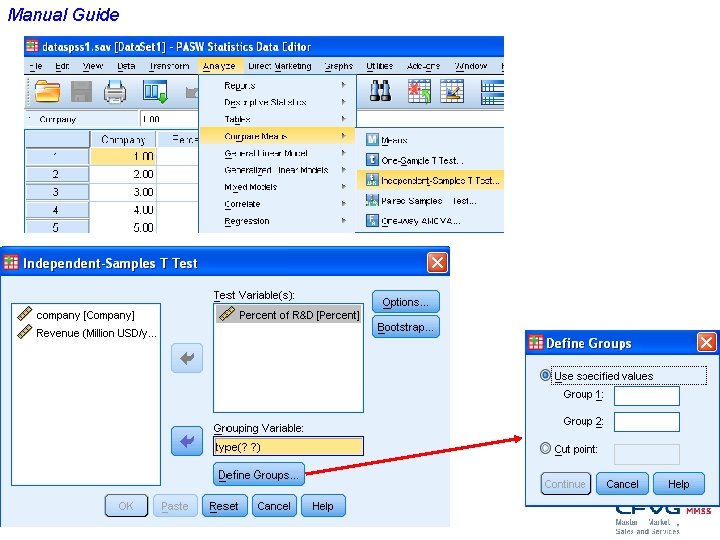
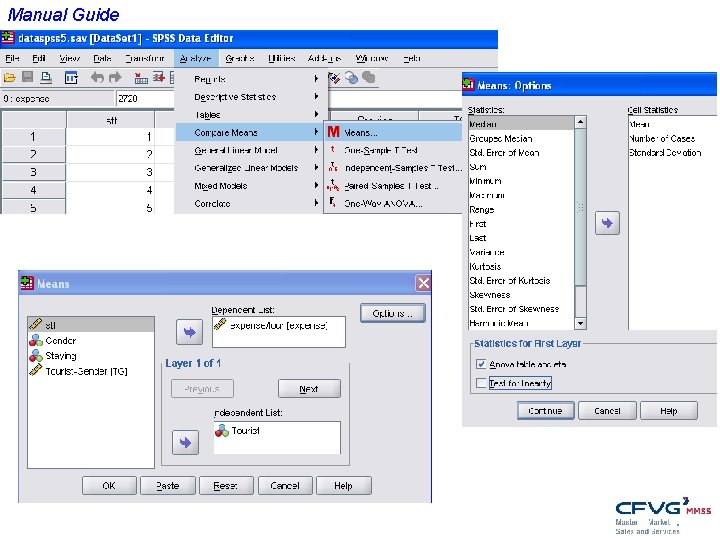
Compare means - SPSS • File: dataspss 2. 2 -Electronic • Compare two groups of male and female with satisfaction on Electronic Supermarkets (Q 9) (Q 9. 1) • Discussion on empirical result • Conclusion how different between two groups
Manual Guide
Empirical result Where to check significant
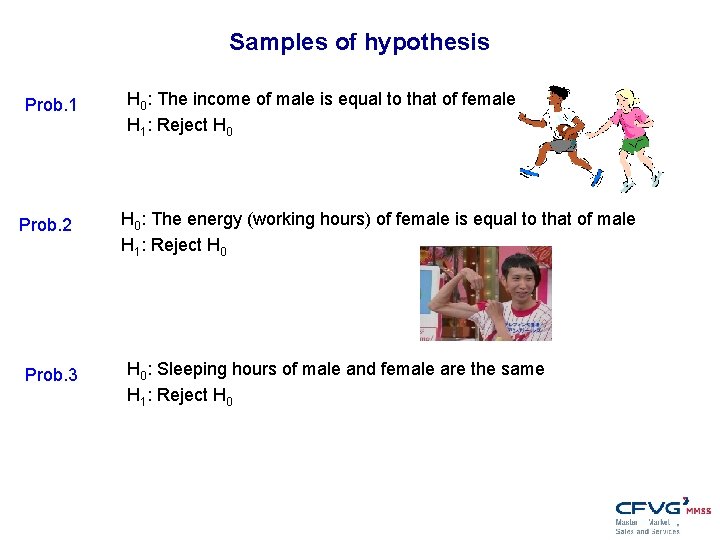
Samples of hypothesis Prob. 1 Prob. 2 Prob. 3 H 0: The income of male is equal to that of female; H 1: Reject H 0: The energy (working hours) of female is equal to that of male H 1: Reject H 0: Sleeping hours of male and female are the same H 1: Reject H 0
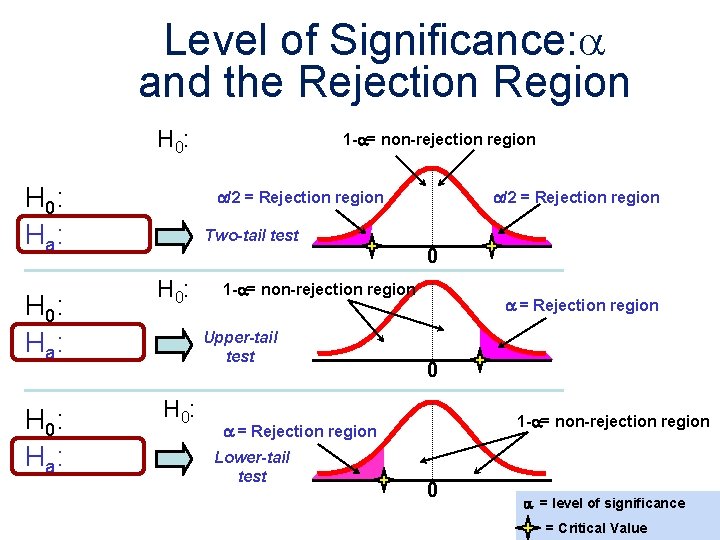
Level of Significance: and the Rejection Region H 0: H a: 1 - = non-rejection region /2 = Rejection region Two-tail test 0 H 0: 1 - = non-rejection region Upper-tail test H 0: = Rejection region 0 1 - = non-rejection region = Rejection region Lower-tail test 0 = level of significance = Critical Value
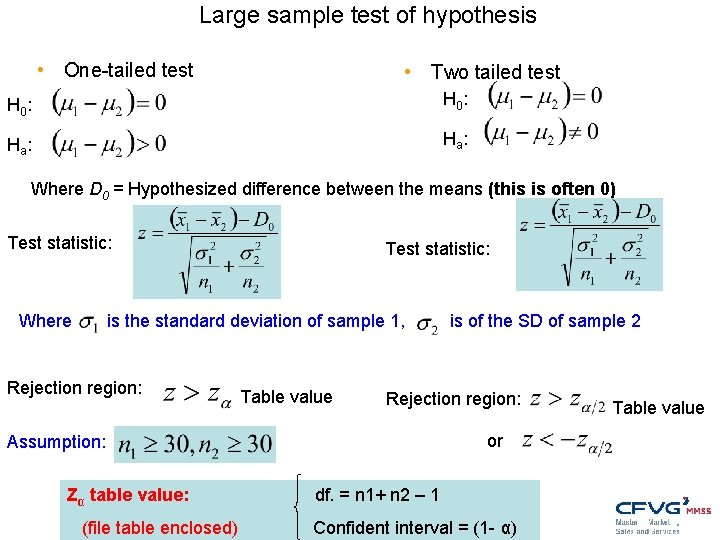
Large sample test of hypothesis • One-tailed test • Two tailed test H 0 : Ha : Where D 0 = Hypothesized difference between the means (this is often 0) Test statistic: Where Test statistic: is the standard deviation of sample 1, Rejection region: Table value Rejection region: or Assumption: Zα table value: (file table enclosed) is of the SD of sample 2 df. = n 1+ n 2 – 1 Confident interval = (1 - α) Table value
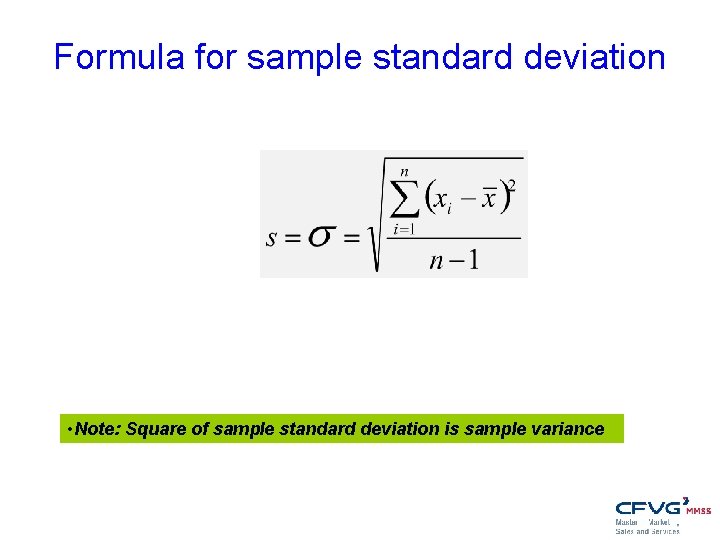
Formula for sample standard deviation • Note: Square of sample standard deviation is sample variance
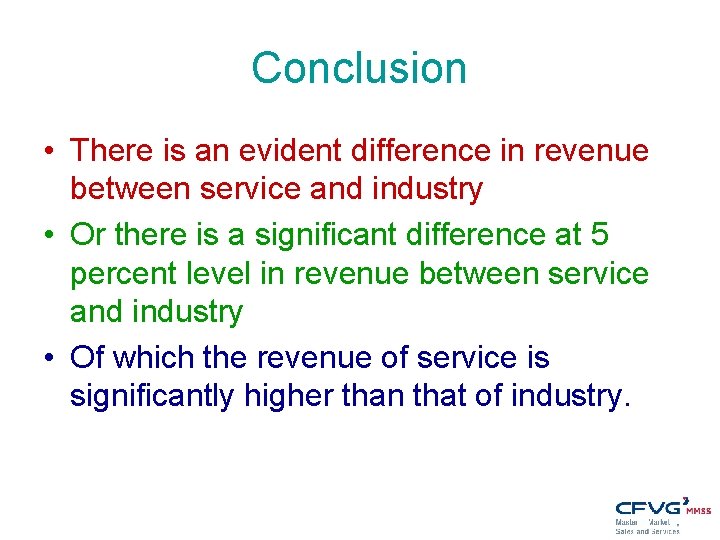
Conclusion • There is an evident difference in revenue between service and industry • Or there is a significant difference at 5 percent level in revenue between service and industry • Of which the revenue of service is significantly higher than that of industry.
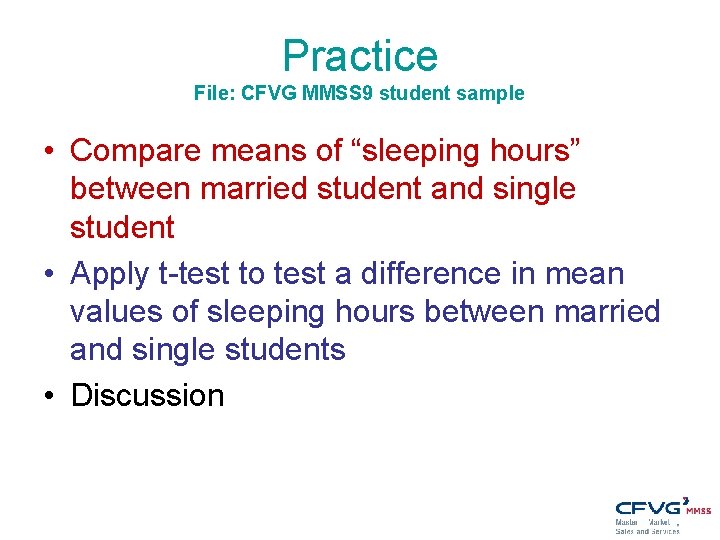
Practice File: CFVG MMSS 9 student sample • Compare means of “sleeping hours” between married student and single student • Apply t-test to test a difference in mean values of sleeping hours between married and single students • Discussion
Practice File: dataspss 2. 1 • Compare means of export values of small size company and large size company (Q 208 by Q 2 group). • Apply t-test to test a difference in mean values of exporting companies between those two groups above • Discussion and conclusion
Group Assignment • File: – MCCdata. xls (raw data) – MCC-questionnaire. xls (questionnaire) • Questions concerned: Q 3, Q 4, Q 8, Q 11, Q 12, Q 14, Q 15, Q 16, Q 17, Q 18, Agegroup. • Assignment: Groups select at least 4 variables (4 variable) to present results of “descriptive analysis), and discuss output – Think Frequency and Crosstab; compare mean
Paired-Samples T-Test of Population Mean Differences • The same observation • Two variables compared are seemly the same kind of things that we want to compare • Compare between two periods, or between two characteristics, etc • File: dataspss 2. 2 -Electronic
Practice : • • • file: QUESTIONNAIRE-Electronic ; File: data-Electronic Paired sample t-test Nguyen Kim (Q 9. 5) vs. IDEAS (Q 9. 1) Nguyen Kim (Q 9. 5) vs. Phan Khang (Q 9. 2) Nguyen Kim (Q 9. 5) vs. Thien Hoa (Q 9. 3) Nguyen Kim (Q 9. 5) vs Cho Lon (Q 9. 4) Conclusion
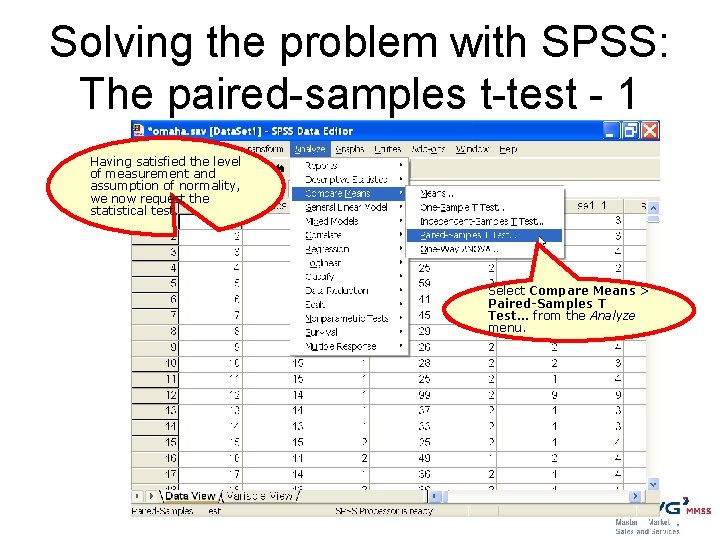
Solving the problem with SPSS: The paired-samples t-test - 1 Having satisfied the level of measurement and assumption of normality, we now request the statistical test. Select Compare Means > Paired-Samples T Test… from the Analyze menu.
Analysis of Variance (ANOVA) • Comparing more than two independent groups: Analysis of Variance (ANOVA) or Kruskal Wallis test
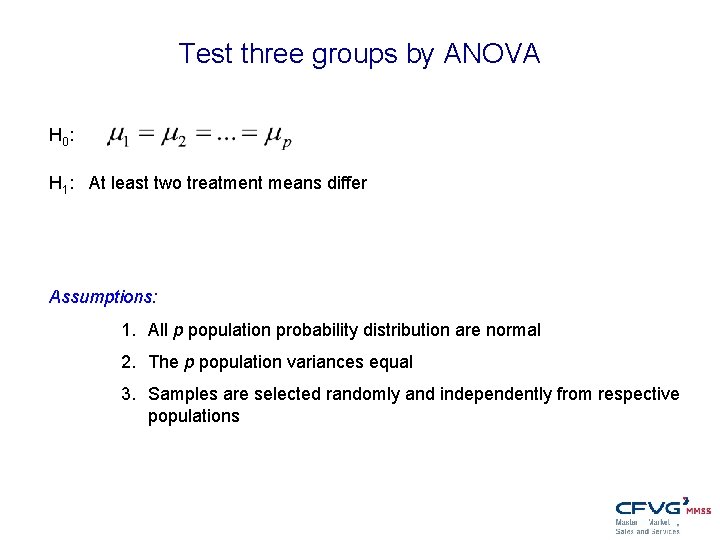
Test three groups by ANOVA H 0 : H 1: At least two treatment means differ Assumptions: 1. All p population probability distribution are normal 2. The p population variances equal 3. Samples are selected randomly and independently from respective populations
Application to test satisfaction on supermarkets (Q 9) regarding to income (Q 19) • Identify groups available • ANOVA test
Manual Guide
Group practice • • Each group checks its owned database Select two categorical variables Compare some variables Interpreting output