
Session 2 Artificial Intelligence Emulates Human Intelligence 1
- Slides: 22
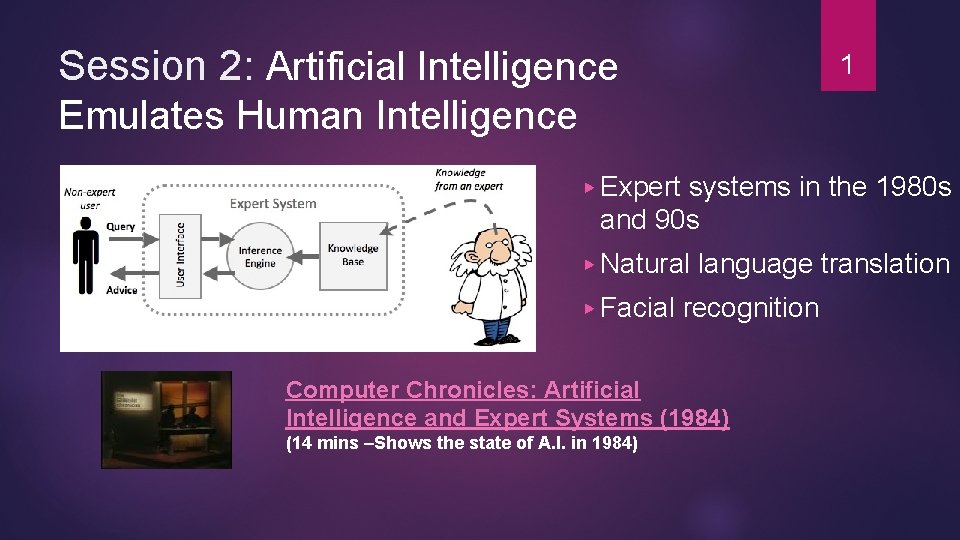
Session 2: Artificial Intelligence Emulates Human Intelligence 1 ▶ Expert systems in the 1980 s and 90 s ▶ Natural ▶ Facial language translation recognition Computer Chronicles: Artificial Intelligence and Expert Systems (1984) (14 mins –Shows the state of A. I. in 1984)
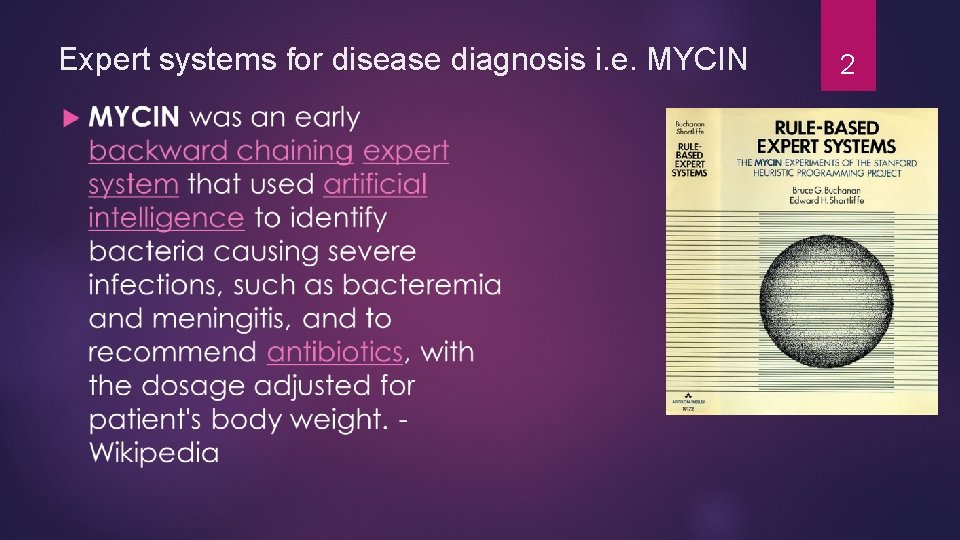
Expert systems for disease diagnosis i. e. MYCIN 2
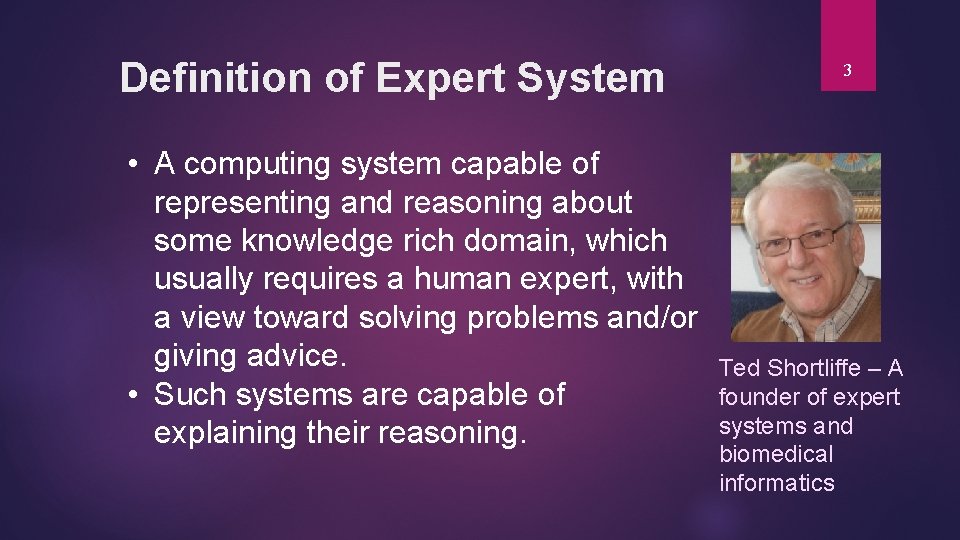
Definition of Expert System • A computing system capable of representing and reasoning about some knowledge rich domain, which usually requires a human expert, with a view toward solving problems and/or giving advice. • Such systems are capable of explaining their reasoning. 3 Ted Shortliffe – A founder of expert systems and biomedical informatics
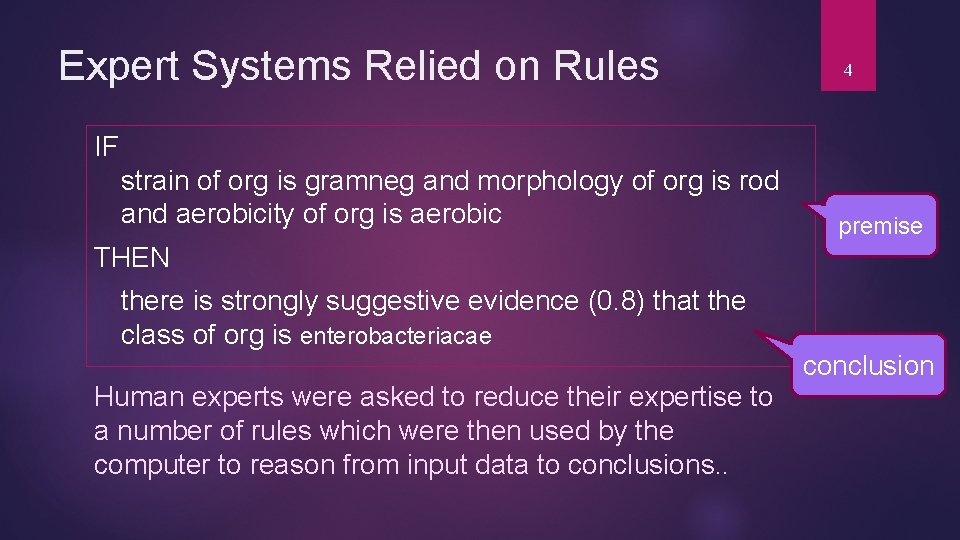
Expert Systems Relied on Rules 4 IF strain of org is gramneg and morphology of org is rod and aerobicity of org is aerobic premise THEN there is strongly suggestive evidence (0. 8) that the class of org is enterobacteriacae Human experts were asked to reduce their expertise to a number of rules which were then used by the computer to reason from input data to conclusions. . conclusion
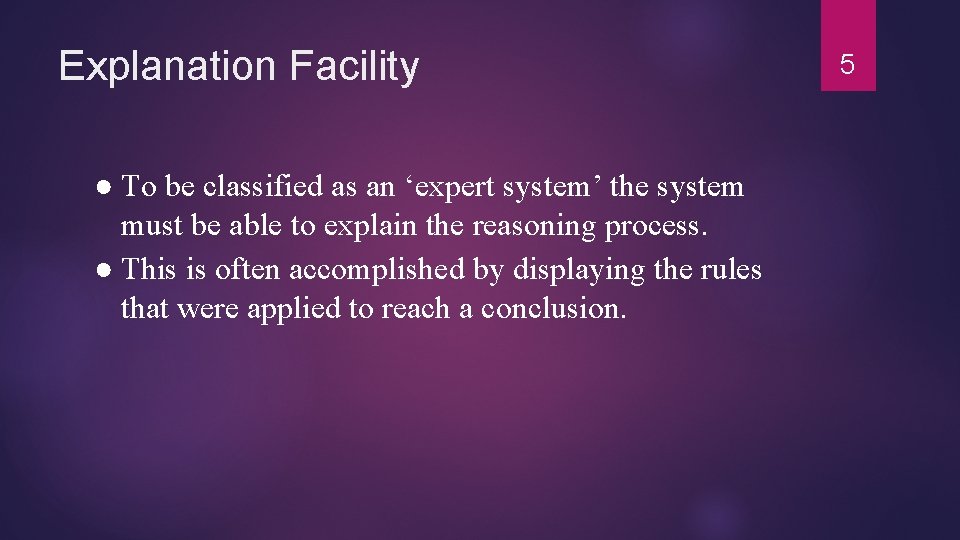
Explanation Facility ● To be classified as an ‘expert system’ the system must be able to explain the reasoning process. ● This is often accomplished by displaying the rules that were applied to reach a conclusion. 5
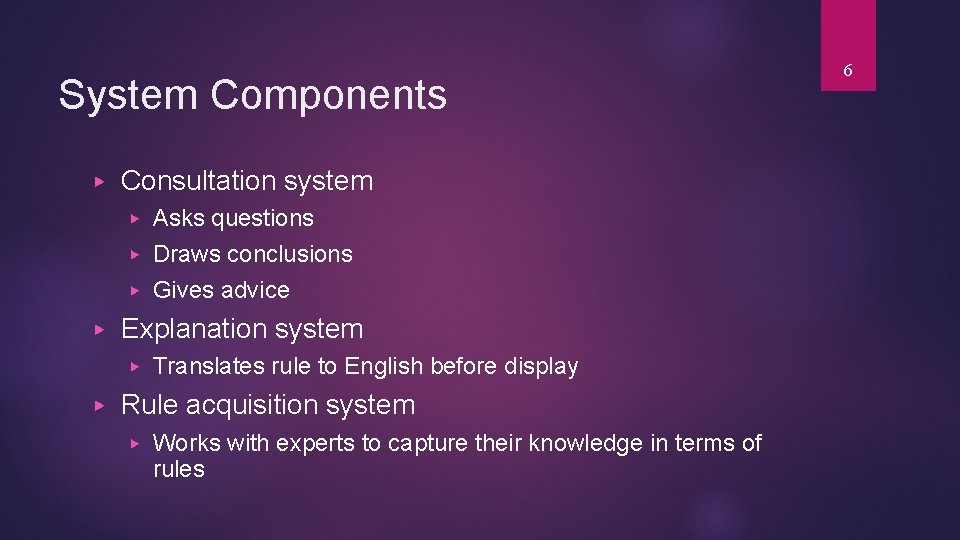
System Components ▶ Consultation system Asks questions ▶ Draws conclusions ▶ Gives advice ▶ ▶ Explanation system ▶ ▶ Translates rule to English before display Rule acquisition system ▶ Works with experts to capture their knowledge in terms of rules 6
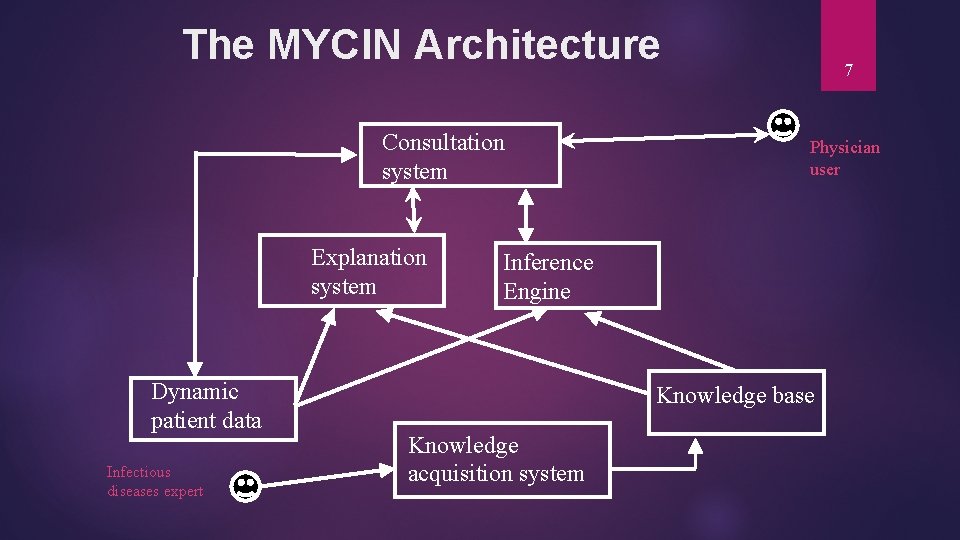
The MYCIN Architecture Consultation system Explanation system Dynamic patient data Infectious diseases expert 7 Physician user Inference Engine Knowledge base Knowledge acquisition system
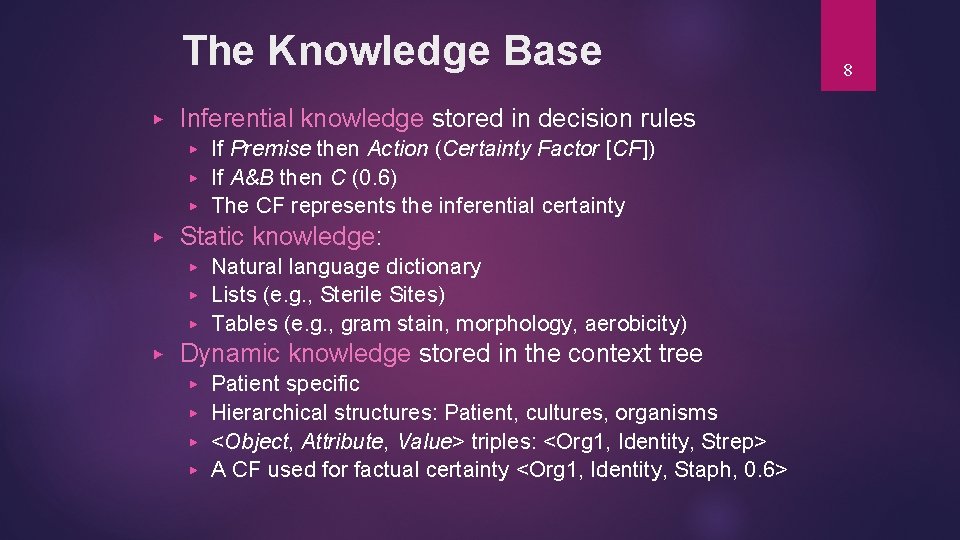
The Knowledge Base ▶ Inferential knowledge stored in decision rules If Premise then Action (Certainty Factor [CF]) ▶ If A&B then C (0. 6) ▶ The CF represents the inferential certainty ▶ ▶ Static knowledge: Natural language dictionary ▶ Lists (e. g. , Sterile Sites) ▶ Tables (e. g. , gram stain, morphology, aerobicity) ▶ ▶ Dynamic knowledge stored in the context tree Patient specific ▶ Hierarchical structures: Patient, cultures, organisms ▶ <Object, Attribute, Value> triples: <Org 1, Identity, Strep> ▶ A CF used for factual certainty <Org 1, Identity, Staph, 0. 6> ▶ 8
MYCIN’s Explanation System ▶ Can display rule being invoked at any point in consultation ▶ Record rule invocation and associates them with questions asked and rules invoked ▶ Use rule index to retrieve particular rules in answer to questions ▶ Why and how questions answered using goal tree 9
Problems with Expert Systems ▶ Experts typically don’t think in terms of rules. They have difficulty articulating their methods to the knowledge engineer. ▶ The systems tend to be brittle. They don’t perform well when some information is missing or erroneous. Are You A Visual Thinker? (4 mins /) 10
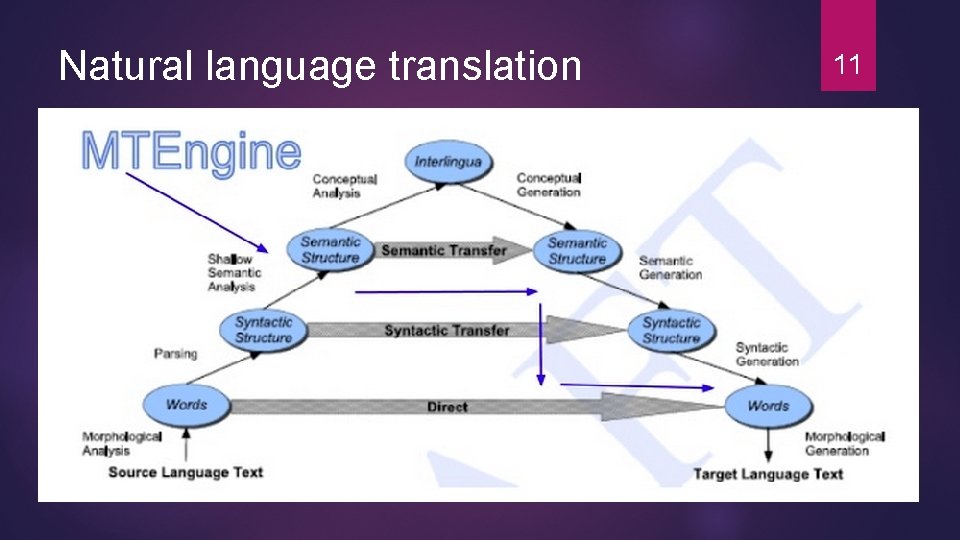
Natural language translation 11
From the source text to interlingua ▶ Interlingua is an international standard language created in 1951. Interlingua es un lingua auxiliar international naturalistic basate super le vocabulos commun al major linguas europee e super un grammatica anglo-romanic simple, initialmente publicate in 1951 per International Auxiliary Language Association (IALA). Step 1: Morphological Analysis – Picking out the words in the source including meaning(s), part(s) of speech and resolving ambiguity by examining their context. 12
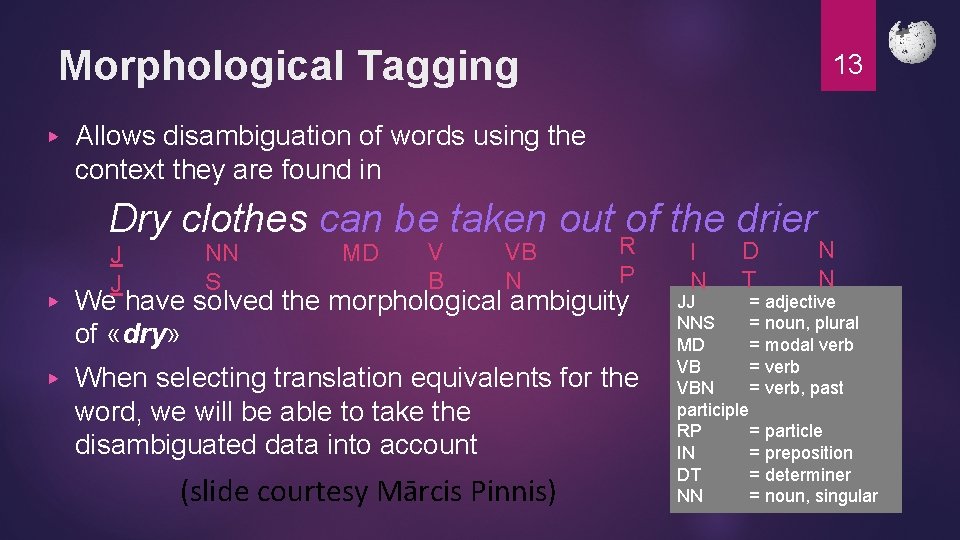
Morphological Tagging ▶ 13 Allows disambiguation of words using the context they are found in Dry clothes can be taken out of the drier J J NN S MD V B VB N R P ▶ We have solved the morphological ambiguity of «dry» ▶ When selecting translation equivalents for the word, we will be able to take the disambiguated data into account (slide courtesy Mārcis Pinnis) I N D T N N JJ = adjective NNS = noun, plural MD = modal verb VB = verb VBN = verb, past participle RP = particle IN = preposition DT = determiner NN = noun, singular
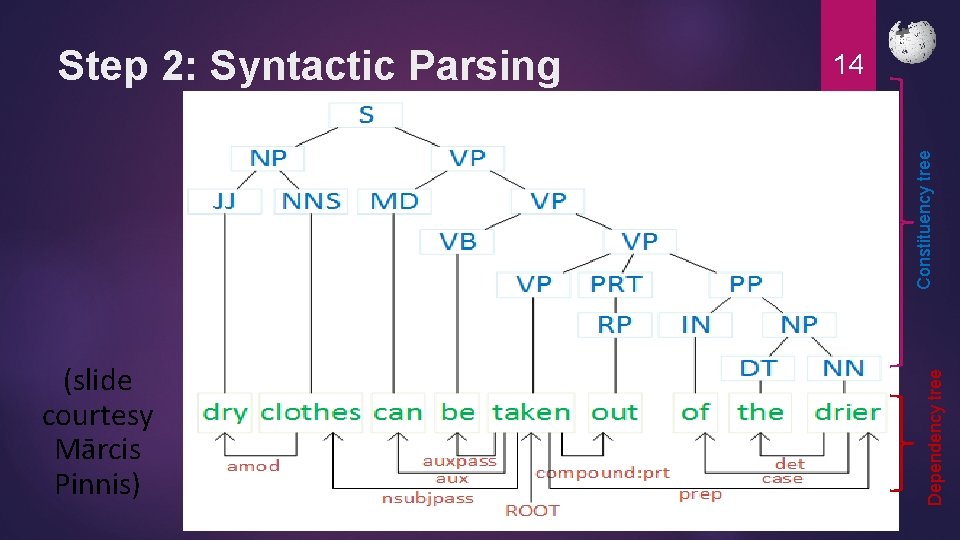
14 (slide courtesy Mārcis Pinnis) Dependency tree Constituency tree Step 2: Syntactic Parsing
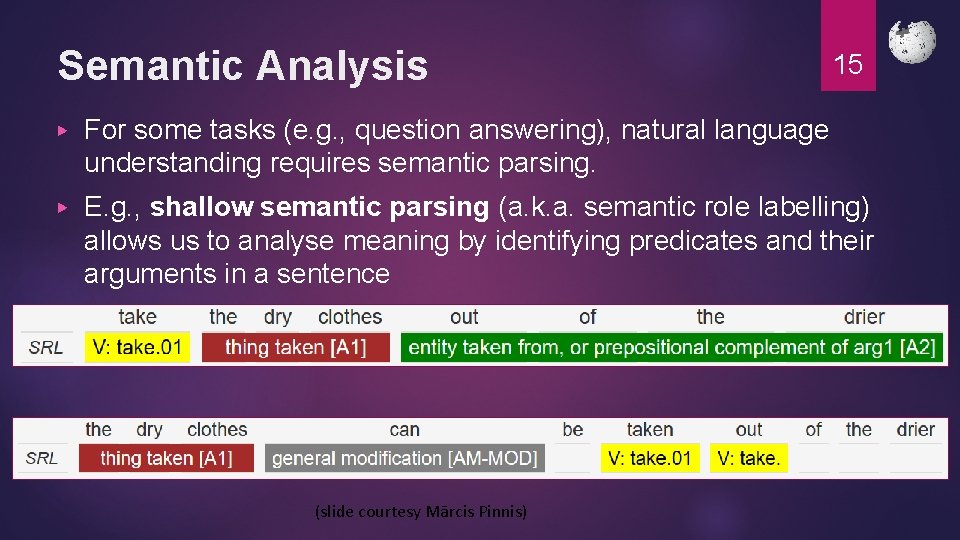
Semantic Analysis 15 ▶ For some tasks (e. g. , question answering), natural language understanding requires semantic parsing. ▶ E. g. , shallow semantic parsing (a. k. a. semantic role labelling) allows us to analyse meaning by identifying predicates and their arguments in a sentence (slide courtesy Mārcis Pinnis)
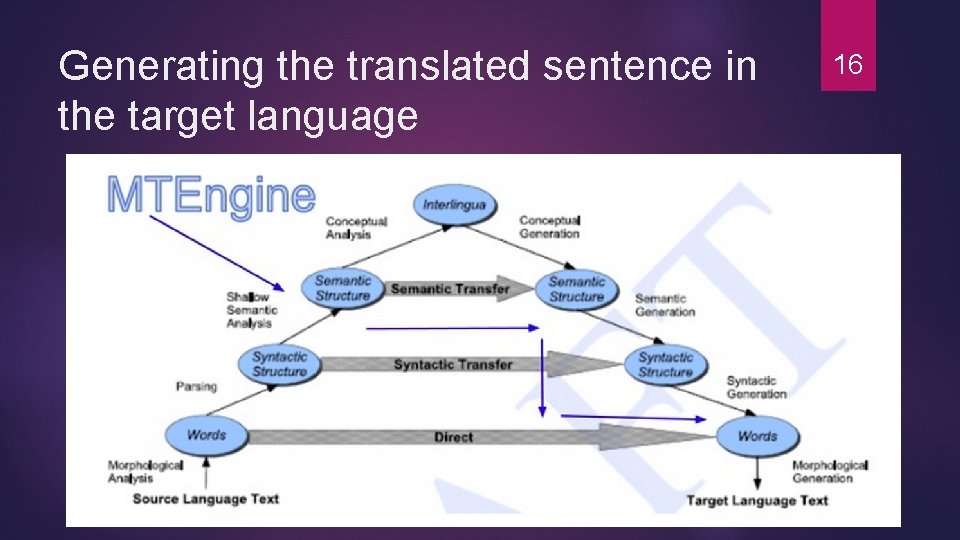
Generating the translated sentence in the target language 16
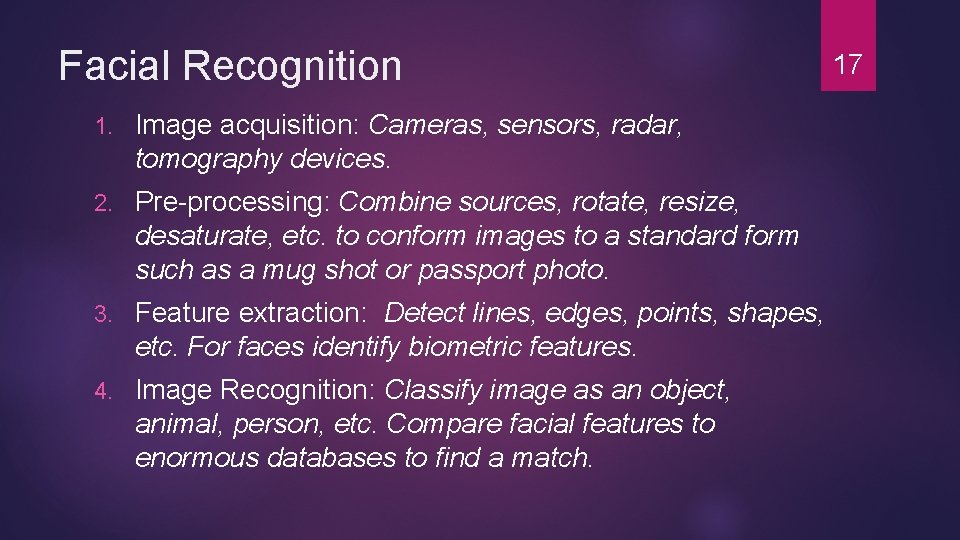
Facial Recognition 1. Image acquisition: Cameras, sensors, radar, tomography devices. 2. Pre-processing: Combine sources, rotate, resize, desaturate, etc. to conform images to a standard form such as a mug shot or passport photo. 3. Feature extraction: Detect lines, edges, points, shapes, etc. For faces identify biometric features. 4. Image Recognition: Classify image as an object, animal, person, etc. Compare facial features to enormous databases to find a match. 17
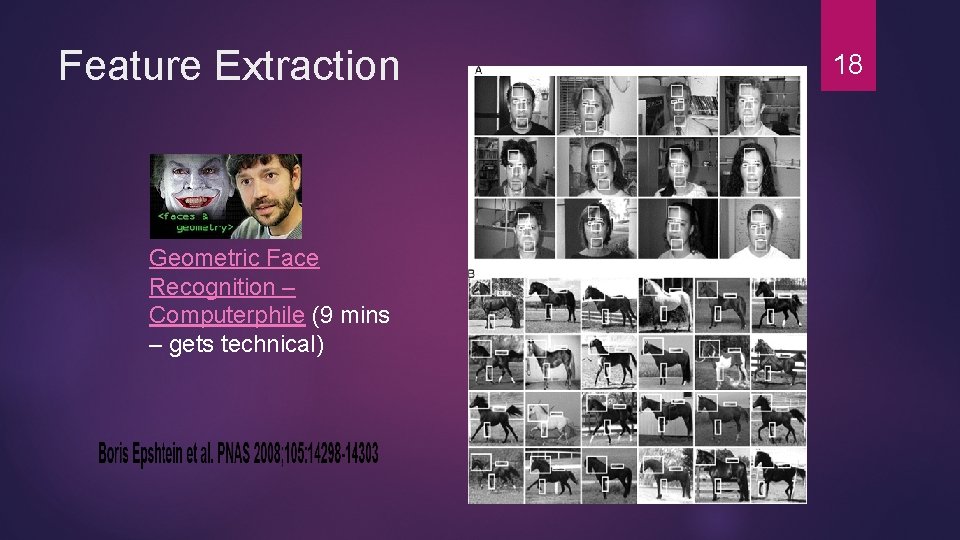
Feature Extraction Geometric Face Recognition – Computerphile (9 mins – gets technical) 18
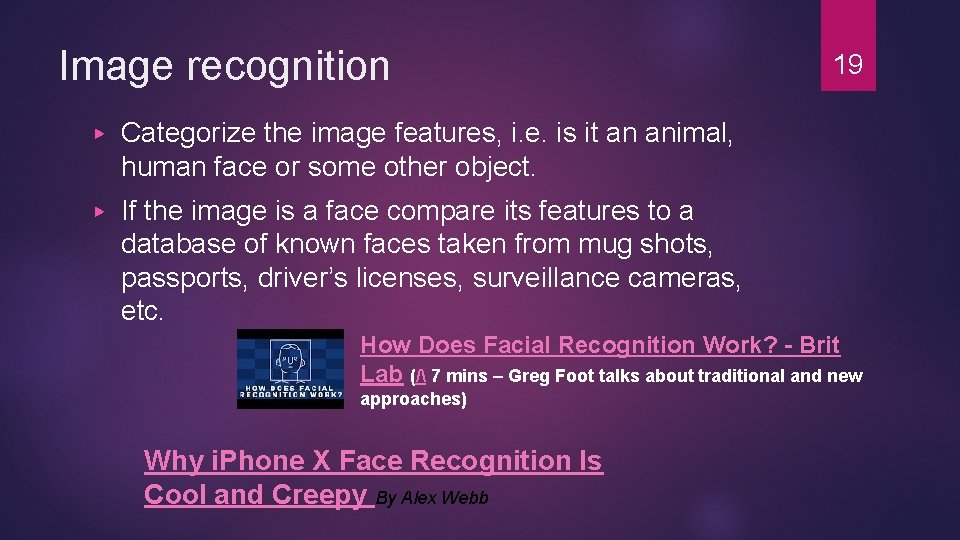
Image recognition ▶ Categorize the image features, i. e. is it an animal, human face or some other object. ▶ If the image is a face compare its features to a database of known faces taken from mug shots, passports, driver’s licenses, surveillance cameras, etc. 19 How Does Facial Recognition Work? - Brit Lab (/ 7 mins – Greg Foot talks about traditional and new approaches) Why i. Phone X Face Recognition Is Cool and Creepy By Alex Webb
Session 2 Summary 20 ▶ Early Artificial Intelligence required programmers to teach computers to solve problems the way humans do. ▶ To make an expert system a knowledge engineer worked with domain experts to try and capture their expertise in the form of rules. An inference engine initially invoked rules whose premises matched the input data. This invoked a chain of rule firing as leading to the conclusions. ▶ An expert system could always explain its reasoning.
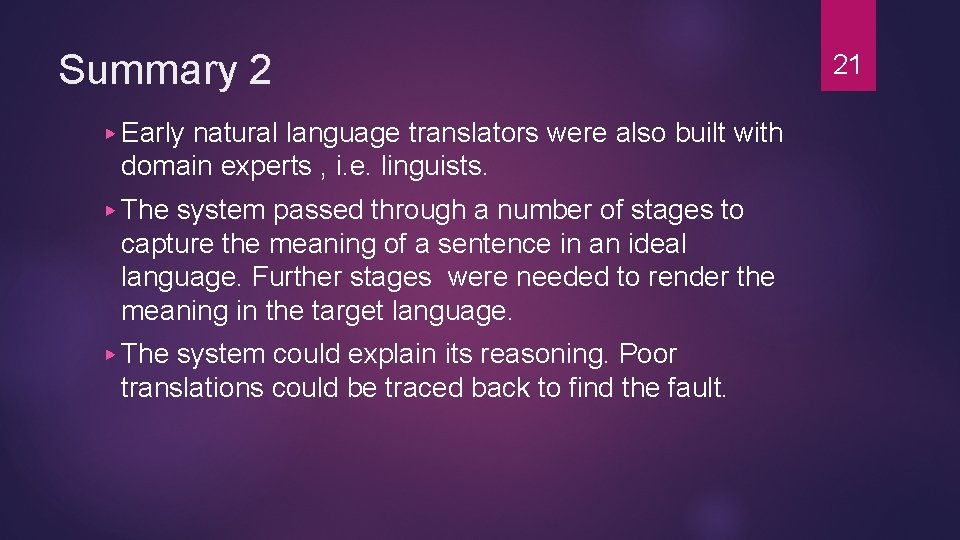
Summary 2 ▶ Early natural language translators were also built with domain experts , i. e. linguists. ▶ The system passed through a number of stages to capture the meaning of a sentence in an ideal language. Further stages were needed to render the meaning in the target language. ▶ The system could explain its reasoning. Poor translations could be traced back to find the fault. 21
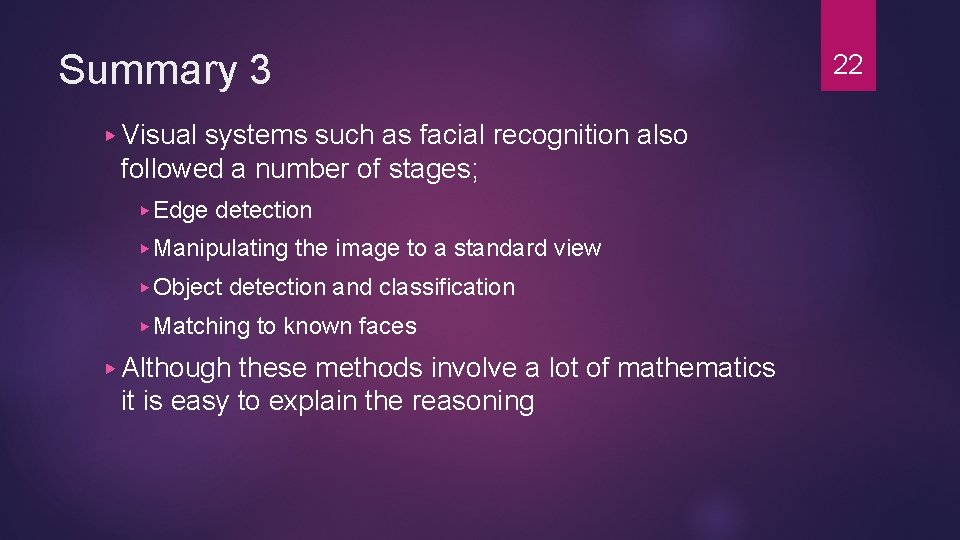
Summary 3 22 ▶ Visual systems such as facial recognition also followed a number of stages; ▶ Edge detection ▶ Manipulating ▶ Object the image to a standard view detection and classification ▶ Matching ▶ Although to known faces these methods involve a lot of mathematics it is easy to explain the reasoning