
Session 2 2 Work Climate Module 2 Managing
- Slides: 29
Session 2. 2: Work Climate Module 2: Managing Human Resources Leadership and Management Course for ZHRC Coordinators and HTI Principals, and ZHRC/HTI Management Teams
Learning Objectives By the end of the session, participants will be able to: § Describe how a work climate impacts performance and retention § Identify at least two ways to improve their work climate § List at least two non-financial incentives they can integrate into their program 2
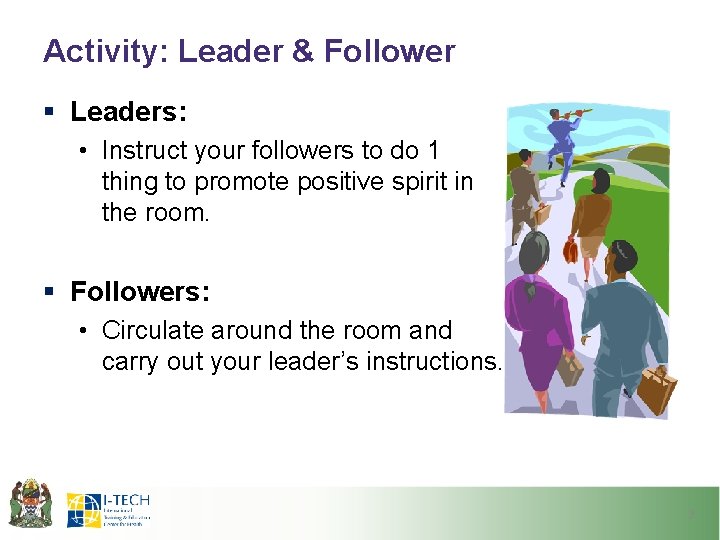
Activity: Leader & Follower § Leaders: • Instruct your followers to do 1 thing to promote positive spirit in the room. § Followers: • Circulate around the room and carry out your leader’s instructions. 3
What is a work climate? The work climate is the prevailing workplace atmosphere as experienced by employees. It is what it feels like to work in a group. - Management Sciences for Health, 2009 4
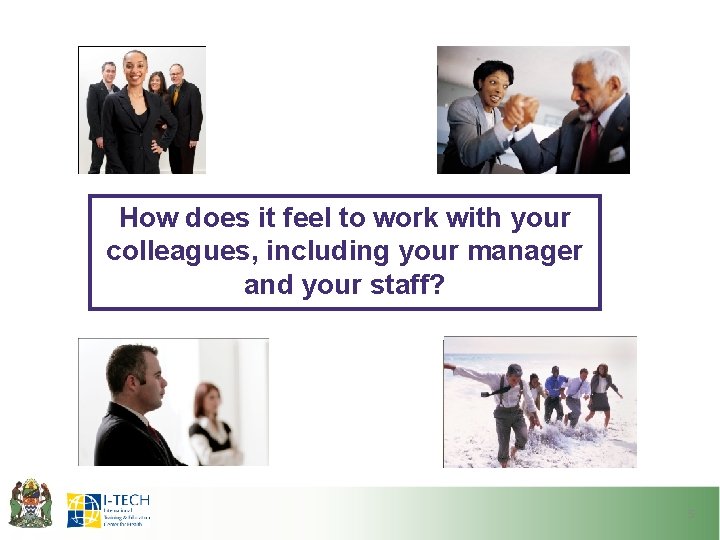
How does it feel to work with your colleagues, including your manager and your staff? 5
What is a positive work climate? § A positive work climate is a workplace atmosphere that supports creative and productive work. § It is a cooperative, civil workplace that is mostly free from: • • • Gossiping Backstabbing Internal Strife (Petty Bickering) Power Struggles Arguments 6
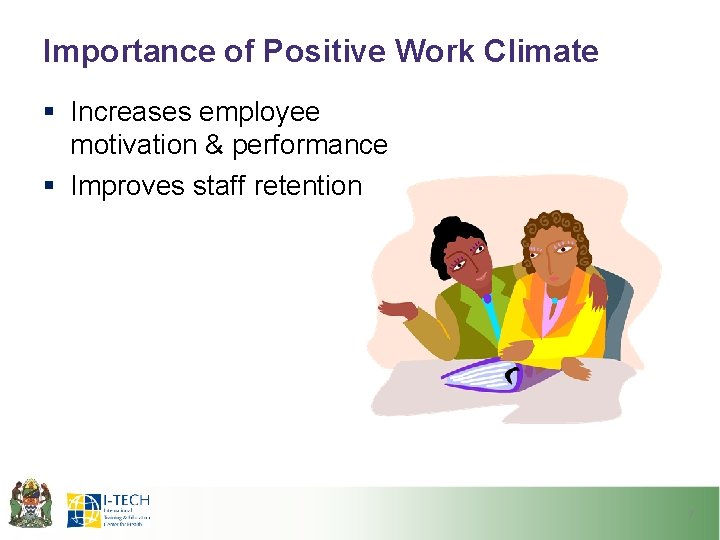
Importance of Positive Work Climate § Increases employee motivation & performance § Improves staff retention 7
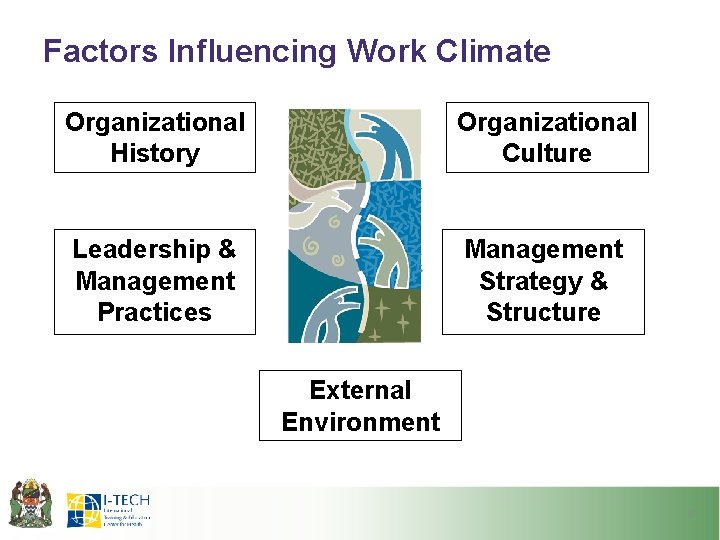
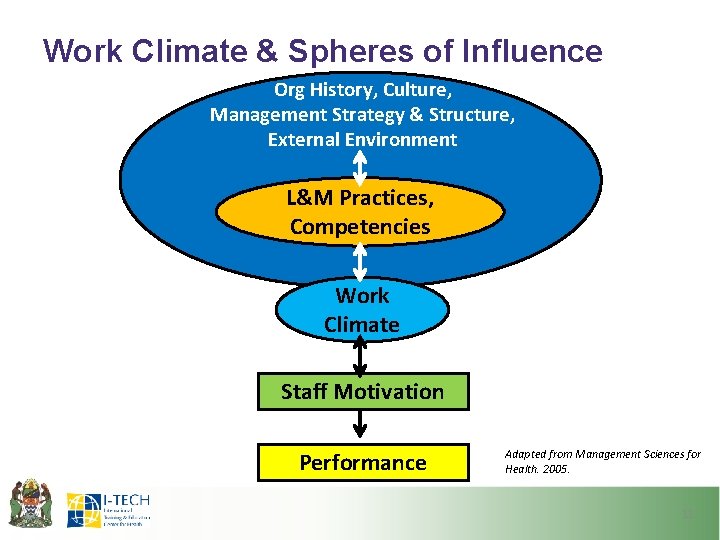
Factors Influencing Work Climate Organizational History Organizational Culture Leadership & Management Practices Management Strategy & Structure External Environment 8
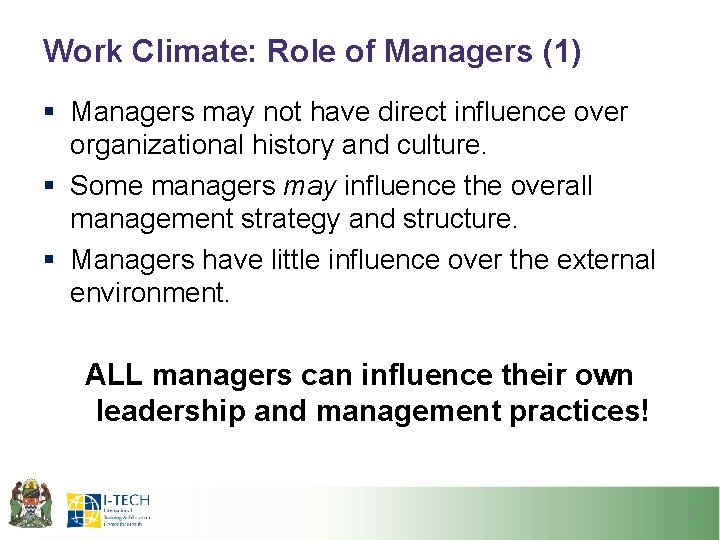
Work Climate: Role of Managers (1) § Managers may not have direct influence over organizational history and culture. § Some managers may influence the overall management strategy and structure. § Managers have little influence over the external environment. ALL managers can influence their own leadership and management practices! 9
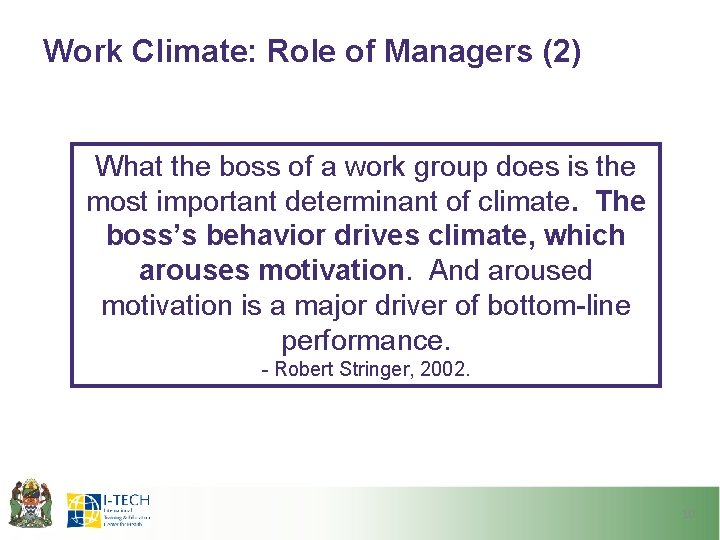
Work Climate: Role of Managers (2) What the boss of a work group does is the most important determinant of climate. The boss’s behavior drives climate, which arouses motivation. And aroused motivation is a major driver of bottom-line performance. - Robert Stringer, 2002. 10
Work Climate & Spheres of Influence Org History, Culture, Management Strategy & Structure, External Environment L&M Practices, Competencies Work Climate Staff Motivation Performance Adapted from Management Sciences for Health. 2005. 11
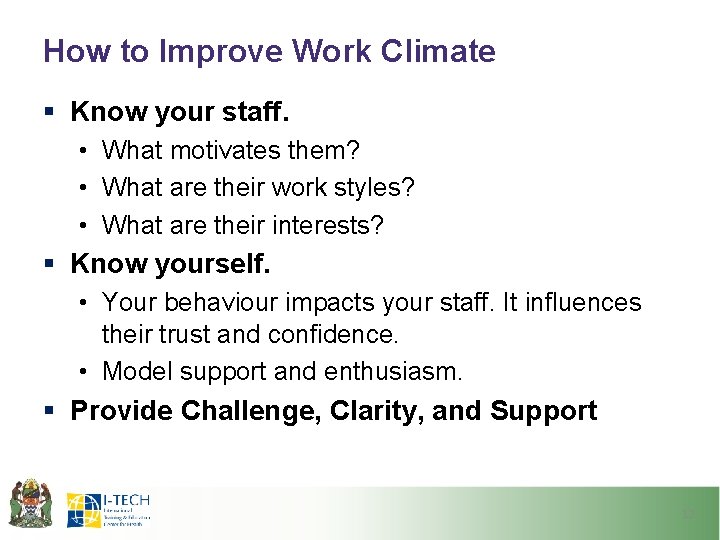
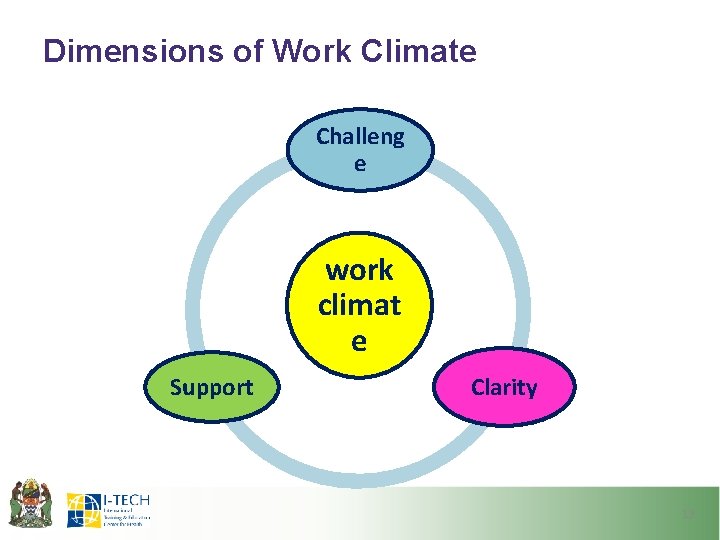
How to Improve Work Climate § Know your staff. • What motivates them? • What are their work styles? • What are their interests? § Know yourself. • Your behaviour impacts your staff. It influences their trust and confidence. • Model support and enthusiasm. § Provide Challenge, Clarity, and Support 12
Dimensions of Work Climate Challeng e work climat e Support Clarity 13
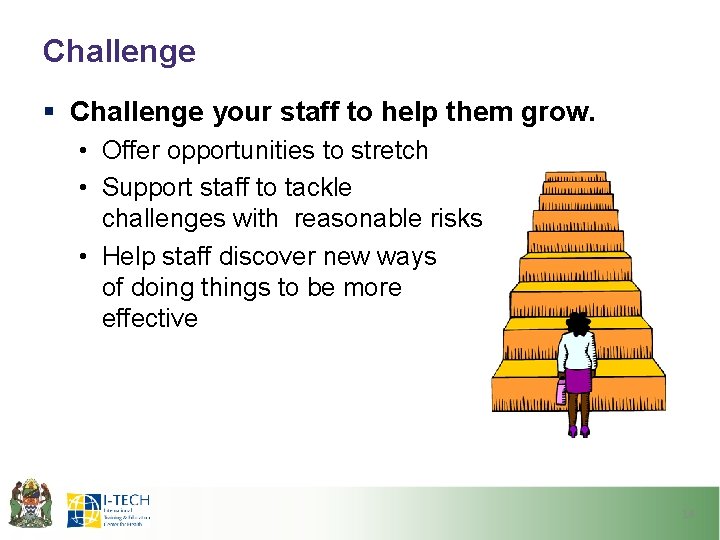
Challenge § Challenge your staff to help them grow. • Offer opportunities to stretch • Support staff to tackle challenges with reasonable risks • Help staff discover new ways of doing things to be more effective 14
Clarity § Ensure clarity about roles & responsibilities. • Help staff see how all roles contribute to the desired results of their group and organization 15
Support § Support your staff in many different ways. • Help your team members feel they have resources and backing to achieve goals. • Essential supplies, equipment, tools, staff & budget • Make your group’s work and accomplishments visible to the organization. • Foster an atmosphere of trust, mutual support, and deserved recognition. 16
Motivation is… …the energy to do something. Each person has motives, needs and reservoirs of energy that represent potential motivators. As a manager, your task is to discover your employees’ motivations and help unleash their energy. -Management Sciences for Health, 2002 …the internal and external factors that stimulate desire and energy in people to be interested in a job, role, or subject, and exert effort in attaining a goal. . -Business. Dictionary. com 17
Incentive is… …something that incites action. -Merriam-Webster Dictionary …an inducement or supplemental reward that serves as a motivational device for a desired action or behavior. -Business. Dictionary. com 18
Motivation & Incentive § Motivation is the energy we bring to our work. • When motivation is high, we perform better. • When motivation is low, performance suffers. § A good manager will help to create a work climate and incentives that encourage high performance, and extra effort. Motivation is the energy to do something. Incentive helps to mobilize that energy. 19
Discussion: Motivators & De-Motivators § Think of a time when you were part of a highperforming team. • What motivated you and your colleagues to perform well? § Think of a time when you were part of an unmotivated team or organization. • What held you back? 20
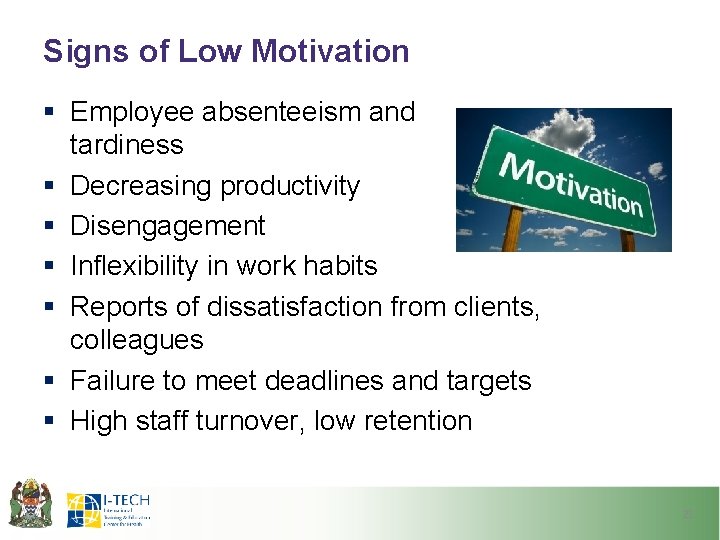
Signs of Low Motivation § Employee absenteeism and tardiness § Decreasing productivity § Disengagement § Inflexibility in work habits § Reports of dissatisfaction from clients, colleagues § Failure to meet deadlines and targets § High staff turnover, low retention 21
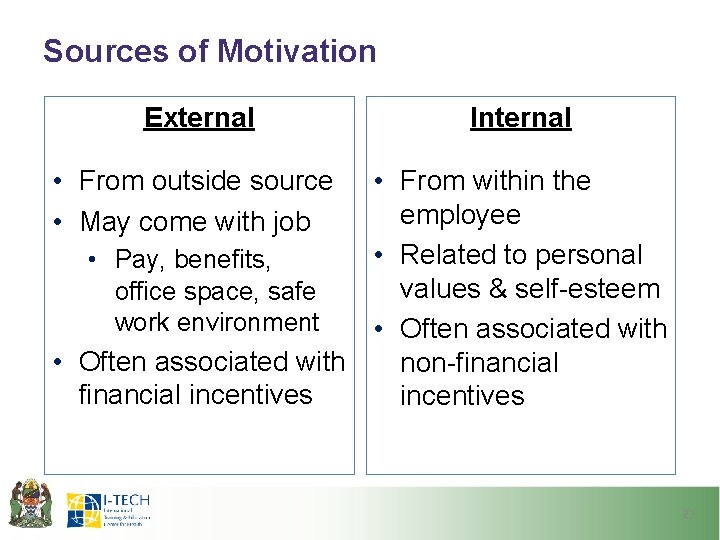
Sources of Motivation External Internal • From outside source • May come with job • From within the employee • Related to personal • Pay, benefits, values & self-esteem office space, safe work environment • Often associated with non-financial incentives 22
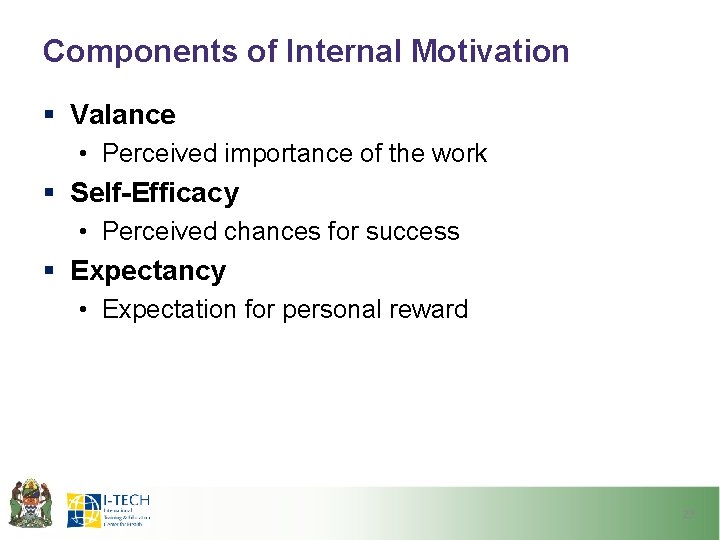
Components of Internal Motivation § Valance • Perceived importance of the work § Self-Efficacy • Perceived chances for success § Expectancy • Expectation for personal reward 23
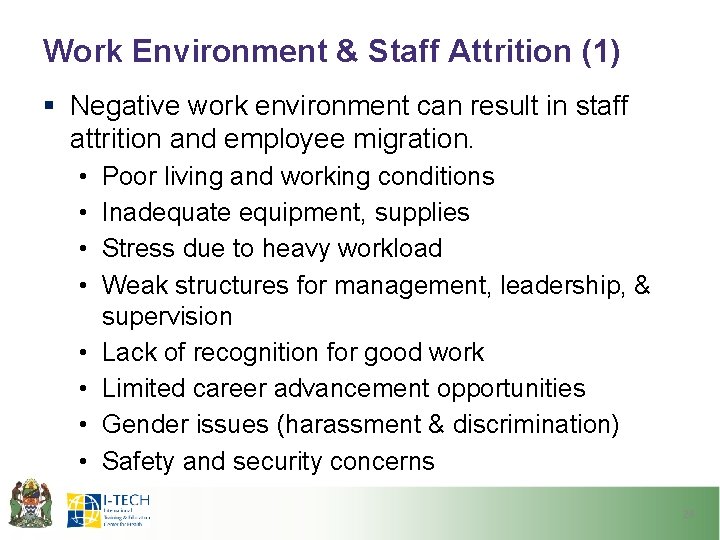
Work Environment & Staff Attrition (1) § Negative work environment can result in staff attrition and employee migration. • • Poor living and working conditions Inadequate equipment, supplies Stress due to heavy workload Weak structures for management, leadership, & supervision Lack of recognition for good work Limited career advancement opportunities Gender issues (harassment & discrimination) Safety and security concerns 24
Work Environment & Staff Attrition (2) • Incentives address staff retention by motivating people to stay in their posts. • Low compensation can be a factor that influences employee turnover; however, turnover is also influenced by problems related to work environment. • None of the problems related with negative work environment. can be addressed by increasing the financial incentives. 25
Effective Incentive Systems § Open and transparent § Fair and consistent § Based on well understood goal 26
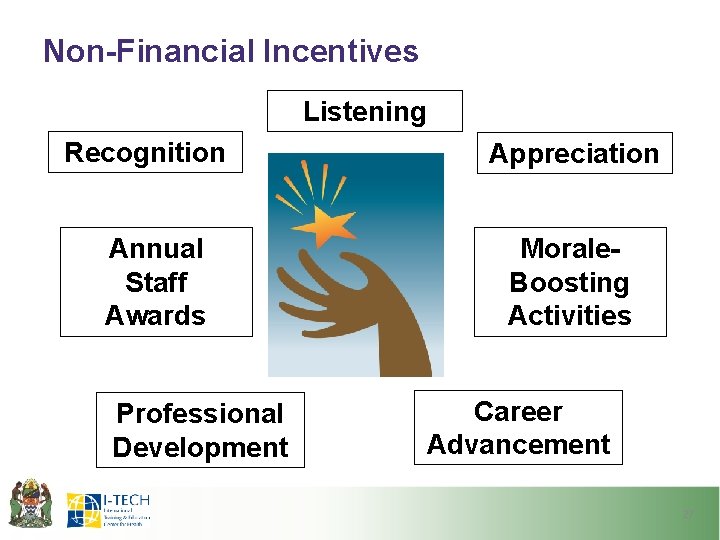
Non-Financial Incentives Listening Recognition Annual Staff Awards Professional Development Appreciation Morale. Boosting Activities Career Advancement 27
Discussion: Non-Financial Incentives § What non-financial incentives is your organization using? § What are the challenges involved with integrating incentives into your workplace? § How might we address these challenges? 28
Key Points § Positive work climate increases employee motivation and performance, and improves staff retention. § Managers influence work climate more than any other factor. § Negative work environment can result in poor performance and staff attrition. § Non-financial incentives play a large role in improving employee retention. 29