
Session 19 Measures GCSE MATHS Length cm metres
- Slides: 13
Session 19 – Measures GCSE MATHS
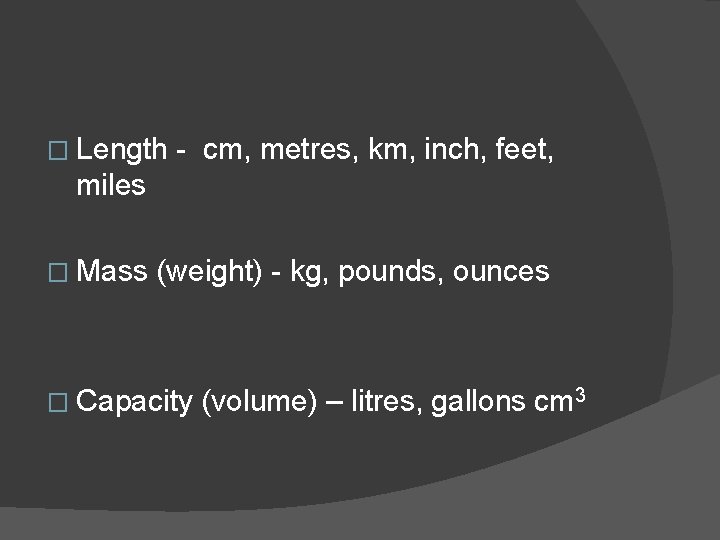
� Length - cm, metres, km, inch, feet, miles � Mass (weight) - kg, pounds, ounces � Capacity (volume) – litres, gallons cm 3
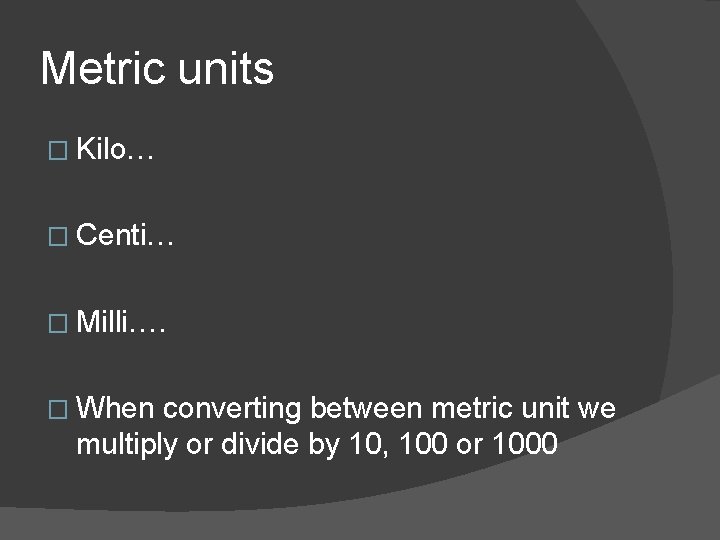
Metric units � Kilo… � Centi… � Milli…. � When converting between metric unit we multiply or divide by 10, 100 or 1000
Converting area and volume � How many cm 3 in 1 m 3? � Ex 31. 1 Q 7, 8, 11, 16 and 19
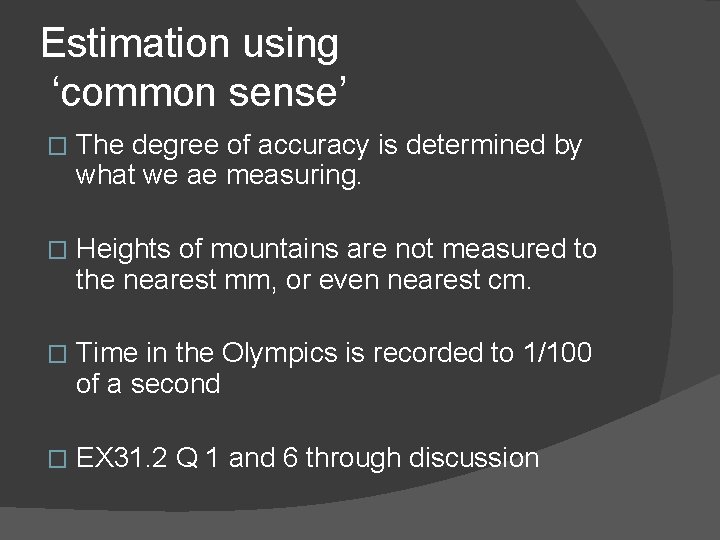
Estimation using ‘common sense’ � The degree of accuracy is determined by what we ae measuring. � Heights of mountains are not measured to the nearest mm, or even nearest cm. � Time in the Olympics is recorded to 1/100 of a second � EX 31. 2 Q 1 and 6 through discussion
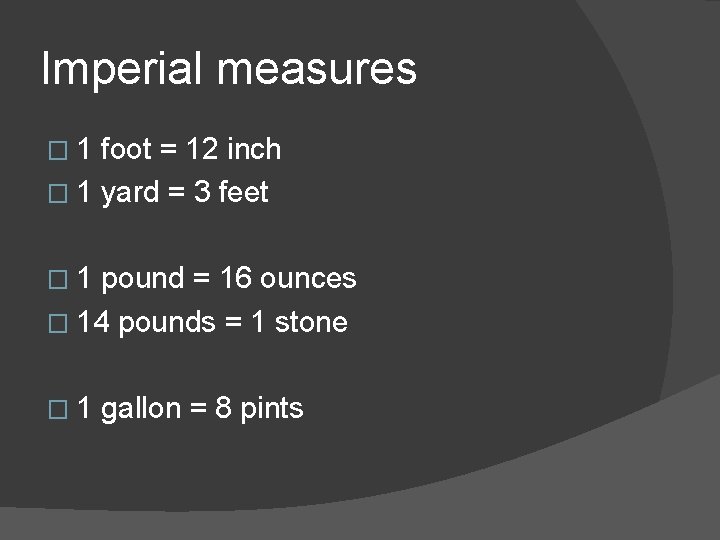
Imperial measures � 1 foot = 12 inch � 1 yard = 3 feet � 1 pound = 16 ounces � 14 pounds = 1 stone � 1 gallon = 8 pints
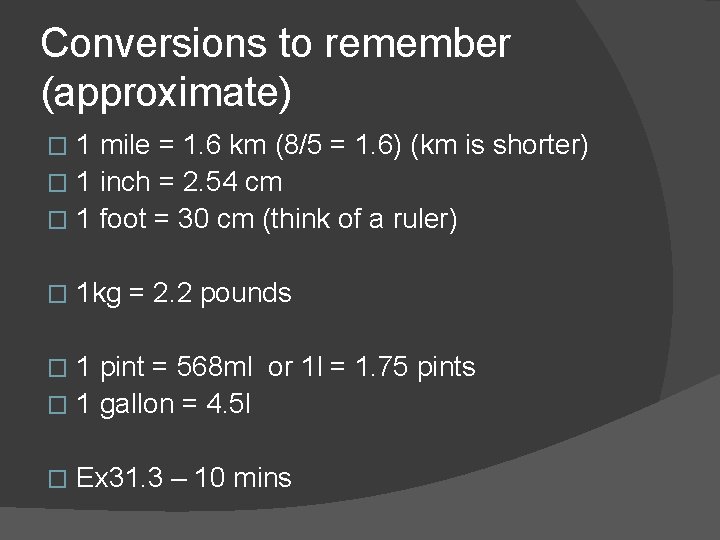
Conversions to remember (approximate) 1 mile = 1. 6 km (8/5 = 1. 6) (km is shorter) � 1 inch = 2. 54 cm � 1 foot = 30 cm (think of a ruler) � � 1 kg = 2. 2 pounds 1 pint = 568 ml or 1 l = 1. 75 pints � 1 gallon = 4. 5 l � � Ex 31. 3 – 10 mins
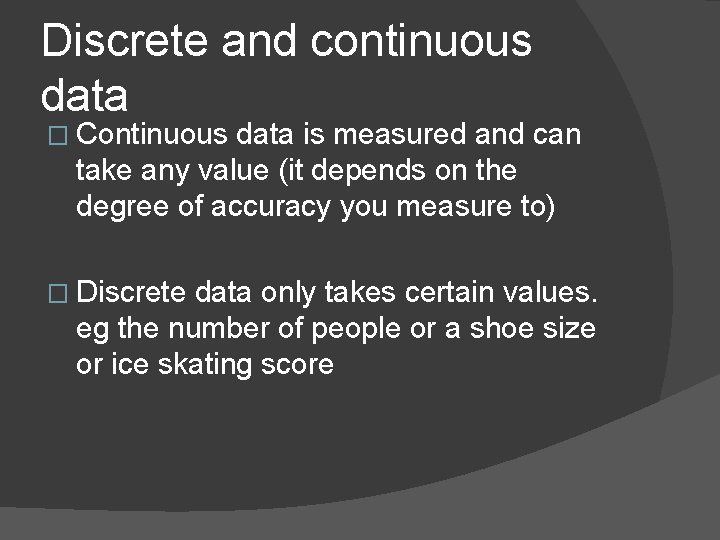
Discrete and continuous data � Continuous data is measured and can take any value (it depends on the degree of accuracy you measure to) � Discrete data only takes certain values. eg the number of people or a shoe size or ice skating score
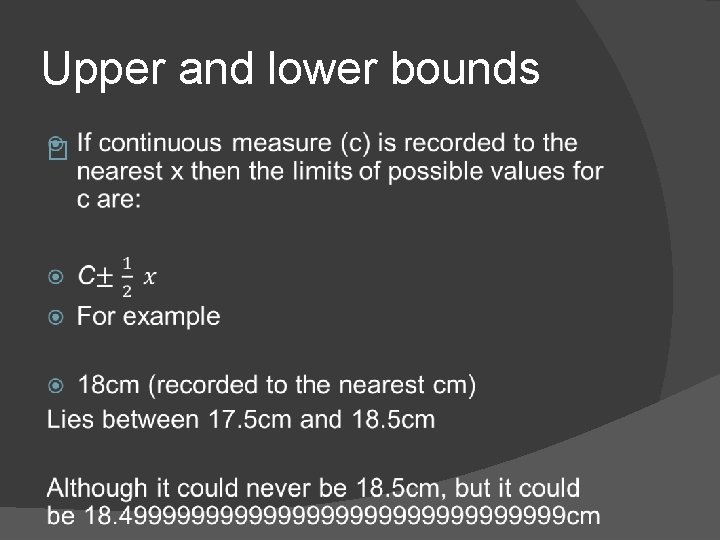
Upper and lower bounds �
Calculating using upper and lower bounds � Example � Try page 333 a few from 31. 5
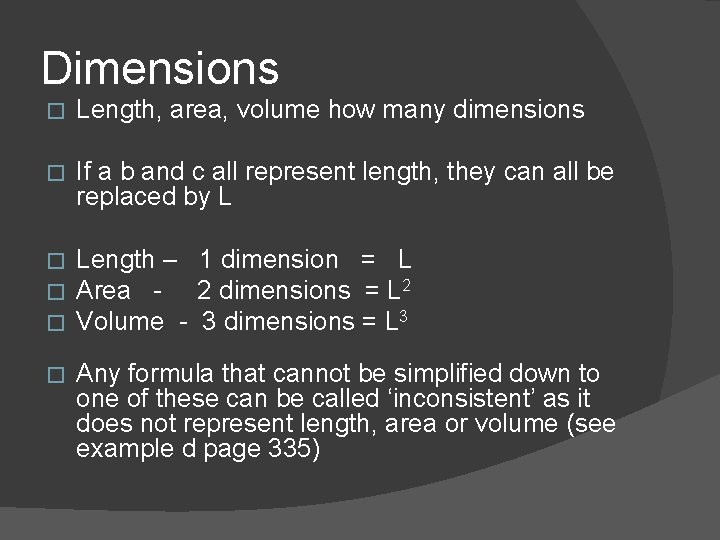
Dimensions � Length, area, volume how many dimensions � If a b and c all represent length, they can all be replaced by L � � � Length – 1 dimension = L Area - 2 dimensions = L 2 Volume - 3 dimensions = L 3 � Any formula that cannot be simplified down to one of these can be called ‘inconsistent’ as it does not represent length, area or volume (see example d page 335)
� Any time at the end go through BKSB � Encourage everyone to begin their revision of topics covered
Homework � Use BKSB to revise topics � Produce a revision page for the geometry ‘what you need to knows’ � Including 2 D shapes, 3 D shapes and circles