
Session 11 Risk Management Risk Risk What is

- Slides: 25
Session 11 Risk Management
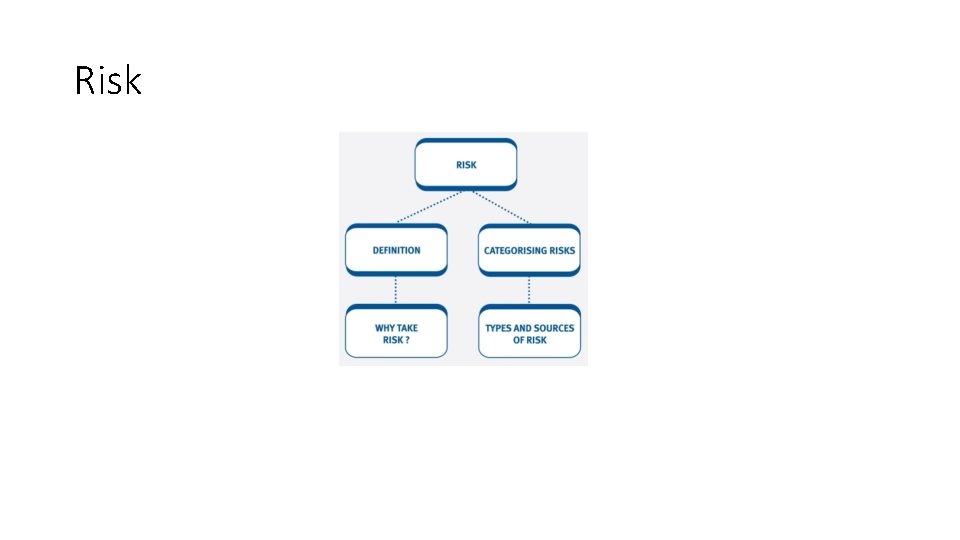
Risk
Risk What is risk ? • . . . the chance that future events or results may not be as expected • It is often thought of as purely bad (pure or ‘downside’ risk). It can be good at times – results better than expected (Speculative or ‘upside’ risk)
Risk vs Uncertainty • Risk is inherent in a situation whenever an outcome is not inevitable • Uncertainty, in contrast, arises from ignorance and a lack of information……. • The future cannot be predicted under conditions of uncertainty because there is insufficient information about what the future outcomes might be or their probabilities of occurrence. • In business, uncertainty might be an element in decision making. For an example, there might be uncertainty about how customers or shareholders are going to respond.
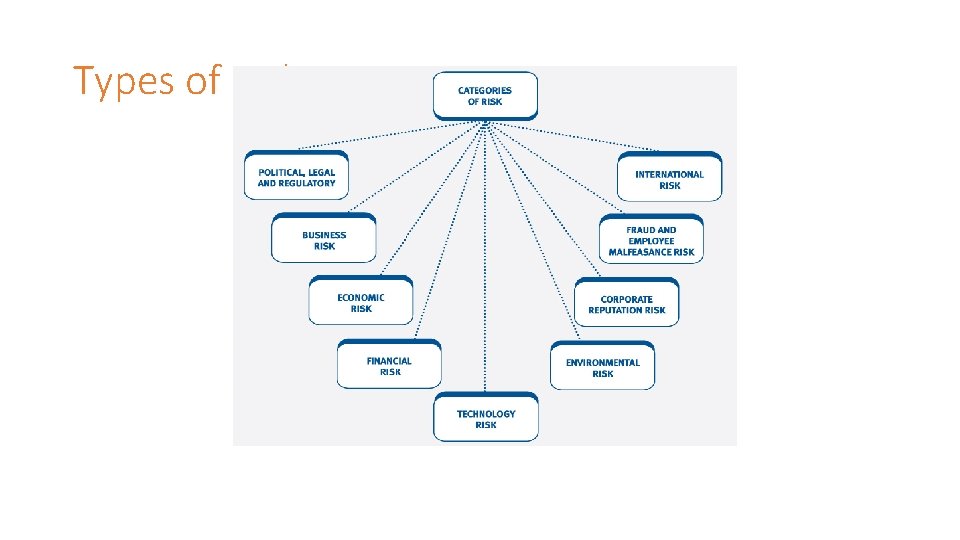
Risk Why incur risk ? • To gain competitive advantage • To increase financial return In order to assess and measure the risks that the organisation faces – the business must be able to identify the principle sources of risk. • Many organisations categorise risks into different types of risk. • There is no single system of risk categories – they will differ according to circumstances.
Types of Risk
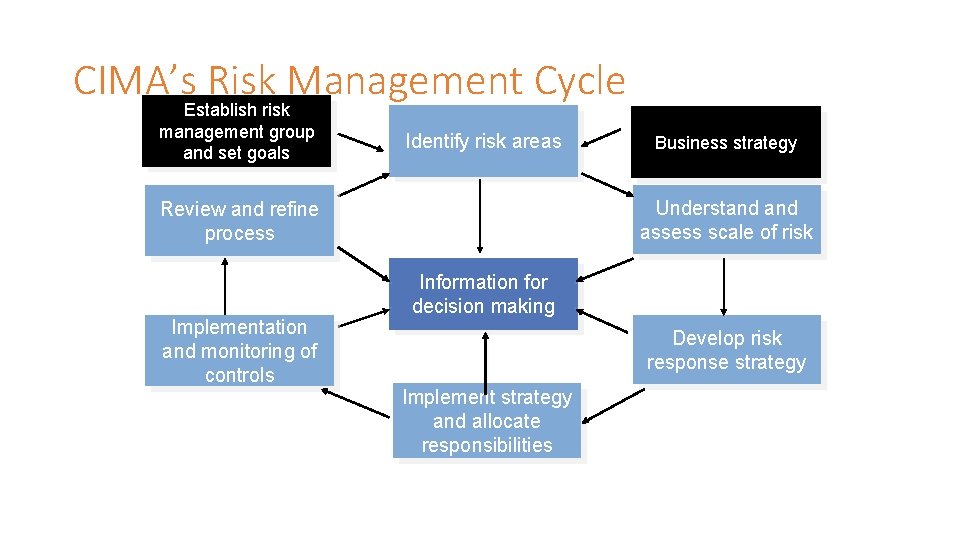
CIMA’s. Establish Riskrisk. Management Cycle management group and set goals Identify risk areas Understand assess scale of risk Review and refine process Implementation and monitoring of controls Business strategy Information for decision making Develop risk response strategy Implement strategy and allocate responsibilities
Risk What is Risk Management? = ‘the process of understanding and managing the risks that the organisation is inevitably subject to in attempting to achieve its corporate objectives’ • The traditional view of risk management has been one of protecting the organisation from loss through conformance procedures and hedging techniques – avoid the downside risk • The new approach to risk management is about taking advantage of the opportunities to increase overall returns within a business – benefiting from the upside risk = Risk Management has transformed from a ‘department focused’ approach to a holistic, co-ordinated and integrated process which manages risk throughout the organisation. Enterprise Risk Management - Is the term given to the alignment of risk management with business strategy and the embedding of a risk management culture into business operations.
Risk Management Strategy • Traditionally, a formal strategy for managing risks would not be made • However, this has change. failure to properly identify and control risks has been identified as a major cause of business failure Risk Management Strategy - RMS needs to be developed to ensure that the risk exposure of the organisation are consistent with its risk appetite. - At the least, RM capability should be sufficient to: - Review its internal control systems, at least annually (and whether adequate), - Ensure that controls are properly implemented, and - Monitor the implementation and effectiveness of controls
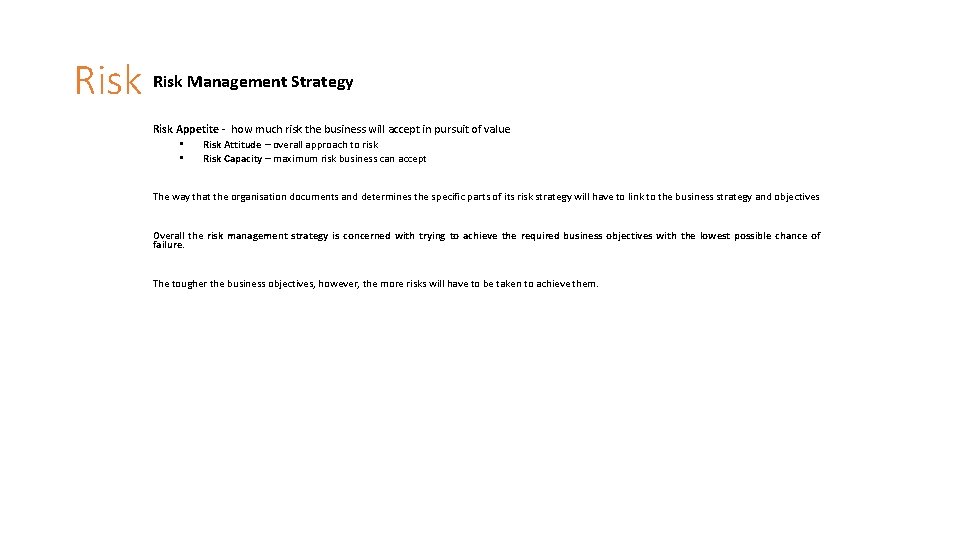
Risk Management Strategy Risk Appetite - how much risk the business will accept in pursuit of value • Risk Attitude – overall approach to risk • Risk Capacity – maximum risk business can accept The way that the organisation documents and determines the specific parts of its risk strategy will have to link to the business strategy and objectives Overall the risk management strategy is concerned with trying to achieve the required business objectives with the lowest possible chance of failure. The tougher the business objectives, however, the more risks will have to be taken to achieve them.
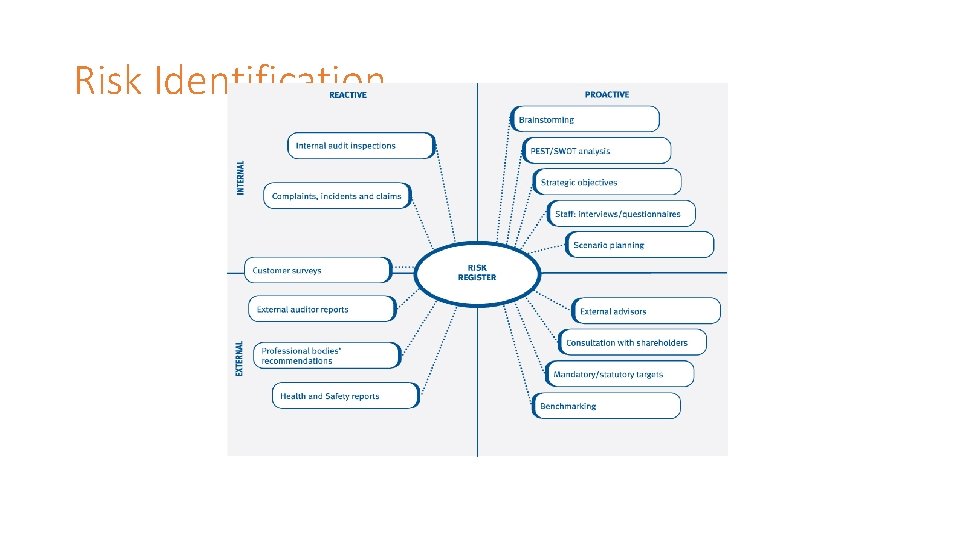
Risk Identification
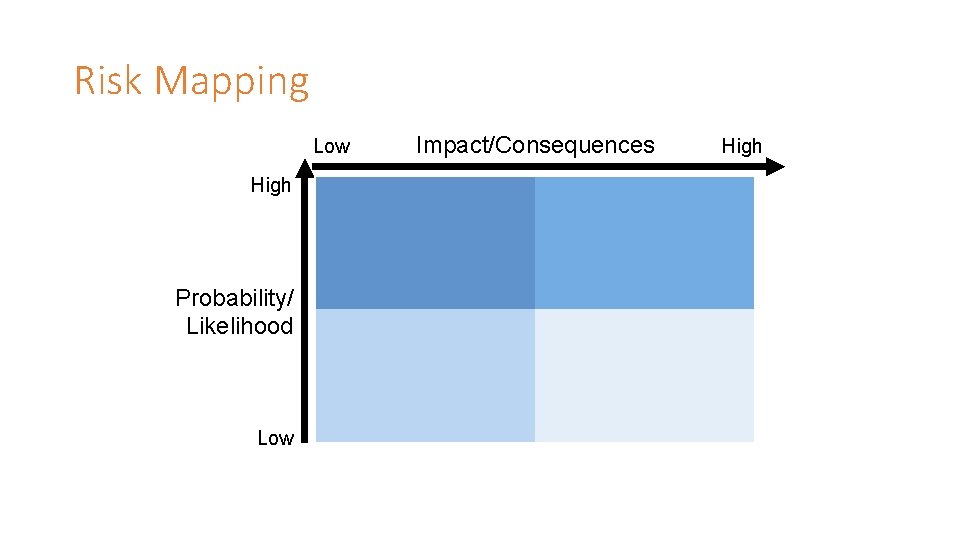
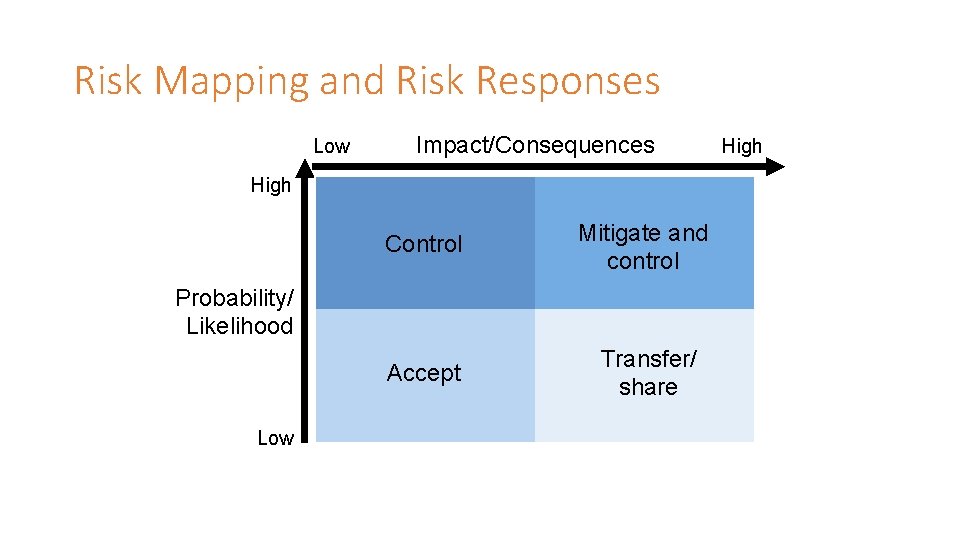
Risk Mapping Low High Probability/ Likelihood Low Impact/Consequences High
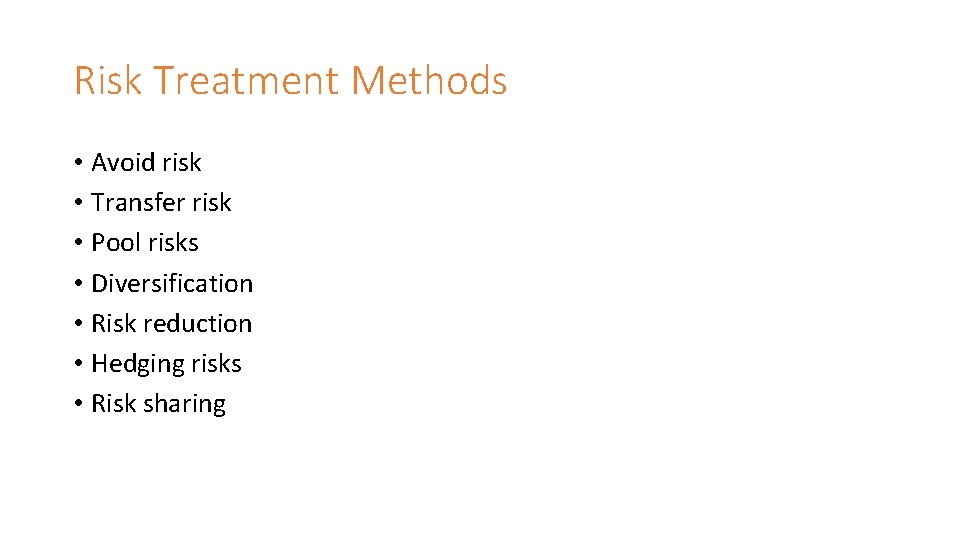
Risk Treatment Methods • Avoid risk • Transfer risk • Pool risks • Diversification • Risk reduction • Hedging risks • Risk sharing
Risk Mapping and Risk Responses Low Impact/Consequences High Control Mitigate and control Accept Transfer/ share Probability/ Likelihood Low High
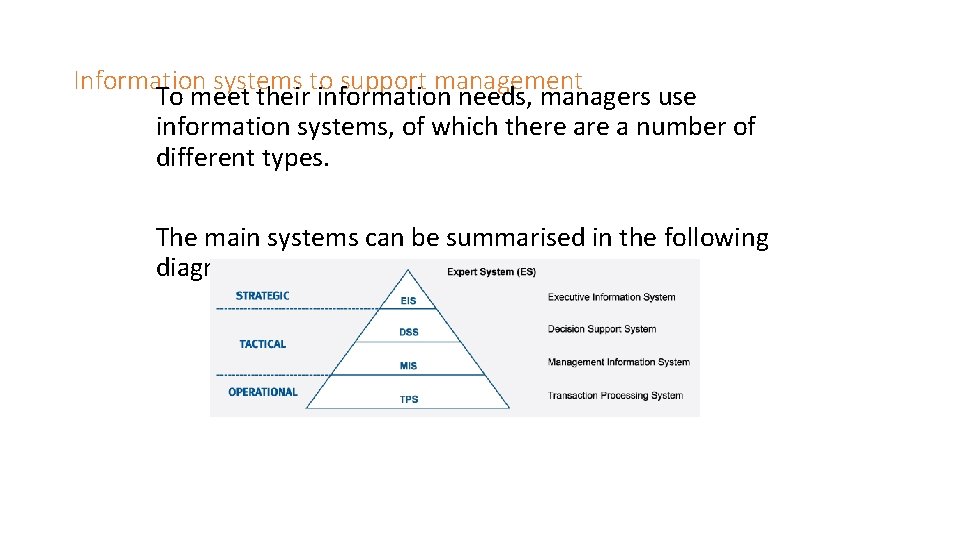
Information systems to support management To meet their information needs, managers use information systems, of which there a number of different types. The main systems can be summarised in the following diagram:
• Achievement of goal congruence between the information system's objectives and the corporate objectives. Failure of computer systems to work can result in the failure of some organisations to function at all. Benefits of an Information Strategy • The organisation is more likely to be able to create and sustain competitive advantage • The high levels of expenditure on information systems will be more focused on supporting key aspects of the business. • Developments in IT can be exploited at the most appropriate time – which is not always when they are first available. • Having an information strategy is a costly business and unmanaged development can lead to costly mistakes.
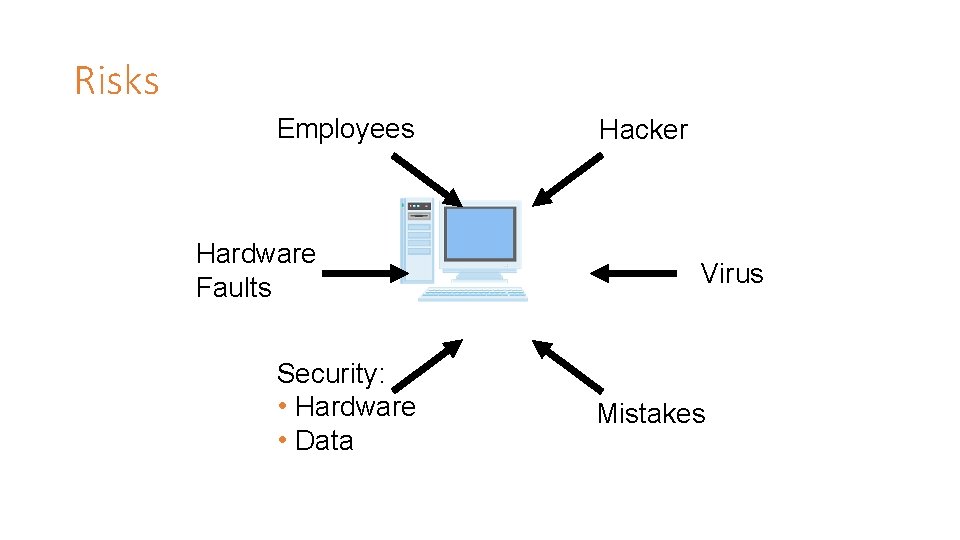
Risks Employees Hardware Faults Security: • Hardware • Data Hacker Virus Mistakes
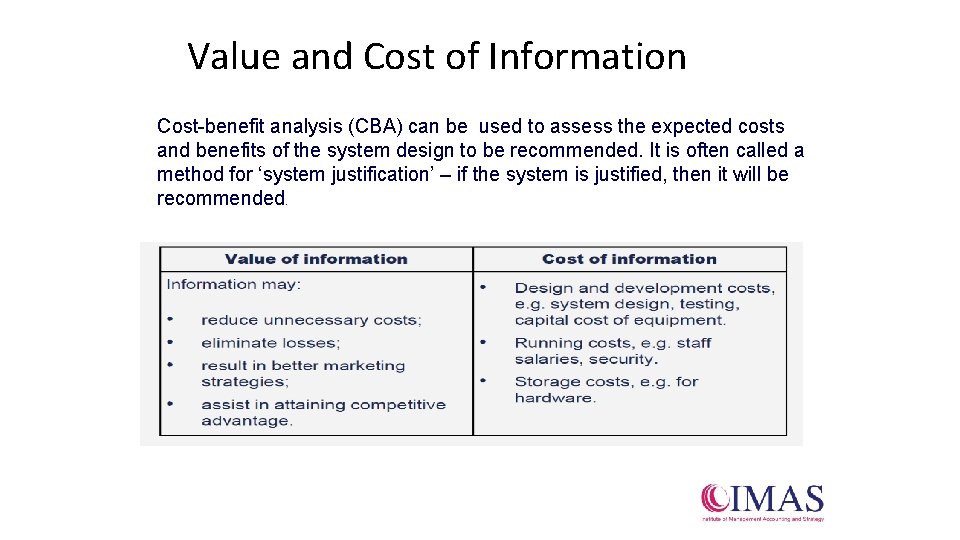
Value and Cost of Information Cost-benefit analysis (CBA) can be used to assess the expected costs and benefits of the system design to be recommended. It is often called a method for ‘system justification’ – if the system is justified, then it will be recommended. Corporate
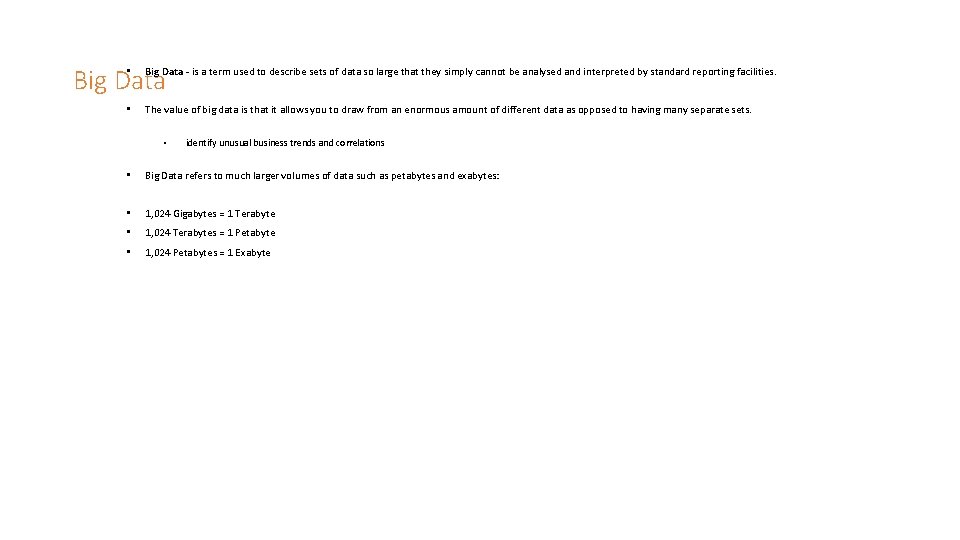
Big Data • Big Data - is a term used to describe sets of data so large that they simply cannot be analysed and interpreted by standard reporting facilities. • The value of big data is that it allows you to draw from an enormous amount of different data as opposed to having many separate sets. • identify unusual business trends and correlations • Big Data refers to much larger volumes of data such as petabytes and exabytes: • 1, 024 Gigabytes = 1 Terabyte • 1, 024 Terabytes = 1 Petabyte • 1, 024 Petabytes = 1 Exabyte
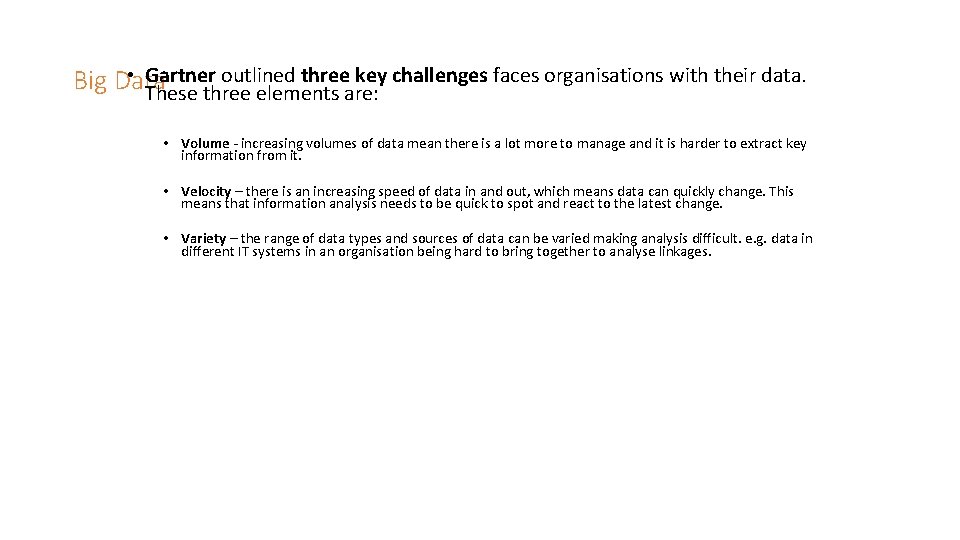
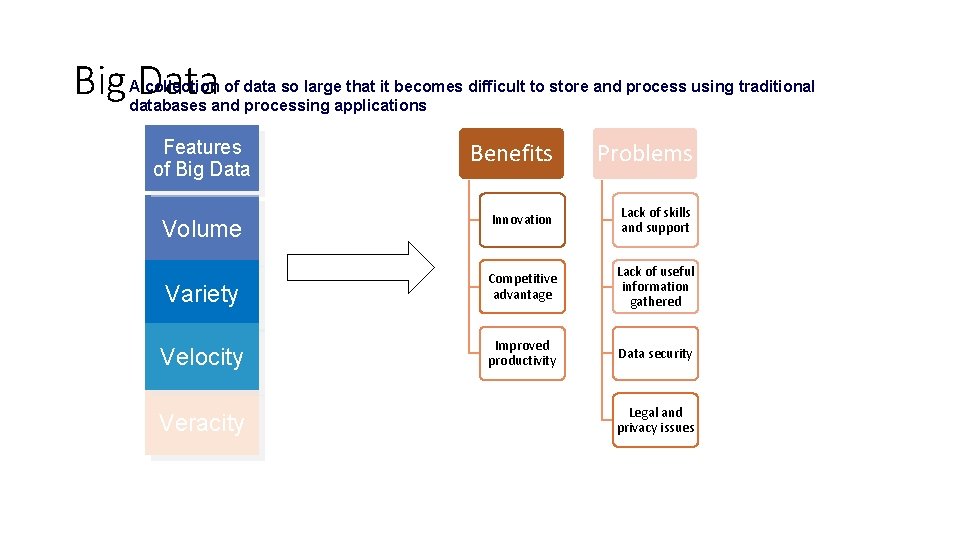
• Gartner outlined three key challenges faces organisations with their data. Big Data These three elements are: • Volume - increasing volumes of data mean there is a lot more to manage and it is harder to extract key information from it. • Velocity – there is an increasing speed of data in and out, which means data can quickly change. This means that information analysis needs to be quick to spot and react to the latest change. • Variety – the range of data types and sources of data can be varied making analysis difficult. e. g. data in different IT systems in an organisation being hard to bring together to analyse linkages.
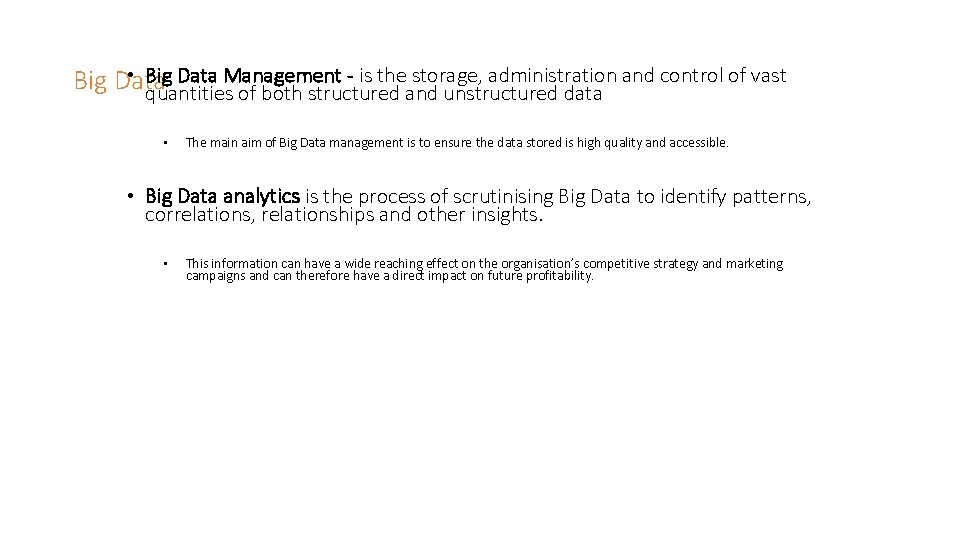
• Big Data Management - is the storage, administration and control of vast Big Data quantities of both structured and unstructured data • The main aim of Big Data management is to ensure the data stored is high quality and accessible. • Big Data analytics is the process of scrutinising Big Data to identify patterns, correlations, relationships and other insights. • This information can have a wide reaching effect on the organisation’s competitive strategy and marketing campaigns and can therefore have a direct impact on future profitability.
Big Data Why is Big Data so important? • Improved customer service – access to rich customer data enables marketers to provide a personalised, narrowly targeted, experience for customers, with relevant advertising and recommendations, increasing loyalty and brand engagement as well as driving sales. • Driving innovation by reducing the time taken to answer key business questions and therefore make decisions. • For example, making connections between things such as purchase history and physical location means that precisely targeted real-time marketing becomes possible. • Storage of transactional data in a digital format – companies can collect more accurate and more detailed performance information on everything from product inventories to sick days. The analysis of this data should help to improve decisions and boost performance. Corporate
Big Data Why is Big Data so important? • Big Data can be used to develop the next generation of products and services. For example, manufacturers are using data from sensors embedded in products from children’s toys to industrial goods to determine how these products are actually used in the real world. • This knowledge should improve the design of products and services. • Source of competitive advantage – Big Data is becoming a crucial way for leading companies to outperform their competitors. • Access to external information – an understanding of external (e. g. social and economic) factors is crucial to business success. Big Data will allow an organisation to, for example, scan and analyse newspaper reports or social media feeds so that they can permanently keep up to speed with the latest developments. • Can create new revenue streams – insights gained from Big Data may not only be valuable to the organisation itself but could be sold to generate a whole new revenue stream. Corporate
Big Data Risks associated with Big Data • Availability of skills to use Big Data systems which is compounded by the fact that many of the systems are rapidly developing and support is not always easily and readily available. There is also an increasing need to combine data analysis skills with deep understanding of the industry being analysed and this need is not always recognised. • Security of data is a major concern in the majority of organisations and if the organisation lacks the resource to manage data then there is likely to be a greater risk of leaks and losses. • Data Protection issues as organisations collect a greater range of data from increasingly personal sources (e. g. Facebook). • It is important to recognise that just because something can be measured, this does not necessarily mean it should be. There is a risk that valuable time is spent measuring relationships that have no organisational value. • If organisations are to effectively utilise Big Data, this will require a change in perspective to ensure sense can be made of the information. Corporate
Big Data A collection of data so large that it becomes difficult to store and process using traditional databases and processing applications Features of Big Data Benefits Problems Innovation Lack of skills and support Variety Competitive advantage Lack of useful information gathered Velocity Improved productivity Data security Volume Veracity Legal and privacy issues