
SESSION 10 MANAGING KNOWLEDGE FOR THE DIGITAL FIRM
- Slides: 29
SESSION 10 MANAGING KNOWLEDGE FOR THE DIGITAL FIRM
KNOWLEDGE MANAGEMENT IN THE ORGANIZATION Organizational learning Creation of new standard operating procedures and business processes Knowledge management Set of processes Creates, gathers, stores, maintains, and disseminates knowledge
KNOWLEDGE MANAGEMENT IN THE ORGANIZATION Systems and Infrastructure for Knowledge Management Knowledge Base Structured internal knowledge (explicit knowledge) External knowledge of competitors, products and markets Tacit knowledge Informal internal knowledge which resides in the minds of employees and has not been formally documented in a structured form
KNOWLEDGE MANAGEMENT IN THE ORGANIZATION Systems and Infrastructure for Knowledge Management Organizational Memory Stored learning from organization’s history Used for decision making and other purposes
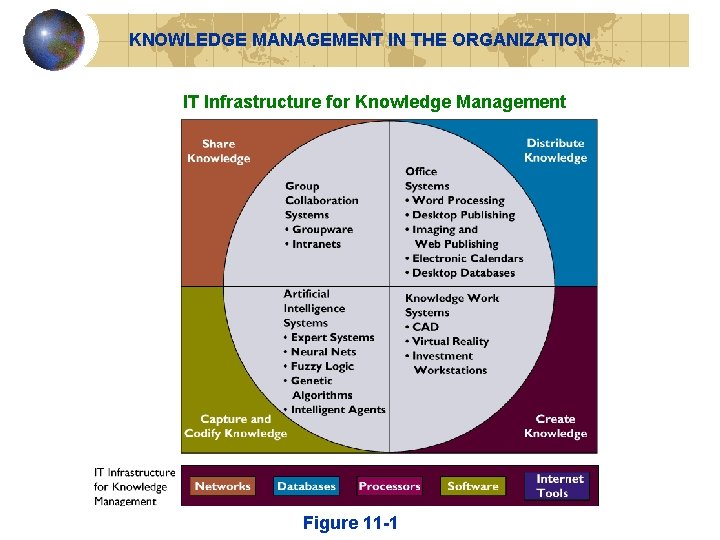
KNOWLEDGE MANAGEMENT IN THE ORGANIZATION IT Infrastructure for Knowledge Management Figure 11 -1
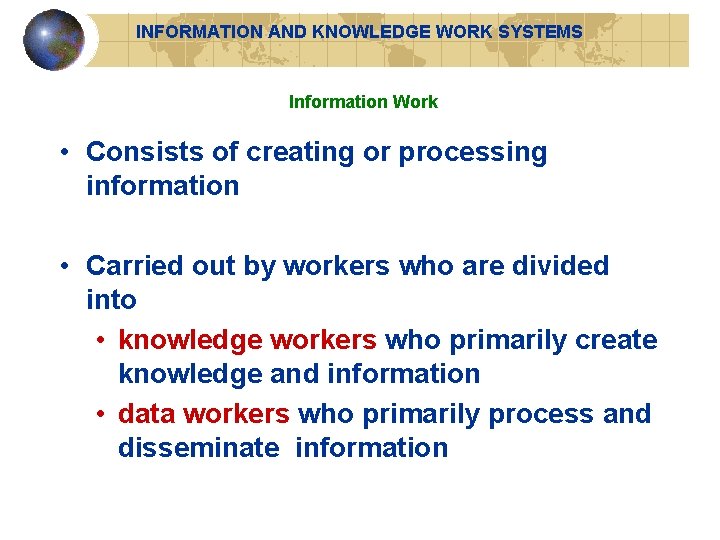
INFORMATION AND KNOWLEDGE WORK SYSTEMS Information Work • Consists of creating or processing information • Carried out by workers who are divided into • knowledge workers who primarily create knowledge and information • data workers who primarily process and disseminate information
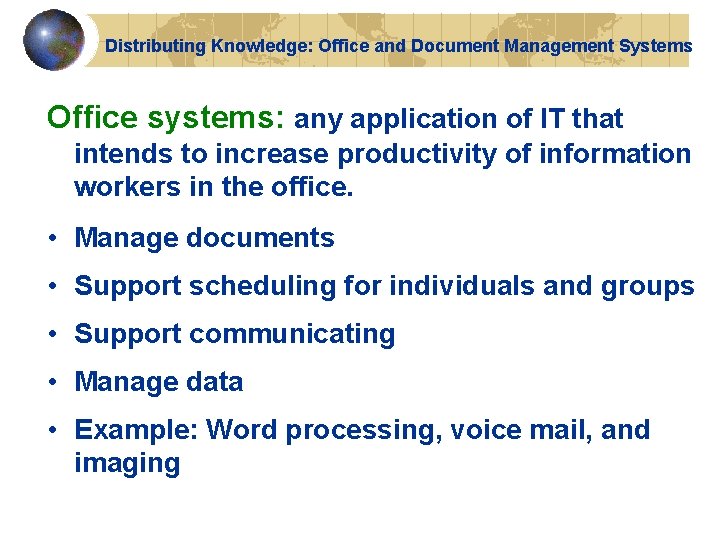
Distributing Knowledge: Office and Document Management Systems Office systems: any application of IT that intends to increase productivity of information workers in the office. • Manage documents • Support scheduling for individuals and groups • Support communicating • Manage data • Example: Word processing, voice mail, and imaging
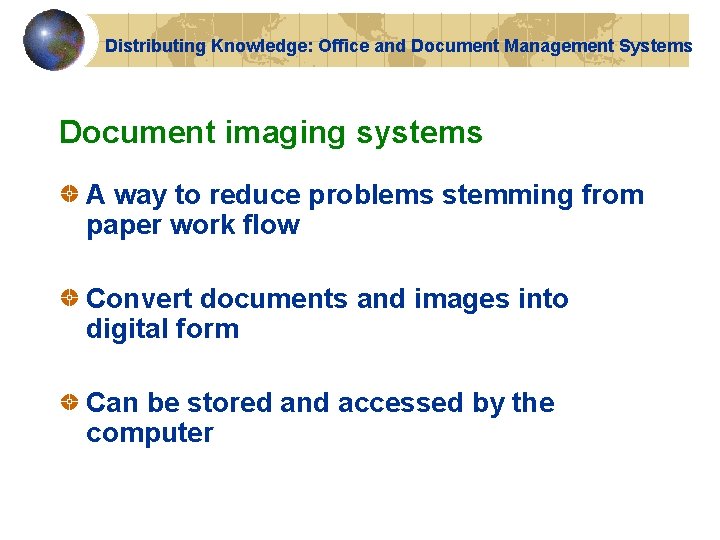
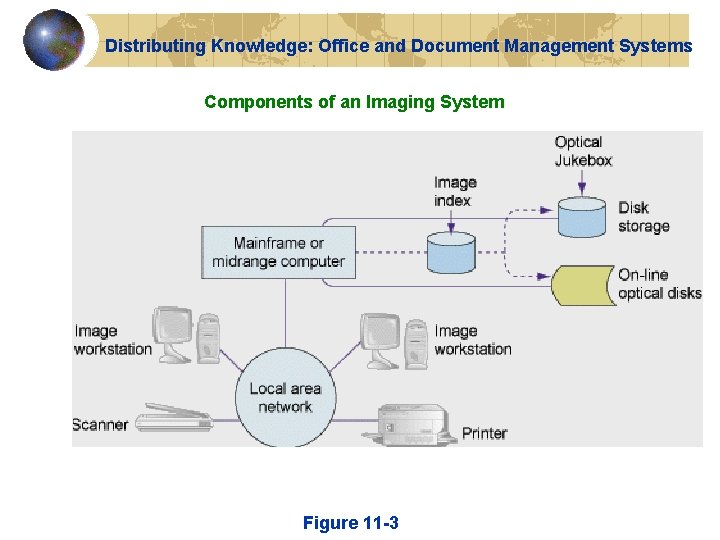
Distributing Knowledge: Office and Document Management Systems Document imaging systems A way to reduce problems stemming from paper work flow Convert documents and images into digital form Can be stored and accessed by the computer
Distributing Knowledge: Office and Document Management Systems Components of an Imaging System Figure 11 -3
Creating Knowledge: Knowledge Work Systems (KWS) Information systems that aid knowledge workers in creation and integration of new knowledge Knowledge work is segmented into highly specialized fields and each field has a different collection of KWS.
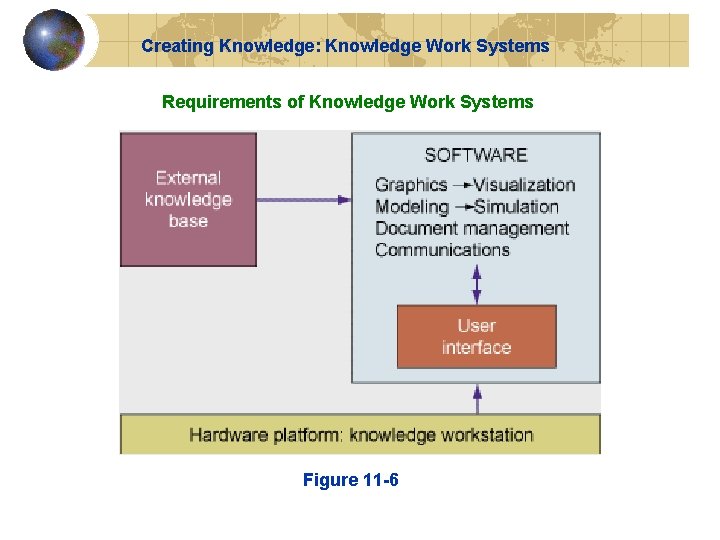
Creating Knowledge: Knowledge Work Systems Requirements of Knowledge Work Systems Figure 11 -6
Creating Knowledge: Knowledge Work Systems Examples of Knowledge Work Systems Computer-aided design (CAD) Virtual reality systems Investment workstations
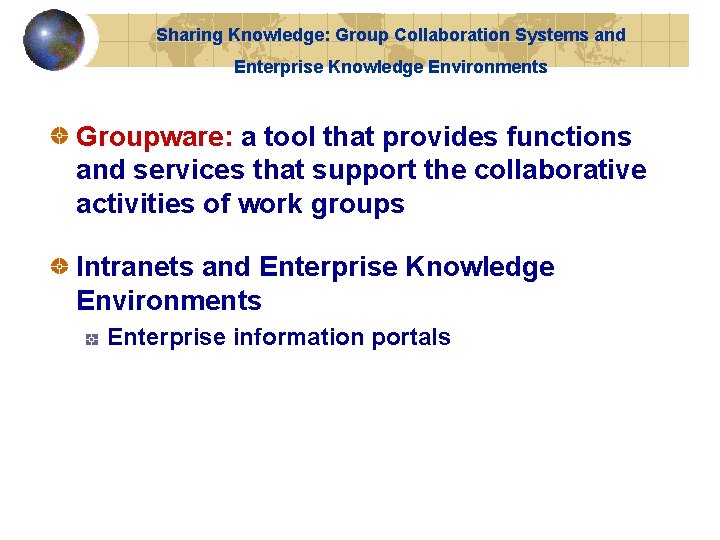
Sharing Knowledge: Group Collaboration Systems and Enterprise Knowledge Environments Groupware: a tool that provides functions and services that support the collaborative activities of work groups Intranets and Enterprise Knowledge Environments Enterprise information portals
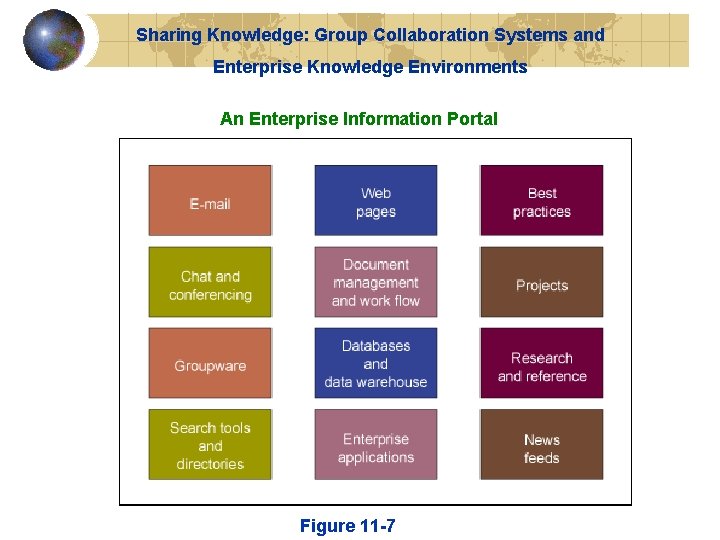
Sharing Knowledge: Group Collaboration Systems and Enterprise Knowledge Environments An Enterprise Information Portal Figure 11 -7
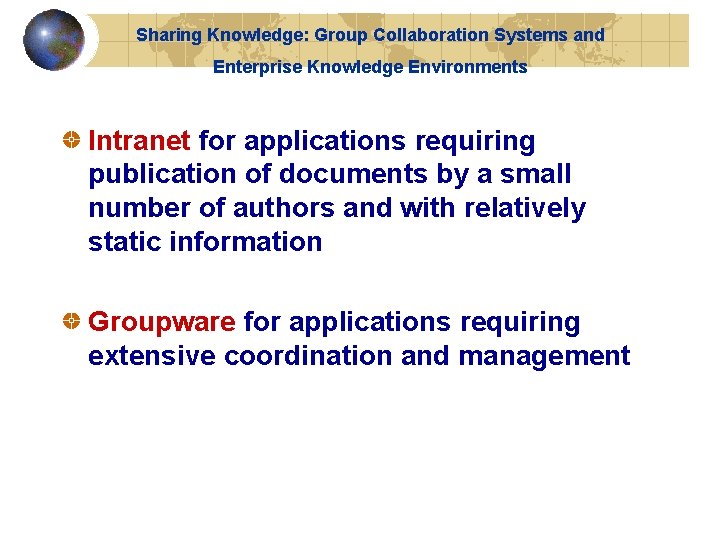
Sharing Knowledge: Group Collaboration Systems and Enterprise Knowledge Environments Intranet for applications requiring publication of documents by a small number of authors and with relatively static information Groupware for applications requiring extensive coordination and management
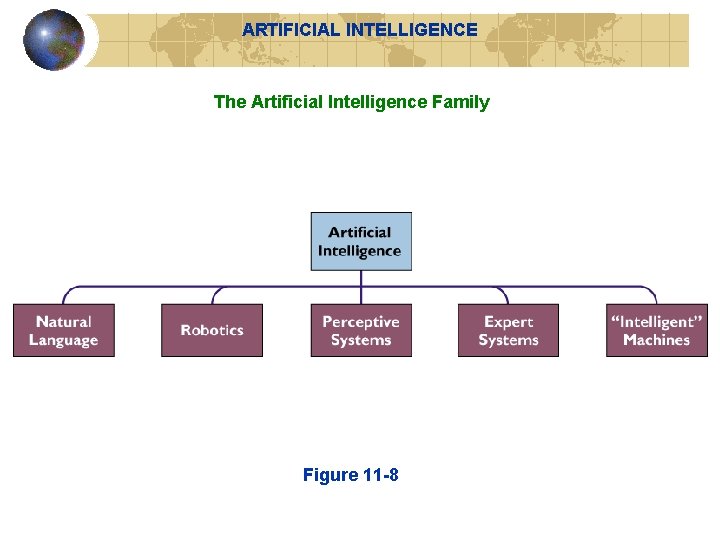
ARTIFICIAL INTELLIGENCE What is Artificial Intelligence? Effort to develop computer-based systems that behave as humans
ARTIFICIAL INTELLIGENCE The Artificial Intelligence Family Figure 11 -8
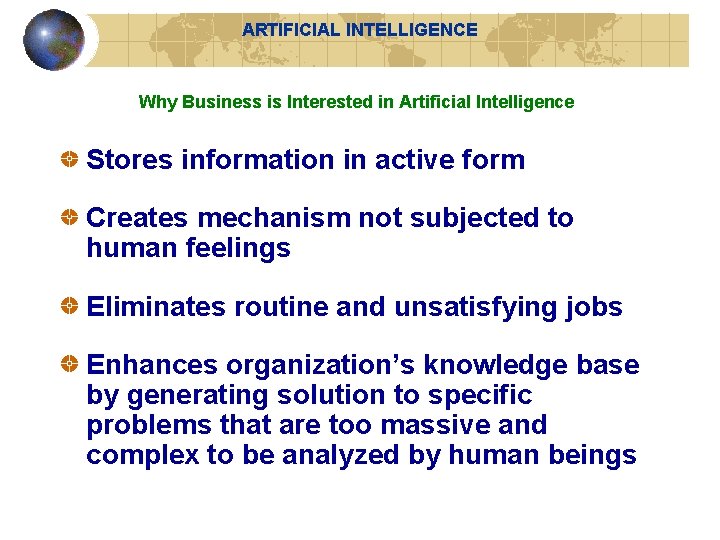
ARTIFICIAL INTELLIGENCE Why Business is Interested in Artificial Intelligence Stores information in active form Creates mechanism not subjected to human feelings Eliminates routine and unsatisfying jobs Enhances organization’s knowledge base by generating solution to specific problems that are too massive and complex to be analyzed by human beings
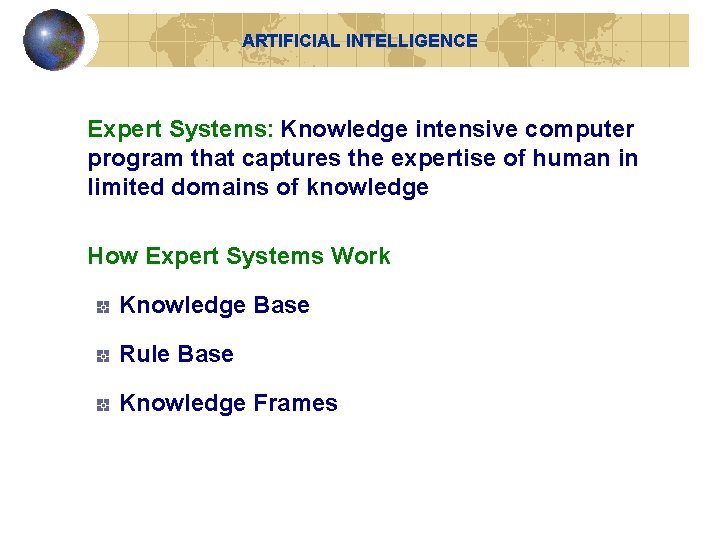
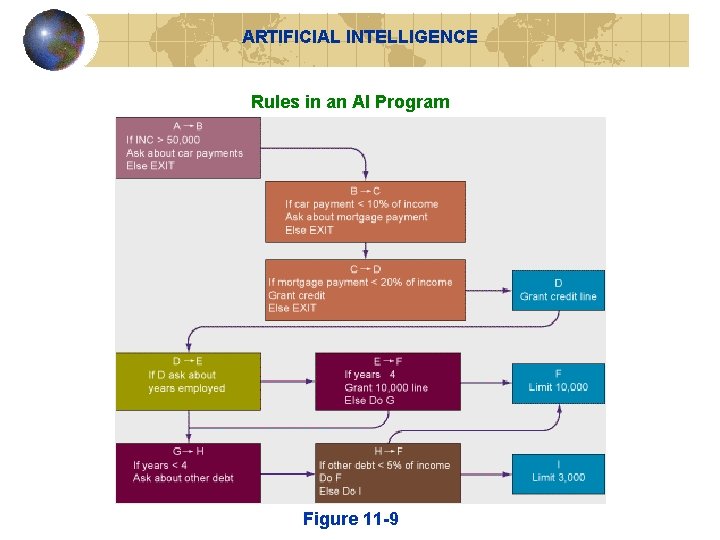
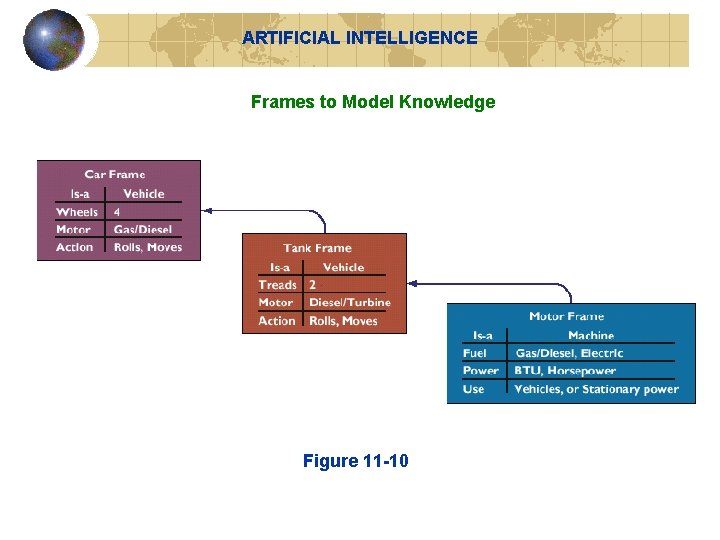
ARTIFICIAL INTELLIGENCE Expert Systems: Knowledge intensive computer program that captures the expertise of human in limited domains of knowledge How Expert Systems Work Knowledge Base Rule Base Knowledge Frames
ARTIFICIAL INTELLIGENCE Rules in an AI Program Figure 11 -9
ARTIFICIAL INTELLIGENCE Frames to Model Knowledge Figure 11 -10
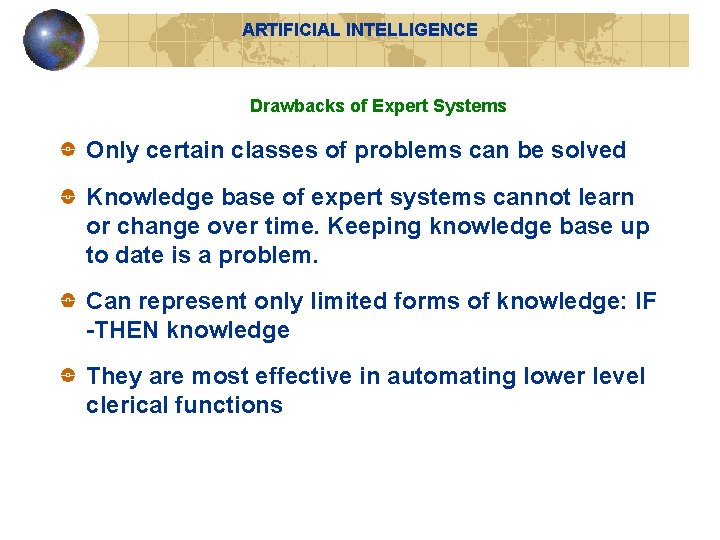
ARTIFICIAL INTELLIGENCE Drawbacks of Expert Systems Only certain classes of problems can be solved Knowledge base of expert systems cannot learn or change over time. Keeping knowledge base up to date is a problem. Can represent only limited forms of knowledge: IF -THEN knowledge They are most effective in automating lower level clerical functions
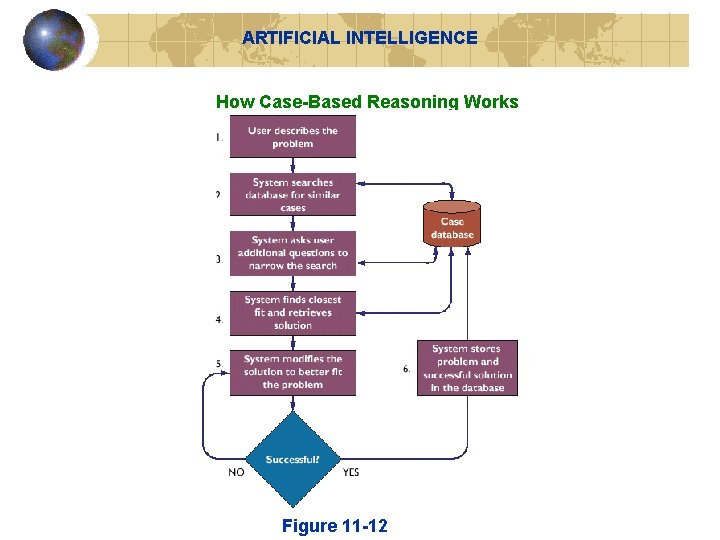
ARTIFICIAL INTELLIGENCE Organizational Intelligence: Case Based Reasoning Case-based Reasoning (CBR) Artificial intelligence technology Represents knowledge as database of cases and solutions
ARTIFICIAL INTELLIGENCE How Case-Based Reasoning Works Figure 11 -12
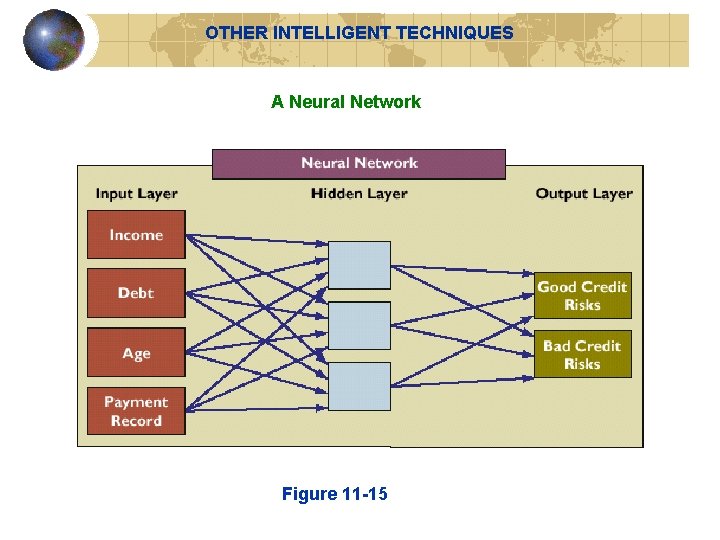
OTHER INTELLIGENT TECHNIQUES Neural Networks Hardware or software emulating processing patterns of biological brain How Neural Networks work The network is fed a training set of data for which the inputs produce a known set of outputs and conclusions. Computer learns the correct solution by example Address the problems in pattern classification, prediction and financial analysis, and control and analysis
OTHER INTELLIGENT TECHNIQUES A Neural Network Figure 11 -15
OTHER INTELLIGENT TECHNIQUES Genetic Algorithms Problem-solving methods Promote evolution of solutions to specified problems Use a model of living organisms adapting to their environment
OTHER INTELLIGENT TECHNIQUES Hybrid AI Systems Integration of multiple AI technologies into a single application Takes advantage of best features of technologies
OTHER INTELLIGENT TECHNIQUES Intelligent Agents Software programs Use built-in or learned knowledge base to carry out specific, repetitive, and predictable tasks or make decisions on the user’s behalf.