
Session 1 The ECC in practice its structure
- Slides: 20
Session 1 The ECC in practice, its structure, its working process Bruno Espinosa, European Communications Office bruno. espinosa@eco. cept. org 5 th CEPT workshop on “European Spectrum Management and Numbering” ECO, 26 October 2017
Scope • ECC: its framework • ECC: its organisation • ECC Deliverables • ECC Work Items • Participation to the ECC • ECC communications
ECC: What we do • Develops policies and work programme on spectrum, numbering and network matters in an European context; • Brings together expertise in managing scarce resources; • Offers a forum for the European preparation of ITU work; • Acts as recognised spectrum and nubering expert for CEPT Administrations and for the European Commission; • Provides a focal point for information (EFIS etc. ) on electronic communications; • Fosters cooperation with other bodies and stakeholders https: //cept. org/ecc/what-we-do
ECC: framework • Rules of Procedure (Ro. P): – High level rules on the structure, the participation, chairmanships, documentation, organisation of meetings. – Mechanism for ECC Decisions (development, approval, implementation, review. . . ). – Principles for conduct of meeting: general rule is consensus (don’t imply unanimity). Voting on an exceptional basis (Plenary, WG). https: //cept. org/files/16100/Edition%2015_Amendments%20 to%20 t he%20 ECC%20 Ro. P_June%202017. pdf Footer copy here
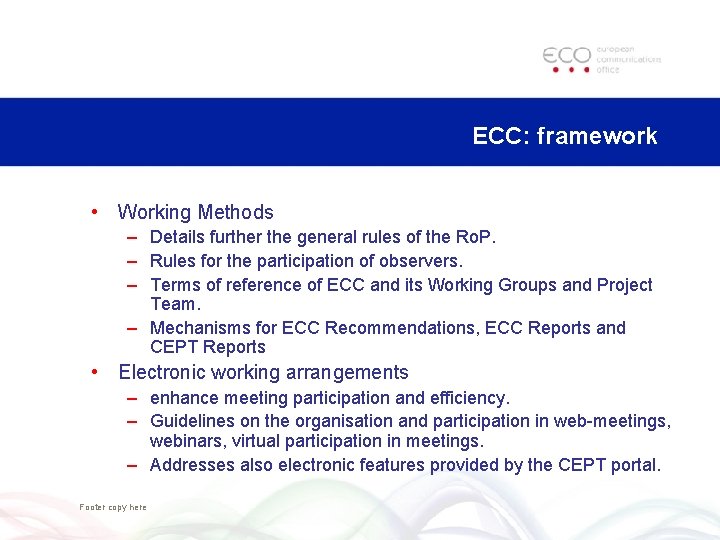
ECC: framework • Working Methods – Details further the general rules of the Ro. P. – Rules for the participation of observers. – Terms of reference of ECC and its Working Groups and Project Team. – Mechanisms for ECC Recommendations, ECC Reports and CEPT Reports • Electronic working arrangements – enhance meeting participation and efficiency. – Guidelines on the organisation and participation in web-meetings, webinars, virtual participation in meetings. – Addresses also electronic features provided by the CEPT portal. Footer copy here
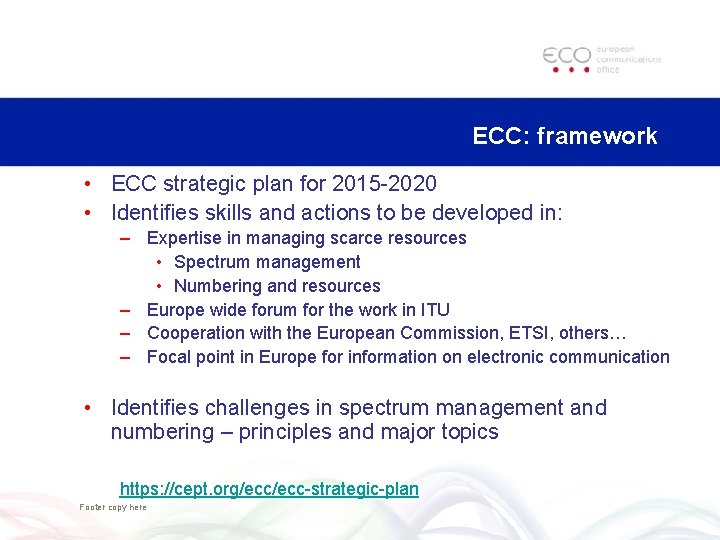
ECC: framework • ECC strategic plan for 2015 -2020 • Identifies skills and actions to be developed in: – Expertise in managing scarce resources • Spectrum management • Numbering and resources – Europe wide forum for the work in ITU – Cooperation with the European Commission, ETSI, others… – Focal point in Europe for information on electronic communication • Identifies challenges in spectrum management and numbering – principles and major topics https: //cept. org/ecc-strategic-plan Footer copy here
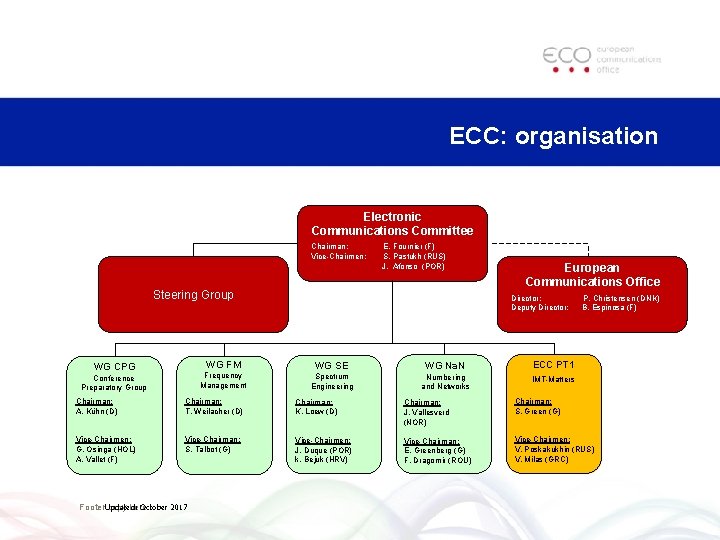
ECC: organisation Electronic Communications Committee Chairman: Vice-Chairmen: E. Fournier (F) S. Pastukh (RUS) J. Afonso (POR) Steering Group WG CPG Conference Preparatory Group European Communications Office Director: Deputy Director: WG FM WG SE WG Na. N ECC PT 1 Frequency Management Spectrum Engineering Numbering and Networks IMT-Matters P. Christensen (DNK) B. Espinosa (F) Chairman: A. Kühn (D) Chairman: T. Weilacher (D) Chairman: K. Loew (D) Chairman: J. Vallesverd (NOR) Chairman: S. Green (G) Vice-Chairmen: G. Osinga (HOL) A. Vallet (F) Vice-Chairman: S. Talbot (G) Vice-Chairmen: J. Duque (POR) k. Bejuk (HRV) Vice-Chairman: E. Greenberg (G) F. Dragomir (ROU) Vice-Chairmen: V. Poskakukhin (RUS) V. Milas (GRC) October 2017 Footer. Updated: copy here
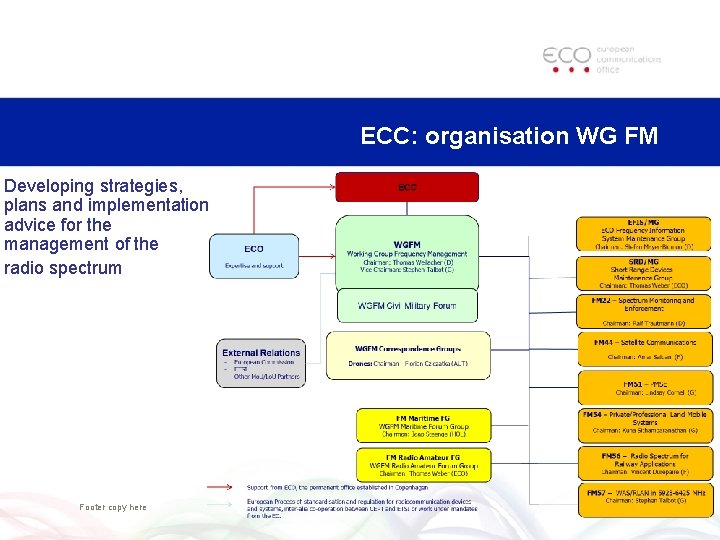
ECC: organisation WG FM Developing strategies, plans and implementation advice for the management of the radio spectrum Footer copy here
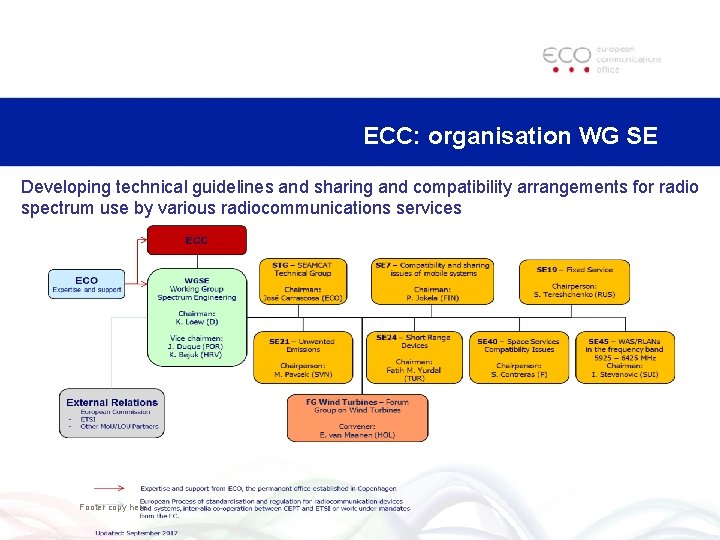
ECC: organisation WG SE Developing technical guidelines and sharing and compatibility arrangements for radio spectrum use by various radiocommunications services Footer copy here
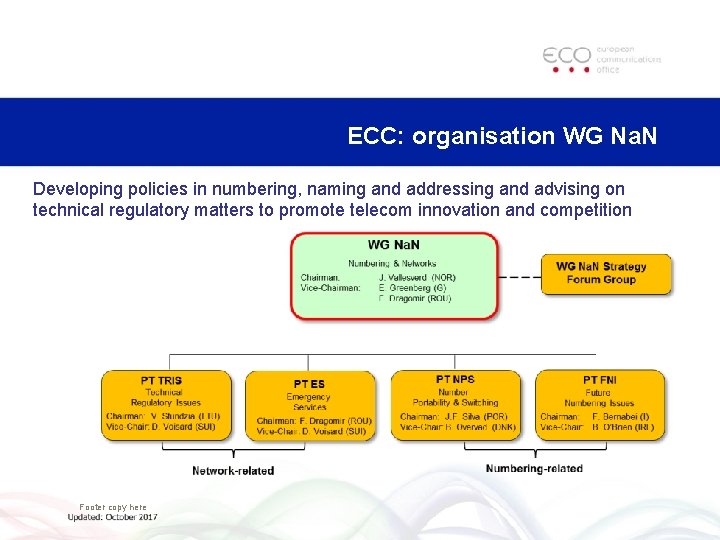
ECC: organisation WG Na. N Developing policies in numbering, naming and addressing and advising on technical regulatory matters to promote telecom innovation and competition Footer copy here
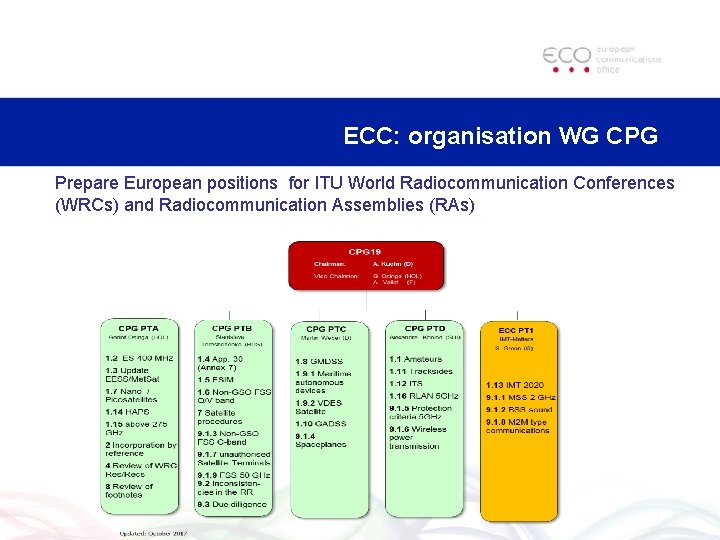
ECC: organisation WG CPG Prepare European positions for ITU World Radiocommunication Conferences (WRCs) and Radiocommunication Assemblies (RAs)
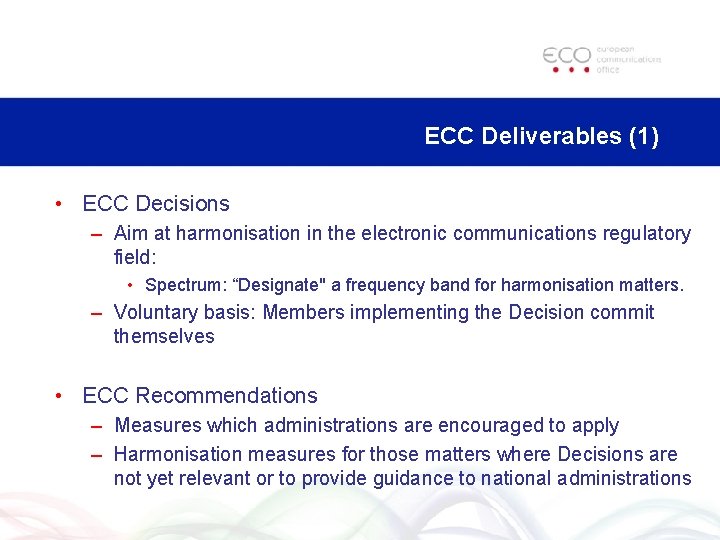
ECC Deliverables (1) • ECC Decisions – Aim at harmonisation in the electronic communications regulatory field: • Spectrum: “Designate" a frequency band for harmonisation matters. – Voluntary basis: Members implementing the Decision commit themselves • ECC Recommendations – Measures which administrations are encouraged to apply – Harmonisation measures for those matters where Decisions are not yet relevant or to provide guidance to national administrations
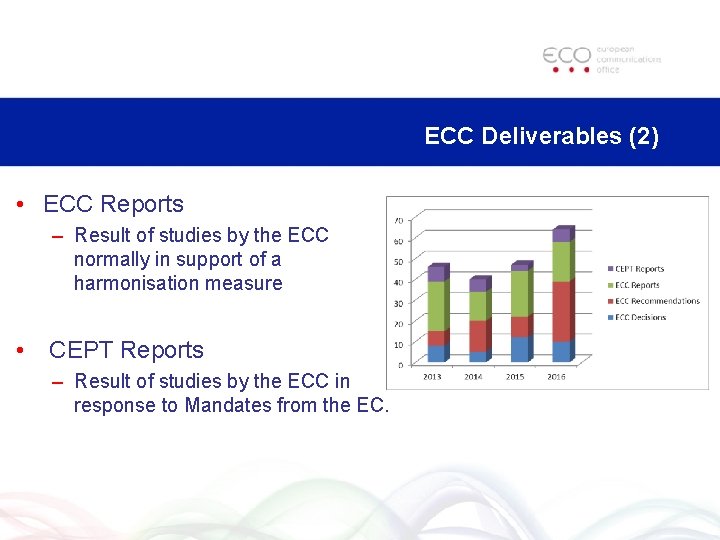
ECC Deliverables (2) • ECC Reports – Result of studies by the ECC normally in support of a harmonisation measure • CEPT Reports – Result of studies by the ECC in response to Mandates from the EC.
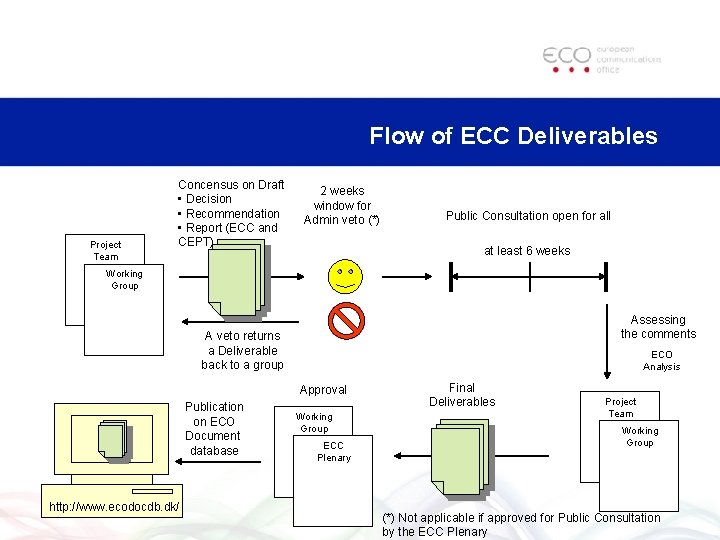
Flow of ECC Deliverables Project Team Concensus on Draft • Decision • Recommendation • Report (ECC and CEPT) 2 weeks window for Admin veto (*) Public Consultation open for all at least 6 weeks Working Group Assessing the comments A veto returns a Deliverable back to a group ECO Analysis Approval Publication on ECO Document database Footer copy here http: //www. ecodocdb. dk/ Working Group ECC Plenary Final Deliverables Project Team Working Group (*) Not applicable if approved for Public Consultation by the ECC Plenary
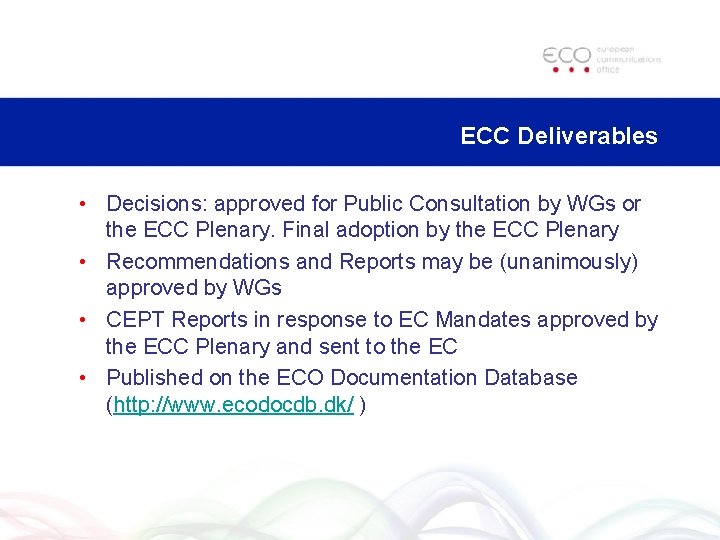
ECC Deliverables • Decisions: approved for Public Consultation by WGs or the ECC Plenary. Final adoption by the ECC Plenary • Recommendations and Reports may be (unanimously) approved by WGs • CEPT Reports in response to EC Mandates approved by the ECC Plenary and sent to the EC • Published on the ECO Documentation Database (http: //www. ecodocdb. dk/ )
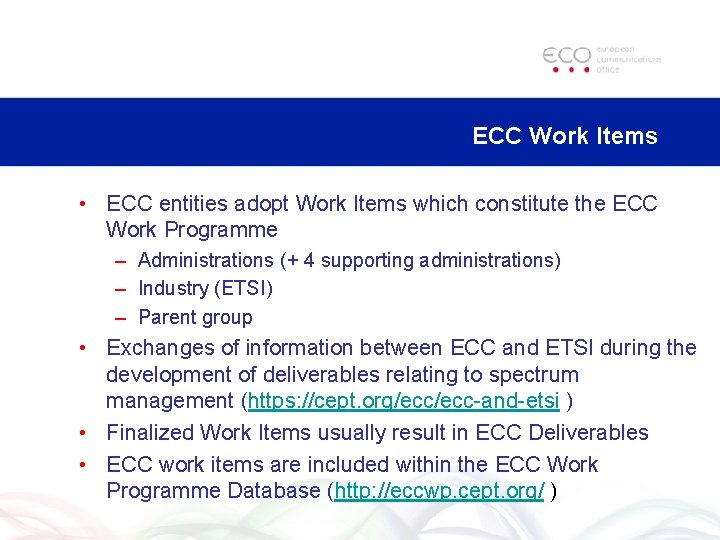
ECC Work Items • ECC entities adopt Work Items which constitute the ECC Work Programme – Administrations (+ 4 supporting administrations) – Industry (ETSI) – Parent group • Exchanges of information between ECC and ETSI during the development of deliverables relating to spectrum management (https: //cept. org/ecc-and-etsi ) • Finalized Work Items usually result in ECC Deliverables • ECC work items are included within the ECC Work Programme Database (http: //eccwp. cept. org/ )
ECC Participation • Members of CEPT are Members of the ECC as of right • Representatives of the European Commission and of the European Free Trade Association Secretariat are Counsellors of the ECC • Mo. Us and Lo. Us with CEPT or specifically with ECC: more than 40 organisations • Representatives of relevant inter-governmental organisations as well as other organisations or non-CEPT administrations concerned with electronic communications may be invited by the relevant Chairmen to participate as Observers in their meetings on an ad-hoc basis
ECC’s external participation • The ECC depends on active external participation in our work to complement our members’ own experience and technical expertise. • Observers can participate in the ECC meetings when issues of mutual interest are placed on the agenda • https: //cept. org/ecc/participation-in-ecc-work
ECC Communications • ECC Newsletters: https: //cept. org/ecc-newsletters. – 3 -4 per year. – Keep up-to-date with important spectrum and numbering policy issues being considered within the ECC. – Distributed to more than 5 000 stakeholders • News releases on the website. • Publication of monthly news summary to find out what's been going on in our Working Groups and Project Teams • Publication of presentations made by key ECC figures at conferences and workshops. • The ECC is on Twitter https: //twitter. com/CEPT_ECC
Thanks for your attention!! Questions? ?