
Session 1 Introduction to the CLAS Standards CLAS
![Session 1 Introduction to the CLAS Standards CLAS Training [ADD DATE] [ADD PRESENTER NAME]](https://slidetodoc.com/presentation_image_h2/bc22e00f9dc9779d2ef6f23aee18dd92/image-1.jpg "Session 1 Introduction to the CLAS Standards CLAS Training [ADD DATE] [ADD PRESENTER NAME]")
- Slides: 18
Session 1 Introduction to the CLAS Standards CLAS Training [ADD DATE] [ADD PRESENTER NAME] [ADD ORGANIZATION NAME]
Learning Objectives Understand the historical context of CLAS Differentiate between equality and equity Recognize at least five cultural differences that humans experience Explain the value of implementing CLAS 1
Activity 2
Key Terms CLAS—Culturally and Linguistically Appropriate Services that are respectful and responsive to cultural practices, language, literacy, and communication needs Limited English Proficiency (LEP)—speaking, hearing or reading English less than “very well” or insufficiently to ensure equal access to public services without language assistance Language assistance (access)—interpretation (spoken or signed) and translation (written)
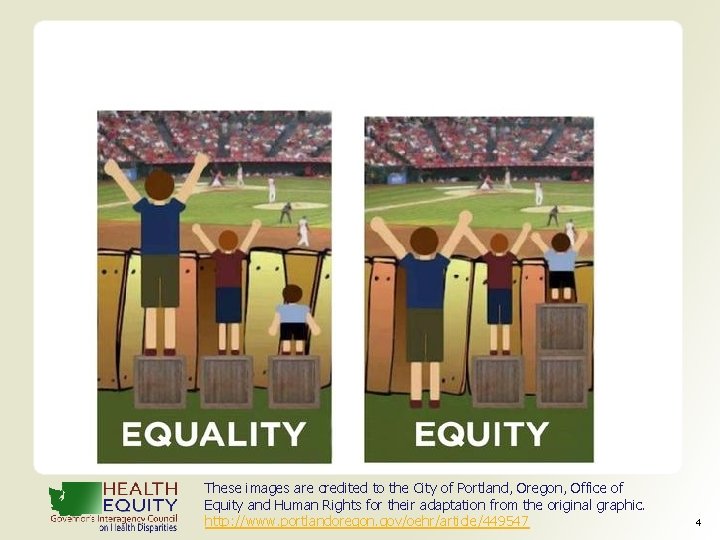
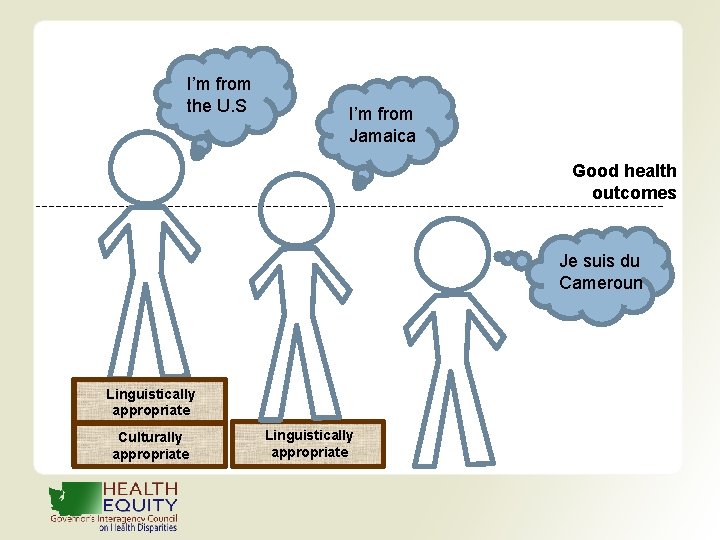
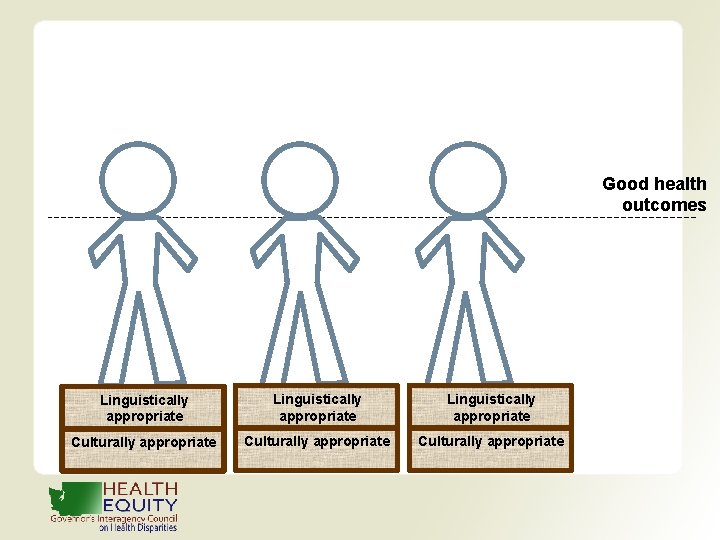
These images are credited to the City of Portland, Oregon, Office of Equity and Human Rights for their adaptation from the original graphic. http: //www. portlandoregon. gov/oehr/article/449547 4
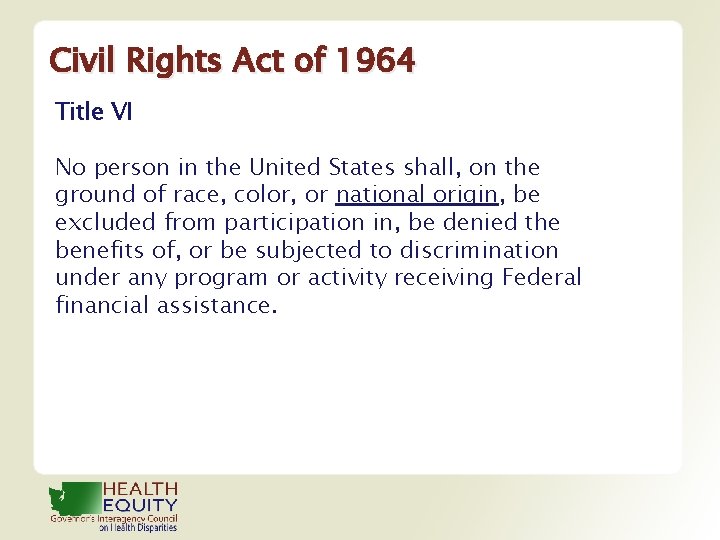
Civil Rights Act of 1964 Title VI No person in the United States shall, on the ground of race, color, or national origin, be excluded from participation in, be denied the benefits of, or be subjected to discrimination under any program or activity receiving Federal financial assistance.
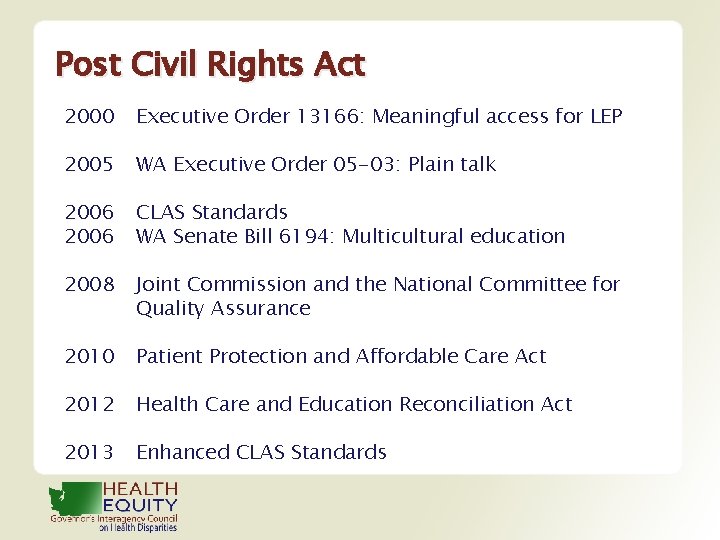
Post Civil Rights Act 2000 Executive Order 13166: Meaningful access for LEP 2005 WA Executive Order 05 -03: Plain talk 2006 CLAS Standards WA Senate Bill 6194: Multicultural education 2008 Joint Commission and the National Committee for Quality Assurance 2010 Patient Protection and Affordable Care Act 2012 Health Care and Education Reconciliation Act 2013 Enhanced CLAS Standards
Who are CLAS Standards for? 7
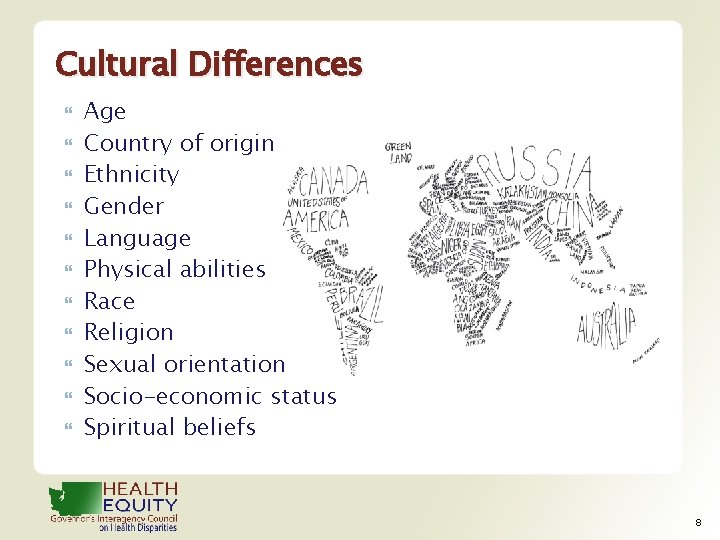
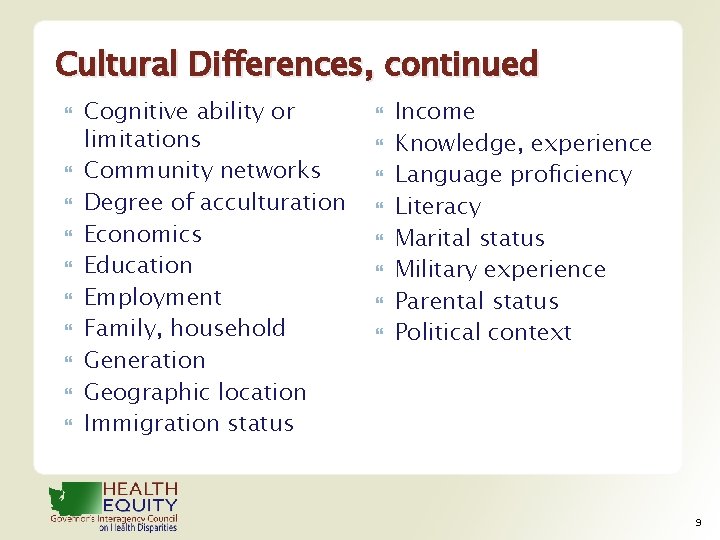
Cultural Differences Age Country of origin Ethnicity Gender Language Physical abilities Race Religion Sexual orientation Socio-economic status Spiritual beliefs 8
Cultural Differences, continued Cognitive ability or limitations Community networks Degree of acculturation Economics Education Employment Family, household Generation Geographic location Immigration status Income Knowledge, experience Language proficiency Literacy Marital status Military experience Parental status Political context 9
10
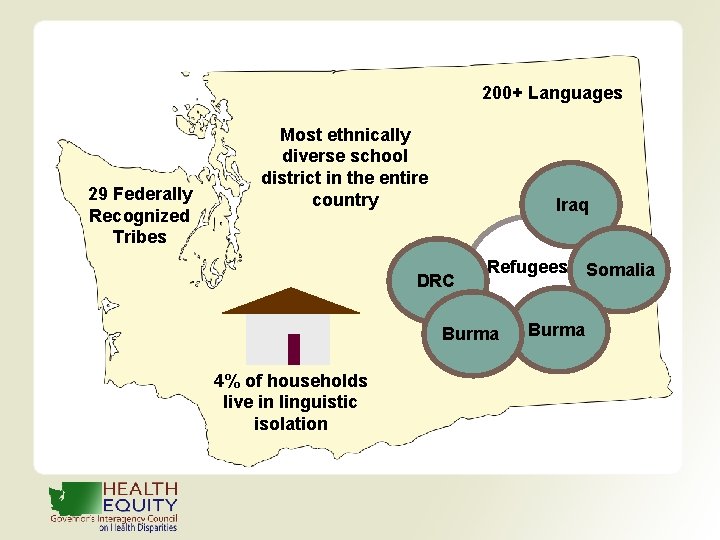
200+ Languages 29 Federally Recognized Tribes Most ethnically diverse school district in the entire country Iraq DRC Refugees Burma 4% of households live in linguistic isolation Burma Somalia
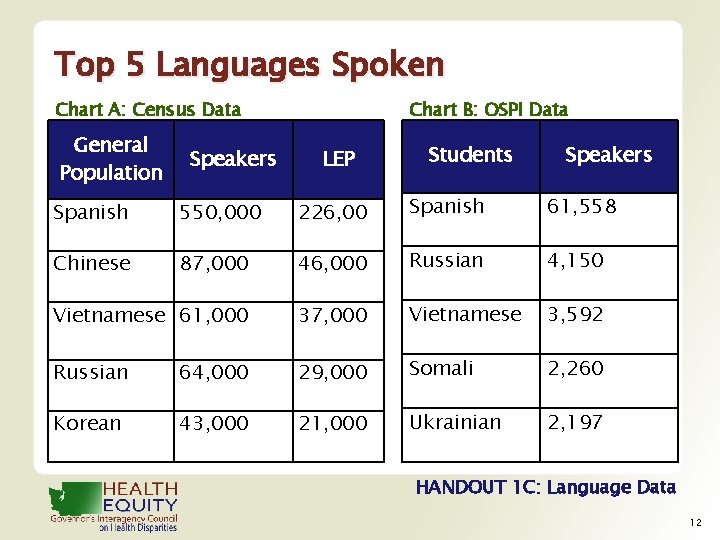
Top 5 Languages Spoken Chart A: Census Data General Population Speakers Chart B: OSPI Data LEP Students Speakers Spanish 550, 000 226, 00 Spanish 61, 558 Chinese 87, 000 46, 000 Russian 4, 150 Vietnamese 61, 000 37, 000 Vietnamese 3, 592 Russian 64, 000 29, 000 Somali 2, 260 Korean 43, 000 21, 000 Ukrainian 2, 197 HANDOUT 1 C: Language Data 12
I’m from the U. S I’m from Jamaica Good health outcomes Je suis du Cameroun Linguistically appropriate Culturally appropriate Linguistically appropriate
Good health outcomes Linguistically appropriate Culturally appropriate
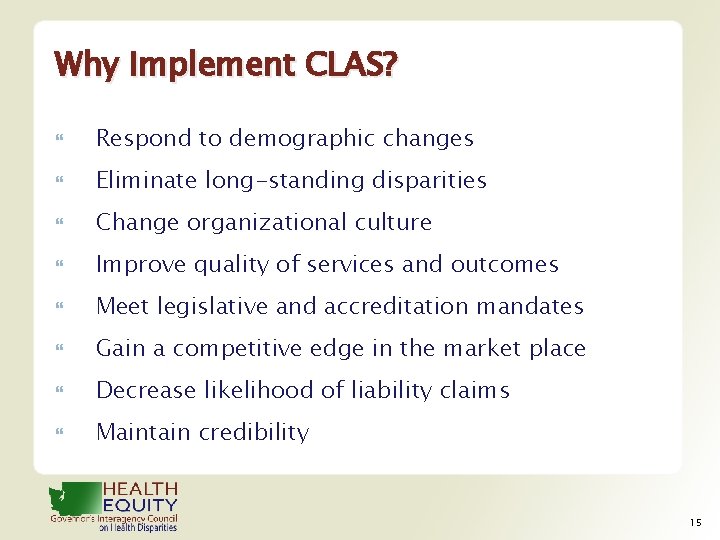
Why Implement CLAS? Respond to demographic changes Eliminate long-standing disparities Change organizational culture Improve quality of services and outcomes Meet legislative and accreditation mandates Gain a competitive edge in the market place Decrease likelihood of liability claims Maintain credibility 15
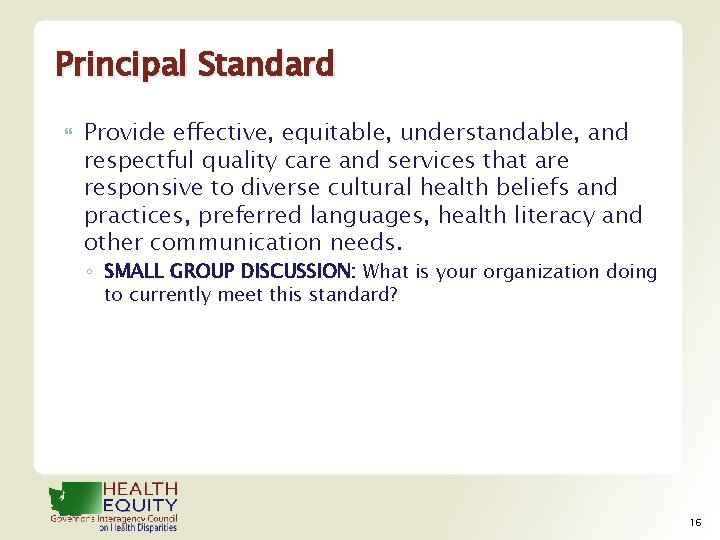
Principal Standard Provide effective, equitable, understandable, and respectful quality care and services that are responsive to diverse cultural health beliefs and practices, preferred languages, health literacy and other communication needs. ◦ SMALL GROUP DISCUSSION: What is your organization doing to currently meet this standard? 16
Thank You! 17