
Session 1 Discriminations definition Discrimination consists in treating
- Slides: 6
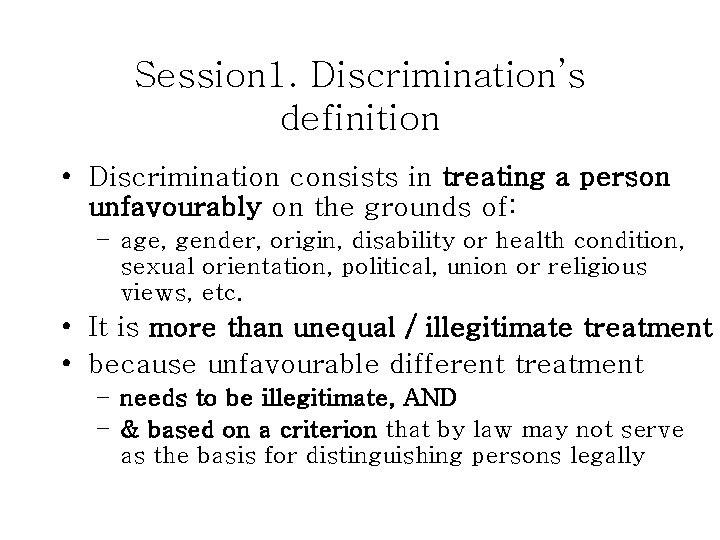
Session 1. Discrimination’s definition • Discrimination consists in treating a person unfavourably on the grounds of: – age, gender, origin, disability or health condition, sexual orientation, political, union or religious views, etc. • It is more than unequal / illegitimate treatment • because unfavourable different treatment – needs to be illegitimate, AND – & based on a criterion that by law may not serve as the basis for distinguishing persons legally
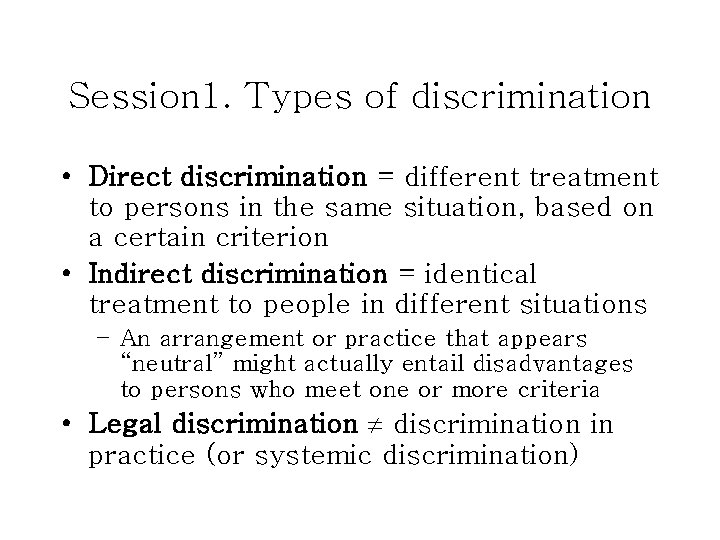
Session 1. Types of discrimination • Direct discrimination = different treatment to persons in the same situation, based on a certain criterion • Indirect discrimination = identical treatment to people in different situations – An arrangement or practice that appears “neutral” might actually entail disadvantages to persons who meet one or more criteria • Legal discrimination in practice (or systemic discrimination)
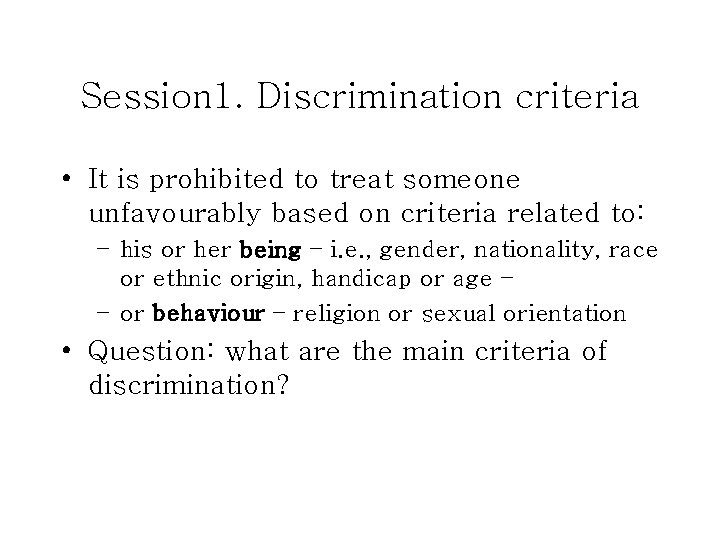
Session 1. Discrimination criteria • It is prohibited to treat someone unfavourably based on criteria related to: – his or her being – i. e. , gender, nationality, race or ethnic origin, handicap or age – – or behaviour – religion or sexual orientation • Question: what are the main criteria of discrimination?
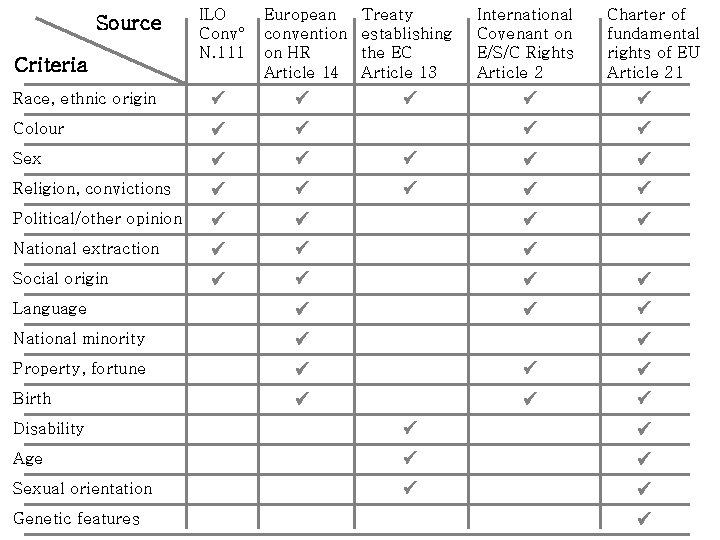
ILO Conv° N. 111 European convention on HR Article 14 Treaty establishing the EC Article 13 Race, ethnic origin Colour Sex Religion, convictions Political/other opinion National extraction Social origin Source Criteria International Covenant on E/S/C Rights Article 2 Charter of fundamental rights of EU Article 21 Language National minority Property, fortune Birth Disability Age Sexual orientation Genetic features
Session 1. Highlighting discrimination • Question: how do you highlight direct and indirect discrimination?
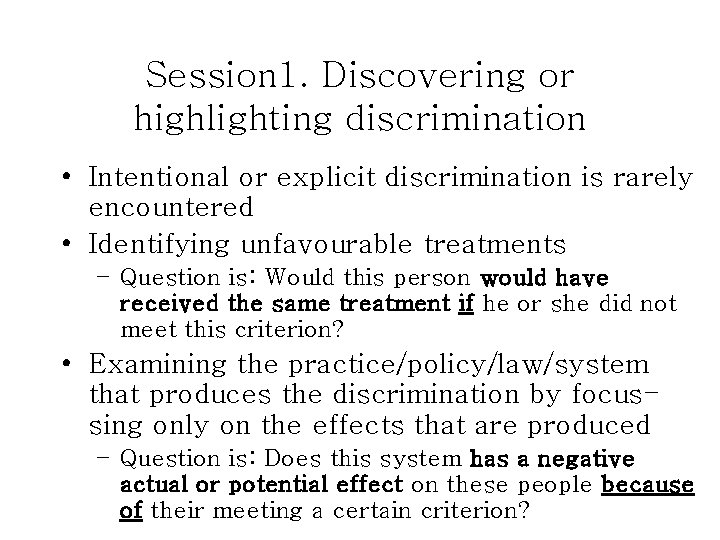
Session 1. Discovering or highlighting discrimination • Intentional or explicit discrimination is rarely encountered • Identifying unfavourable treatments – Question is: Would this person would have received the same treatment if he or she did not meet this criterion? • Examining the practice/policy/law/system that produces the discrimination by focussing only on the effects that are produced – Question is: Does this system has a negative actual or potential effect on these people because of their meeting a certain criterion?