
Session 1 4 Interpersonal Communication Module 1 Leadership
- Slides: 39
Session 1. 4: Interpersonal Communication Module 1: Leadership and Team Building Leadership and Management Course for ZHRC Coordinators, HTI Principals, and ZHRC/HTI Management Teams
Learning Objectives By the end of the session, participants will be able to: § Define interpersonal communication. § Describe the importance of communication in leadership. § List at least three styles of communication. § Identify and practice at least two strategies to improve listening. § Describe communication barriers. § Identify strategies for preventing and overcoming communication barriers. 2
Activity: Build A Story § One person begins the story with 1 sentence. • Once upon a time, ____ § The next person adds 1 more sentence to the story, and so on. § Continue until the story ends! 3
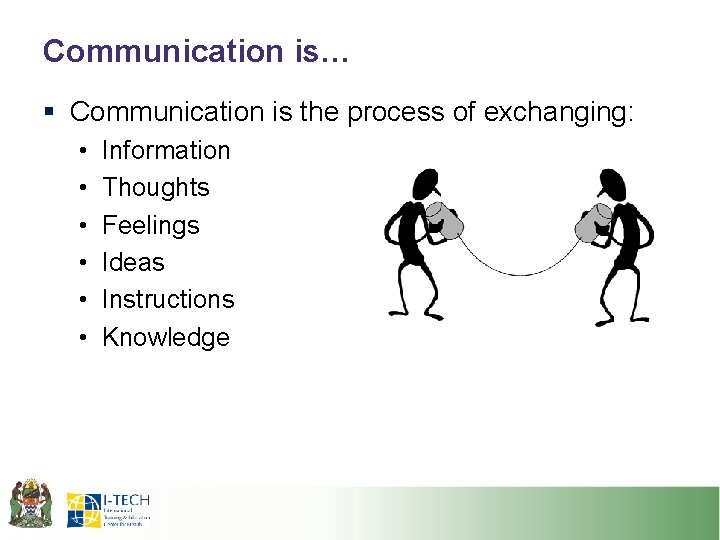
Communication is… § Communication is the process of exchanging: • • • Information Thoughts Feelings Ideas Instructions Knowledge
Importance of Communication § Communication is necessary to: • • • Share knowledge and experiences Build relationships Motivate Inform Teach Persuade Entertain Inspire Give or receive instructions, directions, etc.
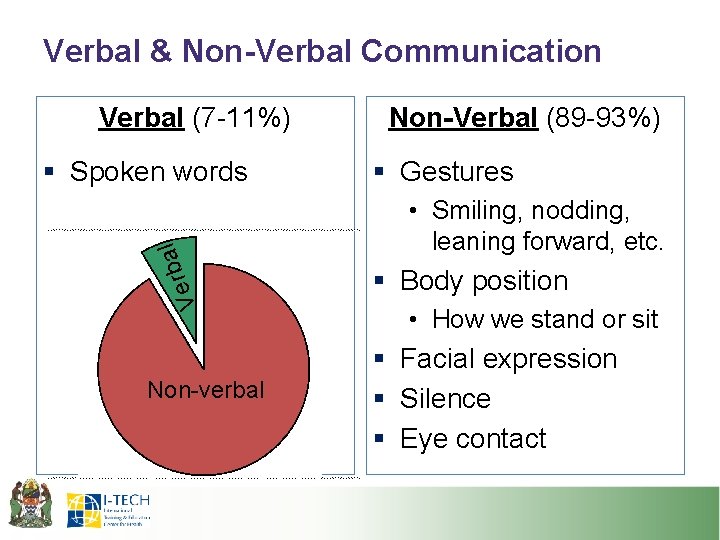
Verbal & Non-Verbal Communication Verbal (7 -11%) § Gestures • Smiling, nodding, leaning forward, etc. l a b r Ve § Spoken words Non-Verbal (89 -93%) § Body position Non-verbal § Facial expression § Silence § Eye contact • How we stand or sit
Components of Communication § Sender: the person who delivers the information § Receiver: the person who takes in the information § Message: the information, ideas, or feelings being shared § Channel: the media or means through which the information is being sent § Feedback: the response from the receiver indicating that the message has been received
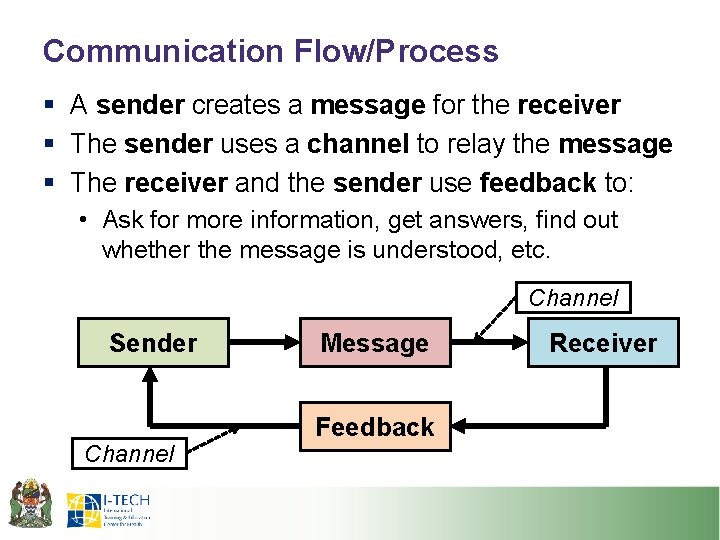
Communication Flow/Process § A sender creates a message for the receiver § The sender uses a channel to relay the message § The receiver and the sender use feedback to: • Ask for more information, get answers, find out whether the message is understood, etc. Channel Sender Channel Message Feedback Receiver
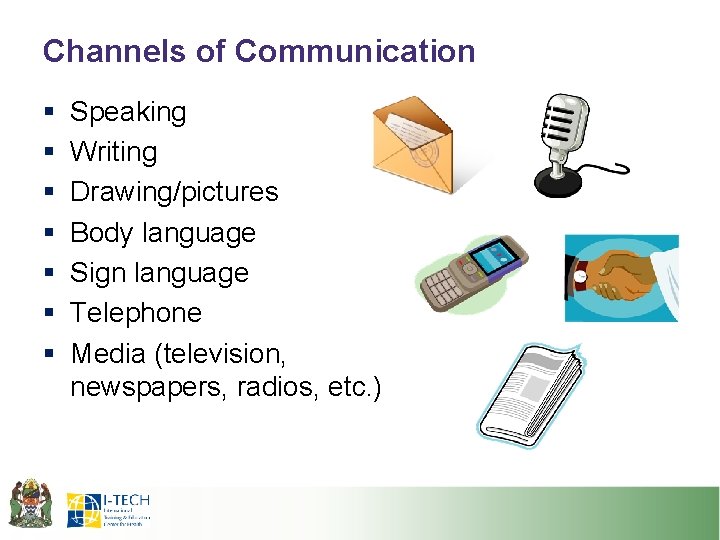
Channels of Communication § § § § Speaking Writing Drawing/pictures Body language Sign language Telephone Media (television, newspapers, radios, etc. )
Why is communication important for leadership? 10
Leadership & Communication § Good leaders are excellent communicators. § Good communication: • Facilitates information exchange, within and outside the organization • Conveys meaning and inspiration • Prepares teams to face challenges • Aligns expectations • Resolves conflicts 11
What are key communication skills that leaders practice? 12
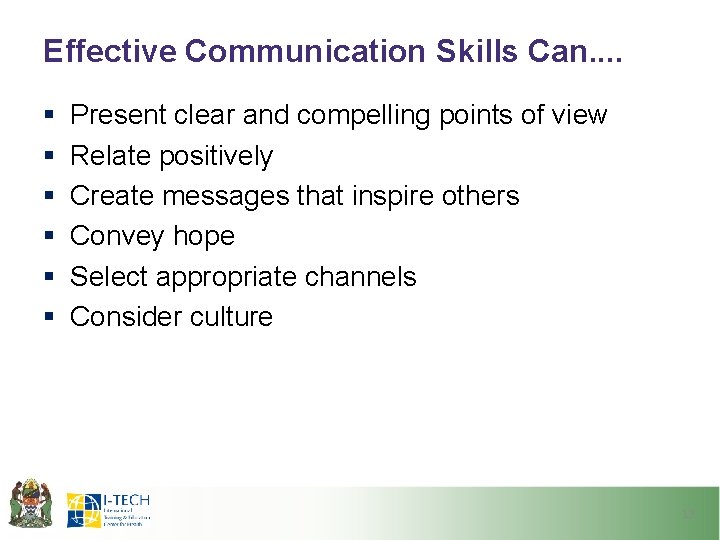
Effective Communication Skills Can. . § § § Present clear and compelling points of view Relate positively Create messages that inspire others Convey hope Select appropriate channels Consider culture 13
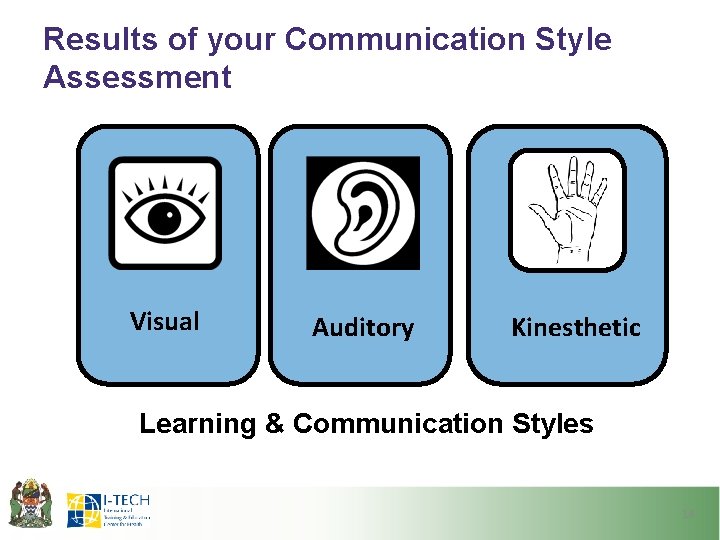
Results of your Communication Style Assessment Visual Auditory Kinesthetic Learning & Communication Styles 14
Visual Learners § Learn best by seeing things. § “Show me!” § “Watch how I do it!” 15
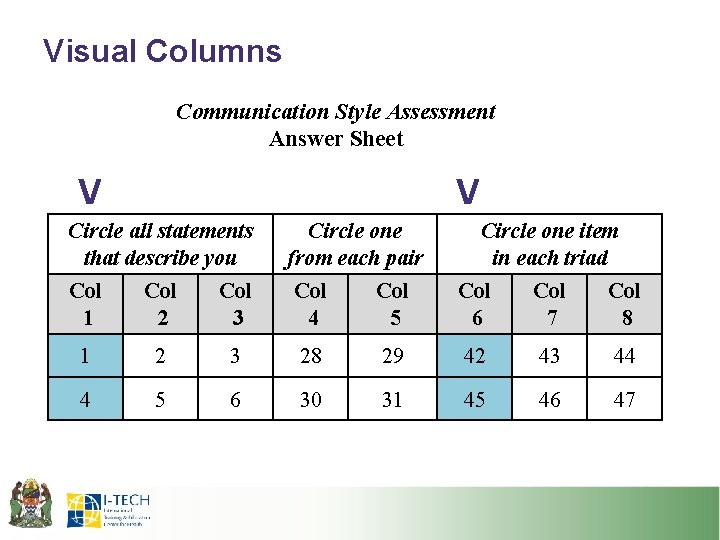
Visual Columns Communication Style Assessment Answer Sheet V V Circle all statements that describe you Circle one from each pair Circle one item in each triad Col 1 Col 2 Col 3 Col 4 Col 5 Col 6 Col 7 Col 8 1 2 3 28 29 42 43 44 4 5 6 30 31 45 46 47
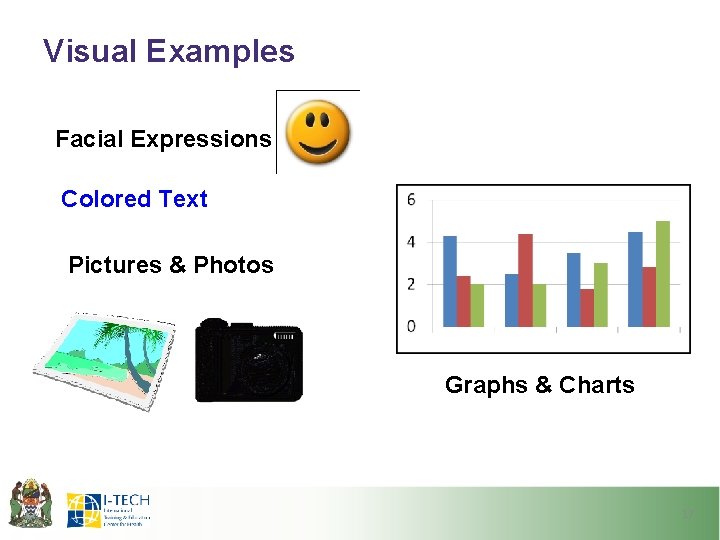
Visual Examples Facial Expressions Colored Text Pictures & Photos Graphs & Charts 17
Auditory Learners § Learn best by hearing things. § “Tell me!” § “Listen to me explain!” 18
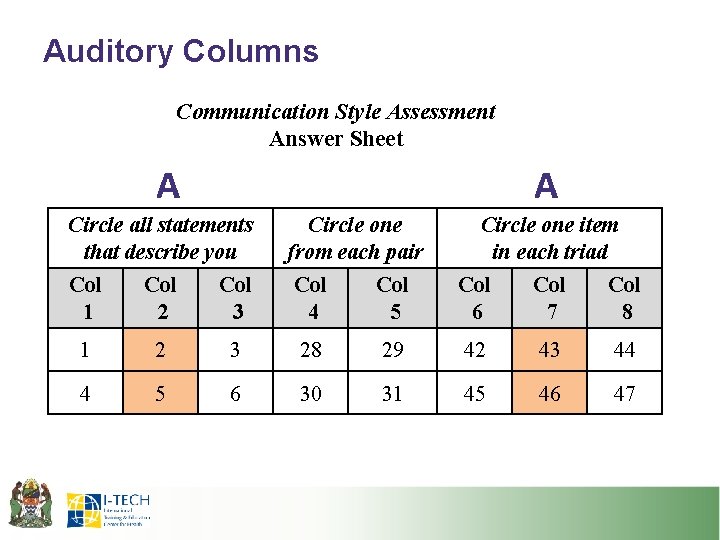
Auditory Columns Communication Style Assessment Answer Sheet A A Circle all statements that describe you Circle one from each pair Circle one item in each triad Col 1 Col 2 Col 3 Col 4 Col 5 Col 6 Col 7 Col 8 1 2 3 28 29 42 43 44 4 5 6 30 31 45 46 47
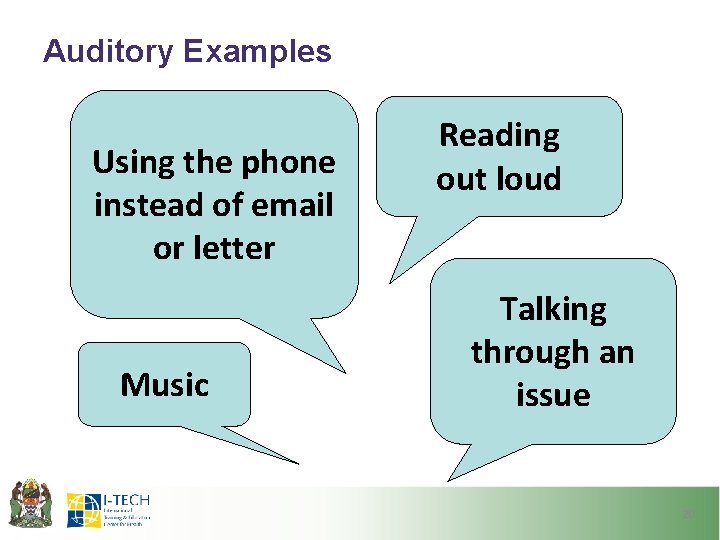
Auditory Examples Using the phone instead of email or letter Music Reading out loud Talking through an issue 20
Kinesthetic Learners § Learn by doing. § “Let me try. ” § “Now, you try doing it!” 21
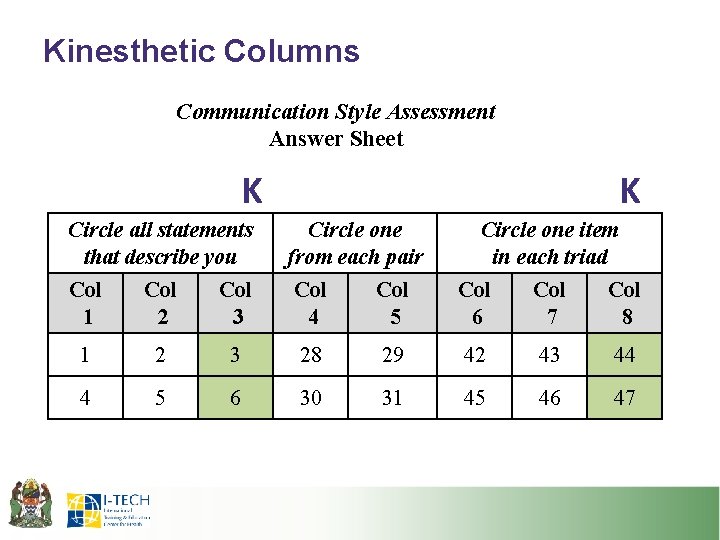
Kinesthetic Columns Communication Style Assessment Answer Sheet K K Circle all statements that describe you Circle one from each pair Circle one item in each triad Col 1 Col 2 Col 3 Col 4 Col 5 Col 6 Col 7 Col 8 1 2 3 28 29 42 43 44 4 5 6 30 31 45 46 47
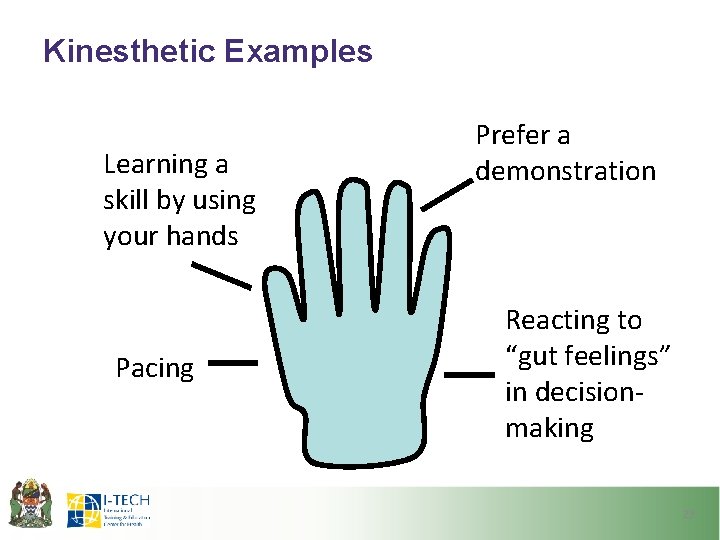
Kinesthetic Examples Learning a skill by using your hands Pacing Prefer a demonstration Reacting to “gut feelings” in decisionmaking 23
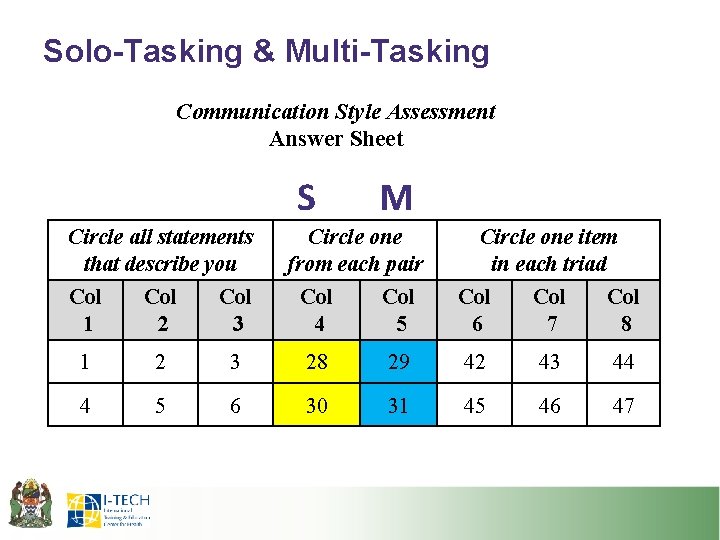
Solo-Tasking & Multi-Tasking Communication Style Assessment Answer Sheet S Circle all statements that describe you M Circle one from each pair Circle one item in each triad Col 1 Col 2 Col 3 Col 4 Col 5 Col 6 Col 7 Col 8 1 2 3 28 29 42 43 44 4 5 6 30 31 45 46 47
Why are these modes important? § To learn and to lead best, we must understand our preferred mode(s) of giving and receiving information. § Most people learn in multiple modes. Mix it up! § To be understood, tailor speech and hearing to the mode of the listener. 25
Why is listening important? 26
Listening & Leadership § Listening is a critical leadership skill. It: • • Improves morale Builds respect and trust Fosters collaboration and learning Helps to prevent and resolve conflict
Activity: Listening Self-Assessment § Complete the Listening Self-Assessment. § Do you consistently practice good listening habits? § How could you improve your listening habits? 28
Activity: The Art of Listening 29
Becoming an Effective Listener § § § § Stop talking Don’t interrupt Ask questions Stay constructive Look, act, and be interested Seek first to understand, then be understood Be sensitive to the speaker’s feelings, and try to appreciate their point of view § Stop talking 30
Strengthening Communication § Simple changes in communication can clarify expectations, lift morale, and help people deal with difficult situations. § We can strengthen communication by: • • Balancing advocacy and inquiry Hearing what others say Responding constructively Using proactive language
Barriers to Effective Communication § § § § § Talking too much Not listening Not paying attention § Expressing criticism, § § judgment § Showing anger Getting upset Not accepting feedback§ Interrupting § Using inappropriate channel Arguing Lack of knowledge Poor non-verbal signs Distracting environment Using mobile phone (answering call, SMS) Lack of privacy
Activity: Barriers to Communication § § Read about the barrier assigned to your group. Discuss how this barrier relates to our work. Identify several examples of this barrier. Suggest possible solutions to overcome this barrier. § Be prepared to share a brief, 2 -minute presentation. 33
Hear What Others Say: Buzz in Pairs § § § Listen carefully Remove barriers to communication Identify assumptions Seek to understand diverse viewpoints End conflict before it spreads 34
Respond Constructively § § § Give specific feedback Balance the negative with the positive Use proactive language Convert complaints into requests Be genuine 35
Be Proactive, Not Reactive Proactive § Making decisions on § Making decisions impulse, in based on values; response to external thinking before you stimuli act
Activity: Using Proactive Language § Work in small groups to turn a reactive statement into a proactive statement. § For example: • Reactive: “There’s nothing we can do. ” • Proactive: “Let’s look at what we can do…” 37
Activity: Improving Communication Skills § Reflect on what you have learned during this session. § What communication skills can you improve? § Write 1 -2 things that you will work to improve. Be specific!
Key Points § Communication includes verbal and non-verbal components. Both are important. § Effective communication skills are essential for good leadership and management. § To communicate well, you should engage different communication styles (visual, auditory, kinesthetic). § Listening helps to improve morale, build trust, foster collaboration, and prevent/resolve conflict. § We can strengthen communication by removing barriers, listening well, being constructive, and being proactive.