
Session 1 3 Managing Organizational Change and Transition
- Slides: 21
Session 1. 3: Managing Organizational Change and Transition Module 1: Leadership and Team Building Leadership and Management Course for ZHRC Coordinators, HTI Principals, and ZHRC/HTI Management Teams
Learning Objectives By the end of the session, participants will be able to: § Describe the difference between change and transition. § Describe the 3 phases of transition. § Describe a change initiative in a complete, compelling, and practical way. § Apply a transition management model to an anticipated organizational change. 2
Organizational Change & Transition It is a terrible thing to look over your shoulder when you are trying to lead, and find no one there. - Franklin Delano Roosevelt Former U. S. President Changes of any sort succeed or fail on the basis of whether the people affected do things differently. - William Bridges
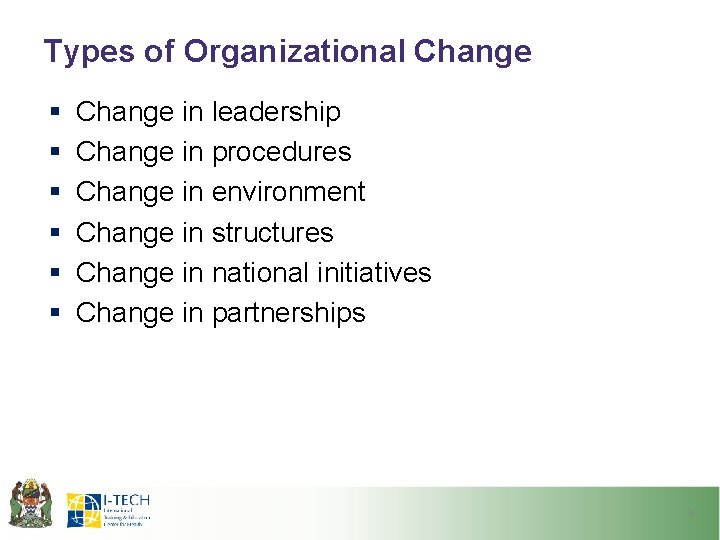
Types of Organizational Change § § § Change in leadership Change in procedures Change in environment Change in structures Change in national initiatives Change in partnerships 4
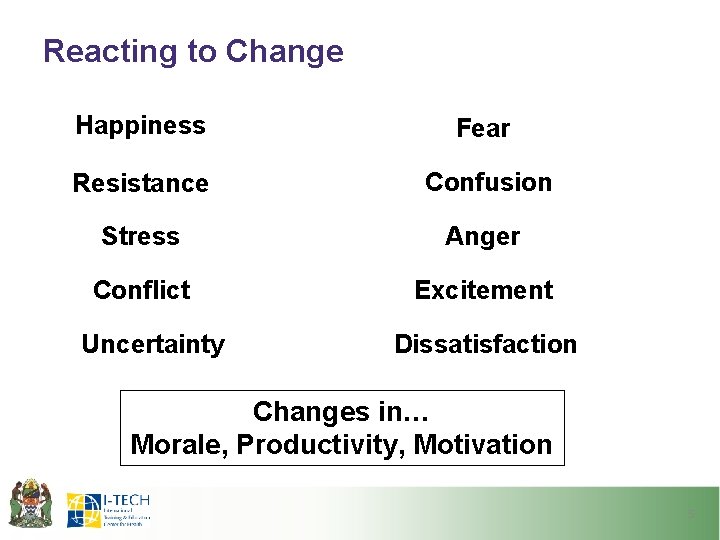
Reacting to Change Happiness Fear Resistance Confusion Stress Anger Conflict Excitement Uncertainty Dissatisfaction Changes in… Morale, Productivity, Motivation 5
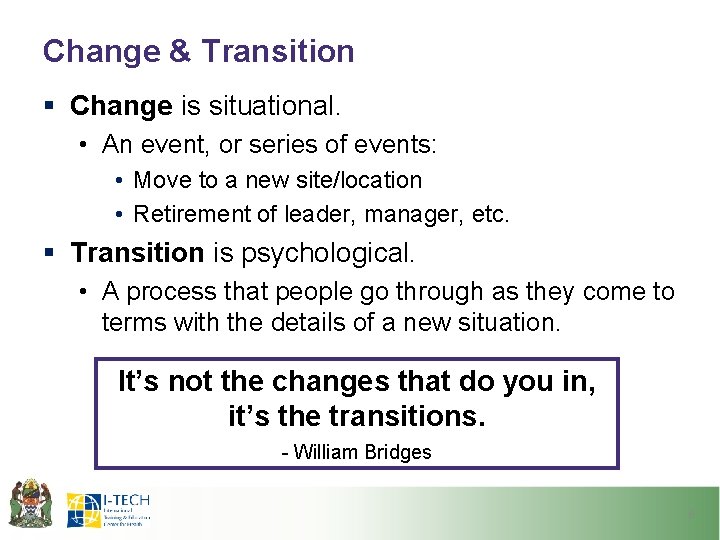
Change & Transition § Change is situational. • An event, or series of events: • Move to a new site/location • Retirement of leader, manager, etc. § Transition is psychological. • A process that people go through as they come to terms with the details of a new situation. It’s not the changes that do you in, it’s the transitions. - William Bridges 6
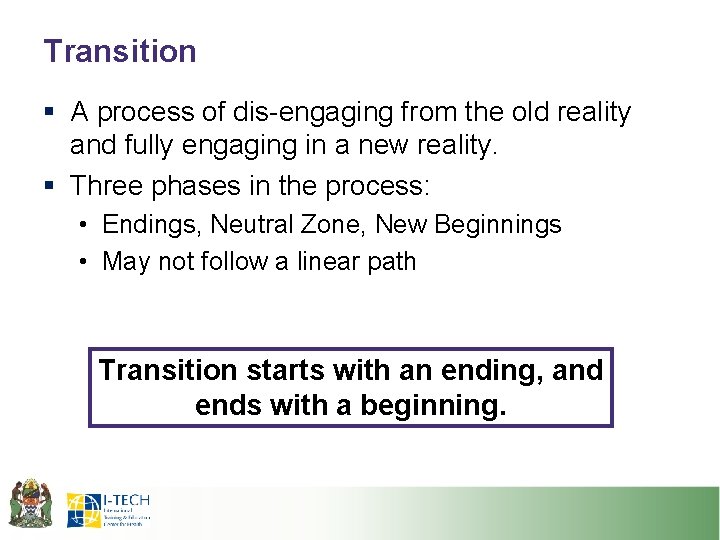
Transition § A process of dis-engaging from the old reality and fully engaging in a new reality. § Three phases in the process: • Endings, Neutral Zone, New Beginnings • May not follow a linear path Transition starts with an ending, and ends with a beginning.
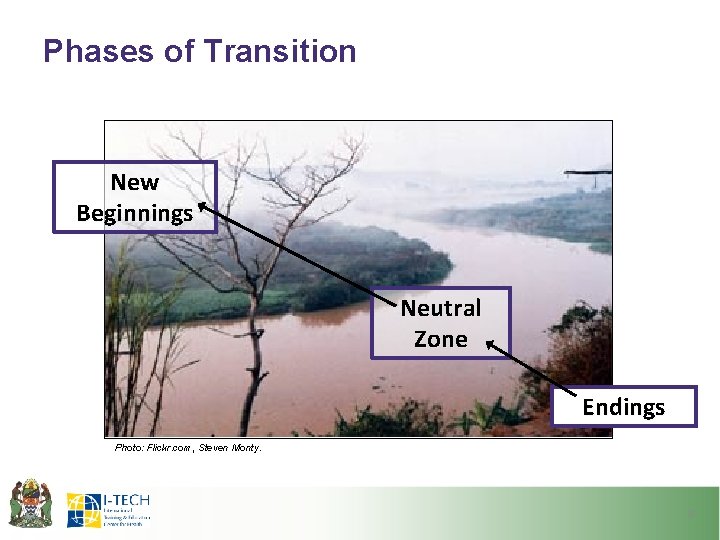
Phases of Transition New Beginnings Neutral Zone Endings Photo: Flickr. com, Steven Monty. 8
Endings § Letting go of old ways. § Dealing with losses. § Transition begins with endings. 9
Neutral Zone § The old is gone; the new is not fully operational § Things are in a state of flux, and feelings of confusion or chaos are common! § It is a time of great opportunity • Old habits are replaced • New beginnings start emerging 10
New Beginnings § New identities § Fresh energy § New sense of purpose 11
Leading Through Transition § Do not overlook endings and neutral zones – you cannot start with the final stage of transition! § People will experience the feelings that come with transition, even if the process is overlooked. § Successful change requires that people move emotionally to a place where they can engage with the new reality. Successful change is 70 -90% leadership, and only 10 -30% management. - John P. Kotter
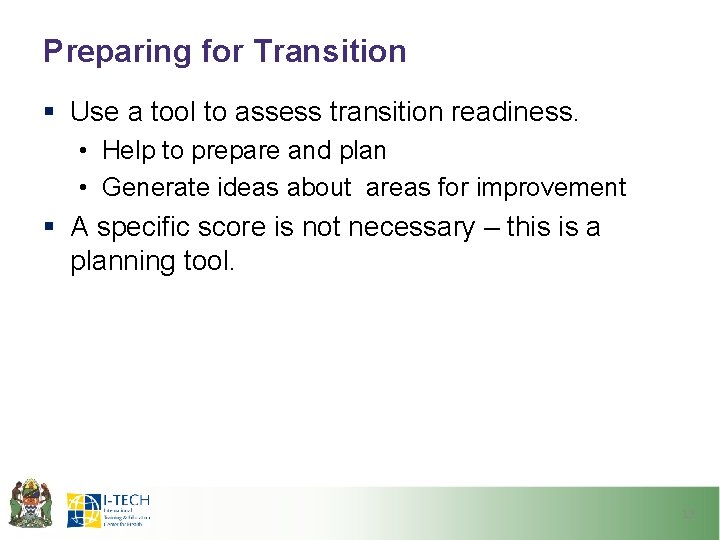
Preparing for Transition § Use a tool to assess transition readiness. • Help to prepare and plan • Generate ideas about areas for improvement § A specific score is not necessary – this is a planning tool. 13
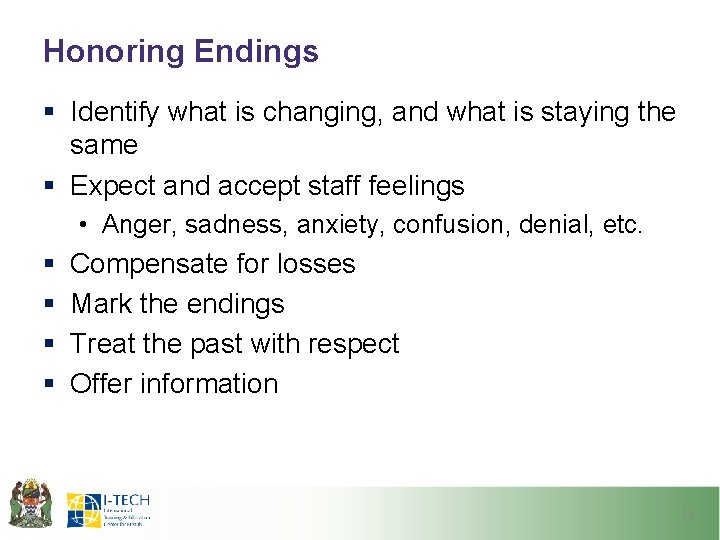
Honoring Endings § Identify what is changing, and what is staying the same § Expect and accept staff feelings • Anger, sadness, anxiety, confusion, denial, etc. § § Compensate for losses Mark the endings Treat the past with respect Offer information 14
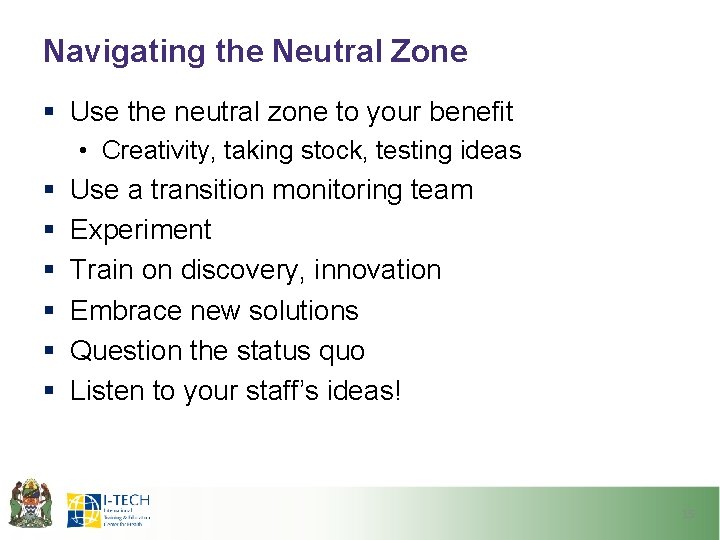
Navigating the Neutral Zone § Use the neutral zone to your benefit • Creativity, taking stock, testing ideas § § § Use a transition monitoring team Experiment Train on discovery, innovation Embrace new solutions Question the status quo Listen to your staff’s ideas! 15
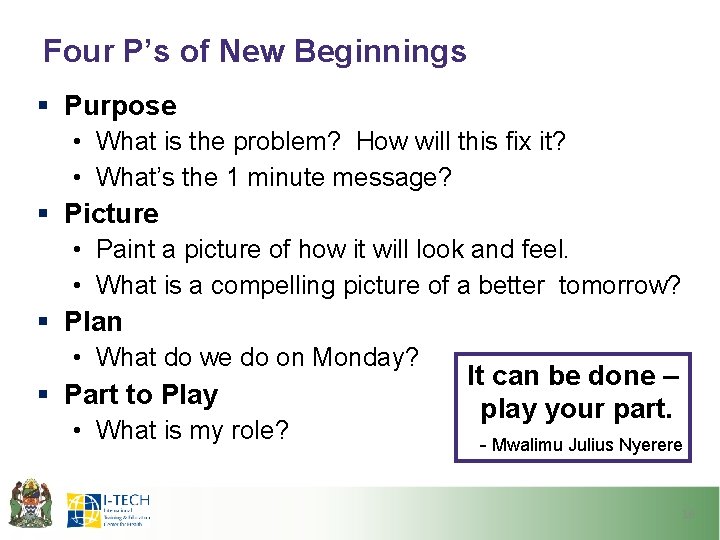
Four P’s of New Beginnings § Purpose • What is the problem? How will this fix it? • What’s the 1 minute message? § Picture • Paint a picture of how it will look and feel. • What is a compelling picture of a better tomorrow? § Plan • What do we do on Monday? § Part to Play • What is my role? It can be done – play your part. - Mwalimu Julius Nyerere 16
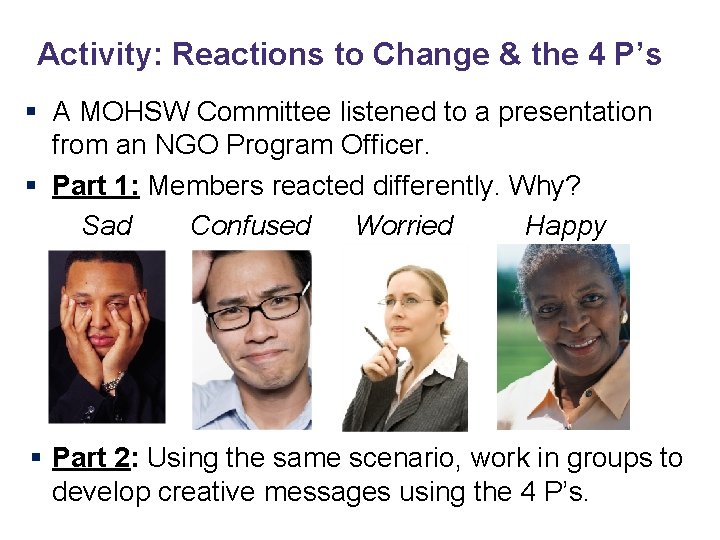
Activity: Reactions to Change & the 4 P’s § A MOHSW Committee listened to a presentation from an NGO Program Officer. § Part 1: Members reacted differently. Why? Sad Confused Worried Happy § Part 2: Using the same scenario, work in groups to develop creative messages using the 4 P’s. 17
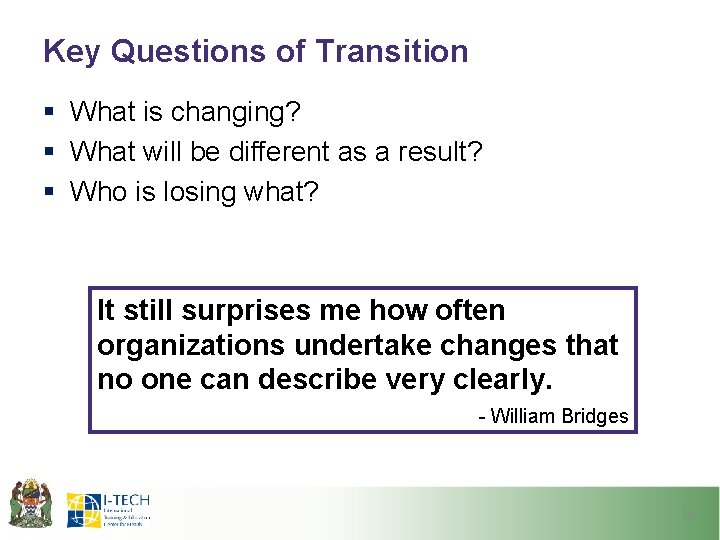
Key Questions of Transition § What is changing? § What will be different as a result? § Who is losing what? It still surprises me how often organizations undertake changes that no one can describe very clearly. - William Bridges 18
Activity: Anticipating Transition § Think of a change that you anticipate in your organization. § Answer the questions in the worksheet. § Describe the change to a partner using the ideas in the worksheet. § Share feedback with each other.
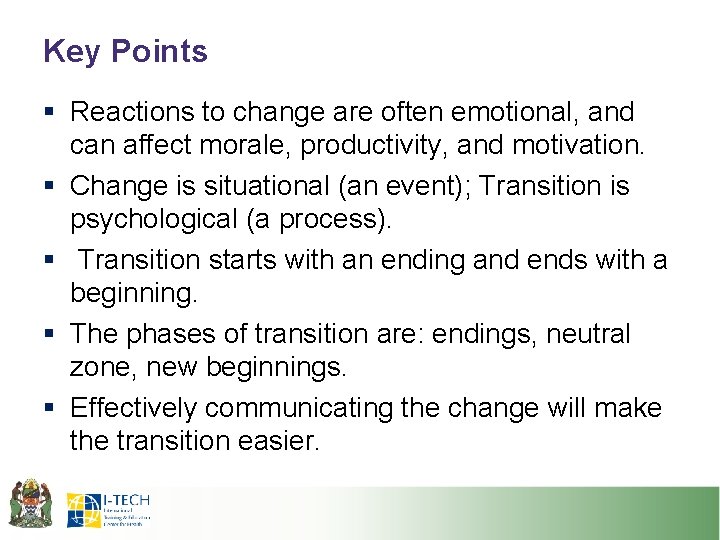
Key Points § Reactions to change are often emotional, and can affect morale, productivity, and motivation. § Change is situational (an event); Transition is psychological (a process). § Transition starts with an ending and ends with a beginning. § The phases of transition are: endings, neutral zone, new beginnings. § Effectively communicating the change will make the transition easier.
Homework Assignment: Communication Style Assessment to Prepare for Tomorrow § Section A • Circle only statements that describe you. • Work quickly – do not think too long/hard! § Section B • Circle one word in each pair of statements. § Section C • Choose the word you would be most likely to say or use. Choose 1 of the 3 words given. § Complete the Answer Sheet 21