
SERVSAFE CHAPTER 1 PROVIDING SAFE FOOD 7 TH
- Slides: 17
SERVSAFE CHAPTER 1 PROVIDING SAFE FOOD (7 TH EDITION)
BELLWORK • What is Food Borne Illness? • What are challenges to food safety? • What is the cost of food borne illness? • Have you ever experienced food borne illness?
FOODBORNE ILLNESS • A disease transmitted to two or more people by food – Outbreaks are investigated and conducted by state and local regulatory authorities and confirmed by lab analysis
CHALLENGES TO FOOD SAFETY • Time • High-risk Customers • Language and Culture • Staff Turnover • Literacy and Education • Pathogens • Unapproved Suppliers
COST OF FOODBORNE ILLNESS BUSINESS COST VICTIM COST • Loss of customers • Lost work • Loss of reputation • Medical costs • Negative media exposure • Long-term disability • Lowered staff morale • death • Lawsuits and legal fees • Staff missing work • Increased insurance premiums • Staff retraining
CATEGORIES OF CONTAMINATION • Biological • Chemical • Physical
HOW FOOD BECOMES UNSAFE • Purchasing food from unsafe sources • Failing to cook food correctly • Holding food at incorrect temps • Using contaminated equipment • Practicing poor personal hygiene
PRACTICES RELATED TO FOODBORNE ILLNESS • Time and temperature abuse • Cross-contamination • Poor personal hygiene • Poor cleaning and sanitizing
TIME-TEMP ABUSE • Food is held too long in TDZ (Temperature Danger Zone) 41˚-135˚ F • Food is not reheated or cooled to correct temperatures-
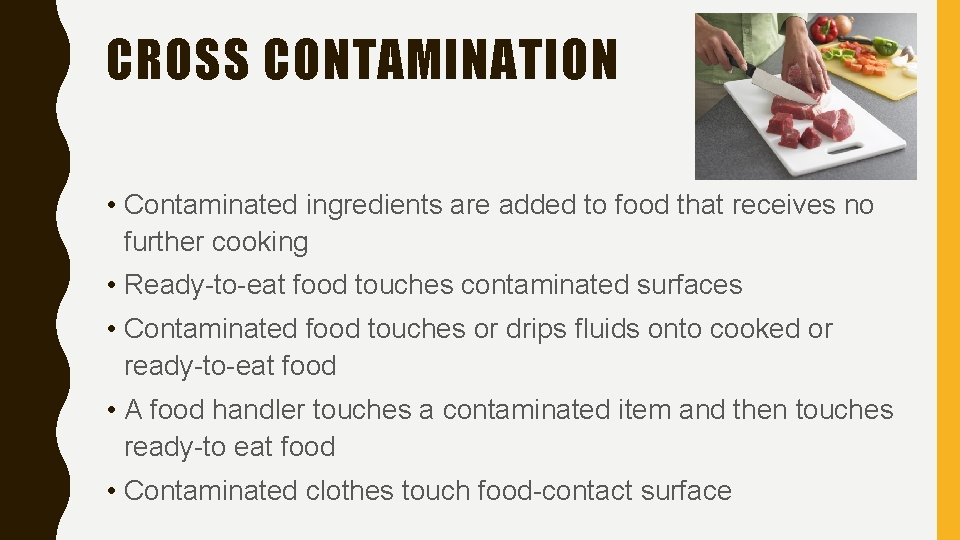
CROSS CONTAMINATION • Contaminated ingredients are added to food that receives no further cooking • Ready-to-eat food touches contaminated surfaces • Contaminated food touches or drips fluids onto cooked or ready-to-eat food • A food handler touches a contaminated item and then touches ready-to eat food • Contaminated clothes touch food-contact surface
POOR PERSONAL HYGIENE • Failure to follow good hygiene practices can cause foodborne illness – Not washing hands correctly after using the restroom – Cough or sneeze on food – Touch or scratch wounds and then touch food – Work while sick
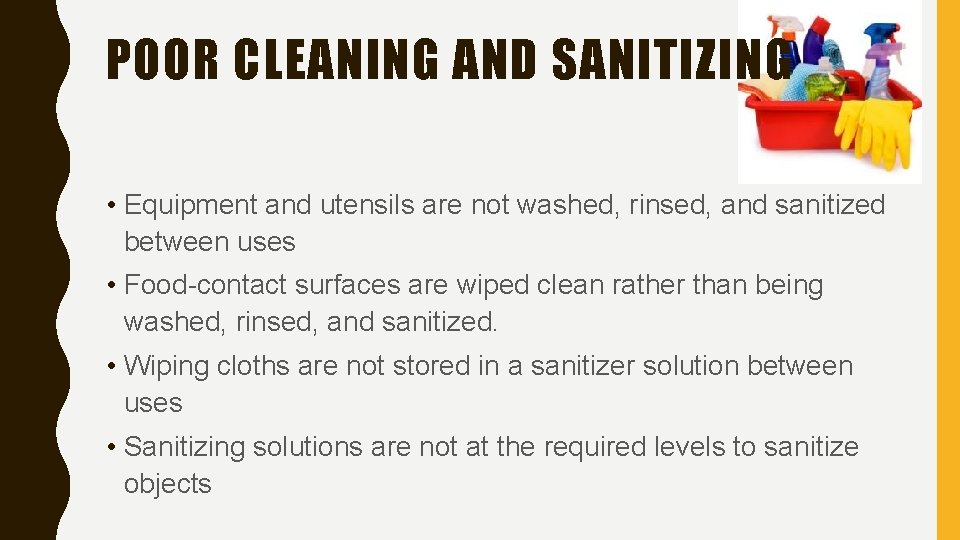
POOR CLEANING AND SANITIZING • Equipment and utensils are not washed, rinsed, and sanitized between uses • Food-contact surfaces are wiped clean rather than being washed, rinsed, and sanitized. • Wiping cloths are not stored in a sanitizer solution between uses • Sanitizing solutions are not at the required levels to sanitize objects
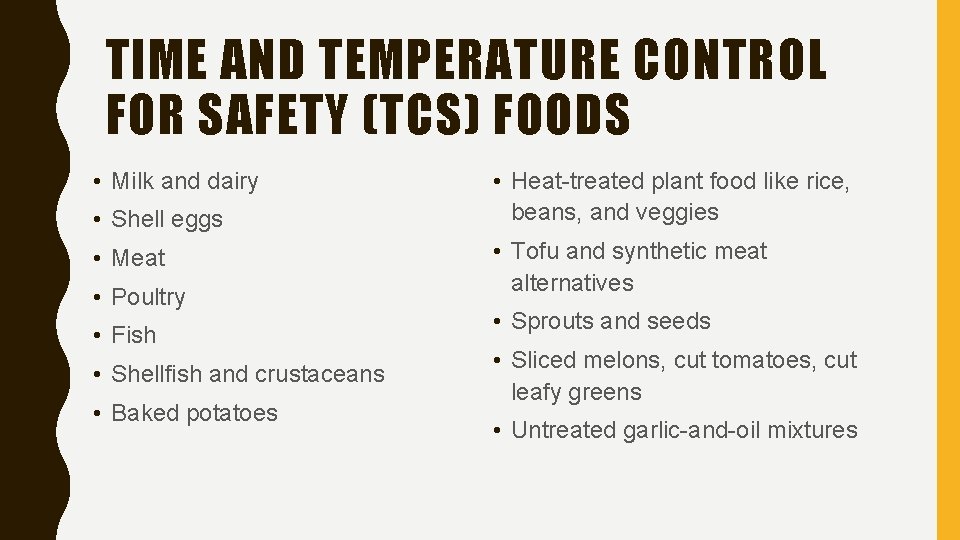
TIME AND TEMPERATURE CONTROL FOR SAFETY (TCS) FOODS • Milk and dairy • Shell eggs • Meat • Poultry • Fish • Shellfish and crustaceans • Baked potatoes • Heat-treated plant food like rice, beans, and veggies • Tofu and synthetic meat alternatives • Sprouts and seeds • Sliced melons, cut tomatoes, cut leafy greens • Untreated garlic-and-oil mixtures
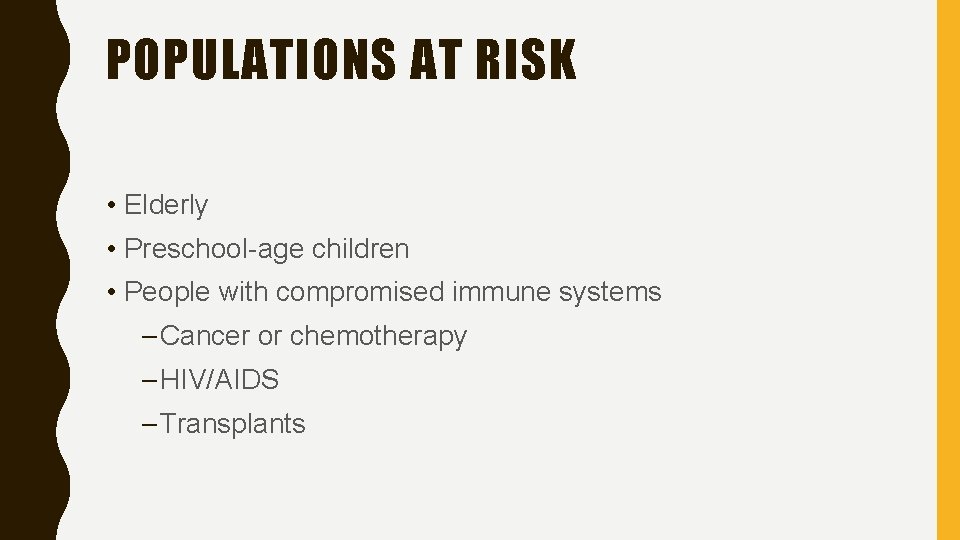
POPULATIONS AT RISK • Elderly • Preschool-age children • People with compromised immune systems – Cancer or chemotherapy – HIV/AIDS – Transplants
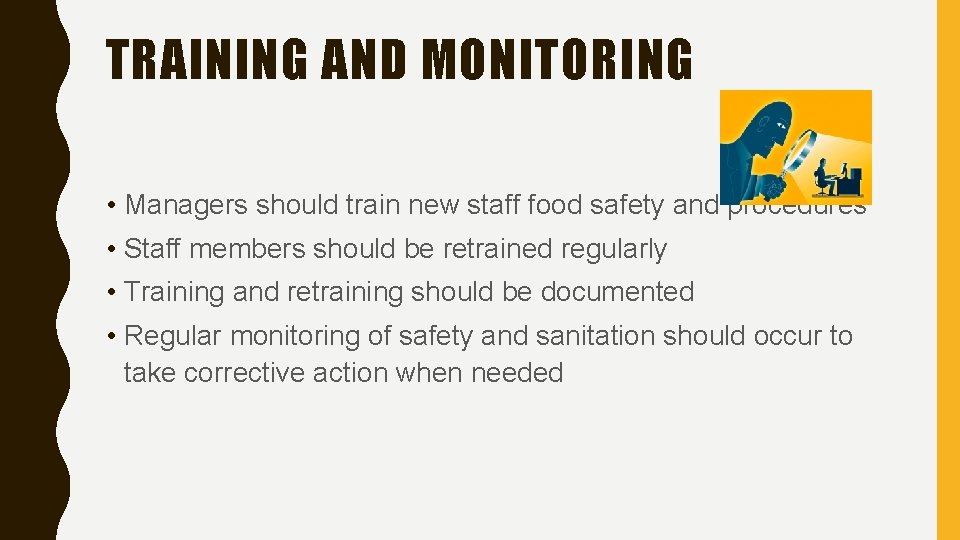
TRAINING AND MONITORING • Managers should train new staff food safety and procedures • Staff members should be retrained regularly • Training and retraining should be documented • Regular monitoring of safety and sanitation should occur to take corrective action when needed
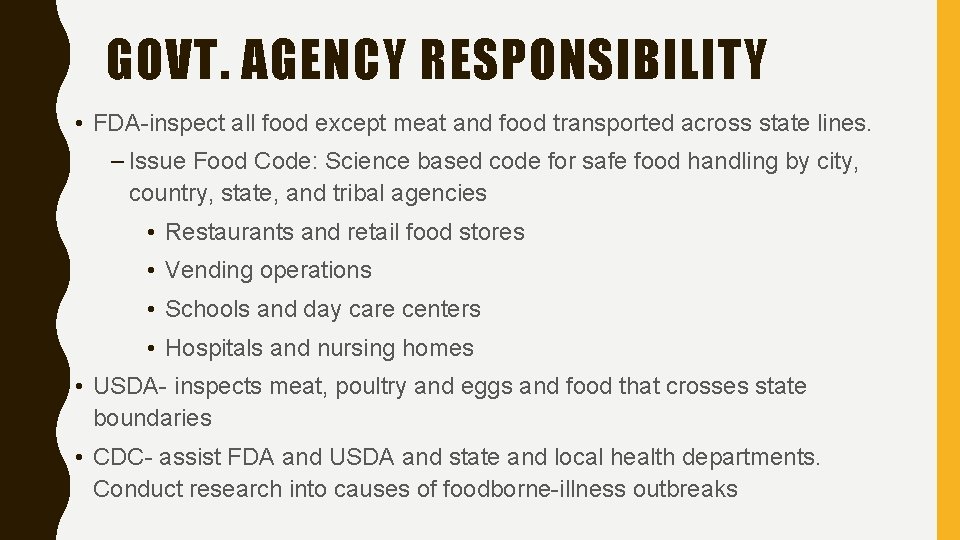
GOVT. AGENCY RESPONSIBILITY • FDA-inspect all food except meat and food transported across state lines. – Issue Food Code: Science based code for safe food handling by city, country, state, and tribal agencies • Restaurants and retail food stores • Vending operations • Schools and day care centers • Hospitals and nursing homes • USDA- inspects meat, poultry and eggs and food that crosses state boundaries • CDC- assist FDA and USDA and state and local health departments. Conduct research into causes of foodborne-illness outbreaks
FOOD CODE • State and Regulatory authorities-write or adopt food code – Inspections and enforcing regs – Investigating complaints – Issuing licenses and permits – Approving construction – Reviewing and approving HACCP