
Service Provision Assessment SPA and Service Delivery Indicators

- Slides: 21
Service Provision Assessment (SPA) and Service Delivery Indicators (SDI) Surveys Shouldn’t they be Merged? Presentation Prepared by Moses Busiga (USAID) and Waly Wane (World Bank) Tanzania DPG Health – November 14, 2012
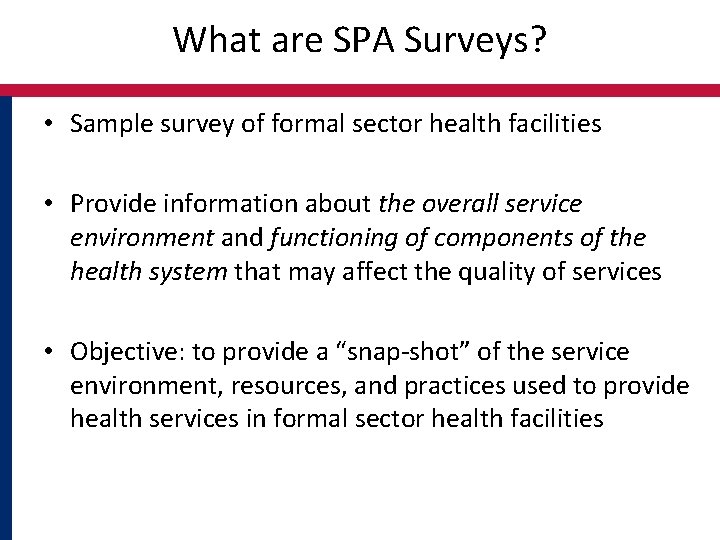
What are SPA Surveys? • Sample survey of formal sector health facilities • Provide information about the overall service environment and functioning of components of the health system that may affect the quality of services • Objective: to provide a “snap-shot” of the service environment, resources, and practices used to provide health services in formal sector health facilities
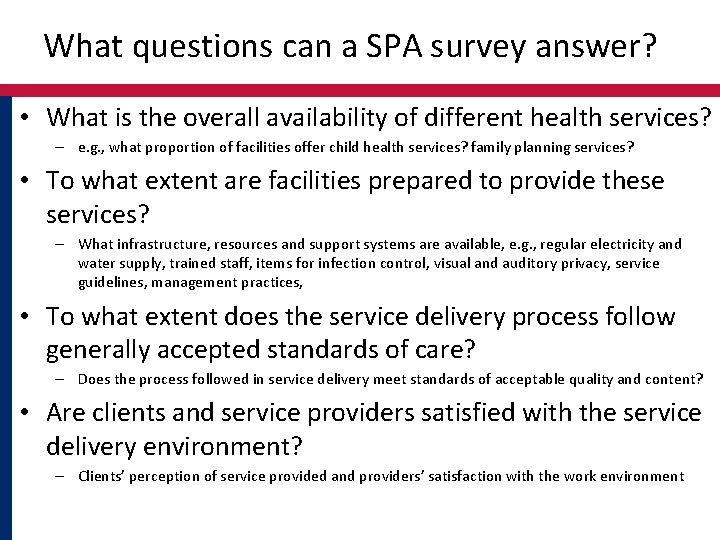
What questions can a SPA survey answer? • What is the overall availability of different health services? – e. g. , what proportion of facilities offer child health services? family planning services? • To what extent are facilities prepared to provide these services? – What infrastructure, resources and support systems are available, e. g. , regular electricity and water supply, trained staff, items for infection control, visual and auditory privacy, service guidelines, management practices, • To what extent does the service delivery process follow generally accepted standards of care? – Does the process followed in service delivery meet standards of acceptable quality and content? • Are clients and service providers satisfied with the service delivery environment? – Clients’ perception of service provided and providers’ satisfaction with the work environment
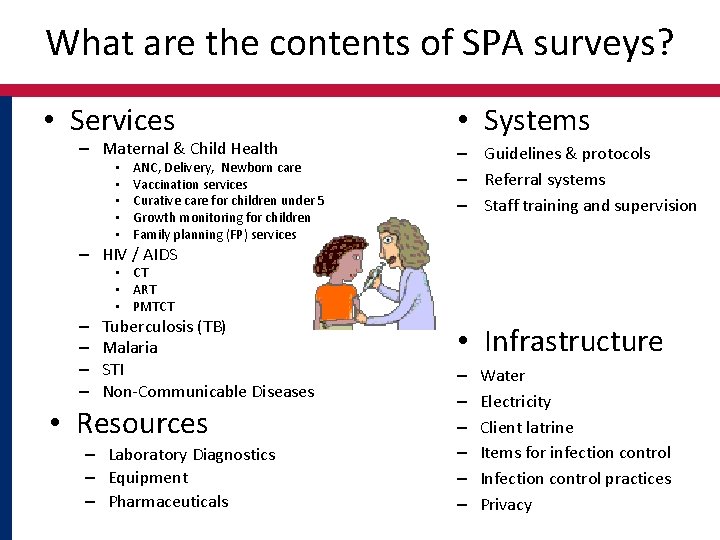
What are the contents of SPA surveys? • Services – Maternal & Child Health • • • ANC, Delivery, Newborn care Vaccination services Curative care for children under 5 Growth monitoring for children Family planning (FP) services • Systems – Guidelines & protocols – Referral systems – Staff training and supervision – HIV / AIDS • CT • ART • PMTCT – – Tuberculosis (TB) Malaria STI Non-Communicable Diseases • Resources – Laboratory Diagnostics – Equipment – Pharmaceuticals • Infrastructure – – – Water Electricity Client latrine Items for infection control Infection control practices Privacy
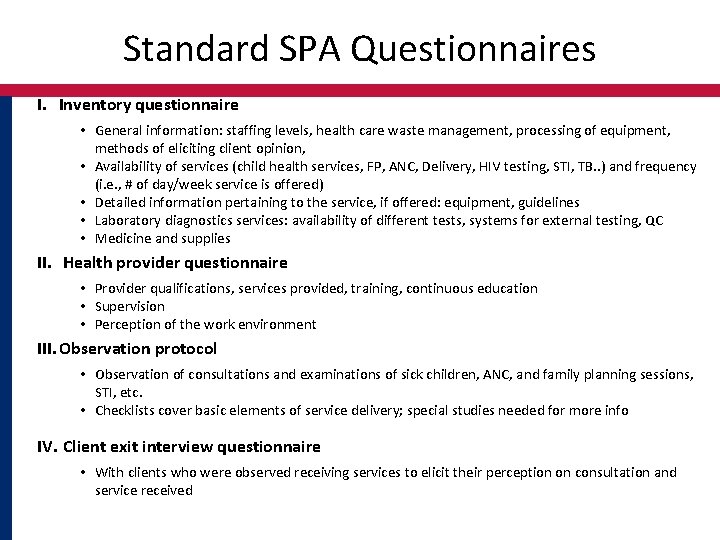
Standard SPA Questionnaires I. Inventory questionnaire • General information: staffing levels, health care waste management, processing of equipment, methods of eliciting client opinion, • Availability of services (child health services, FP, ANC, Delivery, HIV testing, STI, TB. . ) and frequency (i. e. , # of day/week service is offered) • Detailed information pertaining to the service, if offered: equipment, guidelines • Laboratory diagnostics services: availability of different tests, systems for external testing, QC • Medicine and supplies II. Health provider questionnaire • Provider qualifications, services provided, training, continuous education • Supervision • Perception of the work environment III. Observation protocol • Observation of consultations and examinations of sick children, ANC, and family planning sessions, STI, etc. • Checklists cover basic elements of service delivery; special studies needed for more info IV. Client exit interview questionnaire • With clients who were observed receiving services to elicit their perception on consultation and service received
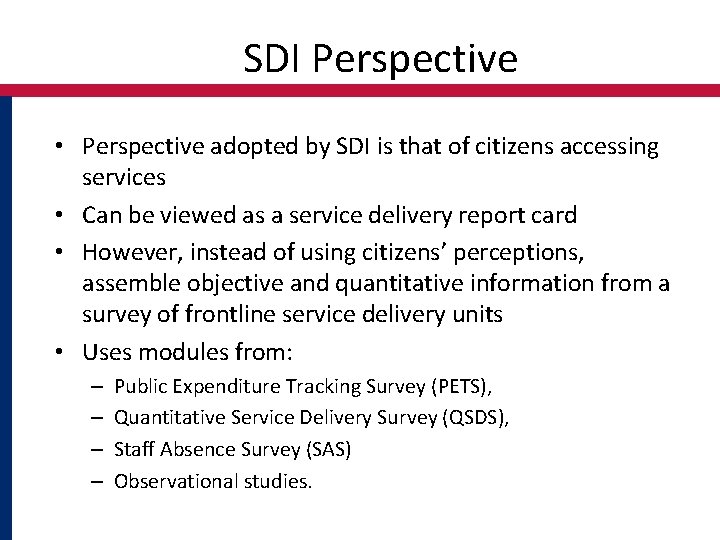
SDI Perspective • Perspective adopted by SDI is that of citizens accessing services • Can be viewed as a service delivery report card • However, instead of using citizens’ perceptions, assemble objective and quantitative information from a survey of frontline service delivery units • Uses modules from: – – Public Expenditure Tracking Survey (PETS), Quantitative Service Delivery Survey (QSDS), Staff Absence Survey (SAS) Observational studies.
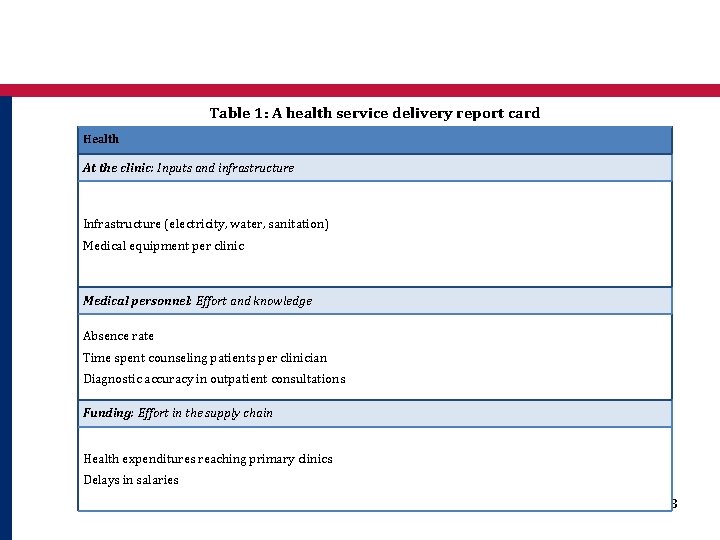
Table 1: A health service delivery report card Health At the clinic: Inputs and infrastructure Infrastructure (electricity, water, sanitation) Medical equipment per clinic Medical personnel: Effort and knowledge Absence rate Time spent counseling patients per clinician Diagnostic accuracy in outpatient consultations Funding: Effort in the supply chain Health expenditures reaching primary clinics Delays in salaries 8
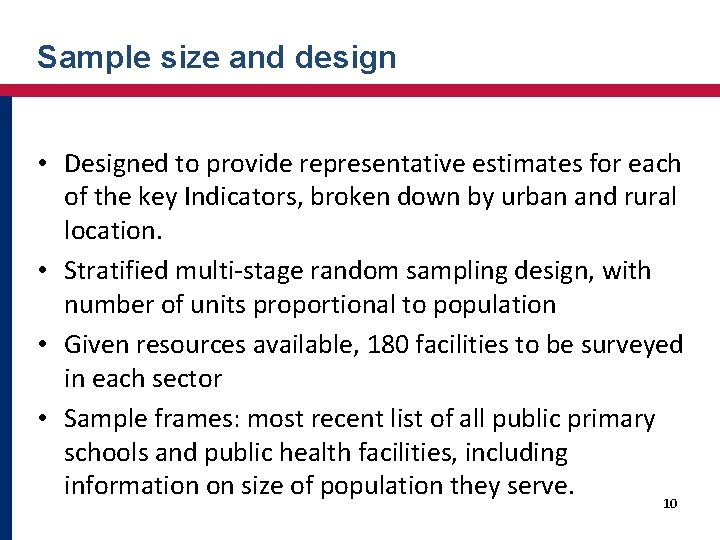
Sample size and design • Designed to provide representative estimates for each of the key Indicators, broken down by urban and rural location. • Stratified multi-stage random sampling design, with number of units proportional to population • Given resources available, 180 facilities to be surveyed in each sector • Sample frames: most recent list of all public primary schools and public health facilities, including information on size of population they serve. 10
Medical personnel: Effort and knowledge • Absence rate • Time spent counseling patients per clinician • Diagnostic accuracy in outpatient consultations
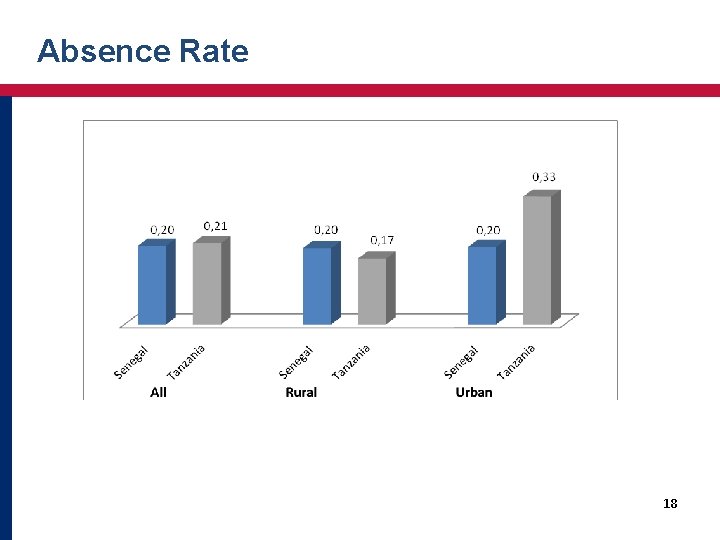
Absence Rate 18
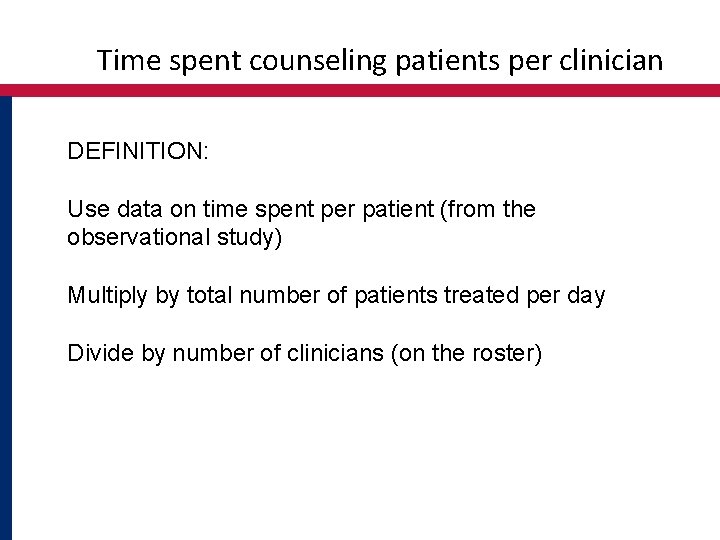
Time spent counseling patients per clinician DEFINITION: Use data on time spent per patient (from the observational study) Multiply by total number of patients treated per day Divide by number of clinicians (on the roster)
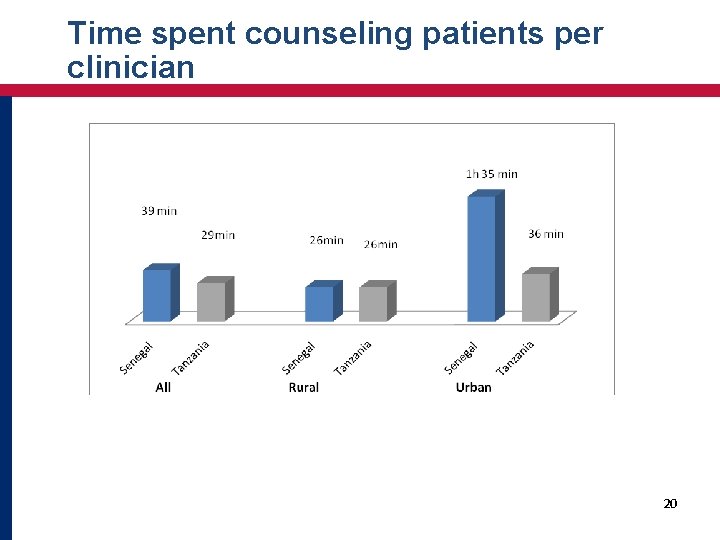
Time spent counseling patients per clinician 20
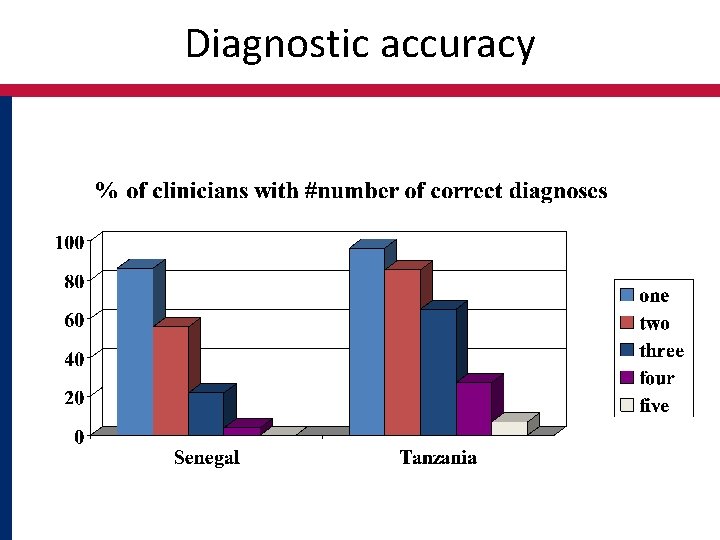
Diagnostic accuracy in outpatient consultations DEFINITION: Share of clinicians who reached correct diagnosis based on patient case simulations (“vignettes”)
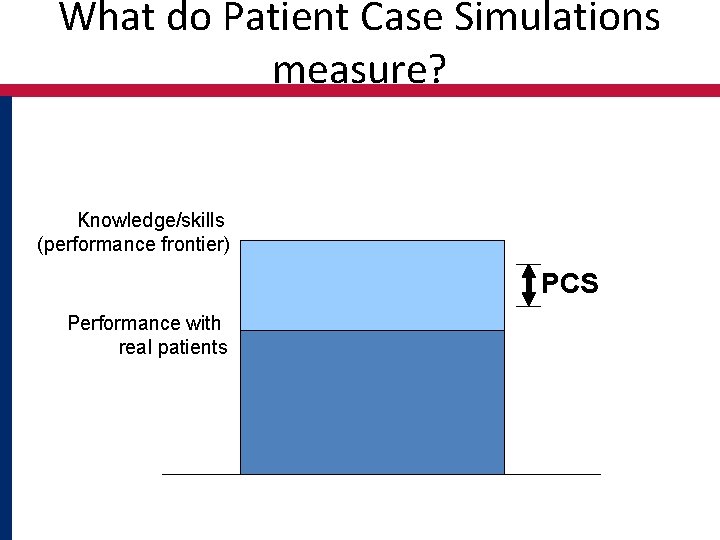
What do Patient Case Simulations measure? Knowledge/skills (performance frontier) PCS Performance with real patients
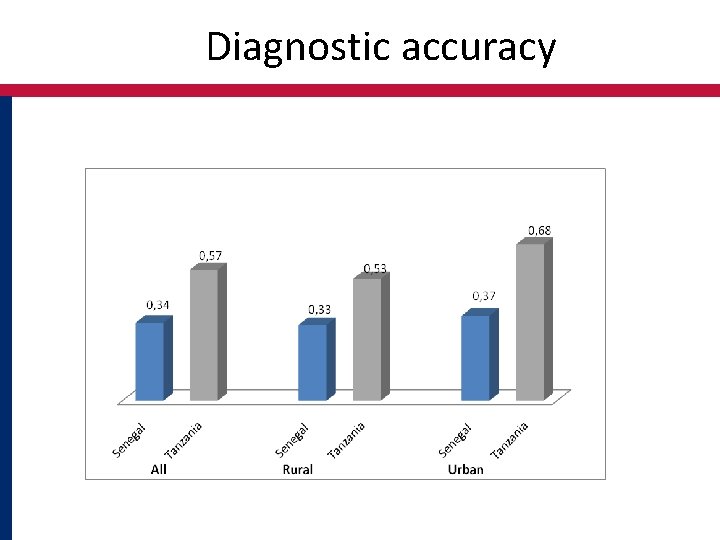
Diagnostic accuracy
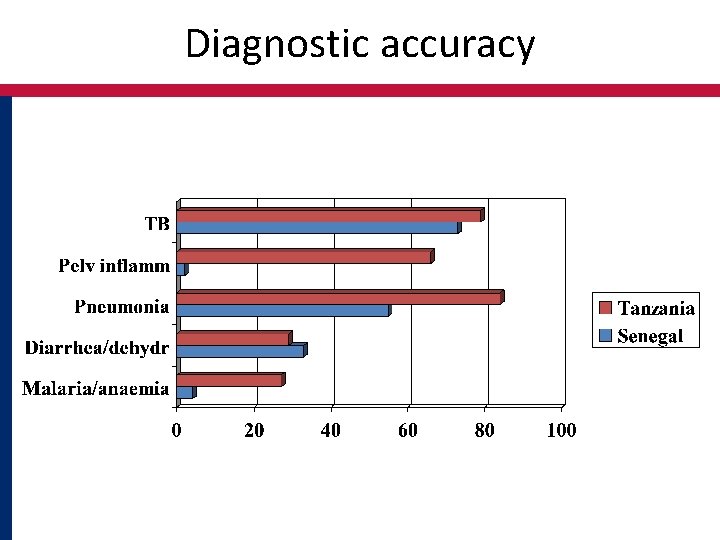
Diagnostic accuracy
Diagnostic accuracy
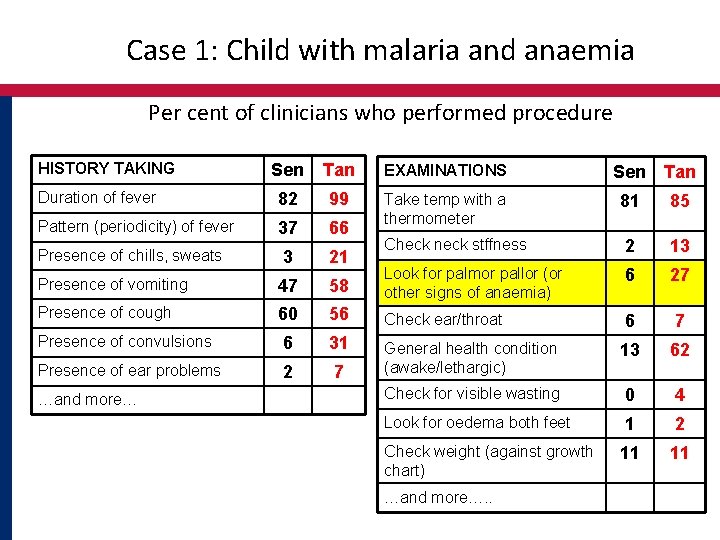
Case 1: Child with malaria and anaemia Per cent of clinicians who performed procedure HISTORY TAKING Sen Tan EXAMINATIONS Duration of fever 82 99 Pattern (periodicity) of fever 37 66 Take temp with a thermometer 3 21 Presence of vomiting 47 Presence of cough Sen Tan 81 85 Check neck stffness 2 13 58 Look for palmor pallor (or other signs of anaemia) 6 27 60 56 Check ear/throat 6 7 Presence of convulsions 6 31 13 62 Presence of ear problems 2 7 General health condition (awake/lethargic) Check for visible wasting 0 4 Look for oedema both feet 1 2 11 11 Presence of chills, sweats …and more… Check weight (against growth chart) …and more…. .
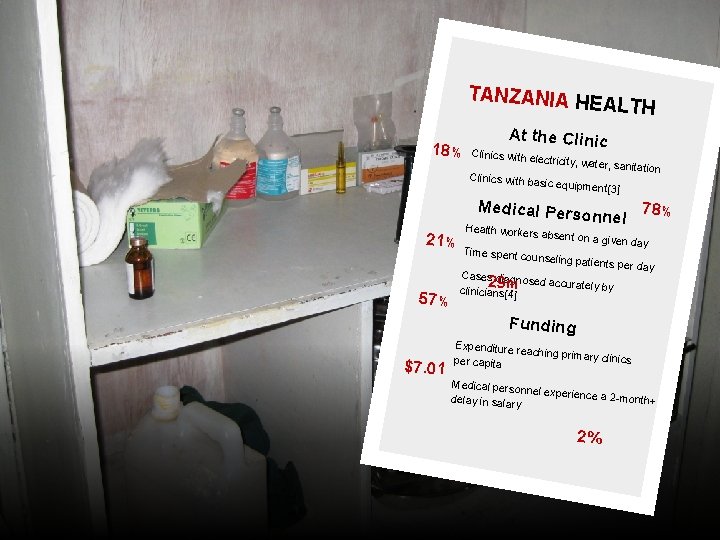
TANZANIA H EALTH 18% At the Clinics with ele Clinics with ba ctricity, water, sanitation sic equipment[ 3] Medical Pers 21% 57% Health workers onnel 78% absent on a g Time spent co unseling patie n iven day ts per day Cases diagno 29 m sed accurately by clinicians[4] Funding $7. 01 Expenditure re aching primary clinics per capita Medical perso nnel experien ce a 2 -month+ delay in salary 2%
What’s Next for SPA & SDI in TZ? • Already had a brainstorming session on how to merge SPA and SDI – Merging SPA and SDI has many advantages • SDI will participate in upcoming SPA stakeholder meeting in December • Both SDI and SPA teams are open to alter their timelines to consider and work on the merge • Tentatively the “merged” survey could start field operations before June 2013
THANK YOU