
Service Learning as a Transformational Pedagogy Connecting Learning
- Slides: 28
Service Learning as a. Transformational Pedagogy: Connecting Learning, Life, and Community BY WENDY SAGERS AND GAYATREE S. SARMA A D A P T E D F R O M C H R I S T I N E M. CRESS, PH. D. PORTLAND STATE U N I V E R S I T Y
OVERVIEW ■ ■ ■ Service Learning as a Transformational Process Typical Challenges/Issues (SWOT) SL Course Design in 5 “Easy” Steps Teaching/Learning Strategies Assessment Methods Resources SAGERS, SARMA
National Clearinghouse for Service Learning www. servicelearning. org Definition: Service-learning combines service objectives with learning objectives with the intent that the activity change both the recipient and the provider of the service. This is accomplished by combining service tasks with structured opportunities that link the task to self-reflection, self-discovery, and the acquisition and comprehension of values, skills, and knowledge content. SAGERS, SARMA
Service Learning Characteristics ■ Links to academic content and standards ■ Involves individuals in helping to determine and meet real, defined community needs ■ Is reciprocal in nature, benefiting both the community and the service providers by combining a service experience with a learning experience ■ Can be used in any subject area so long as it is appropriate to learning goal SAGERS, SARMA
Development of Service Learning Goals ■ Do something good and learn something ■ Make a difference and become different ■ Co-create the world you want to live in SAGERS, SARMA
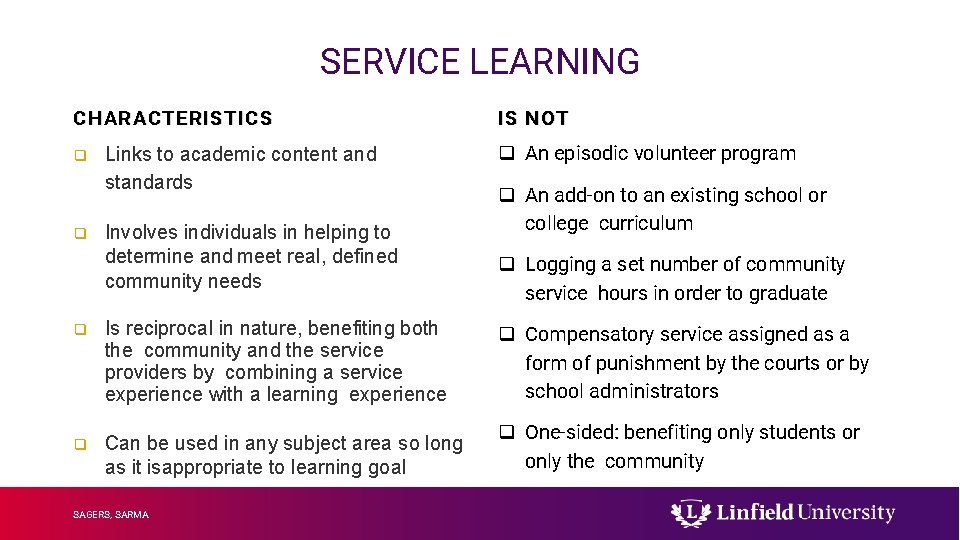
SERVICE LEARNING CHARACTERISTICS q q Links to academic content and standards Involves individuals in helping to determine and meet real, defined community needs IS NOT q An episodic volunteer program q An add-on to an existing school or college curriculum q Logging a set number of community service hours in order to graduate q Is reciprocal in nature, benefiting both the community and the service providers by combining a service experience with a learning experience q Compensatory service assigned as a form of punishment by the courts or by school administrators q Can be used in any subject area so long as it isappropriate to learning goal q One-sided: benefiting only students or only the community SAGERS, SARMA
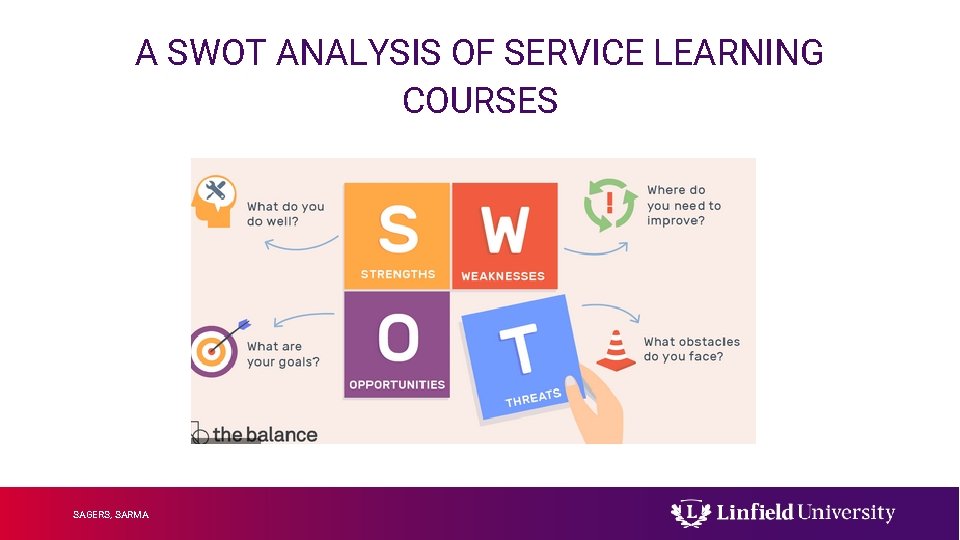
A SWOT ANALYSIS OF SERVICE LEARNING COURSES SAGERS, SARMA
Service-Learning Is Transformational: Not Additive (Strength) Transformational Learning is an epistemological change, rather than merely a change in behavior or increase in the quantity of knowledge. SAGERS, SARMA
SERVICE LEARNING AS A TRANSFORMATIONAL EXPERIENCE ( STRENGTH) Community Partners q q Intentions: charity vs. reciprocity Outcomes: hours vs. learning and change SAGERS, SARMA ■ q q Students Explicit knowledge and skills Explicit connection to academics/curric ulum ■ q q Faculty Teaching and learning logistics/ideas Integration into Scholarship/rewa rd structure
Teaching/Learning Challenges (Weakness) q q q Instructors: q I don’t know how to do it q I won’t get promoted Students: q It was fun q I hated my group Community Partner: Partner q The students were self-righteous q I felt used by the university SAGERS, SARMA
Service Learning Design Challenges- General q q q Adding on” service-learning to and already full syllabus and course Developing service-learning objectives Identifying/developing a community partner Integrating service hours and projects Creating assignments and activities Letting go of traditional instructional roles SAGERS, SARMA
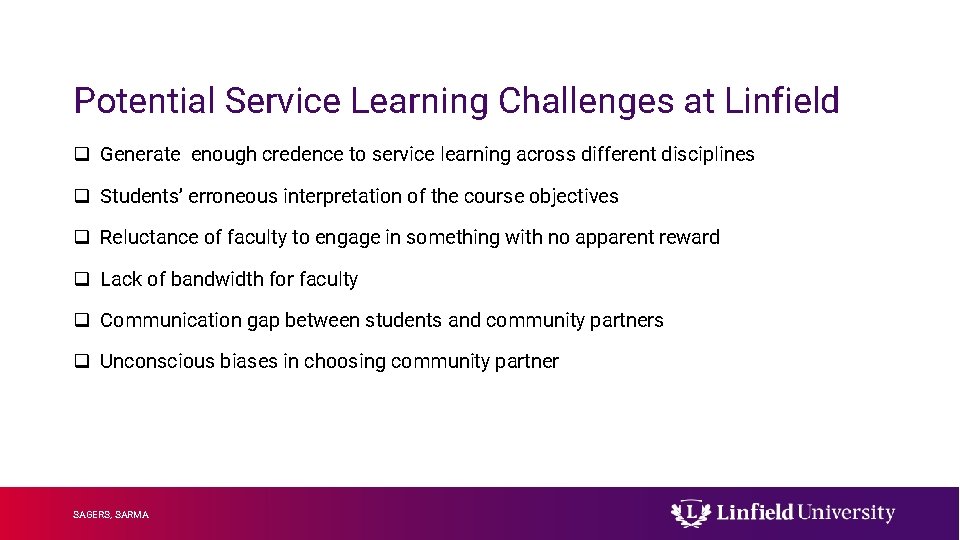
Potential Service Learning Challenges at Linfield q Generate enough credence to service learning across different disciplines q Students’ erroneous interpretation of the course objectives q Reluctance of faculty to engage in something with no apparent reward q Lack of bandwidth for faculty q Communication gap between students and community partners q Unconscious biases in choosing community partner SAGERS, SARMA
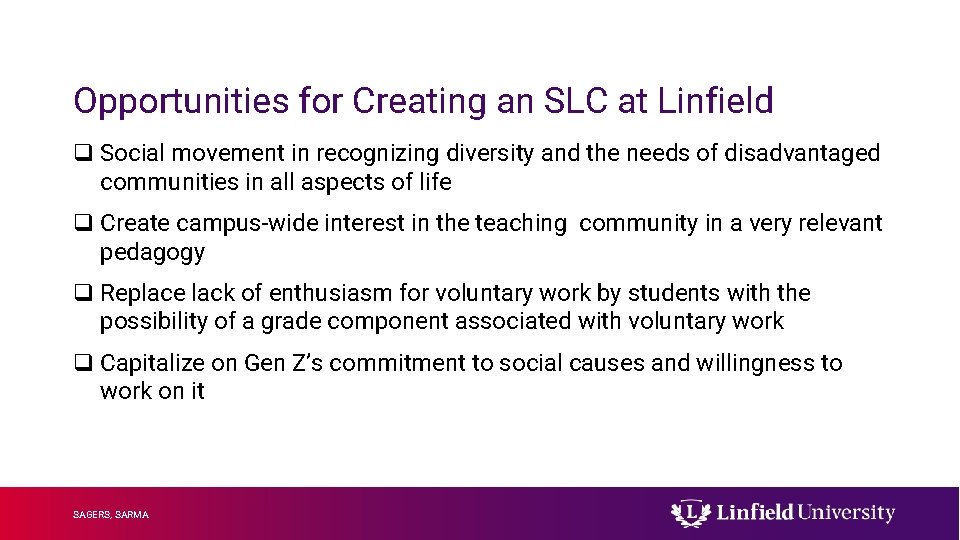
Opportunities for Creating an SLC at Linfield q Social movement in recognizing diversity and the needs of disadvantaged communities in all aspects of life q Create campus-wide interest in the teaching community in a very relevant pedagogy q Replace lack of enthusiasm for voluntary work by students with the possibility of a grade component associated with voluntary work q Capitalize on Gen Z’s commitment to social causes and willingness to work on it SAGERS, SARMA
POSSIBLE SOLUTIONS AND SUGGESTIONS Moving on SAGERS, SARMA
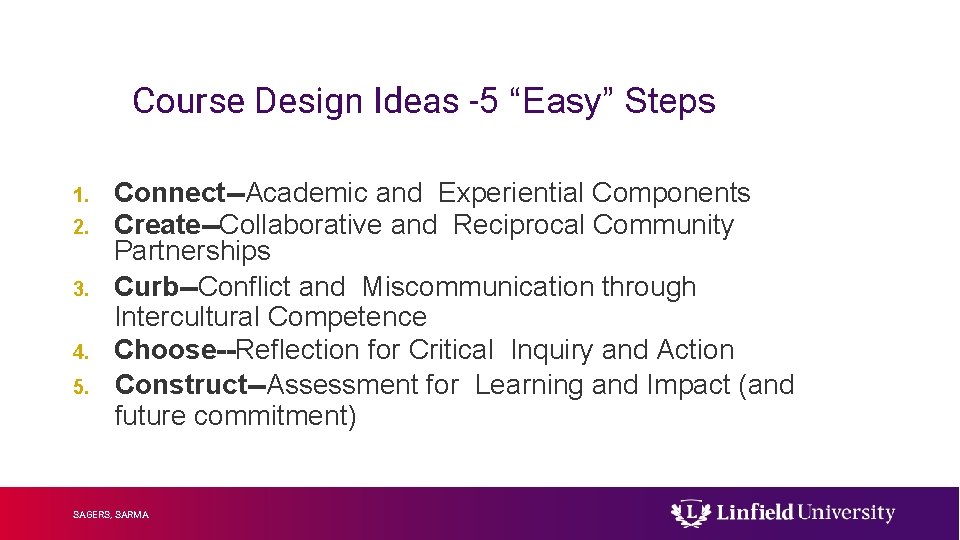
Course Design Ideas -5 “Easy” Steps 1. 2. 3. 4. 5. Connect--Academic and Experiential Components Create--Collaborative and Reciprocal Community Partnerships Curb--Conflict and Miscommunication through Intercultural Competence Choose--Reflection for Critical Inquiry and Action Construct--Assessment for Learning and Impact (and future commitment) SAGERS, SARMA
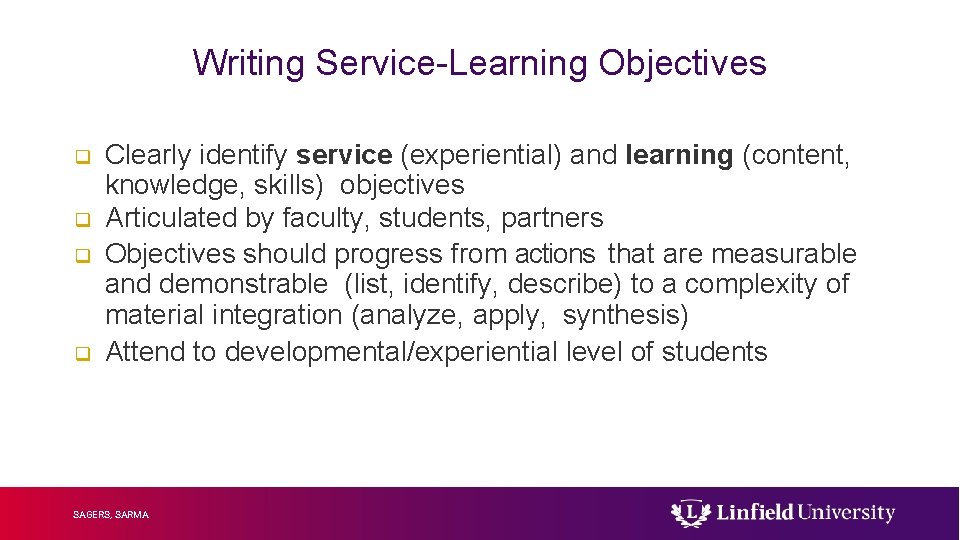
Writing Service-Learning Objectives q q Clearly identify service (experiential) and learning (content, knowledge, skills) objectives Articulated by faculty, students, partners Objectives should progress from actions that are measurable and demonstrable (list, identify, describe) to a complexity of material integration (analyze, apply, synthesis) Attend to developmental/experiential level of students SAGERS, SARMA
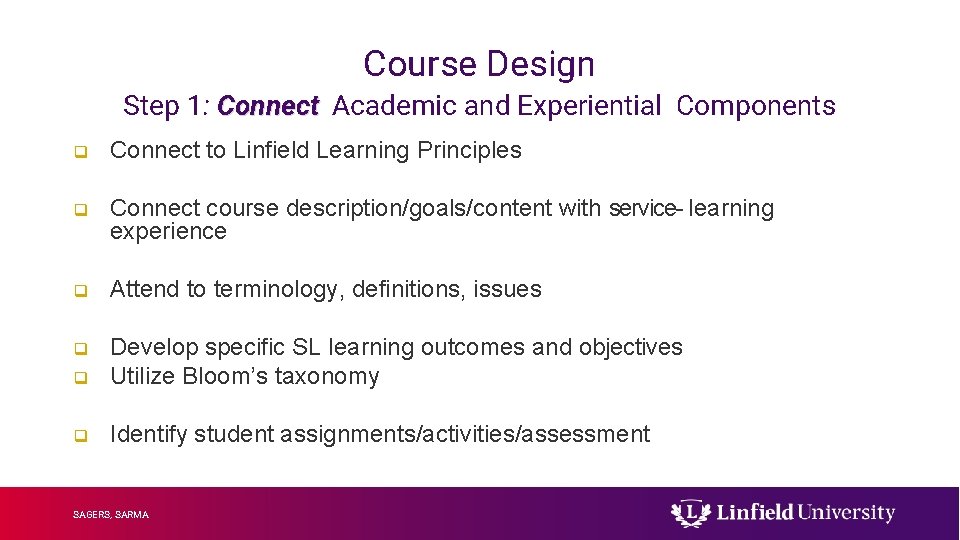
Course Design Step 1: Connect Academic and Experiential Components q Connect to Linfield Learning Principles q Connect course description/goals/content with service- learning experience q Attend to terminology, definitions, issues q q Develop specific SL learning outcomes and objectives Utilize Bloom’s taxonomy q Identify student assignments/activities/assessment SAGERS, SARMA
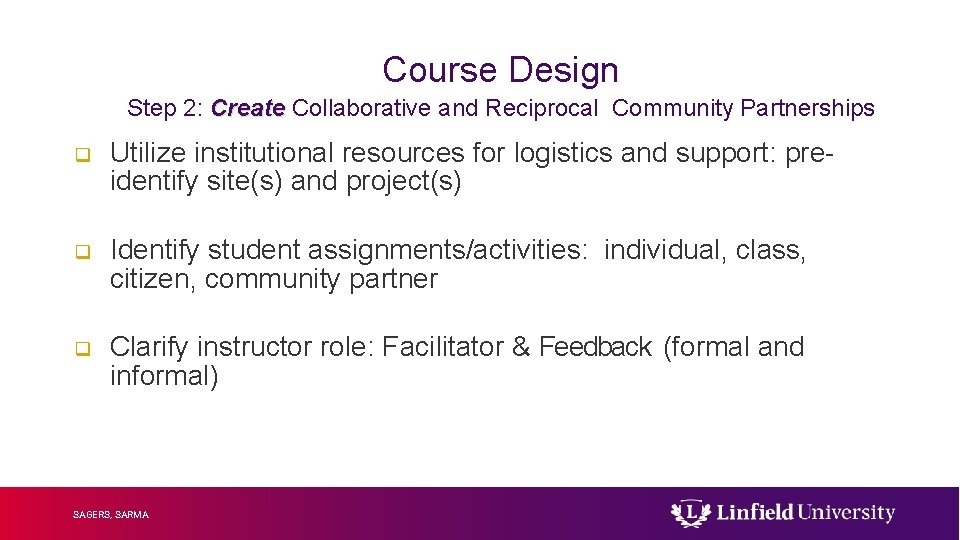
Course Design Step 2: Create Collaborative and Reciprocal Community Partnerships q Utilize institutional resources for logistics and support: preidentify site(s) and project(s) q Identify student assignments/activities: individual, class, citizen, community partner q Clarify instructor role: Facilitator & Feedback (formal and informal) SAGERS, SARMA
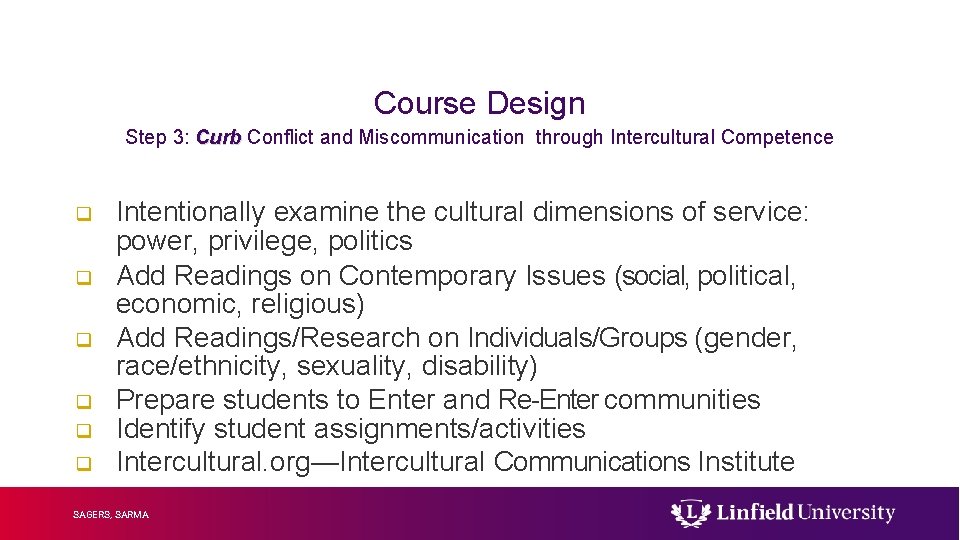
Course Design Step 3: Curb Conflict and Miscommunication through Intercultural Competence q q q Intentionally examine the cultural dimensions of service: power, privilege, politics Add Readings on Contemporary Issues (social, political, economic, religious) Add Readings/Research on Individuals/Groups (gender, race/ethnicity, sexuality, disability) Prepare students to Enter and Re-Enter communities Identify student assignments/activities Intercultural. org—Intercultural Communications Institute SAGERS, SARMA
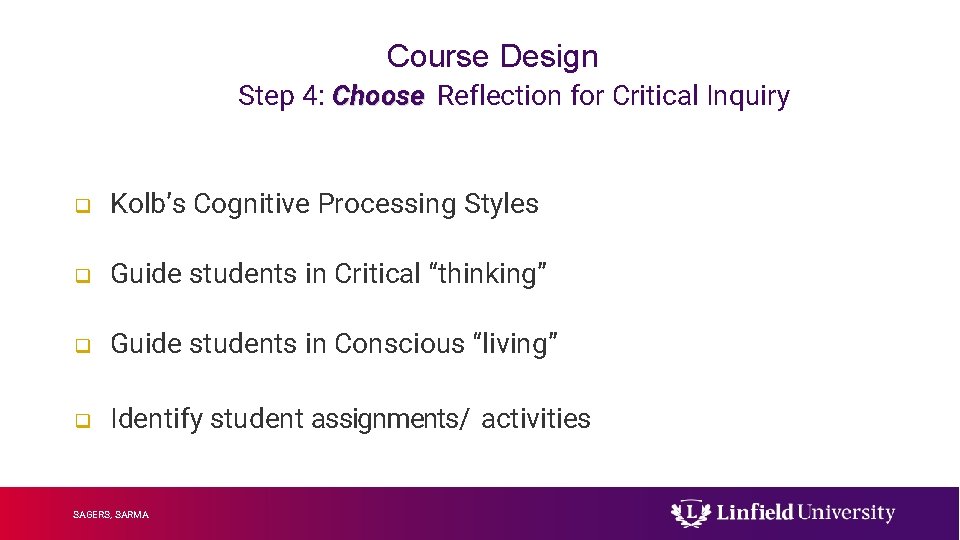
Course Design Step 4: Choose Reflection for Critical Inquiry q Kolb’s Cognitive Processing Styles q Guide students in Critical “thinking” q Guide students in Conscious “living” q Identify student assignments/ activities SAGERS, SARMA
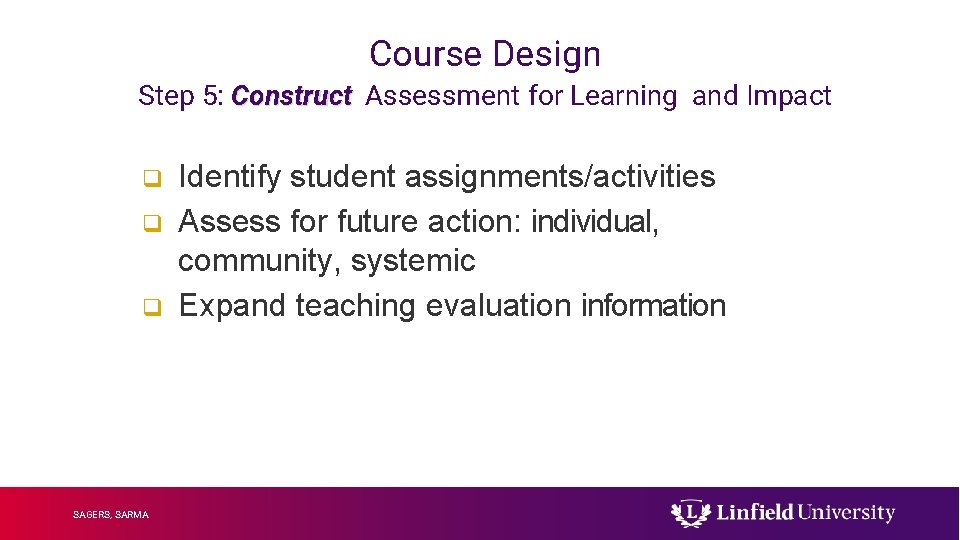
Course Design Step 5: Construct Assessment for Learning and Impact q q q SAGERS, SARMA Identify student assignments/activities Assess for future action: individual, community, systemic Expand teaching evaluation information
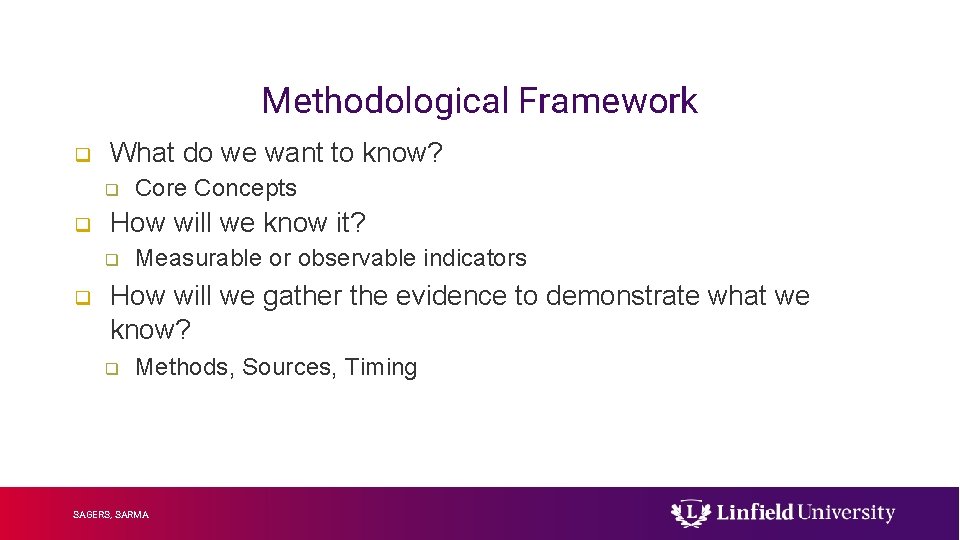
Methodological Framework q What do we want to know? q q How will we know it? q q Core Concepts Measurable or observable indicators How will we gather the evidence to demonstrate what we know? q Methods, Sources, Timing SAGERS, SARMA
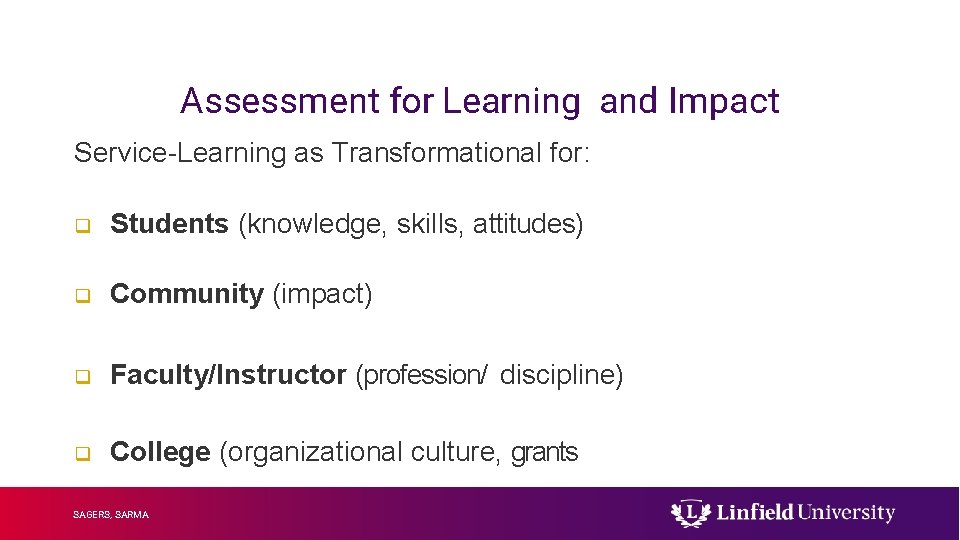
Assessment for Learning and Impact Service-Learning as Transformational for: q Students (knowledge, skills, attitudes) q Community (impact) q Faculty/Instructor (profession/ discipline) q College (organizational culture, grants SAGERS, SARMA
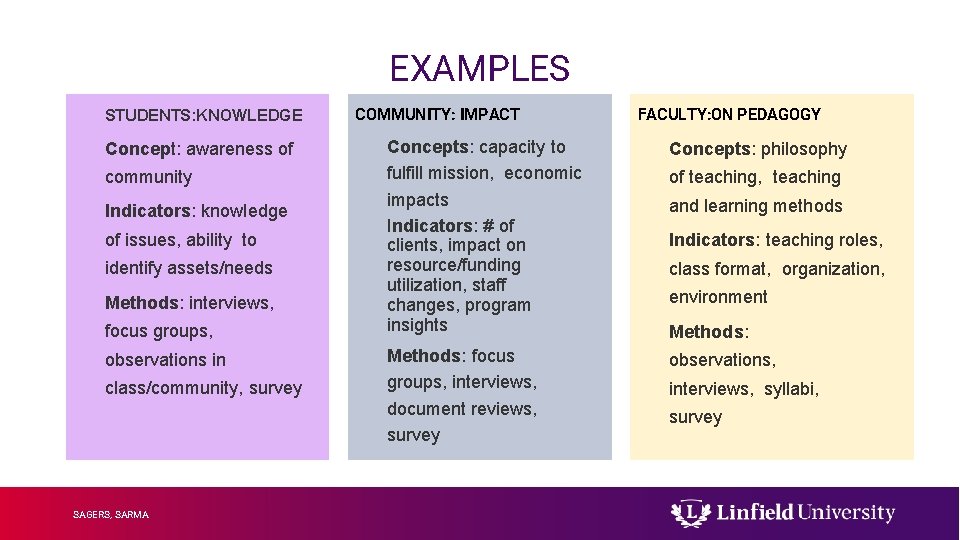
EXAMPLES STUDENTS: KNOWLEDGE Concept: awareness of community Indicators: knowledge of issues, ability to identify assets/needs Methods: interviews, focus groups, observations in class/community, survey SAGERS, SARMA COMMUNITY: IMPACT FACULTY: ON PEDAGOGY Concepts: capacity to fulfill mission, economic impacts Indicators: # of clients, impact on resource/funding utilization, staff changes, program insights Concepts: philosophy Methods: focus groups, interviews, document reviews, survey observations, of teaching, teaching and learning methods Indicators: teaching roles, class format, organization, environment Methods: interviews, syllabi, survey
THANK YOU! SAGERS, SARMA
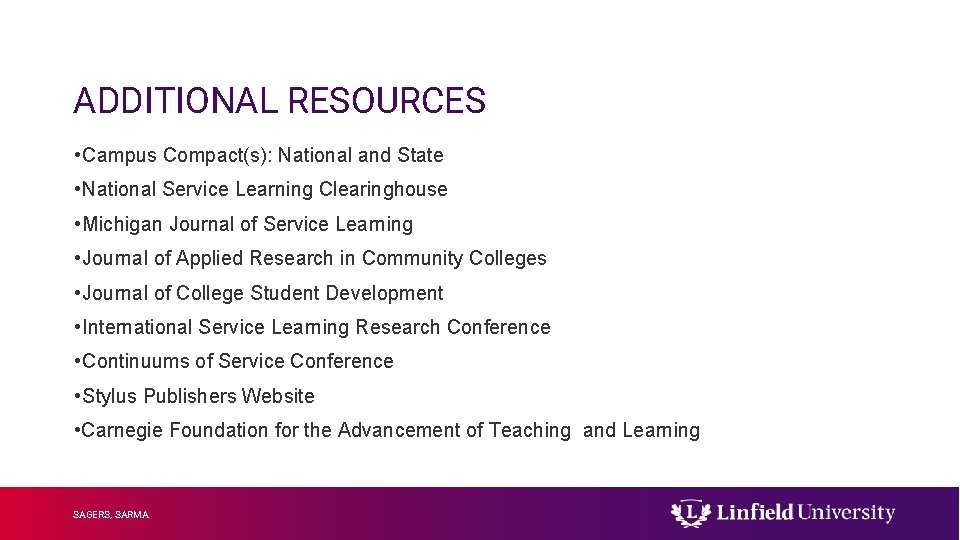
ADDITIONAL RESOURCES • Campus Compact(s): National and State • National Service Learning Clearinghouse • Michigan Journal of Service Learning • Journal of Applied Research in Community Colleges • Journal of College Student Development • International Service Learning Research Conference • Continuums of Service Conference • Stylus Publishers Website • Carnegie Foundation for the Advancement of Teaching and Learning SAGERS, SARMA
Extra information Slides #15 -#20 #24, #25 #27 -#33 #41, #45, #46 ALL THESE SLIDES CAN BE ADDED AND MADE AVAILABLE TO FACULTY WHO ARE INTERESTED. SAGERS, SARMA