
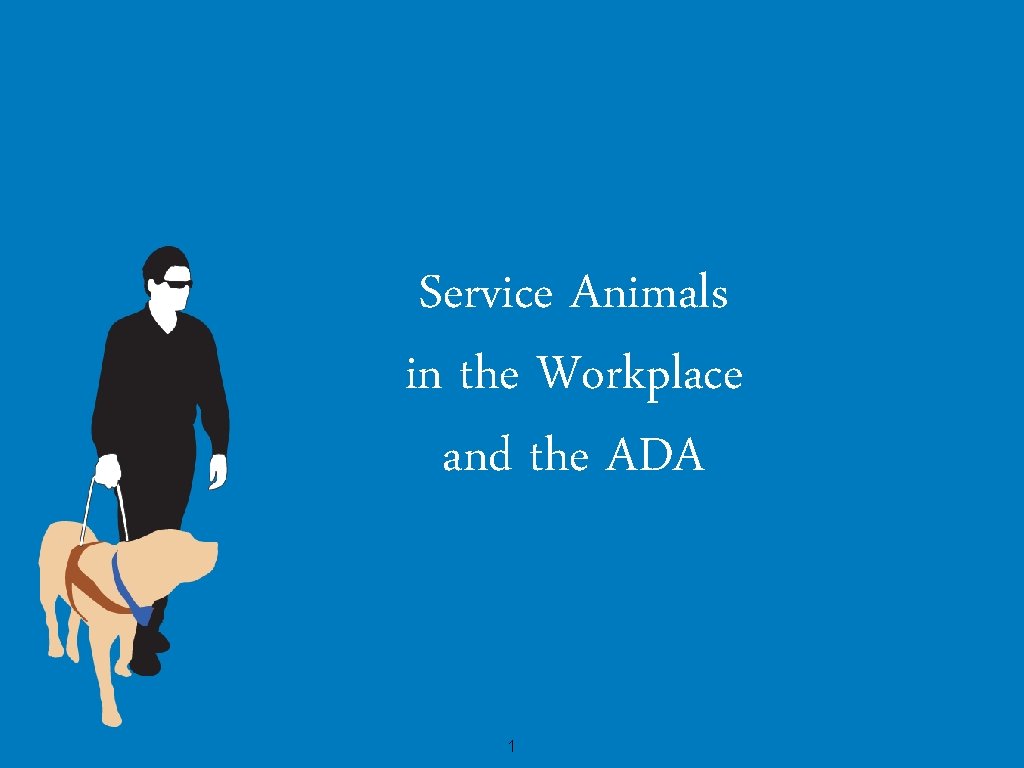
Service Animals in the Workplace and the ADA


- Slides: 27
Service Animals in the Workplace and the ADA 1
Laws that Cover Service Animals • Title II and III of the ADA has regulations that specifically cover the right to use service animals in public places. • Fair Housing Act gives people with disabilities the right to have service animals in housing (includes emotional support animals) • Air Carriers Access Act covers service animals in air travel. 2
Laws that Cover Service Animals • Definition of a service animal is different under all three laws and rules vary. • No wonder there is so much confusion! • What you read, hear, and see on the news probably does not apply to service animals in the workplace because… 3
Title I of the ADA • Title I of the ADA covers employment. • Unlike, Title II and III of the ADA, there are no regulations regarding service animals in the Title I regulations. • What does this mean? 4
When Can an Employee Use a Service Animal in the Workplace? • An employee can request to use a service animal in the workplace as a reasonable accommodation. • The criteria for determining if a service animal request is “reasonable” is the same as for any other reasonable accommodation request. 5
What is Considered a Service Animal in the Workplace Under the ADA? • Because there is no regulation defining a service animal in Title I of the ADA, much broader range of animals may be requested as a reasonable accommodation. • Emotional support animal-can be a wide range of animals. • Service animal-Not limited to the Title II & III definition of only a dog. 6
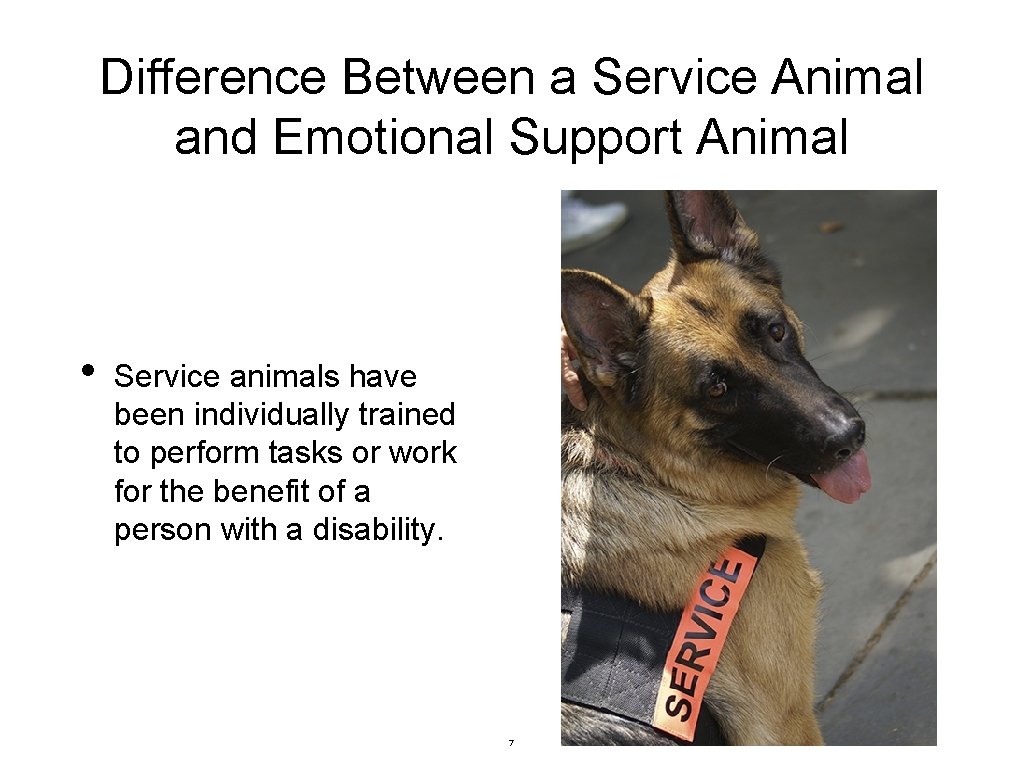
Difference Between a Service Animal and Emotional Support Animal • Service animals have been individually trained to perform tasks or work for the benefit of a person with a disability. 7
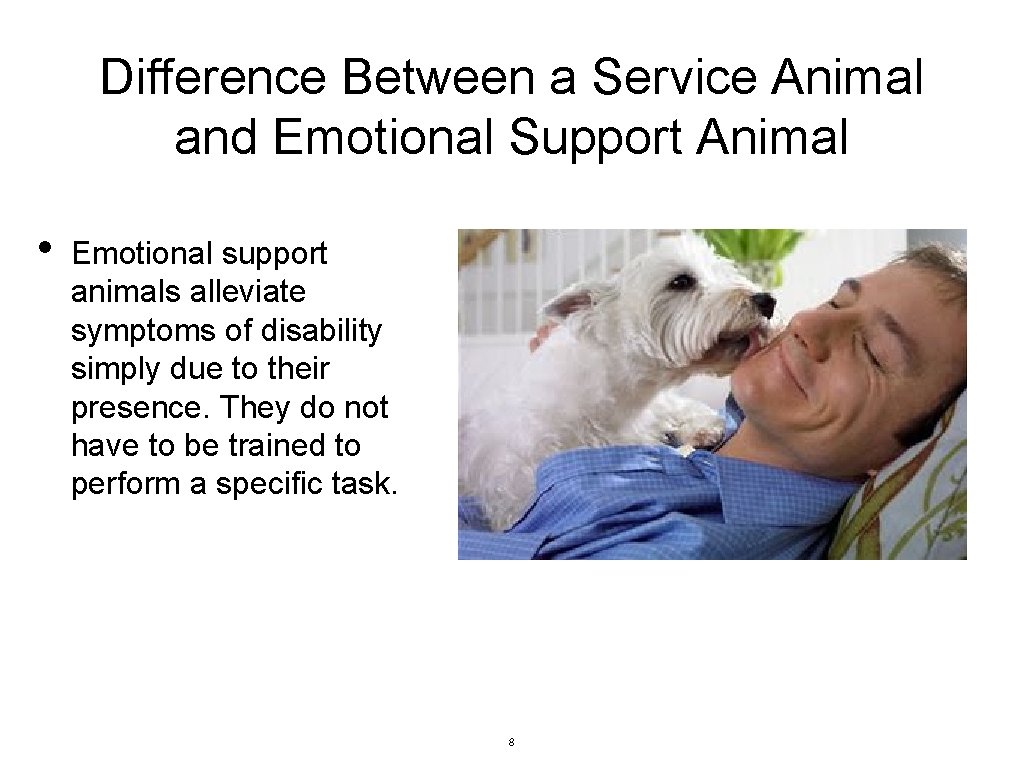
Difference Between a Service Animal and Emotional Support Animal • Emotional support animals alleviate symptoms of disability simply due to their presence. They do not have to be trained to perform a specific task. 8
Difference Between a Service Animal and Emotional Support Animal • Both may be requested as an accommodation in the workplace! • However, the need must be related to work in some way. 9
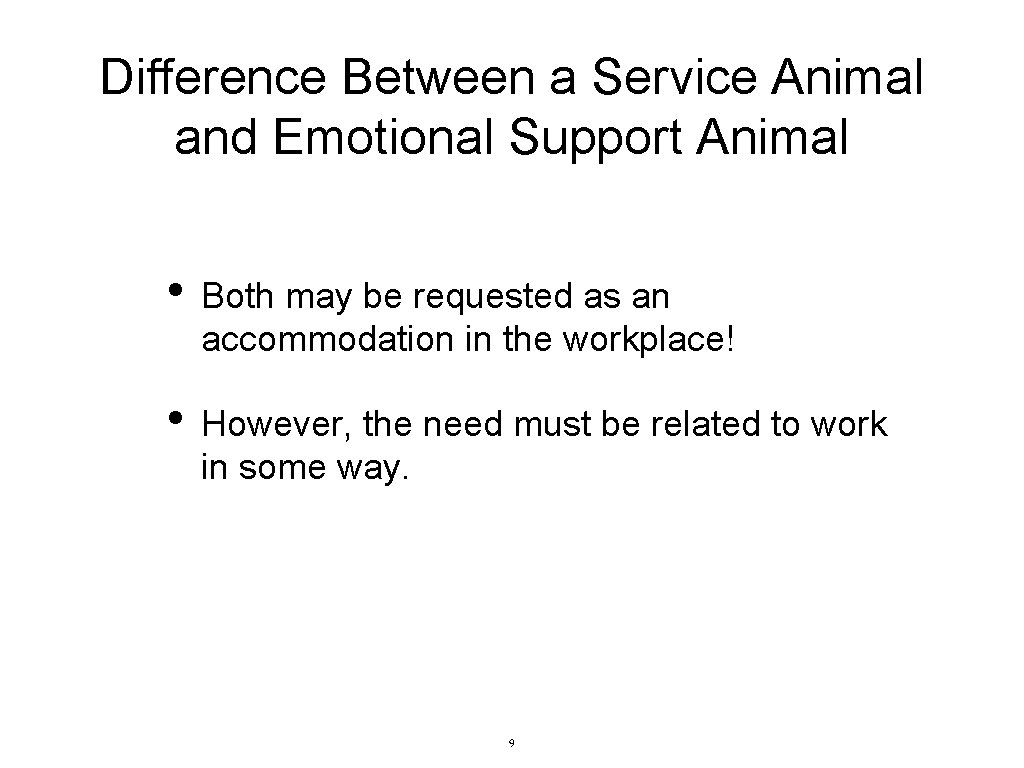
Examples of Service Animals in the Workplace • This guide dog doesn’t assist in work tasks but is needed to get to and from work and go to different locations in the workplace. 10
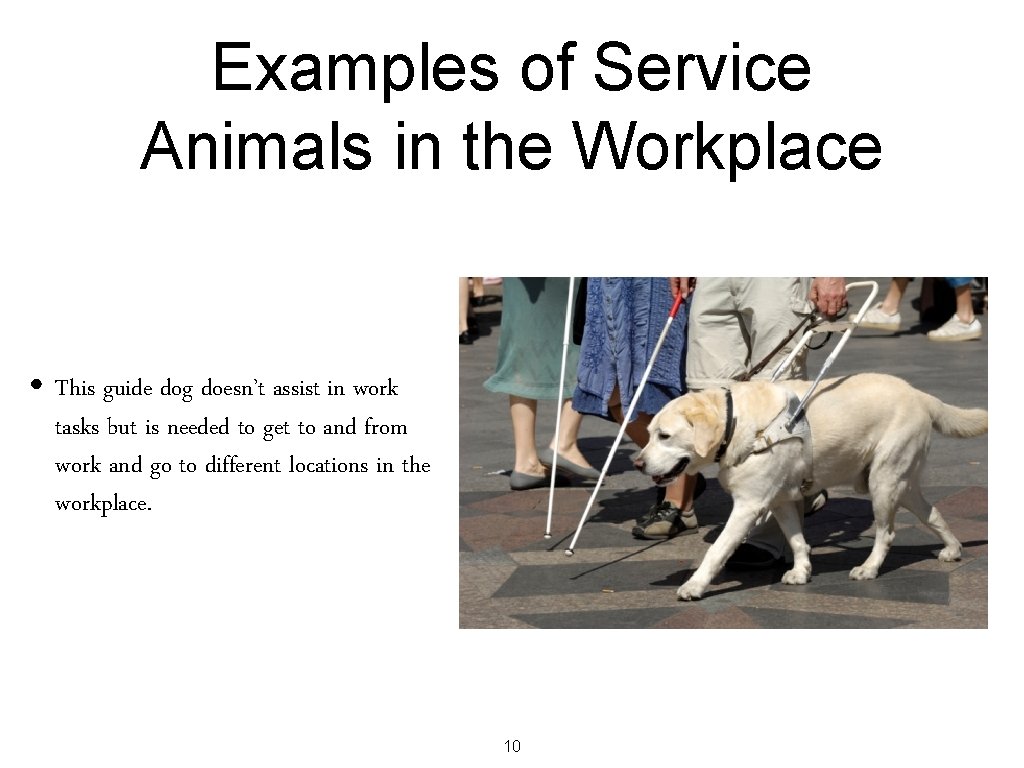
Examples of Service Animals in the Workplace • This dog is holding a man safely in place who is having a seizure. The dog also alerts the owner to oncoming seizures. • Note that this man, generally, does not appear to have a disability. 11
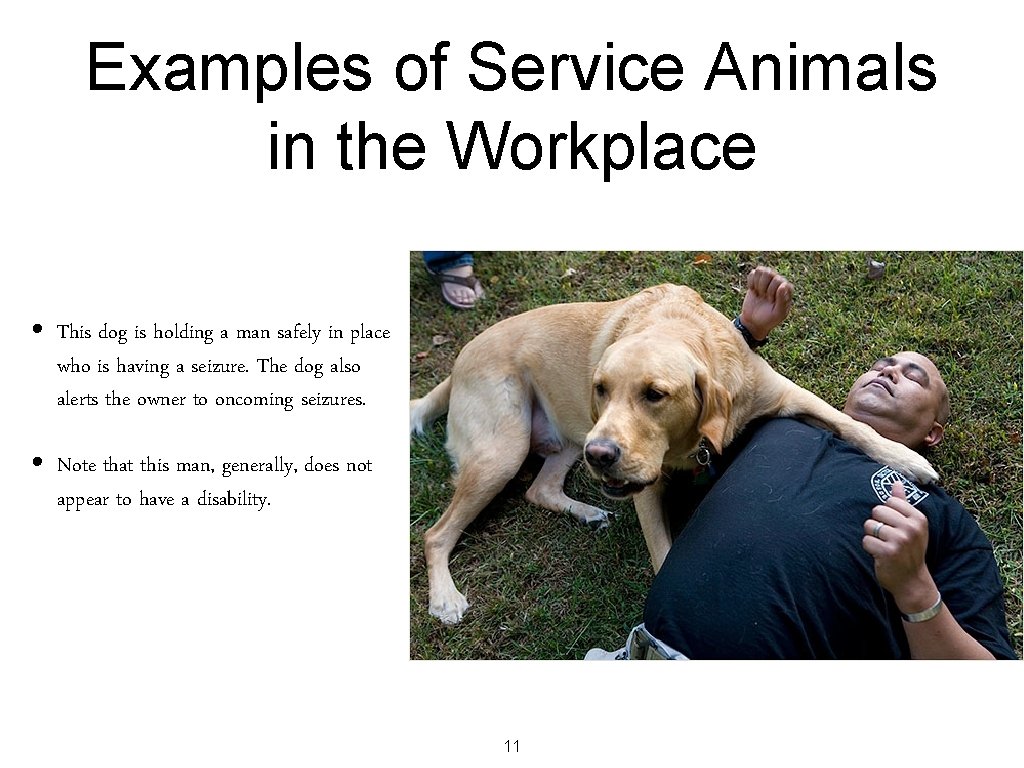
Examples of Service Animals in the Workplace • This woman has severe anxiety. The presence of her cat in her workspace helps her manage her anxiety and be more productive. 12
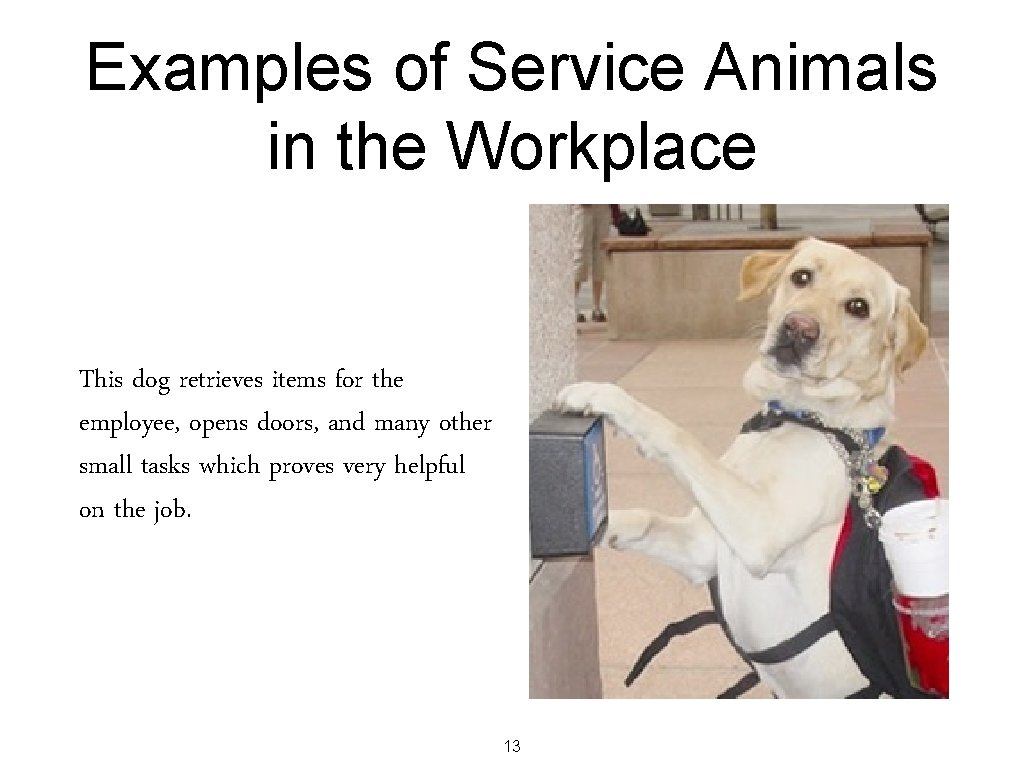
Examples of Service Animals in the Workplace This dog retrieves items for the employee, opens doors, and many other small tasks which proves very helpful on the job. 13
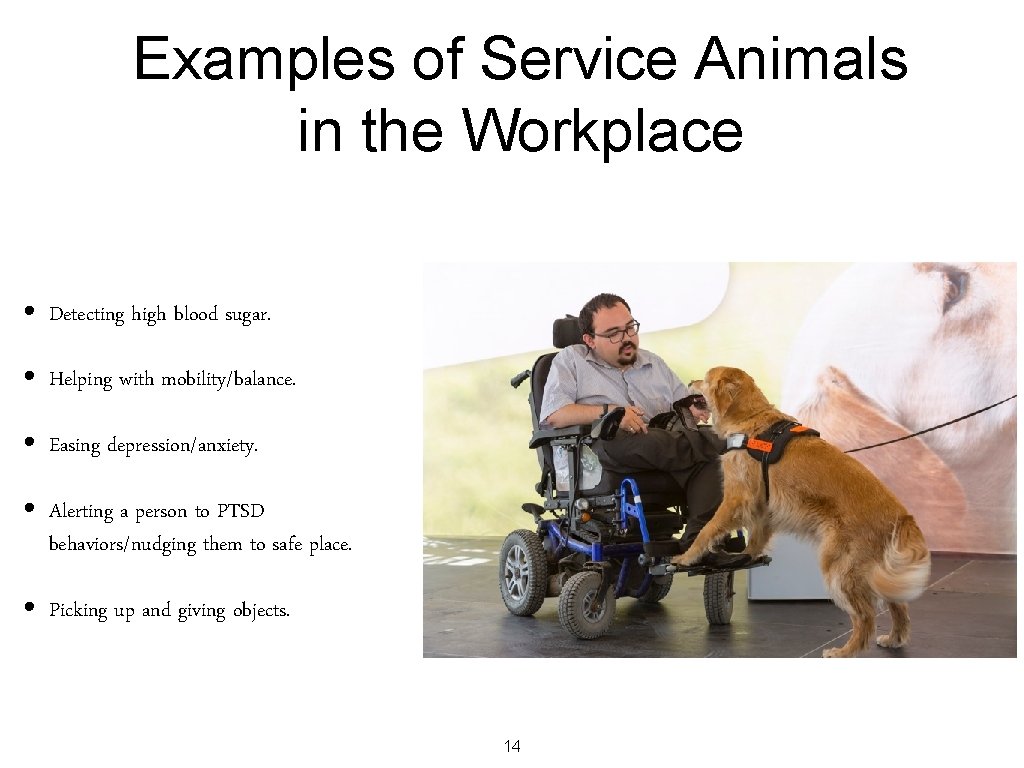
Examples of Service Animals in the Workplace • Detecting high blood sugar. • Helping with mobility/balance. • Easing depression/anxiety. • Alerting a person to PTSD behaviors/nudging them to safe place. • Picking up and giving objects. 14
Steps to Determining if a Service Animal Request is Reasonable. Step 1 Engage in the interactive process of reasonable accommodation just like any other type of request. • Do not deny a service animal on face value or as a matter of policy. Consider each request on a case-by-case basis. 15
Steps to Determining if a Service Animal Request is Reasonable. Step 2 Documentation to determine if an employee is a “qualified person with a disability” under the ADA. • Employer has the right to request medical documentation of disability (unless disability is “readily apparent”, or the employee has already disclosed disability. 16
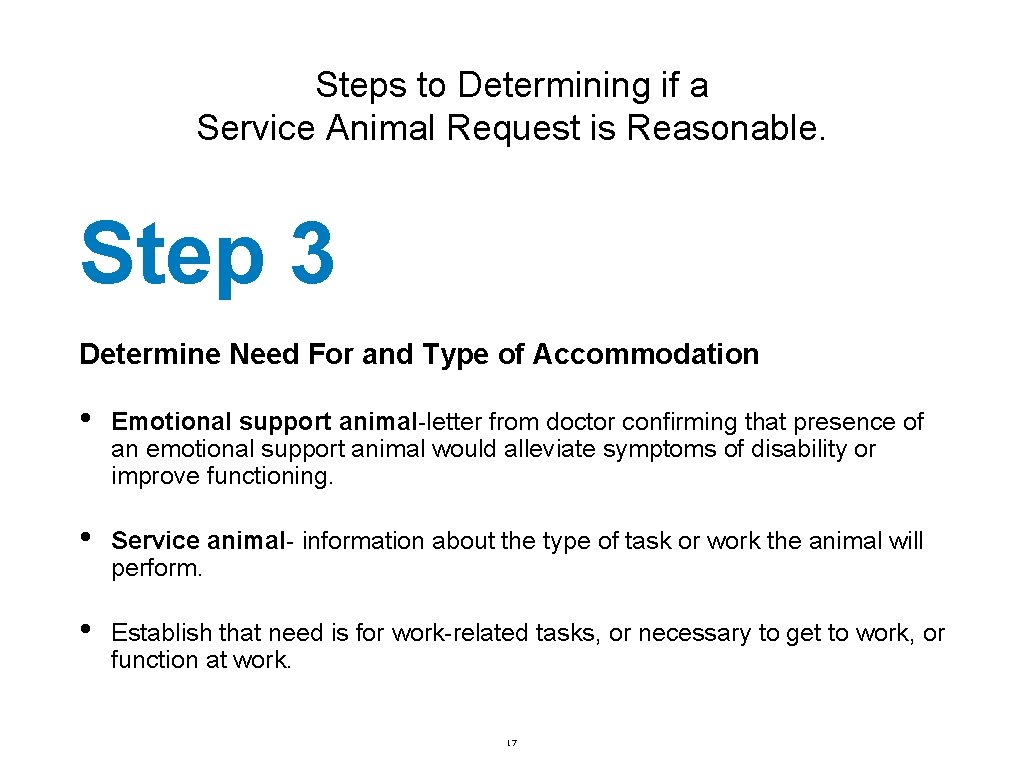
Steps to Determining if a Service Animal Request is Reasonable. Step 3 Determine Need For and Type of Accommodation • Emotional support animal-letter from doctor confirming that presence of an emotional support animal would alleviate symptoms of disability or improve functioning. • Service animal- information about the type of task or work the animal will perform. • Establish that need is for work-related tasks, or necessary to get to work, or function at work. 17
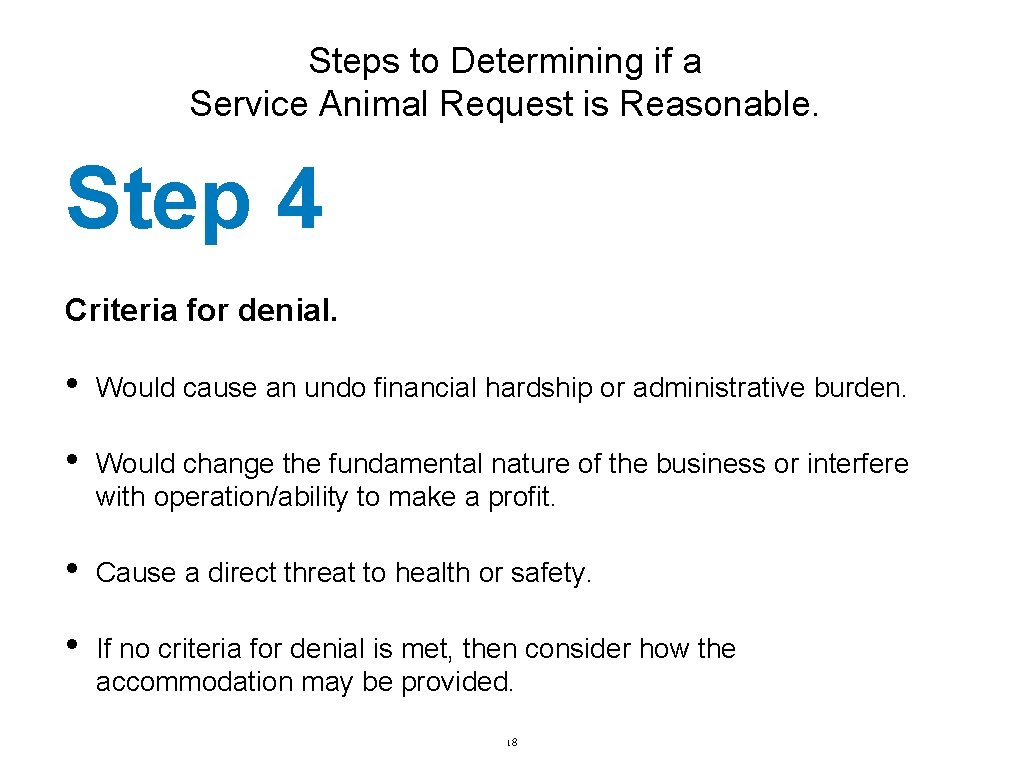
Steps to Determining if a Service Animal Request is Reasonable. Step 4 Criteria for denial. • Would cause an undo financial hardship or administrative burden. • Would change the fundamental nature of the business or interfere with operation/ability to make a profit. • Cause a direct threat to health or safety. • If no criteria for denial is met, then consider how the accommodation may be provided. 18
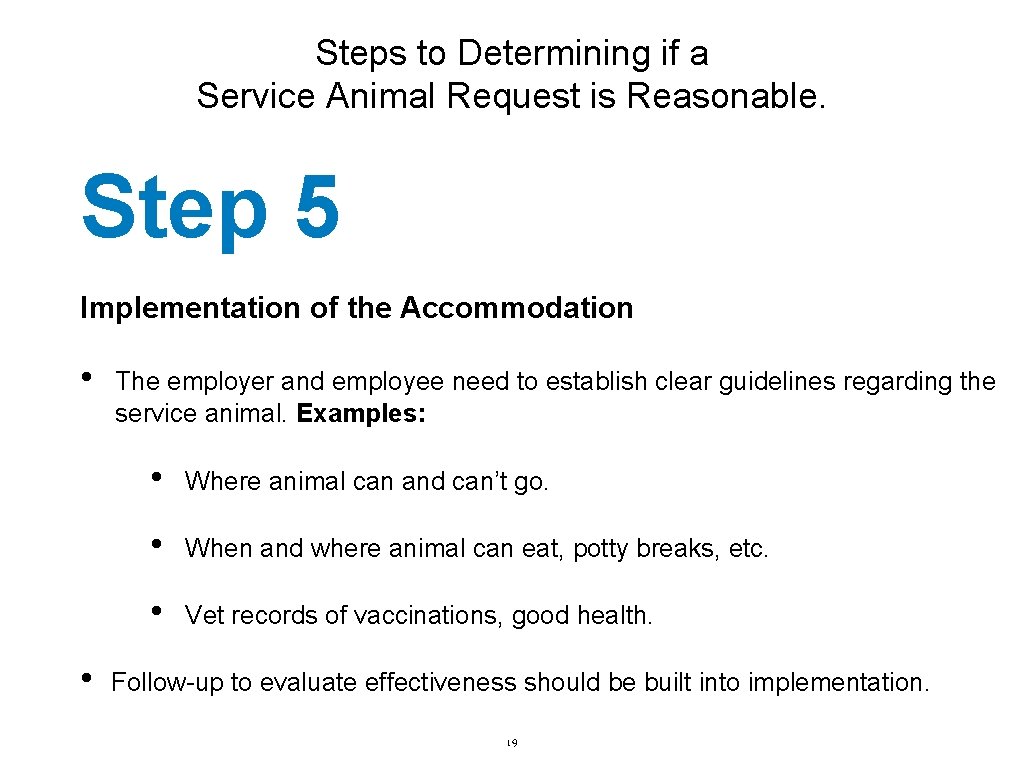
Steps to Determining if a Service Animal Request is Reasonable. Step 5 Implementation of the Accommodation • • The employer and employee need to establish clear guidelines regarding the service animal. Examples: • Where animal can and can’t go. • When and where animal can eat, potty breaks, etc. • Vet records of vaccinations, good health. Follow-up to evaluate effectiveness should be built into implementation. 19
Let’s Analyze Some Scenarios 20
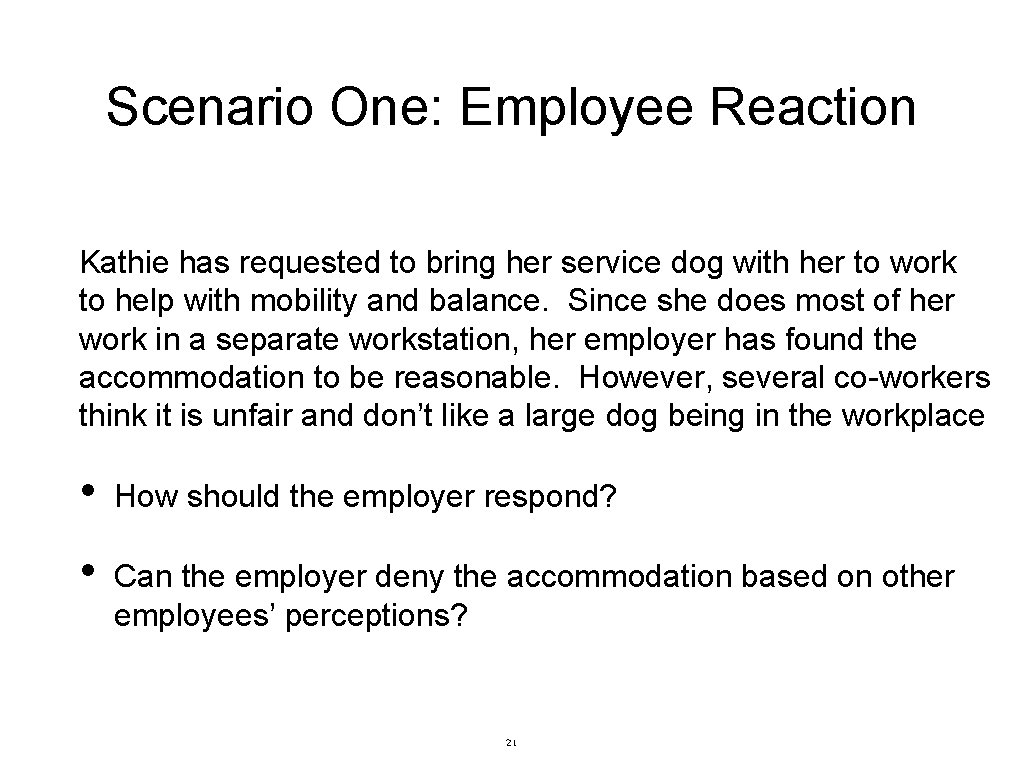
Scenario One: Employee Reaction Kathie has requested to bring her service dog with her to work to help with mobility and balance. Since she does most of her work in a separate workstation, her employer has found the accommodation to be reasonable. However, several co-workers think it is unfair and don’t like a large dog being in the workplace • How should the employer respond? • Can the employer deny the accommodation based on other employees’ perceptions? 21
Scenario Two: Employee Reaction • Tamra has an emotional support cat that she has requested to bring to work as a reasonable accommodation. Two of her co-workers are allergic to cats and are very concerned about how the animal will affect their health and ability to work. • How should the employer respond in this situation? • Can the employer deny the accommodation based on other employees’ health and well-being? 22
Scenario Three: Trial Period • Brandon uses a service dog to assist in tasks that are difficult for him due to his MS. He requests to bring his dog to work. Because Brandon works at the customer service desk, the employer is not sure if the presence of the animal will impact business services. Brandon suggests a trial period to see if the accommodation is effective and to give both Brandon and the dog time to adjust to a new situation. • Is this a legitimate request? • Can the employer make any stipulations because there are customers involved? 23
Scenario Four: Who Provides What • Jim has difficulty with balance at times and his job requires him to go to different areas of the plant. He wants to use a service dog and wonders if the employer can help pay for one. He also wants a crate for the dog to stay in and assumes that is an expense the employer will pick up. • Is Jim correct? Employers pay for many other types of accommodation, are there any financial obligations associated with service animals? 24
Scenario Five: Past Experience • Pat has requested to bring her emotional support cat to work at the recommendation of her therapist. A year ago another employee who works in the same department brought an emotional support cat to work but there were real problems with the cat’s behavior. The accommodation was eventually rescinded. • Given this history, can the employer assume the presence of the emotional support animal won’t be reasonable? • What factors should be taken into consideration? 25
Scenario Six: Supervision • Emma’s request to bring her small emotional support dog to work was granted. Emma is an excellent employee and is usually highly productive. A few months into having her dog at the office, the dog began to have problems with “potty breaks” causing some carpet damage. Emma stopped bringing her dog to work and is considering using a larger, younger dog for emotional support. • Emma’s evaluation is due, and her supervisor is unsure how to evaluate the dog situation. Do problems with an accommodation affect employee evaluations? 26
Questions?