
Service Analysis and Simulation in Process Mining Doctoral


- Slides: 39
Service Analysis and Simulation in Process Mining Doctoral Consortium, BPM 14’ Arik Senderovich Advisers: Avigdor Gal and Avishai Mandelbaum 7. 9. 2014
Contents Ø Introduction: o Services o Operational process mining Ø Research Goal Ø Research Outline Ø Preliminary Work: o Queue Mining: Predicting Delays in Services Ø Future Work 2
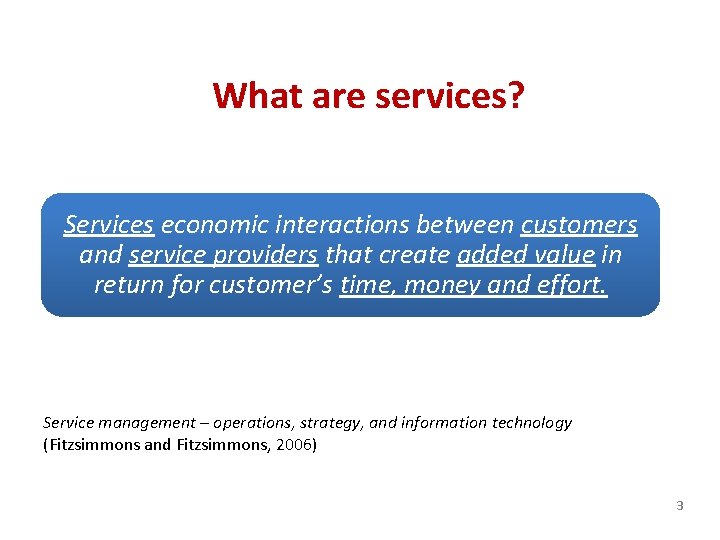
What are services? Services economic interactions between customers and service providers that create added value in return for customer’s time, money and effort. Service management – operations, strategy, and information technology (Fitzsimmons and Fitzsimmons, 2006) 3
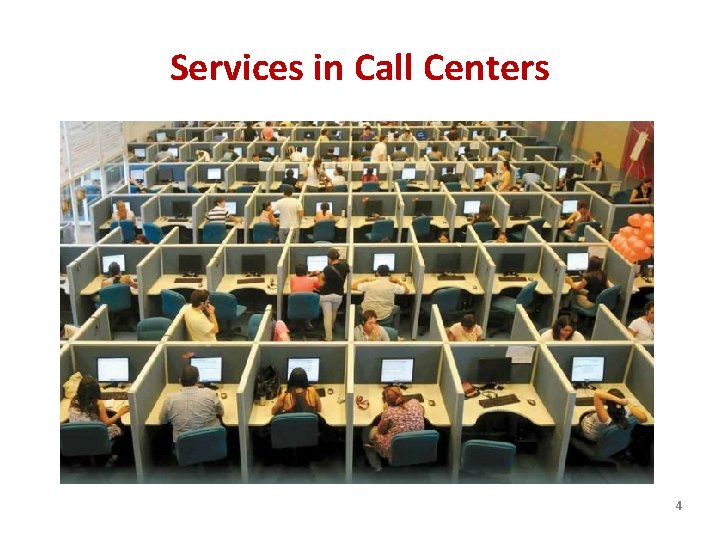
Services in Call Centers 4
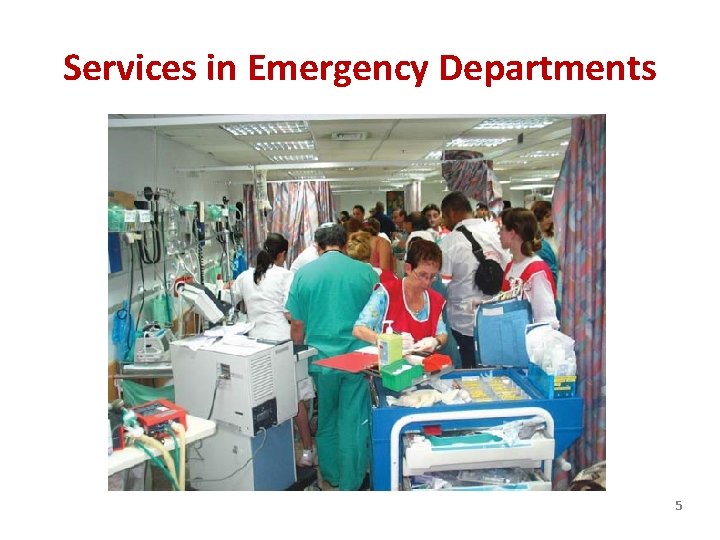
Services in Emergency Departments 5
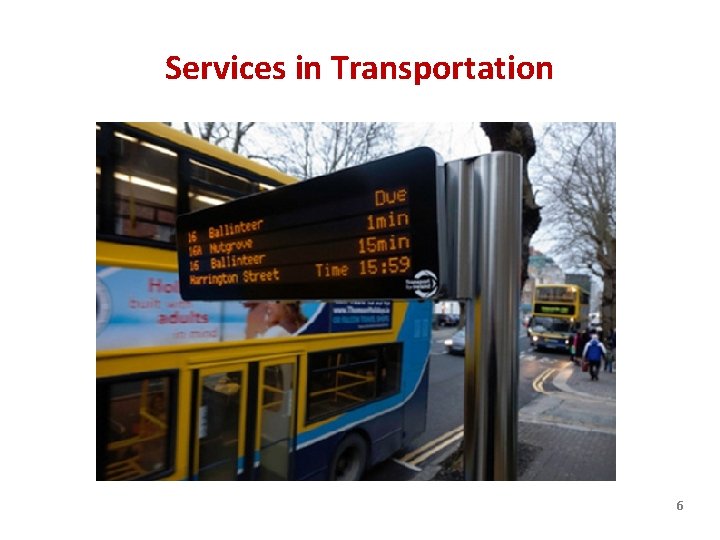
Services in Transportation 6
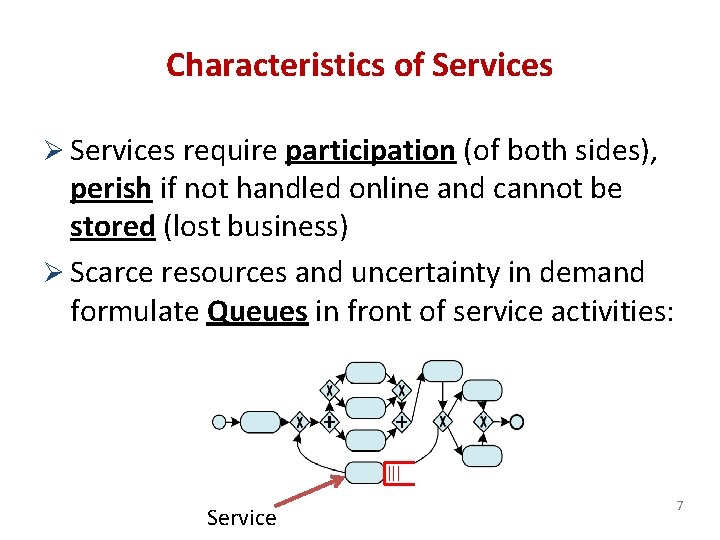
Characteristics of Services Ø Services require participation (of both sides), perish if not handled online and cannot be stored (lost business) Ø Scarce resources and uncertainty in demand formulate Queues in front of service activities: Service 7
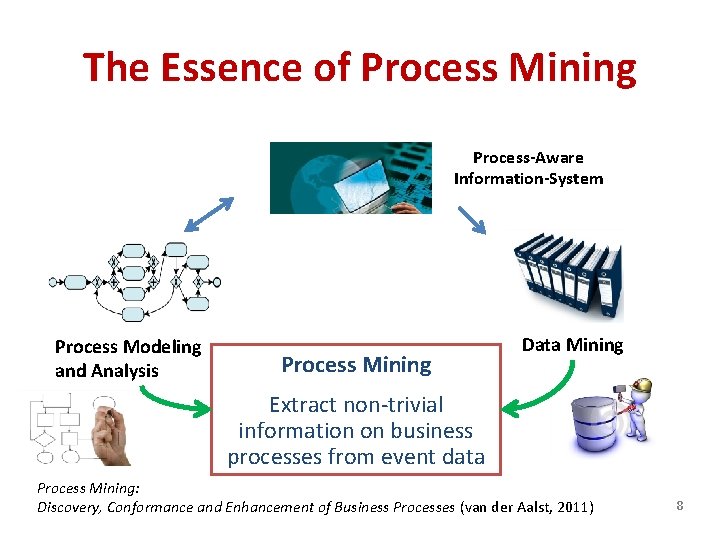
The Essence of Process Mining Process-Aware Information-System Process Modeling and Analysis Process Mining Data Mining Extract non-trivial information on business processes from event data Process Mining: Discovery, Conformance and Enhancement of Business Processes (van der Aalst, 2011) 8
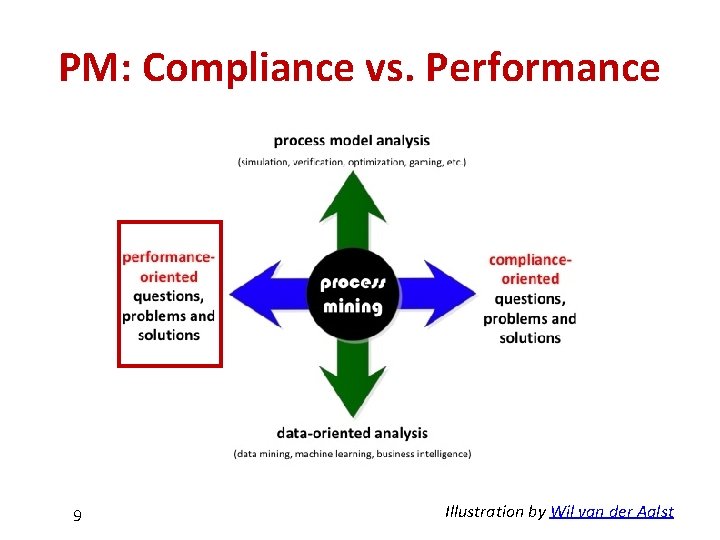
PM: Compliance vs. Performance 9 Illustration by Wil van der Aalst
Types of Performance Analysis Ø We aim at data-driven: o Capacity analysis (e. g. utilization of resources, bottleneck identification) o Time analysis (e. g. predicting delays, sojourn times) o Sensitivity analysis (directions for process improvement) o Optimization with respect to some goal 10
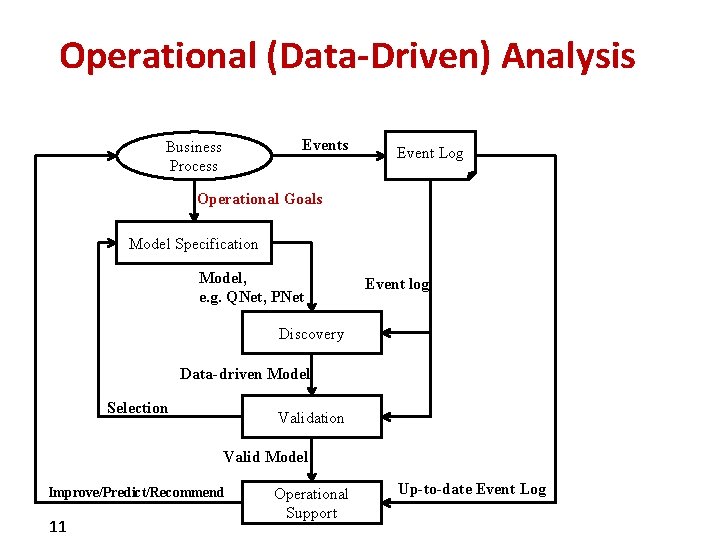
Operational (Data-Driven) Analysis Events Business Process Event Log Operational Goals Model Specification Model, e. g. QNet, PNet Event log Discovery Data-driven Model Selection Validation Valid Model Improve/Predict/Recommend 11 Operational Support Up-to-date Event Log
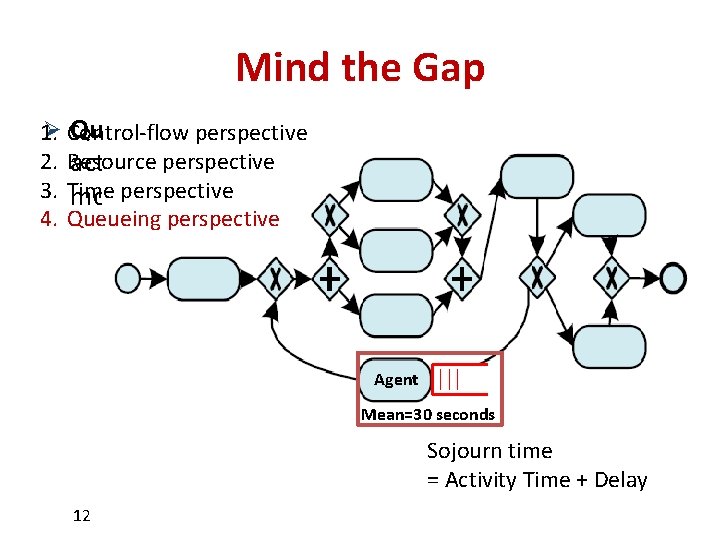
Mind the Gap Ø Control-flow Queues areperspective not treated separately from service 1. 2. Resource activitiesperspective in analytic and simulation performance 3. Time perspective models (e. g. for time prediction) 4. Queueing perspective Agent Mean=30 seconds Sojourn time = Activity Time + Delay 12
Research Goal Ø Integrating service analysis techniques (e. g. Service and Simulation Queueing Analysis Theory) into process mining by discovering analytic and simulation models in Process Mining from event data 13
Research Outline Ø Queue mining: discovery and analysis of service processes via analytical or approximated queueing models Ø Discovery of simulation models of service processes from event data Ø Development of a single modeling framework for discovery, conformance and performance analysis of business processes with queues that combines: o Current process mining perspectives (e. g. control-flow, time, resources) – at the instance level o with the queueing perspective – at an aggregate level o Simulation being the common denominator 14
Queue Mining “Queue Mining – Predicting delays in service processes” (CAi. SE 14’) 15
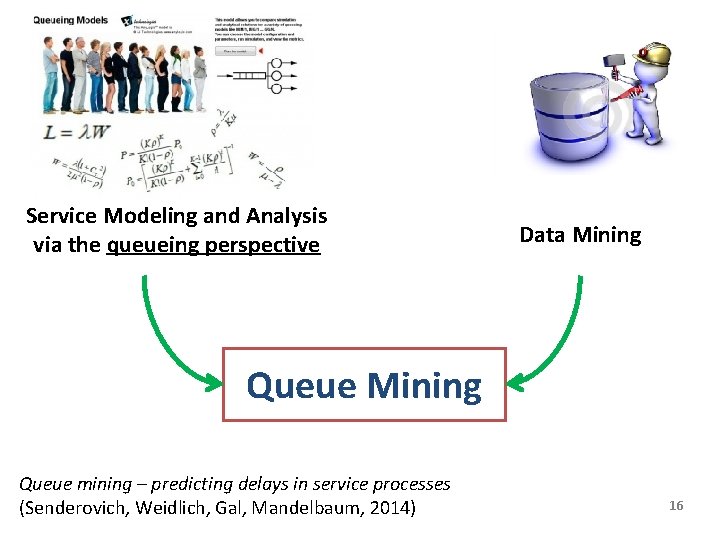
Service Modeling and Analysis via the queueing perspective Data Mining Queue mining – predicting delays in service processes (Senderovich, Weidlich, Gal, Mandelbaum, 2014) 16
Goals of the Preliminary Work Ø Introducing the queueing perspective to process mining Ø Showing that queue mining techniques improve prediction accuracy in service processes Ø Validating well-established results in Queueing Theory against real-world data 17
Steps towards our goal 1. Target a relevant operational problem: online delay prediction 2. Explore Queueing Data (Q-Log) that comes from a real-world service process 3. Consider delay prediction methods 4. Empirical evaluation of the methods 18
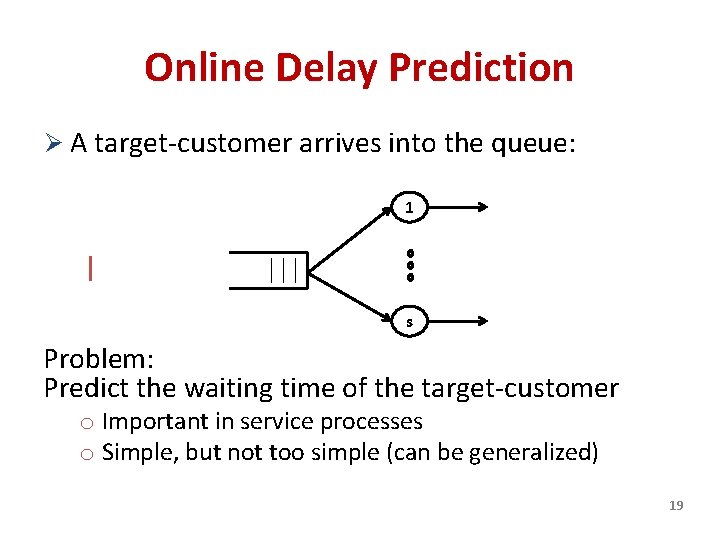
Online Delay Prediction Ø A target-customer arrives into the queue: 1 s Problem: Predict the waiting time of the target-customer o Important in service processes o Simple, but not too simple (can be generalized) 19
Steps towards our goal 1. Target an operational problem 2. Explore Queueing Data (Q-Log) that comes from a real-world service process 20
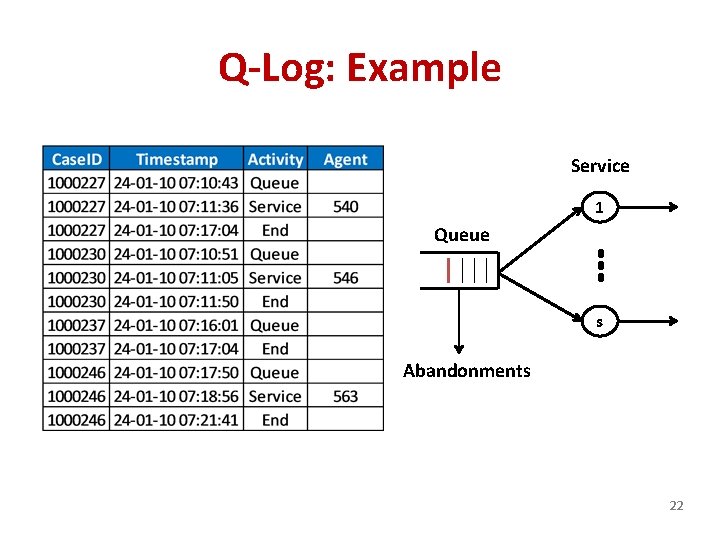
Queueing Data (Q-Log) Ø ILDUBank (Israeli Daily Updated Bank) data, coming from the Technion SEELab Ø Focus on a single customer type o “General Banking” (70% of bank’s customers) Ø Training log of 250488 delays; test log of 117709 delays (January-March, 2011) 21
Q-Log: Example Service 1 Queue s Abandonments 22
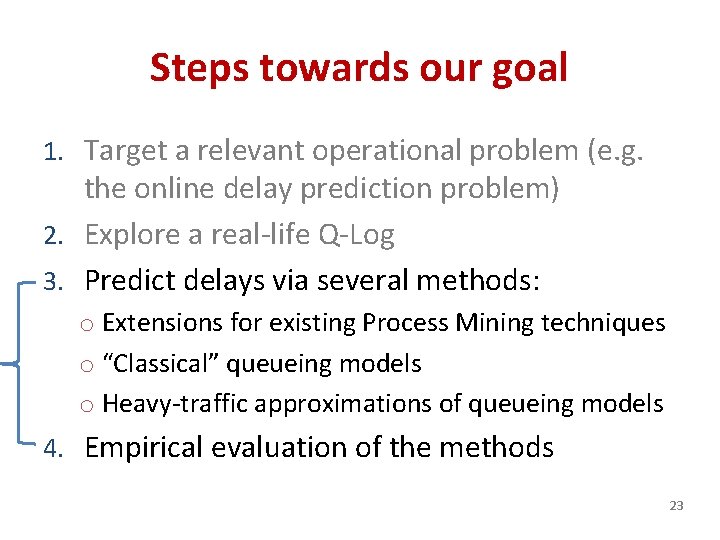
Steps towards our goal 1. Target a relevant operational problem (e. g. the online delay prediction problem) 2. Explore a real-life Q-Log 3. Predict delays via several methods: o Extensions for existing Process Mining techniques o “Classical” queueing models o Heavy-traffic approximations of queueing models 4. Empirical evaluation of the methods 23
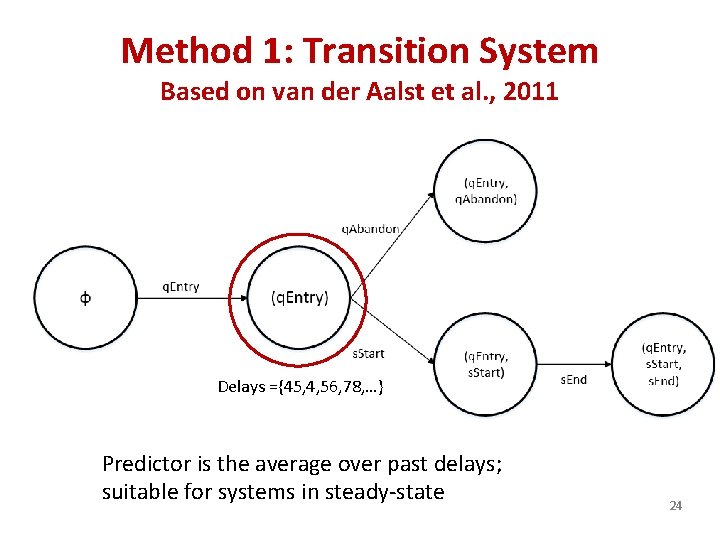
Method 1: Transition System Based on van der Aalst et al. , 2011 Delays ={45, 4, 56, 78, …} Predictor is the average over past delays; suitable for systems in steady-state 24
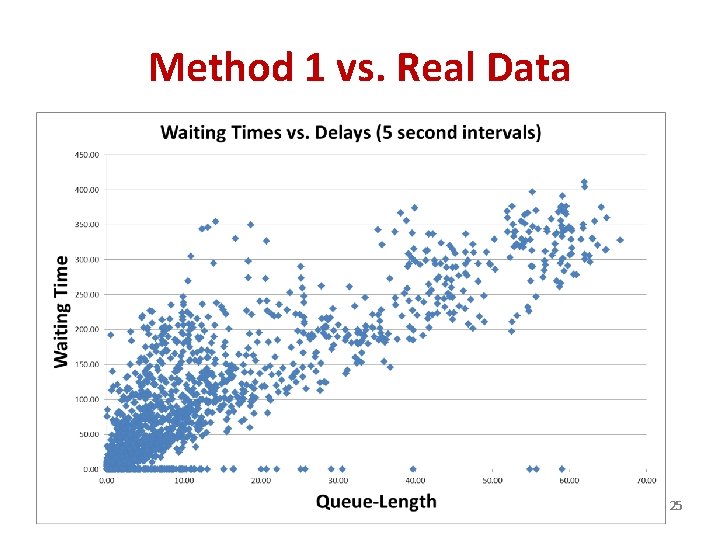
Method 1 vs. Real Data 25 25
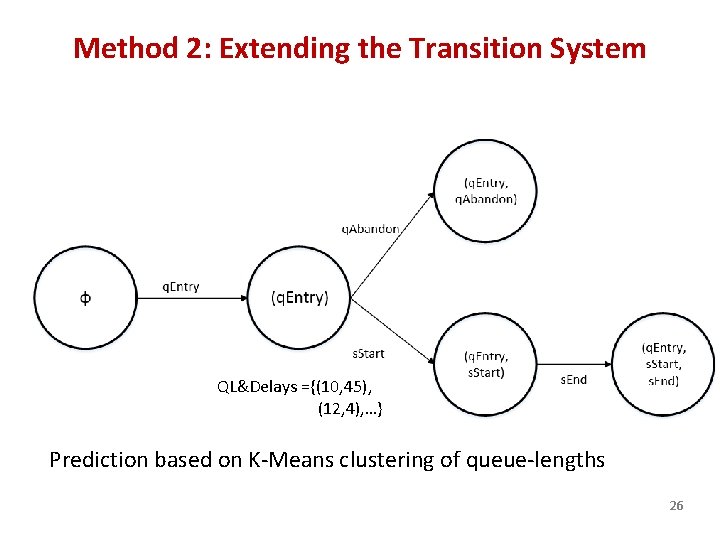
Method 2: Extending the Transition System QL&Delays ={(10, 45), (12, 4), …} Prediction based on K-Means clustering of queue-lengths 26
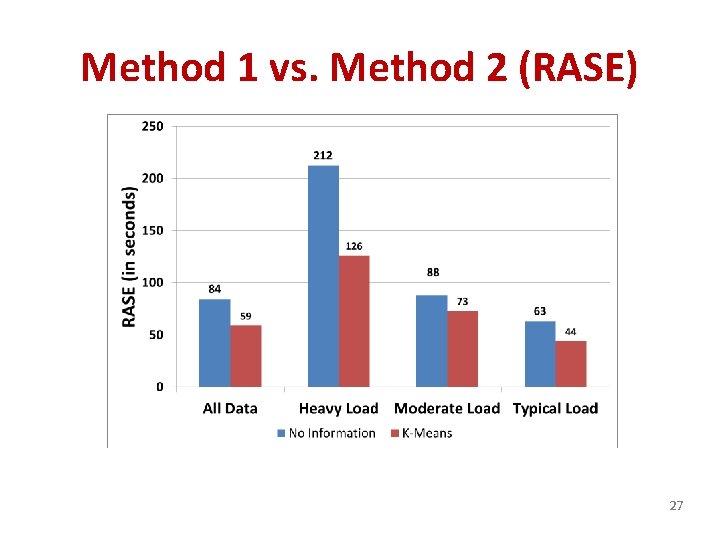
Method 1 vs. Method 2 (RASE) 27
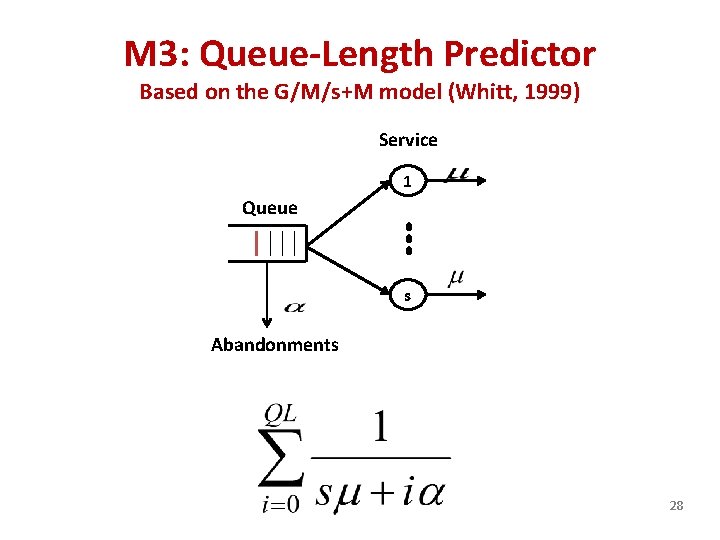
M 3: Queue-Length Predictor Based on the G/M/s+M model (Whitt, 1999) Service 1 Queue s Abandonments 28
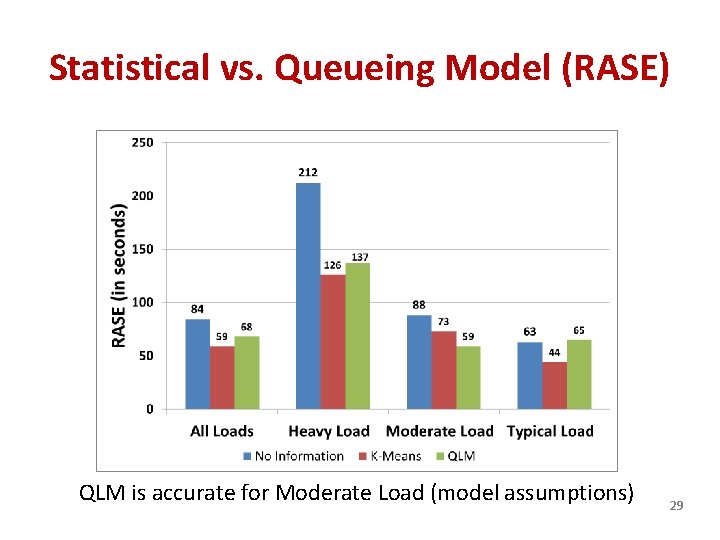
Statistical vs. Queueing Model (RASE) QLM is accurate for Moderate Load (model assumptions) 29
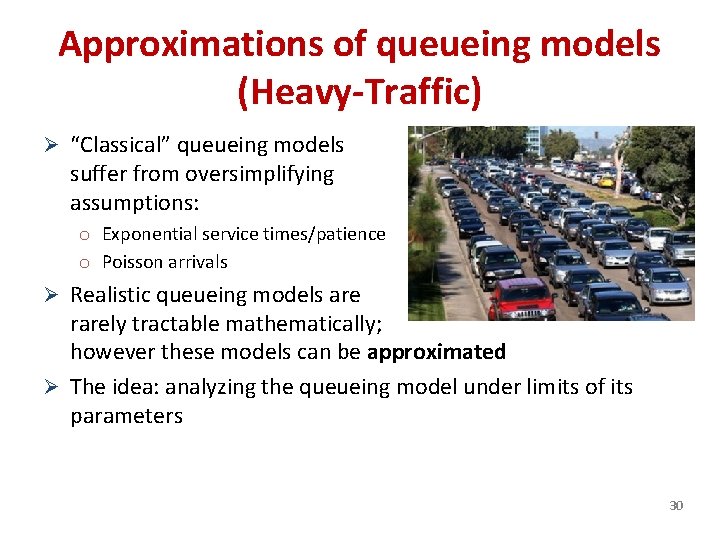
Approximations of queueing models (Heavy-Traffic) Ø “Classical” queueing models suffer from oversimplifying assumptions: o Exponential service times/patience o Poisson arrivals Ø Realistic queueing models are rarely tractable mathematically; however these models can be approximated Ø The idea: analyzing the queueing model under limits of its parameters 30
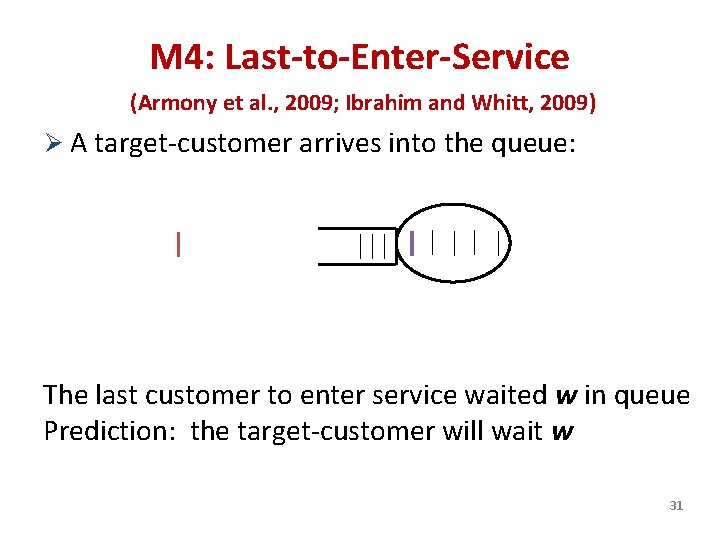
M 4: Last-to-Enter-Service (Armony et al. , 2009; Ibrahim and Whitt, 2009) Ø A target-customer arrives into the queue: The last customer to enter service waited w in queue Prediction: the target-customer will wait w 31
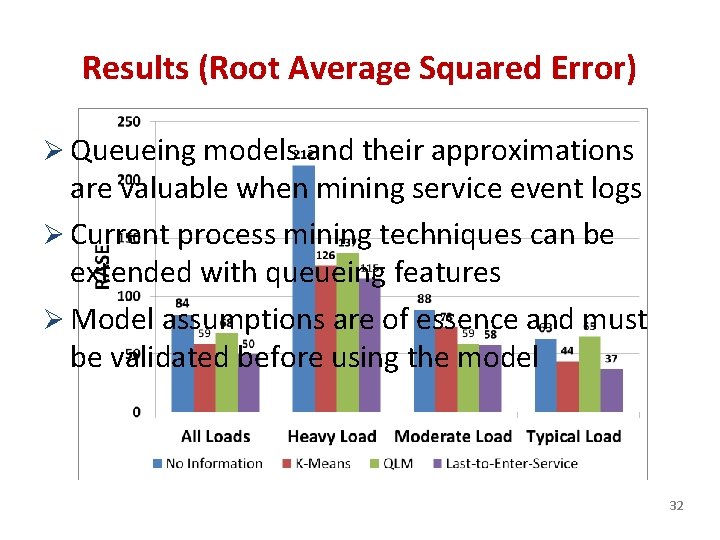
Results (Root Average Squared Error) Ø Queueing models and their approximations are valuable when mining service event logs Ø Current process mining techniques can be extended with queueing features Ø Model assumptions are of essence and must be validated before using the model 32
More on Queue Mining Ø Work-in-progress: o Delay prediction in queueing networks (buses) / multiclass services (call centers) o Mining RTLS hospital data Ø Future work: Automatic model selection from a possible set of analytical queueing models o Search for analytically tractable queueing networks (somewhat analogous to searching for sound PNets) o vs. search for simple models that aggregate complex realities yet work well in practice 34
Towards Data-Driven Simulation Models of Services (and Business Processes with Queues) 35
The need to Simulate Service Processes Ø Complex service environments often result in analytically intractable queueing models Ø Solutions: o Approximations (e. g. snapshot principle) with (sometimes) unrealistic assumptions o Simulation 36
Discovering Simulation Models of Services 1. Service network structure (control-flow from both a customer and a resource perspective) 2. Building blocks (arrival rates, service times, routing probabilities) 3. Scheduling protocols (rules by which customers and resources are matched with each other) o “Mining Resource-Scheduling Protocols”, BPM 14’ 37
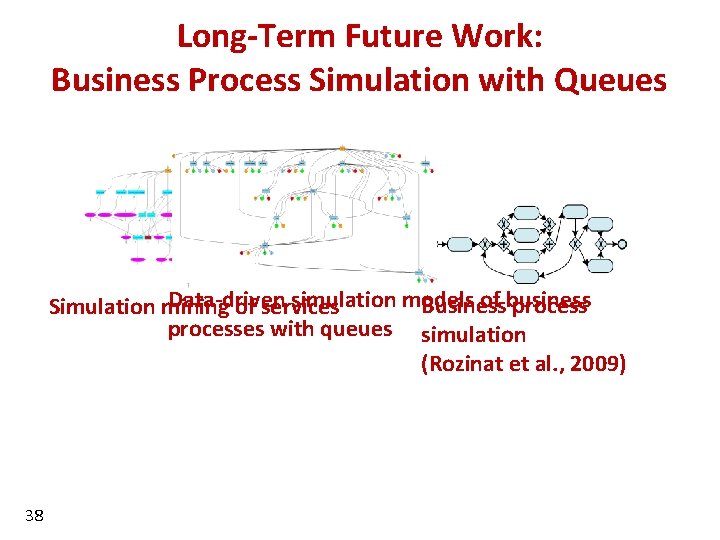
Long-Term Future Work: Business Process Simulation with Queues Data-driven simulation models of business Business process Simulation mining of services processes with queues simulation (Rozinat et al. , 2009) 38
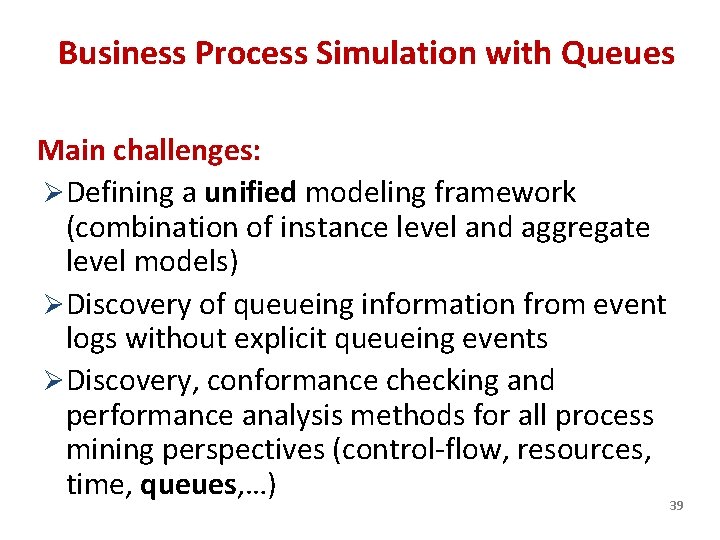
Business Process Simulation with Queues Main challenges: ØDefining a unified modeling framework (combination of instance level and aggregate level models) ØDiscovery of queueing information from event logs without explicit queueing events ØDiscovery, conformance checking and performance analysis methods for all process mining perspectives (control-flow, resources, time, queues, …) 39
Thank you! sariks@tx. technion. ac. il 40