
serverbase txt 1 Client 1 Server 3 2
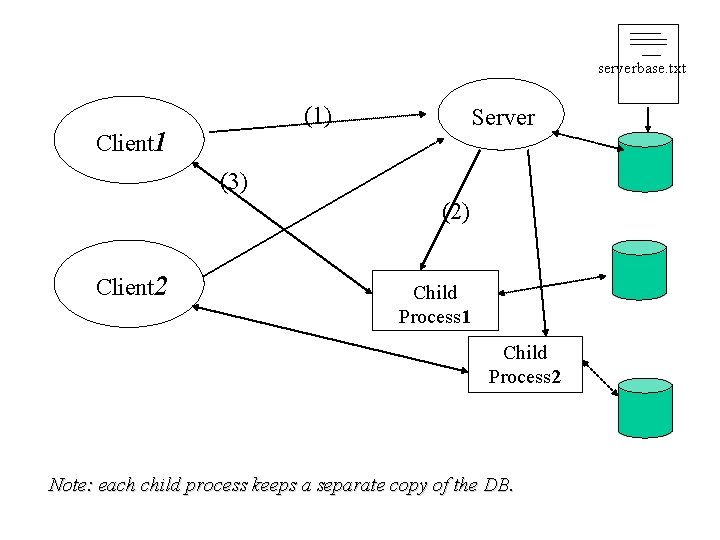
serverbase. txt (1) Client 1 Server (3) (2) Client 2 Child Process 1 Child Process 2 Note: each child process keeps a separate copy of the DB.
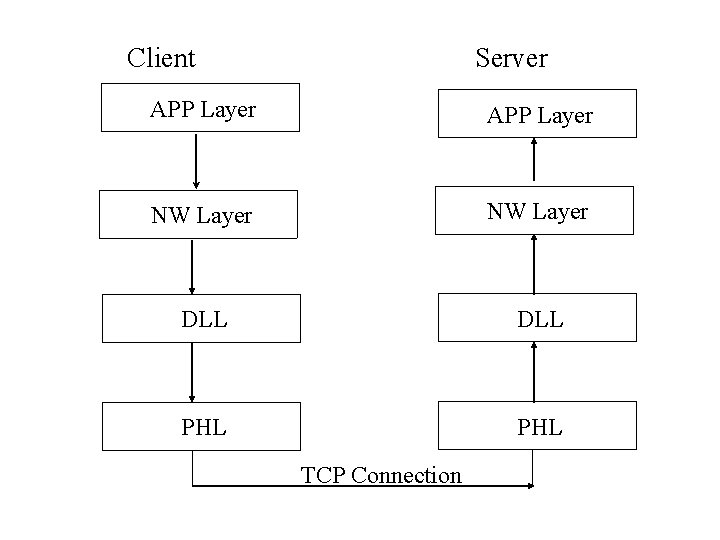
Client Server APP Layer NW Layer DLL PHL TCP Connection
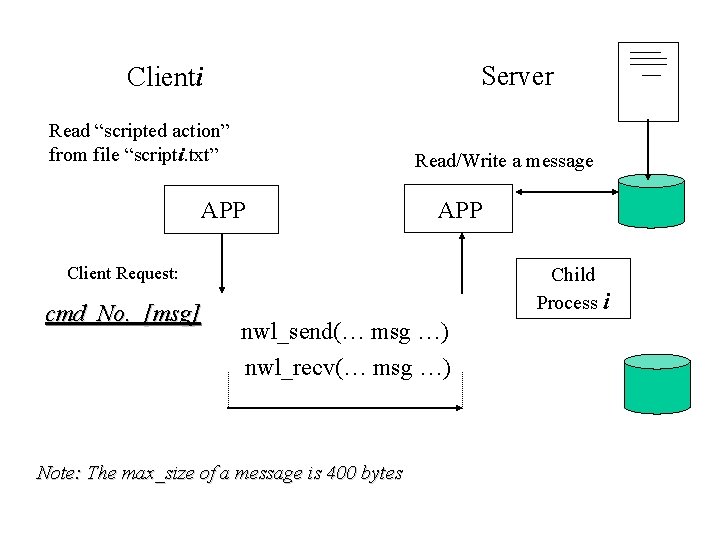
Server Clienti Read “scripted action” from file “scripti. txt” APP Read/Write a message APP Client Request: cmd No. [msg] Child Process i nwl_send(… msg …) nwl_recv(… msg …) Note: The max_size of a message is 400 bytes
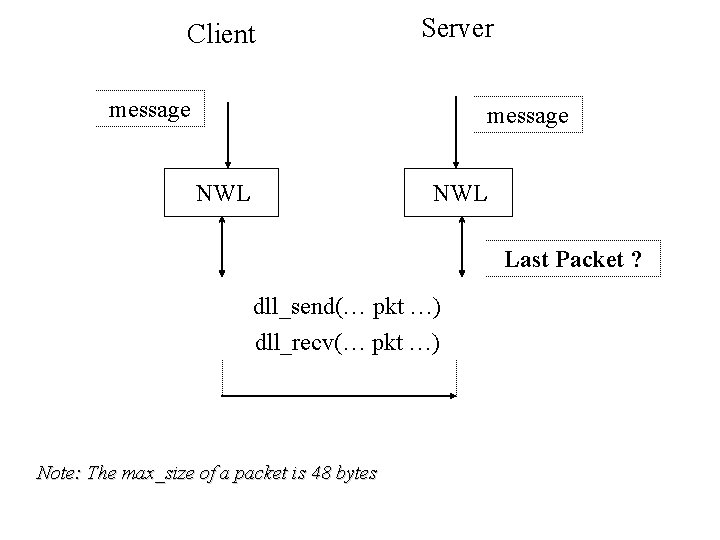
Client Server message NWL Last Packet ? dll_send(… pkt …) dll_recv(… pkt …) Note: The max_size of a packet is 48 bytes
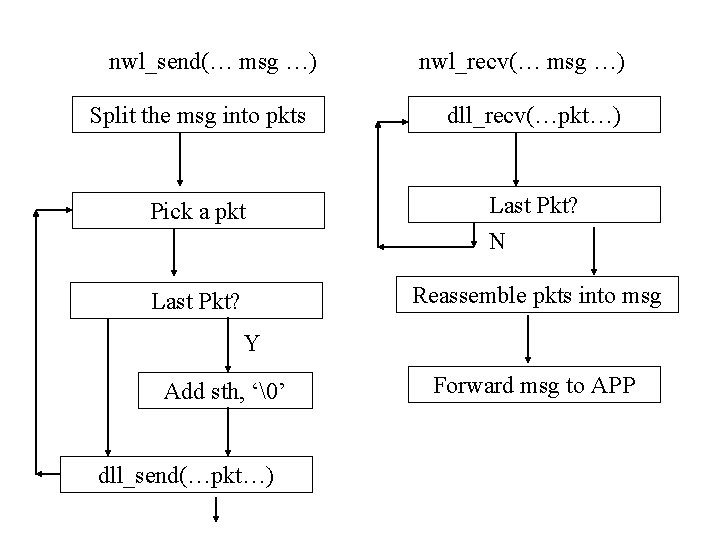
nwl_send(… msg …) nwl_recv(… msg …) Split the msg into pkts dll_recv(…pkt…) Pick a pkt Last Pkt? N Last Pkt? Reassemble pkts into msg Y Add sth, ‘’ dll_send(…pkt…) Forward msg to APP
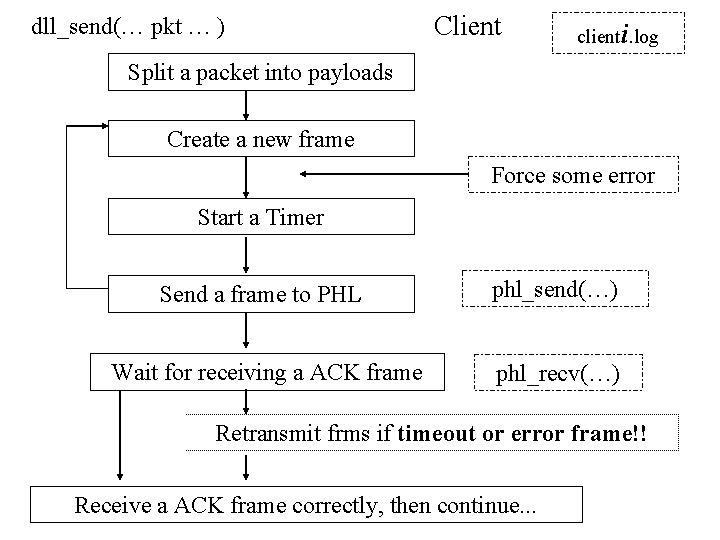
dll_send(… pkt … ) Client clienti. log Split a packet into payloads Create a new frame Force some error Start a Timer Send a frame to PHL phl_send(…) Wait for receiving a ACK frame phl_recv(…) Retransmit frms if timeout or error frame!! Receive a ACK frame correctly, then continue. . .
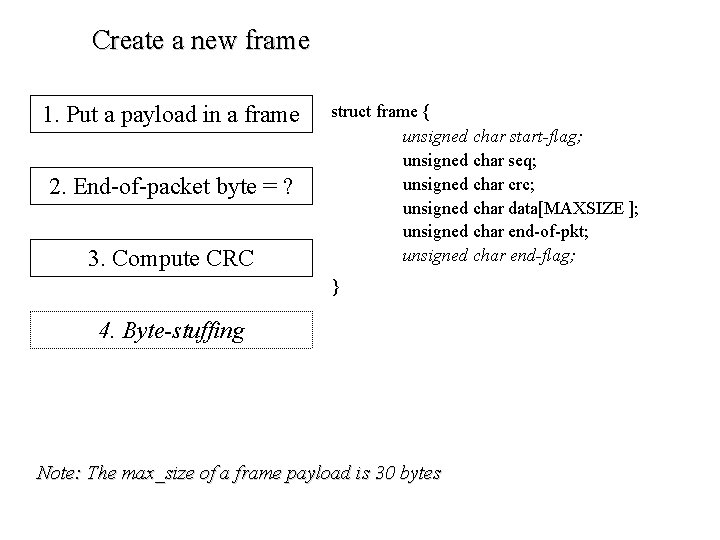
Create a new frame 1. Put a payload in a frame 2. End-of-packet byte = ? 3. Compute CRC struct frame { unsigned char start-flag; unsigned char seq; unsigned char crc; unsigned char data[MAXSIZE ]; unsigned char end-of-pkt; unsigned char end-flag; } 4. Byte-stuffing Note: The max_size of a frame payload is 30 bytes
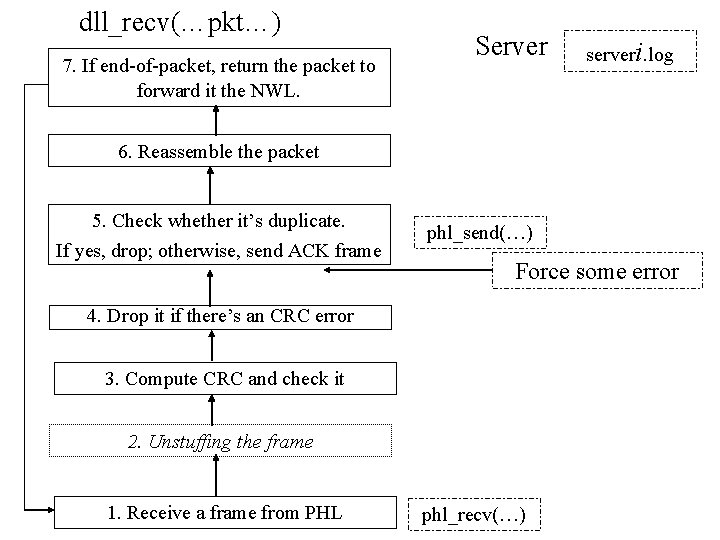
dll_recv(…pkt…) 7. If end-of-packet, return the packet to forward it the NWL. Server serveri. log 6. Reassemble the packet 5. Check whether it’s duplicate. If yes, drop; otherwise, send ACK frame phl_send(…) Force some error 4. Drop it if there’s an CRC error 3. Compute CRC and check it 2. Unstuffing the frame 1. Receive a frame from PHL phl_recv(…)
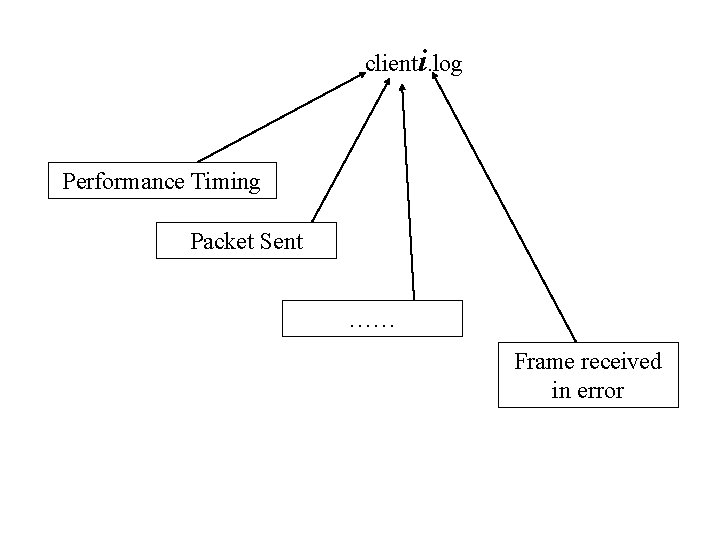
clienti. log Performance Timing Packet Sent …… Frame received in error
More • Sliding Window Protocol: Go back N – Try to implement the simplest firstly: • One-bit sliding window • A single timer – Then implement a sending window size of • 3 or more frames • How to terminate a client process: – When the client gets the response to the quit message – A “clean” way to terminate the server child process ?
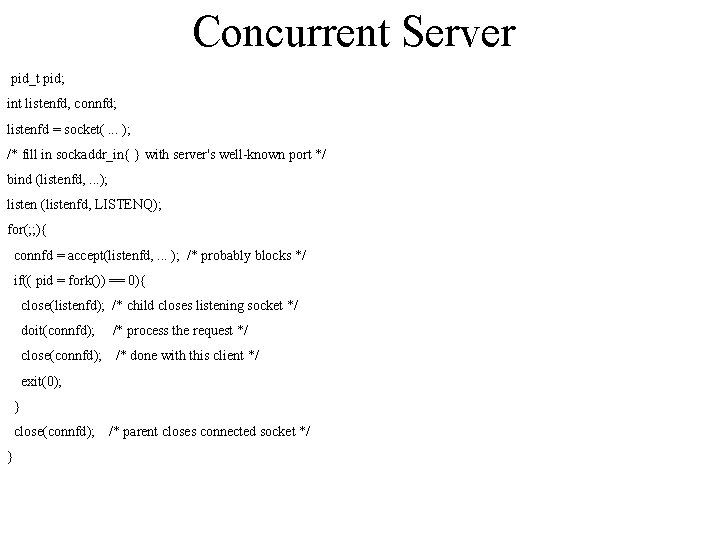
Concurrent Server pid_t pid; int listenfd, connfd; listenfd = socket(. . . ); /* fill in sockaddr_in{ } with server's well-known port */ bind (listenfd, . . . ); listen (listenfd, LISTENQ); for(; ; ){ connfd = accept(listenfd, . . . ); /* probably blocks */ if(( pid = fork()) == 0){ close(listenfd); /* child closes listening socket */ doit(connfd); /* process the request */ close(connfd); /* done with this client */ exit(0); } close(connfd); /* parent closes connected socket */ }
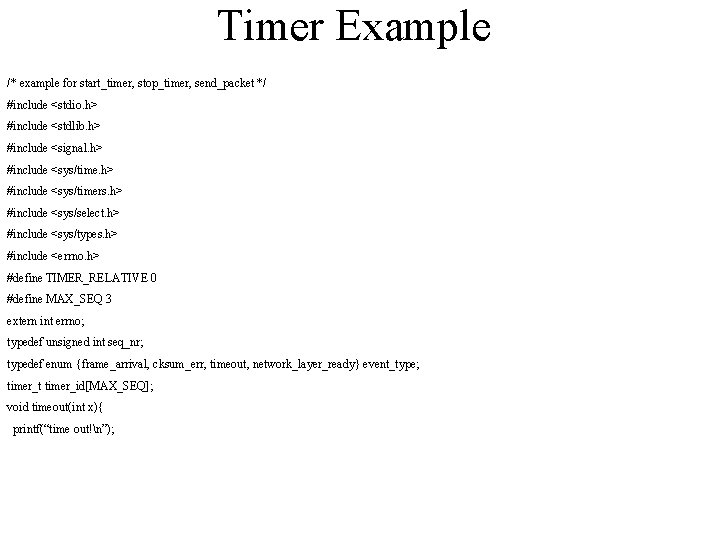
Timer Example /* example for start_timer, stop_timer, send_packet */ #include <stdio. h> #include <stdlib. h> #include <signal. h> #include <sys/timers. h> #include <sys/select. h> #include <sys/types. h> #include <errno. h> #define TIMER_RELATIVE 0 #define MAX_SEQ 3 extern int errno; typedef unsigned int seq_nr; typedef enum {frame_arrival, cksum_err, timeout, network_layer_ready} event_type; timer_t timer_id[MAX_SEQ]; void timeout(int x){ printf(“time out!n”);
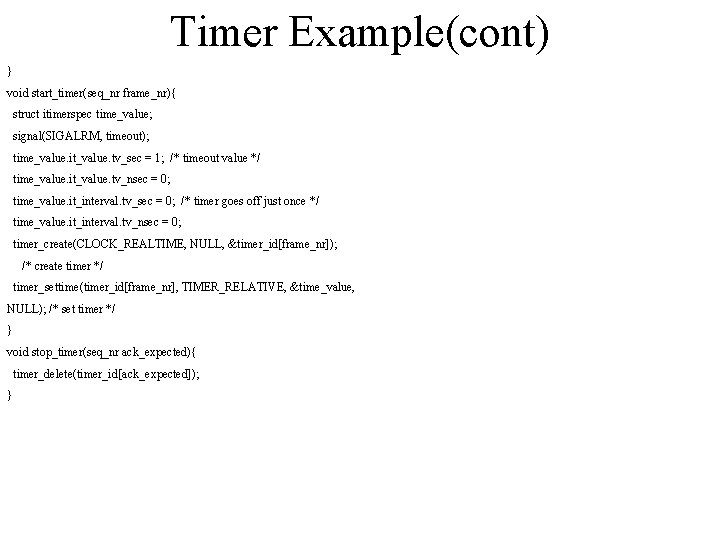
Timer Example(cont) } void start_timer(seq_nr frame_nr){ struct itimerspec time_value; signal(SIGALRM, timeout); time_value. it_value. tv_sec = 1; /* timeout value */ time_value. it_value. tv_nsec = 0; time_value. it_interval. tv_sec = 0; /* timer goes off just once */ time_value. it_interval. tv_nsec = 0; timer_create(CLOCK_REALTIME, NULL, &timer_id[frame_nr]); /* create timer */ timer_settime(timer_id[frame_nr], TIMER_RELATIVE, &time_value, NULL); /* set timer */ } void stop_timer(seq_nr ack_expected){ timer_delete(timer_id[ack_expected]); }
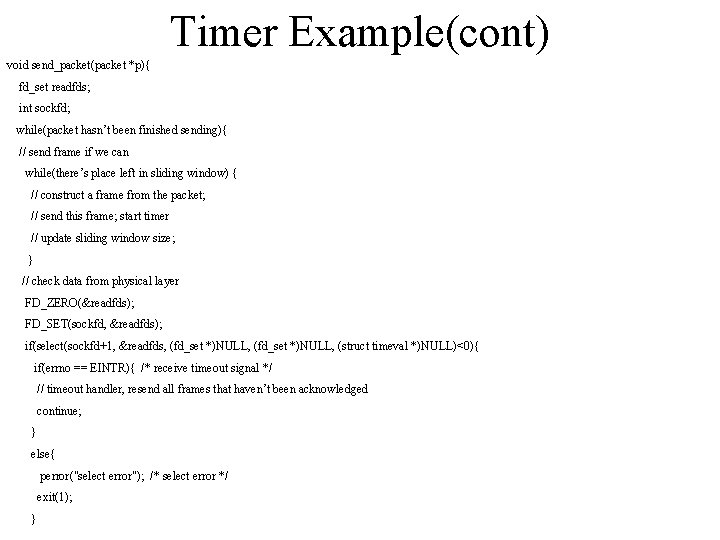
Timer Example(cont) void send_packet(packet *p){ fd_set readfds; int sockfd; while(packet hasn’t been finished sending){ // send frame if we can while(there’s place left in sliding window) { // construct a frame from the packet; // send this frame; start timer // update sliding window size; } // check data from physical layer FD_ZERO(&readfds); FD_SET(sockfd, &readfds); if(select(sockfd+1, &readfds, (fd_set *)NULL, (struct timeval *)NULL)<0){ if(errno == EINTR){ /* receive timeout signal */ // timeout handler, resend all frames that haven’t been acknowledged continue; } else{ perror("select error"); /* select error */ exit(1); }
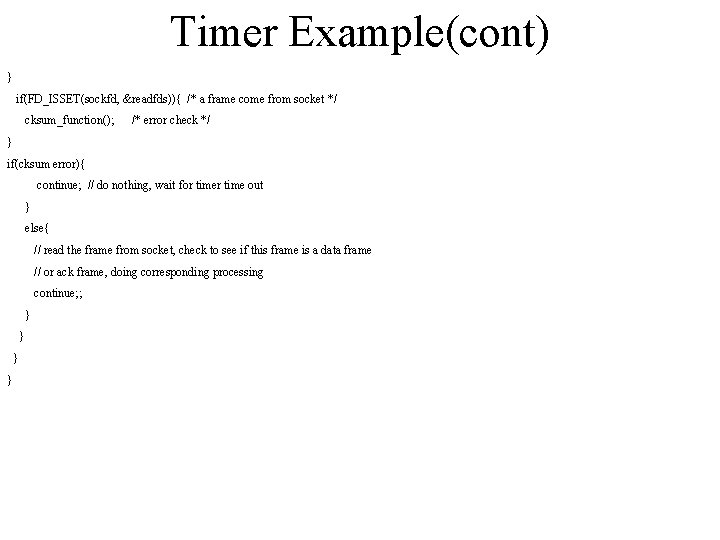
Timer Example(cont) } if(FD_ISSET(sockfd, &readfds)){ /* a frame come from socket */ cksum_function(); /* error check */ } if(cksum error){ continue; // do nothing, wait for time out } else{ // read the frame from socket, check to see if this frame is a data frame // or ack frame, doing corresponding processing continue; ; } } } }
- Slides: 15