
Serousal Fluids The closed cavities of body are

Serousal Fluids § The closed cavities of body are lined by serosal membranes (pleura – pericardium and pertoneum) § The fluid is a plasma filtrate from capillaries of the parietal membrane § The fluid is reabsorbed through the lymphatics and venules of the visceral membrane § The small amounts of fluid facilitates movement of two membranes § The serosal fluids are plasma ultra filtration and mesothelial lining does not add any substance § For laboratory assessment needle aspiration is done (Thoracocentesis – Pericardiocentesis – Paracentesis)
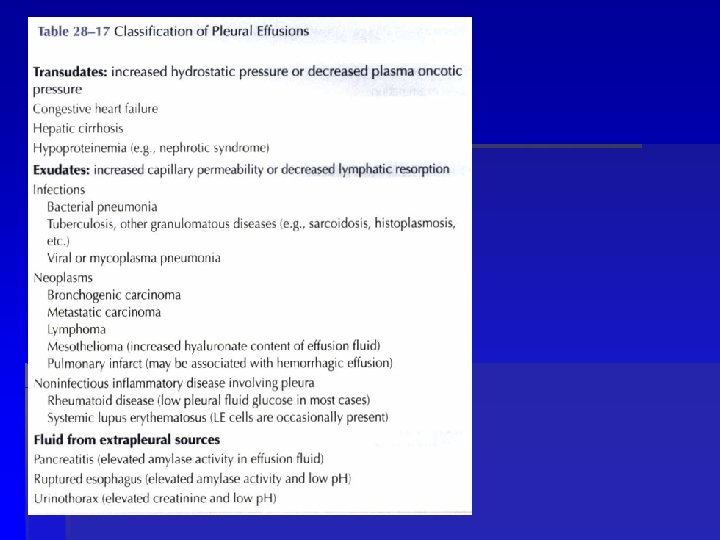
Serousal Fluids Transudate and Exudate § Evaluation of serous fluids directed first toward differentiating transudate from exudate § Transudative effusions (usually bilateral in pleura) have mechanical process owning to systemic conditions, leading to increase capillary hydrostatic pressure or decreased plasma oncotic pressure § Exudative effusions (usually unilateral in pleura) have inflammatory process, associated with disorders of vascular permeability or interfere with lymphatic resorption
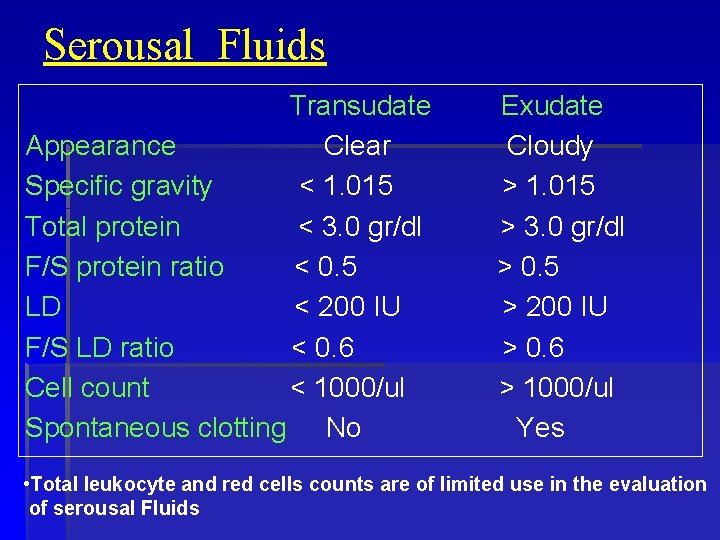
Serousal Fluids Transudate Appearance Clear Specific gravity < 1. 015 Total protein < 3. 0 gr/dl F/S protein ratio < 0. 5 LD < 200 IU F/S LD ratio < 0. 6 Cell count < 1000/ul Spontaneous clotting No Exudate Cloudy > 1. 015 > 3. 0 gr/dl > 0. 5 > 200 IU > 0. 6 > 1000/ul Yes • Total leukocyte and red cells counts are of limited use in the evaluation of serousal Fluids
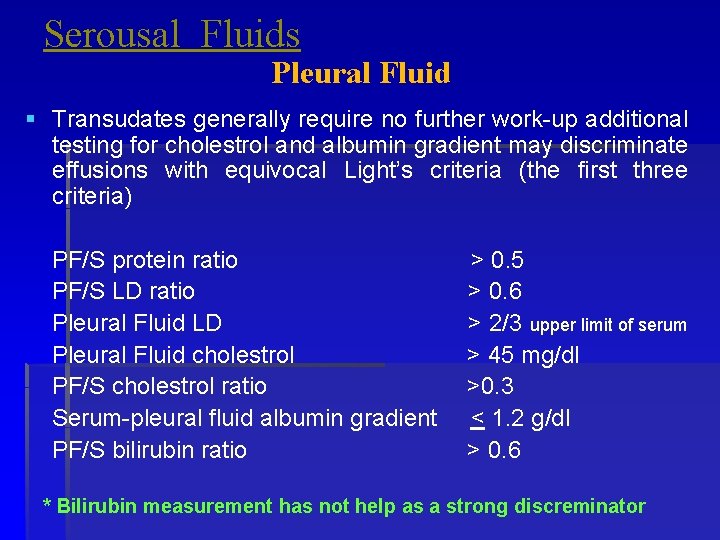
Serousal Fluids Pleural Fluid § Transudates generally require no further work-up additional testing for cholestrol and albumin gradient may discriminate effusions with equivocal Light’s criteria (the first three criteria) PF/S protein ratio PF/S LD ratio Pleural Fluid LD Pleural Fluid cholestrol PF/S cholestrol ratio Serum-pleural fluid albumin gradient PF/S bilirubin ratio > 0. 5 > 0. 6 > 2/3 upper limit of serum > 45 mg/dl >0. 3 < 1. 2 g/dl > 0. 6 * Bilirubin measurement has not help as a strong discreminator
Serousal Fluids Pleural Fluid § Indications of thoracocentesis: 1. Any undiagnoesd pleural effusion 2. Therapeutic purposes in massive effusions § Collection: 1. Heparinized tubes to avoid clotting 2. Except for an EDTA tube for all counts and differentials § Inoculation into the blood culture medium at the bed side * If necessary fresh specimen for cytology may be stored up to 48 hours in the refrigerator with satisfactory results.
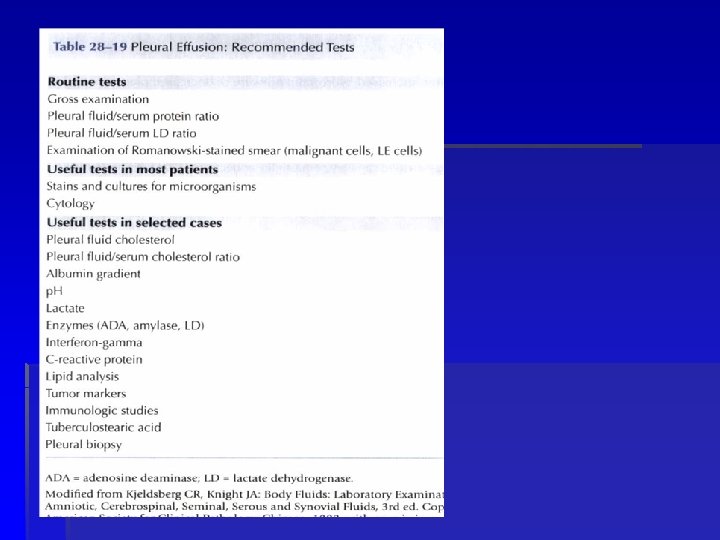
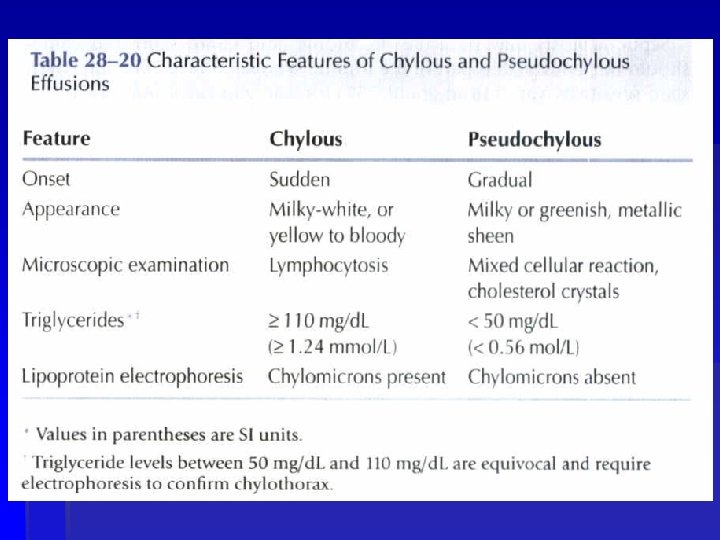
Serousal Fluids Pleural Fluid § Amylase: measurement of this enzyme is recommended for all pleural effusions with unknown ethiology Increased levels found in esophageal rupture § PH value > 7. 3 is related to uncomplicated cases § PH < 7. 2 is related to complicated cases such as bacterial pneumonia, Tb or malignancy § PH < 6. 0 is characteristic of esophageal rupture § Pleural fluid TG > 110 mg/dl indicate a chylous effusion § Values between 60 -110 mg/dl are less certain and require lipoprotein electrophoresis for chylomicrons § Pleural fluid TG < 50 mg/dl indicate a pseudochylous effusion, seen in chronic inflammatory process § Adenosine deaminase (ADA) is a rapid chemical evidence of Tb. ADA-2 from lymphocytes
Serousal Fluids Pleural Fluid § Formal cell counts have little practical value § Pleural fluid Hct > 50% of blood is a good evidence for hemothorax § A bloody pleural effusion (Hct >1% or RBC> 100, 000/ul) suggest trauma, malignancy and pulmonary infarction § Differential cell count on an air-dried Romanowski’s stain § Filtration or automated concentration methods with Papanicolaou stain for cytologic evaluation § Preparation of cell block is unnecessary except for effusions in which malignancy is a consideration
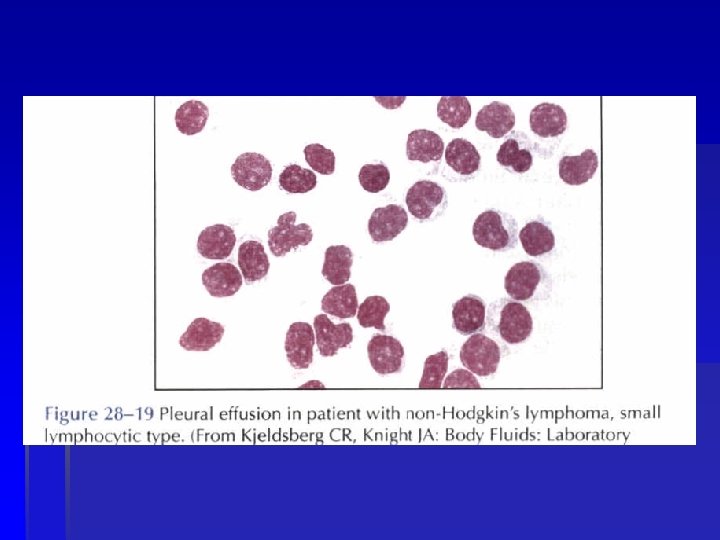
Serousal Fluids Pleural Fluid § Neutrophils: Predaminate in pleural fluid with inflammation. Over 10% of transudates also have a predominance of neutrophils but has no clinical significance § Lymphosytes: Associated with transudate and no clinical significance * Most are small but medium, large and reactive variants may be seen * Nuceloi and nuclear cleaving are more prominent in effusions than in prepheral blood * Low grade NHL or CLL may be difficult to distinguish from benign lymphocyte-rich serous effusions. In conjunction with cellular morphology, immunophenotyping by flowcytometry or immunocytochemistry is usually helpful
Serousal Fluids Pleural Fluid § Eosinophils: an eosinophilic effusion is defined as having > 10% eosinophils * The most common causes are related to the presence of air or blood in the pleural cavity * Most are exudates * in about 35% of patients the ethiology is unknown * though not of much assistance in diagnosing an effusion, eosinophilia does appear to independently associated with longer survival
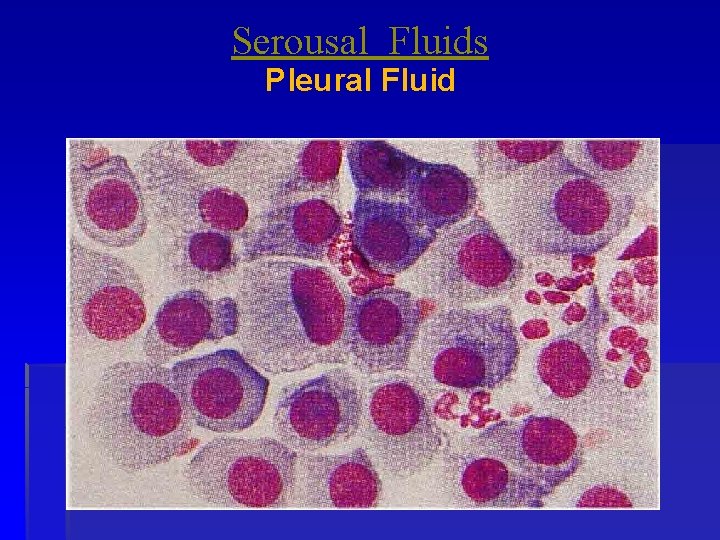
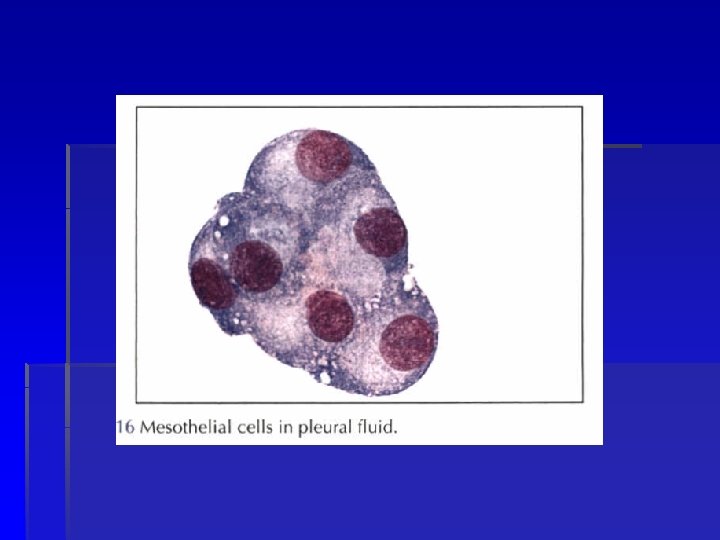
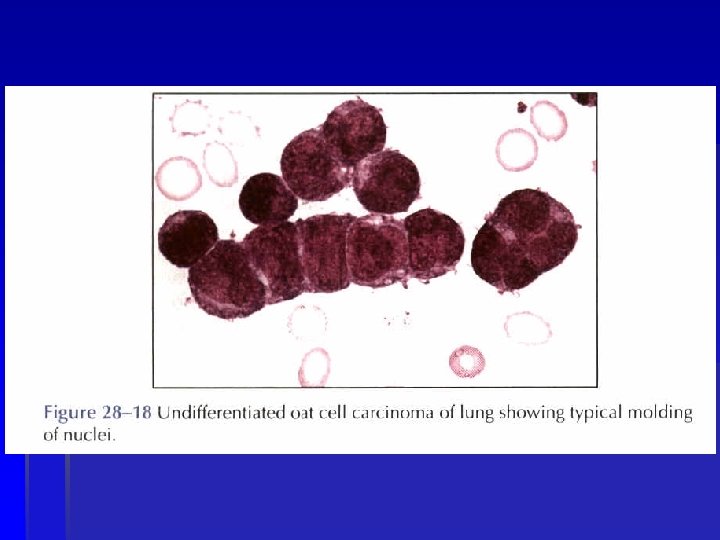
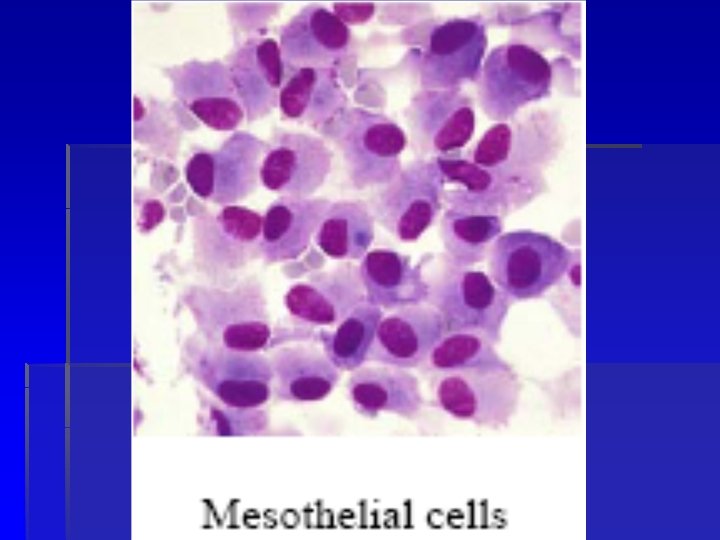
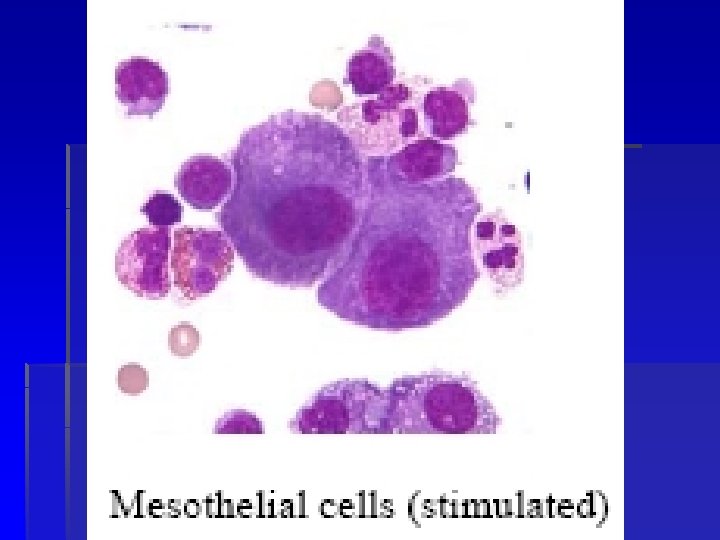
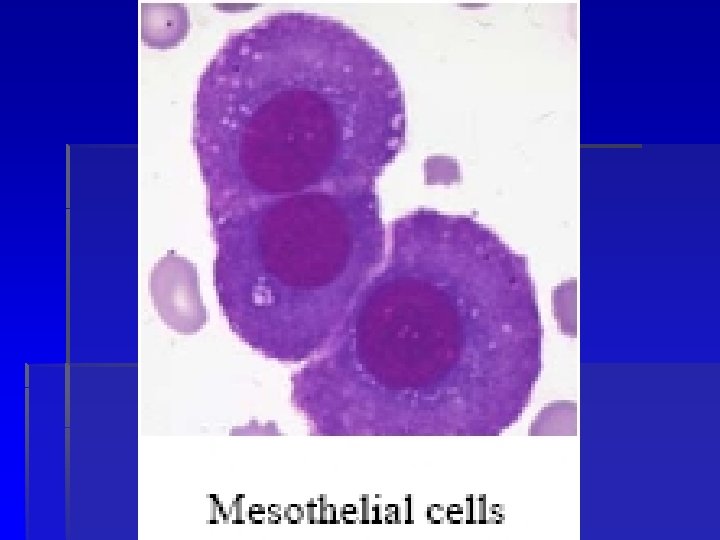
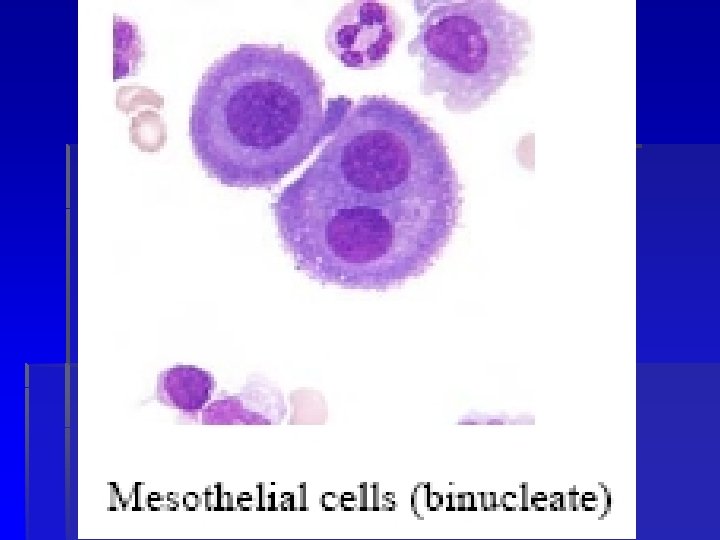
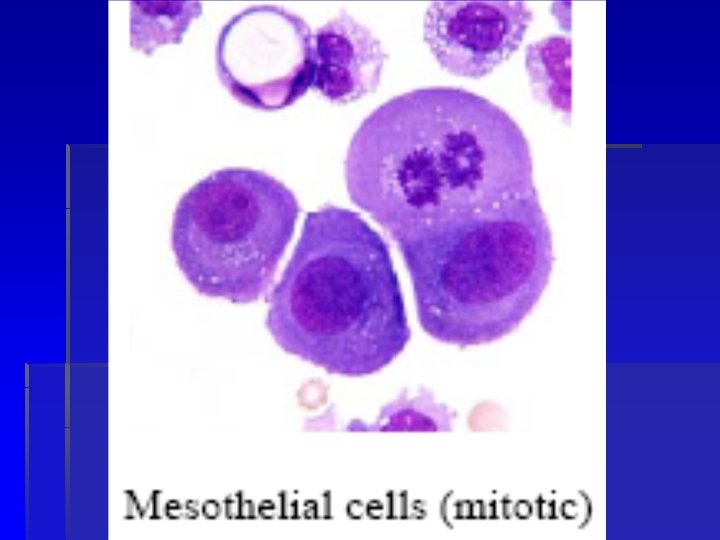
Serousal Fluids Pleural Fluid § Mesothelial cells: Are common in pleural fluid from inflammatory process. * Rare in patients with Tb pleurisy, empyema, RA and patients who have pleurodesis * Fibrin deposition and fibrosis occurring in these conditions prevent exfoliation of mesothelial cells * Carcinoma cells may form easily recognized tumor clusters or closely mimic mesothelial cells a panel of immunocytochemistry stains may be necessary for conformation
Serousal Fluids Pleural Fluid
Serousal Fluids Pleural Fluid
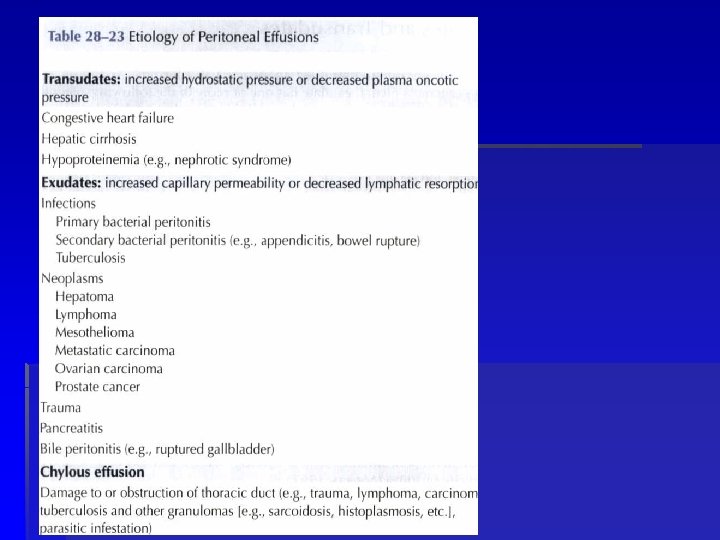
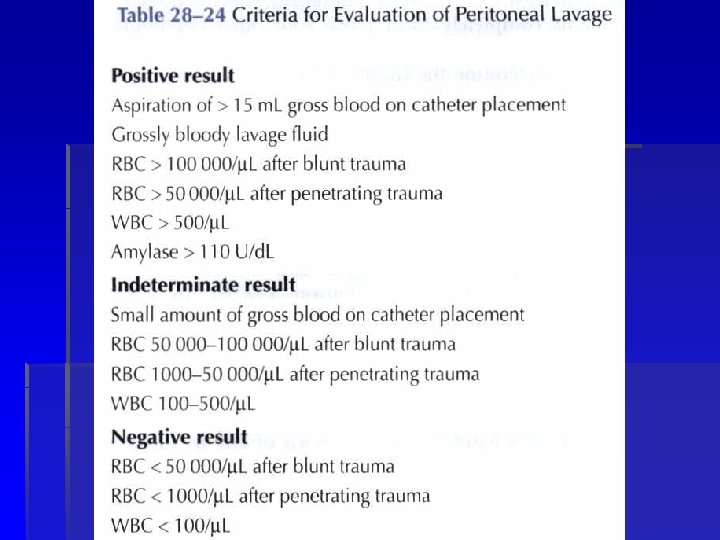
Serousal Fluids Peritoneal Fluid § Up to 50 ml Fluid normally present in peritoneal cavity § Peritoneal effusion is called Ascites § Laboratory criteria for dividing ascitic fluid into transudate and exudate is not well defined as it is for pleural fluid § Diagnostic peritoneal lavage (DPL) have limited use: 1. Rapid screening for significant abdominal hemorrhage 2. Evaluation of hollow viscus injuries § Peritoneal dialysis: submitted to check for infection § Peritoneal washing: performed intra operatively to document early intra abdominal spread of gynecologic and gastric Ca.
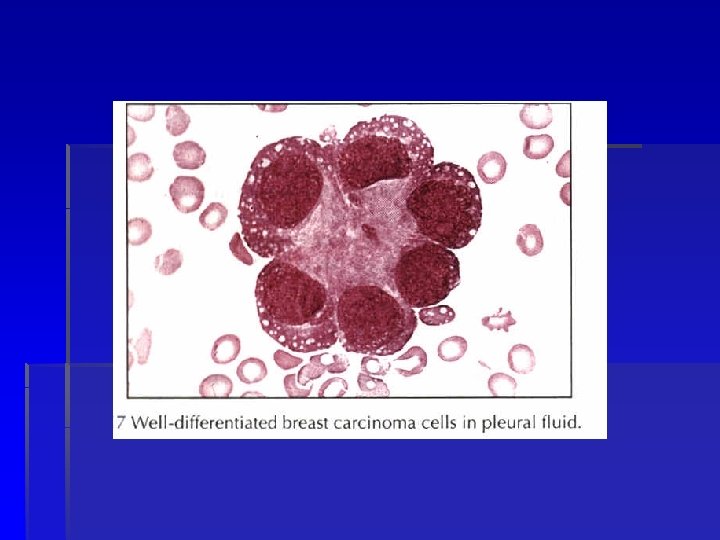
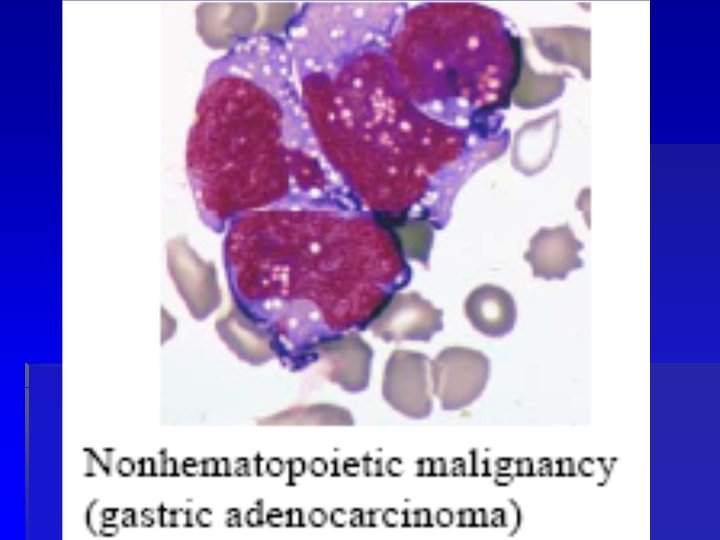
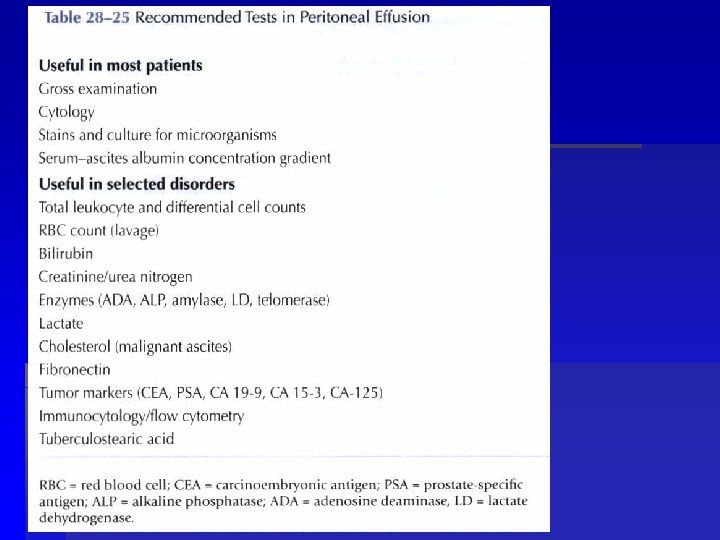
Serousal Fluids Peritoneal Fluid § Total leukocyte useful in spontaneous bacterial peritonitis (SBP) § Approximately 90% of (SBP) have leukocyte count > 500/ul and over 50% neutrophiles § Eosinophilia > 10% most commonly associates with chronic peritoneal dialysis. Also in CHF, vasculitis, lymphoma and ruptured hydatid cyst § Overall sensitivity of cytology for malignant ascitis is 40 -65% § Peritoneal carcinomatosis accounts for two thirds of malignant effusions § Immunocytochemical stains are useful in characterizing atypical cells
Serousal Fluids Peritoneal Fluid § Amylase activity in normal peritoneal fluid is similar to blood levels § A fluid amylase level greater than three times of serum value is good evidence of pancreas-related ascitis and also in GI perforation § Increased peritoneal BUN and Cr + increased serum BUN + normal serum Cr (due to back diffusion of urea) suggests bladder rupture § CEA sensitivity 40 -50% specificity 90% using cut off point of 3 ng/ml § Increase CEA in peritoneal washing suggest a poor prognosis of gastric Ca § CA-125 extremely high in epithelial Ca of ovary, follopian tube or endometrium
Serousal Fluids Peritoneal Fluid
Serousal Fluids Peritoneal Fluid
Serousal Fluids Peritoneal Fluid
Serousal Fluids Pericardial Fluid § 10 -15 ml fluid normally present in pericardial space § Causes of pericardial effusion: 1)infection 2)neoplasm 3)MI 4)hemorrhage 5)methabolic 6)RA § HIV infected patients commonly have asymptomatic pericardial effusion § In HIV associated cardiac temponade 45% are idiopathic, Tb and bacterial infections each accounts for 20% of cases § Large effusions (>350 ml) most often caused by malignancy or uremia § Blood-like fluid represent hemorrhagic effusion or aspiration of blood from the heart § Hct comparable to peripheral and blood gas analysis help to differentiate
Serousal Fluids Pericardial Fluid § Postpericardiotomy syndrome common but nonspecific complication of cardiac surgery, days to weeks following the injury Exudative pericardial effusion developed in over 80% of cases Presence of antimyocardial Abs suggests an immune mediated process § Hct and RBC count have limited value in differential diagnosis of pericardial effusions. Total WBC > 10, 000/ul suggests bacterial, Tb or malignant pericarditis § Metastatic Ca of lung and breast are most frequent cause of malignant pericardial effusion

- Slides: 39