
SEROLOGY HISTORY ANTIGENS ANTIBODIES Chapter 12 Serology Background
SEROLOGY HISTORY, ANTIGENS, ANTIBODIES Chapter 12
Serology Background Dr. Karl Landsteiner – typed blood into A, B, AB, and O groups Blood factors are determined genetically – used for individualization
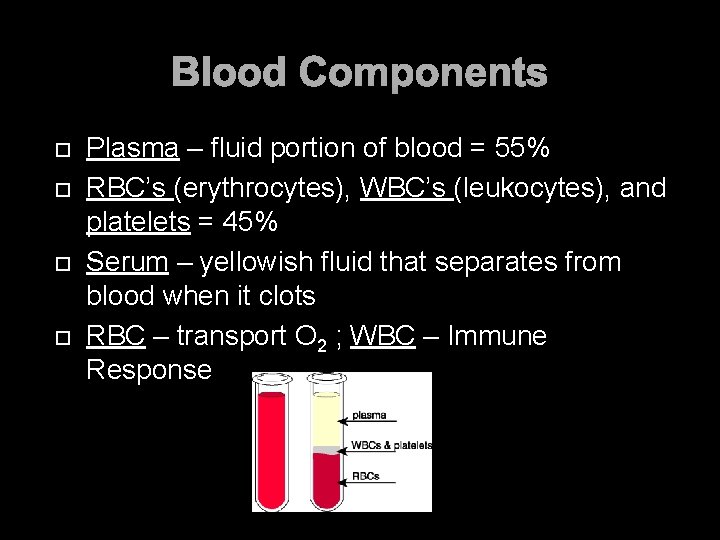
Blood Components Plasma – fluid portion of blood = 55% RBC’s (erythrocytes), WBC’s (leukocytes), and platelets = 45% Serum – yellowish fluid that separates from blood when it clots RBC – transport O 2 ; WBC – Immune Response
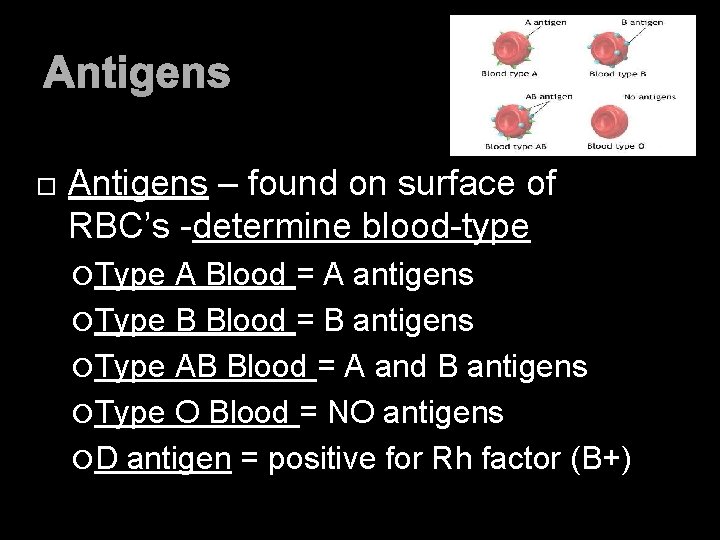
Antigens – found on surface of RBC’s -determine blood-type Type A Blood = A antigens Type B Blood = B antigens Type AB Blood = A and B antigens Type O Blood = NO antigens D antigen = positive for Rh factor (B+)
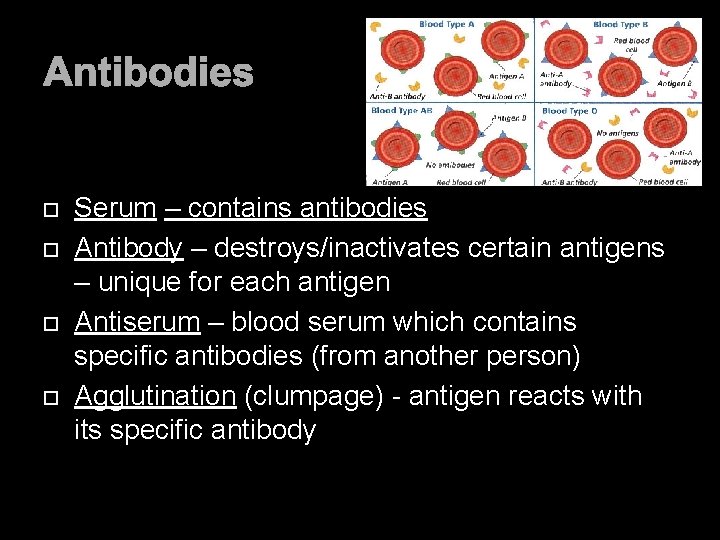
Antibodies Serum – contains antibodies Antibody – destroys/inactivates certain antigens – unique for each antigen Antiserum – blood serum which contains specific antibodies (from another person) Agglutination (clumpage) - antigen reacts with its specific antibody

Antibodies Continued Serology – study of antigen-antibody reactions Types of Antibodies: Anti-A = clumps with A antigens Anti-B = clumps with B antigens Anti-AB = clumps with A and B antigens O blood = no clumpage **This information is used to type someone’s blood!

Blood Type Table (As seen on test…) Antigens on Antibodies Agglutination Blood Type Antibody RBC’s in Serum A A Anti-B Anti-A B B Anti-A Anti-B A&B None Anti-A and Anti-B None AB O
Blood Types Continued This is important for blood transfusions – if the wrong blood is given it could cause clumpage, which would cause death
Blood Types Continued Universal Donor – Type O blood because the plasma that’s transfused contains no antigens to react with the antibodies present in the patient Universal Acceptor – Type AB blood because it contains no antibodies to fight ‘foreign’ antigens
- Slides: 9